Treestand Rules on Pennsylvania Game Lands
One of the trickiest parts of hunting public land in Pennsylvania isn't finding the deer, but understanding all the nuances of what you can and cannot do. Hunters often get frustrated trying to figure out the specific regulations around treestands on State Game Lands, leading to confusion, wasted effort, and sometimes even violations. This guide is here to break down the rules for treestands on Pennsylvania State Game Lands, ensuring you can hunt ethically and legally, without second-guessing your setup.
The "Temporary" Nature of Treestands on State Game Lands
Pennsylvania's State Game Lands are a huge asset for hunters, offering millions of acres of public access. But with that access comes a responsibility to adhere to specific regulations, especially regarding structures like treestands. The core principle to grasp is that anything you put on State Game Lands, including your treestand, is considered temporary. This isn't your backyard woodlot where a permanent stand might stay up year-round. These are public lands, managed for all wildlife and all users, and the rules reflect that.
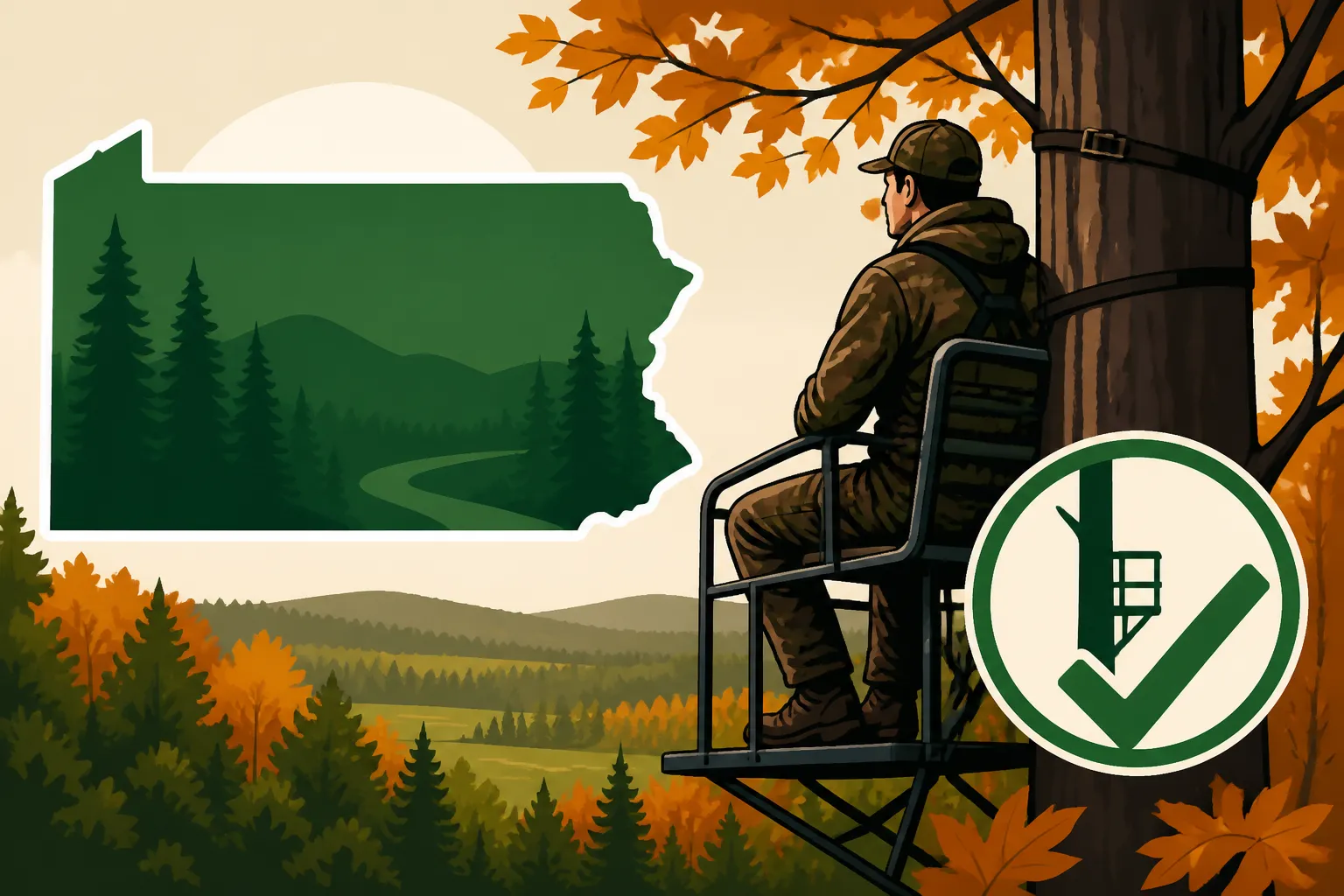
You can't just throw up a stand in August and expect it to be there, undisturbed, come rifle season in November, or even the next archery season. The Pennsylvania Game Commission (PGC) specifically states that portable treestands and ground blinds can be placed on State Game Lands, but they must be removed from the property no later than two weeks after the close of the last deer season. This includes the late archery and flintlock seasons. Imagine the sheer number of stands that would accumulate if everyone left them up indefinitely! The PGC needs to maintain the aesthetic and ecological integrity of these lands, and permanent structures simply don't fit that model. This rule is in place to prevent clutter, reduce long-term habitat impact, and ensure fairness among all hunters. You'll find similar considerations for other temporary structures like ground blinds, which are covered in more detail in Ground Blind Rules on Public Land.
Furthermore, it’s not just about the end-of-season deadline. These stands must also be clearly marked with the owner’s name and address or their customer identification number (CID) from their hunting license. This isn't just a suggestion; it's a requirement. If a Game Warden finds an unmarked stand or one left past the deadline, it could be confiscated, and you could face a citation. It’s a real headache for hunters who overlook this seemingly small detail. Many veteran public land hunters will tell you stories of stands being removed or damaged, not always by game wardens, but sometimes by other individuals. It reinforces the idea that even though you follow the rules, your equipment isn't guaranteed safe on public ground, making the "temporary" aspect even more critical to remember.
Permissible Treestand Types and Attachment Methods
When it comes to the type of treestand you can use and how you can attach it, the PGC has clear guidelines designed to protect the trees and the environment. You can't just nail a few boards to a tree and call it a day. That kind of action can damage the tree, potentially compromising its health and even creating a hazard for future hunters or hikers.
The PGC explicitly prohibits any method of attachment that damages the tree. This means no nails, screws, or any device that would permanently alter or penetrate the tree bark or cambium layer. So, forget about screw-in steps, permanent ladder sections, or anything that requires drilling into the tree. This is where most modern, commercially available portable treestands shine. Stands that use straps, chains, or cables that cinch around the tree are generally permissible because they don't cause lasting damage. This includes most climbing stands, hang-on stands, and ladder stands that rely on strap systems. Always check the manufacturer's instructions and ensure your chosen stand adheres to this principle.
Approved vs. Prohibited Treestand Attachment Methods
| Attachment Method | Status on PA Game Lands | Reason |
|---|---|---|
| Straps/Chains | Permissible | Does not permanently damage tree bark or wood. |
| Cables | Permissible | Does not permanently damage tree bark or wood. |
| Screw-in Steps | Prohibited | Damages tree by penetrating bark and wood. |
| Nails/Bolts | Prohibited | Permanently damages tree, weakens structure, creates hazard. |
| Drilled Supports | Prohibited | Damages tree by penetrating bark and wood. |
| Permanent Ladders | Prohibited | Constitutes a permanent structure, damages tree, not portable. |
When you're packing into your chosen spot on State Game Lands, whether it's deep in the big woods or along the edge of some Hunting Pennsylvania Farm Country Edges, you need to think about the entire setup. This includes your climbing sticks, steps, or whatever method you use to get into your stand. These, too, must adhere to the non-damaging rule. Systems like climbing sticks that strap onto the tree are perfectly fine. Similarly, you cannot cut branches or brush to clear a shooting lane from your stand on State Game Lands. You have to work with what's there, which often means finding natural openings or choosing a stand location that doesn't require modification of the natural habitat. This contrasts sharply with private land, where landowners might allow such modifications. Understanding these differences is key to successful and legal public land hunting in Pennsylvania. For more on navigating these public lands, check out Scouting Pennsylvania Public Land Before Season.
Placement and Safety Considerations on Public Land
Beyond the type of stand and how it's attached, where you place your stand and how you ensure your own safety are paramount, especially on public land shared with others. The general safety zone rules apply to treestands just as they do to hunting from the ground. You cannot hunt within 150 yards of any occupied building, camp, or playground without the express permission of the occupant. This rule is crucial to remember when hunting near private properties that abut State Game Lands. You might think you're on public land, but if your stand is within that safety zone, you're in violation. Using mapping apps like onX Hunt becomes invaluable here, as it allows you to clearly see property lines and mark potential safety zone infringements before you even hang a stand. Knowing where the State Game Land boundary blazes are and understanding Reading Game Lands Boundary Blazes is essential.
Another critical consideration is your personal safety. While the PGC sets rules for the stand itself, they also strongly encourage safe hunting practices. This includes wearing a safety harness every time you are in a treestand, from the moment your feet leave the ground until they return. Falling from a treestand is one of the leading causes of serious hunting injuries. On public land, where you might be far from immediate help, the consequences of a fall can be even more severe. Many hunters have experienced near misses, and it's a stark reminder that even a brief moment of carelessness can lead to disaster. For more on staying safe, you can read Safety Harnesses and Lifelines.
Visibility is also a factor. While treestands are designed for concealment, during specific seasons, hunter orange requirements still apply. For example, during the firearms deer season, you still need to wear the required amount of fluorescent orange, even if you are in a treestand high above the ground. This isn't just about being seen by other hunters; it's about being visible if you need assistance. It's about protecting yourself and others. Imagine trying to locate an injured hunter in thick cover who isn't wearing any orange. The rules are there for a reason, and they apply universally. When considering your setup, think about Treestand Setups in Pennsylvania Hardwoods to maximize your concealment while adhering to safety rules.
Enforcement, Penalties, and Responsible Hunting
The Pennsylvania Game Commission takes its State Game Land regulations seriously, and violations regarding treestands can lead to fines and other penalties. As mentioned, an unmarked stand or one left on State Game Lands past the two-week grace period after the last deer season is subject to confiscation. Beyond that, if a Game Warden determines that your method of attachment has caused damage to a tree, you could be cited for damage to state property. This isn't a slap on the wrist; these are real legal consequences that can impact your hunting privileges and your wallet.
For example, a hunter found to have screwed steps into a tree could face a fine for damaging a tree on public property, plus potentially a separate fine for leaving an illegal attachment. If the stand itself is illegally constructed (e.g., using lumber to build a permanent platform), the penalties could be even stiffer. The PGC's goal isn't just to punish, but to deter behavior that degrades public resources and creates unfair situations for other hunters. They are protecting the resource for everyone, including future generations of hunters.
The responsibility ultimately lies with each hunter to know and follow these rules. Ignorance of the law is rarely an excuse in the eyes of the law. Before you head out, familiarize yourself with the current Pennsylvania State Game Lands Rules. These rules are often updated or clarified, so staying informed is key. Many hunters use digital tools like onX Hunt or even general mapping applications to review State Game Land boundaries and understand topography. While onX Hunt is particularly strong for land ownership and boundary lines, some hunters might also consult resources like GoHunt for general mapping and planning, though for Pennsylvania specifics onX is often preferred due to its focus on local regulations and land ownership.
Hunting on State Game Lands is a privilege, not an inherent right, and adherence to the rules helps ensure that privilege continues for all of us. Responsible hunting means not only being safe and ethical in the field but also respecting the land and the regulations put in place to manage it. By understanding and following these treestand rules, you're contributing to a positive hunting environment for everyone in Pennsylvania.
Disclaimer
This article is for general informational purposes only and does not constitute professional advice. Laws, prices and regulations vary by location and change over time. Consult a qualified professional for guidance on your specific situation.