Treestand Setups in Pennsylvania Hardwoods
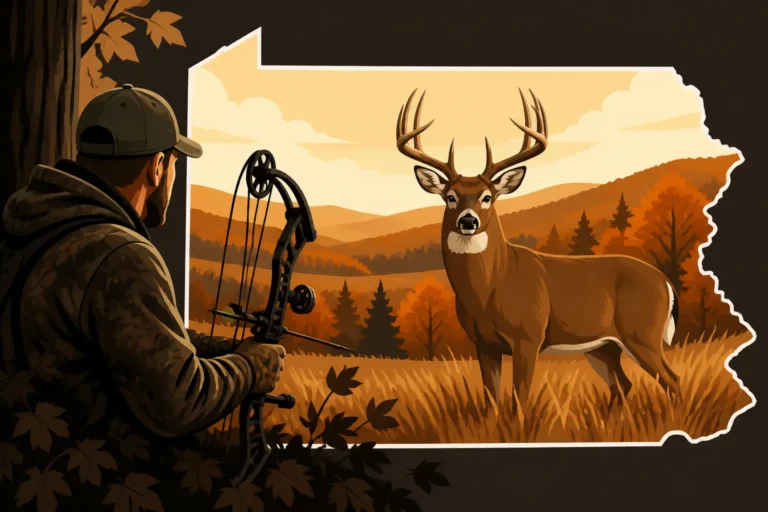
There's nothing quite like the crunch of leaves underfoot in a Pennsylvania hardwood forest, but for many of us, the sheer vastness and challenging terrain can make finding that perfect deer stand setup feel impossible. We've all been there: lugging gear deep into the woods, only to realize the tree isn't quite right, or worse, setting up perfectly only to have our scent blow out our spot. This guide is all about cutting through that frustration, helping you strategically select, safely install, and effectively hunt from treestands in Pennsylvania's diverse and often unforgiving hardwood environments.
Pre-Season Scouting and Tree Selection in PA Hardwoods
Success in treestand hunting isn't born on opening day; it's forged in the sweat and steps of the off-season. In Pennsylvania's hardwoods, where deer sign can be subtle and terrain unforgiving, your pre-season scouting is paramount. You're not just looking for deer; you're looking for the perfect tree within the deer's natural travel patterns.
Reading Sign and Terrain for Optimal Spots
Pennsylvania's hardwoods are a mosaic of challenges and opportunities. You've got everything from the sprawling Big Woods of the northcentral region to the steep, rocky ridges and hollows of the Ridge and Valley. Deer in these areas move differently than their farm country cousins. During your scouting missions, don't just focus on fresh rubs and scrapes – though those are certainly important, especially closer to the rut. Instead, try to understand the larger picture of deer movement. Look for subtle trails on benches and saddles that connect feeding areas (like oak flats dropping acorns) to bedding areas on leeward slopes. Pay close attention to terrain features like old logging roads, creek bottoms, and natural funnels created by changes in elevation or thick briar patches.
Consider using mapping tools like those offered by GoHunt to digitally scout large areas before you ever step foot on the ground. These tools allow you to identify potential travel corridors, pinch points, and bedding areas by analyzing topography, canopy cover, and water sources. Once you have a few promising spots marked, then it's time to hit the woods and confirm your theories. Look for historical sign – old rubs, deer trails worn deep into the earth, and even shed antlers from previous seasons can tell a story of consistent deer use. Remember, deer are creatures of habit, and consistent use over time means your stand location has a better chance of success. For a deeper dive into finding these spots, check out our guide on Scouting Pennsylvania Public Land Before Season.
Identifying Key Tree Species for Stand Placement
Not all trees are created equal when it comes to hanging a treestand. In Pennsylvania's hardwood forests, certain species offer distinct advantages, while others are best avoided. Your primary concerns should be safety, stability, and concealment.
Oak trees, especially mature white and red oaks, are often prime candidates. Their sturdy trunks provide excellent support, and their often gnarly bark offers good camouflage, especially if you pick a spot with some significant branching. Plus, if it's an acorn year, you'll be right in the action. Maples, especially sugar maples, are also good due to their strong, straight trunks. Poplars (aspen) can be decent, but older ones can become brittle, so always check for rot. Black cherry trees are generally sturdy but their smooth, dark bark can make climbing sticks or a climbing stand more challenging to secure and conceal.
Conversely, avoid softwoods like pine or hemlock if possible, as they can be less stable, and pine bark can be tricky with some stand types. Also, steer clear of trees that show any signs of disease, extensive rot, or dead branches overhead that could come crashing down. Always pick a living, healthy tree that is straight enough to accommodate your stand and climbing method safely. The trunk diameter is also critical; ensure it's not too small to be unstable or too large for your stand's attachment system. A good rule of thumb for most hang-ons and climbers is a tree between 8 and 20 inches in diameter.
Types of Treestands for Pennsylvania Hardwoods
When you're hunting Pennsylvania's hardwoods, the type of treestand you choose can make or break your hunt. Each style has its strengths and weaknesses, and understanding them will help you select the best option for your specific hunting style and the terrain you're facing.
Hang-on Stands: Versatility and Stealth
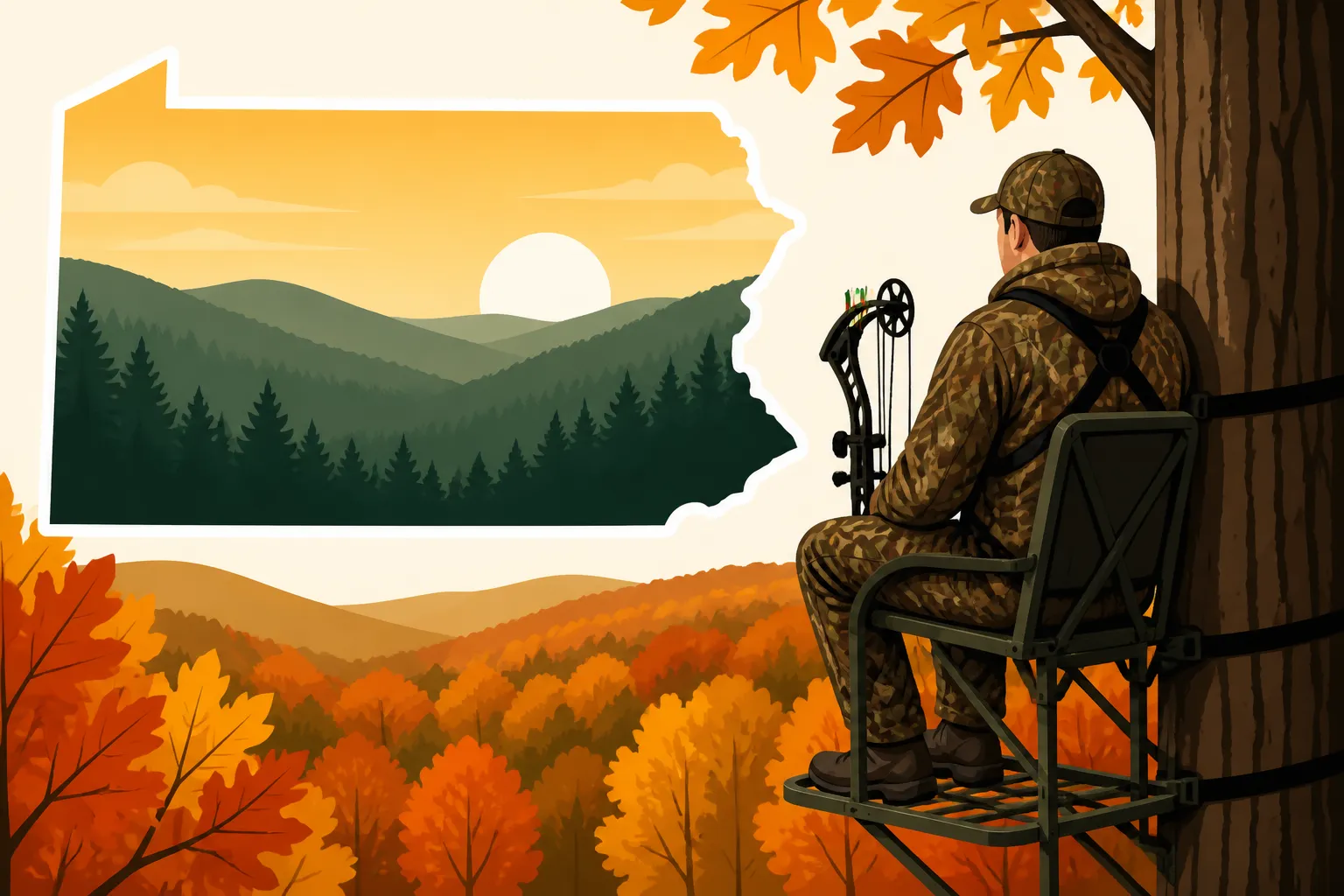
Hang-on stands, often called fixed-position stands, are incredibly versatile and a favorite among many hardcore Pennsylvania bowhunters. These stands consist of a platform and a seat that you attach to a tree using straps or chains, usually in conjunction with climbing sticks or screw-in steps. The main advantage of hang-ons is their adaptability; you can place them in almost any healthy tree, regardless of its straightness or the presence of lower limbs, as long as you can get your climbing sticks up. This makes them ideal for those gnarly oak trees or irregularly shaped maples that might be perfectly positioned over a deer trail.
The stealth factor is another huge plus. Once installed, a hang-on stand is often less visible than a large ladder stand, blending more seamlessly into the forest canopy. You can also leave them in place for the entire season (check local regulations like Treestand Rules on Pennsylvania Game Lands for public land restrictions) or move them quickly if conditions change. The downside? They require more effort to set up each time you hunt, especially if you're packing in and out daily. This process involves hauling your stand and climbing sticks, ascending the tree, and securing everything, which can be noisy and time-consuming. However, for hunters who pre-scout, pre-set locations, and prioritize concealment and precise placement, the hang-on stand is tough to beat in the varied landscapes of Pennsylvania.
Climbing Stands: Mobility and Ease of Use
Climbing stands are the go-to choice for hunters who prioritize mobility and quick, silent setup. These stands are comprised of two sections – a foot platform and a seat section – that work together to "climb" the tree as you ascend. They are incredibly efficient for run-and-gun hunting or when you need to adapt quickly to changing deer patterns or wind directions. In Pennsylvania's vast tracts of timber, where deer move frequently, being able to quickly pack up and move to a new location can be a game-changer.
The biggest limitation of climbing stands is their tree requirement: they demand a relatively straight, limbless tree, typically within a specific diameter range (usually 8-20 inches), for safe and effective operation. This can be a challenge in many mature Pennsylvania hardwoods, where lower limbs are common, or trees grow at an angle. If you hunt areas dominated by straight, tall timber, like certain stands of mature oaks or poplars, a climbing stand is an excellent choice. They are generally lighter than ladder stands, and once you master the climbing technique, they offer a secure and elevated hunting position with minimal pre-setup. Just remember that finding that perfect "climber tree" might take some extra scouting, but the reward is unmatched flexibility.
Ladder Stands: Comfort and Stability
Ladder stands are the heavy-duty workhorses of the treestand world, offering unparalleled comfort and stability, particularly suited for longer sits. As their name suggests, they feature a ladder section that you lean against the tree, leading up to a large platform and often a spacious, comfortable seat. Many ladder stands are designed for two hunters, perfect for double setups & companion hunting or for taking a mentored youth hunter.
The primary advantages of ladder stands are their safety (you're climbing a sturdy ladder, not scrambling up sticks) and comfort. The larger platforms allow for more movement and the ability to stretch, which is invaluable during those long, cold sits during late archery or rifle season. They're also an excellent choice for hunters who have a well-established, reliable spot that they plan to hunt repeatedly throughout the season. However, ladder stands are the least mobile option. They are bulky, heavy, and loud to transport and set up, often requiring two people. Once installed, they are typically left in place for the entire season or even multiple seasons. While not ideal for constantly moving with the deer, for a productive, long-term ambush point in accessible hardwood fringes or along consistent travel corridors, a well-placed ladder stand offers a comfortable and secure hunting experience.
Safety First: Essential Gear and Practices
Hunting from a treestand inherently involves risks, but nearly all treestand accidents are preventable with the right gear and practices. In Pennsylvania's rugged terrain and often unpredictable weather, prioritizing safety isn't just a recommendation; it's an absolute necessity.
Full-Body Harness Use, Always
This cannot be stressed enough: always wear a full-body harness when your feet leave the ground. This is the single most critical piece of safety equipment for treestand hunting, and it's shocking how many hunters still choose to go without. A fall from even a moderate height can result in severe injury, paralysis, or even death. It's not "if" you fall, but "when" something unexpected happens – a slippery step, a broken branch, a moment of distraction. Your harness, correctly worn and attached, is your lifeline.
Ensure your harness fits properly and that you understand how to use all its components: the main straps, leg loops, and most importantly, the tree strap and tether. As soon as you begin ascending the tree, attach your tether to the tree strap (which should be placed around the tree at chest height or above). Stay connected from the moment your feet leave the ground until you are safely back on terra firma. Many harnesses come with a suspension relief strap, which is crucial if you do fall, as it allows you to stand up and relieve pressure on your legs, preventing suspension trauma while you wait for help or self-rescue. Never climb, descend, or sit in a treestand without being securely tethered.
Inspection and Maintenance of Your Stand and Gear
Your treestand and all its components are subject to wear and tear from weather, UV exposure, and repeated use. Before each season, and ideally before each hunt, conduct a thorough inspection of all your equipment. This includes your treestand itself, climbing sticks or steps, and especially your full-body harness and all straps.
Look for frayed ropes, cracked plastic parts, rusty metal, or any signs of weakness. Check the cam buckles and straps on your stand and climbing sticks for wear. Rodents love to chew through straps, and UV rays can degrade nylon and polyester over time, making them brittle and unsafe. If anything looks suspicious, replace it. Don't take chances with equipment that's compromised; the cost of new straps or a new harness is negligible compared to the cost of a severe injury. For permanent sets, make sure to check the tree for growth that might be stressing straps or causing the stand to become unstable. Also, verify that the tree itself hasn't suffered any damage or disease over the off-season. Regularly maintaining and inspecting your gear is a small investment of time that offers huge returns in peace of mind and safety.
Emergency Preparedness in the Woods
Even with all precautions, emergencies can happen, especially when you're hunting alone in remote areas of Pennsylvania's hardwoods. Being prepared for the worst can make all the difference. Always carry a cell phone with you, but don't rely solely on it, as service can be spotty or nonexistent in many big woods areas. Invest in a personal locator beacon (PLB) or a satellite messenger device (like a Garmin inReach or Zoleo) for true off-grid emergency communication.
Beyond communication, carry a small first-aid kit that includes essentials for cuts, scrapes, and sprains. A sharp knife, a headlamp with fresh batteries (even for daytime hunts, you never know when you'll be out late), and a whistle for signaling are also critical. If you hunt alone, let someone know exactly where you're going and when you expect to return. Share your specific stand location using mapping coordinates if possible. Finally, consider carrying a small self-rescue device, like a Haul-Safe or similar rope system, that can help you descend safely if you fall and are suspended, or if your stand becomes compromised. Being prepared for an emergency means you can focus more on the hunt and less on "what if."
Strategic Placement and Entry/Exit Routes
The most well-built stand on the safest tree won't do you any good if it's not placed strategically. In Pennsylvania's hardwoods, where deer are often pressured, your stand's location relative to deer movement, wind, and your own access is absolutely critical.
Wind Direction and Thermals in Mountainous Terrain
Understanding wind and thermals is arguably the most crucial aspect of treestand placement in Pennsylvania. Deer rely heavily on their sense of smell, and if your scent is blowing into their likely travel paths or bedding areas, your hunt is over before it begins. Always know the prevailing wind direction for the day you plan to hunt and choose a stand location that keeps your scent out of the primary deer movement zones. This often means having multiple stand locations for different wind directions.
In Pennsylvania's hilly or mountainous hardwood country, thermals add another layer of complexity. Thermals are air currents created by temperature changes. As the sun rises, the ground warms, and air flows up the mountainside. In the evening, as the air cools, it flows down the mountainside into the valleys and hollows. This means a morning hunt might require you to be set up on an upward slope to catch the rising thermals, while an evening hunt might necessitate a setup lower in a hollow as air sinks. Failure to account for thermals will quickly betray your presence. Utilize tools like GoHunt's advanced weather overlays to predict not just general wind direction, but also thermal shifts throughout the day. Integrating this knowledge into your strategy is key to success in places like Hunting Oak Ridges and Benches or when trying to decipher Reading a Pennsylvania Hollow for Deer.
Concealment and Shot Lane Preparation
Once you've identified a promising tree with the right wind, your next step is to ensure maximum concealment and clear shot lanes. Deer have excellent eyesight, and being silhouetted against the sky or a bright background will alert them quickly. Choose a tree that offers natural breaks in your outline, perhaps with a clump of branches behind you or a darker background of dense evergreens if available.
Before the season, and certainly before your first hunt from a specific stand, take the time to trim any branches that obstruct your view or potential shooting lanes. Do this sparingly and thoughtfully. Don't create a gaping hole in the canopy that screams "hunter here!" Instead, clip only what's necessary to give you clear shooting lanes to key deer travel routes, scrapes, or feeding areas. Consider both standing shots and seated shots, and practice drawing your bow or shouldering your rifle from various positions in the stand to ensure you have full range of motion. For gun hunters, especially in the thick timber of Pennsylvania, remember that shots are often close, so don't trim out to 100 yards if your average shot is 30. For bowhunters, focus on those critical 15-30 yard windows.
Accessing Your Stand Quietly and Undetected
Even the best-placed stand is useless if you spook deer on your way in or out. Quiet entry and exit routes are paramount. Scout a path to and from your stand that avoids known bedding areas, fresh sign, and any obstacles that might create noise. Often, this means using ridge tops, deep creek beds, or dense cover to mask your movement. Walk slowly, deliberately, and pick up your feet to avoid kicking leaves or breaking twigs.
Think about the time of day you'll be entering and exiting. For morning hunts, approach your stand in the dark, preferably an hour or more before first light, to allow the woods to settle down before legal shooting hours. For evening hunts, aim to be in your stand at least two hours before dark, well before deer typically start moving. Consider the route you'll take when dragging a deer out; sometimes the best hunting access isn't the best exit for a heavy buck. Planning your Entry Routes on Steep Ground carefully can save you a lot of grief and prevent alerting other deer in the area to your presence. The goal is to be a ghost, appearing and disappearing without a trace.
| Treestand Type | Pros | Cons | Ideal PA Hardwood Use |
|---|---|---|---|
| Hang-on | Versatile, stealthy, precise placement | More effort to set up, requires climbing sticks | Irregular trees, deep woods, multiple spots |
| Climbing | Mobile, quick setup/takedown, quiet movement | Requires straight, limbless tree; limited tree choice | Straight timber stands, run-and-gun hunting |
| Ladder | Comfortable, stable, easy access | Bulky, heavy, less mobile, visible | Established spots, long sits, mentored hunts |
Advanced Setup Considerations and Seasonal Adjustments
Hunting Pennsylvania's hardwoods demands adaptability. Deer patterns shift with food sources, weather, and hunting pressure. Mastering advanced treestand setups means not just picking a spot, but knowing how to maximize it and adjust when conditions change.
Double Setups and Companion Hunting
For many Pennsylvania hunters, sharing the woods is part of the tradition, whether it's mentoring a young hunter or bringing a buddy along. Double treestand setups or a larger ladder stand designed for two can be a fantastic way to introduce someone to the sport or simply enjoy the camaraderie. When planning a double setup, the considerations are amplified. You'll need a sturdier tree, often a larger diameter, capable of safely supporting two hunters, their gear, and the combined weight of a two-person stand or two adjacent hang-ons.
Placement for a double setup needs careful thought. You'll want to position yourselves for optimal visibility and shot opportunities for both individuals, without one hunter interfering with the other's shot. Often, this means placing stands a few feet apart, or using a wider, two-person ladder stand that gives ample elbow room. Communication becomes even more critical; quiet signals are essential to avoid spooking game. It's also a great opportunity to teach important skills like Judging Antler Points Before the Shot in a real-world scenario. Remember that twice the people means potentially twice the scent, so extra attention to scent control is a must. These setups are particularly effective near highly productive food sources or major travel corridors where you expect consistent deer movement.
Elevating Your Game: Higher Stands
While 15-20 feet is a common height for treestands, sometimes going higher can offer significant advantages, especially in Pennsylvania's hardwood forests. Elevating your stand to 25-30 feet or even more can provide a wider field of view, allowing you to spot deer approaching from a greater distance. This can be particularly useful in open timber where visibility is good, or when trying to look over terrain features like small ridges or thick brush that might obscure your view from lower heights.
A higher stand also helps with scent control. The higher you are, the more your scent plume is dispersed before it reaches the ground, making it harder for deer to pinpoint your location, especially with tricky thermals. It also increases your angle of attack for a shot, creating a steeper downward angle that can be beneficial for bowhunters, often resulting in cleaner pass-throughs and avoiding shoulders. The trade-off, however, is increased difficulty and risk during ascent and descent, and potentially more challenging recovery of a downed animal. You'll need more climbing sticks, a longer safety rope, and greater care when climbing. Always ensure your tree is perfectly suited for higher placement – strong, healthy, and stable enough to support your stand and you at that elevation.
Adapting to Changing Conditions Throughout the Season
Pennsylvania's deer season is long and varied, and what works in September might fail completely in December. Being able to adjust your treestand strategy throughout the season is a hallmark of an experienced hunter. Early season often revolves around consistent food sources like acorns or soft mast, while the peak rut in November sees bucks cruising for does, making travel corridors and scrape lines hot spots, potentially requiring a shift in strategy to capitalize on Hunting the Peak Rut Week in Pennsylvania.
Later in the season, when temperatures drop and natural food sources become scarce, deer will gravitate towards remaining food, like standing corn on farm country edges, or browse in clearcuts and thick hemlock stands. This might mean moving your stand from a ridge top to a south-facing slope that gets more sun, providing warmth and holding late-season browse. Weather plays a huge role; after a fresh snow, deer movement patterns can change dramatically, often moving less and sticking to dense cover. During these periods, considering a ground blind or still-hunting might be more effective than a fixed treestand, but if you're committed to a stand, a Cold Weather Sitting Strategy will be critical. Your ability to read the woods, interpret deer behavior, and adjust your treestand placement accordingly will dictate your success throughout Pennsylvania's diverse hunting calendar.
Disclaimer
Hunting is an inherently dangerous activity. The information provided in this guide is for informational purposes only and is not a substitute for professional training, personal judgment, or adherence to all applicable laws and regulations. Always prioritize safety, wear appropriate gear, and consult with experienced professionals. The author and publisher assume no liability for any accidents, injuries, or other consequences that may result from the use of this information.