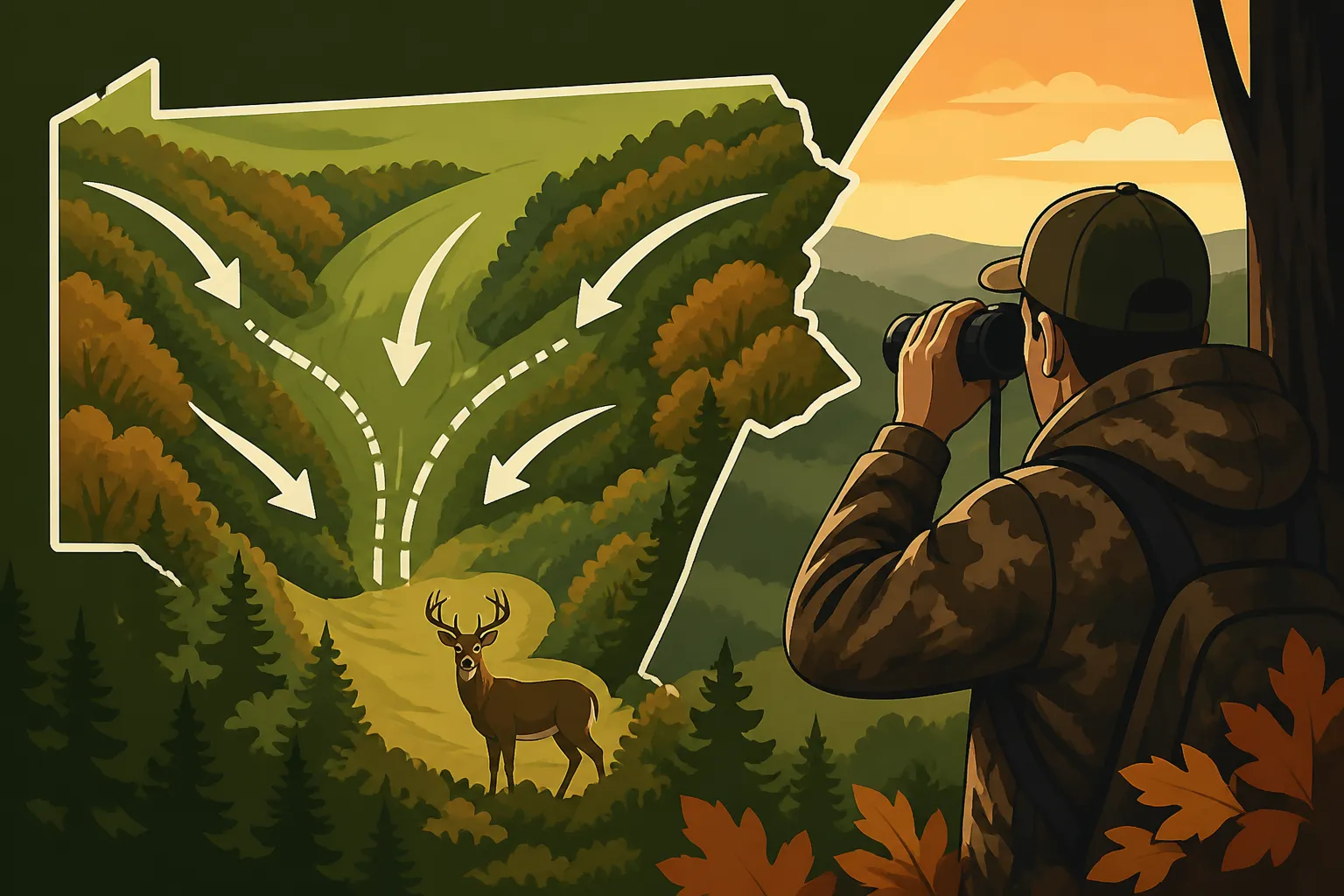
Reading a Pennsylvania Hollow for Deer
Hunting the rolling, rugged landscape of Pennsylvania means you're going to encounter your fair share of hollows, and if you haven't learned to "read" them, you're missing out on some prime deer hunting opportunities. These natural depressions, ravines, and small valleys can be absolute magnets for whitetails, offering sanctuary, food, and strategic travel corridors. This guide is all about helping you understand the intricate dynamics of a Pennsylvania hollow, from how deer use them to the critical role of wind and thermals, and ultimately, how to set up for success in these often-overlooked hotspots.
Understanding the Anatomy of a Pennsylvania Hollow
Before you can effectively hunt a hollow, you need to know what you're looking at and why deer find these places so appealing. A hollow isn't just a dip in the ground; it's a complex ecosystem that provides specific advantages to deer throughout the season.
Defining a Hollow and Its Appeal to Deer
At its simplest, a hollow is a low, often elongated depression or valley, typically found between hills or ridges. In Pennsylvania, these can range from subtle dips in agricultural fields to steep, rugged ravines carved by ancient streams in the vast State Forests. What makes them so attractive to whitetails? It comes down to basic needs: cover, water, food, and thermal regulation.
Imagine a deer looking for a safe place to bed down or a secure route to a food source. A hollow offers immediate concealment from predators and human disturbance. Its varying topography creates a natural labyrinth of folds, benches, and thickets where a deer can easily vanish. Many hollows also contain natural water sources – small streams, seeps, or marshy areas – which are vital, especially during drier periods. Furthermore, depending on the vegetation, hollows can hold abundant food sources, from mast crops like acorns on the slopes to succulent browse in the bottoms, or even small patches of regrowth after a timber cut. The very structure of a hollow provides protection from harsh winds and extreme temperatures, creating a more stable microclimate that deer utilize for comfort, especially in winter or during scorching early-season days.
Key Topographical Features within a Hollow
To truly "read" a hollow, you need to break it down into its constituent parts and understand how deer interact with each.
- Hollow Bottoms: This is the lowest point, often defined by a stream bed or a flatter, sometimes swampy, area. Deer will use these bottoms as travel corridors, particularly if the stream offers an easy path or the surrounding cover is exceptionally thick. However, bottoms can also be wind tunnels or collect cold, damp air, making them less ideal for bedding unless very dense thermal cover is present. Always check for tracks and scat along the water's edge.
- Sidewalls and Slopes: These are the inclines rising from the bottom to the rim. The angle of the slope is important. Gentle slopes might have benches – flat or nearly flat strips of ground that run horizontally along the hillside. These benches are absolute goldmines. Deer love to travel on them because it's easier than constantly climbing or descending steep ground. They also offer excellent vantage points and thermal protection. You'll often find parallel trails running along multiple benches at different elevations. Keep an eye out for smaller draws or finger ridges that intersect these main slopes, as they create natural funnels and travel routes up and down the hollow. These subtle changes in elevation are often the key to Hunting Oak Ridges and Benches.
- Hollow Rims and Ridgetops: This is where the hollow meets the higher, flatter ground above. The transition zone can be heavily used. Deer will often travel along these rims, just inside the timber, as they offer both cover and a commanding view. Ridgetops themselves can be major travel corridors, especially during the rut when bucks are cruising for does. They also serve as escape routes, allowing deer to quickly top out and disappear over the horizon if pressured. Understanding how these features connect is crucial, as deer often transition between them based on pressure, wind, and time of day.
Decoding Wind and Thermals in Hollows
If you ignore wind and thermals in a hollow, you might as well wave a flag and announce your presence. These are arguably the most critical factors when hunting contoured terrain, and they behave very differently than on flat ground.
Daytime Thermal Dynamics
Thermals are essentially columns of air that rise and fall with temperature changes. As the sun climbs and begins to heat the earth, the ground warms, and the air directly above it also warms. Warm air is lighter than cool air, so it begins to rise, creating an upward current – a "rising thermal."
In a hollow, this means that as the sun rises, especially on an uncloudy morning, thermals will start to pull scent up the slopes and out of the hollow. For a morning hunt, this is crucial. You generally want to be positioned above where you expect deer to be, allowing your scent to be carried up and over them. If you set up in the bottom of a hollow in the morning, your scent will likely rise and alert any deer moving higher up the slopes or out of the hollow. The strength and timing of these rising thermals can vary based on sunlight, cloud cover, and vegetation density, but the general rule holds: in the morning, thermals rise. Many hunters use sophisticated mapping tools, like those offered by GoHunt, to visualize elevation changes and anticipate thermal movement more accurately.
Evening Thermal Dynamics
The opposite occurs as the sun begins to set and the air cools. As the ground radiates its heat away, the air above it cools, becomes denser, and starts to fall, creating a "falling thermal." This downward current pulls scent down into the hollows and along their bottoms.
For an evening hunt, this means you generally want to be positioned below where you expect deer to be. Your scent will be carried down into the hollow, away from deer that might be moving up to higher ground for evening feeding or traveling along upper benches. Setting up on an upper ridge or bench in the evening would mean your scent is carried down into the hollow, likely alarming deer below you. Being cognizant of these patterns, often discussed when considering Wind and Thermals on a Ridge, is vital for a successful sit. The strongest falling thermals occur as darkness truly sets in, and they will continue throughout the night, funneling cold air and scent into the lowest points of the landscape.
Wind Interaction with Topography
While thermals are driven by temperature, wind is driven by pressure differences, and it can become incredibly complex and unpredictable in a hollow. A strong prevailing wind that might be blowing consistently from the west on a flat ridgetop can be completely altered once it hits the broken terrain of a hollow.
Hollows often act like funnels, channeling the wind's direction. A westerly wind might be forced to blow down the hollow, or up it, depending on the orientation of the hollow and the surrounding topography. What's even more tricky is the "wash" or swirling effect. The wind can hit one side of a hollow, eddy, and create swirling currents that make scent control a nightmare. You might feel a gentle breeze on your face, only to have your scent picked up by a deer 50 yards away due to a micro-swirl.
This is where understanding the lay of the land, and using advanced tools like GoHunt's wind direction overlays, becomes invaluable. You need to analyze how the wind will interact with the specific contours of your chosen hollow. Sometimes, a hollow can offer a "lee" side – the side sheltered from the prevailing wind – where deer might seek refuge on blustery days. In these situations, your approach and stand placement must account for the wind's erratic behavior, especially if you're attempting a Still-Hunting Pennsylvania Big Woods approach.
Identifying Deer Sign and Travel Corridors
Once you understand the structure of a hollow and the invisible forces of wind and thermals, it's time to put boots on the ground and look for the visible clues deer leave behind. These signs will confirm your hypotheses and guide your setup.
Trails and Rubs Along Hollow Edges
Deer, like humans, are creatures of efficiency. They will almost always choose the path of least resistance when traveling. In hollows, this often means well-worn trails that skirt the edges and utilize benches.
- Main Travel Trails: Look for heavy trails running horizontally along the slopes, often just below the rim or on prominent benches. These are the deer highways. They provide relatively flat travel and allow deer to quickly drop into the hollow for cover or ascend to the ridge. These trails are particularly strong where the terrain narrows or funnels deer into a specific corridor. Also, pay attention to "cross-hollow" trails that descend one side, cross the bottom (often near water), and ascend the other. These are typically routes used for quick escapes or accessing different feeding/bedding areas.
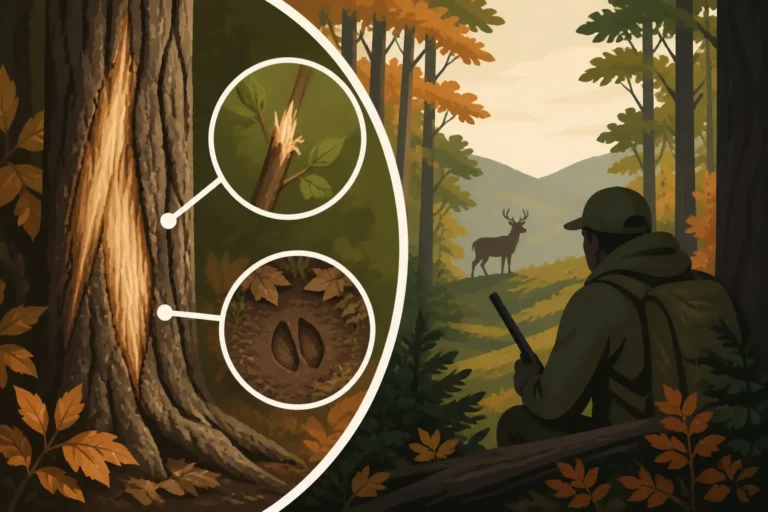
- Rubs and Scrapes: During the pre-rut and rut, bucks will leave rubs on saplings and small trees along these travel routes. If you find a line of rubs paralleling a trail on a bench, you’ve found a prime cruising route. Scrapes, while less common deep within the thickest parts of hollows, can sometimes appear in more open sections, especially near transitional cover or along logging roads that might pass through. Finding these tells you a buck is actively using that corridor.
Bedding Areas and Food Sources Within Hollows
Hollows offer an incredible array of bedding and feeding options, making them highly attractive to deer throughout the year.
- Bedding Sanctuary: Deer seek thermal cover and security for bedding. South-facing slopes within a hollow receive more direct sunlight, making them ideal bedding spots during colder months. Thick cover, such as dense mountain laurel, rhododendron, or stands of young hemlocks, provides excellent visual concealment and wind breaks. Look for flat spots or benches within these thickets where deer might lie down. Blowdowns and areas of recent Hunting Pennsylvania Clearcuts and Regrowth can also create impenetrable bedding cover that deer adore.
- Food for Thought: Hollows can be abundant food pantries. If there are oak trees on the slopes, you'll find deer feeding on acorns, especially in early fall. Look for "cuttings" – acorn caps and bits of shell left behind. During the late season, when the acorn crop might have failed or been consumed, deer will switch to browse. The tender shoots of saplings, greenbrier, and other woody vegetation found along the slopes or in the bottom become critical. If the hollow is adjacent to agricultural land, deer will often stage in the protective cover of the hollow before moving out into fields to feed after dark.
Water Sources and Funnels
Water is life, and hollows often provide it in spades. This, combined with their natural topography, creates perfect funnels.
- Steady Supply: Streams, small springs, and seeps are common in hollows. Deer will visit these regularly, especially during dry spells or after a long day of feeding on dry browse. Look for fresh tracks around these water sources.
- Pinch Points and Bottlenecks: These are critical features in any deer habitat, and hollows are full of them. A pinch point occurs where the terrain forces deer into a narrow corridor. This might be where a steep bluff on one side pushes deer closer to a stream on the other, or where a dense thicket funnels movement onto a specific bench. Saddles—low spots in a ridge connecting two hollows or a hollow to a ridge—are also classic funnels, especially for cruising bucks during the rut. These are places where multiple deer trails converge, making them ideal ambush locations. Scouting Pennsylvania Public Land Before Season with an eye for these natural bottlenecks can pay huge dividends.
| Feature | Morning Strategy | Evening Strategy | Primary Deer Use |
|---|---|---|---|
| Thermals | Rising (Scent moves UP) | Falling (Scent moves DOWN) | Movement based on warmth/coolness |
| Wind | Often channeled/swirling, can rise or fall | Often channeled/swirling, can rise or fall | Seek shelter on lee side of slopes |
| Stand Height | Higher on the slope, above anticipated deer | Lower on the slope, below anticipated deer | Security, vantage, scent control |
| Deer Movement | From lower beds to higher feeding, or out of hollow | From higher beds/travel to lower feeding/water | Access to food, water, bedding, escape routes |
| Optimal Location | Upper benches, just below ridge | Lower benches, just above bottom | Intercepting movement based on thermal/wind |
Strategic Stand Placement and Hunting Tactics
Now that you've got a grasp of the hollow's structure and how deer use it, along with the invisible forces at play, it's time to translate that knowledge into effective hunting strategies.
Morning and Evening Setups
Understanding the thermal and wind dynamics in a hollow is paramount to choosing your stand location for different times of the day. This isn't just about throwing up a stand; it's about making a calculated decision based on how deer move and how your scent will travel.
- The Morning Advantage (Hunting High): As mentioned, morning thermals rise. This means your scent will be carried up and out of the hollow. Therefore, your best bet for a morning setup is often higher on the slope, possibly on a bench just below the main ridgetop. You're looking to intercept deer moving from their lower, secure bedding areas in the hollow bottom or on the mid-slopes, as they head either up to higher feeding areas on the ridge or out of the hollow altogether. You want to be positioned so that the rising thermals carry your scent over any deer that are still below you. For such placements, a well-chosen spot for Treestand Setups in Pennsylvania Hardwoods can be critical. Your approach path into this stand should also be planned to keep you out of the primary deer movement zones and utilize terrain features to shield your scent.
- The Evening Edge (Hunting Low): Conversely, evening thermals fall, pulling your scent down into the hollow. This dictates a lower setup. Your ideal evening stand might be on a lower to mid-level bench, or even in a strategic pinch point closer to the hollow bottom. You're aiming to catch deer as they begin to move up the slopes from their daytime beds to evening feeding areas on the ridge or as they travel along the hollow bottom to water sources. By being below them, the falling thermals should carry your scent down past them, keeping you undetected. Always consider the wind direction, as a strong crosswind can override even the most predictable thermal flow.
Still-Hunting and Ground Blind Considerations
While treestands are popular, hollows also lend themselves beautifully to other tactics, particularly still-hunting and, in specific scenarios, ground blinds.
- The Art of Still-Hunting: Still-hunting in a hollow can be incredibly effective, especially if you move with the thermals. In the morning, you can slowly work your way up the hollow, letting the rising thermals carry your scent away and keeping you undetected by deer ahead and below you. In the evening, reverse the process: slowly descend, allowing the falling thermals to pull your scent behind you. This takes immense discipline – slow, deliberate steps, pausing frequently to observe, listen, and glass. Focus on natural funnels, benches, and thick cover. Use GoHunt's GPS features to navigate silently and mark any fresh sign you encounter, which can inform future hunts or stand placements. This methodical approach is key to success when you're Still-Hunting Pennsylvania Big Woods.
- Strategic Ground Blinds: Ground blinds aren't always ideal in hollows due to swirling winds, but they can be deadly in specific situations. Consider a ground blind at a well-defined pinch point, where a hollow narrows significantly, forcing deer into a tight corridor. They can also work exceptionally well near very thick bedding cover or an irresistible food source within a hollow, especially if you can brush them in effectively and ensure your scent is properly managed. Remember, ground blinds require absolute scent control and careful entry/exit routes. The advantage is concealment and warmth in cold weather, but the disadvantage is limited visibility and often challenging wind conditions.
Adapting to Weather Changes
Weather isn't just a comfort factor; it's a game-changer for deer behavior and your hunting strategy in hollows.
- Rainy Days: Rain can be a blessing and a curse. It often dampens thermals, making scent control easier as your scent gets washed out of the air. However, it also reduces visibility and makes hearing deer more difficult. Deer may move more freely in the rain, especially during a light drizzle, as the noise helps mask their movement. Look for them in thicker cover, still utilizing the hollows for protection.
- Snowy Conditions: A fresh snow blanket is a gift for a hollow hunter. It simplifies tracking dramatically, clearly outlining deer trails, their preferred travel routes, and even where they've been browsing or bedding. Deer will often seek the thermal advantages of thick hollows during deep snow, especially on south-facing slopes. Flintlock Hunting in Pennsylvania Snow reveals how critical these features are in late season. Pay attention to how deer are using the terrain to conserve energy.
- Cold Fronts and Wind: A sudden cold front often stimulates deer movement. They know winter is coming and will increase feeding activity. Hollows with good food sources can be red-hot during these periods. On excessively windy days, deer will often seek refuge on the lee side of ridges or deep within hollows, where the wind's intensity is significantly reduced. Adjust your stand placement to be on the downwind side of these sheltered areas.
Disclaimer
Always consult the latest Pennsylvania Game Commission regulations and local laws before heading afield. Hunting regulations, seasons, and licensing requirements can change, and it is every hunter's responsibility to stay informed and hunt ethically and legally.