Finding Sign in Mature Timber
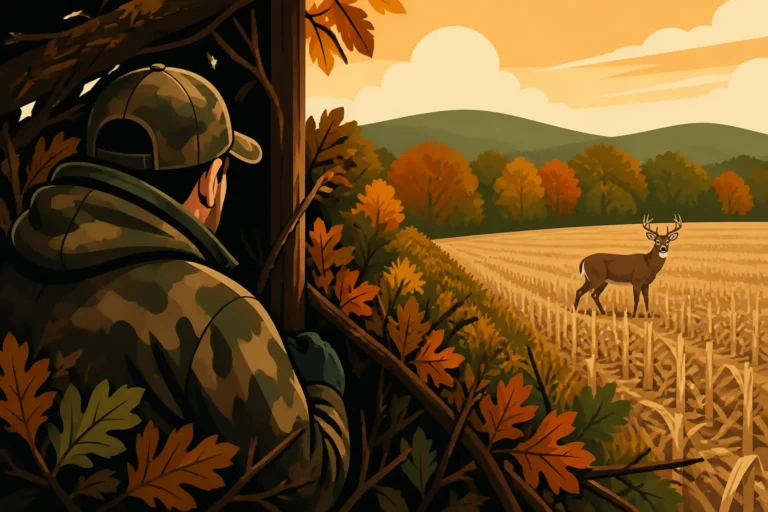
You've trekked for what feels like miles through dense Pennsylvania hardwoods, the kind of mature timber where the canopy closes overhead and the undergrowth can be surprisingly thick or eerily sparse. You know deer live here – you've seen the trail cameras, the occasional glimpse of a ghostly shadow – but finding actual sign that tells a story, that leads you to where a mature buck might be, feels like trying to read a whisper in a hurricane. It's a common frustration for many hunters, feeling lost in the vastness of the big woods, and this guide is here to help you decipher the subtle clues deer leave behind in these often-overlooked habitats.
The Unique Challenges and Rewards of Mature Timber
Hunting mature timber isn't for the faint of heart, or for those who prefer wide-open fields and obvious deer trails. It’s a different beast entirely, but one that can offer incredible rewards if you learn its secrets.
Why Mature Timber Feels Like a Puzzle
Imagine stepping into an ancient, sprawling library where all the books are the same size and color. That's what mature timber can feel like – endless trees, an overwhelming sameness that makes it hard to pinpoint anything specific. There often isn't the lush, obvious food plot or the distinct crop field edge that practically screams "deer here!" Instead, you’re looking at vast expanses of oak, maple, or hemlock, with little visible undergrowth in some areas, or incredibly dense thickets of mountain laurel and rhododendron in others. It’s easy to feel defeated, convinced that the deer have simply vanished, or that they only inhabit the small, managed parcels you’ve read about online.
However, just because the signs aren't screaming at you doesn't mean they aren't there. Deer absolutely live, thrive, and avoid pressure in mature timber. They move through it, bed in it, and find sustenance within its deep confines. The challenge lies in adjusting your perception and understanding that the "rules" of farm country or small woodlots don't always apply here. You’re not looking for obvious highways; you’re looking for subtle game trails, faint marks, and concentrations of activity that betray their presence.
The sheer scale of these areas can be intimidating, leading many hunters to shy away. But for those willing to put in the time and effort to learn how to read the landscape, mature timber often holds less pressured deer, especially older, wiser bucks who have learned to use its vastness to their advantage. It requires patience, a keen eye for detail, and a willingness to explore areas others might dismiss as "too big" or "empty."
The Elusive Nature of Big Woods Bucks
Mature bucks, particularly in the sprawling public lands and state forests of Pennsylvania, are masters of evasion. They aren’t going to consistently parade across open clearcuts or frequent the same food plots day after day, especially during daylight hours once hunting pressure begins. These older deer gravitate towards mature timber precisely because it offers the kind of solitude and security they crave. They've lived through multiple hunting seasons, learned the subtle cues of human presence, and developed an uncanny ability to disappear into the landscape.
Their elusive nature means that the sign they leave behind is often less frequent and more subtle than what you might find from younger deer in more open habitats. You won't typically find massive rub lines stretching for hundreds of yards or a dozen scrapes in a single field edge. Instead, you'll find isolated, but significant, clusters of sign that indicate a buck's more deliberate movements through his core area. These are the bucks that will give you only one chance, often deep in cover, which is why understanding their patterns through sign is so critical.
To consistently find and hunt these deer, you must think like them. Consider their primary needs: security, food, and water. In mature timber, security is often paramount, making dense areas of cover – whether it's a stand of thick hemlocks, a steep hillside choked with rhododendron, or a large blowdown – prime locations for finding where Big Woods Bucks Bed. Understanding how they use elevation, wind, and thermal currents to their advantage to detect predators is key to predicting their movements and finding their most secure hideouts.
Decoding Deer Sign in the Big Woods
Finding deer sign in mature timber requires a detective's eye and an understanding that not all sign is created equal. It's about piecing together a story from subtle clues, rather than reading a bold headline.
Rubs and Scrapes: More Than Just Scenery
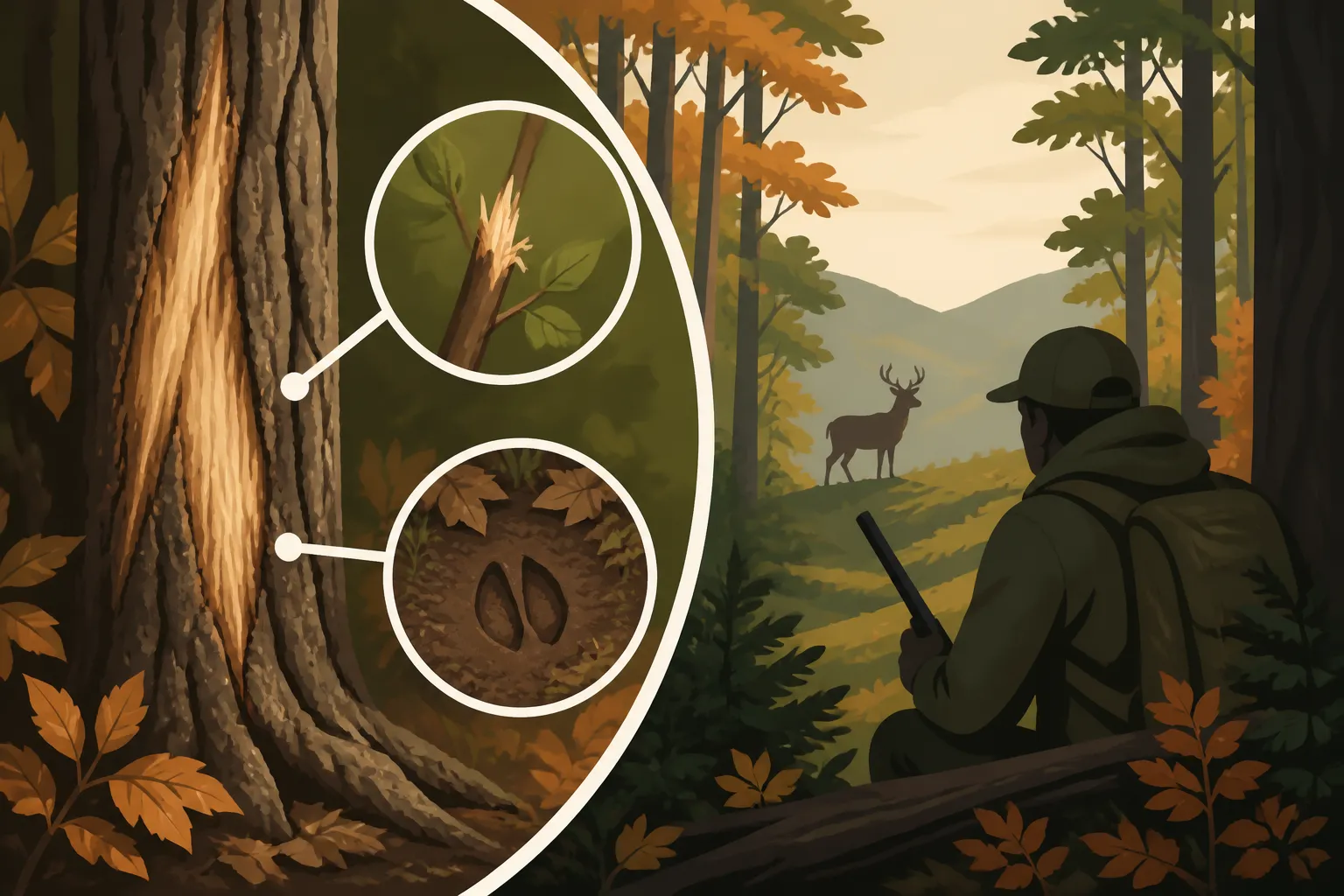
When you stumble upon a rub in mature timber, it’s not just a peeled sapling; it’s a direct message from a buck. The size of the rub tells you something about the deer's antlers, of course, but the freshness, the direction it faces, and its location are equally important. Fresh rubs, with sap still oozing and bright bark, mean a buck was recently there. A line of rubs, often called a "rub line," can indicate a travel corridor, especially if it runs along a ridge top or parallels a contour line. If you see rubs on the uphill side of trees, it often means the buck was traveling uphill. Understanding these nuances can help you discern between a random rub and a deliberate communication point.
Scrapes, similarly, are critical pieces of the puzzle. While perhaps less common in deep timber than on field edges, finding an active scrape in mature woods is a goldmine. An "active" scrape will have freshly disturbed earth and, crucially, a broken or chewed overhanging branch. Bucks scent-check and mark these branches with glands near their eyes and forehead, communicating their presence to other deer. You might find a single, large scrape, or more typically, a series of smaller "secondary scrapes" leading to or from a primary scrape. Pay close attention to the trees and branches directly above the scrape.
It's not just about finding a rub or a scrape; it's about connecting the dots. Are these rubs leading to a bedding area? Is that scrape along a subtle travel path between two food sources? Often, in mature timber, you might find a series of smaller rubs and scrapes that form a less defined version of the Scrape Lines Along a Logging Road These subtle lines can reveal a buck's preferred route through a vast woodlot. Look for these signs along terrain features like benches, saddles, or the edges of dense thickets.
Trails and Funnels: Highways and Bottlenecks
Deer trails in mature timber are rarely the well-beaten paths you find in farm fields. They are often faint, almost imperceptible depressions in the leaves or moss, easily missed if you’re not actively looking down. These trails might weave around blowdowns, follow slight changes in elevation, or stick to the path of least resistance through dense undergrowth. The key is to look for consistency – repeated disturbances in the leaf litter, slightly bent saplings, or areas where the ground appears subtly worn. These are the deer's highways, connecting bedding areas to food, water, or other security cover.
Funnels, however, are the true bottlenecks in these vast landscapes. A funnel is any geographical feature that naturally concentrates deer movement into a narrower path. In mature timber, these can be incredibly subtle. Think of a steep ridge where a gentler saddle forces deer to cross at a specific point, or a narrow strip of timber between two clearcuts. A dense thicket of mountain laurel might force deer to walk around it, creating a natural pinch point. Water features, like a small creek bottom or a swampy area, can also create funnels by limiting crossing points.
A great example of a natural funnel in Pennsylvania's big woods is a hollow. When you're Reading a Pennsylvania Hollow for Deer, you'll notice how deer often stick to specific contours or benches to navigate the steep terrain, creating natural pathways. Learning to identify these funnels on a topographical map before you even step foot in the woods, then confirming them on the ground, is a crucial scouting skill. Tools like GoHunt's mapping overlays can be invaluable for identifying subtle terrain features that act as funnels, allowing you to focus your ground scouting efforts.
Droppings, Beds, and Browsing: The Everyday Story
Sometimes the most mundane signs are the most informative. Fresh deer droppings are a prime example. The size and shape can sometimes indicate the age class of the deer, with larger, more oval pellets often belonging to bigger deer. Crucially, the freshness of the droppings tells you how recently a deer was in the area. Dark, moist, clumped droppings mean a deer was there very recently, perhaps within hours. Dry, scattered, faded pellets, however, indicate older activity. Pay attention to what they’re eating – droppings from an acorn diet will look different from those of a browse diet.
Finding a bed in mature timber is like finding a deer's armchair. These are often subtle depressions in the leaves or pine needles, usually in a spot that offers security and good visibility or scent-checking opportunities. Deer beds will frequently be found on benches along hillsides, on the points of ridges, or within dense cover that provides thermal protection from the wind. A group of beds indicates a small herd, while a single, larger bed in a strategic location (like overlooking a trail or a low-lying area) might indicate a mature buck. Understanding Where Big Woods Bucks Bed, which is often in unexpected, secluded spots offering a tactical advantage, can be a game-changer.
Finally, don't overlook browsing. In mature timber, particularly when primary food sources are scarce, deer will browse on available woody vegetation. Look for small twigs and branches that have been nipped off cleanly, often leaving a frayed edge from their lower incisors. The height of the browse can give you an idea of the deer's size, and the freshness indicates recent feeding. While subtle, consistent browsing in an area can indicate a preferred feeding ground, especially during late season.
Strategic Scouting: Where to Focus Your Search
Scouting in mature timber can feel like looking for a needle in a haystack, but by understanding terrain, transitions, and subtle food sources, you can narrow your search significantly.
Terrain Features as Magnets
Topographical maps and aerial imagery are your best friends when scouting mature timber. Before you even set foot in the woods, spend time studying the contours, identifying key terrain features that naturally attract or funnel deer. Ridges, benches (flat spots along a hillside), saddles (low points between two high points on a ridge), and creek bottoms are all critical. Deer will often travel along benches or just below the crest of a ridge to avoid being silhouetted. Saddles act as natural cross-points. Creek bottoms provide water and often offer denser vegetation and different food sources.
Understanding how deer use elevation and air currents is also vital. The concept of Wind and Thermals on a Ridge, for example, dictates how deer might move at different times of the day. In the mornings, thermals rise, carrying scent uphill. In the evenings, they fall, carrying scent downhill. Deer will often position themselves to take advantage of these air currents, allowing them to detect predators from a distance. A mature buck might bed on a ridge point, with rising thermals carrying scent from below, and his eyes watching any approach from above.
Using advanced mapping tools, like those offered by GoHunt, allows you to overlay topographical maps with satellite imagery, providing an incredibly detailed view of the terrain. You can mark potential bedding areas, travel corridors, and funnels digitally, making your ground scouting much more efficient. Instead of wandering aimlessly, you can target specific areas with high potential. Identifying Hunting Oak Ridges and Benches, which are often overlooked, can put you on a path to success. These subtle features, especially those with good mast crops, can be buck magnets.
Identifying Key Transition Areas
Deer, particularly mature ones, love edges and transitions. These are the seams where different habitat types meet, offering a diverse array of food, cover, and security. In mature timber, these transition areas might not be as obvious as a clearcut meeting a field, but they are equally important. Look for where a dense stand of pines or hemlocks transitions into a deciduous oak forest, or where a steep, rocky slope levels out into a bench. The boundary of a swamp or marsh where it meets higher ground is another prime transition zone.
Old logging roads, abandoned foundations, or even forgotten apple trees deep in the woods can also create crucial transition points. These human-made disturbances, over time, become integrated into the landscape and offer unique food or travel opportunities for deer. A logging road, for example, might be used as a travel corridor, and the edges where new growth sprouts can offer browse. These spots are excellent for finding subtle buck sign.
When planning your approach, think about Entry Routes on Steep Ground. Accessing these deep timber areas without alerting deer is paramount. Often, the steepest, most difficult paths are the least traveled by other hunters, meaning deer are less pressured there. Utilizing terrain features like creek beds or the bottoms of hollows to mask your movement and scent can make a huge difference in getting into these crucial transition zones undetected. These are the places where deer feel most secure and are often found moving naturally.
The Role of Food Sources, Even Subtle Ones
While mature timber might not have obvious food plots, it's rich in natural food sources that deer rely on heavily. Acorns, particularly from white oaks, are a powerhouse food source in the fall. During a good acorn crop year, deer will concentrate in oak stands, sometimes ignoring other food sources entirely. Spend time scouting oak flats and ridges, looking for fresh droppings, disturbed leaf litter, and deer trails leading to and from these areas. The presence of even a few scattered acorn caps can be a clue.
However, acorn crops can fail, or simply not be present in every area. When you're Hunting After the Acorn Crop Fails, deer shift their diet dramatically. This is when other browse becomes critical. Look for areas with green briar, mountain laurel (which deer browse heavily in winter), dogwood, or maple saplings. Beech nuts, while less widespread than acorns, are another highly prized food source. When What Changes When Beech Nuts Drop, deer will quickly key into these as well.
Don't overlook the more subtle food sources. Old, forgotten apple trees – relics of abandoned homesteads – can be magnets for deer, especially in early fall. Patches of wild berries, mushrooms, or even specific types of moss can provide sustenance. The key is to identify what is available in the specific patch of timber you’re hunting and understand how deer will utilize it throughout the different seasons. Even if it's not a primary food source, it could be a crucial secondary option that dictates local deer movement.
Seasonal Considerations for Finding Mature Timber Sign
The types of sign you’ll find, and how deer use mature timber, changes dramatically throughout the hunting seasons. Adapting your scouting and hunting strategy to these seasonal shifts is essential.
Early Season and Pre-Rut Clues
As summer transitions into early fall, deer patterns are still somewhat in flux. During the early archery season, deer are often still on a relatively consistent summer pattern, focusing on soft mast (like wild grapes or black berries) and reliable water sources. Rubs might start to appear, but they are often smaller, made by younger bucks establishing dominance, or by older bucks just starting to shed velvet and test their antlers. These early rubs are good indicators that bucks are present, but might not yet reveal their rutting travel patterns.
As October progresses, the pre-rut begins to intensify. This is when bucks start to become more aggressive, expanding their home ranges and actively seeking does. You'll start to see more significant rubs and scrapes appearing, often on larger trees, as bucks lay down their scent. This is a critical time for Hunting the Pre-Rut in Late October, as buck movement increases, and they become more visible during daylight hours. Look for scrapes in unexpected places, especially along travel corridors where bucks are moving between bedding and feeding areas.
During this period, bucks are often still somewhat nocturnal in their core areas, but their daylight activity picks up, particularly towards the end of the month. Your best bet for finding sign during the early season and pre-rut is to focus on areas that offer both security and a food source. Creek bottoms, sheltered benches with a good acorn crop, or dense thermal cover near water are all excellent places to start.
The Rut: Active Sign and Predictable Behavior
The rut is arguably the most exciting time to be in the woods, and mature timber becomes a stage for intense deer activity. Bucks are now actively chasing does, and their caution often takes a backseat to their reproductive drive. This is when scrapes and rubs become incredibly active and fresh, sometimes overnight. You might find multiple fresh scrapes in a single area, or a rub line that seems to have materialized out of nowhere. The overhanging branches above scrapes will be heavily worked, and the ground will be freshly disturbed.
During the peak of the rut, bucks are constantly on the move, searching for receptive does. This means their travel patterns, while still rooted in security, become more expansive and less predictable in terms of specific bedding-to-feeding routes. Instead, they’ll be covering a lot of ground, using ridges, saddles, and creek bottoms as thoroughfares to cover as much territory as possible. This increased movement, often during daylight, makes it an ideal time for tactics like Still-Hunting Pennsylvania Big Woods. By moving slowly and deliberately, constantly looking for movement and listening for sounds, you can intercept a buck actively searching for a doe.
Listen for grunts, snort-wheezes, and rattling in the distance, especially in thick areas where bucks might be challenging each other or tending a doe. While it's tempting to focus solely on scrapes, remember that the "chase phase" of the rut means bucks are constantly moving. Position yourself along known travel corridors or funnels between areas of cover, and be prepared for a shot at any moment.
Late Season: Food and Security are King
As winter sets in and temperatures drop, the deer’s priorities shift dramatically to survival. Food and thermal cover become paramount. Any remaining natural food sources, like acorns that have been buried under snow, persistent browse, or late-dropping beechnuts, become critical. Deer will also seek out the densest thermal cover they can find – thick stands of hemlock, pine, or rhododendron that shield them from harsh winds and trap what little warmth the sun provides.
During the late season, deer tend to "yard up" or concentrate in specific areas that offer the best combination of food and cover. This means that while deer activity might be generally lower, the sign you do find will be heavily concentrated. Look for clusters of fresh droppings, multiple beds in close proximity within a thicket, and heavily browsed vegetation. Late-Season Food Sources for Whitetails, such as browse on clearcut edges or even agricultural crops if hunting near farm country, become magnets.
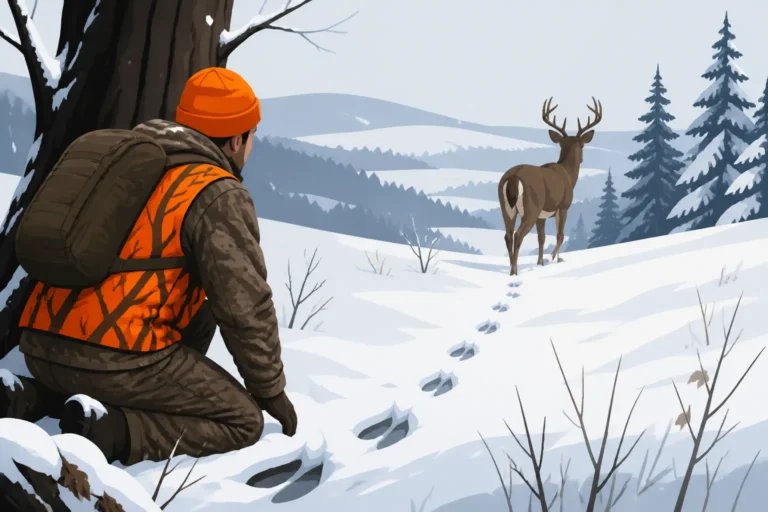
Your scouting efforts in late season should focus on these critical survival zones. Identify south-facing slopes, which receive more sunlight and melt snow faster, exposing browse. Look for the densest cover available, even if it looks impenetrable. Often, the deer are literally inside these thickets. This is also a good time to observe deer from a distance to learn their patterns without disturbing them, saving that information for next year. Tracks in the snow can tell a vivid story of deer movement, showing you exactly where they're coming from and going to.
| Type of Sign | What it Tells You | Best Time to Look | Where to Focus |
|---|---|---|---|
| Rubs | Buck presence, size (if fresh and large), travel direction, aggressiveness. | Early Season to Peak Rut | Along ridge lines, near bedding areas, transition zones, subtle travel corridors. |
| Scrapes | Buck presence, communication hub, doe activity (if fresh and active). | Pre-Rut to Peak Rut | Along travel routes, under overhanging branches, junctions of trails, near bedding/feeding transitions. |
| Trails | Consistent deer movement, travel corridors between key areas. | Year-Round | Faint depressions in leaf litter, leading to food, water, or dense cover. Look for junctions. |
| Beds | Resting/security areas, size of deer, direction of observation/escape. | Year-Round (easier in snow) | Benches, ridge points, dense thickets, south-facing slopes (late season), sheltered areas. |
| Droppings | Recent presence, diet (acorns vs. browse), relative freshness (within hours/days). | Year-Round | Wherever deer frequent: feeding areas, bedding areas, along trails. |
| Browsing | Current food sources, recent feeding activity, deer presence. | Late Season, Winter | Areas with preferred browse species (briars, saplings), clearcuts, old apple trees. |
Disclaimer
Always check the current Pennsylvania Game Commission regulations and local ordinances before heading afield. Hunting seasons, bag limits, and specific rules can change annually. Stay safe and hunt ethically.