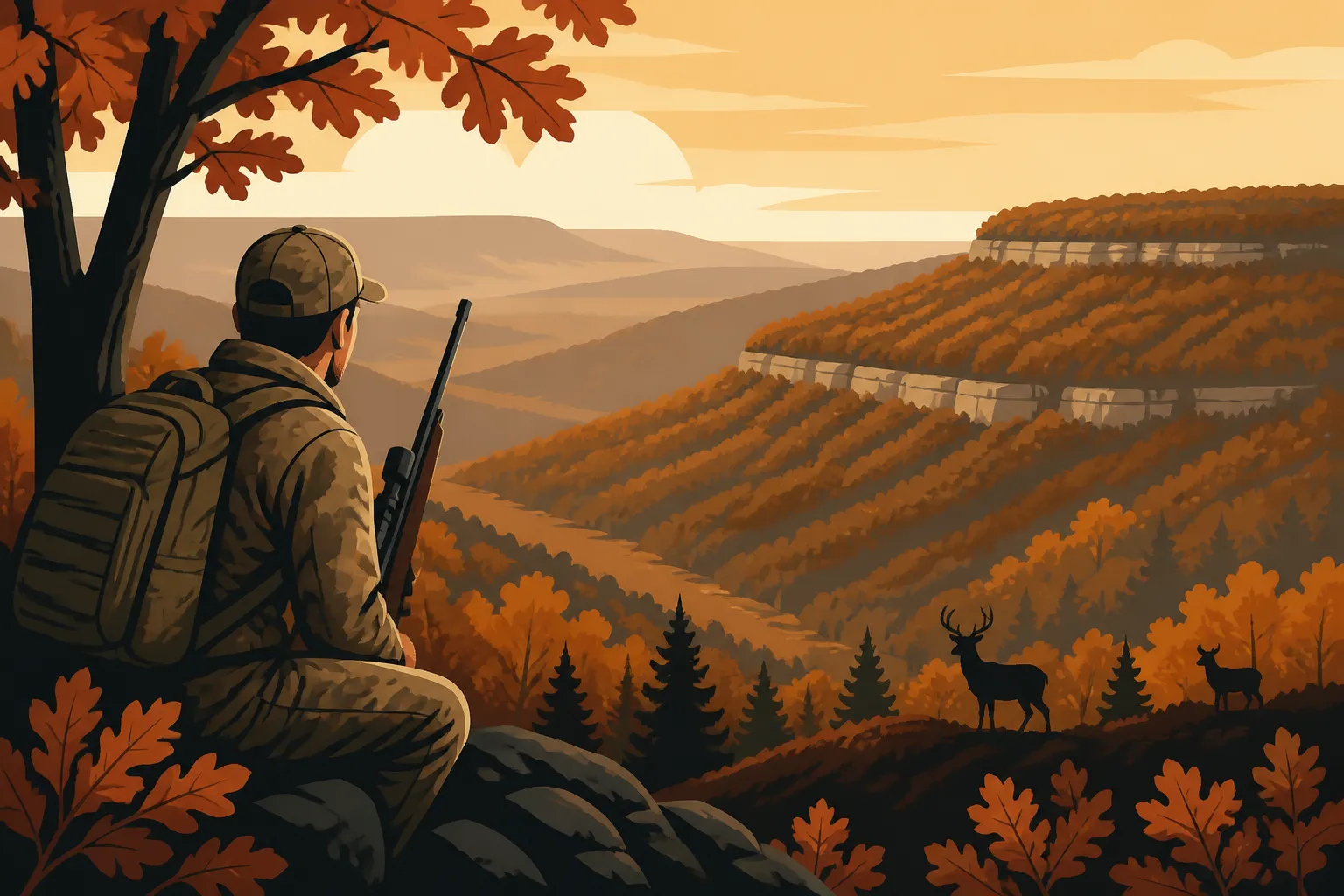
Hunting Oak Ridges and Benches
One of the most frustrating things for any deer hunter in Pennsylvania's vast timber is trying to figure out where the deer are. The woods can feel so huge, so empty, and often, we just default to the easiest access points or last year's spot. But if you spend enough time out there, especially in those big, sprawling public land tracts or even larger private parcels, you start to realize the immense drawing power of oak ridges and the subtle, often overlooked benches that crisscross them. This guide will walk you through the ins and outs of locating, understanding, and effectively hunting these prime whitetail magnets.
Understanding the Allure of Oak Ridges for Whitetails
There's a reason why the seasoned hunters talk about "finding the acorns" with such reverence; it's because acorns, the fruit of the mighty oak, are a superfood for deer. When the acorn crop is good, deer will abandon almost everything else to gorge on this high-fat, high-carbohydrate energy source. Oak ridges, by their very nature, are often prime locations for these crucial food sources, making them natural magnets for deer from late summer right through the fall and even into early winter.
Why Acorns are a Deer Magnet
Deer are opportunists, and when a bounty of acorns hits the forest floor, it's like an all-you-can-eat buffet for them. Acorns are incredibly nutritious, packed with fat and protein, which is exactly what deer need to pack on weight before the rut and to survive the lean winter months. Unlike browse or many forbs, acorns offer a concentrated energy source that's easily digestible. This isn't just a casual snack; for a significant portion of the hunting season, acorns can dictate deer movement more than anything else. When the acorns are falling, deer will often spend entire days feeding on a productive ridge, only moving off to bed nearby or to water.
Differentiating Oak Species and Their Acorns
Not all oaks are created equal, at least not in the eyes (or stomachs) of a deer. Pennsylvania is home to several oak species, broadly categorized into red oaks and white oaks. White oak acorns generally drop earlier in the season, typically in late September and October, and are preferred by deer due to their lower tannin content, which makes them less bitter. Deer will hit these hard as soon as they start falling. Red oak acorns, on the other hand, drop later, usually from late October through November and even into winter. They have a higher tannin content, making them more bitter, but they also have a higher fat content and tend to persist longer on the ground, especially under snow. Understanding this difference can give you a significant advantage. If you find white oaks dropping, that's your early-season hotspot. If those dry up or get eaten, shift your focus to red oaks as the season progresses. Knowing what to look for, and when, is key.
Pinpointing Productive Benches on Oak Ridges
Once you understand the power of oak trees, the next step is to actually find where deer will congregate on these ridges. This is where "benches" come into play. A bench is essentially a relatively flat, often subtle, shelf or terrace that runs horizontally along a hillside or ridge. They're not always obvious, but to a deer, they're superhighways and safe havens. They offer easier travel, prime feeding areas, and often overlooked bedding spots.
What Exactly is a "Bench" in Hunting Terms?
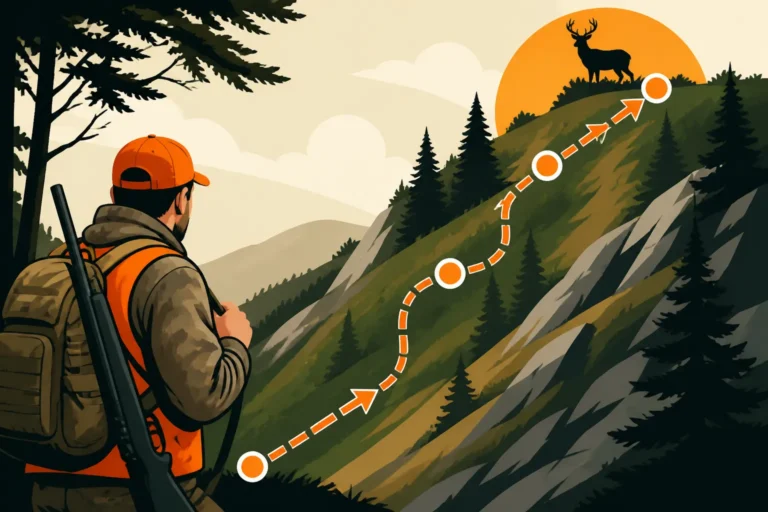
Think of a bench as a natural contour line that flattens out for a stretch before the terrain steepens again. Imagine walking up a steep hillside; it's a grind. Now imagine finding a relatively flat path running across that hillside—that's a bench. Deer use these extensively because they require less energy to travel along a contour than directly up or down the slope. These benches can be narrow, barely perceptible ledges, or wide, expansive flats. They often occur where changes in soil type or rock formations create a natural break in the slope. These micro-terrain features might seem insignificant to us, but for a deer, they're essential navigation and living spaces within steep terrain. You might find several benches at different elevations on the same ridge.
Using Topographic Maps and Aerial Imagery to Identify Benches
This is where your scouting begins long before you set foot in the woods. Topographic maps, whether paper or digital, are your best friend here. Look for contour lines that spread out and become less dense, indicating a flatter area on a hillside. On a steep slope, contour lines are close together; where they widen, you're likely looking at a bench. Don't just look for massive, obvious benches; even a slight widening of the contour lines can indicate a deer-favored path.
Pairing topo maps with high-resolution aerial imagery is even better. Tools like GoHunt can overlay topo lines on satellite photos, allowing you to see the terrain and the vegetation. Look for changes in tree cover, subtle clearings, or even slight color variations in the foliage that might indicate a mix of oak species. A bench lined with mature oak trees is gold. Pay close attention to points where benches converge, intersect with drainage features, or run around a prominent ridge point. These are often funnel points for deer. This combination of mapping allows you to identify potential travel corridors, feeding zones, and even where big woods bucks bed before you ever step foot on the ground.
Deer Movement Patterns on Oak Benches
Once you've identified potential benches, it's crucial to understand how deer actually use them. They're not just random trails; these benches serve specific purposes in a deer's daily life, from feeding to traveling to bedding. Recognizing these patterns is what turns a "potential" spot into a "productive" spot.
Travel Corridors and Natural Funnels
Deer are creatures of efficiency, and benches provide the path of least resistance across steep terrain. Imagine a deer moving from a lower bedding area to a higher feeding area, or vice-versa. Rather than constantly battling the incline, they'll often "bench hop," moving along a relatively flat bench for a distance before dropping down or climbing up to another. These benches become natural travel corridors connecting different parts of a deer's home range.
Look for benches that wrap around ridge points, especially those that jut out into a valley. These points often act as natural funnels, concentrating deer movement as they navigate the terrain. Also, pay attention to where a bench might narrow or where the terrain creates a pinch point; these are excellent ambush locations. Deer, especially mature bucks, often prefer to travel just below the crest of a ridge or along a bench that offers a slight elevation advantage, allowing them to survey below while staying somewhat hidden from above.
Feeding, Bedding, and Staging Areas
Oak benches aren't just for travel; they're also prime real estate for feeding and bedding. During the acorn drop, deer will spend hours on a productive bench, diligently cleaning up every fallen acorn. If you find fresh droppings, chewed acorn caps, and disturbed leaves, you know you're in a feeding hotspot. These areas are often used repeatedly, so finding fresh sign is a strong indicator of current deer activity.
Benches can also serve as fantastic bedding areas, especially if they offer thick cover. A buck might bed on a bench with a slight rise behind him, allowing him to watch his back trail, and a clear view downwind into the valley below. These elevated beds give them a tactical advantage, enabling them to detect danger from multiple directions. Similarly, benches can be staging areas where deer gather before moving into larger fields or open timber to feed after dark, or where they linger after feeding before heading to their daytime beds. Understanding these multifaceted uses is key to effective hunting. You might find a bench that serves as a bedding area in the morning, a travel corridor mid-day, and a feeding zone in the evening.
Scouting Strategies for Pennsylvania's Oak Benches
Effective hunting starts long before the season opener. Scouting, especially for oak benches, needs to be strategic and thorough. You're not just looking for deer; you're looking for signs that indicate how deer are using these critical landscape features.
Pre-Season Reconnaissance: Summer and Early Fall
Summer is an ideal time for initial reconnaissance. The leaves are on, providing cover, but it also means deer are less pressured. Use your mapping tools to identify promising oak ridges and benches. During summer walks, focus on locating specific oak trees, especially white oaks, and assessing the potential acorn crop. Are the branches heavy with acorns? Are there any signs of early drops? Look for well-worn trails that follow the contours of the benches. You might not see many deer, but you'll find rubs from previous seasons, old scrapes, and distinct travel paths.
As early fall arrives and acorns begin to drop, this is your prime time for specific ground scouting. Visit the benches you've identified. Look for fresh droppings, freshly shelled acorn caps, and tracks. Pay attention to the size of the tracks and the frequency of droppings to gauge the number and size of deer using the area. Check for early rubs on smaller trees, indicating bucks are starting to get active. The key is to find benches with not just oaks, but actively dropping and being fed upon oaks. This often means returning to the same spots several times as the season progresses. This is also when you can start planning your approach and entry routes on steep ground, thinking about wind direction.
Interpreting Sign: Rubs, Scrapes, and Droppings
Deer sign tells a story, and on oak benches, that story often revolves around food and travel.
- Droppings: Fresh, dark, and moist droppings indicate recent activity. The volume of droppings can give you an idea of how many deer are using the area. If you find piles of fresh droppings littered with acorn pieces, you've hit a feeding jackpot.
- Acorn Caps: While finding whole acorns is good, finding piles of chewed-up acorn caps is even better. It proves deer are actively feeding there. Check under different oak species to determine which ones are preferred or currently dropping.
- Tracks: Look for distinct deer tracks along the benches. Wider, deeper tracks might indicate a heavier, mature deer. Pay attention to the direction of travel and if multiple tracks converge at a particular point.
- Rubs: Rubs, where bucks scrape their antlers on trees, are territorial markers and signposts. On benches, look for rubs along major travel corridors or leading to and from bedding areas. Multiple rubs, especially fresh ones, can indicate a buck regularly uses that bench.
- Scrapes: While scrapes are more common in lower areas or near field edges, bucks will create them on benches, particularly during the pre-rut and rut. Look for an exposed patch of bare earth, typically under a licking branch, that deer have pawed out. A fresh scrape is a definite indicator of buck presence.
Combining these signs helps you build a picture of deer activity. If you find heavy feeding sign mixed with fresh rubs and tracks, you're likely on a hot trail. Finding sign in mature timber can be challenging, but on a bench, these indicators are often more concentrated.
Effective Hunting Tactics for Oak Ridges and Benches
Now that you've identified and scouted your productive oak benches, it's time to put a plan into action. Hunting these areas successfully often comes down to precise stand placement, understanding wind and thermals, and knowing when to still-hunt versus sit.
Stand Placement and Wind Considerations
Choosing the right stand location on an oak bench is critical. You're not just hanging a stand; you're setting an ambush. Look for natural pinch points, convergences of trails, or areas where the bench narrows. A stand placed overlooking a heavily used section of the bench, particularly where fresh feeding sign is present, can be incredibly effective. Consider setting up just off the primary bench trail, perhaps 15-25 yards into the timber, to remain concealed.
The most crucial factor, especially on ridges, is wind and thermals. In the mornings, cold air sinks, creating a downward thermal draft. As the sun warms the slope, the air begins to rise, creating an upward thermal. This means your wind direction will often shift throughout the day. For a morning hunt, you'll generally want to approach from above the bench and set up so your scent is carried down into the valley. In the afternoon, as thermals rise, you might need to approach from below and set up where your scent rises away from the deer's likely travel path. Always have an exit strategy that minimizes disturbance. Learning about wind and thermals on a ridge is not just important, it's non-negotiable for success.
A common strategy is to hang a stand on an oak bench that allows you to cover a feeding area, a travel corridor, and potentially a bedding area. An ideal setup might be on a tree at the edge of the bench, allowing you to see deer approaching from both directions along the bench, as well as those moving up or down the hill. If you're on public land, remember the rules about treestand setups in Pennsylvania hardwoods and make sure you're compliant.
Still-Hunting the Ridge for Acorn-Feeding Deer
While stand hunting is effective, sometimes the best way to hunt oak benches, especially if deer aren't moving predictably or if you're exploring new territory, is to still-hunt. Still-hunting is an art form, especially on terrain that can be crunchy with fallen leaves. The idea is to move slowly, deliberately, taking a few steps, then stopping for extended periods (5-10 minutes) to observe, listen, and scan.
Move along the benches, especially during midday, when deer might be bedded nearby or still lingering after a morning feed. Focus on areas with good cover and active acorn drops. The goal is to spot deer before they spot you. Use your binoculars to pick apart the cover, looking for horizontal lines (a deer's back) in a vertical world (trees). Pay attention to any flick of an ear, a patch of deer hair, or a subtle movement. When still-hunting, always consider the wind, trying to move into or across it. This tactic can be particularly productive during the peak of the acorn drop when deer are more focused on feeding and less vigilant. Mastering still-hunting Pennsylvania big woods can unlock incredible opportunities.
| Oak Species Group | Acorn Drop Time (Approx.) | Deer Preference | Acorn Characteristics | Best Hunting Period |
|---|---|---|---|---|
| White Oaks | Late Sept – Mid-Oct | High | Lower tannin, sweeter, softer meat, germinates quickly | Early Archery, Early Firearms |
| Red Oaks | Late Oct – Nov (into Dec) | Moderate | Higher tannin, more bitter, harder shell, persists longer | Late Archery, Firearms, Flintlock |
| Chestnut Oaks | Mid-Sept – Mid-Oct | High | Large, sweet, good oil content, favored where present | Early Archery, Early Firearms |
| Pin Oaks | Oct – Nov | Moderate | Small, bitter, abundant crop, good for late season where present | Late Archery, Firearms |
Adapting to Pressure and Changing Conditions
Hunting oak ridges and benches isn't a set-it-and-forget-it strategy. Deer are constantly adapting to pressure, and nature itself provides its own challenges. Being flexible and knowing how to adjust is what separates a consistently successful hunter from one who only finds deer by luck.
Dealing with Hunter Pressure on Public Lands
Pennsylvania's public lands, especially State Game Lands, can see a lot of hunting pressure. When a popular oak ridge starts getting pounded, deer will often become nocturnal or shift to less accessible areas. If your primary oak bench suddenly goes cold, it's time to adapt.
First, consider the time of day. Heavily pressured deer might only visit prime feeding areas under the cover of darkness. In this scenario, focus on hunting the fringes of these areas or setting up on benches that serve as travel corridors to and from the feeding area, catching deer as they transition at dawn or dusk. Second, look for benches that are harder to reach. Bucks, especially mature ones, will often seek refuge on benches on the steepest, nastiest parts of a ridge, or deep within thick cover that most hunters avoid. Don't be afraid to put in the extra effort to get away from the crowds. Even just an extra half-mile walk can put you into unpressured territory. Tools like GoHunt can help you identify remote access points and property lines, guiding you to those untouched corners.
When the Acorn Crop Fails or is Eaten Out
Mother Nature doesn't always cooperate. Some years, the acorn crop can be sparse due to late frosts, heavy rain, or insect damage. Even in a good year, a hot oak bench can be completely cleaned out by deer and other wildlife within a few weeks. When hunting after the acorn crop fails, or if the acorns are simply gone, deer will shift their focus to other food sources.
This is when you need to switch gears. If the acorns are gone, deer will likely move to browse (like greenbriar, honeysuckle, or maple saplings), persistent soft mast (like wild grapes or apples), or agricultural fields if you're near farm country. It's crucial to have a backup plan. Scouting for these alternative food sources becomes paramount. Still-hunting and covering ground to find fresh sign becomes even more important. Don't abandon the oak ridge entirely, though; sometimes deer will still use the benches as travel corridors even if the food source has dried up. They're established routes, and old habits die hard.
Disclaimer
Hunting is an inherently dangerous activity. Always prioritize safety, understand and follow all Pennsylvania Game Commission regulations, and obtain proper licenses and permits before heading afield. The information provided here is for educational purposes only and should not replace professional guidance or personal experience. Be respectful of private land and other hunters.