Coyote Calling in Pennsylvania Winter
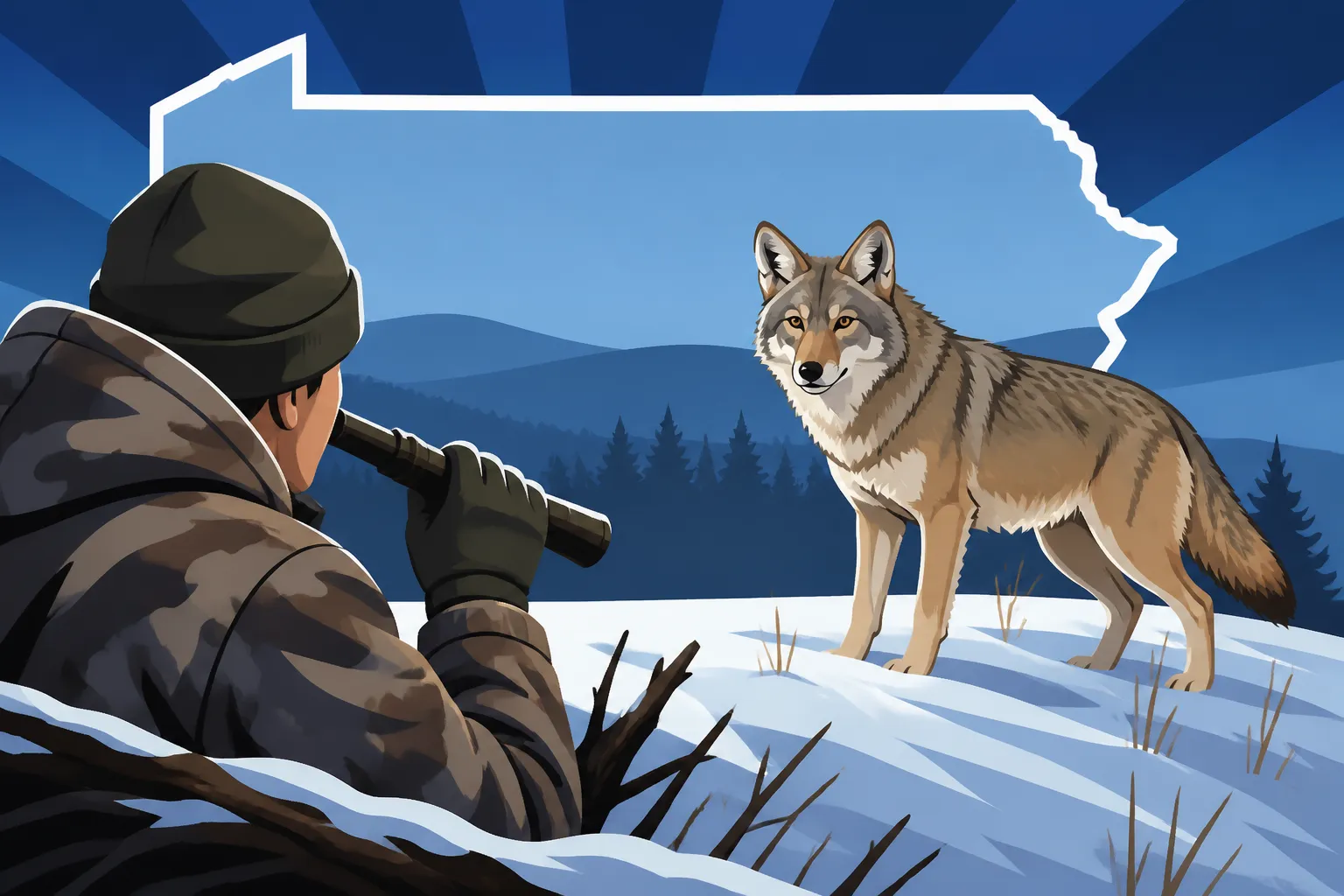
The Pennsylvania winter can feel long and cold, and for many hunters, once deer season wraps up, the deep chill means packing away gear until spring gobblers or bear season. But for those of us who love a challenge, winter is when the real fun begins: coyote calling. If you've ever felt the frustration of setting up in biting winds, only to have a wily coyote skirt your setup, or wondered how to entice these intelligent predators when the mercury plummets, you're in the right place. This guide is all about giving you the edge, diving deep into the tactics and considerations for calling coyotes in the demanding Pennsylvania winter landscape.
The Unique Challenges of Winter Coyote Hunting in Pennsylvania
Hunting coyotes in Pennsylvania during the winter months isn't for the faint of heart. It presents a whole new set of obstacles compared to milder seasons. The elements themselves are often your biggest adversary, but understanding how coyotes adapt to these harsh conditions is key to overcoming them.
Snow, Ice, and Bitter Cold's Impact on Coyotes
When the snow flies and the temperatures drop well below freezing, coyotes, like all wildlife, change their patterns. They become more focused on survival, primarily finding food and conserving energy. This often means they're less active during the day, seeking shelter in thick cover or sunning themselves when conditions allow. You'll find their travel routes might become more predictable, hugging south-facing slopes for warmth or sticking to well-used deer trails that are easier to navigate through deep snow. The crisp air can carry sound much further, which can be a blessing for your calls, but also a curse if you're not careful with your approach. The snow itself can reveal so much—tracks in fresh powder are like a daily newspaper of the woods, telling you where they've been, what they've been doing, and sometimes, even where they're headed.
But let's be honest, those extreme conditions also make our lives tougher. Trying to stay warm and still for an extended period in single-digit temperatures, especially when the wind is whipping through the hardwoods, is a battle. Your fingers get numb, your breath fogs your optics, and every creak of your stand or rustle of your clothes sounds amplified in the quiet, frozen landscape. This is why proper clothing and equipment aren't just about comfort; they're critical for your success and safety. You need to be able to focus on the hunt, not on shivering uncontrollably.
Understanding Winter Coyote Behavior
Coyotes are incredibly adaptable animals, and their behavior shifts significantly in winter. Food sources become scarcer, making them more opportunistic and often more aggressive when responding to distress calls. Small game like rabbits, voles, and mice are still their primary targets, but they'll also scavenge deer carcasses or even take down a fawn if one is available. The rut for coyotes typically runs from late January through March in Pennsylvania, which introduces a whole new dynamic. During this time, male coyotes are actively seeking mates, and both sexes become more vocal and responsive to howls, especially those mimicking rival coyotes or lonely females.
This seasonal shift means your calling strategy needs to change too. Early winter, before the rut, might see more success with high-pitched rabbit or rodent distress calls, as coyotes are hungry and focused on easy meals. As the rut approaches and throughout it, incorporating howls can be incredibly effective. You might draw in a territorial male looking for a fight, or a lonely female seeking a partner. Understanding these nuances—the constant search for food, the drive to reproduce, and the territorial instincts—allows you to tailor your calls to their current motivations, giving you a much better chance of enticing them into range. It's a game of psychology, really, playing on their primal instincts.
Dealing with Hunting Pressure and Educated Coyotes
Pennsylvania has a strong hunting tradition, and coyotes are fair game year-round. This means many of the coyotes you'll encounter, especially on public land like State Game Lands, have heard it all before. They've likely been called to, shot at, and are incredibly wary. They're masters of circling downwind, hanging up just out of range, or simply melting back into the timber without ever offering a shot. It's a frustrating reality for many hunters, and it can feel like you're always one step behind these intelligent creatures.
This pressure forces you to be even more strategic and patient. Your setup needs to be flawless, your concealment absolute, and your calling sequences varied and realistic. Using different calls, changing your rhythm, and not over-calling are crucial. Sometimes, silence is your best call. You might need to focus on areas that are harder to access, where hunting pressure is lighter, or where coyotes have more sanctuary. Checking out remote sections of State Forests or less-traveled corners of larger Game Lands, often accessible by hiking in, can yield better results. Remember, these coyotes didn't get smart by being careless; they learned from past encounters. We have to be smarter, more patient, and more adaptable than they are.
Essential Gear for Pennsylvania Winter Coyote Calling
Hunting coyotes in the dead of winter isn't like a warm fall morning in a deer stand. The gear you choose is paramount, not just for success, but for your safety and comfort. Skimping on the right equipment can turn an exciting hunt into a miserable ordeal.
The Right Calls and Calling Sequences
When it comes to calls, you've got options: hand calls, mouth calls, and electronic calls. Each has its place in the winter toolkit. Hand calls offer incredible versatility and realism if you can master them. Open-reed calls can produce a wide range of rabbit distress, fawn bleats, and even coyote howls with practice. Closed-reed calls are often easier for beginners to get consistent distress sounds. Many seasoned callers swear by a handful of reliable hand calls, often from brands like Foxpro or Primos, because they can instantly adapt to a coyote's response.
However, electronic callers have revolutionized coyote hunting. They allow you to project incredibly realistic sounds at high volume, and crucially, place the sound source away from your actual location, drawing the coyote's attention away from you. Brands like Foxpro dominate the market, offering a vast library of sounds from various distress cries to howls and barks. In Pennsylvania's winter, the ability to control volume and switch sounds quickly, especially when dealing with coyotes that might hang up at a distance, is invaluable. A common sequence might start with a few locator howls, then transition to a rabbit in distress, and if that doesn't work, perhaps a pup distress or a challenge howl during the rut. The key is to vary your sequence and volume, listen intently, and react to how the coyotes respond. Sometimes, a short, sharp burst of sound is enough; other times, a sustained, mournful cry is what it takes.
Optics for Spotting and Shooting
Visibility can be tricky in winter. Snow can blend with the landscape, creating camouflage for coyotes, and low light conditions are common. Good optics are non-negotiable. A quality pair of binoculars, perhaps 8×42 or 10×42, is essential for scanning vast fields or dense timber edges. You need to pick up subtle movements, a flick of an ear, or the slight outline of a coyote against a snowy backdrop long before it gets into shooting range. Having a steady hand or using a tripod mount for your binoculars can make a huge difference, especially during long waits in the cold.
For shooting, a reliable rifle scope with good light-gathering capabilities is critical. Many hunters prefer scopes with a lower magnification range, like 3-9x or 2-10x, for typical Pennsylvania timber shots, but with enough power to reach out across a wider cut or field. An illuminated reticle can be a game-changer in those dim, overcast winter days or as dusk approaches, providing a clear aiming point against a dark background. And let's not forget the rangefinder. While many shots might be close, knowing the exact distance to a fence line, tree, or rock can mean the difference between a clean kill and a miss, especially when a coyote stops just out of what you thought was "chip shot" range. The more precision you can bring to your setup, the better your chances against a ghost-like predator that barely gives you a second to react.
Staying Warm and Concealed in the Snow
Winter hunts demand meticulous attention to your clothing and concealment. Layering is your best friend. Start with a good wicking base layer to pull moisture away from your skin, followed by insulating mid-layers like fleece or wool. For your outer shell, think warmth, wind protection, and water resistance, especially if you're dealing with snow, sleet, or freezing rain. Insulated boots are crucial; your feet will get cold fast sitting still. Brands like Irish Setter or Schnee's offer excellent options for keeping your feet toasty, even during those extended sits. Remember to check out tips on Layering for a Pennsylvania Deer Stand as many principles apply directly to coyote hunting.
Concealment in snow requires specific patterns. While a general breakup pattern might work in a mixed environment, true snow camouflage, often white with muted grays or browns, can make you virtually disappear against a snowy backdrop. A white outer garment, or even a simple white sheet draped over yourself and your gear, can be incredibly effective. Don't forget your face and hands; a white balaclava and gloves will complete the disguise. Even though you might feel like an abominable snowman, this level of concealment helps break up your silhouette and allows you to move subtly if needed, without alerting sharp-eyed coyotes. Remember, they're looking for movement and anything that breaks the natural patterns of the woods.
Scouting and Location Selection in Winter
You can have the best calls and the most expensive gear, but if you're not in the right place, it's all for naught. Winter scouting in Pennsylvania is a game-changer for coyote success, revealing their hidden highways and feeding grounds.
Reading the Snow for Coyote Sign
The beauty of a fresh snowfall is that it acts like a giant, blank canvas, recording every step and every action of the wildlife moving across it. For coyote hunters, this is an invaluable scouting tool. Fresh tracks are gold. Look for the characteristic trot—coyotes are efficient travelers, often walking in a straight line, putting their hind feet in the prints of their front feet. The size and depth of the tracks can give you an idea of the coyote's size, and how recent the snow fell can tell you how fresh the track is. A general rule: if the edges of the track are sharp and distinct, it's very fresh. If they're rounded or filled with a dusting of new snow, they're older.
Beyond tracks, look for other signs. Scat, often containing hair or bone fragments, indicates their diet and recent activity. Urination posts, especially during the rut, can tell you where a coyote is marking its territory. You might even find kill sites—a deer carcass being picked apart by coyotes, or the scattered remains of a rabbit or pheasant. These are all clues that point to active coyote presence. Following these clues can lead you to bedding areas, travel corridors, or prime hunting grounds. This detailed analysis of what's written in the snow is far more effective than just blindly heading into the woods.
Identifying Key Winter Travel Corridors
In winter, coyotes, much like deer, become creatures of efficiency. They'll use the path of least resistance, especially when navigating deep snow. This means concentrating on natural funnels and features that make travel easier. Ridge lines, especially those with southern exposures that catch more sun, can be major travel routes. Creek bottoms and old logging roads, even if covered in snow, can offer easier walking than busting through drifts. Field edges, especially those bordering thick cover, are also prime spots, as coyotes will often patrol these areas looking for rodents or other small game emerging from the field.
When you're out scouting, pay close attention to where multiple tracks converge. These convergence points are natural ambush spots. Consider how the topography forces coyotes into certain areas. A narrow strip of timber connecting two larger woodlots, a saddle between two hills, or a distinct point jutting into a field are all places where a coyote is likely to pass. Using online mapping tools, like those offered by GoHunt or the Pennsylvania Mapping Center, can help you identify these features from your couch, then confirm them on the ground. Understanding these travel corridors allows you to set up where a coyote is most likely to appear, rather than hoping they stumble across your setup. Think about it like this: coyotes have their own highways, and your job is to find the on-ramps and off-ramps.
Setting Up for Success in Diverse PA Landscapes
Pennsylvania's landscape is incredibly diverse, from the big woods of the northern tier to the rolling farmlands of the south. Your setup strategy needs to adapt to these different environments. In the dense timber of the big woods, visibility is limited, so you'll want to set up in clearings, along logging roads, or on benches where you can see for a reasonable distance. Coyotes might come in closer here, but they can also sneak in undetected. Utilizing a ground blind can be particularly effective in these situations, offering excellent concealment and breaking up your outline against the dense background. For more insights, check out Using a Ground Blind on Pennsylvania Game Lands.
In farm country, where fields meet woodlots, your approach will be different. Coyotes often travel these edges, and you might have longer shot opportunities. Setting up with the wind in your favor, nestled into a hedgerow, a stand of evergreens, or even a small clump of brush at a field corner, can be very effective. You might need to place your electronic caller further out into the field to draw the coyote's attention away from your immediate position. No matter the landscape, always consider the wind. Coyotes will almost always circle downwind to scent-check your position before committing. Your setup should anticipate this, allowing you a shot before they get directly downwind of you. This means placing yourself so that their downwind approach brings them into your shooting lane.
Mastering Calling Tactics for Cold Weather Success
Calling coyotes in winter demands a thoughtful approach. The cold, the snow, and the often-pressured nature of Pennsylvania coyotes mean you can't just randomly blow on a call and expect success. You need strategy and nuance.
The Art of Distress Calls and Howling
Distress calls are your bread and butter for coyote calling. Mimicking a rabbit, a rodent, or even a bird in distress appeals directly to a coyote's hunger instinct. In winter, when natural food sources are harder to come by, these calls can be incredibly effective. Start with a series of short, sharp cries, then transition to longer, more sustained wails, mimicking a struggling animal. Pause frequently, listening intently for a response. The key is to sound realistic and panicked. Vary the volume, starting softer and increasing if you don't get a response. Different calls can appeal to different coyotes—sometimes a cottontail distress works, other times a jackrabbit or even a mouse squeak. Experiment to see what brings them in.
As mentioned earlier, howls come into their own during the coyote rut (late January through March). A lonesome female howl can draw in a curious male, while a challenging male howl or a group "pack howl" can provoke a territorial response. A common tactic is to start with a few lonesome howls, then switch to distress calls after about 5-10 minutes. If no response, you might try a challenge howl. Remember, coyotes are social animals, and they use howls to communicate over long distances. Playing on these social instincts can be a powerful tool. The more realistic and varied your howls, the better your chances of convincing a coyote that there's a real animal in its territory.
Electronic Callers vs. Hand Calls in Winter
Both electronic callers and hand calls have their distinct advantages in winter. Electronic callers, as previously noted, offer unparalleled realism, volume, and the ability to project sound away from your location. This is especially useful for wary coyotes that try to circle downwind. You can place the speaker 50-100 yards upwind of your position, drawing the coyote's attention there while you remain hidden. The wide array of sounds, often including unique "coyote vocalizations" that are hard to replicate with hand calls, makes them extremely versatile. GoHunt often features articles and discussions about the latest electronic calling technology, which can be super helpful for staying informed.
However, never underestimate the power and versatility of hand calls. They require no batteries (a huge plus in bitter cold where batteries drain quickly), and a skilled caller can create incredibly nuanced sounds, adapting instantly to a coyote's reaction. Sometimes, an electronic call can sound a bit too "perfect" or repetitive to an educated coyote. A well-executed series of hand calls can sound more natural and spontaneous. Many successful winter callers use a hybrid approach: they'll start with an electronic caller to grab attention from a distance, then switch to a hand call for the final, enticing sounds when the coyote is closer. This blend of power and precision often yields the best results.
Adapting Calling to Wind and Terrain
Wind and terrain are two of the most critical factors in winter coyote calling, and they dictate how you call and where you set up. High winds can carry your scent further and make it difficult for coyotes to pinpoint the direction of your call. On very windy days, you might need to increase the volume of your call and choose setups in more sheltered areas, like thick draws or valleys, where the sound can travel better. However, calm days have their own challenges; sound doesn't travel as far, and coyotes are more likely to hear your approach.
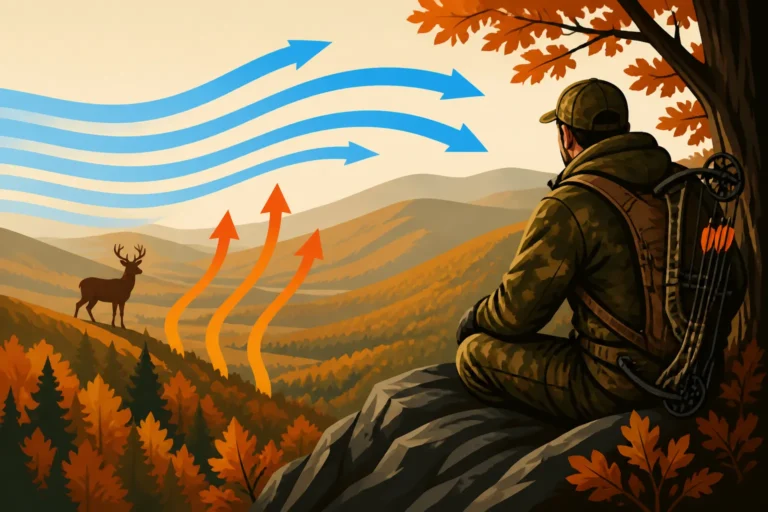
Terrain plays a huge role in sound propagation. In open fields, your calls will carry a long way, but coyotes also have a wide field of view. In thick timber, sound is absorbed, and your effective calling range is reduced. When setting up, consider how the sound will travel. Will it carry over a ridge or be blocked by a dense stand of pines? Always try to set up so the wind is in your favor, blowing your scent away from where you expect the coyote to approach. If a coyote circles downwind, ensure that its downwind approach leads it into an open shooting lane, rather than behind a dense thicket where it can get your scent and disappear. This chess match against the wind and topography is often the difference between seeing a coyote and just wondering where it went. For more insights on how these factors affect deer movement and, by extension, coyotes, consider reading Wind and Thermals on a Ridge.
Practical Considerations and Safety Tips
Winter coyote hunting, while exhilarating, also comes with inherent risks due to the extreme conditions. Being prepared and understanding the rules is just as important as your calling technique.
Legal Aspects and Night Hunting Rules
Before you even step foot in the woods, make sure you're up to date on Pennsylvania's specific regulations for coyote hunting. Generally, coyotes can be hunted year-round, day or night, with a valid hunting license. However, specific rules apply to night hunting. You are permitted to use artificial lights (spotlights, headlamps) and night vision or thermal optics while hunting coyotes at night. This is a significant advantage, especially during the long winter nights when coyotes are often most active.
It's crucial to be aware of safety zones around occupied buildings and to always know your target and what's beyond it, especially at night. While night hunting is legal for coyotes, some specific areas, like certain State Game Lands or private properties, might have their own restrictions. Always double-check local ordinances and the Pennsylvania Game Commission's digest. For a deeper dive into the specifics, check out Night Hunting Rules for Pennsylvania Coyotes. Understanding these rules is not just about avoiding fines; it's about being a responsible and ethical hunter.
Carcass Handling and Reporting
While coyotes aren't a regulated game animal in the same way deer or bear are, proper carcass handling is still important, especially if you plan to keep the hide or participate in predator hunting contests. If you're interested in trapping or predator control, knowing how to handle furbearers is key. For those interested in the fur, it's essential to skin the coyote as soon as possible, especially in warmer winter conditions, to preserve the quality of the pelt. If you're not keeping the hide, dispose of the carcass respectfully and ethically, away from public view and water sources.
There are no mandatory reporting requirements for coyotes in Pennsylvania, unlike deer or bear harvests. However, participating in local predator hunting contests often requires you to present the carcass for verification. These contests, such as the widely known Pennsylvania Coyote Challenge or those hosted by local sportsman's clubs, can be a fun way to engage with the hunting community and test your skills. For more information on these events, check out Predator Hunting Contests in Pennsylvania. While not mandatory, sometimes local wildlife agencies appreciate information on coyote harvests, especially if you suspect disease or unusual behavior.
Staying Safe and Prepared in Extreme Cold
The dangers of hypothermia and frostbite are very real when hunting in a Pennsylvania winter. Always tell someone where you're going and when you expect to return. Carry a fully charged cell phone (though don't rely on it for navigation in remote areas as service can be spotty), a map, and a compass or a reliable GPS unit like those on a GoHunt app. A small survival kit containing a fire starter, emergency blanket, extra food, and water is a smart addition to your pack.
Hydration is often overlooked in cold weather, but it's crucial. Drink plenty of water or warm liquids to stay hydrated. Pack high-energy snacks like nuts, trail mix, or energy bars to keep your caloric intake up. Hand warmers and foot warmers can provide critical relief during long, stationary sits. Dress in layers, as discussed earlier, and be vigilant about changing out wet clothing immediately. If you start to shiver uncontrollably, feel disoriented, or experience numbness and pain in your extremities, it's time to pack it in and get warm. No coyote is worth risking your life over. Your safety, and the safety of those you might be hunting with, should always be your top priority.
Winter Coyote Calling Gear Comparison
| Feature | Hand Calls | Electronic Calls (e-calls) |
|---|---|---|
| Realism / Variety | Highly realistic with skill; limited sound types | Extremely realistic; vast library of sounds |
| Learning Curve | Moderate to High (requires practice) | Low (push button); high for advanced sequences |
| Volume Control | Manual (by breath); good for subtle shifts | Excellent (remote control); high volume capabilities |
| Battery Dependency | None | High (drain faster in cold); need spares |
| Placement | Must be near hunter | Can be placed away from hunter (draws attention) |
| Cost | Low to Moderate per call | Moderate to High (initial investment) |
| Adaptability | Instantaneous changes based on coyote reaction | Quick changes via remote; pre-programmed sequences |
| Weather Impact | Can freeze up; hands get cold | Batteries drain; potential speaker issues in extreme cold |
| Best Use Case | Close-in calling, follow-up calls, subtle sounds | Long-range attraction, multiple sound types, wary coyotes |
Disclaimer
Hunting is an inherently dangerous activity. This article is intended for informational purposes only and does not substitute for proper training, adherence to all local and state regulations, or personal responsibility. Always prioritize safety, respect wildlife, and obtain the necessary licenses and permits before hunting. Always check the latest Pennsylvania Game Commission regulations before heading afield, as rules can change.