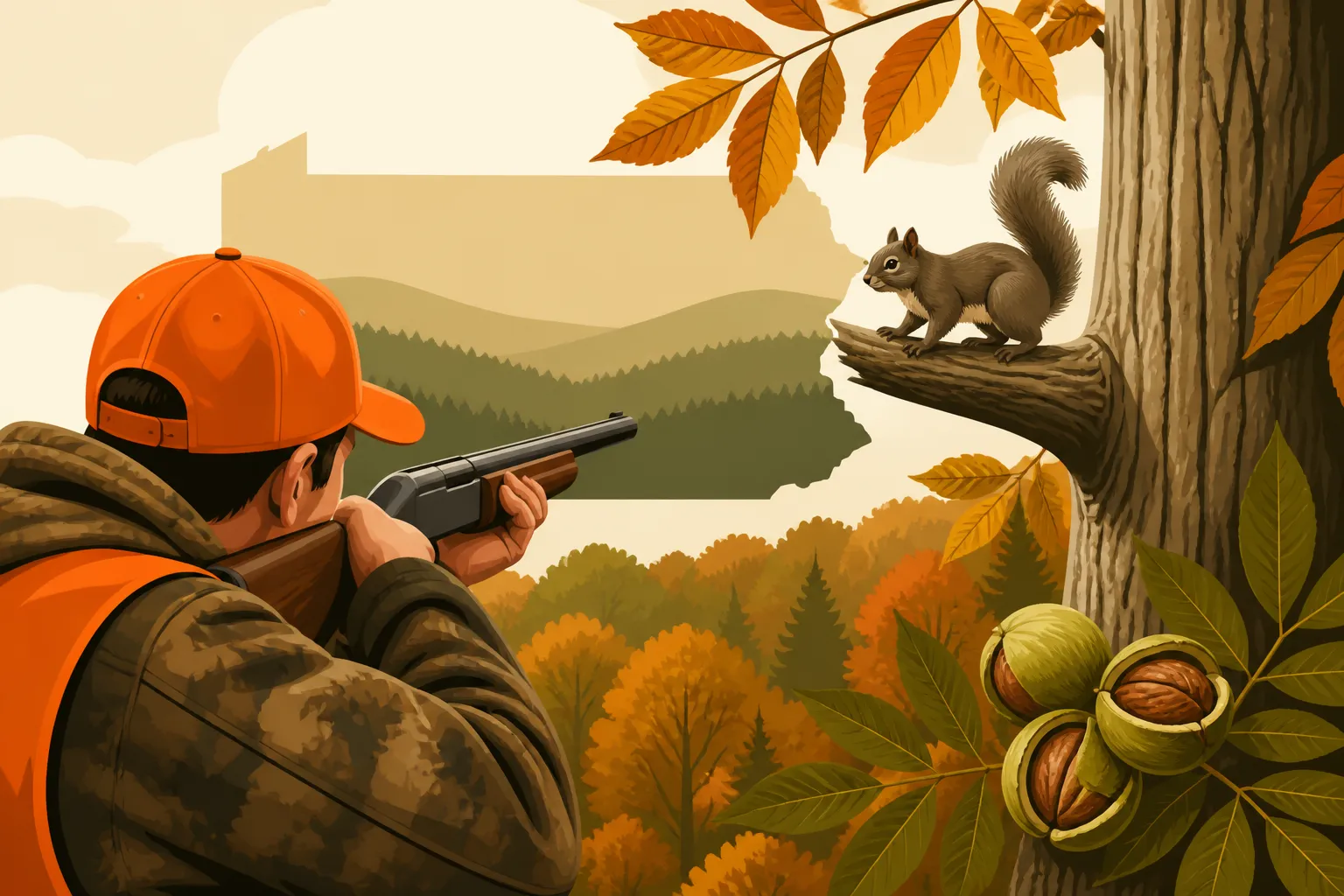
Squirrel Hunting in Hickory Timber
There’s a unique satisfaction that comes with squirrel hunting, a pursuit that demands sharp eyes, patience, and a deep understanding of the woods. But let's be honest, sometimes you walk for hours, seeing nothing but empty branches, and the frustration can build. If you're tired of aimlessly wandering Pennsylvania's forests hoping to stumble upon a bushy-tailed bandit, this guide is for you. We're going to dive deep into one of the most productive and often overlooked squirrel hotspots: hickory timber. We'll cover everything from scouting to tactics, ensuring your next trip isn't just a walk in the woods, but a successful hunt.
The Irresistible Pull of Hickory Timber for Pennsylvania Squirrels
For a squirrel in Pennsylvania, a stand of hickory trees isn't just a place to live; it's a buffet, a pantry, and a safe haven all rolled into one. While acorns get a lot of press, hickory nuts are often the unsung heroes of a squirrel's diet, offering a powerful combination of nutrition and long-lasting energy.
Understanding Hickory Nut Production Cycles
Pennsylvania is home to several species of hickory, including the widespread shagbark, pignut, and mockernut. Each has its own rhythm when it comes to producing those coveted nuts, and understanding these cycles is key to consistent success. Unlike some tree species that might produce a decent crop year after year, hickory trees, like many hard mast producers, often operate on a "boom and bust" cycle. One year, a specific stand might be absolutely loaded with nuts, making it a squirrel paradise. The next year, those same trees might offer very little, forcing squirrels to seek food elsewhere.
This variability means that while a patch of hickory timber is always worth investigating, its productivity can fluctuate wildly. Shagbark hickory, identifiable by its peeling bark, is particularly prized by squirrels for its relatively thin shell and large, sweet kernel. Pignut and mockernut hickories also contribute to the bounty, though their nuts can be tougher to crack. Knowing your trees, and keeping an eye on the developing nuts in late summer, can give you a crucial edge. If the husks are abundant and swelling on the branches in August, you know you've found a potential honey hole for the upcoming season. Conversely, if you're not seeing much development, it might be time to broaden your search or target areas with different mast producers.
Why Squirrels Prioritize Hickory Above Other Mast
So, what makes hickory nuts such a squirrel magnet, even when oak acorns are plentiful? It boils down to nutritional value and strategic resource management. Hickory nuts are often higher in fat and protein compared to acorns, providing a more energy-dense food source. For an animal that needs to constantly replenish its energy reserves and prepare for the lean winter months, this caloric punch is invaluable. Imagine going to a grocery store, and one aisle has a delicious, high-energy meal that’s easy to store, while another has something less nutritious. Which would you choose? Squirrels are no different.
Furthermore, the hard shells of hickory nuts, while a challenge for some creatures, are perfectly suited for a squirrel's strong jaws and sharp incisors. This natural armor often means that hickory nuts are less susceptible to predation by deer, turkeys, or bears, at least in their initial fallen state, giving squirrels a more exclusive food source. They'll gorge themselves, burying nuts for later, creating vast underground caches. This diligent caching behavior means that even after the initial rush of falling nuts, the ground beneath active hickory trees remains a goldmine of stored food, attracting squirrels throughout the fall and into the early winter, often long after easier-to-access acorns have been consumed or rotted away.
Mastering the Art of Scouting Hickory Stands
You can't just wander into any old patch of woods and expect to find squirrels. Effective squirrel hunting, especially in hickory timber, starts long before you ever shoulder your firearm. It begins with deliberate scouting, understanding the lay of the land, and interpreting the subtle clues left behind by your quarry.
Locating Promising Hickory Stands on Public and Private Land
The first step to finding squirrels in hickory is, well, finding hickory. This isn't always as straightforward as it sounds, especially when you're exploring new public land. Start with a good mapping tool. Digital platforms like GoHunt are invaluable for this, allowing you to use satellite imagery and topographic maps to identify potential areas. Look for patches of mixed hardwoods on ridge tops, along creek bottoms, or on benches – these are prime locations where hickory often thrives.
When reviewing aerial photos, try to discern the different tree canopies. Hickory leaves often have a distinct texture or shade, especially in the fall as they begin to turn yellow. Look for areas with older growth, as mature hickory trees are generally the best producers. Cross-reference this with topographic lines; squirrels, like deer, appreciate areas with varied terrain that offer both food and escape routes. Creek bottoms provide water, while ridges offer commanding views and cooler air. Don't be afraid to zoom in and look for individual tree shapes if the resolution allows. If you’re scouting on public ground, understanding the nuances of Scouting With the Pennsylvania Mapping Center can give you a significant advantage in pinpointing these high-probability areas before you ever step foot in the woods. Once you have a few promising spots marked, it’s time for boots-on-the-ground investigation.
Reading the Ground: Signposts of Squirrel Activity
Once you’re in the woods, the ground itself will tell you a story if you know how to read it. Squirrels leave behind undeniable evidence of their presence and feeding habits. The most obvious sign is fresh cuttings. These are the tell-tale fragments of hickory nut shells, often piled up in small mounds, where squirrels have sat and eaten. Look for these "middens" at the base of trees, on fallen logs, or on rocks. The fresher the cuttings, the more recently a squirrel has been dining there. Old, weathered shells mean past activity, but not necessarily current.
Beyond cuttings, look for other signs. Scat, though small, can indicate heavy use of an area. You might also find bits of green husks that squirrels have stripped from nuts still on the tree, or even entire green nuts that have been dropped prematurely. Another often-overlooked sign is bark damage. Squirrels will climb trees constantly, and on certain species, you might see claw marks, especially on trees with softer bark. For shagbark hickory, while the bark is already peeling, fresh activity can still leave subtle rubs or smoothed patches. Pay attention to how squirrels are accessing the nuts – are they climbing the tree, or are they feeding on fallen nuts? This will inform your hunting strategy. This meticulous approach to deciphering ground sign is a critical skill, much like Reading Cuttings Under an Oak, but tailored to the unique characteristics of hickory.
Seasonal Considerations for Scouting
Squirrel activity and the availability of hickory nuts change throughout the hunting season, requiring you to adapt your scouting efforts.
- Pre-Season (Late Summer/Early Fall): This is when you want to identify the "hot" trees. Look for trees with heavy nut crops. The nuts will still be green on the branches, but you can see their abundance. This early scouting helps you prioritize areas. If you're seeing squirrels nipping at green nuts, that's a good sign the trees are producing.
- Early Season (September/October): As nuts begin to ripen and fall, this is prime time. Squirrels will be actively cutting and caching. Focus your scouting on fresh cuttings and listen for the distinct sound of nuts falling or squirrels chewing. The leaves are often still on the trees, making visibility a challenge, but fresh sign is usually abundant.
- Mid-Season (November/December): Once the leaves have dropped, visibility improves dramatically. Squirrels will have cached a significant portion of their food, but they'll still be visiting those caches and feeding on any remaining nuts. Look for fresh holes where they’ve dug up buried nuts. Activity might shift from tree-top feeding to ground foraging.
- Late Season (January/February): This can be tough. Squirrels will rely heavily on their cached food. Your best bet is to find areas with the densest populations and the most extensive caching, often in protected hollows or sun-exposed slopes. Snow can be a great asset here, revealing fresh tracks to and from dens and feeding areas.
Understanding these seasonal shifts helps you anticipate where squirrels will be and what signs to look for, maximizing your time afield.
Effective Hunting Strategies for Hickory Timber Squirrels
Once you've located a promising hickory stand, the real fun begins. Hunting squirrels effectively in this timber requires a blend of stealth, patience, and knowing when to sit tight versus when to move. It’s a great way to hone skills applicable to Small Game Hunting in Pennsylvania overall.
Still-Hunting Through Hickory Woods
Still-hunting is perhaps the most rewarding and challenging method for squirrels in hickory timber. It involves moving incredibly slowly, pausing frequently, and using your eyes and ears more than your feet. The goal isn't to cover ground, but to observe. Take a few steps, then stop for several minutes, scanning every branch and listening intently. Squirrels are masters of camouflage, and they'll often freeze or flatten themselves against a limb when they sense danger.
When still-hunting, pay meticulous attention to your foot placement. Avoid stepping on dry leaves or twigs that will announce your presence. Think about what's ahead of you. Move towards terrain features that might break up your silhouette, like large trees or fallen logs. Use your binoculars constantly to pick apart dense canopy sections or to confirm if that bump on a branch is a squirrel or just a knot. Focus on movement; a flick of a tail, a twitch of an ear, or the subtle sway of a branch can give them away. If you spot a squirrel, resist the urge to immediately raise your rifle. Observe it, see if it moves into a better position, and ensure you have a clear shot and a safe backdrop. This deliberate approach is very similar to the methodical nature required for Still-Hunting Pennsylvania Big Woods, just on a smaller scale.
Sit-and-Wait Tactics in Active Stands
Sometimes, the best strategy is to simply become part of the scenery. If you've scouted an area with abundant fresh hickory cuttings and you know squirrels are actively feeding, finding a good spot to sit and wait can be incredibly effective. Look for a location that offers a good vantage point of several hickory trees, ideally with some cover at your back to break up your outline. A large tree trunk, a cluster of thick brush, or even a portable stool can work.
Position yourself facing away from the rising or setting sun to avoid glare and to have better visibility. Remain as still and quiet as possible. Squirrels, especially gray squirrels, are incredibly curious. After an initial disturbance, they will often resume their activity if they perceive the threat has passed. Listen for the distinct "chunk-chunk-chunk" of them gnawing on nuts, the rustle of leaves as they forage, or the bark and chatter of territorial disputes. Use squirrel calls (barks, distress calls) sparingly, as sometimes too much can spook them, but a well-timed call can bring a curious squirrel out of hiding. Patience is paramount here; sometimes it takes 15-20 minutes for activity to resume after you settle in.
Leveraging Dogs for Squirrel Hunting
For many hunters, the ultimate squirrel hunting experience involves a good dog. Squirrel dogs, typically breeds like feists or cur dogs, add an entirely new dimension to the hunt. These dogs are specifically bred and trained to locate squirrels, tree them, and then "bark treed" until the hunter arrives. This method is particularly effective in thick hickory timber where visual scouting might be challenging due to dense foliage.
A well-trained squirrel dog will cover a lot of ground, using its nose and eyes to find squirrels that a human might completely miss. Once a squirrel is treed, the dog's persistent barking keeps the squirrel focused on the dog, often allowing the hunter to circle the tree and find a clear shot. It takes away much of the stealth requirement from the hunter, allowing them to focus more on shot placement. Ethical considerations include ensuring your dog is well-behaved, controlled, and respects other hunters or private property boundaries. It's a fantastic way to enjoy the woods and share the experience with a loyal companion.
Best Times of Day and Weather Conditions
Timing is crucial when hunting squirrels in hickory timber. Generally, squirrels are most active during the early morning hours, right after sunrise, and again in the late afternoon, leading up to sunset. During these periods, they're most actively feeding and moving between den trees and food sources. Midday can often be slower, especially on warm days, as squirrels may retreat to their dens or lay out on branches to sun themselves.
Weather also plays a significant role. Overcast days with little wind can be excellent, as the lack of direct sunlight encourages longer periods of activity, and the absence of wind makes it easier to hear subtle squirrel noises. A light rain or a damp morning can also be a blessing, as wet leaves create less noise when you’re still-hunting, allowing for a much quieter approach. Conversely, high winds are often challenging. Squirrels become more cautious, and the rustling leaves make it incredibly difficult to hear them or distinguish their movements. Similarly, extremely cold temperatures might push them to stay in their dens, especially after a fresh snow, making hunting tougher. However, after a cold snap, they often emerge hungry and active on the first sunny, calm day, making it a great time to be in the woods.
Essential Gear and Practical Considerations
Like any hunting pursuit, having the right gear can make all the difference between a frustrating outing and a successful one. While squirrel hunting doesn't require an arsenal of specialized equipment, a few key items will significantly enhance your experience in Pennsylvania's hickory timber.
Firearm and Ammunition Choices
The choice of firearm for squirrel hunting in hickory timber often comes down to personal preference and hunting style.
- .22 Rifle: This is arguably the most popular choice for dedicated squirrel hunters. A good .22 rifle, whether a bolt-action like a Ruger 10/22 or a Marlin, allows for precise headshots, preserving more meat. The low recoil and quiet report are also major advantages. When using a .22, shot placement is critical. Aim for the head to ensure a clean kill and minimize damage to the small carcass. Standard velocity or subsonic .22 LR ammunition works well for quieter hunting, while high-velocity rounds offer a flatter trajectory over slightly longer distances.
- Shotgun: A shotgun, typically a .410, 20-gauge, or even a light 12-gauge, is an excellent choice for hunters who prefer moving quickly or those who struggle with precise rifle shots. Shotguns are more forgiving, especially when squirrels are on the move or obscured by leaves. Small shot sizes, like #6 or #7.5, are ideal. The downside is more potential meat damage, but if you're looking for quick, clean kills on active squirrels, a shotgun is hard to beat.
- Air Rifle: Modern, high-powered air rifles, often in .177 or .22 caliber, have become increasingly popular for squirrel hunting. They offer extreme accuracy, minimal noise, and no need for specialized shooting ranges. Like the .22 rifle, headshots are the goal. They are a fantastic option for hunters wanting a challenge and to keep noise down.
When hunting in Pennsylvania, always be mindful of legal shooting hours. Knowing your Legal Shooting Hours is crucial for both safety and compliance. The important thing is to be proficient with whatever firearm you choose. Practice shooting at small targets from various positions, mimicking what you might encounter in the woods, whether you’re focusing on Squirrel Hunting Pennsylvania Hardwoods or other small game.
| Firearm Type | Pros | Cons | Ideal Scenario |
|---|---|---|---|
| .22 Rifle | Precision headshots, less meat damage, quieter, inexpensive ammo. | Requires more accurate shooting, can be challenging in dense cover or on moving targets. | Still-hunting, sit-and-wait, clear shots, conserving meat. |
| Shotgun | Forgiving pattern for moving targets or obscured squirrels, quicker follow-up shots. | More meat damage (especially with larger shot), louder, can be heavier. | Run-and-gun, thick foliage, quick flushes, less emphasis on extreme precision. |
| Air Rifle | Very quiet, excellent accuracy, no need for gun powder, often legal where firearms are restricted (check local laws). | Slower projectile speed, typically single-shot, not as much knockdown power as rimfire. | Suburban areas (check regulations), precision hunting, noise-sensitive locations. |
Optics and Other Essential Tools
Good optics are often overlooked for squirrel hunting but are incredibly valuable. A quality pair of binoculars, like an 8x or 10x power, can help you pick out squirrels hidden high in the canopy or identify movement that your naked eye might miss. They are essential for confirming a target and ensuring a safe shot.
Beyond your firearm and optics, here's what else to consider:
- Comfortable Clothing: Layered clothing suitable for the expected weather, durable pants to protect against briars and brush, and good, quiet footwear. Consider scent control, though less critical for squirrels than deer.
- Game Bag or Vest: Essential for carrying your harvested squirrels comfortably.
- Small Knife: For field dressing if you choose to do so in the woods.
- Navigation: A GPS unit or a smartphone with a reliable mapping app (like GoHunt) is crucial, especially on unfamiliar public land or in large timber blocks. It helps you keep track of your location, mark hot spots, and navigate back to your vehicle. Knowing how to use these tools effectively is key, especially if you plan on exploring vast areas.
- Water and Snacks: Even a few hours in the woods can make you hungry and thirsty.
- First Aid Kit: A small, basic kit for minor cuts, scrapes, or other unexpected incidents.
Safety and Ethical Practices
Safety should always be your top priority. Ensure you know the Pennsylvania Hunter Orange Rules for the specific season and location you are hunting. During small game season, you typically need to wear 250 square inches of fluorescent orange on your head, chest, and back combined, visible 360 degrees. Always follow the fundamental rules of firearm safety: treat every firearm as if it's loaded, never point your muzzle at anything you're not willing to destroy, be sure of your target and what's beyond it, and keep your finger off the trigger until you're ready to shoot.
Ethical hunting means taking clean, humane shots. Avoid shooting into leaf nests unless you are absolutely certain it's a squirrel and you have a clear shot. Respect private property and always secure permission before hunting on land you don't own. Pack out everything you pack in, leaving no trace behind.
Field Care and Processing Your Harvest
Once you've harvested a squirrel, proper field care is important to ensure the meat is of the highest quality. In warm weather, it's best to field dress squirrels immediately. This involves gutting them to allow the carcass to cool down quickly. Many hunters also skin them in the field to further accelerate cooling and reduce weight.
If it's cold, you might have a bit more time, but rapid cooling is still beneficial. Place the cleaned squirrels in a game bag to protect them from dirt and insects. Once home, clean the squirrels thoroughly and either cook them fresh or freeze them. Squirrel meat is delicious and versatile, perfect for stews, pan-frying, or even grilling. Enjoying the fruits of your labor is a rewarding part of the overall hunting experience.
Disclaimer
Please note: Hunting regulations and seasons in Pennsylvania can change. Always consult the most current Pennsylvania Game Commission Digest or website for the latest information before heading afield. This guide is for informational purposes only and does not supersede official regulations.