Coyote Calling in Pennsylvania Farm Country
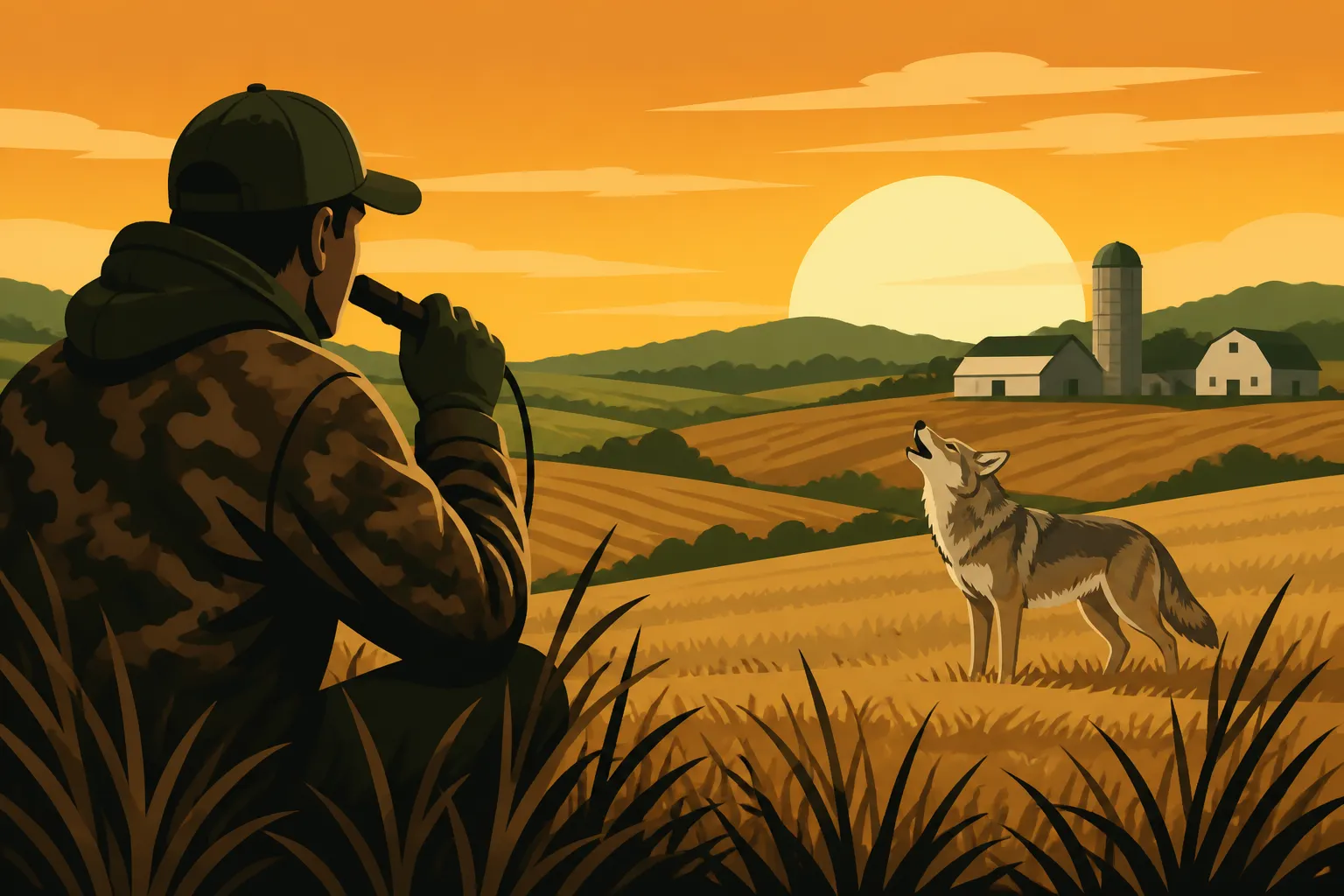
Hunting coyotes in Pennsylvania farm country presents a unique challenge, one that many hunters, myself included, have found both frustrating and incredibly rewarding. These aren't your deep-woods, unpressured coyotes; these are often the ghosts of the fields, savvy survivors who have learned to live in close proximity to humans and their agricultural operations. They've heard every sound, seen every truck, and smelled every trace of human presence. If you've been struggling to call in these wily predators, this guide will walk you through their behavior, effective calling strategies, and the essential gear you'll need to turn those frustrating outings into successful hunts.
Understanding Coyote Behavior in Pennsylvania Farm Country
Before you even think about setting up a call, you absolutely need to grasp the mind of a farm-country coyote. They're a different breed, shaped by their environment and the constant presence of people. This isn't the wilderness; it's a landscape of fields, woodlots, farmsteads, and bustling roads, and the coyotes here are masters of adaptation.
Adapting to Human Presence and Pressure
Coyotes in Pennsylvania's agricultural zones are arguably some of the most intelligent and wary predators you'll encounter. Unlike their counterparts in the remote Big Woods, farm country coyotes are constantly exposed to human activity. They see tractors, hear vehicles, and smell people on a daily basis. This constant exposure makes them incredibly quick learners. If they associate a certain sound or sight with danger, they remember it. This means calling strategies that might work in less-pressured areas often fall flat here.
They are often primarily nocturnal or crepuscular (active at dawn and dusk), especially in areas with high human traffic during the day. They use the cover of darkness to move between feed sources, often skirting along wood lines, drainage ditches, and fencerows. During daylight hours, they’ll typically bed down in the thickest cover available—dense brush, multiflora rose thickets, standing cornfields, or small, overlooked woodlots. This is why a proper understanding of their habits is so crucial; you're not just hunting a coyote, you're hunting a coyote that has earned its stripes surviving among us. Ignoring this innate wariness is a recipe for frustration.
Diet, Territories, and Movement Patterns
A farm coyote's diet is a smorgasbord of opportunity. While deer fawns and rabbits are common prey, these coyotes also readily target mice, voles, groundhogs, and even domestic animals if given the chance. This diverse diet means they'll often be found near areas rich in these food sources: field edges, hayfields, overgrown pastures, and around barns or livestock operations. They're opportunistic, and if an easy meal presents itself, they'll take it.
Their territories in farm country tend to be smaller and more defined by available cover and food. They don't roam dozens of miles like some wilderness coyotes. Instead, they might patrol a few square miles, utilizing every piece of linear cover. Think about the natural highways coyotes use: old logging roads, creek bottoms, drainage ditches, and especially hedgerows and fencerows that connect woodlots across open fields. These are their travel corridors, their superhighways from bedding to feeding areas. Understanding these routes is vital for predicting where a coyote might emerge or travel when called. For a deeper dive into scouting these types of areas, you might find some crossover insights in methods for Hunting Pennsylvania Farm Country Edges. Identifying these subtle nuances in their movement will be your biggest asset in setting up a successful stand.
Strategic Calling and Setup for Farm Coyotes
Once you've wrapped your head around the unique habits of farm country coyotes, it's time to put that knowledge into action. This isn't just about blowing a call; it's about a holistic approach that includes meticulous stand placement, smart call selection, and integrating visual aids.
Perfecting Your Stand Location and Approach
Your stand location is perhaps the most critical factor for success in farm country. These coyotes are educated and will often hang up out of range, studying the scene before committing. You need to pick a spot that offers you concealment, a clear view, and positions the wind in your favor. Look for natural breaks in the terrain—a small knoll, a low ridge, or the edge of a standing cornfield. The thicker the cover you can blend into, the better. Consider using an existing structure, like an old barn foundation or a mature oak tree on a woodlot edge, to break up your outline.
Crucially, wind direction is non-negotiable. Coyotes will almost always circle downwind to scent-check the source of a call. You need to position yourself so the wind is blowing from the suspected coyote approach direction towards you, allowing you to see them before they get a whiff of your presence. Your entry and exit routes are just as important. Avoid walking across open fields or through areas where coyotes might be bedded. Use treelines, ditches, or existing trails to make a quiet, unnoticed approach. Once you've selected your spot, spend a few minutes enhancing your concealment. For ideas on improving your setup, consider tactics like Brushing In a Blind on a Field Edge. Remember, the goal is to be invisible and undetectable until the moment of the shot.
When choosing a stand, consider the use of mapping software like that offered by GoHunt. These tools can help you analyze terrain, identify potential travel corridors, and even locate suitable cover for your setup on private agricultural land. Knowing where the woodlots meet the fields, where creek bottoms run, and where dense patches of cover are located can dramatically improve your chances.
Effective Call Selection and Sequences
For pressured farm coyotes, call selection and the sequence in which you use them can make or break your hunt. Electronic calls, like those from FoxPro or Primos, are incredibly versatile, offering a wide array of sounds from rabbit distress to pup barks and coyote howls. Hand calls, while requiring more skill, can add a personal touch and sometimes sound more authentic to wary ears.
Start with soft, subtle sounds. A common mistake is blasting a loud distress call right away, which can spook a close coyote. Begin with a few quiet whimpers of a cottontail or a soft fawn distress call. If nothing responds after a few minutes, gradually increase the volume and intensity. Mix in some pup distress calls, as these can trigger a strong maternal or territorial response from adult coyotes. Don't be afraid to experiment with different species' distress calls; sometimes a bird in distress or a rodent squeak can be the ticket.
For a calling sequence, try this: 30 seconds of soft calling, then a 2-3 minute pause. Repeat, perhaps increasing volume slightly. After 10-15 minutes, if nothing has appeared, you might switch to a more aggressive sound, like a coyote interrogation howl or a challenge howl, followed by distress. The key is patience and variety. Many stands last 20-30 minutes, giving a wary coyote enough time to approach cautiously. If you're hunting in colder months, you might find the principles discussed in Coyote Calling in Pennsylvania Winter helpful for adapting your approach.
Decoys and Visual Aids for Wary Predators
While sound is your primary tool, visual attraction is often what seals the deal, especially with highly cautious farm coyotes. They’ve likely heard distress calls before, but seeing something struggling brings a whole new level of realism. Motion decoys are incredibly effective for this. A simple spinning rabbit decoy, or a decoy with a flickering bird wing, can instantly draw a coyote’s eye away from your position and give them the confidence to commit.
Place your decoy 30-50 yards out from your position, ideally within your effective shooting range, and in a spot that a coyote would naturally approach. If they circle downwind, make sure the decoy is positioned so they have to expose themselves to your shooting lane as they try to get a better look. Static decoys, like a fake rabbit or a small predator decoy, can also work, but motion adds a crucial element of realism.
Remember, the goal of the decoy is to distract the coyote and give them a focal point other than you. Many hunters find that when a coyote commits to a decoy, they often become so fixated on it that they overlook minor details, allowing for a better shot opportunity. Using a well-placed decoy in conjunction with your calling can dramatically increase your success rate on these challenging animals.
Essential Gear and Safety Considerations
Success in hunting farm country coyotes isn't just about calling; it's also about having the right tools for the job and respecting the unique environment you're hunting in. From your firearm to your camouflage and your understanding of local rules, every detail matters.
Optics, Firearms, and Ammunition
When targeting coyotes in Pennsylvania's farm country, you need gear that can handle both short, fast shots in dense cover and longer shots across open fields. For firearms, many hunters favor flat-shooting centerfire rifles like a .223 Remington, .204 Ruger, or .243 Winchester. These calibers offer the accuracy and velocity needed for ethical kills at typical coyote ranges. However, if you're hunting in areas with more fragmented cover or closer quarters, a shotgun loaded with buckshot can be incredibly effective, especially for coyotes that come charging in close. For specific information on what firearms are legal for various game in Pennsylvania, you can consult resources like Legal Firearms for Pennsylvania Deer, understanding that similar principles often apply to predators.
Good quality optics are non-negotiable. A rifle scope with clear glass and a suitable magnification range (e.g., 3-9x or 4-12x) will serve you well in varied lighting and distances. Don't skimp on binoculars either; an 8x or 10x pair will help you scan fields and pick apart distant cover. A rangefinder is also invaluable for quickly and accurately determining distances in open terrain. For stability, a bipod or shooting sticks are highly recommended, especially when you might be sitting for extended periods in an exposed position, allowing for steady aim when that wary coyote finally shows itself.
Camouflage, Scent Control, and Comfort
Camouflage is more than just looking like a tree; it's about blending into the specific environment you're hunting. In farm country, this might mean patterns that mimic dry fields, sparse brush, or dark timber edges. A good quality ghillie suit can be incredibly effective, especially if you're sitting out in the open near a field edge. For concealment when using calls, a well-chosen ground blind can be a game-changer, providing excellent visual cover and helping to contain some of your scent. You can learn more about effective ground blind use by reading about Using a Ground Blind on Pennsylvania Game Lands.
Scent control is absolutely paramount. Farm coyotes are inundated with human scent, and they learn to avoid it. Employ a strict scent control regimen: shower with scent-eliminating soap, wash your hunting clothes in scent-free detergent, and store them in airtight containers. Use scent-eliminating sprays on your boots and outer layers. Even a slight whiff of human odor can cause a wary coyote to hang up or bolt. Given the close proximity to human activity, this detail can be the difference between a successful call-in and a coyote that simply never appears. More in-depth tips can be found in Scent Control on Small Pennsylvania Tracts.
Finally, comfort is key for patience. You might be sitting still for 30 minutes or more in varying weather conditions. Dress in layers, wear good waterproof boots, and bring a comfortable, quiet seat. Being cold, wet, or uncomfortable will make you shift, fidget, and ultimately compromise your stand.
Landowner Relations and Adhering to Regulations
Hunting on private land in Pennsylvania's farm country comes with significant responsibilities, particularly regarding landowner relations and adherence to safety regulations. Always, always obtain explicit permission from the landowner before stepping foot on their property. A simple knock on the door, a friendly conversation, and an offer to share any harvested game can go a long way. You can gain valuable insights on approaching landowners by checking out Asking a Pennsylvania Farmer for Permission.
Once permission is granted, ensure you understand all the specific rules for that property. Are there areas off-limits? Are there livestock to be aware of? Always be mindful of safety zones: Pennsylvania law dictates specific distances you must maintain from occupied dwellings, camps, or farm buildings when discharging a firearm. This is especially critical in farm country, where houses and barns are frequently scattered across the landscape. Ensure your shooting lanes are clear and you have a safe backdrop for every shot. For general safety information regarding visibility, review Pennsylvania Hunter Orange Rules, which can be adapted to your predator hunting endeavors even if the orange requirements are different.
Be aware of specific regulations pertaining to coyote hunting, such as legal shooting hours and any restrictions on night hunting. Pennsylvania has specific Night Hunting Rules for Pennsylvania Coyotes that you must understand if you plan to hunt after dark. Staying informed and compliant not only keeps you safe and legal but also helps foster positive relationships with landowners and the broader hunting community. Participating in activities like Predator Hunting Contests in Pennsylvania often requires strict adherence to these rules, making familiarity with them even more vital.
Disclaimer
Please remember that hunting regulations and conditions can change. Always consult the latest Pennsylvania Game Commission digest and local ordinances before heading afield to ensure you are fully compliant with all rules and safety requirements.