Blood Trailing After Dark in Pennsylvania
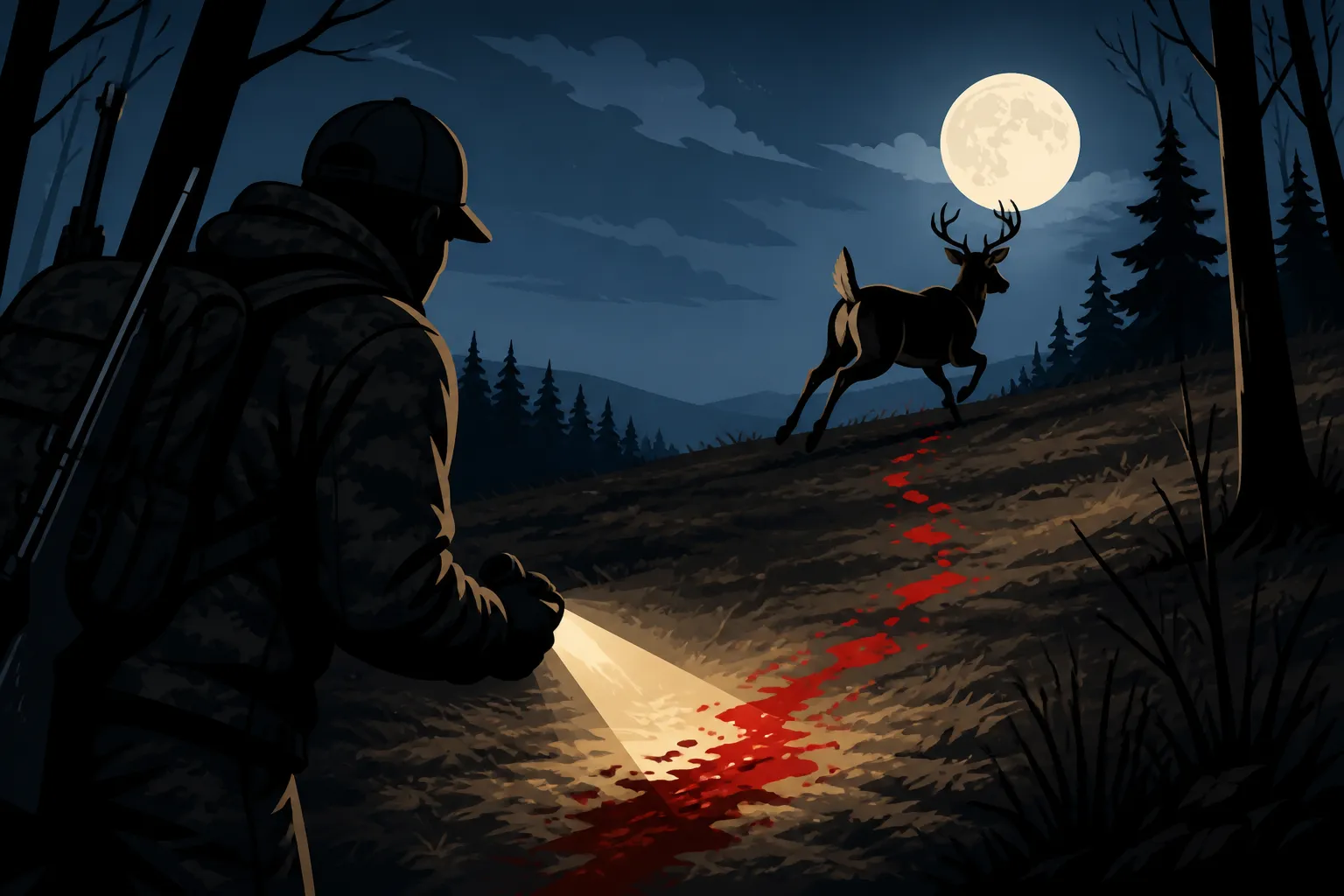
There's nothing quite like the knot that forms in your stomach when you've made a shot on a deer as dusk falls, only to lose the blood trail just as the last bit of light fades from the sky. We've all been there, standing in the fading twilight, headlamp cutting through the gloom, trying to pick up that elusive sign. This comprehensive guide is here to walk you through the essential steps, legalities, and practical techniques for blood trailing after dark in Pennsylvania, helping you maximize your chances of a successful recovery.
Understanding Pennsylvania's Rules for Night Recovery
When the sun dips below the ridge and you're still on the trail, it's easy to get caught up in the moment. However, it's absolutely crucial to understand the Pennsylvania Game Commission's regulations regarding night recovery and how they impact your actions. Ignorance of the law is never an excuse, and a successful recovery isn't worth a citation or, worse, losing your hunting privileges.
Legal Shooting Hours and When to Stop Hunting
First and foremost, legal shooting hours for deer end at sunset. This is a hard stop. While you might be able to see to shoot for a few minutes longer, doing so is illegal. If you shoot a deer and it runs, and it’s now after legal shooting hours, you must cease active hunting. This doesn't mean you can't track your deer, but it does mean you cannot discharge your firearm again unless it is deemed necessary to dispatch a wounded animal that you have already legally shot and located. The key here is "legally shot." You can't go looking for a deer after dark and then decide to shoot another one you happen to jump. Your focus shifts entirely to recovery. The PGC website offers clear guidance on Pennsylvania Legal Shooting Hours, which is always worth reviewing before the season.
The moment you realize you're going to be trailing into darkness, you should mentally switch gears. Your primary objective becomes finding the animal, not taking another shot. If you do locate your deer, and it's still alive but wounded, state law allows you to humanely dispatch it, even after legal shooting hours, with the weapon you used to make the initial shot. This is a critical distinction and often misunderstood. Make sure your headlamp isn't so bright that it could be construed as aiding in hunting, as some illumination devices are restricted.
Navigating Property Lines and Permission After Dark
One of the biggest hurdles when blood trailing after dark, especially in Pennsylvania's patchwork of public and private land, is navigating property lines. It's one thing to cross a property line during the day with a quick call to the landowner; it's another entirely to do so after dark. Pennsylvania law dictates that you need permission to enter private land, and this holds true for game recovery. While most landowners are understanding when you explain the situation, surprising them in the dark can lead to serious issues.
Before you even head out to hunt, especially if you're near known property boundaries, take the time to identify the landowners. Mapping applications like GoHunt, or even the Using the Pennsylvania Mapping Center, are invaluable for this. They allow you to see property boundaries and often provide landowner contact information. If you anticipate a challenging track into evening, it’s wise to try and make contact with adjacent landowners beforehand, or at least have their numbers saved. Trust me, a quick, polite phone call explaining you might need to recover a deer on their property will go a long way, especially if you’re already using onX Layers for Pennsylvania Land Status to accurately pinpoint your location. Showing respect for private property rights prevents a difficult situation from becoming a legal one.
Practical Strategies for Effective Night Trailing
The sun is gone, the woods are quiet except for your own hurried breathing and the rustle of leaves. This is where a systematic approach trumps panic. Effective night trailing isn't about speed; it's about meticulousness, patience, and knowing what to look for when your visual cues are limited.
Marking the Trail and Slow, Methodical Searching
As soon as the light begins to fade, or if you're already operating in low light, start marking your trail immediately. Don't wait until you lose the blood. Fluorescent orange flagging tape, toilet paper, or even small pieces of biodegradable paper are perfect for this. Place markers frequently, especially at the last confirmed blood sign, at turns, and at any spot where the trail becomes sparse. This creates a breadcrumb trail that allows you to backtrack easily and ensures you don't inadvertently spiral away from the last known spot.
When you do lose the trail, resist the urge to immediately expand your search in a wide circle. Instead, assume the deer maintained its initial direction. Start by marking your last known blood sign. Then, slowly expand your search in the direction of travel, meticulously scanning every leaf, twig, and patch of ground. Use your headlamp or a powerful handheld spotlight (more on that later) to sweep the ground in a grid pattern. Get down on your hands and knees if necessary. Look for not just drops, but smears, hair, disturbed leaves, or even broken twigs. Sometimes the smallest bit of sign, like a single speck of blood on the underside of a leaf, can be the key to unlocking the next section of the trail. This methodical approach is far more effective than haphazardly wandering.
Identifying Different Types of Blood Sign
Not all blood is created equal, and knowing what kind of blood you're following can give you critical clues about the shot placement and the deer's condition. This is especially important in the dark when visibility is reduced, and you're relying more on the quality and quantity of the sign.
- Bright Red, Frothy Blood: This is the golden ticket. Bright red, often bubbly or frothy blood, indicates a lung hit. Deer hit in the lungs typically don't go far, often bedding down within 100-200 yards. This is the most promising sign for a quick recovery. You might still have a long track, especially if the deer got a burst of adrenaline, but the sign itself speaks volumes.
- Dark Red, Non-Frothy Blood: This usually points to a muscle or liver hit. The blood will be a deeper, richer red. Liver hits can be fatal, but it might take hours for the deer to expire, meaning a longer track. Muscle hits, while often survivable for the deer, can also be extensive bleeders. In these cases, it's often best to back out for at least 6-8 hours and return at first light, as pushing the deer can make it travel much further.
- Thin, Watery Blood with Undigested Food Particles or Green Matter: This is gut blood, and it's generally the most disheartening sign. It smells distinctively of stomach contents, and the deer will often be alive for a very long time, sometimes days. If you find this, it's almost always best to back out immediately for 8-12 hours, sometimes longer, depending on weather conditions. Pushing a gut-shot deer is the surest way to lose it. A deer that can walk away from a gut shot when not pressured will often bed down nearby and stiffen up. When you return in the morning, approach extremely cautiously, expecting the deer to still be alive.
Knowing these distinctions helps you make informed decisions about whether to continue the track or back out. It's agonizing to leave a deer in the woods, but sometimes it's the most ethical and effective choice for recovery.
| Blood Color | Consistency | Odor | Indication | Recommended Action |
|---|---|---|---|---|
| Bright Red | Frothy, bubbly, oxygenated | None | Lung hit | Continue tracking carefully; likely quick recovery. |
| Dark Red | Thick, gel-like | None | Muscle or Liver | Track cautiously. Consider backing out 6-8 hrs if sparse. |
| Green/Brown | Watery, mixed with food | Strong gut odor | Stomach/Intestine | Back out for 8-12+ hours; return at first light. |
| Light Pink/Red | Thin, watery | None | Brisket, leg | May be superficial. Assess other signs carefully. |
Essential Gear for After-Dark Tracking
You wouldn't head into the woods for Hunting Pennsylvania's Big Woods for Deer without a rifle, and you shouldn't attempt an after-dark blood trail without the right tools. The dark demands specific equipment to ensure your safety and maximize your chances of success.
Lighting Solutions: Headlamps and UV Lights
Your most crucial piece of gear for night trailing is a reliable light source. Don't rely solely on the small light on your phone.
- Powerful Headlamp: A good quality headlamp is non-negotiable. Look for one with a high lumen output (300-600 lumens is a good starting point) and a wide beam pattern. A headlamp frees up your hands, allowing you to carry your weapon, mark the trail, or push through brush. Make sure you have fresh batteries or a fully charged unit, and always carry spares. A red-light option can be helpful for preserving night vision if you need to pause and scan.
- Handheld Spotlight: A powerful handheld spotlight can be incredibly useful for spotting distant splashes of blood or checking ahead into thick cover. Some trackers prefer a very focused beam, others a broader one. This acts as a secondary, often more powerful light source than your headlamp.
- UV Blood Tracking Lights: These are specialized lights that claim to make blood fluoresce, making it easier to spot. While they can be effective for older, dried blood, or very sparse trails, their effectiveness varies. Blood needs to be completely dry for them to work best, and wet blood can actually absorb the UV light, making it harder to see. Many hunters find them helpful as a supplemental tool, but they shouldn't replace a good white light. Try one out beforehand to see if it works for you. They can be a bit of an investment, but if they save you one deer, they're often worth it.
Navigation and Communication Tools
Getting lost in the dark, especially while focused on a blood trail, is a real risk. Being able to communicate with your hunting party or emergency services is paramount.
- GPS Unit or Smartphone with Mapping App: This is an absolute must. Whether you prefer a dedicated GPS unit or a robust smartphone app like GoHunt, ensure you have your hunting area downloaded for offline use. Mark your starting point, the last known blood, and any property boundaries. Knowing GPS Units Versus Phone Apps and their pros and cons can help you choose the best tool for you. Many seasoned hunters rely on apps that use detailed satellite imagery and property lines to avoid accidental trespass.
- Two-Way Radios/Cell Phone: If you're trailing with a partner, two-way radios are excellent for maintaining communication, especially if you split up or one person stays at the last sign while the other searches. Always carry a fully charged cell phone, even if service is spotty. It could be your lifeline in an emergency. Remember to save local emergency numbers and the Game Commission's regional office number.
- Whistle: A simple whistle can be a surprisingly effective way to signal your location to partners if you get separated or need assistance, especially in steep or thick terrain where voices don't carry well.
Safety and Comfort for the Long Haul
Night trailing can be physically and mentally draining. Don't neglect your personal safety and comfort.
- Warm, Waterproof Clothing: Even if it wasn't cold when you shot the deer, temperatures can drop significantly after dark. Being wet and cold will compromise your focus and decision-making. Wear layers that are appropriate for the expected night temperatures and always have rain gear on hand. This is particularly important if you're out in the Hunting Pennsylvania Big Woods for Deer where conditions can change rapidly.
- Sturdy Boots: You'll likely be traversing uneven ground, possibly through wet leaves or mud. Good, waterproof boots with ankle support are essential. You might be Recovering a Deer on Steep Ground or Getting a Deer Out of a Pennsylvania Hollow, and twisted ankles are a common issue.
- First Aid Kit: A compact First Aid Kits for Remote Big Woods is a sensible addition to your pack. Minor cuts, scrapes, or blisters can happen, and being able to treat them keeps you in the game.
- Snacks and Water: A few high-energy snacks and a bottle of water can make a huge difference, especially if you're out for several hours. Staying hydrated and fueled helps maintain focus.
When to Call It Quits (for the Night) and Seek Help
There's a fine line between persistent tracking and making the situation worse. Knowing when to pause the search and regroup is a sign of an experienced and ethical hunter. Sometimes, the best course of action is to temporarily abandon the trail.
Assessing the Shot and Weather Conditions
Before you even start trailing, take a moment to honestly assess your shot. Did it feel good? Did the deer react strongly? Did you see or hear any tell-tale signs like a "thwack" of an arrow or the specific sound of a bullet hitting vitals? This initial assessment, combined with the first blood you find, should guide your decision. If you have clear, frothy lung blood and a strong trail, keep going. If the blood is sparse, dark, or has gut matter, pausing might be the wisest choice.
Weather conditions are a huge factor. A light rain can wash away a blood trail quickly, making it almost impossible to follow. Heavy snow, while providing a tracking medium (see Tracking a Deer in Pennsylvania Snow), can also quickly cover a trail. Freezing temperatures can make blood difficult to distinguish on frozen leaves or ground. If the forecast calls for rain or snow overnight, and you have any doubts about a quick recovery, seriously consider backing out and returning at first light. The deer is likely to stiffen up or expire, and you'll have a much better chance of finding it in daylight before scavengers do.
The Role of Tracking Dogs
Sometimes, despite your best efforts and the best gear, the trail simply vanishes. This is where a certified tracking dog can be a game-changer. Pennsylvania allows the use of leashed tracking dogs for wounded game recovery, and there are many skilled individuals and dogs available. If you've exhausted your options and are confident the deer is mortally wounded but lost, don't hesitate to reach out to a professional tracker.
A good tracking dog handler will ask you about the shot, the last known blood, and the terrain. They often work best on "cold" trails, meaning trails that haven't been trampled by too many human feet. So, if you decide to call a dog, try to mark your last sign and then back out, disturbing the area as little as possible. These dogs have an incredible sense of smell and can often pick up a faint scent that no human eye could ever see, especially after hours of darkness or light precipitation. Finding a reliable tracker in your area before the season begins can save precious time and heartache when you truly need them.
Disclaimer
Please remember that hunting regulations and best practices can evolve. Always consult the latest Pennsylvania Game Commission regulations for the most current and accurate information. This guide provides general advice and should not replace official guidelines or common sense safety practices.