Snow Goose Hunting at Middle Creek
Trying to understand the intricacies of hunting snow geese at a renowned spot like Middle Creek can feel overwhelming, especially with its unique regulations and the sheer volume of birds. This guide is here to unravel the complexities of pursuing these abundant waterfowl at and around Pennsylvania's famous Middle Creek Wildlife Management Area, offering practical advice for a successful hunt.
Understanding the Middle Creek Snow Goose Spectacle
Middle Creek Wildlife Management Area, located in Lebanon and Lancaster counties, is absolutely legendary in Pennsylvania for its incredible concentration of migratory waterfowl, especially snow geese. If you've ever driven through in late winter or early spring, you've seen the spectacle – thousands, sometimes tens of thousands, of snow geese descending upon the impoundments and surrounding fields. It's a breathtaking sight for bird watchers, but for hunters, it represents a unique and challenging opportunity.
Why Middle Creek is a Snow Goose Magnet
The reason Middle Creek attracts such astounding numbers of snow geese is a combination of strategic habitat management and its location along the Atlantic Flyway. The Pennsylvania Game Commission has meticulously developed the area with extensive shallow water impoundments, managed grain fields, and protected resting areas. These provide critical food sources, like waste corn and winter wheat, and safe roosting sites that are irresistible to migrating waterfowl. The geese know this is a sanctuary, a place where they can rest and refuel before continuing their long journey north. This consistent provision of ideal habitat year after year cements Middle Creek's reputation as a reliable stopover, making it a key location for observing the annual phenomenon of Snow Goose Numbers at Middle Creek.
Beyond the managed habitat, the area’s agricultural landscape plays a huge role. Surrounding Middle Creek are vast expanses of farm fields, primarily corn and soybeans. When the geese aren't loafing on the water, they're often out feeding in these fields, voraciously gleaning leftover grain. This abundance of food within a short flight of safe water makes the entire region incredibly attractive. The combination of sanctuary and sustenance creates a holding pattern for these birds, making them predictable in their general movements, even if they can be frustratingly unpredictable on a day-to-day basis.
The Peak Season and Viewing Opportunities
The absolute peak for snow goose numbers at Middle Creek typically occurs from late February through early March, though significant numbers can be present from January into April, depending on weather conditions and the timing of the spring migration. During this window, you’ll witness a sight that truly has to be seen to be believed: massive flocks lifting off the main lake, swirling in the sky like snow squalls, and then settling back down or heading out to feed. This period is also often When Snow Geese Peak at Middle Creek, providing prime viewing opportunities for non-hunters from designated observation areas.
While the sheer volume of birds is a marvel, it also presents a unique challenge for hunters. These birds are extremely wary and have been pressured all along their migration route. Their sheer numbers create an incredible alarm system; if one bird spooks, the entire flock can lift off, creating a cacophony of sound and a blizzard of white. For hunters, this means adapting tactics that account for this heightened vigilance and the constant movement of thousands of birds. It’s a completely different game than hunting local Canada geese.
Navigating the Regulations and Access for Hunting Snow Geese at Middle Creek
Hunting snow geese, especially within the vicinity of Middle Creek, requires a keen understanding of specific regulations and access protocols. It's not a place you can just show up and start hunting without proper preparation. The Pennsylvania Game Commission manages this area very carefully to balance conservation, public viewing, and hunting opportunities.
Specific Rules for Middle Creek Wildlife Management Area
The Middle Creek Wildlife Management Area itself has very specific, often restricted, hunting zones and seasons, particularly for snow geese. These rules are put in place to ensure public safety, manage the wildlife, and maintain the sanctuary's integrity. For instance, large portions of Middle Creek are designated as inviolate sanctuary areas where no hunting is permitted. This is crucial for providing the birds with a safe resting place, which in turn draws them to the area in the first place.
When it comes to snow geese, hunting opportunities within the managed boundaries of Middle Creek are highly controlled. The Pennsylvania Game Commission often runs special hunts or a lottery system for specific dates and areas, primarily during the Conservation Order Snow Goose Season. This season is designed to help control the booming population of snow geese, which has become so large it's damaging their Arctic breeding grounds. Hunters must be diligent in checking the most current PGC Waterfowl Digest for the specific regulations, permit requirements, and hunt zone maps related to Hunting Rules at Middle Creek. This information changes annually, so relying on old habits or hearsay is a surefire way to get a citation. Remember, migratory bird hunting also requires you to possess a valid state hunting license, a Pennsylvania Migratory Game Bird Licence, and a Federal Duck Stamp.
Hunter Access and Application Process
Gaining access to hunt within the defined, limited hunting areas of Middle Creek typically involves an application process, often a lottery. These hunts are highly sought after due to the incredible numbers of birds. You usually need to apply well in advance through the Pennsylvania Game Commission's website. If selected, you'll receive specific instructions regarding hunt dates, allowed areas, and any additional rules, such as shooting hours or designated entry/exit points. These hunts are truly a privilege, and successful applicants are expected to adhere strictly to all guidelines.
For those not selected in the lottery, or for hunters who prefer a different approach, the focus shifts to hunting the agricultural fields surrounding the refuge. While these fields are not part of the Middle Creek WMA's strict boundaries, they are where the geese spend a significant portion of their day feeding. Access here is primarily through gaining permission from private landowners. This means knocking on doors, building relationships, and being respectful. Often, farmers are happy to have hunters help deter geese from eating their crops, but you must always obtain explicit permission before stepping foot on private land. This approach ties into the broader strategies for Goose Hunting Pennsylvania Fields and is often the most productive way to hunt Middle Creek snow geese without a special permit.
Effective Strategies for Hunting Snow Geese Around Middle Creek
Hunting snow geese around Middle Creek is a high-energy, high-commitment endeavor. These birds are some of the wariest waterfowl you'll encounter, having navigated hunters from the Arctic to the Mid-Atlantic. Success hinges on meticulous preparation, understanding their behavior, and being adaptable.
Decoy Spreads and Concealment
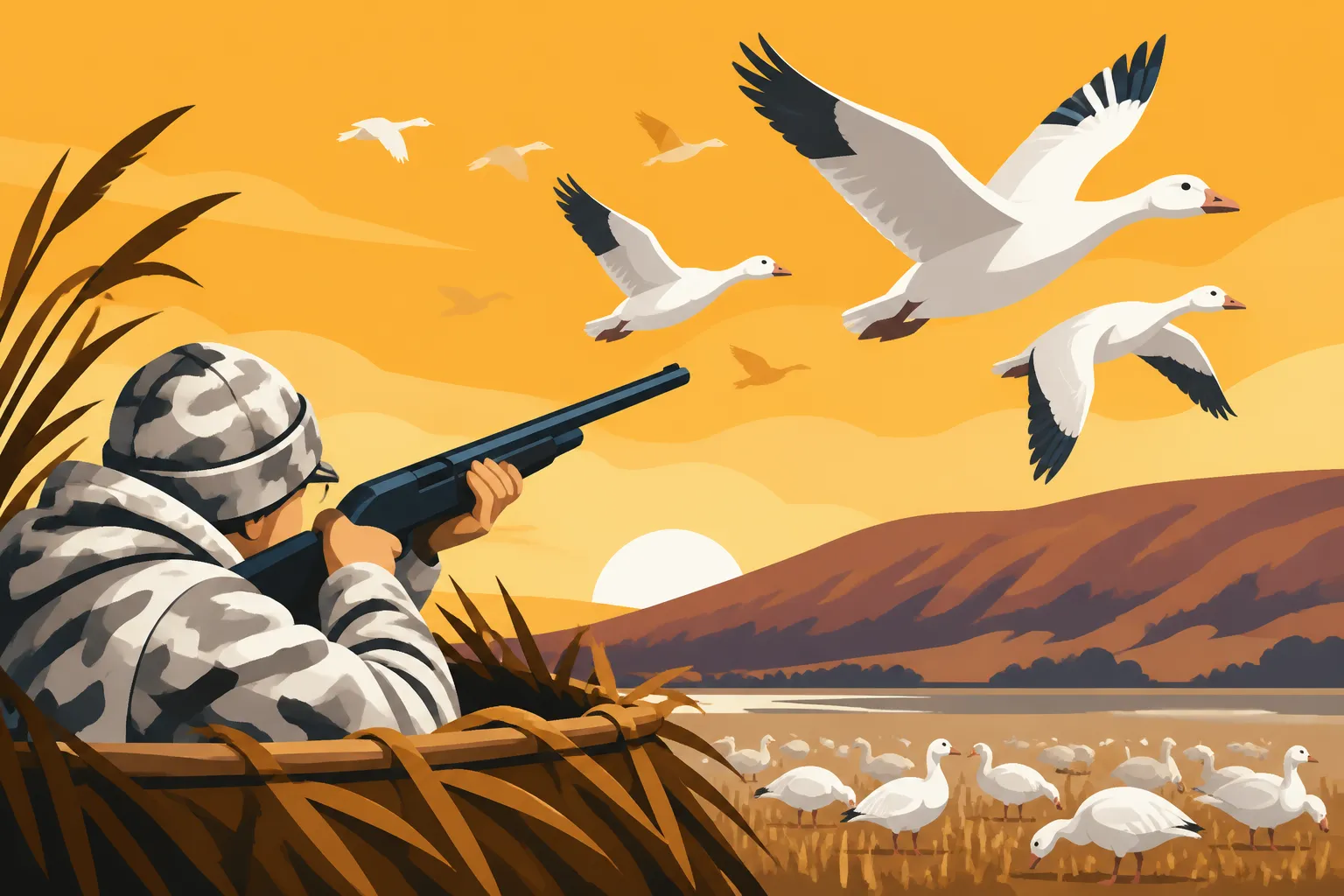
Snow goose hunting is a numbers game, especially with decoys. We're not talking about a dozen floaters for ducks; we're talking hundreds, sometimes even a thousand or more, white rags, silhouettes, or full-bodied decoys to mimic a feeding flock. A massive spread gives the illusion of safety and abundance. When setting up, you want to create a "landing strip" or "kill hole" for the geese to pitch into, typically in the center of your spread. Think about what a real flock looks like on the ground: spread out, but with a main concentration.
Concealment is paramount. Snow geese have incredible eyesight, and a slight glimmer of exposed skin or an unnatural outline can flare an entire flock. Layout blinds are the standard for field hunting and are a must-have for the flat, open expanses around Middle Creek. Brush your blinds in meticulously with local vegetation – cornstalks, stubble, dirt. Don't just toss a few stalks on top; make it look like part of the field. Even better, dig in your blinds if the farmer allows and conditions permit. If you're working with a smaller crew, white ghillie suits or even just white Tyvek suits can offer excellent camouflage when lying directly in a massive spread of white decoys. A crucial part of scouting is identifying where the birds want to be and then blending seamlessly into that environment, ensuring you are invisible to their discerning eyes.
Calling Techniques and Gear
Calling snow geese is an art form. It's not just about making noise; it's about mimicking the diverse, chaotic chatter of a massive flock. You'll need high-volume calls to reach birds hundreds of yards away, as well as softer, more realistic finishing calls for when they're working close. Electronic calls (e-callers) are permitted during the special Conservation Order Snow Goose Season, and they are practically essential for consistent success. These devices can project the sound of a large feeding or resting flock across vast distances, helping to draw birds to your spread. A good e-caller allows for multiple sounds and volumes, which you can adjust based on the birds' reaction.
However, don't underestimate the power of mouth calls. While e-callers do the heavy lifting, skilled mouth callers can add a dynamic, realistic element that often seals the deal for wary birds. A blend of both can be deadly. When you see birds commit, switch to softer, more contented clucks and murmurs. If they hesitate, increase the volume and excitement. Brands like GoHunt often feature articles and videos showcasing effective calling techniques and gear reviews, which can be a fantastic resource for improving your game. Understanding the timing and rhythm of a real snow goose flock is key to replicating it effectively.
Understanding Snow Goose Behavior
These birds are constantly moving and reacting to pressure, weather, and food sources. They typically roost on the protected waters of Middle Creek at night, then fly out to feed in surrounding agricultural fields during the day. This creates distinct flight lines. Scouting is critical to identify these flight lines and locate the specific fields they are using. Pay attention to wind direction, as geese almost always land and take off into the wind. Set your spread accordingly.
Weather plays a huge role. Cloudy, windy days often bring birds in lower and make them more responsive to calls and decoys. Bright, calm days can make them extremely wary, flying high and circling endlessly. Be prepared to adapt. If they're hitting a field one day, they might be on a different field the next. Use mapping apps like GoHunt to mark potential roosts, feeding areas, and flight paths. Look for fresh droppings, tracks, and mud on cornstalks to confirm current feeding activity. Understanding Reading Roost-to-Field Flight Lines is paramount, as it tells you precisely where to set up for optimal interception.
Beyond Middle Creek: Exploring Nearby Opportunities
While Middle Creek is the epicenter, limiting your focus solely to the WMA's direct vicinity can be a mistake. The true opportunity often lies in the surrounding landscape, especially once the birds have been pressured. Snow geese are highly adaptable, and their movements are dictated by food availability and safety.
Hunting Adjacent Agricultural Fields
The vast majority of successful snow goose hunting around Middle Creek happens on private agricultural land outside the WMA's boundaries. These are the cut cornfields and winter wheat fields where the geese spend their days gorging themselves. The challenge, of course, is gaining permission. This requires legwork and building rapport with local landowners. Start early, before the season opens, and approach farmers respectfully. Offer to help them with goose control, be tidy, and always follow up with a thank-you. Some farmers even welcome hunters as it helps to reduce crop damage caused by massive feeding flocks.
When hunting these fields, flexibility is key. What was a hot field yesterday might be devoid of birds today. You need to be ready to move your spread, sometimes multiple times in a single day. This is where a light, portable decoy spread (like large numbers of white rags or Sillosocks) can be a game-changer. These allow for rapid deployment and retrieval, enabling you to follow the birds as they shift. Don't be afraid to put in the effort to move – a quick, strategic reposition can turn a slow morning into an epic hunt. This often means driving around the night before or early morning, spotting where the birds are currently feeding, and then quickly securing permission and setting up.
Scouting and Adaptability
Scouting is not just a suggestion; it's the bedrock of successful snow goose hunting in this region. You need to spend time observing the birds' patterns. Where do they fly after leaving the roost? Which fields are they using? What time do they typically arrive and depart? What are their preferred entry and exit points in a field? These are all critical pieces of information that can only be gathered through diligent pre-hunt scouting.
Modern mapping tools, including the GoHunt app, can be invaluable here. Use satellite imagery to identify potential feeding fields, water sources, and access roads. Mark your observations on the map and look for patterns over several days. The geese are creatures of habit until something spooks them or the food source dwindles. Being adaptable means having multiple spots scouted, having your gear ready for a quick setup, and being willing to adjust your plan based on what the birds are doing that day. A truly effective snow goose hunter in this region is as much a scout and strategist as they are a shooter. The ability to switch fields or adjust your setup based on new information, even mid-hunt, often dictates success or failure. This proactive approach applies to many other pursuits in the region, such as Scouting Pennsylvania Public Land Before Season for deer or other game.
Key Considerations for Snow Goose Hunting at Middle Creek
| Aspect | Detail | Importance |
|---|---|---|
| Peak Season | Late February to Early March | Optimal time for highest bird concentrations |
| Regulations | Special PGC permits/lotteries often required within WMA; Conservation Order Season | Critical for legal hunting; check current PGC Waterfowl Digest annually |
| Licenses | PA Hunting License, PA Migratory Game Bird Licence, Federal Duck Stamp | Absolute legal requirement |
| Decoy Spread | 500-1000+ white rags, silhouettes, or full-bodies | Essential for attracting wary geese; large numbers mimic safety |
| Concealment | Layout blinds brushed in with local stubble, white ghillie suits | Snow geese have exceptional eyesight; invisibility is key |
| Calling | Electronic calls (e-callers) permitted/recommended during Conservation Order; mouth calls for realism | High volume to attract, subtle calls to finish |
| Scouting | Identify roost-to-field flight lines, current feeding fields, wind impact | Locating birds and setting up in their path is crucial |
| Access | PGC lottery within WMA; private land permission for surrounding fields | Primary means of gaining hunting access outside of viewing areas |
| Shot | Non-toxic shot (steel, bismuth, tungsten) required | Where Nontoxic Shot Is Required in Pennsylvania for all waterfowl hunting |
| Bag Limits | Very liberal during Conservation Order (often 25 per day, no possession limit) | Reflects conservation goals to reduce population |
Disclaimer
Please remember that hunting regulations and seasons in Pennsylvania are subject to change. Always consult the most current Pennsylvania Game Commission hunting and trapping digest, available on their website or at license issuing agents, before heading afield. This guide is for informational purposes only and should not replace official regulations.