Hunting Pennsylvania’s Big Woods for Deer
Hunting Pennsylvania's vast "Big Woods" for deer can feel like an overwhelming challenge, leaving many hunters frustrated by endless miles of timber with seemingly no sign of whitetails. Unlike the predictable patterns of farm country, deer in these sprawling forests operate on a different rhythm, making success hinge on understanding their unique behaviors and mastering specialized tactics. This comprehensive guide will walk you through the nuances of pursuing deer in Pennsylvania's rugged, expansive woodlands, from scouting deep-woods terrain to implementing effective hunting strategies and preparing for the unexpected.
Understanding the Big Woods Landscape
Pennsylvania's Big Woods regions are legendary, not just for their beauty, but for the distinct hunting challenges they present. We're talking about massive, unbroken tracts of forest, often covering hundreds of thousands of acres across counties like Potter, Tioga, Elk, and Clinton. These aren't your easily accessible woodlots or farm fringes; this is truly wild country where deer densities can be lower and the deer themselves are often much more elusive and wilderness-savvy. Navigating this terrain effectively is the first step toward finding success.
Geography and Terrain Challenges
The Big Woods are characterized by their dramatic topography: steep mountainsides, deep hollows, countless ridges, and winding creek bottoms. Elevations can change rapidly, meaning that a seemingly short hike on a map can turn into a grueling climb or descent in reality. This ruggedness naturally funnels deer in specific ways, but it also demands a higher level of physical fitness and navigational skill from the hunter. You'll encounter dense underbrush in some areas, particularly in younger clearcuts or areas recovering from logging, while other sections might be mature, open timber with a sparse understory.
One of the biggest challenges here is the sheer scale. It's easy to get disoriented, even with modern GPS devices. Ridgelines often look similar, and drainages can be numerous and confusing. This means you need a keen eye for subtle terrain features that can act as natural markers, like a unique rock outcrop, an old logging road, or a specific type of tree stand. Understanding how water flows and where saddles and benches naturally form on these mountainsides is crucial, as these are prime deer travel corridors. The constant ups and downs also mean you're always contending with thermals, which are air currents that rise and fall with the sun, affecting wind direction in unpredictable ways.
Identifying Key Habitat Types
While it might all look like "woods" at first glance, the Big Woods actually contain a variety of critical habitat types that draw deer at different times of the year. Mature hardwood forests, often dominated by oaks, provide vital acorn crops, which can be a primary food source in the fall. When the acorns are dropping, deer will gravitate heavily to these areas. However, acorn crops are not consistent year to year, so you need to be flexible and know what other food sources might be available.
Beyond the mature timber, look for areas of younger regrowth, often resulting from timber harvests or natural disturbances like wildfires. These clearcuts, sometimes decades old, offer dense cover and a wider variety of browse for deer. Think of them as deer supermarkets and sanctuaries rolled into one. Identifying the age and type of regrowth is key; deer prefer certain browse species and will utilize areas with more palatable plants. Openings, like old logging landings or small clearings, can also be crucial, especially if they contain any type of soft mast, like wild apple trees, or offer an opportunity for sunlight to reach the forest floor, promoting herbaceous growth.
The Impact of Timber Management
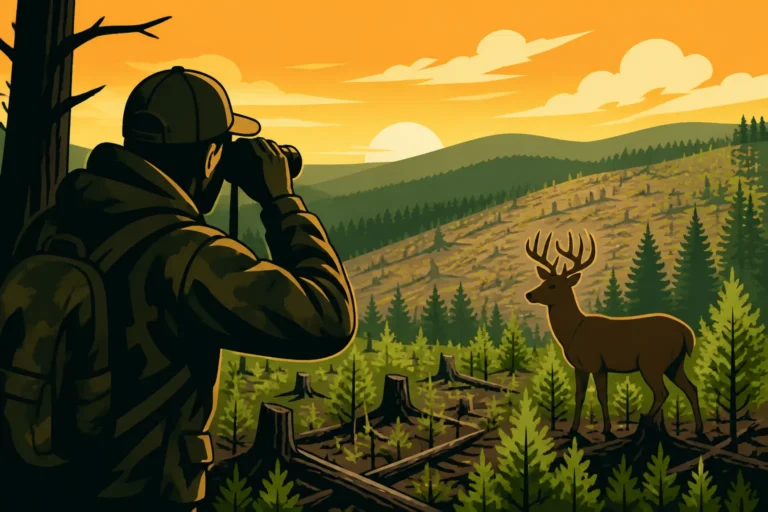
Timber management practices play a significant, often overlooked, role in shaping deer habitat and movement within the Big Woods. Foresters strategically cut timber for various reasons, creating a mosaic of different aged forests. These cuts can range from small, selective thinning operations to large-scale clearcuts. Each type of cut creates new opportunities for deer. Newer clearcuts, while initially dense and hard to penetrate, quickly become phenomenal bedding and browse areas as saplings and shrubs emerge. Older clearcuts, perhaps 10-20 years old, offer more mature browse and slightly easier navigation for both deer and hunters, while still providing excellent cover.
Understanding the history of timber harvests in your hunting area is like having a secret map. You can often find this information on forest district websites or by using mapping tools that show recent logging activity. These areas will concentrate deer, especially when food sources are limited elsewhere. Deer will often bed in the thickest part of these young stands and travel along their edges, utilizing the dense cover for security while accessing nearby mature timber for acorns or water. Knowing where and when these cuts occurred can tell you precisely where deer are likely to be focusing their energy, whether it's for food, bedding, or simply secure travel.
Deer Behavior in Big Woods Environments
Deer in Pennsylvania's Big Woods don't behave like their farm country cousins. They're typically more nocturnal, warier, and their movements are often dictated by the vastness of their habitat rather than small, predictable food plots. To consistently find success, you need to think like a Big Woods deer, understanding their unique challenges and adaptations.
Scarcity of Concentrated Food Sources
One of the primary differences in Big Woods hunting is the absence of easily identifiable, concentrated food sources common in agricultural areas. There are no expansive cornfields or meticulously maintained food plots everywhere you look. Instead, deer rely on a broader, more scattered diet of natural browse and mast. Acorns from oak trees are paramount when available, but their abundance can vary wildly year to year and location to location. When acorns are plentiful, deer might spread out across vast areas, making them harder to pattern. When acorns are scarce, deer become more focused on other, less calorie-dense browse, like the tender shoots of maple, birch, or blackberry briars found in clearcuts and regenerating forests.
This means your scouting for food sources needs to be meticulous and adaptable. Instead of looking for a single hotspot, you're searching for general areas where palatable browse is abundant, or where mast trees are actively dropping. Deer will travel significant distances between bedding and these scattered feeding areas, often utilizing subtle terrain features to do so. They might hit a small pocket of red oaks on one ridge, then move to a clearcut for browse, and eventually bed down miles away. This makes hunting them a game of intercepting these larger, less predictable movements.
Movement Patterns and Home Ranges
Big Woods deer tend to have larger home ranges compared to deer living in fragmented farm country. This is simply a function of needing to cover more ground to find adequate food, water, and cover. Bucks, especially mature ones, might have home ranges spanning several square miles. Their travel corridors are often less distinct than in agricultural areas, though they still gravitate towards natural funnels like saddles between ridges, benches on steep hillsides, and the edges of dense cover. Old logging roads, pipeline clearings, or even well-used game trails along creek bottoms can become major highways, especially during the rut.
Understanding wind and thermals is absolutely critical for predicting movement. In mountainous terrain, air currents tend to rise as the sun heats the ground and fall as it cools. This means a deer traveling a ridge in the morning might have a completely different wind advantage than one moving along the same ridge in the afternoon. Mapping tools can help you visualize topography, but nothing beats experiencing the thermals firsthand. Bucks will often use these shifting winds to their advantage, traveling with the wind in their favor or using crosswinds to detect danger. Knowing this allows you to set up to intercept them before they detect you.
Bedding Strategies in Vast Timber
Finding where Big Woods bucks bed can feel like looking for a needle in a haystack. With so much available cover, they have endless options. However, mature bucks will still choose bedding sites that offer a strategic advantage: thick cover for concealment, a clear view downwind, and an escape route. In the Big Woods, these often translate to dense regenerating clearcuts, thickets of mountain laurel, or secluded pockets of hemlock or pine on steep slopes. They'll frequently bed on benches or small knobs within these areas, often just below the crest of a ridge, allowing them to survey the terrain below while catching an updraft to scent anything approaching from above.
The key to understanding Big Woods bedding is to recognize that deer will adjust their bedding locations based on pressure, food availability, and weather. During peak hunting pressure, they'll retreat to the nastiest, most impenetrable cover available, making them incredibly difficult to push out. After a fresh snow, they might seek out thick conifer stands for thermal cover. Pay close attention to subtle sign like well-used deer trails leading into thickets, fresh rubs or scrapes near the edge of dense cover, and areas with concentrated deer droppings. These are all clues that a buck is likely bedding nearby. Knowing Where Big Woods Bucks Bed is paramount to finding success in these vast areas.
Essential Scouting Strategies for Big Woods
Scouting is paramount in the Big Woods, arguably more so than in any other hunting environment. You can't just show up on opening day and expect to stumble upon deer. The sheer scale and density require a methodical, year-round approach. Effective scouting blends modern technology with old-fashioned boots-on-the-ground effort, allowing you to build a comprehensive picture of deer activity long before the season begins.
Leveraging Topographical Maps and Aerial Photos
Before you ever set foot in the woods, the best scouting begins from home. Digital mapping tools and topographical maps are your best friends in the Big Woods. Services like GoHunt or similar online mapping platforms allow you to zoom in on specific areas, identify key terrain features, and mark potential hotspots. Look for saddles, benches, natural funnels created by converging drainages or changes in timber type, and areas where ridges come to a point or drop off steeply. These are all high-percentage travel corridors.
Aerial photos, especially high-resolution satellite imagery, can reveal things that topo maps can't. You can often spot clearcuts, areas of dense evergreen cover, or even subtle differences in tree canopy that indicate different timber types. Identifying these features allows you to pinpoint potential bedding areas or forgotten pockets of mast trees. Mark these areas as waypoints on your GPS or phone app. This pre-season digital scouting saves you countless hours of aimless wandering and helps you prioritize areas for physical investigation. It also helps you plan potential Entry Routes on Steep Ground to avoid alerting deer.
Boots-on-the-Ground Reconnaissance
While digital tools are powerful, nothing replaces spending time in the actual woods. Post-season is an excellent time for this, as deer sign from the previous fall is still visible, and you can cover ground without disturbing active hunting areas. Look for old rub lines, abandoned scrapes, and well-used trails. Pay particular attention to trails that appear to be used by mature deer – these will often be wider, deeper, and show less sign of yearlings. Follow these trails to see where they lead: do they connect a bedding area to a food source? Do they funnel through a narrow pinch point?
During the late summer and early fall, focus your boots-on-the-ground efforts on finding active food sources. Walk oak ridges to see which trees are producing acorns. Scout the edges of clearcuts to identify palatable browse that deer are actively feeding on. Don't be afraid to penetrate deeper into thick cover if you've identified it as a potential bedding area from your maps. Look for actual beds – depressions in the leaves or snow where a deer has been lying. Note the direction they're facing and what kind of cover and wind advantage they had. This direct observation is invaluable for understanding how deer utilize specific locations. This kind of diligent effort is a key part of Scouting Pennsylvania Public Land Before Season.
Understanding Wind and Thermals on a Ridge
This isn't just about knowing basic wind direction; it's about mastering the microclimates of a mountain. In Pennsylvania's Big Woods, especially along ridges and in hollows, wind is rarely consistent. Thermals, driven by the sun's heating and cooling of the land, dictate much of the air movement. In the morning, as the sun rises and warms the slopes, air typically rises, creating an updraft. In the evening, as the sun sets and the air cools, it sinks, creating a downdraft. These shifts can be dramatic and can completely change a deer's ability to scent you.
When scouting or setting up a stand, always consider the prevailing wind and the expected thermal shift. A stand on a ridge top might be great in the morning with an updraft, but disastrous in the afternoon as thermals start to fall. Similarly, a stand in a hollow might work with an afternoon downdraft but fail in the morning. Use a wind checker constantly to confirm real-time air movement. Observe how smoke or dust behaves in different areas. Learning to Wind and Thermals on a Ridge is a skill that takes practice but is absolutely essential for consistently beating a Big Woods buck's nose. Pay attention to how deer approach and leave bedding areas; they will almost always be using the wind to their advantage.
Effective Hunting Tactics for Big Woods Deer
Once you've done your homework and understand the landscape, it's time to apply specific hunting tactics suited for the Big Woods. Forget sitting over a food plot; here, it's about calculated movement, strategic waiting, and sometimes, organized effort.
Still-Hunting Pennsylvania Big Woods
Still-hunting is perhaps the most iconic and effective tactic for Big Woods deer, demanding patience, stealth, and a deep understanding of deer behavior. It involves moving slowly, often taking only a few steps at a time, then pausing for several minutes to scan for deer. The key is to blend into the environment, using every tree, bush, and terrain feature for concealment. This isn't just walking slowly; it's an active hunt, always looking for subtle signs like flicking ears, a horizontal line in a vertical forest, or the glint of an antler.
When still-hunting, focus on areas where deer are likely to be moving or feeding, such as oak ridges, the edges of clearcuts, or along creek bottoms. Always hunt into the wind or a favorable thermal, moving from downwind to upwind to maximize your scent advantage. Utilize binoculars to pick apart dense cover before you commit to moving. A common mistake is to move too quickly. A good rule of thumb is to spend 80% of your time still and 20% moving. This tactic is especially potent when combined with detailed knowledge of local terrain, allowing you to anticipate where deer might be. Mastering Still-Hunting Pennsylvania Big Woods is a true test of a hunter's skill.
Ambush Points and Stand Placement
While still-hunting is effective, there are times when sitting an ambush point is the better strategy, especially during the rut or in areas with consistent deer movement. The Big Woods offer numerous natural ambush points: saddles connecting two ridges, benches on steep hillsides, the narrow strips of timber between dense clearcuts and roads, or creek crossings. These are choke points where deer are funneled by the terrain, making their movements more predictable.
When choosing a stand location, prioritize scent control above all else, especially with variable mountain winds. Consider where the deer are coming from and going to, and how your scent will drift. Use a quality mapping tool, like the ones from GoHunt, to visualize the contours and identify these natural pinch points. Place your stand downwind or crosswind of the expected travel path. If you're hunting an oak flat, set up where deer will be feeding or traveling to and from the feeding area. For bedding areas, position yourself on the travel corridor leading to or from the thicket, not directly on the bedding area itself, to avoid spooking deer and blowing your spot. For optimal concealment and safety, make sure to follow guidelines for Treestand Setups in Pennsylvania Hardwoods.
Deer Drives on Pennsylvania State Game Lands
For many, deer drives are a cherished tradition, especially in the vast public lands of the Big Woods. While some scoff at the idea, a well-executed deer drive can be an incredibly effective way to push deer out of dense cover and provide shot opportunities, particularly during the firearms season. The key is careful planning, clear communication, and understanding the terrain. Drives work by having a group of "drivers" walk through a designated block of cover, pushing deer towards "posters" positioned strategically at known escape routes or funnels.
Successful drives on Pennsylvania State Game Lands require intimate knowledge of the area. You need to know where the deer are likely to be bedding, what their most probable escape routes are, and where the posters can safely and effectively position themselves. Terrain plays a huge role; driving downhill or across a wide flat is generally more effective than trying to drive uphill or across a complex series of hollows. Always prioritize safety: know where every hunter is, never shoot towards other hunters, and only take clear, ethical shots. Even with three or four hunters, a well-planned drive can be effective, especially when you understand Deer Drives With Three or Four Hunters. This method can be a game-changer when combined with still-hunting or stand hunting throughout the season.
Gear and Preparation for Big Woods Success
Hunting the Big Woods is physically demanding and often requires spending long hours away from the truck. Having the right gear and being properly prepared can make the difference between a miserable trip and a successful one. Comfort, durability, and reliability are paramount.
Packs and Drags for Steep Ground and Boots for Pennsylvania Mountains
Your feet are your most important asset in the Big Woods. Investing in high-quality, waterproof, and supportive hunting boots is non-negotiable. Look for boots with aggressive traction for steep, rocky, and often muddy terrain. A good pair of boots will prevent blisters, provide ankle support on uneven ground, and keep your feet dry in snow, rain, or stream crossings. Brands like Schnee's, Kenetrek, and Crispi are popular for their ruggedness and support, specifically designed for mountain hunting. Always break in new boots well before the season.
Equally important is a reliable pack. You'll be carrying water, food, extra layers, first-aid, a knife, and potentially game bags. For day hunts, a 20-40 liter pack is often sufficient, but for longer excursions or if you plan to bone out an animal, a larger frame pack might be necessary. Consider one with external straps or a meat shelf for securing a quartered deer. Deer drags or sleds are also incredibly useful, especially if you anticipate having to move a deer a long distance over challenging terrain. A strong rope or a dedicated deer harness can make the exhausting task of extracting a deer much more manageable. Get yourself properly equipped with the right Packs and Drags for Steep Ground and Boots for Pennsylvania Mountains to ensure you are ready for the demanding environment.
Optics for Pennsylvania Timber Hunting
While long-range shooting opportunities might be rare in the Big Woods, quality optics are still crucial for close-quarters observation and identifying deer in dense cover. A good pair of binoculars, typically 8×42 or 10×42, will help you pick apart brush piles, scan distant clearcuts, and confirm legal antler points without unnecessary movement. Look for optics with excellent low-light performance, as deer are most active during dawn and dusk, and the deep woods can be dark even in midday.
A rangefinder is also an invaluable tool, especially in undulating terrain where judging distances can be tricky. Even if most shots are within 100 yards, knowing the precise distance can prevent misses. For rifle hunters, a scope with a wide field of view and good low-light gathering capabilities is preferred. Variable power scopes (e.g., 3-9x or 2-10x) offer versatility, allowing for a wide view at low power for close shots and enough magnification for clearer shots at slightly longer distances. Prioritize reliability and durability over extreme magnification for this environment. Knowing which are the best Optics for Pennsylvania Timber Hunting can greatly improve your hunting experience.
Clothing for Long, Cold Sits
Pennsylvania weather in the fall and winter is notoriously unpredictable, especially in the mountains. You can start a day in mild conditions and quickly find yourself in driving rain or a full-blown snowstorm. Layering is the absolute key to staying comfortable and safe. Start with a moisture-wicking base layer to manage sweat, add an insulating mid-layer (fleece or wool) for warmth, and finish with a waterproof and windproof outer shell. Wool is an excellent choice for hunting clothing in the Big Woods because it retains its insulating properties even when wet and is naturally quiet.
Consider the extended periods you might be sitting still in a stand. An insulated vest or jacket can be packed and donned once you're settled. Insulated gloves or mittens, a warm hat, and neck gaiter are also essential for retaining body heat. Remember that hunter orange requirements apply to certain seasons; make sure you have enough visible orange to meet Pennsylvania's regulations. Being prepared for rapidly changing conditions ensures you can stay out longer and remain focused on the hunt, rather than battling the elements.
Navigating Public Access and Regulations
Pennsylvania offers an incredible amount of public hunting land, particularly in the Big Woods regions. Understanding where you can hunt, how to access it, and the specific rules and regulations is critical for a legal and ethical hunt. These lands are a shared resource, and it's every hunter's responsibility to respect them.
Hunting Pennsylvania State Forests and State Game Lands Rules
Many of Pennsylvania's Big Woods areas are comprised of State Game Lands (SGLs) or State Forests (SFs). Both offer extensive hunting opportunities but come with distinct regulations. State Game Lands are managed by the Pennsylvania Game Commission (PGC) primarily for wildlife habitat and public hunting. They are generally well-marked with yellow boundary signs. State Forests are managed by the Department of Conservation and Natural Resources (DCNR) for multiple uses, including timber, recreation, and hunting.
It's crucial to consult the specific rules for each. For instance, while both allow hunting, rules for camping, ATV use, or even the placement of tree stands can differ. SGLs often have designated parking areas and established foot trails, but much of the hunting occurs off-trail. State Forests might have more extensive road networks (though many are seasonally gated) and often permit dispersed camping with a permit. Always download or acquire maps of your chosen area, either from the PGC or DCNR websites, or by using a mapping app. Knowing Pennsylvania State Game Lands Rules and those for Hunting Pennsylvania State Forests is fundamental to a responsible and successful hunt.
Permits and Licenses Specific to Big Woods
To hunt deer in Pennsylvania, you'll need a general hunting license, available to residents and non-residents. Beyond that, antlerless deer licenses are specific to Wildlife Management Units (WMUs), and you'll need to purchase one for the WMU where you intend to harvest a doe. In some Big Woods WMUs, antlerless tags can be harder to come by or sell out quickly, so it's wise to purchase them as soon as they become available. Depending on the season and your target, a bear license or special turkey license might also be required.
Always carry your valid hunting license and any necessary permits with you while afield. Be aware of antler restrictions for bucks in your specific WMU, as these can vary. Most Big Woods WMUs require three points on one side to be a legal buck for junior hunters and first-time adult hunters, and four points on one side for all others. Double-check the current hunting digest for the latest regulations and specific season dates for your chosen WMU, as these can change annually.
Dealing with Hunting Pressure on Pennsylvania Game Lands
While vast, even the Big Woods can experience significant hunting pressure, especially on opening days and weekends. Don't let this deter you; instead, use it to your advantage. Most hunters won't venture far from roads or established trails. To escape the crowds and find unpressured deer, you need to be willing to walk. Identify areas on your map that are a mile or more from the nearest road or parking lot. These "walk-in" areas often hold deer that have learned to avoid human contact.
Hunting pressure can also influence deer movement. When pressured, deer will often move to the densest, nastiest cover available – those clearcuts and thickets that most hunters avoid. They may also become more nocturnal. If you encounter significant pressure, consider adjusting your tactics. Instead of sitting, try still-hunting through those impenetrable thickets that other hunters bypass. Or, focus on hunting mid-week when pressure is significantly lighter. Understanding Hunting Pressure on Pennsylvania Game Lands can help you predict deer movement and find success where others might give up.
Overcoming Common Big Woods Challenges
The Big Woods are unforgiving, and unexpected situations are common. Being prepared for these challenges and knowing how to respond can make all the difference in turning a tough hunt into a successful memory, or a dangerous situation into a safe one.
Tracking a Deer in Pennsylvania Snow and Recovering a Deer on Steep Ground
After the shot, the work truly begins, and in the Big Woods, it can be the hardest part. Tracking a deer, especially one that has gone a long distance, can be incredibly challenging. A fresh snow can be a blessing, making blood trails easier to follow, but it can also quickly cover tracks. If you get a shot on a deer in snow, immediately mark the last spot you saw it and the point of impact. Give the deer time, especially if it's a gut shot. When you begin trailing, move slowly and deliberately. Look for blood, broken branches, disturbed leaves, and tracks. In snow, pay attention to the depth of the tracks and any signs of dragging. If the blood trail peters out, circle ahead in the direction of travel.
If your deer goes down on a steep mountainside or in a deep hollow, the task of recovery can be daunting. Dragging a mature deer uphill is an enormous physical effort, potentially dangerous if the ground is icy or unstable. Consider quartering the deer if legal in your area and packing it out in pieces using a frame pack. This often saves time and effort in the long run. If you're hunting with a partner, coordinating the drag is essential. Utilize natural terrain features to your advantage, such as sliding the deer down a less steep grade. Always prioritize safety over speed when navigating treacherous terrain with a heavy load. Knowing the best practices for Tracking a Deer in Pennsylvania Snow and Recovering a Deer on Steep Ground is vital for ensuring you get your game out.
Staying Found and Emergency Preparedness
Getting lost in the vastness of the Big Woods is a legitimate concern, even for experienced hunters. Always carry a reliable GPS device or a smartphone with a dedicated hunting app (like GoHunt or OnX Hunt) that has offline map capabilities. Mark your vehicle's location and any key waypoints before you leave. A physical compass and map are also essential backups, and you should know how to use them. Before setting out, tell someone exactly where you're going and when you expect to return.
Beyond navigation, a basic emergency kit is non-negotiable. This should include a powerful headlamp (with extra batteries), a fire starter (lighter, waterproof matches), a small first-aid kit, a whistle, a space blanket, and enough food and water for at least an extra day. Consider a personal locator beacon (PLB) or satellite messenger for truly remote areas, especially if hunting alone. Hypothermia and injuries are real risks in the backcountry, so being able to call for help or survive an unexpected night in the woods is paramount.
Managing Expectations and Persistence
Hunting Pennsylvania's Big Woods for deer is not for the faint of heart. It demands patience, physical stamina, and a willingness to accept that success isn't guaranteed every trip. Deer densities are generally lower than in farm country, and the animals are often older, wiser, and more attuned to human presence. You might walk for miles without seeing a single deer, only to encounter one unexpectedly. This is part of the allure and the challenge.
Manage your expectations. Focus on the experience – the solitude, the challenge, the beauty of the wild. Celebrate the small victories: finding fresh sign, mastering a new piece of terrain, or executing a silent still-hunt. Persistence is your greatest weapon. The hunters who consistently find success in the Big Woods are often those who put in the most time, hike the farthest, and refuse to give up, even when faced with multiple empty days. Keep learning, keep adapting, and keep enjoying the incredible experience of pursuing whitetails in Pennsylvania's rugged wilderness.
| Feature | Big Woods Hunting | Farm Country Hunting |
|---|---|---|
| Terrain | Steep ridges, deep hollows, vast unbroken forests | Rolling hills, smaller woodlots, open fields |
| Deer Density | Generally lower, scattered | Higher, concentrated near food sources |
| Food Sources | Natural browse, acorns, scattered clearcuts | Agriculture (corn, soybeans), food plots, orchards |
| Deer Behavior | Wary, nocturnal, larger home ranges, unpredictable | More accustomed to human activity, predictable patterns |
| Scouting Emphasis | Terrain features, timber cuts, obscure sign | Field edges, pinch points, specific food plots |
| Primary Tactics | Still-hunting, drives, ambush points in funnels | Stand hunting over food, field edges, small woodlots |
| Physical Demands | High (steep climbs, long walks) | Moderate (shorter walks, less elevation change) |
| Navigation | Critical (GPS, map & compass, experience) | Easier (landmarks, roads) |
| Hunting Pressure | Can be high near access, low in remote areas | Often high, even on private land |
Disclaimer
The information provided in this guide is for informational purposes only and is not a substitute for official regulations. Hunting laws and regulations in Pennsylvania, including season dates, license requirements, and legal shooting hours, are subject to change. Always consult the most current Pennsylvania Game Commission Digest and local ordinances before engaging in any hunting activities. Adherence to all safety protocols and ethical hunting practices is the responsibility of each individual hunter.