Getting a Deer Out of a Pennsylvania Hollow
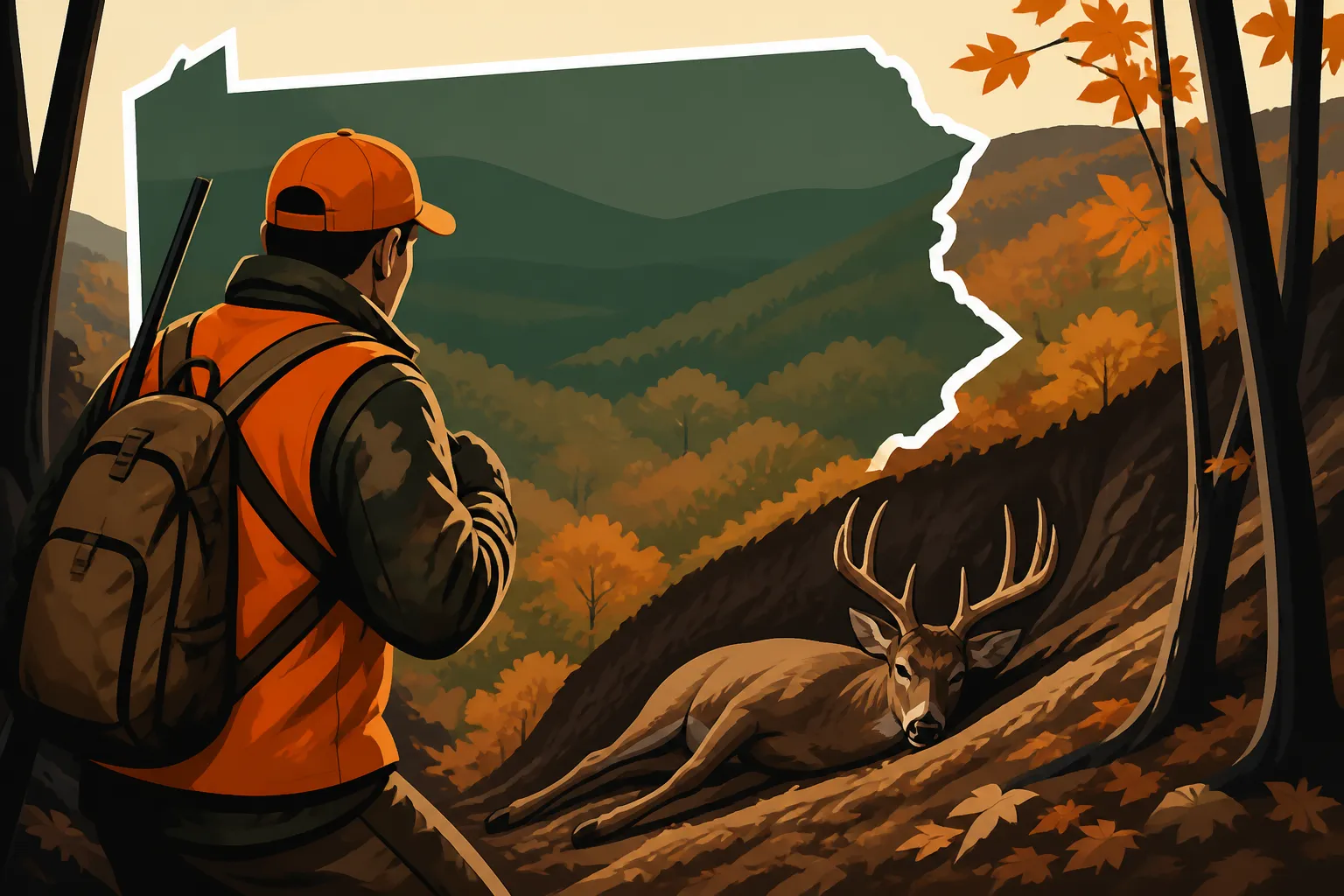
The exhilaration of a successful shot in Pennsylvania's deer woods often quickly gives way to a daunting reality: how do you get that deer out, especially when it's lying in a deep, unforgiving hollow? Many of us have faced that moment of triumph mixed with dread, staring down into a ravine knowing the hardest part of the hunt is yet to come. This guide aims to prepare you for that inevitable challenge, offering practical advice, essential gear insights, and tried-and-true strategies to make deer recovery from steep Pennsylvania hollows as smooth and safe as possible.
Understanding the Challenge of Pennsylvania Hollows
Pennsylvania's landscape is famously rugged, and its hollows are legendary for both holding big bucks and presenting formidable retrieval nightmares. It’s not just about steepness; it’s the combination of factors that turns a simple drag into an epic struggle.
The Nature of Pennsylvania Terrain
If you've spent any time hunting the Ridge and Valley or Appalachian Plateau regions of Pennsylvania, you know exactly what I'm talking about. These hollows aren't just gentle dips; they're often precipitous valleys, carved by ancient streams, littered with jagged rocks, fallen timber, and tangled mountain laurel thickets. The ground underfoot can be a treacherous mix of loose shale, slick mud, and unseen roots, especially after a rain or during a thaw. It's a landscape that tests your footing, your endurance, and your will. Navigating these steep, uneven slopes with nothing but your own two feet is one thing; doing it while wrestling a 150-pound deer is entirely another. The sheer physical toll is immense, often leaving hunters exhausted, bruised, and questioning their life choices.
The deep gorges and ravines found in areas like the Tioga and Loyalsock State Forests, or even some of the more rugged State Game Lands, can feel like you've descended into another world. Sunlight barely penetrates the canopy, making for dim, disorienting conditions, even in the middle of the day. The soil, often saturated from groundwater seepage, becomes a clay-like adhesive, adding pounds of mud to your boots with every step. And let's not forget the sheer density of the vegetation; thick rhododendron and greenbrier can turn a direct line of travel into a grueling detour, forcing you to constantly re-evaluate your path. This kind of environment is why a successful recovery often feels like a second hunt in itself.
Initial Assessment and Planning
Before you even touch your deer, take a moment. Seriously, take a deep breath and assess the situation. Safety is always paramount, and rushing in blindly can lead to injury or even losing your deer temporarily. Start by noting the precise location of your deer relative to the surrounding terrain. Where did it fall? Is it wedged against a log, in a stream bed, or on a relatively clear patch of ground? Look uphill, downhill, and across the hollow. Can you spot any natural draws, old logging roads, or game trails that might offer a more gradual slope or clearer path out? Often, the path of least resistance isn't a straight line.
Consider the time of day. Is daylight fading fast? If so, you'll need to prioritize getting the deer field dressed and marked, perhaps even quartered, before darkness sets in. What's the weather doing? A sudden rain shower can turn a slippery slope into a treacherous mudslide, and a drop in temperature means you need to work quickly to preserve the meat. Think about help: are you hunting solo, or do you have partners nearby who can assist? A quick call or text to alert them is invaluable. Finally, before you start moving anything, use your GPS device or a mapping app like GoHunt to mark the exact location of your deer. This waypoint will be your lifeline if you get disoriented or need to leave and return. Trust me, these hollows can all start to look the same when you’re tired and adrenaline has worn off.
Essential Gear for Deer Recovery in Steep Terrain
Getting a deer out of a Pennsylvania hollow demands more than just grit; it requires the right tools. Having specialized gear can turn an impossible task into a manageable one, ensuring both your safety and the quality of your venison.
Personal Gear and Safety
Your personal gear forms the foundation of a safe and successful recovery. First and foremost, wear good quality boots with aggressive tread. Traction is non-negotiable on steep, often wet, and rocky slopes. Investing in a solid pair of Boots and Packs for Steep Country will pay dividends not just in recovery, but throughout your hunt. Heavy-duty gloves are also crucial to protect your hands from briars, sharp rocks, and rope burn. Layered clothing, appropriate for the weather, is a must, as you’ll alternate between periods of strenuous activity and necessary rest.
Beyond your attire, always carry a well-stocked first-aid kit. Minor scrapes and sprains are common when navigating tough terrain, and being able to address them quickly can prevent more serious issues. A reliable headlamp with fresh batteries is absolutely essential, even if you plan to be out before dark. Things can go sideways quickly, and you don’t want to be fumbling in the gloom. Carry plenty of water and some high-energy snacks; deer recovery is physically demanding work. Of course, you'll need a sharp field dressing knife, and a few large game bags are excellent for keeping meat clean, especially if you opt for the gutless method. For navigation, a dedicated GPS unit or a robust hunting app like GoHunt on your smartphone is indispensable for keeping track of your location, marking the deer's spot, and finding the easiest route back to your vehicle. Checking the topo lines on your GoHunt map can reveal those hidden benches or gentler slopes that aren't obvious from the ground.
Hauling Aids and Equipment
Forget about just grabbing an antler and pulling. While that might work on flat ground, a steep Pennsylvania hollow will humble you quickly. Investing in proper hauling aids is key. A sturdy deer drag or harness is a game-changer. These typically consist of heavy-duty straps or ropes that distribute the pulling force, allowing you to use your body more efficiently without slipping. Some models even incorporate shoulder straps, turning the drag into more of a backpack-style haul, which is far easier on your back. For extreme inclines, a rope and pulley system can be incredibly effective, especially if you have a hunting partner or two. A simple setup with a sturdy rope and a few carabiners can multiply your pulling power, making seemingly impossible ascents manageable.
Now, a word about game carts: while fantastic for Using a Deer Cart on Game Lands on relatively flat trails, they are almost useless in the kind of deep, rocky, and brush-filled hollows we're discussing. You might be able to get a cart to the top or bottom of a hollow, but getting it through the hollow itself is a non-starter. Instead, consider a quality frame pack if you're prepared to quarter your deer. For more on this, check out our guide on Packs and Drags for Steep Ground. Quartering a deer, though more work initially, reduces the weight significantly, allowing you to make multiple trips with manageable loads. This is often the most realistic approach for solo hunters or when faced with truly brutal terrain.
Communication and Navigation Tools
In the remoteness of Pennsylvania's hollows, reliable communication and navigation can be literal lifesavers. Cell service can be spotty to non-existent, especially deep in a ravine or tucked away in dense cover. Don't rely solely on your smartphone for calls. If hunting with a group, two-way radios are an absolute must. They allow for instant, reliable communication to coordinate efforts, relay status updates, or call for help. For more insights on this, our article on Two-Way Radios on a Deer Drive offers valuable advice, even if you’re not on a drive.
For navigation, a dedicated GPS unit is still king for many hunters, offering robust performance even without cell signal. However, modern smartphone apps, especially those with downloaded offline maps like GoHunt or onX Hunt, have become incredibly capable. Make sure your phone is fully charged and consider carrying a portable power bank. These apps allow you to mark waypoints, track your path, and view detailed topographic maps, which are invaluable for identifying contours, benches, and potential exit routes. Having your deer's location marked accurately on your GoHunt app, for example, gives you a visual reference point for every step of the recovery process. A simple whistle can also be a surprisingly effective emergency signaling device if you become separated from your group or need to alert someone to your location. Never underestimate the importance of redundant communication and navigation tools when you're deep in the wilderness.
Strategies for Extracting Your Deer
Once you’ve got your gear squared away and a plan in mind, it’s time to get down to the grueling work of moving your deer. The strategy you employ will largely depend on whether you’re alone or have help, and the specific characteristics of the hollow you’re in.
Solo Recovery Techniques
Hunters often find themselves alone when they connect with a deer, especially when Hunting Pennsylvania's Big Woods for Deer where solitude is more common. If you’re a solo hunter and your deer is down in a hollow, the first thing to accept is that it's going to be a long, difficult process. Your primary goal is to minimize weight and maximize leverage. The "gutless method" of field dressing is arguably your best friend here. Instead of opening the body cavity, you essentially skin and quarter the deer in place, removing the backstraps, hindquarters, and front shoulders. This significantly reduces the weight you need to haul by leaving the entrails and hide behind (unless you want the hide). This method is cleaner, lighter, and often more efficient in rugged terrain. For a deeper dive into processing your deer, you might find our guide on Butchering a Deer at Camp helpful, which includes tips on various field dressing methods.
Once the deer is lighter (or at least field dressed), employing a good quality deer drag harness becomes crucial. Instead of just grabbing an antler, which offers poor leverage and can twist your body, a harness allows you to use your legs and core more effectively. Try to pull the deer head-first or butt-first, whichever offers less resistance depending on the terrain. On steep ascents, a slow, steady pull, taking frequent short breaks, is far more effective than trying to muscle it up quickly and exhausting yourself. If you have a rope, you can even tie it to the deer and then to a tree uphill, essentially using yourself as a human anchor to pull it up in stages, or even run the rope through a natural pulley point like a strong tree branch to gain a mechanical advantage. Remember to always face uphill and use your legs, keeping your back straight. Fatigue leads to sloppy form, which leads to injury.
Team Extraction Methods
Having hunting partners is a massive advantage when faced with a deer in a hollow. Even one extra person can cut the workload in half and open up more efficient retrieval options. With two or more people, you can employ more robust strategies. The classic "drag team" involves one person pulling from the front, while another pushes or lifts from the rear, especially on smaller deer. For larger deer or steeper terrain, two people can drag side-by-side using separate harnesses, distributing the weight and maintaining better control.
For truly steep and treacherous hollows, a rope and pulley system becomes a viable option. Anchor a sturdy rope to a strong tree at the top of the hollow, run it down to the deer, attach it securely, and then run it back up through a pulley anchored to another strong tree or even a dedicated pulley system. This multiplies your pulling power, making the ascent much more manageable. Communication is absolutely vital here. Designate one person as the "leader" to call out instructions: "Pull!", "Hold!", "Clear a path!" Hand signals or Two-Way Radios on a Deer Drive (even if it's not a drive) can ensure everyone is on the same page. While one or two people pull, others can act as spotters, guiding the deer around obstacles, clearing fallen branches, or even pushing from behind if necessary. Teamwork not only makes the job easier but also significantly enhances safety.
Utilizing Natural Terrain Features
One of the smartest things you can do during deer recovery is to "read" the terrain. Don’t fight the mountain; work with it. Often, the path of least resistance isn't a straight line. Look for natural game trails that wind their way up the side of a hollow. Deer are masters of efficient travel, and their trails often follow the most gradual slopes and avoid the densest thickets. Old logging roads, even if overgrown, can provide a more stable and less steep path than bushwhacking straight up.
Also, pay close attention to geological features like benches and saddles. A "bench" is a relatively flat area on a steep hillside, offering a much-needed resting point and a brief reprieve from the incline. A "saddle" is a dip or low point in a ridge line, often providing a gentler ascent to the top of the hollow. Scouting these features ahead of time, perhaps by studying your GoHunt maps with their detailed topographic layers, can save you immense effort. Our guide on Hunting Oak Ridges and Benches delves into how deer use these features, and you can apply that same knowledge to planning your exit route. Avoid dense thickets of mountain laurel, greenbrier, and rhododendron if at all possible; pushing a deer through these can be incredibly slow, tiring, and frustrating. Sometimes, a slightly longer route that follows a gentler contour or avoids heavy cover is actually faster and less exhausting in the long run.
Post-Extraction Care and Safety
You've done it! The deer is out of the hollow, and the relief is palpable. But the job isn't quite finished. There are still crucial steps to ensure the quality of your harvest and your own well-being.
Field Dressing and Preservation
If you opted for the gutless method in the hollow, now is the time to gather any remaining cuts or finish up the process. If you managed to drag the whole deer out, complete the full field dressing as quickly as possible. Rapid cooling of the carcass is paramount, especially if the weather is mild or warm. Lay the deer on a slight incline to allow for drainage, and prop the body cavity open with a stick to allow air circulation. If you're fortunate enough to have Field Dressing a Deer in Cold Weather, the cooling process is less urgent, but still important. Remove the heart and liver if you plan to keep them, and place them in a separate bag.
Once field dressed, the deer needs to be transported to camp or home. Ensure the deer is secured safely in or on your vehicle. If it's still warm out, consider covering the deer with a tarp and placing bags of ice inside the body cavity to accelerate cooling. Game bags are excellent for keeping the meat clean and protecting it from insects and debris during transport. The goal is to get the deer into a cooler environment as soon as possible to prevent spoilage and ensure delicious venison for your table.
Safety Considerations During and After
Even after the deer is out of the hollow, don't let your guard down. Exhaustion can lead to mistakes. Double-check your gear, ensure your firearm is unloaded and safe, and take a moment to rehydrate and refuel. The physical exertion of deer recovery, particularly from a steep hollow, can be immense, leading to muscle strain, dehydration, or even hypothermia in cold, wet conditions, or heat exhaustion in warmer weather. Pay attention to your body's signals.
Before heading home, do a quick check for ticks, especially if you were crawling through thick brush. The Pennsylvania woods are home to various tick species, some carrying diseases like Lyme disease. Finally, and crucially, remember your legal obligations. In Pennsylvania, you must tag your deer immediately after harvest. Our detailed guide on Pennsylvania Deer Tagging Requirements outlines all the rules you need to follow to stay on the right side of the law. Properly tagging and reporting your harvest is the final, official step of your successful hunt.
| Hauling Aid | Description | Pros | Cons | Best Use Case |
|---|---|---|---|---|
| Deer Drag Harness | A strap or system of straps worn by the hunter, attaching to the deer's head/neck. | Distributes weight, frees hands, generally lightweight and compact. | Still relies on brute strength, can be hard on shoulders/back on long drags. | Solo hunter on moderate terrain, less extreme hollows. |
| Game Sled/Cart | Plastic sled or wheeled cart designed to carry a deer. | Reduces friction significantly, ideal for one-person hauling. | Impractical in dense brush, steep rocky hollows, or deep mud/snow. | Flat ground, old logging roads, after deer is out of the initial hollow. |
| Rope & Pulley | System of rope, carabiners, and pulleys to create mechanical advantage. | Multiplies pulling power, great for heavy loads or steep ascents. | Requires anchor points (strong trees), takes time to set up, usually needs multiple people. | Extreme steep inclines, deep hollows, team recovery. |
| Frame Pack | Backpack with an external frame for carrying heavy loads, usually boned-out quarters. | Ideal for quartered deer, reduces overall weight per trip, hands-free. | Requires field quartering skills, multiple trips usually necessary. | Solo hunter in very rugged, remote terrain, long distances. |
| Basic Rope/Webbing | A simple length of strong rope or flat webbing. | Lightweight, versatile, can be used for dragging, securing, or makeshift pulls. | Can dig into hands, less efficient than purpose-built harnesses for long drags. | General utility, securing deer, short pulls, emergency use. |
Disclaimer
Please note that hunting regulations and best practices can change. Always consult the latest Pennsylvania Game Commission digest and regulations before heading afield. Safety should always be your number one priority.