Opening Day Crowds on Pennsylvania Game Lands
The crunch of frost-covered leaves underfoot, the crisp scent of autumn in the air, the hopeful anticipation as dawn breaks on opening day of deer season in Pennsylvania — it’s a feeling unlike any other. But for many of us, that serene picture is quickly shattered by the sight of endless vehicles lining the shoulders of State Game Land roads, revealing the harsh reality of just how many hunters share our passion. Dealing with opening day crowds on Pennsylvania Game Lands can be frustrating, leading to feelings of lost opportunity and, frankly, a less enjoyable experience. This guide will walk you through why these areas become so packed and, more importantly, equip you with practical strategies to navigate or completely avoid the rush, helping you find those coveted quiet pockets for a more successful and peaceful hunt.
Understanding Why Opening Day on Game Lands Feels So Crowded
It’s easy to feel disheartened when you pull up to your favorite State Game Land parking lot on opening morning only to find it overflowing. The sheer number of trucks and trailers can make you question if there’s even a deer left to chase, let alone a place to set up without bumping into another hunter. This isn't just bad luck; it’s a predictable pattern rooted in the fundamental nature of public land hunting in a state as passionate about deer as Pennsylvania.
The Allure of Public Access
Pennsylvania boasts an impressive amount of public hunting land, from its vast State Game Lands to sprawling State Forests and sections of the Allegheny National Forest. For many hunters, these lands are the only accessible option. Not everyone has private property or the connections to hunt on sprawling farms, so these public tracts become the default destination for thousands of eager individuals and hunting camps alike. This accessibility is a double-edged sword: it ensures hunting remains a democratic pursuit, open to all, but it also concentrates pressure.
Think about it: most hunters work hard all year and cherish those few precious days they get to be out in the woods. Opening day, especially for firearms season, is almost a holiday for many Pennsylvanians. It's a tradition, a social event, and often the first time many get to put boots on the ground for the season. The convenience of driving to a marked parking area, knowing you have legal access, draws an immense crowd. This is particularly true for State Game Lands, which are often well-maintained with designated parking, making them incredibly attractive to anyone looking for straightforward access to the woods. It’s not just the number of Game Lands, which is considerable, but their well-advertised and easy access that pulls in the masses. You can find out How Many State Game Lands Pennsylvania Has and quickly see why they are such a magnet.
The Psychology of Pressure Points
Deer, being creatures of habit and survival, learn quickly where the pressure is heaviest. Unfortunately, so do hunters. There's a natural human tendency to gravitate towards what's easy or what looks like a "good spot" from the road. This creates predictable pressure points. Main access roads, well-worn hiking trails, and the immediate vicinity of parking lots become a beehive of activity. Hunters often don't want to venture too far from their vehicles, especially if they anticipate dragging a deer out, so they tend to hunt the fringes.
This often leads to a "herd mentality," where the presence of other hunters, paradoxically, draws more hunters. If you see five trucks parked, your mind might think, "Well, they must know something I don't," even if those hunters are just like you, following the easiest path into the woods. Deer respond by pushing deeper into thick cover or onto neighboring private lands, creating a vacuum in the high-pressure areas. The deer that remain in these areas become incredibly wary, moving mostly at night or holding tight in dense, overlooked pockets that most hunters don't bother to penetrate. This dynamic means that while there are plenty of deer in Pennsylvania, finding one in the heavily trafficked areas of Game Lands on opening day requires more luck than strategy.
Strategies to Escape the Opening Day Rush
Feeling like you're constantly dodging other hunters can really take the joy out of opening day. But it doesn't have to be that way! There are very real, actionable strategies you can employ to find more solitude and, consequently, more success, even on the busiest public lands. It often comes down to doing what others aren't willing to do.
Walking Further Than the Rest
This is perhaps the simplest and most effective strategy for escaping crowds on public land: put more distance between yourself and your vehicle than the average hunter. Most hunters, statistics show, don't venture more than a quarter to a half-mile from their parking spot. They want to minimize the effort of a drag out, or they simply aren't equipped for a deeper push. If you're willing to walk a mile or more, you dramatically increase your chances of finding unpressured deer and fewer fellow hunters.
Think of it as a funnel. All the hunters pour into the woods from the parking lot, but only a fraction continue past that first bend in the trail, and an even smaller fraction go beyond the next ridge. Use detailed topographic maps, and even mapping tools like those from GoHunt, to identify remote corners of State Game Lands. Look for areas without established trails, especially those that require navigating steep ravines, crossing small streams, or pushing through thick briar patches. These are the natural barriers that deter most people. Planning your entry and exit routes meticulously is key, especially when you're going deep. Remember, How Far to Walk From the Parking Lot can often dictate your success. The deeper you go, the more the crowds thin out, and the more likely you are to find deer that haven't been harassed for hours.
Utilizing Overlooked Terrain and Cover
While many hunters are focused on oak flats or obvious travel corridors, smart hunters know that pressured deer will seek out the thickest, nastiest, most inconvenient cover imaginable. These are often areas that others glance at on a map and quickly dismiss. We're talking about dense conifer thickets, impenetrable laurel and rhododendron jungles, steep, rocky sidehills, or swampy bottoms that are a pain to walk through.
These aren't necessarily where deer want to be all the time, but they are where deer go when they feel pressure. On opening day, as soon as the first shots ring out and hunters start pushing, deer will immediately funnel into these refuges. You'd be amazed at how many deer will bed down in a tiny, overlooked island of thick stuff, literally a stone's throw from a main trail, if it offers them enough security. You need to identify these areas during your pre-season scouting. Look for subtle benches, small draws, or humps within these dense areas. Often, these spots provide both security cover and a vantage point for deer to watch their backtrail. Don’t be afraid to put on your brush pants and go where others won’t. Sometimes, just Finding Ground Others Walk Past can make all the difference. Even a seemingly unremarkable dip in a ridge can be a sanctuary if it offers good cover and thermals are right; understanding how to read these nuanced spots, like Reading a Pennsylvania Hollow for Deer, is a huge advantage.
Timing Your Hunt Differently
Opening day isn't your only opportunity, and sometimes, avoiding the peak chaos altogether can be a fantastic strategy. If you have the flexibility, consider hunting mid-week after the initial opening weekend frenzy has subsided. The majority of casual hunters or those with limited time off will hit Saturday and maybe Sunday, then return to work. By Tuesday or Wednesday, the woods are often noticeably quieter, and deer might start to resume more natural movement patterns.
Another approach is to focus on afternoon hunts, particularly on opening day itself. Many hunters are out bright and early, but by mid-morning, some are heading back to their trucks for lunch or calling it quits if they haven't seen anything. The afternoon often sees a dip in hunter numbers before a smaller resurgence closer to evening. This can be an opportune time to slip into an area that received heavy morning pressure, as deer might be slowly filtering back in or moving between bedding and feeding areas. If you’re really serious about avoiding crowds, consider focusing your efforts on Hunting the Second Week of Rifle Season. By then, the woods are significantly quieter, deer have settled back into patterns, and the chances of encountering a trophy buck that survived the initial barrage are often higher.
Scouting and Technology as Your Secret Weapons
In today's hunting world, "winging it" on opening day, especially on public land, is a recipe for frustration. The most successful hunters don't just show up; they prepare. This preparation involves a blend of old-school woodsmanship and modern technology to pinpoint those less-pressured pockets.
Pre-Season Scouting for Undisturbed Pockets
You simply cannot overstate the importance of pre-season scouting. This is your chance to understand deer movement patterns before they're completely disrupted by hunting pressure. Start well before the season, ideally in late summer or early fall, to identify reliable food sources, primary bedding areas, and the most likely travel corridors between them. But don't just look for deer sign; look for human sign. Notice where other hunters have placed stands, where trails are heavily worn, and where rub lines or scrapes are easily accessible from parking areas. These are the spots to avoid on opening day.
Instead, focus your scouting efforts on finding those remote, overlooked pockets we discussed earlier. Look for areas with heavy security cover that show consistent, but perhaps not abundant, deer sign. These might be smaller, less obvious trails leading into a thicket, or subtle changes in elevation that offer a deer an advantage. Pay attention to how deer might use wind and thermals to their advantage in these spots. Scouting in areas that are hard to get to will give you confidence on opening day. Remember, Scouting Pennsylvania Public Land Before Season is the foundation of any good strategy. Learning Reading Aerial Photos for Big Woods Deer can save you countless hours of walking in the wrong direction, helping you pinpoint these untouched spots.
Leveraging Mapping Tools and Apps
Modern mapping tools and apps have revolutionized how we scout and hunt public land. Services like GoHunt or even the free Pennsylvania Mapping Center are invaluable. These platforms allow you to overlay property boundaries (crucial for State Game Lands where adjacent private land might be off-limits), detailed topography, satellite imagery, and even historical aerial photos. This digital reconnaissance allows you to identify potential bedding areas in thick cover, assess steep terrain that discourages other hunters, and plan the quietest, most efficient entry and exit routes.
Before you even step foot in the woods, you can use these apps to:
- Identify Remote Access Points: Zoom in on State Game Land boundaries and look for obscure dirt roads, old logging trails, or forgotten access easements that aren't marked as main parking areas.
- Analyze Topography: Steep ravines, high benches, and hidden saddles can often funnel deer movement while deterring human foot traffic. Use contour lines to understand elevation changes and predict how deer might navigate the landscape.
- Pinpoint Thick Cover: Dense conifer stands, areas of young clear-cuts, or natural swamps show up clearly on satellite imagery. Mark these as potential pressure refuges.
- Plan Silent Approaches: Trace routes that keep you on high ground, out of sight from potential deer beds, or utilize natural screening like ridges or drainage ditches.
Using a tool like GoHunt or Using the Mapping Center on a Phone effectively means you arrive on opening day with a precise plan, not just a hope and a prayer.
Considering Less Popular Game Lands or Adjacent Public Lands
While the major, well-known State Game Lands get hammered, Pennsylvania offers a vast network of public lands. Sometimes the solution isn't to walk further in one popular Game Land, but to choose a different Game Land altogether, or even another type of public land. Smaller, less accessible State Game Lands, or those nestled in less-traveled regions, often see significantly less pressure. These might not have the biggest deer populations, but the deer present will be less wary.
Don't overlook the immense opportunities in Pennsylvania's State Forests. While State Game Lands are specifically managed for hunting and wildlife, State Forests are managed for timber, recreation, and water, but also allow hunting over vast acreage. Often, State Forests offer even larger, more contiguous blocks of timber than Game Lands, and their access points can be more dispersed and less obvious, leading to lighter hunting pressure. For a truly immersive "big woods" experience, Hunting Pennsylvania State Forests can offer a unique challenge and solitude you won't find at the busiest Game Land parking lots.
Here’s a quick comparison to help you strategize:
| Feature | High-Pressure State Game Land Areas | Low-Pressure State Game Land Areas / State Forests |
|---|---|---|
| Access | Well-marked parking lots, easy trails, close to major roads | Remote pull-offs, obscure logging roads, requires more walking |
| Terrain | Gentle slopes, open timber, easily navigable | Steep hillsides, dense thickets, swamps, rocky areas |
| Deer Behavior | Wary, nocturnal, quick to flee, hold tight in thick cover | More natural movement, less wary, may browse in more open areas |
| Hunter Density | Very high, constant human scent and movement | Significantly lower, potential for true solitude |
| Success Odds | Requires extreme patience, deep pushes, or luck | Increased odds through strategic scouting and perseverance |
Ethical Considerations and Safety in Crowded Conditions
While escaping crowds is a primary goal, there will inevitably be times, especially on opening day, when you encounter other hunters. In these situations, ethical behavior and safety become paramount. We're all out there for the same reason – to enjoy the hunt – and a little courtesy goes a long way in ensuring everyone has a positive experience.
Hunter Etiquette and Respect
When you're sharing public land, showing respect for your fellow hunters is critical. This means giving other hunters their space. If you walk into an area and see someone already set up, whether it's a treestand, ground blind, or just a hunter sitting against a tree, acknowledge their presence and back out quietly. Don't try to squeeze in nearby. There’s enough woods for everyone, and encroaching on another hunter’s setup is not only rude but can spoil their hunt and yours. If you come across fresh tracks and realize another hunter is just ahead, consider swinging wide or changing your direction to avoid interfering with their stalk.
Keep noise to a minimum, especially when approaching your chosen hunting spot in the dark. Don't skyline yourself on a ridge where you can be seen from a distance. If you're still-hunting, move slowly and deliberately. Communication is also key; if you accidentally walk up on another hunter, a quiet "Good morning, just passing through" can ease any tension. We all represent the hunting community, and respectful interactions uphold our traditions and public image.
Prioritizing Safety in Numbers
Safety is non-negotiable, particularly when multiple hunters are in the woods. The most crucial rule is always positive target identification. Never, ever shoot at movement or sound. Always identify your target clearly and ensure you have a safe backdrop before pulling the trigger. This means knowing what's beyond your deer. On public land, you must assume there could be another hunter, a hiker, or even a dog in the vicinity.
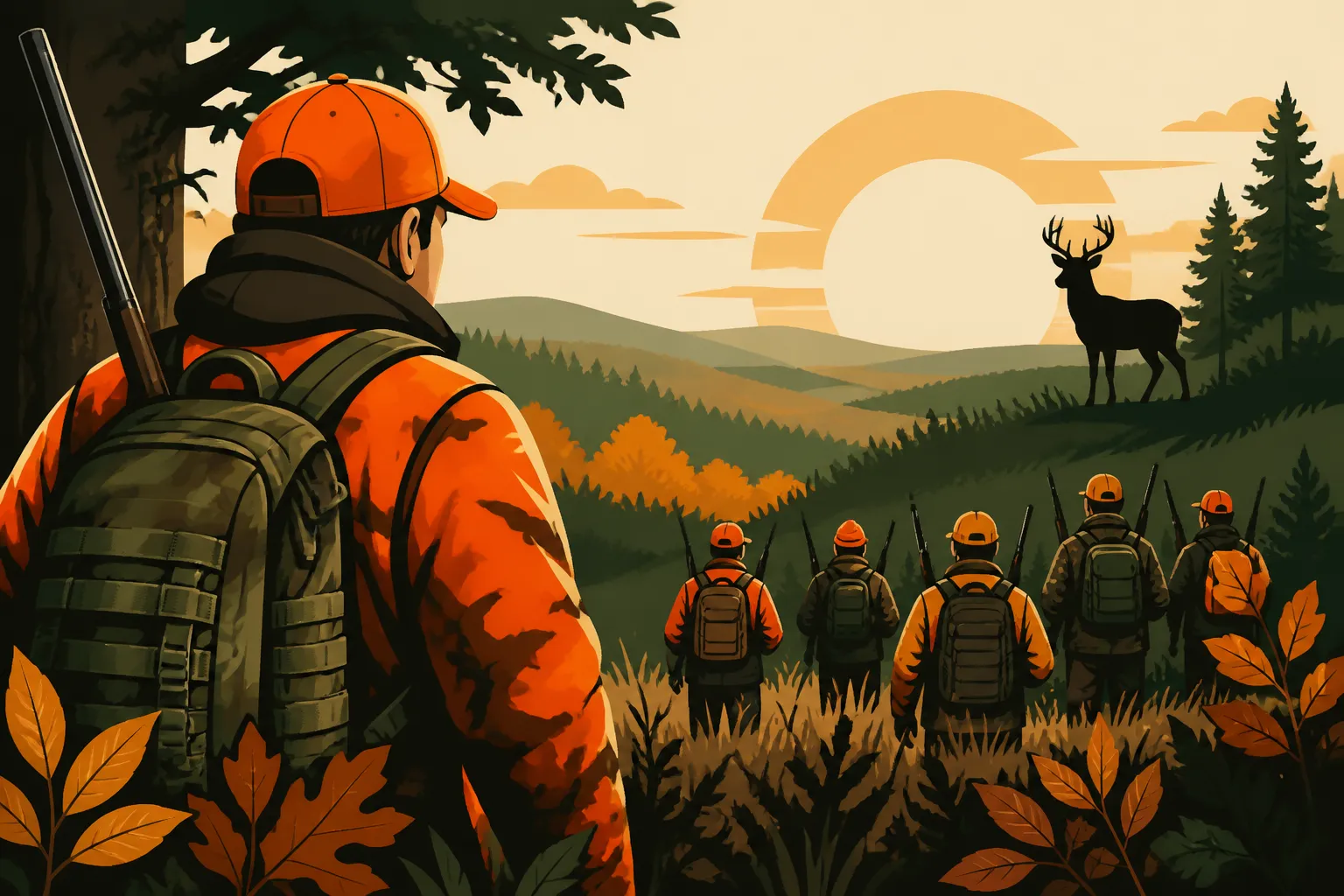
Adhering to Pennsylvania Hunter Orange Rules is not just a legal requirement but a life-saving measure. Make sure you and anyone hunting with you are wearing the appropriate amount of fluorescent orange, visible from 360 degrees. If you’re involved in a small deer drive with a few trusted hunting partners, ensure everyone knows their shooting lanes and stays aware of others' positions. Carry a whistle or two-way radio for emergency communication, but use them sparingly to avoid disturbing other hunters or spooking game. The goal is to hunt smart, hunt safe, and ensure everyone goes home at the end of the day.
Disclaimer
Please remember that hunting regulations and seasons are subject to change. Always consult the official Pennsylvania Game Commission Digest for the most current and accurate information before heading afield. Stay safe and good luck!