How Far to Walk From the Parking Lot
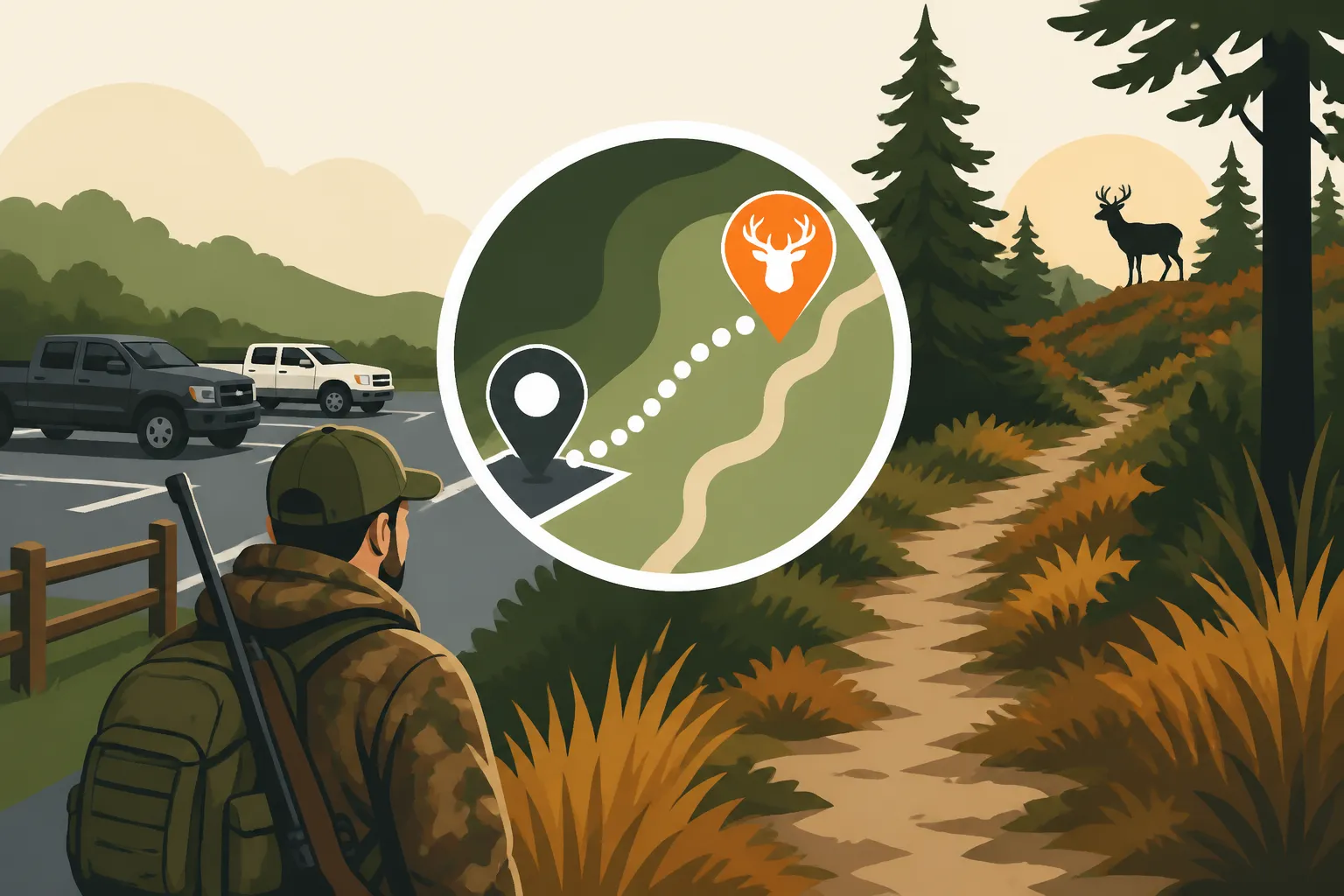
You've just pulled into a Pennsylvania Game Lands parking lot, and it's already packed. Cars are lined up, trucks are idling, and you can practically hear the collective sigh of a hundred hunters thinking, "Well, so much for an unpressured spot." It's a common frustration, especially during opening day or peak rut, trying to figure out how far you actually need to walk from that crowded trailhead to find some peace and, more importantly, some deer. This guide will help you navigate that exact challenge, offering insights into escaping the crowds and finding those hidden pockets many hunters overlook.
The Parking Lot Paradox: Why Miles Matter (and Don't)
It's a classic hunting conundrum: how far is far enough? We all know that the further you get from a vehicle, the less human pressure you're likely to encounter. But it's not always about sheer mileage; sometimes it's about the quality of that distance, the terrain you cover, and the understanding of what truly deters other hunters. The "parking lot paradox" means that while everyone thinks about getting away from the crowd, not everyone actually does it, or they do it in predictable ways.
The Psychological Edge: Even a Short Walk Can Deter Casual Hunters
You'd be surprised how many hunters stop within a half-mile or even a quarter-mile of their truck. Think about it: they're out for a morning hunt, maybe not fully committed to a grueling trek, or perhaps they're just looking for a quick sit near a known trail. Even walking that seemingly short distance past the initial crush can put you in a completely different hunting environment. The psychological barrier of simply going "further" than the next guy often leaves pockets of undisturbed game much closer than you might imagine.
This isn't to say you'll find trophy bucks just over the first ridge, but you'll likely encounter more natural deer movement. The simple act of passing those first few hundred yards where most people spread out can dramatically increase your chances of seeing deer that aren't constantly dodging human presence. It’s about understanding the path of least resistance for both hunters and deer. Hunters often take it, and deer learn to avoid it.
Consider the steepness of the terrain. A half-mile walk uphill through thick laurel can deter far more hunters than a two-mile stroll down a flat, grassy pipeline. Entry Routes on Steep Ground are often overlooked precisely because they require more effort. Hunters, like water, tend to follow the easiest path. If you're willing to put in a little extra grunt work, you can often leave 80% of the pressure behind in a relatively short distance, simply by choosing a less appealing, more difficult route.
Beyond the Gate: Access Roads and Trails
Many public lands, including various State Game Lands, are crisscrossed with old logging roads, gas line right-of-ways, or designated administrative roads that are often gated to vehicle traffic. While these might seem like an easy way to cover ground, they can also act as "pressure funnels." Everyone sees them, and everyone uses them. So, while you're walking away from the parking lot, you might still be walking with a line of other hunters.
The real trick is to use these established paths as a means to an end, not the destination itself. Walk them just far enough to get past the initial crowd, then peel off into the timber. Look for subtle deer trails, old overgrown logging cuts, or a change in topography that takes you away from the obvious human highways. That's where you start to find the real solitude.
Think of it like this: you drive to the grocery store, but you don't hunt in the parking lot. These roads are just another extension of easy access. Deer know this, and they'll often hold tight in thickets just off these roads during hunting hours, only moving across them quickly. If you want to find them truly relaxed, you need to get into those areas where human footsteps are less frequent. These spots can be excellent for still-hunting, as deer are less apt to be on high alert.
The density of roads and trails also impacts how far you need to walk. In areas with fewer access points, the "mileage" needed to escape pressure might be less, as the human footprint is concentrated. Conversely, in areas with a spiderweb of old roads, you might need to walk further off the main routes to genuinely find undisturbed ground. Hunting Pressure on Pennsylvania Game Lands is often dictated by this accessibility.
Understanding Hunter Pressure and Deer Behavior
Deer are incredibly adaptable creatures. They learn human patterns and adjust their behavior accordingly. During hunting season, especially during firearms season, they'll gravitate towards areas with less human disturbance. This knowledge is key to figuring out your optimal walking distance.
The "Sweet Spot" Distance: Escaping the Pressure Cooker
Generally speaking, a lot of hunters consider a walk of 1 to 1.5 miles into public land to be a decent effort. This often gets you past the casual morning sitters and the hunters who aren't equipped or inclined to go much further. For many areas, especially those with rolling hills or moderate terrain, this range can put you into a different caliber of hunting ground. You're entering what some refer to as the "second wave" of pressure, but still, often better than the first.
However, in really high-pressure areas, or on easily accessible flat ground, that distance might need to stretch to 2 or even 3 miles. It truly depends on the specific piece of ground and the local hunting culture. What's a long walk in one WMU might be considered typical in another. The goal isn't just distance, it's effective distance – getting to where the deer feel safer and move more naturally during daylight hours. This often means going beyond what most hunters consider a "convenient" walk.
| Type of Public Land Access | Typical Hunter Walking Distance (to initial stop) | Recommended Walk (to reduce pressure) |
|---|---|---|
| Easy trail, flat terrain | 0.25 – 0.75 miles | 1.5 – 2.5+ miles |
| Old logging road, moderate incline | 0.5 – 1 mile | 1.5 – 2 miles |
| Steep, thick timber, no clear trail | 0.25 – 0.5 miles | 0.75 – 1.5 miles |
| Limited access, remote gates | 1 – 2 miles (often further by design) | 2.5+ miles |
Remember, these are just guidelines. The actual distance needed can vary wildly. The real "sweet spot" isn't a fixed number of miles; it's the point at which you notice a significant drop-off in human sign and a corresponding increase in fresh deer sign that shows normal daytime activity. You might find this spot in half a mile if the terrain is particularly brutal, or you might need to stretch to two miles if the walking is easy.
Reading the Land for Untouched Pockets
Sometimes, you don't need to walk miles to get away from people; you just need to walk smart. Topography is your best friend here. Deep hollows, steep benches, thick laurel thickets, or rocky outcroppings often act as natural barriers that deter casual hunters. These features can create "untouched pockets" of habitat where deer feel secure, even if they're relatively close to a main access point.
For instance, a steep, rocky hillside leading down into a brushy creek bottom might only be a few hundred yards from a busy Game Lands road, but if it looks intimidating to descend and ascend, most hunters will pass it by. Deer, however, will often bed down in these inaccessible spots, knowing they offer both cover and a quick escape route. Reading a Pennsylvania Hollow for Deer can reveal these hidden havens.
Similarly, consider thick clearcuts or areas of dense regrowth. While they can be a nightmare to walk through, they provide excellent security cover for deer. Hunters often avoid them for the ease of travel, leaving these areas largely unpressured. If you're willing to push through such cover for a few hundred yards, you might find yourself in prime deer habitat that others simply walk around. Hunting Pennsylvania Clearcuts and Regrowth requires a different mindset but can be incredibly rewarding.
Ultimately, reading the land involves looking for areas that are difficult for humans to traverse but provide good cover and food for deer. These could be swamps, boulder fields, steep ravines, or impenetrable thickets. Deer don't care about convenience; they care about survival. If you can embrace the inconvenience, you'll often find success closer than you thought possible. This is especially true for Hunting Pennsylvania's Big Woods for Deer, where challenging terrain is often the norm.
Practical Strategies for Going Deeper (or Smarter)
So, how do you actually implement this "go deeper or smarter" philosophy? It starts with good planning, the right tools, and realistic self-assessment.
Leveraging Mapping Tools for Remote Access
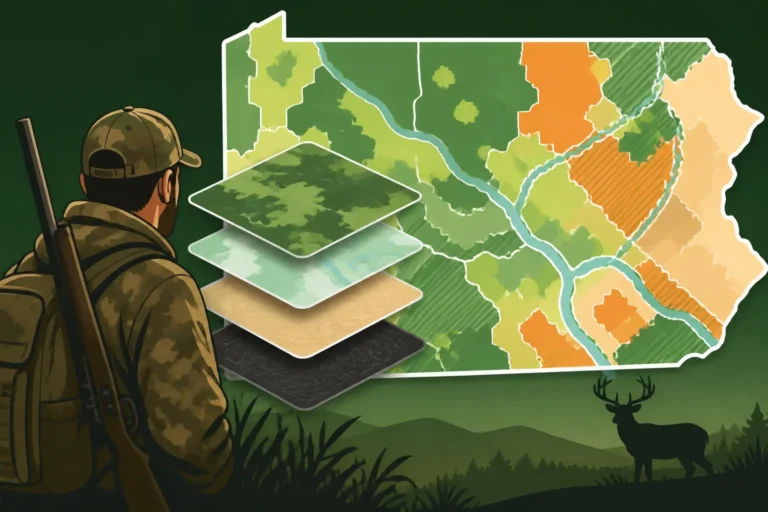
Modern hunting requires modern tools, and digital mapping apps are indispensable for finding those remote spots. Services like onX Hunt and GoHunt allow you to scrutinize aerial imagery, topographic maps, and land ownership boundaries right from your phone or computer. This is where you can identify potential "honey holes" that are hard to see from the ground.
Before you even leave home, use these tools to scout parking areas and potential access points. Look for terrain features like deep ravines, thick timber stands, or saddle points that are a good distance from popular trails. Identify areas of public land that might be surrounded by private property, as these often receive less pressure because getting to them requires specific permission or a long walk around private parcels. Scouting With the Pennsylvania Mapping Center is a powerful skill.
You can drop waypoints to mark potential deep-woods bedding areas, escape routes, or food sources. When you're on the ground, your GPS-enabled map can guide you precisely to these spots, ensuring you don't get turned around, especially when you're making a bee-line through thick timber or in low light. These apps allow you to see exactly where you are relative to property lines, roads, and, crucially, other potential access points. This helps you identify pockets that might be just as far from another hunter's starting point as they are from yours, minimizing overlap.
When studying your map, pay attention to the contour lines. Steep, tightly packed lines indicate difficult terrain that most hunters will avoid. Areas of gentler slopes surrounded by these steep sections can be ideal bedding or feeding areas that are only accessible to those willing to make the tough climb or descent. Look for benches on these steep hillsides; these are natural travel corridors that deer use and hunters often overlook. Hanging a Stand on an Oak Bench is a classic tactic for these scenarios.
Gear and Fitness: Preparing for the Long Haul
If you're serious about getting away from the crowds, you need to be physically prepared and have the right gear. A two-mile hike with a pack on your back, up and down hills, in cold weather, before you even start hunting, is no joke. Don't underestimate the physical demands of truly getting deep into public land. Training hikes with your fully loaded pack, even in the off-season, can make a huge difference.
Your gear also needs to be up to the task. Comfortable, supportive boots are paramount. Blisters or sore feet will cut any deep-woods hunt short. A good quality backpack that can comfortably carry your essentials (water, snacks, extra layers, first-aid, field dressing kit) is non-negotiable. Think lightweight but durable. Boots and Packs for Steep Country are designed for this exact challenge.
And don't forget game retrieval. If you put in the miles and succeed, you then have to get that animal out. Dragging a deer two miles across rugged terrain is an exhausting, back-breaking chore. Consider packing a lightweight deer cart if the terrain allows, or at least a good drag rope. If you're in truly remote, steep country, knowing how to bone out an animal to pack it out in pieces can be a lifesaver. Using a Deer Cart on Game Lands can save your back if you're not in the steepest country.
Table: Essential Gear for Deeper Access Hunts
| Gear Item | Why It's Crucial | Pro Tip |
|---|---|---|
| High-Quality Boots | Comfort, ankle support, waterproof for long, rugged treks | Break them in well before season; carry extra socks. |
| Hydration Pack/Water | Staying hydrated for sustained physical exertion | Consider a water filter or purification tablets for extended trips. |
| Navigation Tools | GPS-enabled app (onX Hunt), physical map, compass | Download offline maps; know how to use all three, even in bad cell service. |
| Layered Clothing | Adapting to changing temperatures and exertion levels | Avoid cotton; wool or synthetics are best for moisture wicking. |
| Headlamp | Essential for walking in before dawn and out after dark | Carry spare batteries or a small power bank. |
| First-Aid Kit | For minor injuries far from immediate help | Include blister treatment, pain relievers, and bandages. |
| Game Retrieval Aids | Drag rope, lightweight deer cart (if applicable) | Consider game bags for boning out if terrain is extreme. |
Knowing When to Stop (or Turn Around): The Balance of Effort
There's a fine line between getting deep and getting lost, exhausted, or just plain ineffective. The goal isn't to walk as far as humanly possible, but to walk just far enough to find what you're looking for – less pressured deer. Sometimes, pushing too far can mean you spend more time walking than hunting, or you exhaust yourself to the point of making poor decisions.
It's about finding that sweet spot where effort meets opportunity. If you've hiked an hour and a half, climbed two steep ridges, and are seeing abundant fresh deer sign with no human tracks, you've likely found your zone. There's no need to push another mile just for the sake of it. Set up, slow down, and hunt that area thoroughly. Often, the deer you're looking for aren't necessarily miles away, but rather in pockets that most people simply don't have the grit or knowledge to reach. Finding Ground Others Walk Past is often about this balance.
Conversely, if you've walked for a significant distance and are still seeing consistent boot tracks, hearing distant shots, or just feel like the area is still too "hot," it might be time to either adjust your strategy, try a different direction, or consider a new parking lot altogether. Don't be afraid to cut your losses if a spot isn't producing the solitude you anticipated. Sometimes, success means trying something different rather than grinding away in a known pressure cooker. This is part of the art of Hunting Pennsylvania State Game Lands.
Ultimately, the best advice for how far to walk from the parking lot is this: walk far enough that you feel truly immersed in the woods, where the sounds of civilization fade, and the only tracks you're consistently seeing are those of wildlife. It could be half a mile, or it could be three. Your map, your fitness, and your willingness to bypass the obvious paths will tell you when you've gone far enough.
Disclaimer
This article is for general informational purposes only and does not constitute professional advice. Laws, prices and regulations vary by location and change over time. Consult a qualified professional for guidance on your specific situation.