Crow Hunting Seasons and Tactics
If you've spent any time in rural Pennsylvania, you know crows can be a real handful. They're noisy, incredibly intelligent, and sometimes, frankly, a massive nuisance to farmers, gardeners, and even other wildlife. Their cawing can pierce the morning quiet, and their sheer numbers in certain areas can feel overwhelming. But what many folks don't realize is that these clever birds offer a fantastic, often overlooked hunting opportunity right here in the Keystone State. This guide will walk you through everything you need to know about navigating Pennsylvania's crow hunting seasons and effective tactics, turning that frustration into a rewarding pursuit.
Understanding Pennsylvania's Crow Seasons and Regulations
Hunting crows in Pennsylvania isn't just about grabbing a shotgun and heading out. Like all hunting activities in our state, there are specific seasons, daily limits, and legal requirements you need to understand to ensure you're hunting ethically and legally. These regulations are designed to manage wildlife populations responsibly while providing ample opportunity for hunters.
The General Crow Season Framework
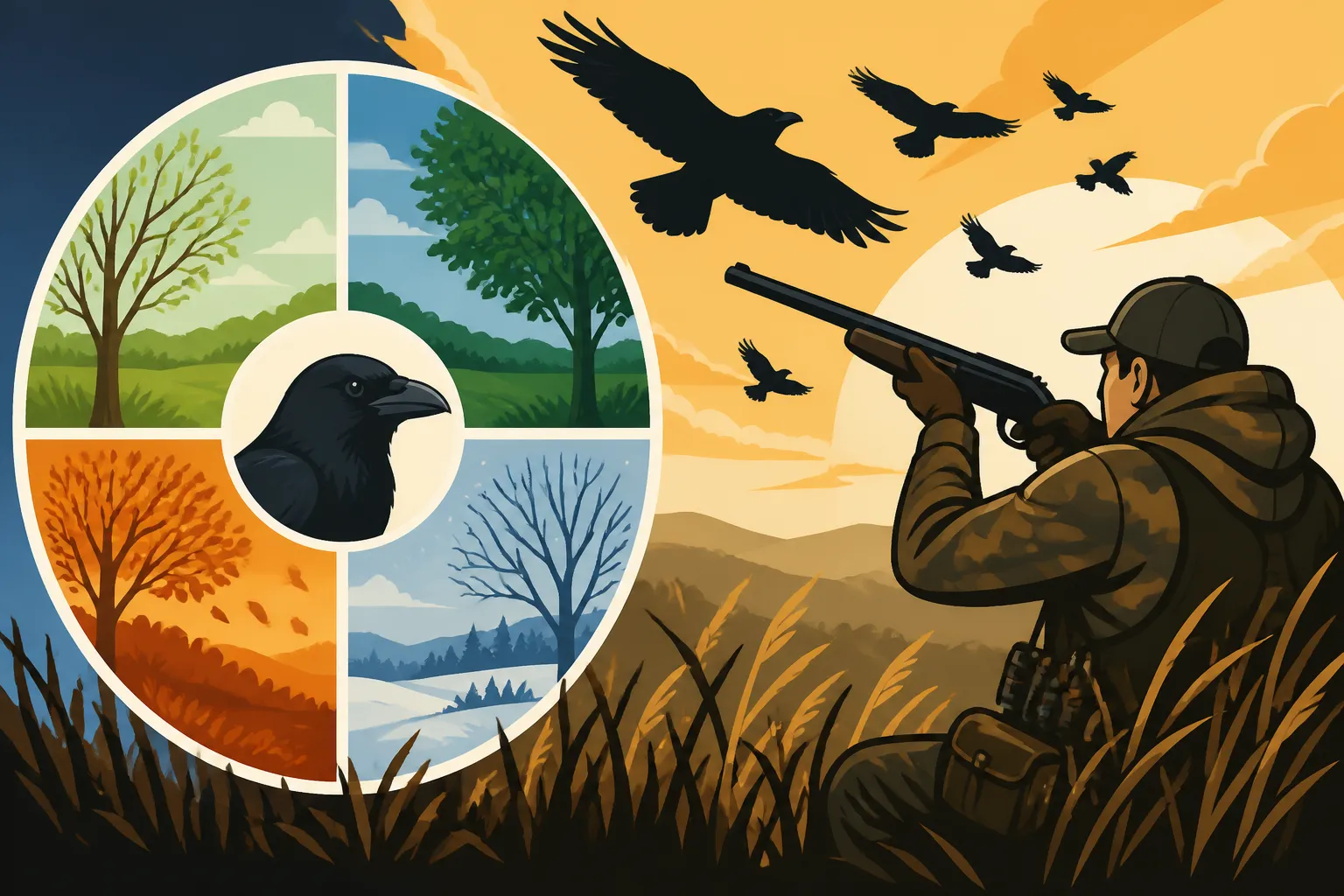
Pennsylvania's crow season is usually quite generous, often running for several months out of the year, with specific days of the week designated for hunting. This isn't like deer season where you have a short, intense window; crow hunting often allows for a more relaxed, extended engagement. Generally, crows can be hunted from July 1 to April 10, but only on specific days, typically Tuesday, Wednesday, Thursday, Friday, and Saturday. This means Sunday and Monday are off-limits for crow hunting, a key detail many new hunters might miss. These dates and specific days are subject to change year to year by the Pennsylvania Game Commission (PGC), so it's always critical to double-check the current year's hunting digest or the PGC website before you head afield. For those looking into general small game opportunities, remember that the crow season runs concurrently with many other small game seasons, allowing for diversified outings if you plan accordingly. You can learn more about specific regulations in our comprehensive guide to Pennsylvania Small Game Seasons and Bag Limits.
The reason for these specific days and long seasons often boils down to managing crop damage and nuisance complaints. Crows are omnivores and, in large numbers, can cause significant damage to agricultural crops like corn and sunflowers. Providing a lengthy hunting season, particularly during the farming months, helps farmers mitigate some of these issues. Unlike regulated game species where populations are strictly controlled through tag limits, crows often have a more open season due to their abundant numbers and the perception of them as a pest species.
Specific Daily Limits and Shooting Hours
When you're out chasing crows, there's no set daily bag limit. That's right—you can harvest as many crows as you're able to. This is a unique aspect of crow hunting in Pennsylvania, setting it apart from virtually every other game species. While it might sound like an invitation to go wild, most hunters find that calling in large numbers of crows is a challenge in itself, and you'll often be limited more by your shooting ability and the birds' wariness than by a bag limit. However, don't confuse the lack of a bag limit with a lack of respect for the game; ethical hunting practices always apply.
Shooting hours for crows are also important. You can hunt crows from one-half hour before sunrise until sunset. This typically aligns with general small game hunting hours, so if you're familiar with those, you're already ahead of the game. However, these times are absolute. Don't push your luck to catch that last straggler in fading light or try to jump a roost before legal shooting time. Always be sure to check the exact Legal Shooting Hours for your specific dates, as they change throughout the year.
Here's a quick summary table of the typical Pennsylvania Crow Hunting Season:
| Aspect | Details |
|---|---|
| Season Dates | Typically July 1 to April 10 (always verify current year PGC digest) |
| Hunting Days | Tuesday, Wednesday, Thursday, Friday, Saturday (No Sunday or Monday hunting) |
| Daily Bag Limit | None (unlimited) |
| Shooting Hours | One-half hour before sunrise to sunset |
Legal Firearms and Methods
For crow hunting in Pennsylvania, you're generally allowed to use shotguns, bows, and crossbows. Most hunters opt for a shotgun due to the fast-flying nature of crows and the ability to get multiple shots off. There are no specific gauge restrictions, meaning a 12-gauge, 20-gauge, or even a smaller .410 can be legal, though larger gauges are certainly more effective for quick, passing shots. When considering your shotgun setup, thinking about Choke Choice for Fast Flushes can significantly improve your success rate.
One common question revolves around the use of semi-automatic firearms. Pennsylvania rules permit semi-automatic shotguns for small game, including crows. The key is to ensure your shotgun is plugged to a three-shell capacity (one in the chamber, two in the magazine) if it has a larger capacity. This is standard for most migratory bird and small game hunting across the country and applies here too. When selecting ammunition, birdshot is your friend. Generally, 7 1/2 or 8 shot size is ideal, providing a dense pattern for these agile birds without over-penetrating. Lead shot is permitted for crows, unlike waterfowl where non-toxic shot is mandatory.
The use of electronic calls is also perfectly legal and, in fact, highly recommended for crow hunting. Crows are incredibly vocal, and mimicking their distress or assembly calls can be remarkably effective. You can even use decoys, which further enhance your chances. We'll dive deeper into these tactics shortly, but it's important to know they are legal tools in your crow hunting arsenal. Before you head out, make sure your Pennsylvania Hunting Licences and What They Cost are up-to-date. Without the proper licensing, none of these tactics matter.
Essential Crow Hunting Tactics for Pennsylvania Landscapes
Successfully hunting crows isn't just about knowing the rules; it's about understanding their behavior, their preferred habitats, and employing smart tactics to bring them into range. Crows are highly intelligent, with keen eyesight and excellent hearing, making them a challenging quarry. You can't just walk into the woods and expect them to fly over your head.
Scouting and Location Selection
Just like deer or turkey hunting, effective crow hunting starts with good scouting. You need to find where crows are congregating. Crows often roost in large numbers in specific woodlots, especially during colder months. These roosts can sometimes hold hundreds, even thousands, of birds. During the day, they'll disperse to feed in agricultural fields, around landfills, or even in suburban areas. Your goal is to intercept them between their roosting and feeding areas, or to call them in when they're feeding.
Look for areas with good food sources, like fields with waste grain (especially corn), freshly mowed hayfields where insects are exposed, or even fruit orchards. Also, pay attention to travel corridors—the routes they use to fly from roost to feeding grounds. These are often along tree lines, creek bottoms, or over prominent hills. Using mapping tools like those offered by GoHunt or similar online resources can be invaluable here. You can identify potential roosting cover (dense stands of evergreens or mature hardwoods) and open feeding areas. Combining satellite imagery with real-world reconnaissance will give you a significant edge. Our guide on Scouting Pennsylvania Public Land Before Season offers broader tips that apply well to pinpointing crow activity.
Wind direction is also crucial. Crows, like most birds, prefer to land and take off into the wind. Position yourself downwind of where you expect them to approach so they turn into the wind over your position, presenting a better shot opportunity. Also, be mindful of hunting pressure; crows quickly learn to avoid areas where they've been shot at. If you find a promising spot but the crows are exceptionally wary, it might be time to move to a less pressured area.
Decoying and Calling Strategies
This is where crow hunting gets really fun. Crows are incredibly responsive to calls and decoys, largely because they are highly social animals that depend on communication for survival.
Calling: An electronic caller loaded with various crow calls is almost a necessity. Start with a "distress" call or a "crow fight" call. These calls mimic a crow in trouble or a gathering of crows aggressively interacting, which triggers their instinct to investigate, mob predators, or join the ruckus. Once crows start to respond, you can often switch to an "assembly" or "come here" call to draw them closer. Vary your calling. Don't just play a constant loop. Mimic the sporadic, excited, and sometimes frantic cawing of real crows. If you have experience with other predator calling, some of the principles can carry over, even if the sounds are different, as covered in topics like Coyote Calling in Pennsylvania Winter.
Decoys: Decoys enhance your setup significantly. Full-body crow decoys, often placed on stakes, give incoming birds a visual reference point. Position them in an open area that offers a clear shot, typically within 20-30 yards of your blind. A common and effective setup involves placing several decoys on the ground, some looking like they're feeding, and one or two positioned on taller sticks to simulate sentinels. Some hunters even incorporate an owl or hawk decoy with their crow decoys. Crows absolutely despise owls and hawks and will come in aggressively to mob them. If using a predator decoy, place your crow decoys around it as if they are harassing the "predator." This can infuriate passing crows and draw them straight into your setup.
Remember, crows have incredible eyesight. They'll spot anything out of place. Your decoy spread needs to look natural. Don't clump them all together. Give them some space, mimicking how a flock would naturally spread out while feeding or harassing a predator.
Concealment and Ethical Shooting
Because crows have such sharp eyes, your concealment is paramount. If they see you, the hunt is over before it begins.
Camouflage: Full camouflage, from head to toe, is non-negotiable. Wear a facemask and gloves. Break up your outline as much as possible. Blend into the background. While hunter orange is generally required for many hunting seasons in Pennsylvania, crows fall under a different category where it's not universally mandated, but always double-check the specific rules, especially if you're mixing small game pursuits. However, for crow hunting, stealth is key, so typically you'll forgo hunter orange for full camo. Consider wearing something like an Upland Vests and Blaze Orange if you're walking in and out of an area that might have other hunters, but switch to full camo once you're set up.
Blinds: A pop-up ground blind is an excellent investment for crow hunting. It provides complete concealment, allows for movement inside, and helps contain scent. Set it up against a natural backdrop like a woodline or a hedgerow. If you don't have a blind, use natural cover such as thick brush, standing corn, or fence rows. Always set up with a good backdrop to break up your silhouette. Our guide on Using a Ground Blind on Pennsylvania Game Lands can offer further tips on blind setup.
Ethical Shooting: While there's no bag limit, ethical shooting is still crucial. Aim for clean, quick kills. Crows are small birds, and shot placement is important. Wait for them to commit to the decoy spread and present a good shot within your effective range. Don't take Hail Mary shots at birds flying high overhead; you'll likely wound them or miss entirely, making them warier for future hunts. A 20-30 yard shot is often ideal. If you're using a 12-gauge, knowing what type of shotgun gauge and choke works best for you and your ammunition will make all the difference.
Gear and Preparation for a Successful Crow Hunt
Having the right gear won't guarantee success, but it will certainly make your crow hunting experience more comfortable and effective. Preparation goes beyond just grabbing your gun; it includes thoughtful choices about your equipment.
Shotguns, Ammunition, and Choke Choices
As mentioned earlier, shotguns are the preferred tool. A 12-gauge or 20-gauge is highly effective. Many hunters opt for a semi-automatic or pump-action shotgun for quick follow-up shots. A common mistake is to use too tight a choke. Crows are fast, aerial targets, and a tighter choke (like a full or improved modified) can be too restrictive at closer ranges, leading to many misses. An improved cylinder or modified choke often provides a better spread pattern for these dynamic targets. This allows for a slightly larger margin of error on those quick, incoming birds. If you're patterning your gun, experiment with different chokes and shot sizes to find what works best for your setup.
When it comes to ammunition, stick with smaller shot sizes. Number 7 1/2 or 8 lead shot is typically perfect. These smaller pellets create a dense pattern, which is crucial for consistently hitting fast-flying birds. While magnum loads aren't necessary, a good quality field load will provide reliable performance. You'll likely go through a good amount of shells on a productive day, so it's wise to have a decent supply.
Calling Devices and Decoy Spreads
Beyond your shotgun, your calling device and decoys are your most important tools. As discussed, electronic callers are legal and highly effective. Brands like Foxpro or Primos offer a wide range of crow calls and can be programmed with various sequences. A remote control for your caller is a game-changer, allowing you to manipulate calls without moving and revealing your position. Place the caller slightly away from your blind, maybe 15-20 yards in front, to draw the crows' attention away from your hiding spot.
For decoys, you don't need dozens, but a spread of 4-6 good quality full-body crow decoys is a solid start. As mentioned, consider adding an owl or hawk decoy if you want to really rile them up. Motion decoys, like those that flap their wings, can also add realism and draw attention from a distance, but they aren't strictly necessary. When setting up, remember what you learned from your scouting trips. Where would a natural flock of crows feed? How would they react to a predator? Mimic that realistic scene as closely as possible.
Camouflage and Other Essential Items
Your clothing is crucial for effective crow hunting. Think full concealment. A good quality camouflage pattern that matches the local vegetation (e.g., Realtree, Mossy Oak, or a generic woodland pattern) will serve you well. Don't forget a face mask and gloves; crows will pick up on exposed skin. Layer your clothing to adapt to changing Pennsylvania weather conditions; even a July morning can be cool before the sun gets high.
Beyond that, consider these essentials:
- Binoculars: Even small ones can help you spot incoming crows from a distance or identify potential roosts while scouting.
- Hearing Protection: You'll be doing a lot of shooting, so ear protection is a must.
- Folding Chair or Seat: If you're in a ground blind, a comfortable, quiet chair can make a long sit much more enjoyable.
- Water and Snacks: Especially if you're planning an extended hunt.
- Small backpack: To carry your gear, shells, and any harvested birds.
- First-Aid Kit: Always a good idea for any outdoor activity.
Crow hunting can be an incredibly dynamic and engaging experience. It sharpens your shooting skills, tests your patience, and requires a keen understanding of bird behavior. With the right knowledge of Pennsylvania's seasons, thoughtful tactics, and appropriate gear, you'll be well on your way to enjoying this unique hunting challenge in the Keystone State.
Disclaimer
Please be aware that hunting regulations, seasons, and licensing requirements are subject to change. Always consult the most current Pennsylvania Game Commission hunting and trapping digest or visit their official website before heading into the field to ensure you are in compliance with all state laws.