Judging Antler Points Before the Shot
That heart-pounding moment when a buck steps out into your shooting lane is what we all live for. But in Pennsylvania, that immediate rush of adrenaline is often accompanied by a flash of anxiety: Is it legal? The split-second decision to identify a rack that meets our specific antler point restrictions can feel like a high-stakes pop quiz, and making the wrong call can ruin your season. This guide aims to strip away that uncertainty, giving you the practical knowledge and field-proven strategies to quickly and confidently judge antler points before you even think about releasing an arrow or squeezing a trigger.
Understanding Pennsylvania's Antler Restrictions
Navigating Pennsylvania's antler restrictions can feel like learning a whole new language, especially when you're under pressure in the woods. The regulations are designed to manage our deer herd, aiming to foster a more mature buck population by protecting younger bucks. This means that simply seeing antlers isn't enough; you need to understand the specifics of what makes a buck legal in your particular hunting zone. It’s not a one-size-fits-all rule across the state, and knowing the nuances is crucial to a successful and legal hunt.
The Basics of the "Three Up" Rule
For a long time, the standard for many hunters was pretty simple: see three points on one antler, and it's a legal buck. This "three up" rule is still very much a part of the landscape, but it's important to understand what truly counts. A legal point is generally considered to be one inch or longer from the main beam. Anything shorter, like a small bump or a burr, typically doesn't count. The intent behind this rule is to allow yearling bucks (often 1.5 years old) a chance to mature, ensuring they can contribute to the breeding population and, ideally, grow larger racks in subsequent years. This rule has dramatically changed the Buck Age Structure Since Antler Restrictions were implemented, pushing more bucks into older age classes.
WMU-Specific Antler Point Requirements
Here's where it gets a little more complex. Pennsylvania isn't just one big hunting zone with a single antler rule. The state is divided into 23 Wildlife Management Units (WMUs), and while many of them adhere to the "three up" rule, several have stricter requirements. Some WMUs require four points on one side, meaning you need to count very carefully to ensure you're in compliance. These stricter rules are often found in areas with higher deer densities or specific management goals. Before you even step foot in the woods, you absolutely need to know the specific antler point requirements for your Pennsylvania Antler Restrictions by WMU. This information is readily available from the Pennsylvania Game Commission (PGC) and often highlighted on mapping apps.
Exceptions and Special Regulations
Just when you think you've got it figured out, there are always a few exceptions to consider. For instance, junior hunters, mentored youth, and those hunting under a Disabled Person Permit (permanently disabled) are often exempt from antler point restrictions, meaning any buck with at least two visible antlers is generally considered legal for them. This is a fantastic program designed to introduce new hunters to the sport without the added pressure of complex antler judging. Additionally, certain special regulations areas, like those within Chronic Wasting Disease (CWD) Disease Management Areas (DMAs), might have specific rules regarding antlerless deer, but the antler point rules for bucks usually remain consistent with the WMU. Always double-check the latest PGC digest for any changes or special circumstances, as these rules can occasionally be tweaked.
The Anatomy of a Legal Buck: What Counts and What Doesn't
When a deer is standing broadside at 40 yards, you don't have time to second-guess yourself about what constitutes a legal point. Understanding the precise definitions of antler anatomy in Pennsylvania hunting regulations is paramount. This isn't just about counting; it's about accurately identifying the characteristics that the PGC deems a "point." Getting this wrong in the field can lead to a violation, a ruined hunt, and potentially a hefty fine, so let's get into the nitty-gritty.
Defining a "Point" in Pennsylvania
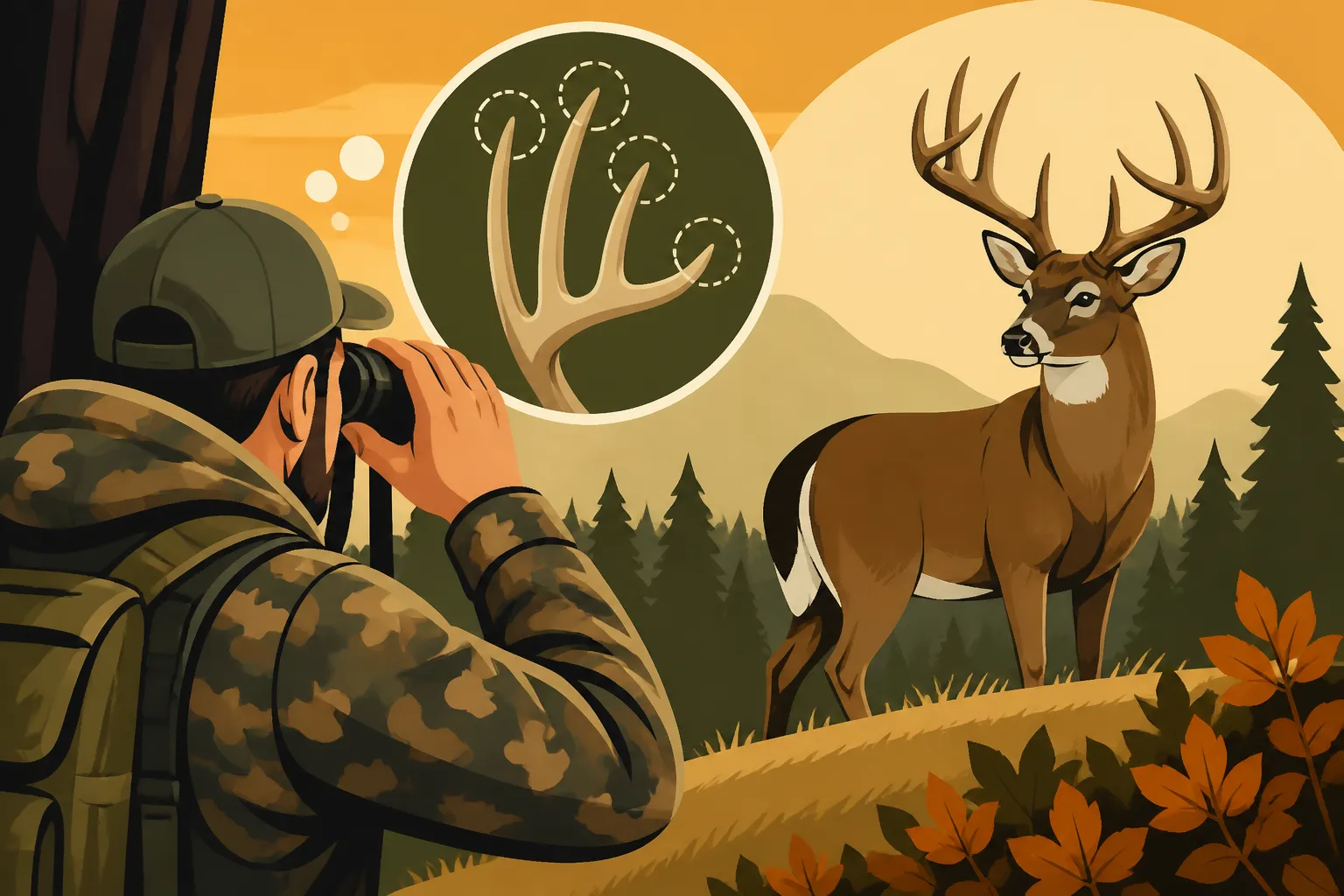
The Pennsylvania Game Commission has a clear definition of what constitutes a "point." For an antler projection to count as a point, it must be at least one inch in length, measured from its tip to the nearest edge of the main beam. Furthermore, the point must be longer than it is wide at one inch up from the tip. This is critical. You might see a small bump or an unusually shaped protuberance on a beam, but if it doesn't meet both the length and width criteria, it simply doesn't count towards the legal point total. This regulation, often referred to as The Three-Point Antler Rule, is foundational to understanding what you can harvest.
Brow Tines, G1s, and Other Confusing Scenarios
Let's talk about the specific tines on a buck's rack. The most common points hunters look for are the brow tines (G1s), the second points (G2s), and so on. A brow tine, if it meets the one-inch rule, absolutely counts. However, sometimes bucks will have broken tines or abnormal growths. A broken tine only counts if the remaining portion still meets the one-inch length and proportion requirements. If a tine is completely broken off, leaving only a stub less than an inch, it doesn't count. Similarly, burrs or small, rounded bumps on the main beam that don't project at least an inch in length are not considered points. It's about clear, definable projections that meet the PGC's specific criteria. This careful distinction is key to accurately judging What Counts as a Legal Pennsylvania Buck.
Understanding Beam Length and Spread
While not directly tied to the point count, beam length and spread can often be helpful indicators of a buck's age and overall rack size, indirectly making your point count easier. A buck with longer main beams generally has more real estate for tines to grow, and a wider spread can sometimes correlate with a more mature animal. Younger bucks, especially yearlings with spike or forkhorn racks, tend to have shorter main beams and a narrower spread. When you're trying to quickly assess a buck, noticing a substantial beam length or a wide spread might give you a mental green light to take a closer look at the points, assuming it's an older, more developed animal. It’s an ancillary observation, but one that can aid in the rapid field judgment process, especially when paired with body size estimation.
Strategies for Quick and Accurate Field Judging
The moment of truth arrives, and you need to make a judgment call in a matter of seconds. Deer don't often stand still for an extended antler inspection, especially wary public land bucks. Developing reliable strategies for quick and accurate field judging is a skill honed over seasons, but there are techniques you can employ to improve your success rate dramatically. This isn't just about raw counting; it's about using every visual cue available to you.
Using Body Cues and Relative Size
One of the most effective ways to gauge a buck's potential antler development, and thus its likelihood of being legal, is by observing its body size. Younger bucks, especially yearlings, tend to have a "leggy" appearance with a thin neck that blends almost seamlessly into their chest. Their body often looks disproportionate to their head. As bucks mature, their bodies fill out. They develop a thick, muscled neck, a deep chest, and a more robust, blocky appearance. A mature buck's belly might even sag a bit, and its legs will appear shorter in proportion to its body. If you see a smaller-bodied, slender-necked buck, odds are its rack is still developing and may not meet stricter point requirements, especially in the Three Up WMUs and What Changed zones. Conversely, a large-bodied, thick-necked buck is more likely to have a mature rack with enough points. This relative comparison is key when Counting Antler Points From a Stand where precise counting can be difficult.
Counting Points Under Pressure: Tips and Tricks
Counting points when your heart is pounding is perhaps the biggest challenge. The key is to have a systematic approach. As soon as you spot antlers, try to mentally "anchor" your count. Start with the brow tines (G1s), then move to the G2s, G3s, and so on. If the buck turns its head, mentally restart or reconfirm your last count. Don't be afraid to use your optics – binoculars are your best friend here. While you can't use them to spot deer legally during rifle season, once the deer is identified, using them for antler judging is perfectly fine. Take a deep breath and force yourself to slow down mentally, even if the buck is moving. If you're hunting during the peak of Hunting the Pennsylvania Rut in November, bucks might be moving quickly, so practice this mental exercise often. Some hunters find it helpful to focus on one side first, get a solid count, then quickly shift to the other side. Remember the one-inch rule for each point; don't just count any bump.
The Importance of Patience and Shot Opportunity
This strategy might seem counter-intuitive when you're racing against the clock, but patience is truly a virtue in antler judging. Sometimes, a buck will step out, but its head will be obscured, or it will be facing directly at you, making a clear count impossible. In these situations, rather than rushing a shot and risking an illegal harvest or a poor hit, it's often better to wait for the buck to turn, offer a better angle, or even move to a more open area. This might mean the buck walks away, and that's okay. It’s a hard pill to swallow, but passing a buck you can't definitively judge is always the right call. Knowing when to Pass a Buck You Cannot Count is a mark of a responsible hunter. If you can, take a few extra seconds to really look through your binoculars or your scope, even if it feels like an eternity. A clear shot and a clear judgment are always preferable to a rushed regret.
Common Pitfalls and How to Avoid Them
Even the most seasoned hunters can fall victim to common mistakes when judging antler points in the field. The combination of excitement, adrenaline, and often less-than-ideal viewing conditions creates a perfect storm for misjudgment. Understanding these pitfalls and actively working to mitigate them is just as important as knowing the rules themselves.
"Ground Shrinkage" and the Adrenaline Factor
Ah, the infamous "ground shrinkage." We've all heard the stories, or perhaps even experienced it ourselves: a buck looks absolutely massive through the scope, but once you walk up to it, the rack seems to have magically shrunk. This phenomenon is largely due to the "adrenaline factor." When your body floods with adrenaline, your perception can become distorted. Peripheral vision narrows, time seems to slow down, and details can become exaggerated. What looked like a clear fourth point might, in reality, be a small burr or a reflection. To combat this, try to employ a consistent mental checklist before every shot. Force yourself to take a deep breath, use your optics, and mentally run through the point count. If you're hunting with a partner, discussing potential targets and confirming legality can also help, though often these moments are solo. This is especially true when hunting during Hunting the Pre-Rut in Late October when bucks are on their feet, but still a bit unpredictable.
Miscounting in Thick Cover or Low Light
Pennsylvania's woods are often thick, especially in areas with dense regeneration or mountain laurel. This heavy cover, combined with low light conditions (dawn, dusk, or heavily overcast days), can make accurate antler judging incredibly difficult. A branch might obscure a critical point, or shadows might play tricks on your eyes, making a small bump appear larger or masking a legal point entirely. Avoid taking a shot if you can't clearly see the entire rack and confidently make your count. If a buck is moving in and out of thick brush, resist the urge to rush. Wait for it to step into a clearer opening. This requires immense self-control, but it's essential for ethical and legal hunting. Similarly, in low light, the reduced contrast can make distinguishing antler points from the main beam challenging. Quality optics, properly adjusted, can help, but sometimes the best decision is to let that ghost walk, knowing you made the responsible choice.
Mistaking Antler Abnormalities for Points
Some bucks grow truly unique and abnormal racks. These can include drop tines, kickers, non-typical growths, or even palmated sections. While these racks are often impressive, not all abnormal growths count as legal points under PGC regulations. Remember the one-inch length and proportion rule: the projection must be longer than it is wide at one inch from the tip. A small, knobby growth, even if it's visually distinct, might not meet this criterion. This is where a clear understanding of the PGC definition of a point becomes critical. Don't let an exciting, unusual rack cloud your judgment. Focus on the clearly defined, measurable points that meet the regulatory requirements. If you're unsure, it’s always best to err on the side of caution.
Practicing Your Eye: Becoming a Better Judge
Becoming proficient at judging antler points isn't something that happens overnight or even in a single season. It's a continuous learning process that involves dedication both in and out of the woods. Just like any other skill in hunting, consistent practice and study will make you more confident and accurate when it matters most.
Off-Season Scouting and Trail Cameras
The off-season is arguably the best time to sharpen your antler-judging skills without the pressure of a live hunt. Head out for Scouting Pennsylvania Public Land Before Season to find shed antlers. Picking up sheds allows you to hold them, measure points, and truly understand how the PGC's definitions translate to real-world racks. Pay attention to how main beams curve, where points typically originate, and what common abnormalities look like. Trail cameras are another fantastic tool. Set them up year-round, especially in areas where you know bucks frequent. Reviewing countless images of bucks, both young and old, allows you to practice counting points and evaluating body size in a low-pressure environment. You can zoom in, pause, and debate with yourself (or hunting buddies) whether a particular buck is legal. Adhering to Trail Camera Rules on Game Lands is crucial while doing so. This consistent exposure to different racks will train your eye for when the moment finally arrives.
Digital Tools and Resources for Practice
In today's digital age, we have an abundance of resources at our fingertips to help us practice. Many hunters swear by digital scouting tools, and platforms like GoHunt can be invaluable for studying terrain and potential deer movement patterns. Beyond mapping, there are forums, social media groups, and websites dedicated to antler judging. Participate in discussions, analyze photos posted by other hunters, and challenge yourself to quickly identify legal bucks in various scenarios. For those who want to hone their judging skills digitally, applications like GoHunt offer overlays and tools that can simulate different antler configurations, allowing you to "practice count" virtual racks. You can even find quizzes online that present images of bucks and ask you to determine their legality based on Pennsylvania's rules. This interactive practice can be incredibly effective.
Learning from Experience and Mentors
There's simply no substitute for real-world experience. Every buck you see, whether you harvest it or not, is a learning opportunity. If you let a buck walk because you couldn't confidently judge its rack, reflect on why. What made it difficult? What could you have done differently? Conversely, if you successfully harvested a legal buck, take the time to re-examine its rack with the PGC's rules fresh in your mind. Measure the points. Understand why they counted.
Mentorship also plays a huge role. Hunt with experienced individuals who are proficient at antler judging. Observe how they make their decisions, ask questions, and engage in post-hunt discussions about bucks you encountered. Their insights and accumulated wisdom can accelerate your learning curve significantly. Combining real-world observation with resources found on platforms like GoHunt can significantly improve your accuracy. Remember, the goal isn't just to fill a tag, but to do so ethically, legally, and with the confidence of a well-prepared hunter.
Here's a quick reference table to help visualize WMU-specific antler requirements:
| WMU Group | Antler Restriction | General Region | Example WMUs | Notes |
|---|---|---|---|---|
| "3 Up" | 3 points on one side, at least 1" long | Most of Northern, Central, and Western PA | 2G, 2H, 3A, 4D, 5B | The most common rule. |
| "4 Up" | 4 points on one side, at least 1" long | Northwestern, Southwestern, and some Eastern PA | 1A, 1B, 2B, 2D, 5C, 5D | Generally applies to specific WMUs where antlerless deer are more abundant or specific management goals are in place. |
| All WMUs | Junior, mentored youth, and Disabled Person Permit holders are exempt from point restrictions. Any buck with at least two visible antlers is legal. | Statewide | N/A | Focus on identifying a buck, not counting points for these specific licenses. |
Disclaimer: This table provides a general overview and examples. Always consult the most current Pennsylvania Game Commission hunting and trapping digest for the precise and up-to-date regulations for the current season, as rules are subject to change.
Disclaimer
The information provided in this guide is intended for general informational purposes only and does not constitute legal advice regarding Pennsylvania hunting regulations. While we strive to offer accurate and up-to-date content, hunting laws and regulations are subject to change. It is the sole responsibility of every hunter to consult the official Pennsylvania Game Commission hunting and trapping digest, local regulations, and any applicable federal laws before engaging in any hunting activities. Failure to do so may result in legal penalties. We are not responsible for any inaccuracies, omissions, or misinterpretations of the regulations presented herein.