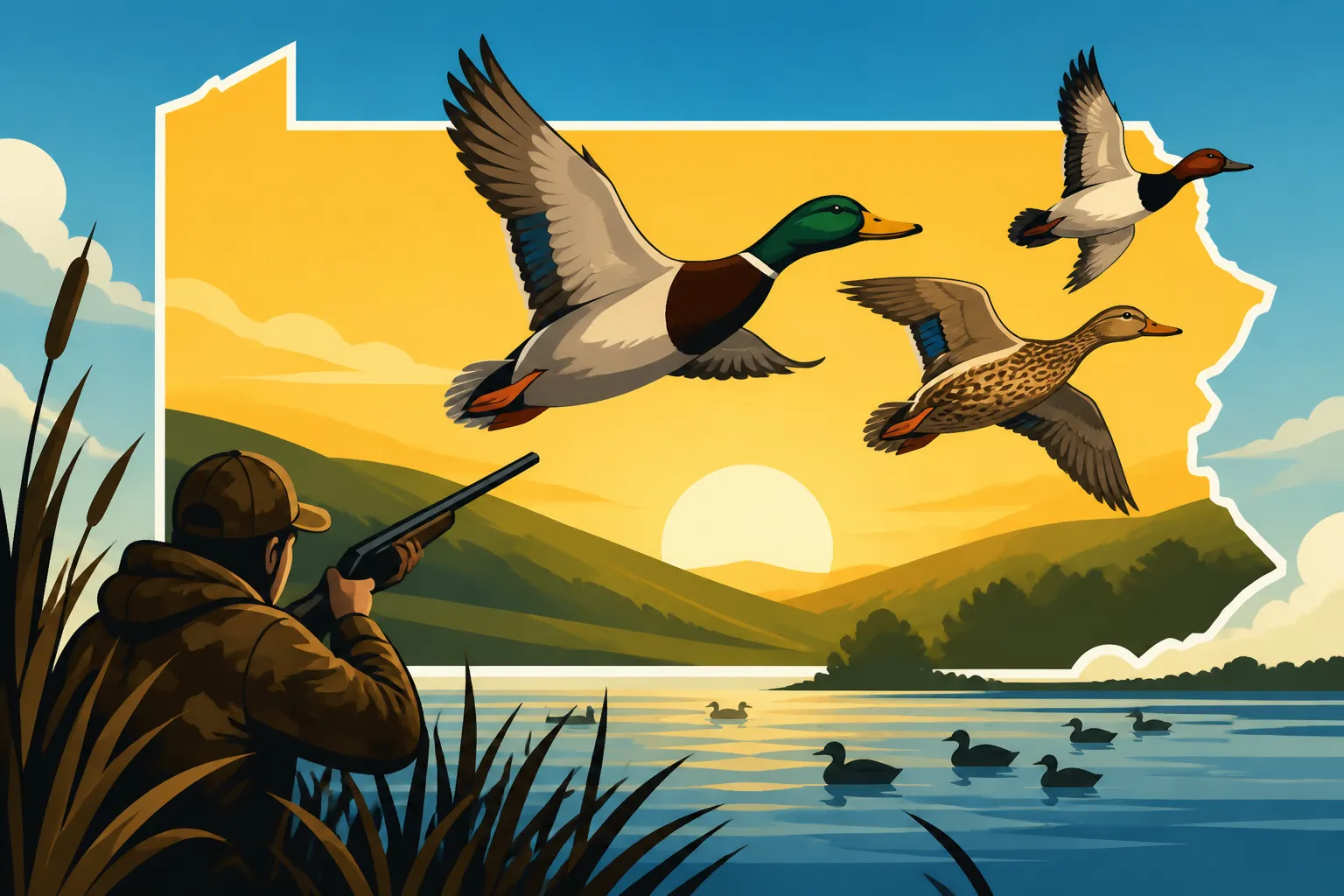
Pennsylvania Waterfowl on the Atlantic Flyway
Hunting waterfowl in Pennsylvania can feel like trying to catch lightning in a bottle sometimes. One day, the birds are everywhere, cupped and committed, and the next, the skies are empty, leaving you scratching your head, wondering where they went. It's a common frustration, especially with the state's diverse waterways and weather patterns. This guide aims to demystify waterfowl hunting on the Atlantic Flyway, helping you understand migration, prime locations, essential gear, and effective tactics to improve your success and enjoyment in the field.
Understanding Pennsylvania's Place on the Atlantic Flyway
Pennsylvania holds a unique and crucial position within the Atlantic Flyway, a migratory corridor stretching from the Arctic tundra all the way down to the Caribbean and South America. It's not just a stopover; for many species, it's a vital staging ground, a wintering area, or even a nesting location. For us hunters, understanding this dynamic is key to predicting bird movements and finding those hot spots.
The Flyway's Importance to Migratory Birds
Imagine a superhighway in the sky, funneling millions of ducks, geese, and other migratory birds between their breeding grounds and wintering habitats. That's essentially the Atlantic Flyway. Pennsylvania, with its mix of mountains, valleys, and major river systems like the Susquehanna and Delaware, acts as a crucial rest stop and feeding station along this incredible journey. Birds aren't just flying over; they're dropping in to refuel, rest, and often, avoid severe weather. This means that if you know when and where they're likely to stop, your chances of a successful hunt increase dramatically.
The sheer volume of birds that pass through the Atlantic Flyway is staggering. From tundra swans to tiny teal, countless individuals rely on the wetlands, rivers, and agricultural fields of Pennsylvania. A cold front pushing down from Canada can bring a fresh wave of birds, while mild weather might see them linger longer further north. This constant flux is what makes waterfowl hunting so challenging, yet so rewarding. You're participating in an ancient journey, a natural phenomenon that has played out for millennia, right here in the Keystone State.
Understanding the timing of these migrations is paramount. Early season hunts might focus on locally hatched birds and early migrants like blue-winged teal, while late season often brings in the hardy mallards, black ducks, and significant numbers of divers seeking open water. It’s a dynamic puzzle that changes with the weather and the calendar, making scouting an ongoing effort rather than a one-time event. Keep an eye on weather patterns to the north, as strong cold fronts can be a hunter's best friend.
Geographic Features Influencing Waterfowl Movement in PA
Pennsylvania's varied topography isn't just pretty; it directly influences where waterfowl travel and congregate. The Appalachian Mountain chain, running diagonally across the state, creates natural funneling points and barriers. Birds will often follow river valleys and large bodies of water that cut through these mountains, using them as navigation aids and reliable sources of food and shelter. This means areas like the Susquehanna River corridor, the Allegheny River system, and the wetlands around Lake Erie become magnets for migrating birds.
Beyond the major rivers, agricultural landscapes in the southeastern and western parts of the state provide vast food sources. Cut cornfields, harvested soybean fields, and winter wheat plantings are irresistible to geese and many duck species. These areas become crucial feeding grounds, drawing birds away from purely aquatic environments, especially as the season progresses and natural wetland foods become scarce or frozen. A good scout knows that ducks and geese will readily travel between water and fields to feed.
The expansive State Game Lands and State Forests also contain numerous wetlands, beaver ponds, and small creeks that, while not always major flyway arteries, provide critical habitat for local and transient birds. These smaller, often overlooked spots can be goldmines, especially during times of high pressure on larger waters. It's about finding those hidden pockets where birds feel safe and have access to undisturbed food and rest. Using mapping tools, like those available through GoHunt, can reveal these smaller, less-pressured waterfowl havens.
Key Waterfowl Species Hunters Encounter in Pennsylvania
Pennsylvania offers a surprisingly diverse waterfowl hunting experience, given its inland location. From the familiar mallard to the sleek canvasback, and the often-frustrating yet abundant Canada goose, understanding the habits of each species is crucial for targeting them effectively. Each bird has its preferences, its flight patterns, and its vulnerabilities, and knowing these can make all the difference in your spread setup or calling strategy.
Dabbling Ducks: Mallards, Wood Ducks, and Teal
Dabbling ducks are probably the most commonly encountered waterfowl in Pennsylvania, and for good reason. They feed by tipping their bodies head-down in shallow water, sifting for seeds, aquatic plants, and invertebrates. They prefer shallow marshes, flooded timber, small ponds, and slow-moving rivers. Their ability to spring directly into the air also makes them adaptable to tighter cover.
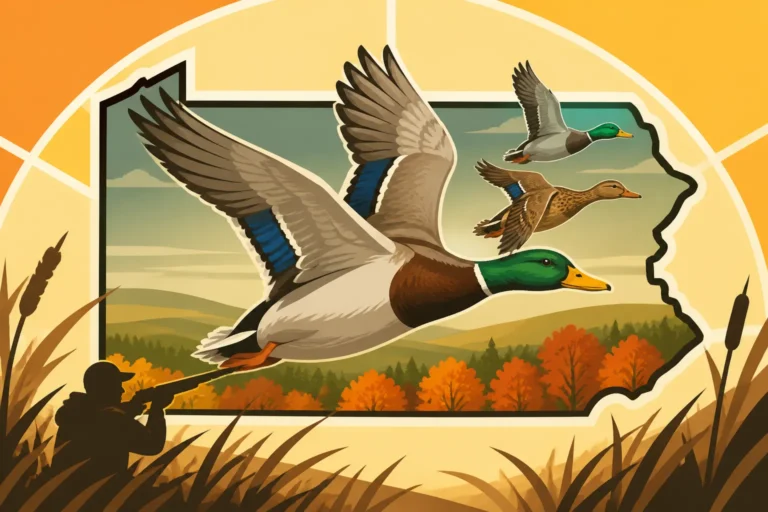
The ubiquitous mallard is the king of dabblers, found almost everywhere there's water and grain. These intelligent birds are often the first duck species hunters pursue, offering challenging yet rewarding opportunities. You'll find them in agricultural fields, feeding on leftover corn, on major rivers, and even in small farm ponds. Their distinct green head (on drakes) and loud quack are unmistakable. Successfully hunting mallards often involves scouting their preferred feeding and loafing areas and setting up a convincing spread, often with a spinning-wing decoy to grab their attention.
Wood ducks, with their stunning plumage, are another favorite, particularly in the early season. They prefer wooded swamps, timbered creeks, and beaver ponds. Their diet includes acorns, seeds, and insects, often found in shallow, flooded areas. Wood ducks are incredibly fast fliers and often present a tough shot. Hunting them typically involves positioning yourself in flooded timber or along wooded creek banks, often at dawn or dusk as they fly to or from roosting areas. Don't be surprised if you jump-shoot them off a small creek while Hunting Pennsylvania Clearcuts and Regrowth nearby for deer.
Teal—blue-winged, green-winged, and occasionally cinnamon—are the smallest of the dabblers, and the blue-winged variety are often the earliest migrants, appearing in Pennsylvania as early as September. Green-winged teal follow a bit later. These fast-flying little rockets prefer shallow, mud-bottomed ponds and marshes. They decoy readily and offer exciting, fast-paced shooting. Early season hunters often target teal with small spreads in shallow, emergent vegetation, taking advantage of their early migration to get a jump on the waterfowl season.
Diving Ducks: Ring-necks, Scaup, and Goldeneyes
Diving ducks, as their name suggests, forage by diving beneath the water's surface to feed on aquatic vegetation, mollusks, and fish. Unlike dabblers, they need a "running start" to take flight, propelling themselves across the water before becoming airborne. This preference for deeper, more open water distinguishes their habitats and hunting methods.
Ring-necked ducks are a common diver in Pennsylvania, often found on smaller lakes, reservoirs, and larger river stretches. They are less wary than some other divers and decoy well. They get their name from a subtle chestnut ring on their neck, though the white ring on their bill is more prominent. Hunters often target them with spreads set in open water, often mixing in some dabbler decoys, as ring-necks will sometimes associate with other duck species. Look for these birds on the deeper sections of rivers or larger impoundments.
Scaup, both greater and lesser, are also frequent visitors to Pennsylvania's larger lakes and rivers. They are often seen in large rafts, especially on big water like Lake Erie. Lesser scaup are more common on inland waters, while greater scaup prefer the larger lakes and coastal areas. They are strong fliers and can be challenging to decoy, often requiring large spreads in wide-open water. These birds are true open-water ducks, so you'll often be hunting them from substantial boats or permanent blinds on big lakes.
Common goldeneyes are stunning birds known for their bright yellow eyes and distinctive flight whistle. They prefer larger rivers and lakes, particularly those with good populations of mussels and aquatic insects. Goldeneyes are strong, fast fliers and can be quite wary. They are often hunted later in the season when colder temperatures push them south and freeze up smaller waters, concentrating them on larger, open bodies of water. Hunting Lake Erie Divers is a prime example of where you might encounter these birds.
Geese: Canada Geese and Snow Geese
Geese offer a completely different hunting experience than ducks, primarily due to their size, flight patterns, and feeding habits. Pennsylvania is home to both resident and migratory populations of Canada geese, and sees massive influxes of snow geese.
Canada geese are perhaps the most recognizable waterfowl in Pennsylvania. The state has a significant and growing resident population, providing hunting opportunities that often don't rely on northern migrations. These birds are often found in agricultural fields, suburban ponds, and large rivers. Their large size and predictable patterns between roosting and feeding areas make them a popular target. Decoy spreads for Canada geese are typically large, mimicking a feeding flock in a field, and calling is critical to bring them into range. They are incredibly vocal birds, and mastering various honks, clucks, and moans is essential.
Snow geese present a spectacle unlike any other in Pennsylvania waterfowl hunting. During their spring and fall migrations, hundreds of thousands, sometimes millions, of these white-bodied birds pass through the state. Locations like Middle Creek Wildlife Management Area are renowned for their massive snow goose concentrations. Hunting snow geese is a high-volume affair, often requiring enormous decoy spreads—hundreds, even thousands, of white decoys (rags, silhouettes, full-bodies)—and extremely aggressive calling. It's a completely different game than ducks, focusing on sheer numbers and overwhelming their wariness. To learn more about this unique opportunity, check out our guide on Snow Goose Hunting at Middle Creek.
Pennsylvania Waterfowl Hunting Seasons and Regulations
Navigating Pennsylvania's waterfowl seasons and regulations can feel like a maze, especially with migratory bird rules overlapping state laws. It’s crucial to be informed, not just about dates, but about the specific zones, licensing, and bag limits that apply to your hunt. Ignorance of the rules is no excuse, and waterfowl violations can carry stiff penalties. Always consult the current Pennsylvania Game Commission (PGC) Digest, available online or at license vendors.
Zone Structures and Their Impact on Season Dates
Pennsylvania is divided into specific waterfowl hunting zones, and understanding which zone you're in is absolutely critical, as season dates can vary significantly. These zones are established to account for different migration patterns and bird populations across the state, ensuring sustainable hunting opportunities. The main zones for ducks and geese include the Lake Erie Zone, the Northwest Zone, the North Zone, the South Zone, and the Atlantic Population Canada Goose Zone.
For instance, the Lake Erie Zone, encompassing the waters of Lake Erie and specific portions of Erie County, often has distinct season dates for ducks and geese compared to inland areas. This is because it's directly influenced by the Great Lakes migration. Hunters in this area need to pay close attention to the specific Pennsylvania Duck Zone Boundaries and corresponding dates. Similarly, the Atlantic Population (AP) Canada Goose Zone has special considerations due to conservation efforts for that specific migratory population.
These zone distinctions mean that a hunter in Erie might have different duck season openers and closers than someone hunting the Susquehanna River near Harrisburg, or the farm ponds of Lancaster County. The PGC, in coordination with the U.S. Fish and Wildlife Service, sets these dates annually. Always double-check the current year's hunting digest for the precise Pennsylvania Duck Season Dates by Zone and When Pennsylvania Goose Seasons Run for your intended hunting area. Failing to do so could lead to accidentally hunting out of season, which is a serious violation.
Daily Bag Limits and Possession Limits
Daily bag limits dictate the maximum number of birds of each species a hunter can legally harvest in a single day. These limits are designed to manage waterfowl populations sustainably and are often species-specific. For example, you might have a bag limit of six ducks, but that six-duck limit might include sub-limits for specific species, such as only two mallard hens, one pintail, or two black ducks. It's not just about the total number, but the composition of your harvest.
Possession limits, on the other hand, refer to the maximum number of legally harvested birds a hunter can have in their possession at any given time, whether fresh, frozen, or otherwise preserved. This limit is typically three times the daily bag limit for most species but can vary. It's important to keep track of your harvest, especially if you're hunting multiple days or processing birds at home. These rules prevent commercial exploitation and ensure fair chase.
These limits are subject to change year to year based on population surveys, habitat conditions, and biological data collected by state and federal agencies. Always review the current regulations before heading afield. Misidentifying a duck or goose can lead to exceeding a specific species' bag limit, even if you're within the overall total. Take the time to study bird identification—it's not just good practice, it's a legal necessity.
Federal and State Licensing Requirements
To legally hunt waterfowl in Pennsylvania, you'll need several key licenses and permits. First, you must possess a valid Pennsylvania hunting license. This is your baseline requirement for any hunting activity in the state. Beyond that, waterfowl hunting has federal and state-specific add-ons.
You must purchase a Federal Migratory Bird Hunting and Conservation Stamp, commonly known as a Federal Duck Stamp. This stamp is required for anyone 16 years of age or older to hunt migratory waterfowl. The funds generated from duck stamp sales go directly towards conserving wetlands and waterfowl habitat, so it's a vital contribution to the sport. For more details on this, you can look up Pennsylvania Federal Duck Stamp Rules.
Additionally, Pennsylvania requires a Pennsylvania Migratory Game Bird License. This state-specific license, often referred to as the "Harvest Information Program (HIP)" permit, is used to gather data on migratory bird hunters, which helps inform season setting and population management. You must register for HIP annually. Learn more about Pennsylvania HIP Registration for Migratory Birds. Ensure you have all these components before your first waterfowl hunt of the season.
Prime Waterfowl Hunting Locations Across Pennsylvania
Pennsylvania might not be renowned for its vast coastal marshes, but don't let that fool you. The state offers an incredible array of waterfowl hunting opportunities, from mighty rivers to secluded farm ponds and expansive impoundments. Finding these prime spots often comes down to understanding waterfowl behavior and knowing where to look on a map. Public land options are abundant, but private land access, if secured respectfully, can also be phenomenal.
Major Rivers and Their Tributaries
Pennsylvania's major river systems are the lifeblood of its waterfowl hunting. The Susquehanna River, stretching across much of the state, acts as a primary migration corridor. Its wide channels, islands, and backwaters provide crucial resting and feeding areas for ducks and geese. Floating the Susquehanna and jump-shooting ducks off bends and islands can be a thrilling experience. Many hunters set up decoys on river islands or along shorelines, using the river's current to their advantage. For tactics specifically related to this, consult Duck Hunting the Susquehanna River.
The Allegheny River in Western Pennsylvania, along with the Ohio and Monongahela, also offers excellent duck and goose hunting. These rivers feature diverse habitats, from riffles and deep pools to agricultural lands adjacent to their banks. Tributaries like the Juniata, West Branch Susquehanna, and smaller creeks throughout the state, though narrower, can be absolute hotspots, particularly for wood ducks and mallards. These smaller waterways, especially those with flooded timber or beaver activity, provide sheltered areas that larger rivers might lack. Many hunters find success Jump Shooting Small Creeks during the early season.
River hunting demands careful attention to safety, especially with strong currents, fluctuating water levels, and cold weather. A reliable boat, appropriate PFDs, and a clear understanding of river navigation are paramount. When scouting these river systems, pay close attention to where birds are loafing during the day and what stretches offer good concealment for setting up a blind or laying out decoys. Often, birds will gravitate to the calmer, wider sections of the river, especially if there are islands or sandbars for loafing.
Large Lakes, Ponds, and Impoundments
Pennsylvania is dotted with numerous large lakes, reservoirs, and smaller ponds that serve as significant waterfowl magnets. These bodies of water can hold large numbers of both dabbling and diving ducks, as well as geese. Examples include Lake Arthur (Moraine State Park), Pymatuning Reservoir, and numerous other state park and game land impoundments. These areas often have established waterfowl management zones or special regulations, so always check local rules.
Pymatuning Reservoir, shared with Ohio, is a renowned waterfowl mecca, particularly for migrating ducks and geese. Its sheer size and protected areas make it a crucial staging area. Hunting opportunities around Pymatuning are popular and often require careful planning and knowledge of specific access points and regulations. Many of these larger impoundments are managed by the Pennsylvania Game Commission (PGC) or the U.S. Army Corps of Engineers, offering diverse access.
Smaller ponds, particularly those on private land, can be incredibly productive, especially if they are located near agricultural fields. A secluded farm pond with good cover can hold resident mallards and wood ducks throughout the season. Gaining permission for private pond hunting can offer less-pressured opportunities. When hunting larger lakes, especially for divers, you might need specialized gear, including larger boats and substantial decoy spreads, to effectively draw birds into range.
Agricultural Fields and Flooded Timber
Beyond the open water, agricultural fields are arguably some of the most important waterfowl hunting grounds in Pennsylvania, especially for geese and field-feeding ducks. Cut cornfields, harvested soybean fields, and winter wheat plantings provide crucial high-energy food sources that ducks and geese seek out. Understanding Goose Hunting Pennsylvania Fields effectively requires extensive scouting to locate active feeding fields.
Hunters often use layout blinds, permanent pits, or natural field edges to conceal themselves in these environments. Large spreads of full-body or silhouette decoys are typically used to mimic a feeding flock, drawing birds into shooting range. Success in field hunting often hinges on knowing the birds' roost-to-feed patterns, which means early morning or late afternoon hunts are most productive. Utilizing a service like GoHunt to scout aerial imagery can help identify these prime agricultural feeding areas even before you step foot in the field.
Flooded timber, though less common than in southern states, can be exceptionally productive, particularly for wood ducks and mallards. These areas, often created by beaver activity or seasonal flooding, provide abundant natural food and cover. Hunting flooded timber typically involves standing in the water or using a small boat, camouflaged amongst the trees. The intimate setting and close-range shooting make it a highly sought-after experience. Look for these types of habitats along river bottoms and in some of the state's larger game lands or state forests.
Essential Gear and Tactics for Pennsylvania Waterfowlers
Waterfowl hunting in Pennsylvania often demands specialized gear and adaptable tactics, given the varied environments and sometimes unpredictable weather. From decoys to blinds, and shotguns to waders, having the right equipment and knowing how to use it effectively can make or break your hunt. It's not just about having the gear; it's about understanding why and how it works in specific situations.
Decoy Spreads and Calling Strategies
Decoy spreads are the cornerstone of most waterfowl hunting. For dabbling ducks in shallow water or flooded timber, smaller, more natural spreads of 6-24 decoys often suffice, mimicking a contented feeding flock. Adding motion decoys, like spinning-wing models (where legal), can significantly increase visibility and draw power. For river hunting, a string of decoys stretching across a current seam can be very effective, giving the appearance of birds loafing or feeding against the flow. For diving ducks on large, open water, larger spreads of 3-5 dozen are often necessary, arranged in lines or J-hooks to guide birds into a landing zone.
Canada goose spreads in fields are typically much larger, often ranging from 5 to 10 dozen or more decoys, creating the illusion of a massive, safe feeding flock. Full-body decoys are highly realistic but can be bulky, while silhouettes and shell decoys offer easier transport for large numbers. Spreads for snow geese can be truly immense, involving hundreds or even thousands of decoys, often using white "rags" or wind socks for mass appeal. The key is realism and numbers.
Calling is another critical component. For ducks, mastering the basic quack, hail call, feed call, and comeback call is essential. Mallard calls are versatile, but specific calls for wood ducks or teal can also be effective. For geese, a range of honks, clucks, and moans is vital to communicate with passing flocks. Understanding the birds' responses and knowing when to call aggressively or softly comes with experience. Using electronic calls for migratory game birds, including waterfowl, is generally prohibited, so practice with your mouth calls! Many resources, including guides on Rattling and Grunting in Pennsylvania for deer, apply the same principle of understanding animal vocalizations, though with different species.
Blind Types and Concealment for Different Scenarios
Concealment is paramount in waterfowl hunting; ducks and geese possess incredibly keen eyesight. The type of blind you use will largely depend on your hunting location. For river and large lake hunting, boat blinds are common, either purpose-built or camouflaged with natural vegetation. These allow hunters to move to different locations and hunt from the water. Layout blinds are excellent for field hunting, allowing hunters to lie prone and pop up for the shot, blending seamlessly into stubble fields. These offer superb concealment in open agricultural landscapes.
For marsh or pond hunting, natural blinds constructed from cattails, reeds, or brush are often the best choice. These can be simple lean-tos or more elaborate permanent structures. Portable pop-up blinds can also be effective, especially if brushed in well with local vegetation. Remember, it's not enough to just be hidden; you must break up your outline and blend into the environment. Even a small patch of exposed face or hands can flare wary birds.
When setting up on public land, be mindful of rules regarding permanent structures. Most State Game Lands prohibit constructing permanent blinds, requiring portable or temporary concealment. Always check specific regulations for the area you plan to hunt. When in doubt, a simple ghillie suit or natural brush draped over yourself can provide surprising concealment, especially in areas with tall vegetation. Don't forget to consider the sun's position – an advantage if it's at your back, but a glaring problem if it's in the birds' eyes, or yours.
Shotgun and Ammunition Choices for Waterfowl
Choosing the right shotgun and ammunition is critical for waterfowl hunting, balancing pattern density, knockdown power, and ethical harvesting. Most waterfowlers opt for 12-gauge shotguns, as they offer the widest range of ammunition choices and excellent patterning capabilities. The 20-gauge is a popular choice for smaller hunters or those seeking less recoil, especially when using modern tungsten loads. Pump-action or semi-automatic shotguns are preferred for their reliability and ability to deliver multiple follow-up shots quickly.
Choke tubes are essential for optimizing your pattern. Modified or Improved Cylinder chokes are common starting points for decoying birds at closer ranges (20-35 yards), while Full or Light Full chokes are often used for pass-shooting at longer distances. Patterning your shotgun with your chosen ammunition and choke at various distances is crucial to understand its performance and ensure clean kills.
Non-toxic shot is a federal requirement for all waterfowl hunting. Steel shot is the most common and affordable option, but it requires larger shot sizes to achieve the same energy as lead due to its lighter density. Bismuth and tungsten-based loads are denser and perform more like lead, allowing for smaller shot sizes and better penetration, but they come at a higher cost. For more detailed advice, consider articles on Waterfowl Loads for Pennsylvania Ducks and Where Nontoxic Shot Is Required in Pennsylvania. Remember, shot size, choke, and ammunition type all work together to create an effective pattern for clean ethical kills on these magnificent birds.
Conservation Efforts and Challenges for Pennsylvania Waterfowl
Waterfowl conservation is a complex, ongoing effort that unites hunters, landowners, and government agencies. In Pennsylvania, these efforts are vital to maintaining healthy bird populations and preserving the wetland habitats they depend on. However, challenges persist, ranging from habitat loss to disease and managing burgeoning resident populations.
Habitat Restoration and Wetland Preservation
The backbone of waterfowl conservation is habitat. Ducks and geese rely on healthy wetlands, marshes, rivers, and agricultural fields for breeding, nesting, feeding, and resting during migration. Pennsylvania has a rich history of wetland loss due to development and agricultural expansion, but significant efforts are underway to reverse this trend. Organizations like Ducks Unlimited, along with state agencies like the PGC and DCNR, are actively involved in wetland restoration projects across the state.
These projects often involve restoring hydrology to drained lands, planting native vegetation, and creating impoundments that can be managed to provide optimal food sources for waterfowl. Preserving existing wetlands is equally important, as they act as natural filters, provide flood control, and support a vast array of other wildlife. Hunters, through their purchase of federal duck stamps and state migratory game bird licenses, directly contribute to the funding of these critical habitat initiatives. This tangible contribution makes hunters true conservationists.
Private landowners also play a crucial role. Many farmers and landowners are implementing conservation practices, such as creating riparian buffers along streams, establishing food plots, or preserving small wetlands on their property, all of which benefit waterfowl. Programs like the PGC's Hunter Access Program can help connect hunters with landowners who are managing their properties in wildlife-friendly ways. These collective efforts ensure that future generations of hunters and wildlife enthusiasts will continue to enjoy Pennsylvania's waterfowl heritage.
Dealing with Resident Goose Populations
While migratory Canada geese are a welcome sight, Pennsylvania also faces challenges with a rapidly growing resident Canada goose population. These birds, often found in urban and suburban areas, can cause significant damage to golf courses, parks, and agricultural crops, and their droppings can create public health concerns. Managing these overabundant populations is a unique conservation challenge.
Hunting seasons for resident Canada geese are often more liberal than for migratory populations, with earlier openers and larger bag limits, designed to help control their numbers. These extended seasons provide additional hunting opportunities for waterfowlers. However, hunting alone isn't always enough, and other management strategies, such as egg addling (shaking eggs to prevent hatching) and hazing, are also employed.
The presence of high numbers of resident geese can also complicate hunting for migratory birds, as local flocks can make incoming migrants more wary. Hunters targeting resident geese often employ different tactics, sometimes focusing on smaller, more accessible ponds or fields closer to developed areas. It's a balance of providing recreational opportunities while mitigating nuisance issues caused by a species that has adapted incredibly well to human-altered landscapes.
Monitoring Disease and Environmental Factors
Waterfowl populations are susceptible to a range of diseases and environmental threats, and monitoring these factors is a critical part of conservation. Avian influenza (bird flu) outbreaks can decimate populations, especially during migration when birds are concentrated. Chronic Wasting Disease (CWD) is another concern, though primarily affecting cervids, it highlights the importance of wildlife disease monitoring. The PGC works closely with federal agencies to monitor for these and other diseases, often relying on hunter reports for initial detection.
Environmental factors like drought, severe weather, and habitat degradation also pose ongoing challenges. Prolonged droughts can dry up critical wetlands, reducing available food and resting areas. Conversely, extreme flooding can destroy nests and displace birds. Climate change is also an overarching concern, potentially altering migration patterns, breeding success, and the availability of suitable habitats. These larger environmental shifts require broad-scale conservation strategies.
Water quality is another significant factor. Pollution from agricultural runoff and industrial sources can degrade aquatic environments, impacting the food base for waterfowl and potentially harming the birds themselves. Conservation efforts therefore extend beyond direct habitat work to advocating for clean water policies and promoting sustainable land use practices. Hunters often act as the eyes and ears in the field, reporting unusual bird behavior or die-offs, contributing directly to these monitoring efforts.
Planning Your Pennsylvania Waterfowl Hunt
A successful waterfowl hunt rarely happens by accident. It's the result of diligent planning, thorough scouting, and a keen understanding of bird behavior and weather patterns. Pennsylvania's diverse waterfowl landscape means that adaptability and preparation are your best friends when heading afield.
Scouting and Pre-Season Preparation
Scouting is, without a doubt, the most important element of planning a successful waterfowl hunt. It involves spending time in the field before the season opens to locate birds, identify their preferred feeding and roosting areas, and understand their daily patterns. This could mean driving country roads looking for geese in fields, walking riverbanks to spot ducks, or observing flight patterns at dawn and dusk. The more information you gather, the better equipped you'll be to choose a location and set up effectively.
Beyond locating birds, scouting also involves finding suitable hunting spots with good concealment and safe access. Look for areas with fresh sign, like droppings or feathers, indicating recent use. Pay attention to wind direction, sun position, and potential access routes for birds. A good scouting trip will tell you not just where the birds are, but why they are there and how they are using the landscape. Resources like the PGC's online mapping tools or mapping apps like GoHunt can be invaluable here. They allow you to study aerial photos, identify water sources, potential feeding fields, and public land boundaries from your couch, narrowing down your in-field scouting efforts. You can identify potential Entry Routes on Steep Ground or ideal places for a layout blind.
Pre-season preparation also extends to your gear. Pattern your shotgun with your chosen non-toxic loads. Check your waders for leaks. Ensure your decoys are clean and ready, and your calls are in tune. A little preparation goes a long way in ensuring your hunt is safe, comfortable, and productive. Don't wait until opening morning to realize your calls are seized up or your waders are soaked!
Weather Considerations and Safety Tips
Weather is arguably the biggest variable in waterfowl hunting, and it dictates bird movements, hunter comfort, and safety. Cold fronts pushing down from the north often bring fresh waves of migratory birds, while sustained mild weather can keep birds spread out further north. Wind is also crucial, as ducks and geese typically land into the wind, making blind and decoy placement critical. A strong wind can also make conditions challenging, both for calling and for staying warm.
Pennsylvania weather can be notoriously unpredictable, especially during the fall and winter waterfowl seasons. Be prepared for everything from mild, rainy days to bitter cold and snow. Layering your clothing is essential, using moisture-wicking base layers, insulating middle layers, and a waterproof/windproof outer shell. Insulated, waterproof boots and gloves are also non-negotiable. For guidance on staying comfortable, consider Cold Weather Sitting Strategy.
Safety should always be your top priority. When hunting from a boat, always wear a U.S. Coast Guard-approved personal flotation device (PFD), and ensure your boat is equipped with all necessary safety gear. Cold water immersion is a serious risk. When crossing streams or wading in ponds, be aware of uneven bottoms and strong currents. Always hunt with a partner, and communicate your hunting plans to someone not in your party. Treat every firearm as if it's loaded, keep the muzzle pointed in a safe direction, and be absolutely sure of your target and what's beyond it.
The Role of Online Resources and Mapping Tools
In today's age, technology is an invaluable asset for waterfowl hunters. Online resources from the Pennsylvania Game Commission provide up-to-date regulations, season dates, and public land maps. Websites and forums dedicated to Pennsylvania hunting offer community insights and shared knowledge. These digital tools can significantly enhance your planning and scouting efforts.
Mapping applications like GoHunt have revolutionized how hunters approach scouting and navigation. These apps provide detailed topographic maps, aerial imagery, and property line overlays, allowing you to identify public vs. private land, potential access points, water features, and agricultural fields from the palm of your hand. You can drop pins to mark potential hunting spots, track your movements, and even check weather conditions in real-time. This level of detail makes pre-season planning incredibly efficient.
For example, using a mapping tool, you can trace Reading a Pennsylvania Hollow for Deer (or ducks, if it has water!) or visualize Reading Roost-to-Field Flight Lines for geese, helping you pinpoint the ideal setup locations. They allow you to identify remote public lands that might see less pressure, which can be a huge advantage, especially during peak season. Don't underestimate the power of these digital aids to make you a more informed and effective waterfowler.
Pennsylvania Waterfowl Species at a Glance
| Species Group | Common Species | Preferred Habitat | Diet | Key Identification Notes |
|---|---|---|---|---|
| Dabbling Ducks | Mallard | Shallow marshes, ponds, slow rivers, flooded fields | Seeds, aquatic plants, invertebrates, grains | Green head (drake), iridescent blue speculum, loud quack |
| Wood Duck | Wooded swamps, timbered creeks, beaver ponds | Acorns, seeds, insects | Distinctive crest, iridescent plumage, high-pitched "hoo-wheet" | |
| Blue-winged Teal | Shallow, mud-bottomed ponds & marshes | Seeds, aquatic insects | Small size, sky-blue wing patch (drake), rapid flight | |
| Diving Ducks | Ring-necked Duck | Small lakes, reservoirs, deeper river stretches | Aquatic plants, mollusks, insects | Black back, white ring on bill, subtle neck ring |
| Lesser Scaup | Large lakes, reservoirs, major rivers | Mussels, aquatic insects, plants | Smaller than Greater Scaup, purplish head sheen (drake), large rafts | |
| Common Goldeneye | Large rivers, lakes (often moving water) | Mussels, crustaceans, fish | Bright yellow eye, white cheek patch (drake), distinctive flight whistle | |
| Geese | Canada Goose | Agricultural fields, large rivers, ponds, urban areas | Grasses, grains, aquatic plants | Large size, black neck and head with white chinstrap, loud honk |
| Snow Goose | Agricultural fields, large impoundments | Grasses, grains, roots | All white body with black wing tips (adult), often in huge flocks |
Disclaimer
Please remember that hunting regulations, season dates, and bag limits can change annually. Always consult the most current Pennsylvania Game Commission digest and federal regulations before planning and undertaking any hunting activities. This guide is for informational purposes only and does not supersede official legal requirements.