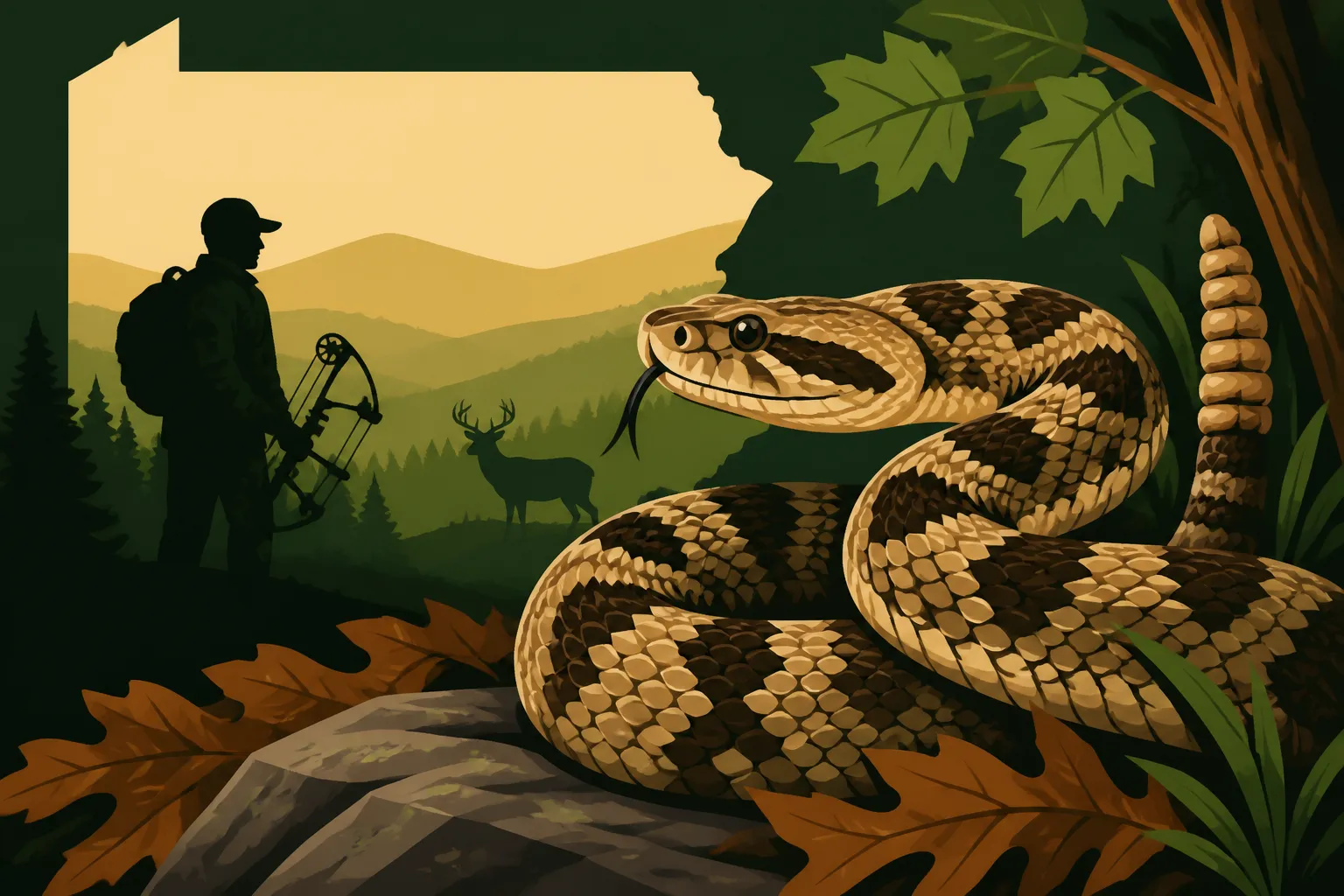
Timber Rattlesnakes in Pennsylvania Hunting Country
There's a certain thrill that comes with hiking deep into Pennsylvania's wild country, especially when you're geared up for a hunt. But with that deep immersion into nature comes an awareness of all its inhabitants – and sometimes, that includes creatures we'd rather not stumble upon. One such resident that can give any hunter pause is the timber rattlesnake, a beautiful yet venomous reptile that shares our favorite hunting grounds. It's a real concern, not just a campfire story, and understanding these snakes is crucial for staying safe and enjoying your time afield. This guide will walk you through what you need to know about timber rattlesnakes, where you're likely to find them, and how to minimize the risk of an unwelcome encounter while hunting in Pennsylvania.
Understanding Pennsylvania's Timber Rattlesnake
Before we can coexist safely with timber rattlesnakes, we need to understand a bit about them. These aren't just generic "snakes"; they have specific habits, appearances, and behaviors that differentiate them from other reptiles you might encounter. Knowing these details can be the difference between a respectful observation and a dangerously close call.
Where They Live and Why
Timber rattlesnakes aren't found everywhere in Pennsylvania, and that's often a relief to hunters in certain regions. They prefer specific habitats, mainly the forested, rocky ridges and mountain areas of the state, particularly in the central and northern counties. Think of those steep, south-facing slopes, dense with hardwoods and dotted with rock outcroppings and crevices – that's prime rattlesnake country. These rocky dens, often called "hibernacula," are critical for their survival, providing safe havens from the harsh Pennsylvania winters. During the warmer months, they'll venture out to hunt rodents, birds, and other small prey, but they often don't stray too far from these essential rocky retreats.
You'll find them in places like Sproul, Susquehannock, and Moshannon State Forests, as well as many of the larger State Game Lands that encompass these kinds of mountainous, rugged terrains. They thrive where there's less human disturbance and ample cover. Hunters pursuing deer in the deep woods, especially when navigating rocky draws or sun-drenched benches, are more likely to cross paths with them. This is especially true during the archery seasons when the weather is still warm, and snakes are most active.
Identifying a Timber Rattlesnake
Knowing what you're looking for is half the battle. Pennsylvania is home to several non-venomous snakes, and mistaking a garter snake for a rattlesnake could lead to unnecessary panic (or worse, unnecessary harm to a protected species). Timber rattlesnakes are generally quite large, often reaching 3 to 5 feet in length, with thick, heavy bodies. Their coloration varies widely, from a light yellow or tan with dark brown or black crossbands to an almost entirely black or dark gray appearance.
A key identifying feature, of course, is the rattle at the end of their tail. It's composed of keratin segments that create a distinct buzzing sound when shaken. However, sometimes they don't rattle, or the sound can be masked by wind, rushing water, or even the rustle of leaves. Don't rely solely on hearing a rattle. Also, look for their broad, triangular head, which is distinctly wider than their neck, a characteristic of many venomous snakes. They also have vertical, cat-like pupils, though you'd have to be dangerously close to see that. Always assume the worst if you're uncertain, and give any large, banded snake in rattlesnake habitat a wide berth.
Their Behavior and Temperament
Despite their fearsome reputation, timber rattlesnakes are generally not aggressive. They're actually quite shy and prefer to avoid confrontation. Their primary defense mechanism is camouflage; they'd rather lie still and hope you pass them by unnoticed. A rattlesnake only bites as a last resort, usually when it feels threatened, stepped on, or cornered. When they do feel threatened, they'll often coil up, raise their head, and, if given the chance, rattle a warning. It's their way of saying, "Hey, I'm here, please leave me alone."
You're most likely to encounter them basking on sun-warmed rocks or logging roads, especially in the spring and fall when they need to regulate their body temperature. They're less active during the hottest parts of summer days but can be on the move during cooler mornings or evenings. During the peak of hunting season, particularly in the warmer early archery weeks, they'll still be out and about. Their movements become more restricted as temperatures drop in late fall, and by the time deer rifle season rolls around, most will have retreated to their dens for the winter. So, if you're Hunting Pennsylvania's October Archery Season, you need to be especially vigilant.
Encounters in the Field: What to Do and How to Avoid Them
The thought of encountering a venomous snake can be unsettling, but with proper precautions and knowledge of what to do, the risk can be significantly managed. Most incidents happen because people are unprepared or unaware.
Prevention is Key: Gear and Awareness
Being proactive is your best defense. When heading into known rattlesnake country, especially during warmer months, your gear choices and overall awareness are critical.
- Footwear: This is paramount. Invest in a good pair of snake-proof boots or gaiters. While no boot is absolutely impenetrable, thick leather or synthetic materials designed to resist snake fangs offer significant protection. Don't skimp here; a flimsy hiking boot won't cut it. Think about the heavy-duty Boots and Packs for Steep Country you'd already consider for the terrain – add snake protection to that list.
- Long Pants: Always wear long, loose-fitting pants made of durable material, even on hot days. Denim or canvas can offer some minor protection against a glancing strike, but combined with proper boots, you create a good barrier.
- Watch Your Step: This seems obvious, but it's easily forgotten when you're focused on deer sign or climbing a steep ridge. Pay attention to where you put your feet and hands. Step on logs and rocks, don't step over them, as a snake could be coiled on the other side. Before you reach into a brush pile, under a rock ledge, or grab a downed log, always check the area first. Using a hiking stick or your bow to tap ahead of you can disturb a snake before you get too close.
- Avoid Night Travel: While hunting regulations usually restrict night hunting, if you're heading to or from your stand in the dark, rattlesnakes can be harder to see. Use a bright headlamp and stay on well-defined trails if possible.
- Be Mindful of Habitat: When Scouting Pennsylvania Public Land Before Season or during a hunt, recognize prime snake habitat. Sunny rock outcroppings, logging road edges, abandoned building foundations, and dense laurel thickets are all places where a snake might be basking or hunting. Move slowly and deliberately through these areas.
Many hunters use mapping apps like those from GoHunt to identify terrain features, like rocky slopes or dense timber stands, that might indicate prime rattlesnake habitat. This advanced scouting can help you mentally prepare for certain areas.
What to Do If You See a Rattlesnake
So, you're walking along a game trail, minding your own business, and there it is: a timber rattlesnake, coiled and maybe even rattling. Don't panic. Seriously. Your reaction in the next few seconds is crucial.
- Stop, Assess, Retreat: Freeze in place. Identify where the snake is and how much space is between you. If it's rattling, it's warning you. Slowly, carefully, and calmly back away from the snake. Give it a wide berth, at least 10-15 feet. Don't make sudden movements or try to harass it.
- Don't Engage: Never try to kill, catch, or move a rattlesnake. This is when most bites occur. Besides the danger, timber rattlesnakes are protected under Pennsylvania law. You cannot legally kill one unless it poses an immediate threat to life or property, and even then, it's generally best to avoid the situation entirely.
- Warn Others: If you're hunting with a partner, quietly warn them. Mark the spot if possible (mentally or with a GPS way point if you use a system like GoHunt) so you can avoid it on your return trip or warn other hunters you might encounter.
- Give It Time: If the snake is blocking your path and seems reluctant to move, be patient. It will eventually move on, especially if you remove yourself from its immediate threat zone. Find an alternate route around it if possible. Remember, it doesn't want to bite you any more than you want to be bitten.
Handling a Bite: Immediate Steps
While rare, a rattlesnake bite is a serious medical emergency. Knowing what to do in those critical first minutes can make a significant difference.
| Do | Don't |
|---|---|
| Stay Calm | Panic or run |
| Remove Jewelry/Tight Clothing | Elevate the bitten limb |
| Keep Bite Area Below Heart | Cut the wound |
| Seek Immediate Medical Help | Apply a tourniquet |
| Immobilize the Limb | Try to suck out venom |
| Transport to Hospital | Apply ice or heat |
| Consume alcohol or caffeine |
The most important thing is to get to a hospital as quickly and safely as possible. Call 911 immediately if you can, especially if you're deep in the woods. Provide your exact location if possible, perhaps by using the location features on your GoHunt app, to guide emergency responders. While waiting for help, keep the bitten limb still and below the level of your heart. Remove any rings, watches, or tight clothing around the bite area, as swelling will occur rapidly.
Carry a well-stocked First Aid Kits for Remote Big Woods that includes a cell phone (charged!), but understand that specific snakebite kits with suction devices or constricting bands are largely ineffective and can sometimes do more harm than good. Antivenom is the only effective treatment, and it must be administered by medical professionals.
Rattlesnakes and the Hunter's Responsibility
As hunters, we are stewards of the land and its wildlife. This responsibility extends to understanding and respecting all creatures that inhabit our hunting grounds, including timber rattlesnakes. Our presence in their habitat comes with an obligation to be informed and cautious.
Legal Protections and Conservation
The timber rattlesnake is classified as a "Candidate Species" in Pennsylvania, meaning its population is monitored and it receives protection. It's illegal to kill or harass a timber rattlesnake unless it poses an immediate threat to human life or domestic animals. This protection is in place because rattlesnakes play a vital role in their ecosystem, primarily by controlling rodent populations.
As a hunter, understanding these protections means you should never intentionally seek out or harm a rattlesnake. If you see one, the best action is always to give it space and let it go about its business. If you encounter one in an unusual location, such as a backyard, the Pennsylvania Fish and Boat Commission (PFBC) is the agency to contact, as they manage all reptiles and amphibians in the state. They can provide guidance on safe removal if necessary. Our role is to be educated and to promote responsible interactions within the wildlife community.
Staying Safe with a Well-Planned Kit
Beyond the immediate concerns of encountering a snake, being prepared for anything is part of responsible hunting. A well-thought-out kit can alleviate many anxieties and prepare you for various scenarios.
- Communication: A fully charged cell phone is a given, but consider a satellite communication device if you’re venturing into areas with spotty service, which is common in many of Pennsylvania's deeper woods.
- Navigation: While you might rely on GPS apps like those in GoHunt, always have a backup. A physical map and compass are invaluable, especially if your electronics fail.
- First Aid Kit: We discussed the snakebite specifics, but a comprehensive first-aid kit for hunting should cover everything from minor cuts and scrapes to sprains and severe bleeding. Knowing how to use its contents is just as important as having them. First Aid Kits for Remote Big Woods need to be adapted for your specific environment.
- Water and Food: Staying hydrated and energized helps you stay alert, which is essential for spotting potential hazards, including snakes.
- Headlamp/Flashlight: Even if you plan to be out before dark, things happen. A reliable light source is critical for safe navigation.
- Snakebite Plan: Even if you don't carry a specific snakebite kit, mentally rehearse what you would do if someone in your hunting party (or yourself) were bitten. Knowing the nearest hospital, having emergency numbers programmed, and understanding the "dos and don'ts" are part of this plan.
A hunter safety course, like those offered to fulfill Pennsylvania Hunter Education Requirements, often includes sections on wildlife encounters and safety, which are excellent refreshers for all hunters.
Sharing the Woods with Venomous Wildlife
Ultimately, timber rattlesnakes are an integral part of Pennsylvania's wild landscape. They were here long before we were, and they deserve our respect and protection. As hunters, we often seek out the same remote, rugged habitats that these snakes call home. This means shared responsibility.
By understanding their habitat preferences, recognizing their appearance, respecting their space, and being prepared for the rare event of an encounter, we can continue to enjoy Pennsylvania's rich hunting opportunities safely. The occasional encounter with a rattlesnake is a powerful reminder that we are guests in a truly wild place, and that wildness is part of what makes Hunting Pennsylvania's Big Woods for Deer such a rewarding experience. It forces us to be more attentive, more aware, and ultimately, better stewards of the environment. So, when you're out there on a crisp autumn morning, keep an eye out, walk mindfully, and appreciate all the diverse wildlife that calls Pennsylvania home.
Disclaimer
This article is for general informational purposes only and does not constitute professional advice. Laws, prices and regulations vary by location and change over time. Consult a qualified professional for guidance on your specific situation.