Why Farm Country Bucks Grow Bigger
It’s a sight familiar to almost every hunter in Pennsylvania: scrolling through social media, checking out the latest buck pictures, and noticing a distinct pattern. The truly massive, heavy-antlered deer often seem to come from farm country, those rolling hills and fertile valleys rather than the rugged mountains and vast timberlands we often associate with trophy animals. It can be frustrating to hunt your heart out in challenging public land only to see giants consistently emerge from private agriculture. This guide will delve deep into the environmental, biological, and human factors that contribute to why farm country bucks tend to grow larger antlers and bodies, offering insights into this common observation.
The Abundant Buffet: Nutrition as the Ultimate Growth Engine
When it comes to a deer's growth, especially antler development, nutrition is king. Bucks are like finely tuned athletes; they need consistent, high-quality fuel to build muscle, maintain health, and, crucially for hunters, grow impressive headgear. Farm country, by its very nature, is designed to be fertile and productive, and deer are the direct beneficiaries of this agricultural bounty.
Year-Round Forage and Crop Fields
Imagine the difference between a sparse, natural forest floor and a vast field of corn or soybeans. In the "big woods," deer browse on saplings, forbs, and acorns when available. While acorns are fantastic, they're seasonal and unreliable. Other natural browse can be limited in quality and quantity, especially in mature timber where sunlight struggles to reach the forest floor. Deer in these areas often have to travel significant distances and expend considerable energy to find enough sustenance, particularly during late winter and early spring.
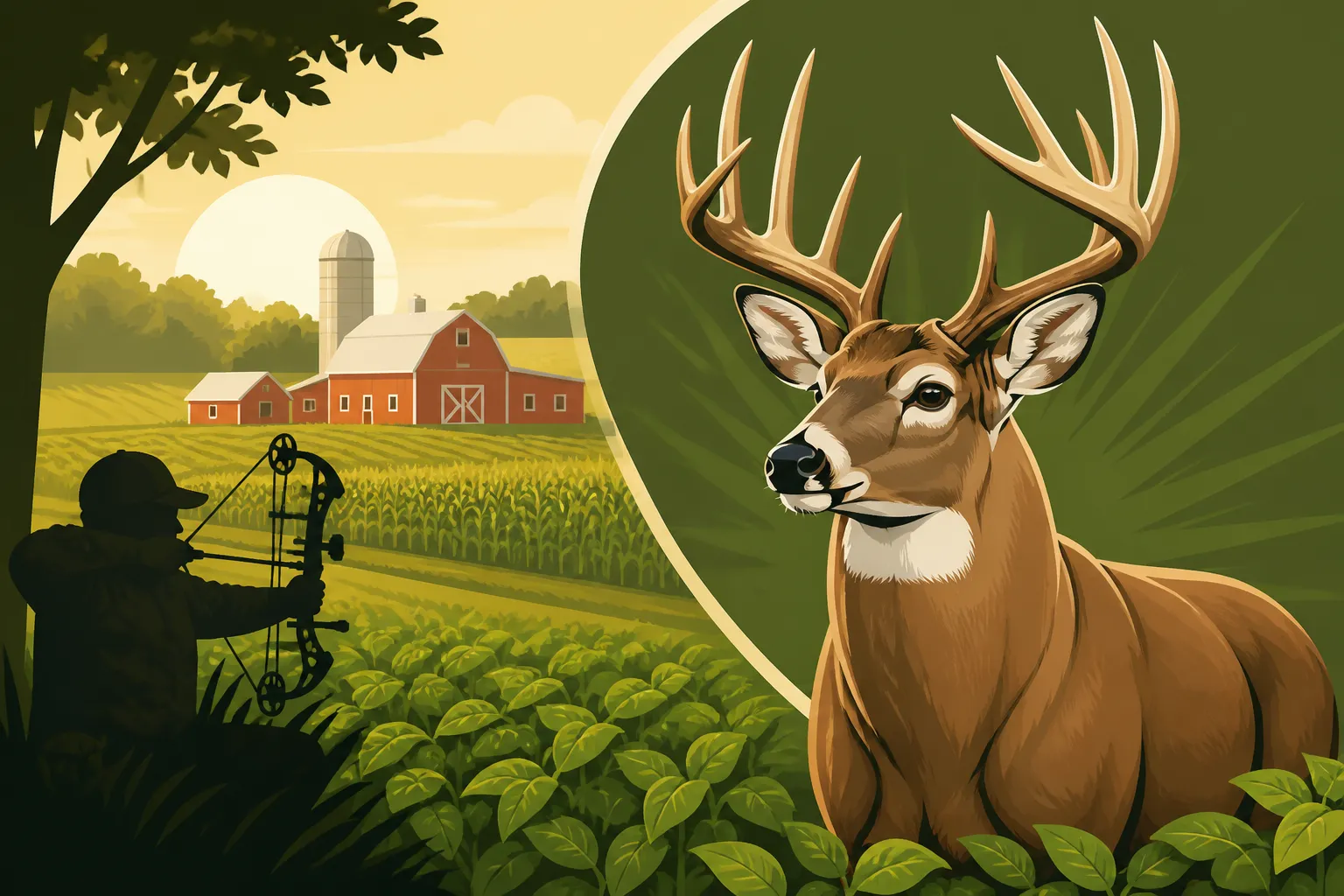
Now picture a farm country buck. From late spring through fall, he has access to an almost endless buffet of high-energy, high-protein crops. Soybeans, corn, alfalfa, and winter wheat provide an incredible nutritional boost. These crops are not only abundant but also specifically bred for maximum yield and nutritional value. A buck feeding regularly on soybeans, for instance, is ingesting far more protein than his mountain counterpart relying on woody browse. This allows him to pack on body mass efficiently and channel surplus energy directly into antler growth. Even after harvest, waste grain provides crucial calories through the winter, giving these deer a significant leg up. You can often see deer pouring into fields during prime feeding times, and understanding this pattern is key when Hunting a Standing Cornfield in Farm Country.
Soil Quality and Mineral Uptake
It’s not just what they eat, but where it grows. Agricultural regions typically boast richer, more fertile soils compared to the thin, acidic soils often found in mountainous or heavily timbered areas of Pennsylvania. These fertile soils are packed with essential minerals like calcium, phosphorus, and zinc – all critical components for robust bone and antler development.
When crops or natural forage grow in mineral-rich soil, they absorb these vital nutrients, which are then passed directly to the deer. A buck in an area with poor soil quality might eat the same type of plant as one in fertile farm country, but the plant itself will contain fewer essential minerals. This difference in mineral uptake can manifest directly in antler size and density. Think of it like a vitamin supplement; farm country provides a natural, constant, high-dose supplement for deer. This fundamental difference in the underlying geology and land management creates a distinct advantage for deer living in agricultural zones, allowing them to express their full genetic potential for antler growth.
Age is Just a Number… Unless You're a Buck
Antlers don't just spring up overnight. For a buck to grow truly impressive headgear, he needs one critical ingredient often in short supply: time. Bucks typically reach their peak antler potential between 4.5 and 7.5 years old. In many heavily hunted areas, bucks rarely live long enough to see their third birthday, let alone their fifth. Farm country, for a variety of reasons, often provides conditions that allow more bucks to reach these prime antler-growing ages.
Reduced Hunting Pressure and Sanctuary Zones
This is perhaps the biggest factor outside of nutrition. While farm country isn't immune to hunting pressure, it often experiences it differently than vast tracts of public land. Many agricultural areas are a patchwork of private landownership, where hunting access can be tightly controlled or limited to a few family members or friends. This creates inherent "sanctuary zones" where bucks can live out their lives with minimal human disturbance. A buck might spend the bulk of daylight hours bedded down in a dense woodlot on a property where hunting isn't permitted, only venturing into crop fields at night.
Contrast this with many State Game Lands or State Forests, especially during the firearms season. Hunters are often numerous, and deer are constantly pushed and bumped. While public land offers incredible opportunities, the sheer volume of hunters can make it difficult for bucks to establish consistent patterns or simply grow old. The presence of smaller, often isolated private land parcels within a broader agricultural landscape can significantly reduce the overall pressure on the deer herd, allowing more bucks to survive multiple hunting seasons and reach older age classes. Understanding these hidden havens is a key part of Hunting Pennsylvania Farm Country Edges.
Hunter Density and Harvest Selectivity
The number of hunters per square mile and their hunting objectives can also play a significant role. In areas where access is limited, fewer hunters are in the woods. This lower hunter density naturally translates to fewer bucks being harvested, especially younger ones. Furthermore, many landowners or leaseholders in farm country might practice a form of quality deer management, opting to pass on younger bucks to allow them to mature. This selective harvesting or conscious choice to let younger deer walk contributes directly to a healthier age structure within the buck population.
On the flip side, public land hunters, while often ethical and skilled, may face higher pressure to take the first legal buck that presents itself, simply because opportunities can be harder to come by. This is especially true when considering Opening Day Crowds on Pennsylvania Game Lands. The cumulative effect is that farm country frequently holds a higher proportion of older, more mature bucks, which by definition means bigger antlers. The success of antler restrictions has helped across the state, but the inherent dynamics of farm country often amplify these benefits, leading to more bucks reaching the ages where they can truly shine, as highlighted in discussions around What Antler Restrictions Did to Buck Ages and How Many Pennsylvania Bucks Reach Age Three.
Genetics and Stress: The Supporting Roles
While nutrition and age are the primary drivers for antler growth, genetics and the overall stress levels a deer experiences also play significant, albeit often secondary, roles. These factors work in conjunction with habitat and age to produce those impressive farm country bucks.
Genetic Potential for Larger Antlers
Every buck has a certain genetic blueprint that determines his potential for antler growth. Just like humans have genetic predispositions for height or build, deer have genes that influence antler mass, tine length, and overall configuration. In a population where bucks consistently reach older age classes and have access to superior nutrition, those with the best genetics for antler growth are more likely to express that potential fully.
It's not that farm country deer necessarily have "better" genetics than mountain deer at a fundamental level. Rather, the environmental conditions in agricultural areas allow the inherent genetic potential for larger antlers to be fully realized. If a genetically superior buck in the big woods is constantly malnourished or harvested at 1.5 or 2.5 years old, you'll never see the massive rack he was capable of growing. In farm country, that same genetically superior buck has the food and time to become truly exceptional. While it's hard to manipulate genetics directly, understanding this interplay helps explain why the impressive racks tend to cluster where conditions are optimal.
Lower Stress Levels and Energy Conservation
Think about the life of a deer in a high-pressure environment versus one in a relatively tranquil farm setting. A deer constantly being hunted, pushed by coyotes, or navigating areas with heavy human activity is under chronic stress. This stress triggers a "fight or flight" response, leading to increased adrenaline and cortisol levels. The deer's body diverts energy from non-essential functions, like antler growth, towards survival mechanisms. Constantly running, hiding, and remaining vigilant burns a lot of calories that could otherwise be used for body maintenance and antler development.
In farm country, with its pockets of sanctuary and often lower human disturbance, bucks can experience significantly reduced stress levels. They spend less energy avoiding predators and humans and more energy eating, resting, and growing. This energy conservation is crucial during the antler growth phase, which is an incredibly demanding physiological process. By not having to constantly look over their shoulder, these bucks can dedicate more resources to adding inches and mass to their antlers, translating directly into larger trophies.
Security Cover and Landscape Dynamics
Beyond food and low pressure, the very structure of the farm country landscape provides unique advantages for deer, offering a blend of secure bedding areas interspersed with prime feeding grounds. This ideal combination is often harder to find in expansive, homogenous big woods environments.
Patchwork of Cover and Edge Habitat
Farm country, particularly in regions like southeastern Pennsylvania, isn't just open fields. It's a mosaic. You'll find vast crop fields, but they're often bordered by thick hedgerows, dense woodlots, creek bottoms choked with multiflora rose and honeysuckle, old abandoned farmsteads, and overgrown fencerows. This patchwork creates an abundance of "edge habitat" – the transition zones between different types of cover – which deer absolutely thrive on. These edges offer both food and immediate security.
A buck can bed down in a thick briar patch within a small woodlot and be just steps away from a standing cornfield. This minimizes the distance he has to travel for food, reducing exposure to predators and humans. These dense pockets of cover, though sometimes small, are often impenetrable to humans and provide excellent thermal and visual security. Using mapping tools like GoHunt, you can easily identify these crucial transition zones and small, overlooked woodlots that connect larger patches of cover, revealing where deer feel safest. This intimate relationship between cover and food is a hallmark of Hunting Pennsylvania Farm Country Edges, where a precise setup can yield big results. Knowing how deer navigate these smaller, more fragmented areas, particularly how they use terrain to their advantage, is key. Even a seemingly minor feature like a depression or a creek bank can serve as a vital travel corridor or bedding spot, much like understanding Reading a Pennsylvania Hollow for Deer in mountain country.
Thermal Cover and Winter Survival
Winter is a harsh reality for Pennsylvania deer, and thermal cover can be a matter of life or death. While big woods offer vast tracts of timber, sometimes the uniform nature of mature hardwood forests doesn't provide the best thermal protection. Farm country, however, often features a greater variety of evergreen stands (like small pine or cedar thickets), dense brush, and thickets that trap heat and block wind more effectively.
Better thermal cover allows deer to conserve critical energy during the coldest months. Instead of burning precious calories just to stay warm, they can hunker down in sheltered spots. This improved winter survival directly contributes to a healthier deer population, with more bucks making it through the lean season in good condition. Bucks that survive winter strong are better equipped to begin antler growth in the spring, dedicating more resources to developing larger racks. This consistent availability of both prime food and secure, diverse cover ensures that farm country bucks not only survive but thrive, year after year, laying the groundwork for those truly impressive antlers that so many hunters pursue.
Summary of Farm Country vs. Big Woods Bucks
To truly visualize the stark differences that lead to larger bucks in agricultural areas compared to more traditional "big woods" settings, let's break down the key factors:
| Factor | Farm Country Bucks | Big Woods/Public Land Bucks |
|---|---|---|
| Nutrition Quality | Excellent: Abundant, high-protein/energy crops (corn, soybeans, alfalfa, winter wheat, waste grain) | Variable: Sparse, lower-quality natural browse; seasonal acorns/mast |
| Soil Mineral Content | High: Fertile agricultural soils provide rich minerals for plant uptake | Moderate to Low: Thinner, often acidic mountain soils; limited mineral transfer |
| Age Structure | Older: More bucks survive to mature age classes (4.5+ years) due to lower pressure and private sanctuaries | Younger: High harvest rates mean fewer bucks reach maturity (often 1.5-3.5 years old) |
| Hunting Pressure | Lower: Patchwork of private land, limited access, more sanctuaries | High: Especially on public lands, frequent disturbance, high hunter density |
| Stress Levels | Lower: Less need to constantly flee or evade; more energy directed to growth | Higher: Constant pressure from hunters and predators; energy diverted to survival |
| Genetics Expression | Maximized: Full genetic potential for antler growth realized due to optimal conditions | Limited: Genetic potential often not fully expressed due to nutritional or age constraints |
| Security Cover | Excellent: Dense hedgerows, small woodlots, creek bottoms, CRP fields next to food | Variable: Vast timber, but specific thickets (clearcuts, mountain laurel) are crucial for bedding |
| Winter Survival | Higher: Better thermal cover and consistent food sources reduce winter stress | Moderate: Can be challenging due to scarce food and less diverse thermal cover in some areas |
| Dispersal & Travel | Localized: Bucks often have smaller home ranges due to close proximity of food and cover | Extensive: Bucks may travel widely to find adequate food, cover, or escape pressure |
Understanding these profound differences can help you adjust your hunting strategies. Whether you're trying to gain access to prime farm ground, or you're determined to find an older buck in more challenging terrain, knowing what drives antler growth is invaluable. Tools like GoHunt can be particularly useful for analyzing these varying landscapes, whether you're looking at agricultural plots in Southeast Pennsylvania or scouting for mature timber in the vastness of the Hunting the Pennsylvania Wilds. By recognizing the factors that allow bucks to truly flourish, you can make more informed decisions afield and perhaps even find that next Pennsylvania giant.
Disclaimer
This article is for general informational purposes only and does not constitute professional advice. Laws, prices and regulations vary by location and change over time. Consult a qualified professional for guidance on your specific situation.