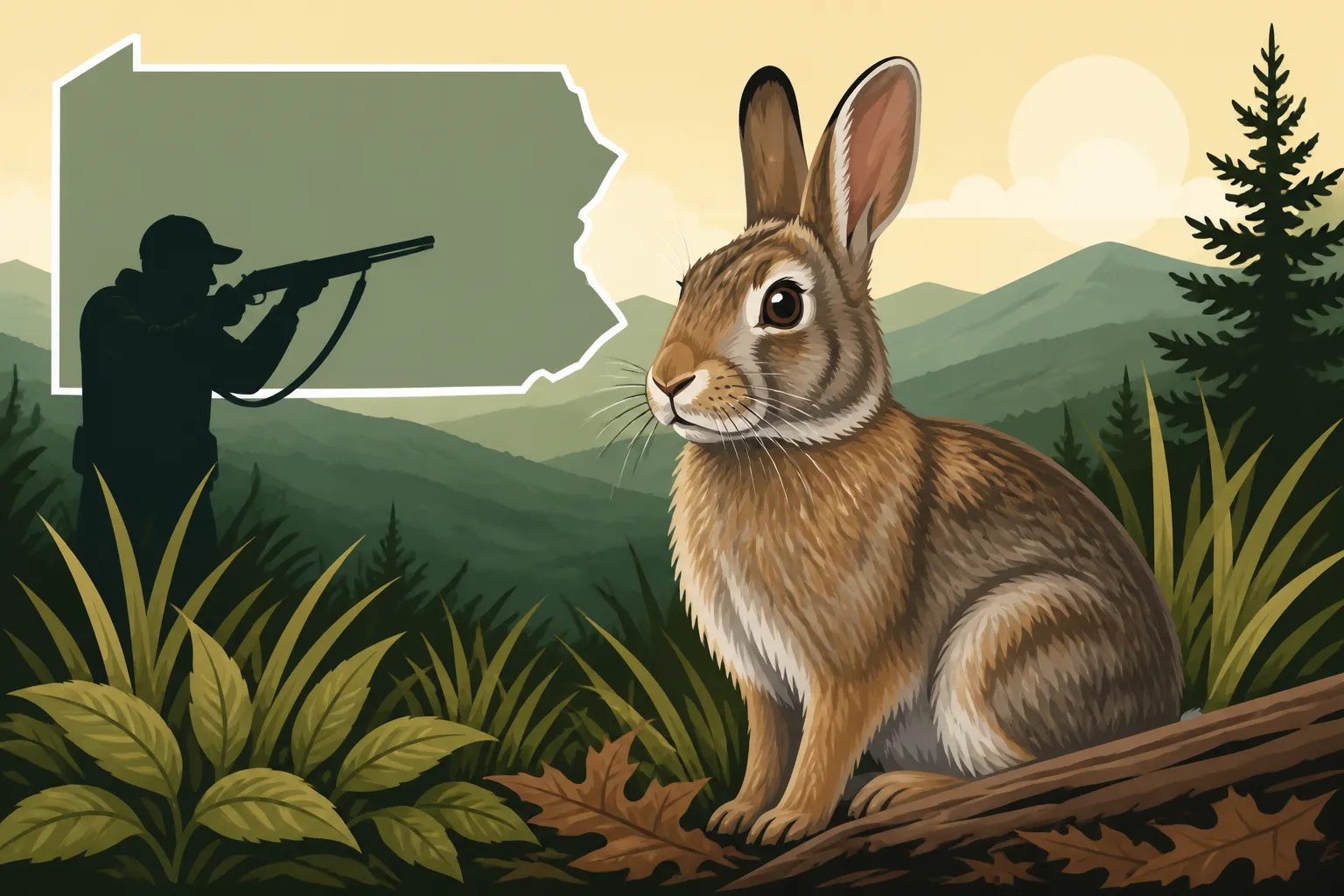
Appalachian Cottontails in Pennsylvania
For many years, when folks in Pennsylvania talked about rabbit hunting, they were almost certainly talking about the Eastern cottontail. These prolific little bundles of fur are a classic symbol of farm fields and brushy edges. But Pennsylvania is a state of incredible diversity, and tucked away in our more rugged, mountainous regions, we have another, more elusive rabbit species: the Appalachian cottontail. It's a real challenge to distinguish these two in the field, and even harder to track down the Appalachian variant, but understanding their unique characteristics and habitat preferences is key for any hunter interested in the full scope of our state's small game. This guide will help you understand what makes the Appalachian cottontail distinct, where to find them, and how their conservation status shapes the way we think about hunting them.
Understanding the Appalachian Cottontail's Unique Niche in Pennsylvania
Hunting small game in Pennsylvania is a cherished tradition, but for a long time, the subtle distinctions between our cottontail species weren't widely understood by the average hunter. Many of us grew up simply calling every rabbit a "cottontail" and never gave it a second thought. However, the Appalachian cottontail carves out a very specific existence here, quite different from its more common cousin.
Distinguishing the Appalachian from the Eastern Cottontail
Let's be honest, trying to tell an Appalachian cottontail from an Eastern cottontail in the heat of a flush is incredibly tough, maybe even impossible for most of us in the field. They are both small, brown, and have those tell-tale white tails. However, there are some subtle differences that scientists use, and that a keen observer might pick up on. Appalachian cottontails (Sylvilagus obscurus) tend to be slightly smaller on average than Eastern cottontails (Sylvilagus floridanus), though this isn't a hard and fast rule. Their fur might appear a bit darker, more rufous or reddish-brown, especially on their flanks.
One of the most frequently cited distinguishing marks, if you can get a good look, is a small, usually faint, black spot or stripe often present between the ears on an Appalachian cottontail. Eastern cottontails typically lack this. Appalachian cottontails also often have shorter ears relative to their body size compared to Easterns, and their hind feet can be marginally smaller. But again, these are subtle cues. The only truly definitive way to identify them is through genetic analysis, which, let's face it, isn't happening on a hunting trip! For most hunters, the biggest clue will be the habitat itself, which leads us to their preferred homes.
Preferred Habitat and Range in Pennsylvania
This is where the Appalachian cottontail truly separates itself. While Eastern cottontails thrive in what we often think of as "rabbit country"—brushy field edges, overgrown fencerows, suburban thickets, and agricultural lands—the Appalachian cottontail is a creature of the mountains and dense, high-elevation cover. You won't find these guys hopping around a standing cornfield in Lancaster County.
Instead, look for Appalachian cottontails in dense, often nearly impenetrable, evergreen thickets of rhododendron, mountain laurel, and spruce. They are particularly fond of the dense cover offered by young, regenerating forest stands, especially those that have grown up after timber harvests or fires. These areas provide both food and crucial protection from predators. Think of the rugged, steep slopes and high plateaus of our state's central and northern tiers. They prefer elevations above 1,500 to 2,000 feet, which means they are primarily found in the Ridge and Valley, Allegheny Plateau, and Pocono Mountains physiographic regions of Pennsylvania. They are less common or absent from the more agricultural and developed southeastern and northwestern parts of the state. If you're heading into some serious Rabbit Hunting Thick Brush and Briars in mountain country, you might be in Appalachian cottontail territory.
Conservation Status and Population Trends
Given their specific habitat requirements and the often-dense, remote areas they call home, the Appalachian cottontail faces a different set of challenges than its ubiquitous Eastern cousin. This makes understanding their conservation status crucial for any responsible hunter.
Why Appalachian Cottontails Are a Species of Concern
The Appalachian cottontail is considered a species of concern across parts of its range, and that includes here in Pennsylvania. Their specialized habitat needs make them particularly vulnerable to environmental changes. Unlike the adaptable Eastern cottontail, which thrives in disturbed landscapes and suburban sprawl, the Appalachian cottontail needs specific conditions—namely, extensive patches of dense, early successional forest or evergreen shrublands. The loss and fragmentation of this particular type of habitat due to mature forest growth, development, or changes in land management practices directly threaten their populations.
Another factor is competition. While they generally occupy different niches, where their ranges overlap, Eastern cottontails are often more aggressive and out-compete their Appalachian relatives. Disease susceptibility is another concern, as dense populations of Eastern cottontails can sometimes act as reservoirs for pathogens that might impact the Appalachian species. Compounding these issues is the difficulty in surveying them; their dense habitat makes accurate population counts incredibly challenging for wildlife biologists, so a full understanding of their numbers is often elusive.
Management Efforts and Hunter Awareness
Recognizing the specific challenges faced by the Appalachian cottontail, various conservation efforts are underway. Much of this work focuses on habitat improvement, particularly creating and maintaining early successional forests. This involves strategic timber harvesting and controlled burns on public lands like State Game Lands and State Forests to promote the growth of young trees and shrubs that provide ideal cover and forage. Groups like the Ruffed Grouse Society and others focused on young forest habitat indirectly benefit Appalachian cottontails, as they share similar habitat preferences. This kind of Habitat Work on Pennsylvania Public Land is vital.
For hunters, awareness is key. While the Pennsylvania Game Commission doesn't typically distinguish between cottontail species in general small game bag limits, understanding that you might be hunting a less common species adds another layer of appreciation and responsibility. If you're out Rabbit Hunting With Beagles in Pennsylvania in dense mountain laurel thickets, you're likely encountering Appalachian cottontails. Supporting land management initiatives that favor diverse, early successional habitat is one way hunters can contribute to the long-term health of these populations. Monitoring the Pennsylvania Rabbit Population Trend gives us a broader picture, but it’s important to remember that this trend often reflects the more numerous Eastern cottontail.
Hunting Strategies for Appalachian Cottontails
Hunting Appalachian cottontails is less about "hunting for" them specifically and more about hunting in the places they live. Given their elusive nature and the challenges in identification, most hunters pursuing rabbits in mountainous, brushy terrain will likely encounter them without even realizing the distinction. But knowing where they prefer to hide can certainly stack the odds in your favor.
Locating Their Specific Coverts
Forget the typical field edges you might scout for Eastern cottontails. For Appalachian cottontails, you need to think dense, steep, and often remote. Start by looking at topo maps and aerial imagery, perhaps using an app like GoHunt to really zoom in on terrain features. Identify areas on public land such as Hunting Pennsylvania State Forests or State Game Lands that feature steep slopes, high elevations, and most importantly, patches of dense evergreen cover. Rhododendron and mountain laurel thickets are prime candidates, especially those interspersed with hemlock or spruce stands. Look for regenerating clearcuts or areas of dense sapling growth that have come up after a recent timber harvest, particularly if they have an understory of these evergreens.
When scouting, look for sign in these dense areas. Droppings can be hard to differentiate from other rabbit species, but fresh tracks in snow might give you a clue about rabbit activity in a specific thicket. Pay attention to south-facing slopes, which can provide thermal refuge and expose the ground more readily for forage during colder months. Scouting With the Pennsylvania Mapping Center can be invaluable for pinpointing these habitat types before you even lace up your boots.
Tactics for Dense Thickets and Mountain Terrain
Hunting Appalachian cottontails is not for the faint of heart or the casually dressed. This is tough, physical hunting. The most effective method, hands down, involves good rabbit dogs, typically beagles. These dogs are purpose-bred to work dense cover, roust rabbits, and follow a track, often bringing the rabbit in a circle back towards the hunter. Without dogs, it's an arduous task of still-hunting through nearly impenetrable vegetation, which is slow, loud, and physically draining.
When you do hear a dog on a hot track, positioning is crucial. Rabbits pushed from these thickets often try to escape along the path of least resistance or circle back into the heaviest cover. Find a small opening, a game trail, or a slightly less dense edge where you might intercept them. For firearms, a small gauge shotgun, like a 20-gauge or even a 28-gauge, with an open choke (improved cylinder or skeet), is ideal for the close, fast-flushing shots you'll likely get in such tight quarters. Heavy shot like 6s or 7.5s will be appropriate. Shotgun choice for fast flushes and Choke Choice for Fast Flushes are critical decisions for this type of hunting.
Dress for extreme briars and brush. Heavy-duty brush pants, a durable jacket, and good, waterproof boots with ankle support are essential. Navigating steep, rocky, and briar-filled terrain will test your endurance and gear. Remember your Pennsylvania Hunter Orange Rules as well, especially when hunting with others and dogs.
| Feature | Eastern Cottontail (Sylvilagus floridanus) | Appalachian Cottontail (Sylvilagus obscurus) |
|---|---|---|
| Size | Larger on average | Slightly smaller on average |
| Coloration | Typically lighter brown, more reddish on neck/shoulders | Often darker, more rufous/reddish-brown, subtle black spot between ears |
| Ear Length | Longer relative to body | Shorter relative to body |
| Hind Feet | Slightly larger | Marginally smaller |
| Preferred Habitat | Open woodlands, agricultural fields, brushy edges, suburban areas, fencerows | Dense evergreen thickets (rhododendron, mountain laurel), spruce/hemlock forests, high-elevation clearcuts |
| Elevation | Sea level to moderate elevations | Primarily higher elevations (above 1,500-2,000 ft) |
| Range in PA | Statewide, very common | Central and Northern PA, Ridge and Valley, Allegheny Plateau, Poconos |
| Conservation Status | Stable, abundant | Species of concern in parts of its range |
Ethical Considerations and the Future of Appalachian Cottontails
Hunting small game in Pennsylvania is a privilege, and that privilege comes with a responsibility to understand and respect the species we pursue. When it comes to Appalachian cottontails, this means acknowledging their unique place in our ecosystem and the challenges they face.
Respecting a Vulnerable Species
Because the Appalachian cottontail is considered a species of concern, hunting them requires an extra layer of ethical consideration. While legal to hunt under general small game regulations in Pennsylvania, hunters should understand that distinguishing them from the more common Eastern cottontail in the field is nearly impossible. This means that focusing rabbit hunting efforts on areas with abundant Eastern cottail populations, such as agricultural regions and lowland brush, can indirectly reduce pressure on Appalachian cottontails in their specific mountain habitats. Always adhere strictly to Pennsylvania Small Game Seasons and Bag Limits, which are designed to ensure sustainable harvests for all species.
The value of these animals extends beyond their role as game. They are an integral part of Pennsylvania's biodiversity, indicators of healthy mountain ecosystems, and a testament to the wildness that still exists within our borders. Respecting them means understanding their habitat, supporting efforts to preserve that habitat, and recognizing that not every rabbit we encounter is one and the same. Even for non-hunters, understanding Protected Species in Pennsylvania Hunting Country is important for maintaining ecological balance.
How Hunters Contribute to Research and Conservation
Hunters have always been—and continue to be—the backbone of wildlife conservation funding and effort. For the Appalachian cottontail, this contribution can manifest in several ways. Firstly, accurate harvest reporting, though it lumps all cottontails together, provides general data that can help biologists track overall rabbit health. More importantly, hunters can participate in citizen science efforts or report unusual sightings to the Pennsylvania Game Commission, providing valuable anecdotal data on distribution.
Beyond direct observation, hunters' financial support through license sales and excise taxes on sporting goods directly funds habitat management projects that benefit Appalachian cottontails. When you purchase a hunting license, a portion of that money goes to efforts on State Game Lands and State Forests to create and maintain the early successional forest and dense shrubland that these rabbits depend on. By supporting organizations that champion these habitat initiatives, hunters are directly contributing to the future of species like the Appalachian cottontail. Using tools like GoHunt to understand the specific habitat types can even make hunters more informed advocates for targeted conservation efforts, identifying areas that are critical for these unique mountain rabbits.
Disclaimer
This article is for general informational purposes only and does not constitute professional advice. Laws, prices and regulations vary by location and change over time. Consult a qualified professional for guidance on your specific situation.