Best Pennsylvania Counties for Big Bucks
Every Pennsylvania hunter dreams of that truly massive whitetail buck, the kind that makes your heart pound just seeing a picture of it. But let's be honest, finding those elusive giants in the Keystone State can feel like searching for a needle in a haystack, especially when you're limited on time or don't know where to focus your efforts. This comprehensive guide will peel back the layers to reveal which Pennsylvania counties consistently produce the biggest bucks and, more importantly, why—giving you a clearer roadmap for your next big buck pursuit.
Understanding "Big Bucks" in Pennsylvania
Before we dive into specific counties, it’s crucial to understand what we mean by a "big buck" in Pennsylvania. It's not just about Boone and Crockett scores; it's about mature, challenging animals that represent a true achievement for any hunter.
Defining What Truly Makes a "Big Buck" in the Keystone State
For many, a "big buck" isn't solely about a tape measure or a score sheet. It’s about the experience, the challenge, and the deer’s overall maturity. In Pennsylvania, a truly big buck is often one that has reached at least 3.5 years old, if not older, boasting a significant body weight and a rack that reflects years of good nutrition and genetic potential. This could be a wide 8-point with heavy mass, a tall 10-point, or even a gnarly non-typical rack that tells a story all its own. These are the deer that have survived multiple hunting seasons, outsmarted countless hunters, and grown into impressive specimens.
Sometimes, a "big buck" is a local legend, a deer that everyone in the area has trail camera pictures of but no one has quite connected with. It's the ghost of the timber, the phantom of the cornfield. The pursuit of such a deer becomes less about antler inches and more about the ultimate game of chess played between hunter and hunted. The feeling of success when you finally outwit such an animal is truly unmatched, regardless of whether it makes the record books.
The Impact of Antler Restrictions on Buck Age Structure
Pennsylvania made a significant change to its deer management strategy years ago with the implementation of antler restrictions. This wasn't just a random rule; it was a deliberate effort to allow more bucks to survive into older age classes. The logic was simple: if young bucks with small racks couldn't be harvested, they would live longer, allowing them more time to grow larger bodies and develop more impressive antlers.
This strategy has undeniably shifted the age structure of the buck population in many areas. What we’ve seen is a marked increase in the number of 2.5- and 3.5-year-old bucks roaming the woods, which were once far less common. While it initially caused some frustration for hunters accustomed to taking any legal antlered deer, the long-term benefit for trophy potential has been substantial. You can learn more about how these regulations changed the game by looking into What Antler Restrictions Did to Buck Ages. It’s a game changer for understanding where those bigger deer are coming from.
The Crucial Role of Nutrition, Genetics, and Habitat
Three pillars support the growth of a truly big buck: nutrition, genetics, and habitat. While we as hunters have little control over the genetics of the wild deer population in a given area, we can certainly focus our efforts where nutrition and habitat are optimal.
Nutrition is paramount. Deer, like any animal, need a consistent supply of high-quality forage to grow large bodies and impressive antlers. Areas with rich agricultural fields, diverse forest understories, and abundant mast crops like acorns and beech nuts provide the protein, minerals, and energy necessary for maximum antler growth. Without it, even a genetically superior buck won't reach its full potential.
Habitat provides the cover, security, and escape routes mature bucks need to thrive and evade predators, including hunters. Dense thickets, vast timber blocks, swampy areas, and steep, rugged terrain all offer sanctuary where older bucks can feel safe. The combination of excellent food sources and impenetrable cover creates an environment where big bucks can not only grow but also survive long enough to reach their prime.
Identifying Pennsylvania's Big Buck Hotbeds
Now for the exciting part: where should you be focusing your attention if a truly big Pennsylvania buck is on your wish list? While giants can show up anywhere, certain areas consistently produce more trophy-caliber deer.
The Farm Country Advantage: Southeast and Southcentral Giants
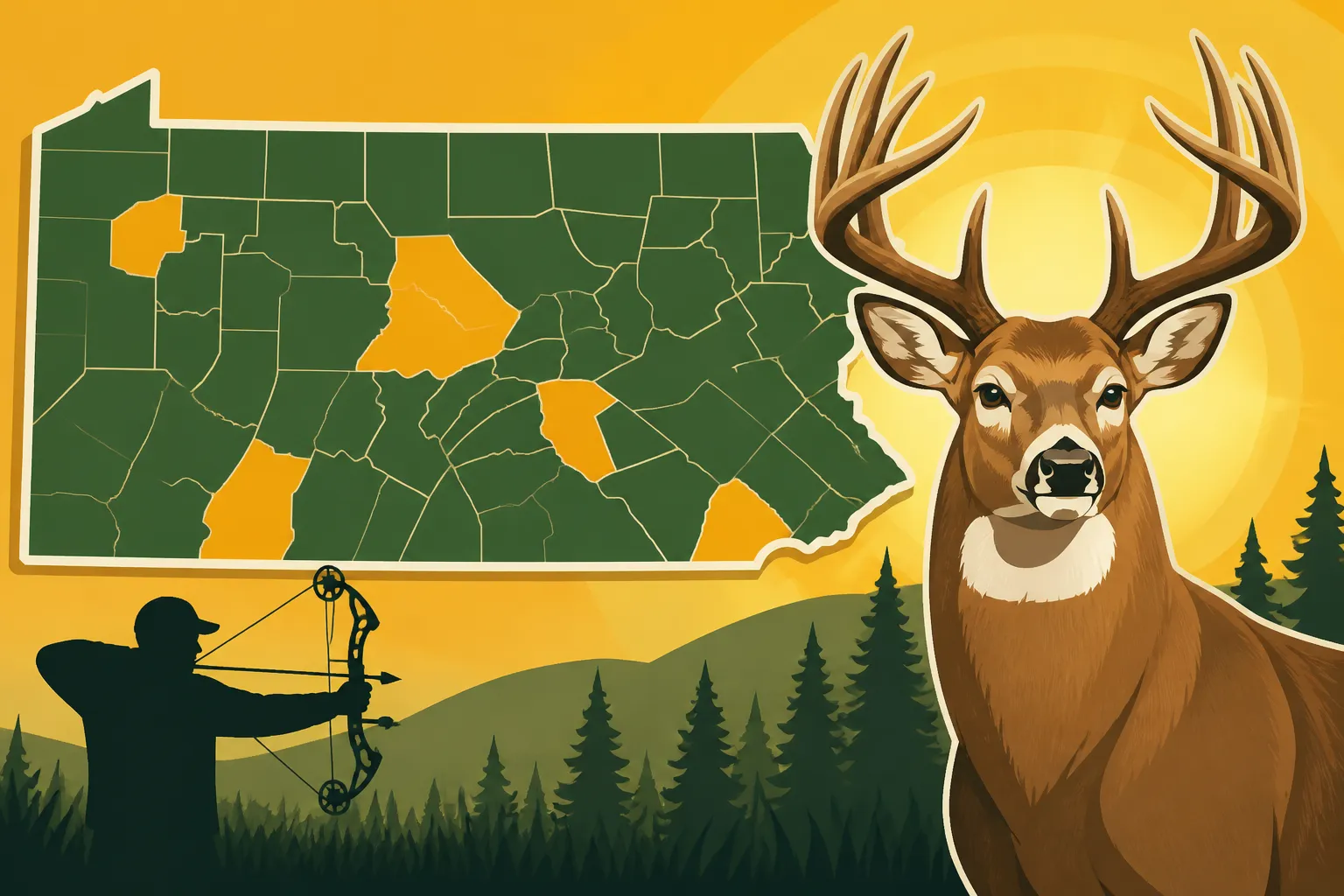
If you're strictly chasing antler size and body weight, the rich agricultural lands of southeastern and southcentral Pennsylvania are often your best bet. Counties like York, Lancaster, Chester, Bucks, Lebanon, and parts of Berks and Dauphin frequently lead the state in producing big-bodied, heavy-antlered deer.
Why these areas? It boils down to superior nutrition. These regions are checkerboarded with cornfields, soybean fields, alfalfa, and winter wheat. This constant buffet of high-energy, protein-rich forage allows bucks to put on significant weight and pour nutrients into antler growth. Bucks in these areas often have bigger frames and develop denser, thicker antlers at a younger age than their mountain counterparts. However, hunting here comes with its own set of challenges, often involving navigating smaller, highly pressured tracts of land. Understanding how to approach these areas is key, and guides like Hunting Pennsylvania Farm Country Edges can offer invaluable insights into effective strategies.
Mountain and Ridge-and-Valley Pockets: Hidden Potential
While farm country often boasts the sheer numbers of big bucks, don't overlook the potential of Pennsylvania's vast "Big Woods" and "Ridge and Valley" regions. Counties like Bedford, Fulton, Huntingdon, Mifflin, and even parts of Centre, Clearfield, and Lycoming, while having lower deer densities, can produce truly ancient, wise bucks with impressive racks. These are often the bucks that have earned every inch of antler growth through sheer survival.
These areas, characterized by their mountainous terrain, dense forests, and often sparse human population, offer the ultimate sanctuary for mature deer. The nutrition might not be as consistently rich as in farm country, but when mast crops like acorns or beech nuts drop, they become critical food sources. Knowing What Changes When Beech Nuts Drop can be vital for patterning deer in these environments. The challenge here is finding those isolated pockets of optimal habitat where an older buck can escape hunting pressure and truly mature. It requires more effort, more walking, and a different style of hunting, but the reward of a truly wild, mountain-grown trophy is immense.
Public Land vs. Private Land Dynamics for Big Bucks
Let's be realistic: a significant portion of Pennsylvania's biggest bucks are harvested on private land. These properties often benefit from reduced hunting pressure, year-round food plot management, and sometimes even selective harvest practices. For many, however, private land access is a dream, and the reality is that we hunt public land. But that doesn't mean public land is devoid of big bucks.
The key to finding big bucks on public land, especially on sprawling State Game Lands or State Forests, is to go where others won't. This often means walking further, climbing steeper hills, or venturing into areas that are difficult to access. These less-pressured pockets can hold older bucks that have learned to avoid easy access points and human scent. Learning to find Finding Ground Others Walk Past is a critical skill for any public land hunter. Additionally, programs like the Deer Management Assistance Program (DMAP) permits, available on some private and public lands, can offer unique opportunities for specific, targeted antlerless harvests, which can also help with management for bigger bucks in the long run. Details on applying for these can be found in resources like Deer Management Assistance Program Permits.
Here’s a general comparison to help visualize the differences:
| Characteristic | Farm Country (Southeast/Southcentral) | Mountain/Big Woods (Central/Northern/Ridge & Valley) |
|---|---|---|
| Primary Food Source | Agricultural crops (corn, soybeans, alfalfa) | Mast crops (acorns, beech nuts), browse |
| Deer Density | Generally higher | Generally lower |
| Body Weight | Often heavier due to rich diet | Can be lean, but still very healthy |
| Antler Growth | Faster, heavier, more points at younger age | Slower, but can be very wide and massive if aged |
| Hunting Pressure | High on small, accessible tracts; lower on private | High near roads/easy access; lower in remote areas |
| Terrain | Rolling hills, flat fields, woodlots | Steep ridges, deep hollows, vast unbroken forest |
| Challenges | Access, hunting small parcels, deer patterns | Fitness, finding deer, tracking in rugged terrain |
Effective Strategies for Pursuing Mature Bucks
Knowing where the big bucks are is only half the battle. You also need a strategy to increase your odds of encountering them, especially if you're targeting older, wiser animals.
Pre-Season Scouting and Year-Round Intelligence Gathering
The hunt for a big buck begins long before opening day. Year-round scouting is paramount. This isn't just a pleasant walk in the woods; it's an active investigation. Look for old rubs and scrapes from the previous fall, identify bedding areas, and pinpoint travel corridors between food and cover. Shed hunting in late winter and early spring is an excellent way to determine the caliber of bucks in an area and gives you clues as to their core home range. Find out more about this rewarding activity in Shed Hunting on Pennsylvania Game Lands.
During the summer, discreet trail camera placement can reveal the exact bucks using an area. Pay attention to changes in food sources throughout the seasons—where are the acorns dropping in late summer? Which fields are being cut? Using tools like mapping apps, you can analyze aerial photos and topo maps to identify potential bedding areas, secure travel routes, and feeding locations, especially when reading complex terrain like Reading a Pennsylvania Hollow for Deer. This intelligence gathering builds a comprehensive picture of deer movement and helps you choose your stand locations wisely.
Adapting Hunting Tactics to Different Terrains
Your hunting strategy needs to be flexible and adapt to the specific terrain you're in. What works in a sprawling cornfield won't necessarily work in a remote mountain hollow.
In farm country, focusing on pinch points, funnels, and the edges of food sources is crucial. Deer will often travel along woodlines, hedgerows, and creek bottoms connecting feeding areas to bedding cover. Setting up on these natural travel corridors, especially where they constrict, can be highly effective. If you're near active agriculture, consider Hunting a Standing Cornfield in Farm Country as deer will often use these dense fields for both food and cover.
In the Big Woods or Ridge and Valley regions, a more mobile approach might be necessary. Still-hunting, which involves moving slowly and deliberately through the woods, can be incredibly effective when done correctly. Learn the nuances of Still-Hunting Pennsylvania Big Woods to improve your chances. Understanding how wind and thermals affect deer movement in mountainous terrain is also non-negotiable. Deer often use thermals to their advantage, dropping into valleys as warm air rises in the morning and moving up slopes as cool air falls in the evening. Neglecting to factor in Wind and Thermals on a Ridge can easily spoil a hunt.
Patience and Persistence: The Hunter's Mindset
Hunting big bucks, especially in Pennsylvania, is a marathon, not a sprint. Mature deer are not easy to come by, and they rarely make mistakes. You might sit for days, even weeks, without seeing the buck you're after. This is where patience becomes your greatest asset. Rushing a setup, making noise, or hunting a stand with a poor wind can spook a mature buck, sending him nocturnal or pushing him out of the area entirely.
Persistence is equally vital. Don't get discouraged by slow days or unsuccessful hunts. Each outing offers an opportunity to learn something new—a fresh track, a rub line you missed, a new bedding area. Analyzing past hunts, reviewing trail camera footage, and adjusting your strategy based on deer sign and weather patterns are all part of the process. Remember, the journey and the learning are often as rewarding as the harvest itself.
Leveraging Modern Tools and Resources
In today's hunting world, we have access to incredible technology and resources that can significantly improve our chances of finding and patterning big bucks.
Advanced Mapping and Data Overlays
Modern mapping applications have revolutionized how we scout and plan our hunts. Platforms like GoHunt provide an unparalleled level of detail, allowing you to view property boundaries (crucial for hunting near private land), topographic lines, public/private land ownership, and high-resolution aerial imagery. You can mark waypoints for rubs, scrapes, bedding areas, and potential stand sites, creating a comprehensive digital map of your hunting area.
Using these tools, you can identify hidden benches along a ridge, locate remote clearcuts that offer prime browse, or find subtle drainage features that funnel deer movement. Analyzing elevation changes and contour lines helps predict how deer will travel and where thermals might carry your scent. Some platforms even offer layers showing historical habitat work or timber cuts on public lands, giving you a serious edge in identifying areas of new growth and improved forage. This kind of detailed planning, especially when considering Reading Aerial Photos for Big Woods Deer, allows you to spend your precious hunting time in the most productive locations.
Connecting with Local Expertise and Community Insights
While technology is powerful, never underestimate the value of local knowledge. Sporting goods stores, small-town diners, and even local social media groups can be treasure troves of information. Striking up conversations with locals, especially older hunters who have spent a lifetime in the area, can provide insights into historical deer movements, preferred bedding areas, and forgotten access points that aren't on any map.
Of course, always take anecdotal information with a grain of salt and verify it with your own scouting, but these conversations can spark ideas or confirm suspicions. Joining a local hunting club or conservation organization can also connect you with experienced hunters who share a passion for the land and its wildlife. This blend of cutting-edge technology and time-honored local wisdom creates a powerful combination for anyone serious about tagging a Pennsylvania giant.
Disclaimer
This article is for general informational purposes only and does not constitute professional advice. Laws, prices and regulations vary by location and change over time. Consult a qualified professional for guidance on your specific situation.