Which Pennsylvania County Kills the Most Deer
For any deer hunter in Pennsylvania, it's a natural question to wonder: "Which county produces the most deer?" We all dream of heading to that magical place where deer are practically falling out of the trees. But the truth is, simply knowing which Pennsylvania county harvests the most deer each year is only one piece of a much larger, more complex puzzle. It doesn't automatically mean that county is going to be your best bet for a successful or enjoyable hunt. This guide is here to unravel the factors behind those harvest numbers, help you understand what they really mean for you as a hunter, and provide strategies for finding a productive hunting spot no matter the county.
Understanding Pennsylvania's Deer Harvest Data
When you look at the annual deer harvest reports from the Pennsylvania Game Commission (PGC), it's easy to get fixated on the raw numbers. County X harvested 15,000 deer, while County Y only harvested 3,000. On the surface, it seems like a no-brainer—head to County X! But before you pack your bags and point your truck north or west, let's dig into what those figures truly represent and what they don't tell you.
How Harvest Data is Collected and Interpreted
Every time a hunter successfully harvests a deer in Pennsylvania, they are required to report that harvest to the PGC. This data is then compiled by county and Wildlife Management Unit (WMU) to give us a statewide picture of deer populations and hunter success. These reports are invaluable for wildlife management, helping the PGC make decisions on antlerless allocations and season structures. However, for the individual hunter trying to pick a hunting spot, these numbers can be a bit misleading if not understood in context.
The PGC data reflects the total number of deer legally tagged and reported in a given county. This includes antlered bucks and antlerless deer. What it doesn't always reflect is the sheer size of the county, the amount of huntable land within it, or the number of hunters actively pursuing deer there. A huge county with a moderate deer density might have a higher total harvest simply because it has more acreage for deer to live and hunters to roam, compared to a smaller county with a very high deer density but limited access. For a deeper dive into the overall picture, you might want to read about the Pennsylvania Annual Deer Harvest.
Raw Harvest vs. Deer Density
This brings us to a crucial distinction: raw harvest numbers versus deer density. A high raw harvest number in a county doesn't necessarily translate to a high density of deer per square mile. Some of Pennsylvania's largest counties, often in the "Big Woods" regions, will consistently show up high on the harvest lists because they cover vast expanses of land. While they hold a significant total number of deer, the deer might be spread out, making individual encounters less frequent. Conversely, some smaller, more agricultural counties might have incredibly high deer densities in certain pockets, leading to fantastic hunting opportunities, even if their overall county harvest number isn't top-tier.
It's a bit like comparing a big city's total population to its population density. New York City has a massive population, but its density is only high in Manhattan. Much like deer, hunters need to know where the deer are concentrated within that large county. Looking at the PGC's WMU-specific data can often give you a clearer picture than just county-wide totals, as WMUs are designed to reflect more uniform habitat and deer populations.
The Top Deer Harvest Counties and Why They Dominate
Year after year, certain Pennsylvania counties consistently rank at or near the top for total deer harvest. These aren't secrets; they're well-known for their combination of expansive habitat, diverse land use, and sometimes, a healthy dose of hunter access.
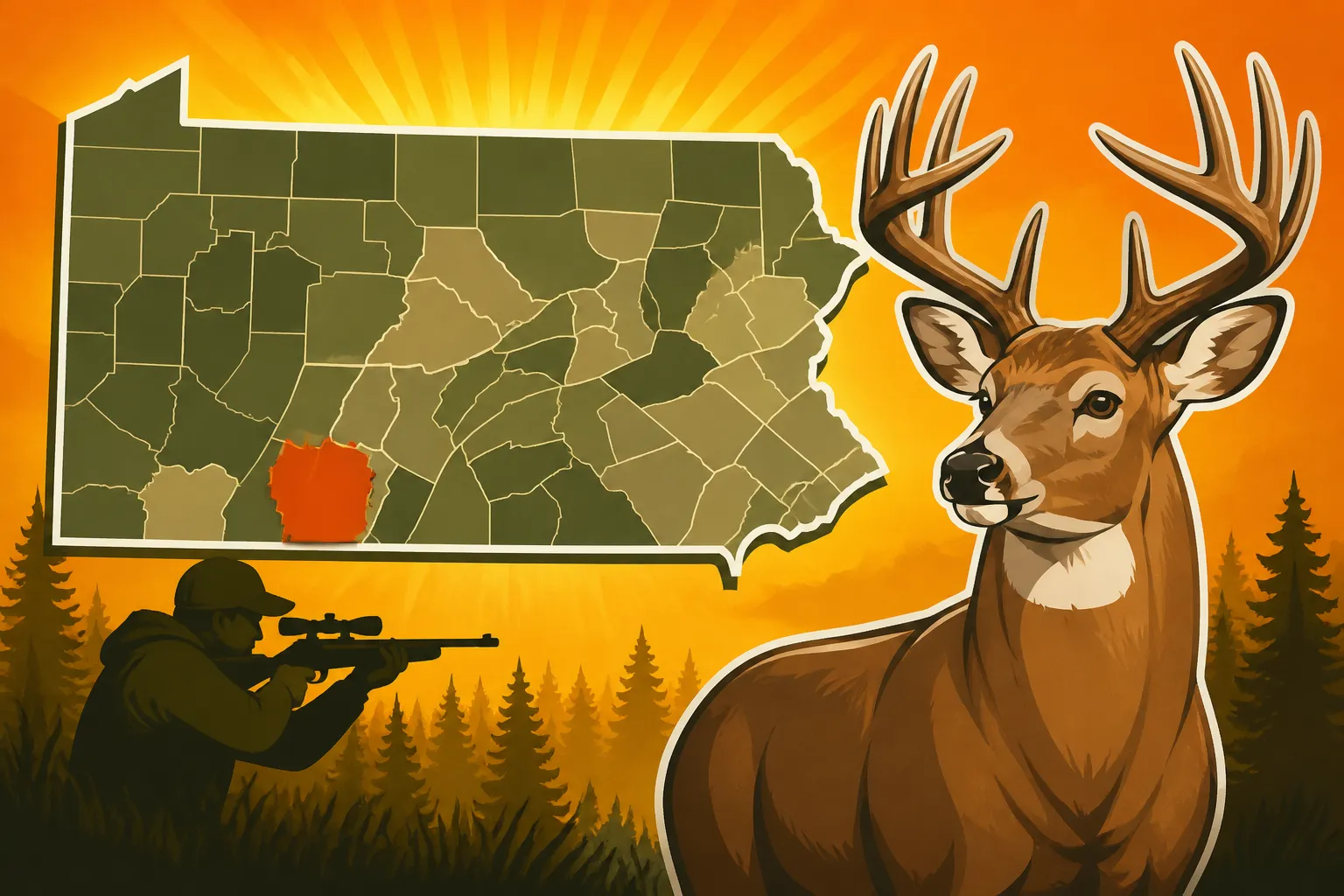
Consistent Performers: A Look at the Map
Historically, counties like Bradford, Tioga, Westmoreland, Clearfield, and others frequently appear on the highest harvest lists. What makes these counties such powerhouses? It's often a blend of factors, not just one single element.
- Bradford and Tioga Counties in the northern tier, for instance, are huge counties with a mix of forested mountains, agricultural valleys, and sprawling public and private lands. This diverse habitat allows deer to thrive, offering both thick cover and abundant food sources. They offer a blend of Hunting Pennsylvania's Big Woods for Deer and fertile valley hunting.
- Westmoreland County in the southwest, while more developed in parts, still boasts considerable agricultural land mixed with significant tracts of timber. This "farm-fringe" habitat is often ideal for deer, providing excellent nutrition from crops and plenty of escape cover.
- Clearfield County lies squarely in the central part of the state, bridging the gap between big woods and more developed areas. It's a vast county with a rich history of timbering, meaning a patchwork of mature woods, regenerating clearcuts, and pockets of agriculture, all contributing to its deer-holding capacity.
These counties aren't just large; they also represent a diverse range of habitats. Deer thrive in transition zones, where forest meets field, providing both security and sustenance. The extensive size of these counties also means they can simply hold more deer in total, even if local densities vary.
Habitat and Hunter Access as Driving Forces
The sheer amount and quality of habitat are undoubtedly critical. Counties with a balanced mix of mature timber, young regenerating forests (often from past logging operations), and agricultural fields tend to support robust deer populations. The young forest growth, in particular, provides vital browse and cover that deer depend on for survival and growth. This is a primary reason why you'll often see larger bucks in these areas too, as they have the nutrition to express their full antler potential. If you're chasing bigger racks, you might also want to consult Best Pennsylvania Counties for Big Bucks.
However, habitat alone isn't enough. Hunter access plays a massive role. The counties with the highest harvests often have significant portions of public land—State Game Lands, State Forests, or even large tracts of timber company land that allow hunting. This widespread access means more hunters can get out and participate in the harvest, contributing to the higher overall numbers. In areas with limited public access, even if deer numbers are high, the harvest might be lower simply because fewer hunters have the opportunity to pursue them. The good news is, tools like GoHunt can help you identify these public land strongholds, showing boundaries and access points, which is invaluable for planning a trip.
The Trade-offs of High-Harvest Areas
While the promise of high harvest numbers is enticing, it often comes with a trade-off: hunter pressure. Areas known for producing a lot of deer, especially public land within those counties, tend to attract a lot of hunters. This means more competition for prime spots, more deer being pushed around, and potentially more educated animals.
Imagine yourself on opening day in a popular State Game Land within a top-performing county. You might find several vehicles parked at every pull-off, and the woods echoing with the sounds of other hunters moving. This doesn't mean you can't be successful, but it does mean you'll need different tactics. You might have to walk further, hunt smarter, or focus on areas others overlook. Understanding Hunting Pressure on Pennsylvania Game Lands is critical for success in these popular spots.
Beyond Raw Numbers: Hunting Quality and Personal Preference
It's easy to get caught up in the numbers game, but for many of us, hunting is about far more than just filling a tag. The "quality" of a hunt can be incredibly subjective and often has little to do with whether a county is number one on the harvest list.
What "Quality" Means to Different Hunters
For some, a quality hunt means bagging the biggest buck they've ever seen, a true trophy animal. For others, it's about the challenge of still-hunting a remote mountain hollow for days, only seeing a few deer but experiencing true wilderness. And for many, it's about putting venison in the freezer, regardless of antler size.
A county that has a high raw deer harvest might not necessarily produce the highest percentage of mature, older-age-class bucks. In some intensely hunted areas, deer might not live long enough to reach their full potential. Conversely, a county with a lower overall harvest but vast, rugged terrain and less pressure might consistently produce older, larger-antlered deer for those willing to put in the effort. The PGC's antler restrictions have certainly changed the landscape, impacting What Antler Restrictions Did to Buck Ages and promoting older buck age classes in many areas.
Consider the kind of experience you're looking for:
- Trophy Hunting: You might prioritize counties known for producing larger-antlered bucks, even if deer density is lower and the hunting is tougher. These often involve more rugged, less accessible terrain.
- Meat Hunting: If your goal is primarily venison, then high deer density and reasonable access become key. You might focus on areas with ample antlerless opportunities.
- Wilderness Experience: For those who cherish solitude and the challenge of remote hunting, focusing on vast State Forests or the Allegheny National Forest might be more important than raw harvest numbers.
- Social Hunting: If hunting with friends and family is paramount, a convenient location with good access for multiple hunters might be your priority.
The Role of Terrain and Habitat Type
Pennsylvania is incredibly diverse, from the rolling farmlands of the southeast to the rugged mountains of the north-central region. The terrain and habitat profoundly influence how deer behave and how you hunt them.
- Farm Country: These areas often have higher deer densities and offer good sightlines. Deer might be found in woodlots, hedgerows, and along agricultural field edges. This type of hunting often involves scouting food sources and focusing on transition areas. You can learn more about this in Hunting Pennsylvania Farm Country Edges.
- Big Woods/Mountainous Terrain: Deer densities can be lower here, but often the deer that do reside in these areas are more elusive and often older, having learned to survive. Hunting here requires physical stamina, keen navigational skills, and a deep understanding of deer movement patterns on large landscapes, such as Reading a Pennsylvania Hollow for Deer or hunting benches and ridges. The rewards, however, can be immense in terms of the challenge and experience.
- Mixed Habitat: Many counties offer a blend of both, with agricultural valleys giving way to forested hillsides. These areas can offer the best of both worlds, with healthy deer populations benefiting from diverse food sources and ample cover.
Your preferred hunting style and physical capabilities should heavily influence your county choice, perhaps even more than harvest statistics.
How to Find Your Own "Best" County
Instead of chasing the county with the highest overall harvest, a more effective approach is to identify counties (or even WMUs within counties) that best fit your hunting style, accessibility needs, and definition of a "quality" hunt.
Utilizing PGC Resources and Mapping Tools
The Pennsylvania Game Commission provides a wealth of information that goes far beyond simple county harvest totals. Their annual deer harvest reports often break down data by WMU, showing antlered and antlerless harvests, success rates, and even buck age structure data. Pay close attention to the WMU-specific data. A WMU with a high percentage of 2.5-year-old bucks, for instance, might indicate a healthy, balanced herd with good potential for mature animals.
Beyond harvest data, the PGC offers detailed maps of State Game Lands. Coupled with modern mapping applications, these tools are indispensable. For example, the Pennsylvania Mapping Center offers incredible topographic and aerial imagery, allowing you to Scouting With the Pennsylvania Mapping Center from the comfort of your home. Platforms like GoHunt integrate this public land data with landowner information and topographical features, making it incredibly powerful for pre-season scouting. You can identify potential bedding areas, travel corridors, and even Hunting a Bench Above a Creek Bottom without ever setting foot in the woods.
Considering Public Versus Private Land Access
Access is often the biggest hurdle for hunters. Pennsylvania offers an incredible amount of public hunting land across its State Game Lands, State Forests, and the Allegheny National Forest. These areas are open to all licensed hunters and are often where the highest harvest numbers come from, simply due to the sheer volume of hunters.
- Public Land: If you primarily hunt public land, focus on counties with large tracts of State Game Lands or State Forests. Research specific Game Lands within those counties for historical deer sign, habitat improvements (like clearcuts or food plots), and accessibility. Be prepared for company, especially on opening days, and learn strategies for Finding Ground Others Walk Past by hiking deeper or targeting less obvious terrain.
- Private Land: If you have access to private land, either through ownership or by Getting Private Land Permission in Pennsylvania, your options expand significantly. Often, some of the best hunting, especially for less pressured deer, happens on private farms and woodlots. These areas might not contribute to the "top harvest county" list in the same way, but they can offer exceptional individual hunting experiences. Remember that if you're hunting private land on a Sunday, you often need written permission from the landowner, as per Sunday Hunting Rules in Pennsylvania.
The Importance of Personal Scouting and Experience
Ultimately, no amount of data or digital mapping can replace boots-on-the-ground scouting. Once you've narrowed down a few potential counties or WMUs, commit to spending time in those areas during the off-season.
- E-Scouting First: Use GoHunt or similar mapping tools to identify promising terrain features, pinch points, and cover. Look for oak ridges, clearcuts, swamps, and creek bottoms – all places deer love to frequent.
- In-Person Scouting: Walk the areas you identified. Look for old rubs, scrapes, deer trails, and feeding areas. Pay attention to how the terrain funnels deer. This is where you'll discover those hidden gems that the general harvest data can't reveal. For instance, looking for Scrape Lines Along a Logging Road can tell you a lot about local buck movement.
- Talk to Locals (Respectfully): If you can, chat with local landowners, hunters, or even game commission officers. They often have invaluable insights into local deer behavior and hunting pressure.
By combining the PGC's data with advanced mapping tools and diligent personal scouting, you can move beyond simply knowing which Pennsylvania county kills the most deer. You can identify the county, WMU, and even the specific hunting spots that offer the best chance for your definition of a successful and rewarding hunt.
Comparative Factors for Selecting Your Hunting County
Here's a quick look at some key factors to consider when choosing a county, moving beyond just the raw harvest numbers:
| Factor | High Harvest County (Often) | Lower Harvest County (Often) | Your Hunting Goal Preference |
|---|---|---|---|
| Land Area | Very large counties contribute to higher totals | Smaller, more densely populated counties | Match to desired remoteness/access |
| Deer Density | Can be moderate overall, with pockets of high density | Can be very high in specific local areas (farms/suburban) | Crucial for encounter rates |
| Habitat Type | Mix of forest, clearcuts, agriculture | More uniform (e.g., dense forest or intensive agriculture) | Dictates hunting style (e.g., big woods vs. farm country) |
| Hunter Pressure | Often higher, especially on public land | Can be lower, especially with good private access | Influences solitude preference and tactics |
| Public Land % | Significant, allowing many hunters access | Varies greatly, can be very low | Important for non-landowners |
| Access Roads | Often good, but may require walking to escape crowds | Varies, some remote areas are very difficult to reach | Affects ease of entry and game retrieval |
| Trophy Potential | Can be good, but often requires more effort due to pressure | Can be excellent if deer reach maturity with less pressure | Key for those focused on larger antlers |
| Success Rate | Good, but often tied to hunter numbers | Can be surprisingly high for those who scout effectively | Personal measure of a "good" hunt |
| Terrain | Highly varied (mountains, hills, valleys, flats) | Can be very specific (e.g., steep mountains or flat farms) | Match to physical capability and preferred hunting style |
This table highlights that a high harvest count is just one metric. Your personal preferences and hunting style should ultimately guide your decision.
Disclaimer
This article is for general informational purposes only and does not constitute professional advice. Laws, prices and regulations vary by location and change over time. Consult a qualified professional for guidance on your specific situation.