Hunting a Bench Above a Creek Bottom
Finding those consistent deer patterns in the vast, often complex Pennsylvania woods can feel like searching for a needle in a haystack. Many hunters overlook subtle terrain features that whitetails rely on daily, leading to frustration and empty tags. This guide is dedicated to dissecting one of the most productive yet often misunderstood setups: how to effectively locate, scout, and hunt a bench located just above a creek bottom.
Understanding the "Bench Above a Creek Bottom" Dynamic
When you're trying to figure out where deer are moving, especially in hillier country, understanding how they interact with elevation and water is key. A bench above a creek bottom isn't just a random spot; it's a topographical goldmine for deer movement. These subtle terraces often run parallel to the contours of the land, providing a flat, easy travel corridor where deer can move through rugged terrain with minimal effort, all while staying out of sight and scent of predators (and hunters!).
What Makes Benches and Creek Bottoms Deer Magnets
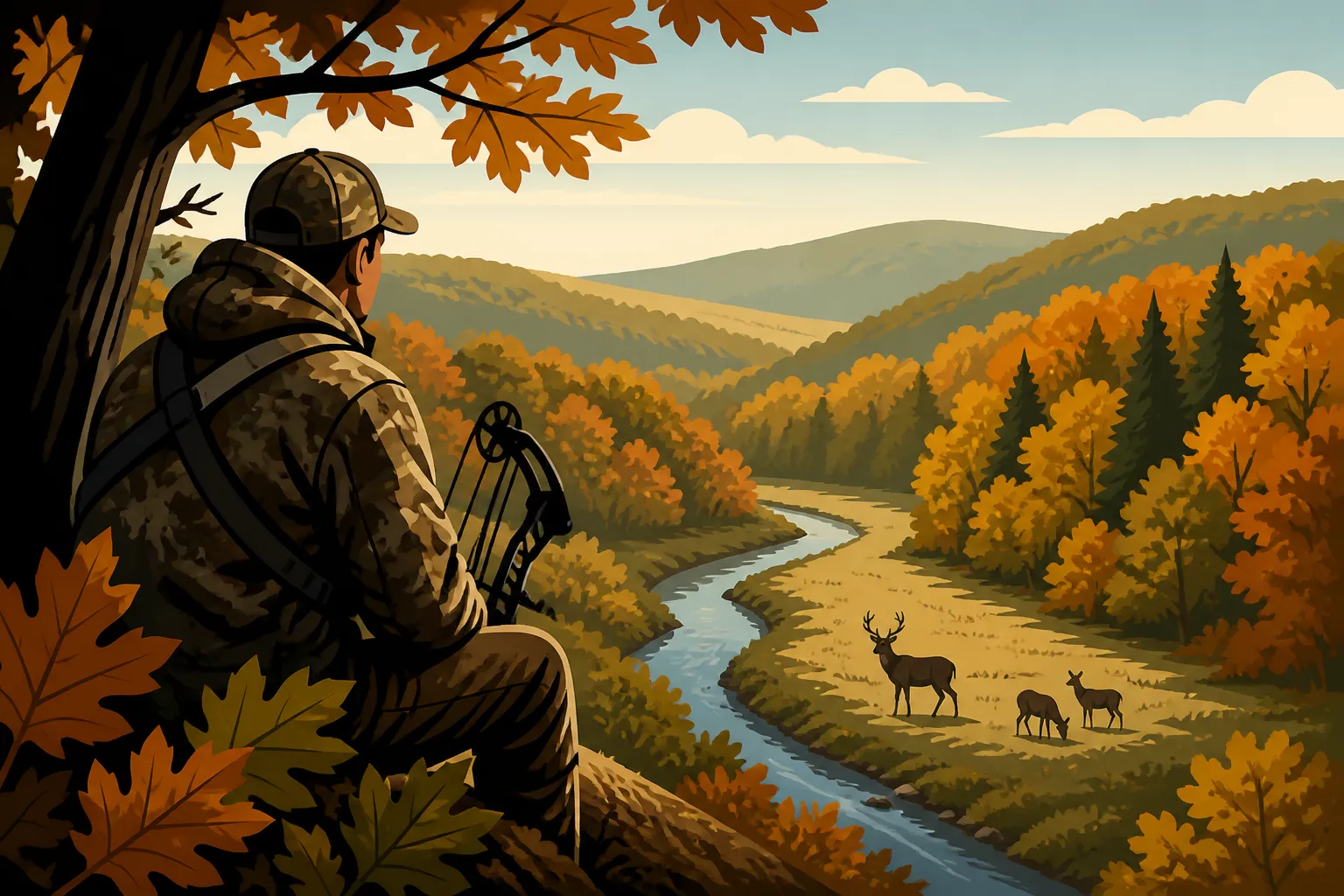
Imagine you're a deer. You want to conserve energy, stay hidden, and have access to resources. Creek bottoms offer water, often lush vegetation, and serve as natural funnels, especially in steep areas. But walking directly in a creek bed or scrambling up a super steep bank is work. That's where the bench comes in. These slightly flatter, horizontal strips of ground, often just 20-50 feet above the actual creek, provide a perfect compromise. Deer can access the water and cover in the bottom but travel along the easier grade of the bench. This is especially true in big woods areas like the Allegheny National Forest or Sproul State Forest, where the terrain can be relentlessly steep. These benches become natural highways for deer moving between bedding areas on higher ridges and feeding spots or simply transitioning across the landscape. They offer cover from above and often provide a vantage point looking down into the creek bottom, giving deer a sense of security.
Reading the Topography for Deer Travel
The trick to identifying these prime locations is learning to read a topographic map. Look for contour lines that spread out slightly, indicating a flatter area, often nestled between steeper sections. These "flat spots" on a slope, right above where the contour lines indicate a drainage or stream, are your target benches. They might not always be perfectly flat or wide, but even a subtle change in grade can be enough for deer to prefer it over a steep incline or descent. Creek bottoms, particularly those with a year-round water source, are easily identifiable. Your job is to find where these two features – the bench and the creek – align to create a natural, low-impact travel route. Pay attention to how these benches connect to other features, too. Do they lead to a saddle, a point, or a transition into a different timber type? These connections amplify their value. This sort of detailed topographical analysis is crucial for anyone trying to master Hunting Pennsylvania's Big Woods for Deer
Scouting Strategies for These Hidden Gems
Finding these benches on a map is one thing; confirming their use by deer and understanding the specifics of deer movement on them is another entirely. This requires a two-pronged approach: digital scouting and boots-on-the-ground investigation.
Aerial Photos and Topo Maps: Your Digital Edge
Before you ever set foot in the woods, spend significant time with digital mapping tools. Services like GoHunt are invaluable for this, allowing you to layer topographic maps with satellite imagery. Start by identifying drainages and prominent creek bottoms. Then, trace the contour lines on the slopes just above them. Look for those "flatter" sections—the benches.
Once you've identified potential benches, switch to the satellite view. Can you see any obvious trails or openings in the canopy along these benches? Look for changes in vegetation—thicker cover often attracts deer. Pay attention to how these benches connect to higher ground (potential bedding areas, like where Big Woods Bucks Bed or lower areas (feeding zones or escape routes). Use the measuring tools to estimate distances and angles. This digital reconnaissance helps you prioritize which areas to scout on foot, saving you countless hours of aimless wandering. Imagine finding a promising bench that extends for a quarter-mile, connecting two major ridge systems, with a small tributary joining the main creek right below it—that's a hotspot waiting to be explored. Being able to read Reading Aerial Photos for Big Woods Deer is an absolute game-changer.
Boots on the Ground: Confirming the Sign
Digital scouting gets you in the ballpark, but nothing replaces putting boots on the ground. Once you've identified a few promising benches, it's time to hike in. Start by walking the creek bottom itself, looking for deer tracks leading up to the benches. Then, move onto the benches themselves. Look for fresh tracks, droppings, rub lines, and old deer beds. A well-used bench will often have a clear deer trail or multiple faint trails running along its length.
Pay close attention to where deer are entering and exiting the bench. Are there well-worn trails leading up or down from the bench to the creek? Are there trails connecting the bench to a ridge top? These intersections are crucial. Also, look for any natural funnels or pinch points on the bench itself—a narrow section, a fallen log, or a cluster of thick pines can force deer into a predictable path. During the rut, you might even find scrapes and rubs right on the bench or along the steep bank leading up to it. Confirming the presence of active deer sign makes all the difference. Remember, scouting isn't just about finding deer, it's about understanding why they use a particular area.
Effective Hunting Tactics and Stand Placement
Hunting these bench-and-creek setups requires a careful consideration of wind, thermals, and deer behavior. A perfect stand location in one scenario might be terrible in another, so adaptability is key.
Playing the Wind and Thermals in Varied Terrain
The interplay of wind and thermals in hilly terrain can be complex, and it’s arguably the most critical factor when hunting benches above creek bottoms. In the mornings, as the sun warms the air, thermals typically rise, carrying your scent uphill. In the evenings, as the air cools, thermals fall, carrying your scent downhill. The wind, of course, is a separate factor that can override or combine with thermals.
For a morning hunt, if deer are likely to be traveling up the bench from the creek bottom towards higher bedding, you want to be positioned so your scent is blowing away from their probable approach, often meaning your stand should be on the downhill side of their travel route, allowing your rising thermals to carry your scent over them or to the side. Conversely, for an evening hunt, as deer move down from bedding to feed, your stand might need to be positioned so your falling thermals don't blow directly into their path. Always try to set up so your scent is drifting into an area you don't expect deer to be, such as directly into the creek itself (if the wind isn't pushing it downstream to another travel lane) or into an open area they'd avoid. Learning to manage Wind and Thermals on a Ridge applies directly to these bench setups as well. GoHunt's mapping features often include wind direction overlays which can be extremely helpful in predicting how your scent will disperse.
Optimal Stand Setup for Ambushes
Once you've found a well-used bench and understood the likely deer movement and prevailing winds/thermals, selecting your exact stand location is paramount. You're generally looking for an ambush point that provides good visibility of the bench trail, allows for a clean shot, and minimizes your detectability.
Consider these aspects:
- Tree Choice: Find a tree that offers good cover, both from the deer's approach and from above. A conifer or a deciduous tree with a dense canopy is ideal. If it's early archery season, consider trees with foliage. For late season, bark texture and limb structure become more important.
- Shot Lanes: Ensure you have clear shooting lanes along the bench in both directions. Trim any small branches that might deflect an arrow or bullet. Think about the most likely shot distances and angles.
- Background: Try to position yourself with a busy background (dense trees, a rise in the terrain) to help break up your outline, especially important when Treestand Setups in Pennsylvania Hardwoods are critical.
- Access: Plan a quiet, concealed entry and exit route that doesn't cross major deer trails or disturb the area. This might mean approaching from the creek bottom side or from above the bench, depending on the terrain and wind.
- Height: Generally, the higher you are, the better your scent is dispersed and the less likely deer are to pick you out. However, don't sacrifice shot angle or comfort for extreme height. A comfortable, stable setup at 18-25 feet is often perfect.
Remember, deer on these benches are often relaxed but alert. Your stand needs to be positioned for a quick, decisive shot when they least expect it.
When and How to Hunt These Locations
Benches above creek bottoms can be productive throughout the entire hunting season in Pennsylvania, but certain times offer unique advantages:
- Early Archery Season: Deer are often patterned around food and water. These benches provide excellent travel corridors between early-season food sources (like acorns, if they're dropping) and bedding. A morning hunt near water can be particularly effective.
- The Rut (Mid-October to Mid-November): This is where benches really shine. Bucks will cruise these easy travel routes scent-checking for does, especially in areas with moderate hunting pressure. Setting up on a bench during the peak of the rut can intercept bucks traveling between drainages or making their way through the woods. Combining still-hunting with stand hunting during this period can be lethal. Hunters focusing on Hunting the Pre-Rut in Late October or Hunting the Peak Rut Week in Pennsylvania will find these benches invaluable.
- Late Archery/Flintlock Season: As temperatures drop and food becomes scarcer, deer will continue to use these low-effort travel routes to conserve energy. Look for benches that connect to persistent Late-Season Food Sources for Whitetails, like standing corn or specific conifer thickets.
Hunting Strategies:
- Stand Hunting: This is the most common and often most effective method. Set up early, stay late, and be patient.
- Still-Hunting: If the bench is wide enough and offers good cover, a slow, deliberate still-hunt along its length can be productive, especially in soft snow or during drizzly conditions when your movement is masked. This aligns well with Still-Hunting Pennsylvania Big Woods.
- Glassing: In more open timber, or if the bench offers a good vantage point, use binoculars to slowly glass the bench and the creek bottom below it.
Here’s a quick overview of thermal and wind strategies:
| Time of Day | Thermal Movement | Ideal Stand Placement Relative to Bench | Wind Considerations |
|---|---|---|---|
| Morning | Rises (Uphill) | Below likely deer path (downhill side) | Wind should ideally be cross-bench, or into the creek bottom |
| Evening | Falls (Downhill) | Above likely deer path (uphill side) | Wind should ideally be cross-bench, or up into a void |
| Mid-Day | Variable/Still | Higher, watching crossing points | Highly variable, prioritize stable wind days if possible |
Common Mistakes and How to Avoid Them
Even with the best intentions, hunters can make mistakes that compromise their success when hunting benches above creek bottoms. Acknowledging these pitfalls is the first step to avoiding them.
Ignoring Subtle Sign
One of the biggest errors is rushing through the scouting phase. A bench might look good on a map, but if there's no fresh sign, deer simply aren't using it consistently enough to justify your time there. Don't be fooled by old rubs or faint tracks from seasons past.
Instead, slow down. Get on your hands and knees if you need to. Look for freshly clipped browse, shiny black droppings, and crisp tracks. Are there multiple faint trails converging on the bench, or just one barely discernible path? Are there beds nestled into the side of the bench, indicating deer are bedding close by? Sometimes, the most productive benches are those with the most subtle, yet consistent, activity. This could be a few scattered droppings over a hundred yards, but they're fresh every time you check. Don't dismiss a spot because it doesn't look like a superhighway; sometimes, the less obvious routes are precisely where the smart deer travel.
Misjudging Entry and Exit Routes
You've done the hard work: found a killer bench, scouted it thoroughly, and picked your stand tree. But if your entry and exit routes are sloppy, you'll blow deer out of the area before you even sit down. Deer are hyper-aware of intrusions, especially in areas they frequent.
Consider the following for your approach and departure:
- Silence is Golden: Choose routes that minimize noise. Avoid crunching leaves, snapping twigs, or rubbing against brush. This might mean taking a slightly longer route or choosing a different side of the hill.
- Scent Control: Always approach with the wind and thermals in mind, just as you would when choosing your stand location. Your entry scent trail can linger for hours. Use terrain features, like the creek itself (if you can walk it quietly and legally) or a higher ridge, to your advantage to mask your approach.
- Timing: Get in well before daylight and stay until well after dark, especially for evening hunts. This allows the woods to settle down around you. If you leave too early, you might spook deer that are just starting to move in or feed.
- Minimize Disturbance: Avoid walking directly on deer trails, especially the main travel corridors on the bench. Try to parallel them, or stay off to the side, taking care with Entry Routes on Steep Ground. The goal is to leave the area as undisturbed as possible, ensuring deer continue to use that bench confidently.
By being meticulous in your scouting and strategic in your approach, these hidden benches above creek bottoms can become some of your most reliable hunting spots in Pennsylvania.
Disclaimer
Always consult the current Pennsylvania Game Commission regulations and local laws before hunting. This guide provides general advice for informational purposes and does not replace official hunting regulations or hunter education.