Grunt Calls in Mature Timber
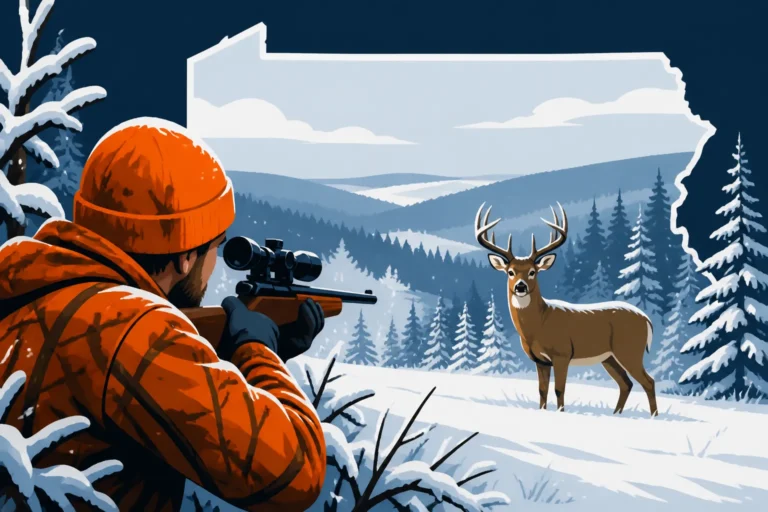
Hunting deer in Pennsylvania's mature timber can be incredibly challenging. Those big, quiet woods, often with deep hollows and vast ridges, can make you feel like you're hunting ghosts. Bucks, especially the older ones, are masters of vanishing acts, and just getting them to acknowledge your presence, let alone come into range, feels impossible sometimes. This guide is all about mastering the art of the grunt call in these specific, often frustrating, environments, giving you practical strategies to turn those distant sightings into close encounters.
The Nuances of Deer Communication in Dense Woods
When you're out in the sprawling mature timber of Pennsylvania, whether it's the Allegheny National Forest or parts of the Sproul State Forest, the world sounds different. Sound doesn't travel as far, it's muffled by the undergrowth, and a deer's senses are on high alert. Understanding how deer communicate, particularly through vocalizations like grunts, is your first step to effectively using these calls to your advantage in such a demanding landscape. It's not just about making noise; it's about mimicking a conversation.
Mature timber, with its towering oaks, maples, and thick understory, creates a completely different acoustic environment than an open field or a sparse woodlot. A grunt that might carry for hundreds of yards in a cut cornfield will be swallowed up much faster here. This means your calling strategy needs to be more targeted and often, more patient. Deer in these areas are also often more accustomed to natural sounds and are keenly aware of anything out of place. They hear the subtle rustle of leaves, the snap of a twig, and the distant calls of other deer, and they interpret these sounds based on their perceived proximity and urgency.
Imagine a young buck, maybe a two-year-old, wandering through a thick hemlock stand in the Tioga State Forest. He's heard grunts before, but in this dense cover, a loud, aggressive call from 100 yards away might sound like it's right on top of him, potentially spooking him. Conversely, a soft, subtle social grunt might barely register if he's actively feeding or distracted. The key is to understand the different types of grunts and their typical contexts, and then adapt them to the specific conditions of your hunting area, paying close attention to factors like wind, terrain, and the actual density of the timber around you.
Decoding the Different Types of Grunt Calls
Not all grunts are created equal, and knowing which one to deploy and when can make all the difference between pulling in a curious buck and sending him running for the hills. Deer use a range of vocalizations to communicate different messages, from mild curiosity to aggressive challenge. For us hunters in Pennsylvania's mature timber, focusing on a few key grunt types will be most beneficial.
First, you have the social grunt. This is a softer, often drawn-out "grrrruuunt" that deer use to acknowledge each other's presence. It's not aggressive, just a "hey, I'm here." This is an excellent call to use when you're just trying to get a deer's attention or make them feel at ease. If you see a deer at a distance and he hasn't seen you, a quiet social grunt can often make him stop, look your way, and sometimes even take a step or two closer to investigate. It's especially useful when you are still-hunting Pennsylvania big woods and want to subtly check for hidden deer.
Then there's the trailing or tending grunt. This one is more excited, often a series of quicker, softer grunts like "grunt-grunt-grunt." Bucks make this sound when they are actively pursuing a doe in heat. It signifies a buck that's interested, but not necessarily aggressive. This call can be highly effective during the pre-rut in late October and the peak rut week in Pennsylvania when bucks are really starting to chase. It simulates a buck that's on a hot trail, and a dominant buck might come in to investigate the competition, while a younger buck might come in out of curiosity, hoping to find the doe.
Finally, you have the challenge or aggressive grunt. This is a deeper, louder, and often rougher "GRRR-UNTTT!" Sometimes it's followed by a snort-wheeze, especially from a dominant buck. This is the sound of a buck spoiling for a fight. It's a high-risk, high-reward call. You want to use this sparingly, primarily when you know there's an aggressive buck in the area, or if a buck has shown some interest in a tending grunt but needs a little more convincing to commit. A dominant buck might respond aggressively, but a timid or younger buck could be intimidated and flee. Timing and situation are everything with this call.
Choosing the Right Grunt Call for Mature Timber
With so many grunt calls on the market, it can feel overwhelming to pick one. Do you need a tube call, a compact one, one with an adjustable reed? In mature timber, where sound transmission is limited and deer are typically more cautious, your choice of call should prioritize versatility, realistic sound, and ease of use. You don't want to be fumbling with a call when a shooter buck steps out.
Many hunters swear by calls that allow for a wide range of tones and volumes, often achieved through an adjustable O-ring or mouthpiece. Brands like Primos and Flextone offer calls that allow you to quickly change from a fawn bleat to a deep, aggressive buck grunt. This versatility is crucial in timber because you might need to start soft to get attention, then escalate to a tending grunt, and maybe even finish with a challenging grunt if the situation demands it. A call with a good, deep range is beneficial because the lower frequencies tend to carry better through dense woods and mimic the larger, more mature bucks that often inhabit these areas.
Consider a call that is durable and quiet to carry. You'll be moving through brush, climbing hills, and sitting for long periods, so a bulky or noisy call in your pack is a nuisance. Compact, tube-style calls are popular for this reason. Some hunters even prefer hands-free calls that can be operated with light pressure from the mouth, leaving their hands free for their bow or rifle. This is especially useful if a buck approaches quickly and you need to make a follow-up call without dropping your weapon or making excessive movement.
Grunt Call Application Guide
| Grunt Type | Sound Description | When to Use It in Mature Timber | Target Deer Response |
|---|---|---|---|
| Social Grunt | Soft, often drawn-out "grrrruuunt" | Seen a deer at a distance, trying to stop it, or confirm presence | Stops, looks, takes a few curious steps |
| Tending Grunt | Series of quicker, softer "grunt-grunt" | Mid-rut, when bucks are actively chasing does; to simulate a "hot" buck | Investigates for competitor or available doe |
| Challenge Grunt | Deep, loud, rough "GRRR-UNTTT!" | Late rut, when a buck is seen with a doe or shows aggression | Comes in to challenge, or flees (high risk) |
| Fawn Bleat | High-pitched, distressed "baaah" | Early season to attract does, or in distress for aggressive does/bucks | Does investigate, aggressive bucks might check for doe in heat |
Remember, practice is key. Get comfortable with your call before you hit the woods. Learn to control the volume and tone, as the acoustics of timber will require a different approach than open fields. What sounds loud in your living room might be barely audible in a thick stand of pines.
Strategic Grunt Calling in Pennsylvania's Timber
Now, let's talk about putting those calls to work in the real world of Pennsylvania's big woods. It's not a set-it-and-forget-it approach; it's about reading the situation, understanding deer behavior, and adapting your calling sequence.
Setting the Scene and Assessing the Wind
Before you even think about calling, you need to consider your setup. In mature timber, deer often approach cautiously, using cover. You want to be positioned so you have good shooting lanes in the direction you expect the deer to approach, usually downwind or crosswind. Always be mindful of the wind and thermals on a ridge; a slight shift can ruin your hunt. Using a detailed mapping app like GoHunt can help you understand the terrain, identifying potential deer travel corridors, bedding areas, and how wind might swirl in hollows. This intel is invaluable for choosing an optimal stand location.
Starting Soft and Building Intensity
Most of the time, you should start with a soft, social grunt. If you spot a buck at 70 yards, heading away from you, a quiet "grrrruuunt" might be all it takes to make him stop and look back. If he stops but doesn't commit, wait a minute, then try another soft grunt, maybe slightly longer. If he still seems uninterested or is moving off, that's when you might escalate to a tending grunt, simulating a buck on the move, maybe even adding a light tickle of rattling antlers if it's the right time of year.
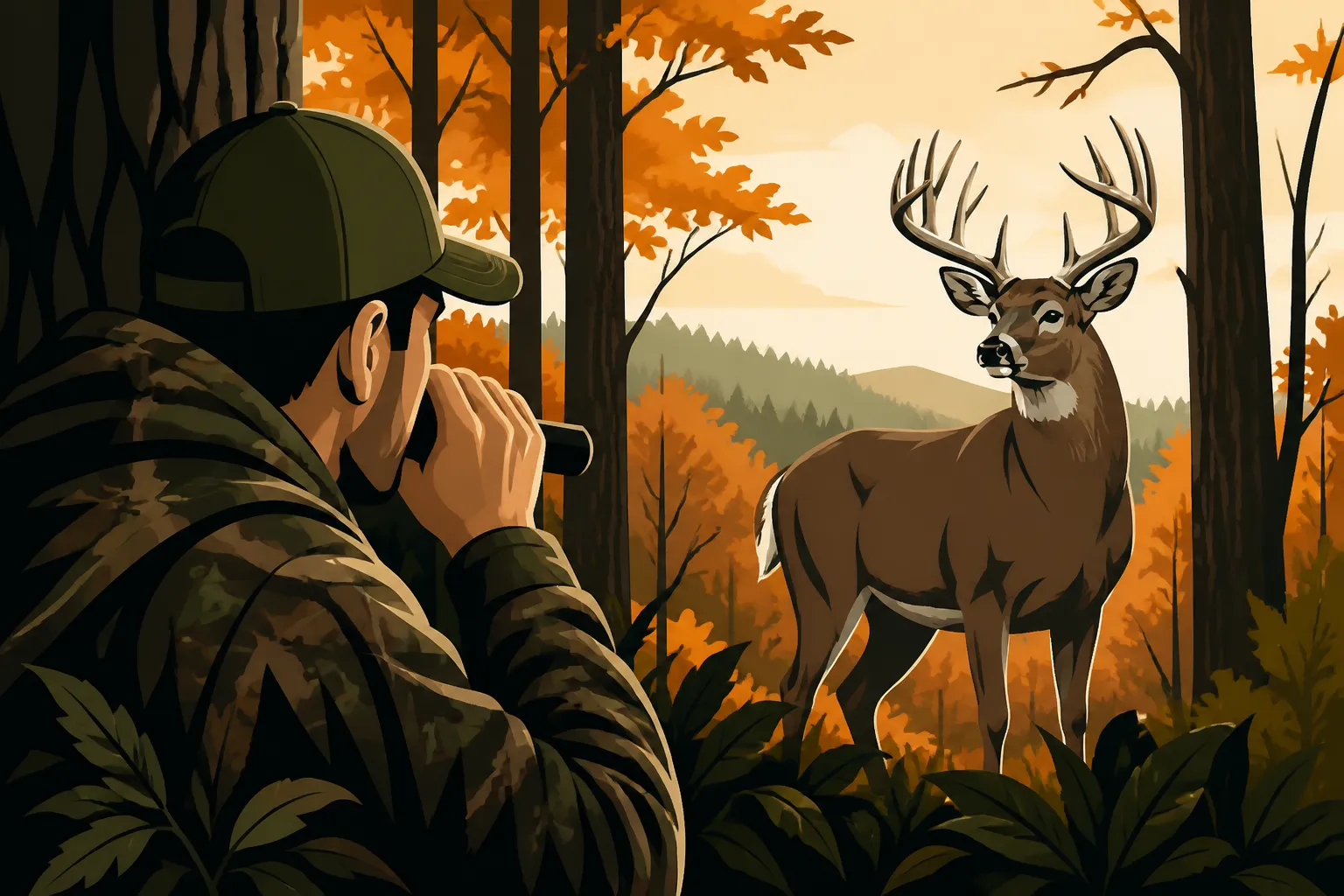
Think about a common scenario: You're on an oak ridge, perhaps near a bench above a creek bottom, and you spot a buck browsing slowly, but he's just out of bow range. A quiet social grunt can often pique his curiosity enough to make him alter his path to investigate, bringing him into your shooting lane. You're not trying to spook him; you're just suggesting there might be another deer in the area that's worth checking out.
Responding to a Buck's Behavior
This is where the art comes in. Every buck is different, and their response will tell you what to do next.
- If he stops and looks: He's heard you. Now, be patient. Sometimes, a single grunt is enough. He might just continue on his way, but often, he'll turn and start to investigate. If he starts walking your way, put the call down and get ready.
- If he hangs up: This is common. He's heard you, he's interested, but he's not committing. He might stand there, stomp a foot, or even snort. This is a crucial moment. A soft, pleading fawn bleat can sometimes break the standoff, appealing to a buck's paternal instincts or hoping a curious doe will lead him closer. Sometimes, silence is the best call. Let him convince himself it's safe to approach.
- If he moves off: This indicates he's either spooked or just not interested. If he's spooked, aggressive calling will only confirm his fears. If he's just not interested, a slightly more aggressive tending grunt, or even a soft rattling sequence, might be worth a try, but don't overdo it. Sometimes, you just have to let him go.
Remember, in areas with higher hunting pressure, like some of Pennsylvania's State Game Lands, deer are often warier. They've heard it all. Subtle, realistic calling is usually more effective than loud, aggressive sequences that sound artificial.
Common Mistakes and How to Avoid Them
Even seasoned hunters make mistakes with grunt calls, especially in the challenging environment of mature timber. Avoiding these pitfalls can significantly increase your success rate.
Overcalling or Calling Too Loudly
This is probably the most common mistake. In dense woods, sound gets muffled. This can tempt hunters to call louder or more frequently than necessary. The problem is that a loud call, even if it sounds natural to you, might be startling to a deer that's close by but unseen. It sounds like an invisible deer just materialized on top of them. Start soft, and only increase volume if you determine the deer is further away or needs more encouragement. Remember, a deer's hearing is incredibly acute, and they can pinpoint sounds with remarkable precision, even if you can't see them. If you're hunting during the early archery WMUs in September, where deer behavior is often different, starting subtle is even more critical.
Ignoring Wind Direction and Thermals
This cannot be stressed enough, especially when hunting the Pennsylvania big woods. Deer almost always try to approach a call from downwind to use their nose to confirm what their ears are telling them. If you call, and a buck circles downwind of you, and your scent reaches him, the hunt is over. Always position yourself with the wind in mind, anticipating where a buck will try to get downwind of your call. On ridgelines and in hollows, thermals can be tricky, shifting as the day warms or cools. Pay attention to how the wind is moving your scent and adjust your strategy, or your location, accordingly. This is a critical factor when considering entry routes on steep ground.
Not Adapting to Deer Behavior
As mentioned earlier, every deer and every situation is unique. If a buck responds positively to a social grunt, don't immediately switch to a challenge grunt. If he's hesitant, don't keep hammering him with the same call. Watch his body language: Is he flicking his ears? Stomping his foot? Lowering his head? These are all cues. An irritated or scared deer will have very different body language than a curious or aggressive one. Patience is often the best call. When you're out there, remember the principles of Hunting the Pennsylvania Rut in November, as buck behavior during this critical time can be highly volatile and responsive to good calling.
Giving Up Too Soon
Sometimes, a buck will hear your call, but won't immediately charge in. He might circle, hang up, or just take his sweet time. Many hunters give up after a few minutes if nothing shows up. However, a buck might take 10-15 minutes, or even longer, to work his way in, especially in thick cover where visibility is limited. If you believe a buck heard you and there's a good chance he's interested, stay alert, keep still, and remain patient. You never know when he might suddenly appear from behind a thicket. This is where scouting Pennsylvania public land before season can help you identify areas where deer might feel secure enough to take their time approaching a call.
Disclaimer
Always consult the latest Pennsylvania Game Commission regulations and local laws before engaging in any hunting activities. Hunting ethics and safety should be your top priority.