Safety Zone Rules Around Buildings
Hunting in Pennsylvania is a cherished tradition, but navigating the rules, especially around private property and residences, can sometimes feel like walking through a minefield. The safety zone rules are one of the most critical aspects, designed to protect homeowners and their property, but they often leave hunters confused about where they can and cannot ethically and legally take a shot. This guide will demystify Pennsylvania's safety zone regulations, helping you understand your responsibilities and hunt confidently and safely.
Understanding Pennsylvania's Safety Zones: What Are They Really?
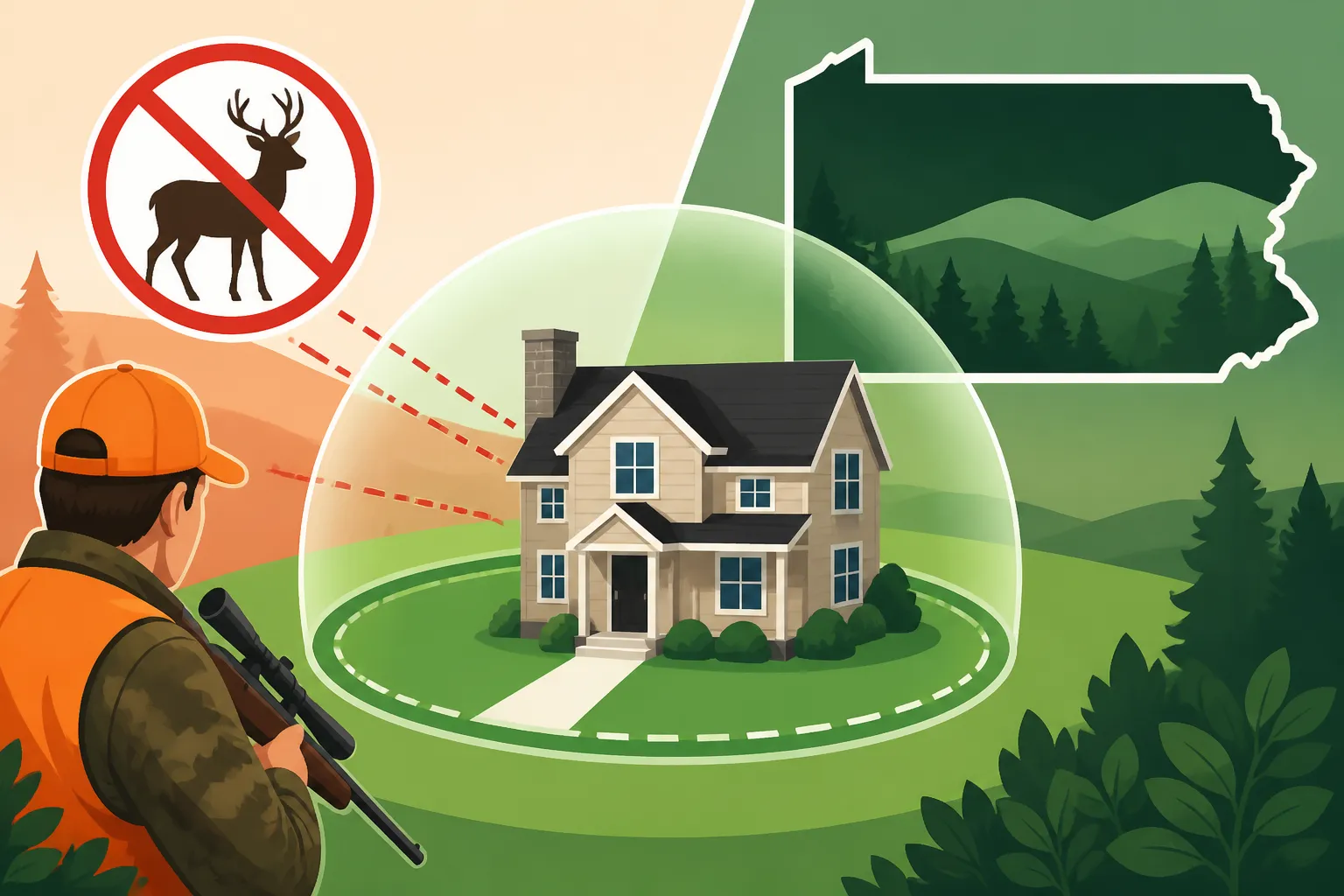
It’s a scenario every hunter has faced: you’re slowly still-hunting through a promising woodlot, perhaps on public game lands, when suddenly a faint outline of a house or barn appears through the trees. Instantly, your brain starts calculating distances, your grip on your firearm tightens, and a little knot of anxiety forms in your stomach. No one wants to accidentally violate a safety zone, let alone endanger someone or their property. These zones are fundamental to responsible hunting, designed to prevent accidents, ensure public safety, and protect private property from errant projectiles. Essentially, they are no-shooting buffers around specific structures and areas where people are likely to be.
The core idea is simple: maintain a safe distance from places where humans live, work, or recreate. This isn't just about avoiding a direct hit; it's about the potential for a bullet, arrow, or shotgun pellet to travel an unforeseen distance and cause harm. Pennsylvania's safety zones are about mitigating that risk before it ever becomes a problem. Ignoring these rules not only puts others at risk but can lead to severe legal penalties and a serious stain on the reputation of hunters everywhere. It's a foundational element of our hunting heritage that we must respect to ensure the privilege continues for future generations.
A common misconception is that a safety zone only applies if you're shooting at a building. That's simply not true. The rule prohibits discharging a firearm within a certain distance of these structures, regardless of your target's location, if that shot would carry into or through the zone. So, if you're standing 100 yards from a house and shoot a deer that's also 100 yards from the house, but your bullet would travel within that 150-yard buffer zone, you're likely in violation. It requires careful consideration of not just where your target is, but where your shot will go and where you are standing when you take it.
Specific Structures and Their Safety Distances
The Pennsylvania Game Commission is pretty clear about what constitutes a safety zone, but the distances can vary depending on what you're hunting and, crucially, what kind of weapon you're using. Understanding these specifics is paramount to staying on the right side of the law and, more importantly, keeping everyone safe. It's not a one-size-fits-all rule, and failing to recognize the nuances can put you in a tough spot.
For most big game, small game, and furbearer hunting with a firearm, the standard safety zone is 150 yards. This applies to any occupied dwelling, residence, or other building, as well as any camp occupied by humans or livestock. It also extends to any structure or area designed for or being used by humans for agricultural or recreational activities, and includes playgrounds, school grounds, or nursery schools. Imagine a child’s swing set, a farmer tending crops, or a family picnicking – you must be 150 yards away from these areas before discharging a firearm. This distance accounts for the typical range and power of common hunting firearms, ensuring a significant buffer for safety.
Now, here's where it gets a little more specific. If you're hunting deer, bear, or turkey with a bow or crossbow, the safety zone shrinks to 50 yards. This reduced distance reflects the generally shorter effective range and less powerful projectile of archery equipment compared to firearms. However, this 50-yard rule is only for those specific big game species. If you're bowhunting small game, coyotes, or furbearers, the 150-yard safety zone still applies, just as if you were using a firearm. This is a critical distinction that often catches hunters off guard, so always double-check the rules for your specific quarry and weapon before heading out.
The regulations are in place to prevent tragic accidents and maintain harmony between hunters and non-hunters. Whether you're hunting on private land or public game lands, these rules are non-negotiable. Knowing the exact distance for each scenario, and being able to identify those structures or areas in the field, is a core responsibility.
Here’s a breakdown of Pennsylvania’s safety zone rules by weapon and game type:
| Weapon Type | Species | Minimum Safety Distance | Applies To | Key Consideration |
|---|---|---|---|---|
| Firearms | All Game Species (Deer, Bear, Turkey, Small Game, Furbearers, Coyotes, etc.) | 150 Yards | No person shall discharge a firearm within 150 yards of any occupied dwelling, residence, other building or camp occupied by humans or livestock, or any structure or area designed for or being used by humans to engage in an agricultural activity, recreational activity, or any playground, school ground or nursery school. | This is the most common safety zone rule. You cannot shoot into or across this zone. It's about the discharge of the weapon, not just the bullet impact. Even if the target is outside the zone, if your shot travels through it, you could be in violation. Permission from the owner/occupant is required to hunt within this safety zone. |
| Archery | Deer, Bear, Turkey | 50 Yards | No person shall discharge a bow or crossbow within 50 yards of any occupied dwelling, residence, other building or camp occupied by humans or livestock, or any structure or area designed for or being used by humans to engage in an agricultural activity, recreational activity, or any playground, school ground or nursery school. | This reduced distance applies specifically to archery equipment for these larger game animals. While the distance is shorter, the principle is the same: permission from the owner/occupant is essential to hunt within this zone. |
| Archery | Small Game, Coyotes, Furbearers | 150 Yards | Applies the standard firearm safety zone if hunting these species with a bow or crossbow. | This is a common point of confusion. The 50-yard archery exception only applies to deer, bear, and turkey. For other species, if using archery equipment, the 150-yard rule for firearms is still the one to follow regarding safety zones. |
Navigating Safety Zones in the Field
Knowing the rules is one thing; applying them accurately when you're out in the woods, adrenaline pumping, is another entirely. Pennsylvania's varied landscape, with its mix of remote forests and interspersed farmsteads, means you're constantly evaluating potential safety zones. It's a critical skill, and modern tools have made it significantly easier to navigate these complex boundaries. No one wants to accidentally stumble into a situation where they're unsure if a shot is safe or legal.
One of the best tools for identifying potential safety zones is a good mapping application like onX Hunt. These apps, particularly with their property line layers and satellite imagery, allow you to scout from home and identify where dwellings, barns, or other structures might be located. You can often see the outlines of fields and buildings, giving you a strong heads-up on areas to avoid or where special caution is needed. While they aren't official legal documents, they provide an invaluable visual aid. You can use features like the line measurement tool in onX Hunt to draw a buffer zone around a building, helping you visualize that 150-yard or 50-yard radius before you even set foot on the property. This type of pre-hunt preparation is essential, especially when exploring new areas or public lands that border private parcels. For more general mapping resources, remember to check the Using the Pennsylvania Mapping Center.
Even with the best maps, unexpected situations arise. What happens if your prized buck or bear runs into a safety zone? First and foremost, resist the urge to immediately pursue it. The law is clear: you cannot trespass to retrieve game. The correct procedure is to contact the landowner immediately, explain the situation calmly and respectfully, and ask for permission to retrieve your animal. They are not obligated to grant it, but a polite request often goes a long way. If you can’t locate the landowner, or if they deny permission, your only option is to contact the Pennsylvania Game Commission. They have the authority to intervene and, if possible, retrieve the game for you. For a deeper dive into this often-frustrating scenario, refer to Retrieving Game From Private Land.
Planning your hunt with safety zones in mind also means strategic stand placement and movement. When scouting, identify not just where deer are moving, but also where potential safety zones lie. If you're setting up a treestand or ground blind, ensure your shooting lanes are clear of any safety zone violations. This might mean adjusting your angle, choosing a different tree, or even moving to an entirely new area. Always think about your furthest possible shot and where that projectile would end up. It's not just about the target, but everything behind it. You might also find it helpful to look into Hunting the Pre-Rut in Late October or Hunting the Peak Rut Week in Pennsylvania to better understand deer movement patterns in relation to where you can safely set up.
Consequences of Violating Safety Zone Rules
Let's be blunt: violating Pennsylvania's safety zone rules isn't just a minor infraction; it carries serious legal consequences and, more importantly, can have devastating real-world impacts. As hunters, we are stewards of the land and our sport, and acting irresponsibly undermines the trust and goodwill built over generations. No hunter wants to face a game warden for an avoidable mistake.
The legal penalties for discharging a firearm or bow within a safety zone can range from significant fines to the loss of your hunting privileges. Depending on the severity of the violation—especially if property damage or injury occurs—you could face charges far more severe than just a game law infraction. These penalties are designed to be a strong deterrent, reflecting the gravity of risking public safety. While specific figures can fluctuate, suffice it to say that a safety zone violation will likely hit your wallet hard and could strip you of the ability to hunt in Pennsylvania for a period. For more details on the potential repercussions, you might want to review Pennsylvania Wildlife Violation Penalties.
Beyond the direct legal ramifications, there's the very real and heartbreaking risk of injury or even death. A bullet travels far and can ricochet unpredictably. Even an arrow, while having a shorter range, can cause serious harm. Accidents happen, but by diligently observing safety zones, we dramatically reduce the chances of a stray projectile finding an unintended target. Every hunter carries a profound responsibility to ensure their shot is safe, and that includes being absolutely certain of what's within, and beyond, their chosen firing line. This is why thorough Pennsylvania Hunter Education Requirements are so critical.
Violations also inflict a heavy toll on hunter-landowner relations. When a homeowner finds bullet holes in their barn or hears shots whizzing too close to their property, it erodes trust. This breakdown of trust often leads to more "No Trespassing" signs, fewer landowners willing to grant access, and greater resentment towards hunters as a whole. Many of us rely on the generosity of private landowners to pursue our passion, and every safety zone violation makes it harder for everyone. Understanding and respecting property boundaries, even outside of safety zones, is vital, which is why topics like Pennsylvania Trespass and Permission Law and Do You Need Written Permission in Pennsylvania? are so important for responsible hunters.
If you witness a safety zone violation, it's crucial to report it to the Pennsylvania Game Commission. While no one likes to "tattle," ensuring safety and upholding the integrity of hunting is paramount. Gather as much detail as possible—location, time, description of individuals involved, license plate numbers if safe to obtain. Your swift action can prevent a potential tragedy and helps maintain the high standards expected of Pennsylvania hunters. For guidance on how to properly report such incidents, check out Reporting a Poacher in Pennsylvania.
Disclaimer
This article is for general informational purposes only and does not constitute professional advice. Laws, prices and regulations vary by location and change over time. Consult a qualified professional for guidance on your specific situation.