Moshannon State Forest Deer Hunting
Hunting deer in Pennsylvania's vast Moshannon State Forest can feel like trying to find a needle in a haystack. This sprawling expanse of central Pennsylvania's big woods offers incredible opportunity but also presents unique challenges, from navigating its remote terrain to understanding how deer move within such a diverse and rugged landscape. This guide will walk you through everything you need to know to confidently plan and execute a successful deer hunt in Moshannon State Forest.
Understanding Moshannon State Forest as a Deer Hunting Destination
Moshannon State Forest, covering a significant portion of Centre, Clearfield, and Elk counties, is a true "big woods" experience. It’s a place where you can walk for miles without seeing another hunter, but also where deer can vanish into thick cover or seemingly disappear over a ridge. Understanding its unique characteristics is the first step to unlocking its potential.
The Lay of the Land: Topography and Habitat
The Moshannon State Forest is characterized by a mix of broad, flat-topped ridges, deeply cut hollows, and extensive plateaus. This isn't your flat farm country hunting; expect significant elevation changes that will test your legs and your lungs. These topographical features dictate everything from wind currents to deer travel patterns. Deer often use the contours of the land, moving along benches and saddles to conserve energy and avoid detection. A thorough understanding of these features is crucial.
The forest itself is primarily deciduous, dominated by various oak species, maples, and birch, interspersed with patches of evergreen conifers like hemlock and white pine, especially in wetter drainages or on steeper slopes. Mature timber stands provide ample mast crops in good years, drawing deer to specific areas. However, timber management practices, like clearcuts and selective harvests, create younger growth that offers critical browse and thick cover, often acting as sanctuary areas for deer during hunting season. Knowing how to identify and hunt these different habitat types is key.
Furthermore, streams, springs, and small seeps are scattered throughout, providing essential water sources. During dry spells, these spots can become magnets for deer. Learning to "read" the terrain—identifying benches, saddles, and transition zones between different forest types—is an acquired skill that pays huge dividends in a place like Moshannon. You'll often find deer using these subtle features as highways between bedding and feeding areas.
Deer Population and Management in Moshannon
Deer densities in Pennsylvania's big woods regions, like Moshannon State Forest, are generally lower than in agricultural areas. This isn't necessarily a bad thing; lower densities often translate to a more mature buck population, as deer aren't as pressured by sheer numbers. However, it means you'll need to cover more ground and focus on finding concentrated sign rather than expecting to see deer everywhere.
The Pennsylvania Game Commission actively manages deer populations within state forests through various strategies, including controlled antlerless allocations and timber management. The goal is to balance the health of the deer herd with the regenerative capacity of the forest. The presence of adequate browse and cover from timbering operations, for instance, can temporarily boost localized deer numbers and hold them in specific areas, especially in Hunting Pennsylvania Clearcuts and Regrowth. These areas are worth seeking out as deer will often gravitate towards them for both food and security, creating prime hunting spots for a diligent hunter.
Understanding the why behind deer movement in these large tracts is more important than just knowing where they are. Their daily patterns are driven by available food, cover, and water, all filtered through the lens of hunter pressure. Deer in Moshannon tend to be more wary and nocturnal, especially once the season opens. They'll quickly adapt to human presence by seeking out the thickest, most remote cover, often moving during low-light hours.
Scouting and Planning Your Hunt in Moshannon
Effective scouting is paramount when hunting a vast area like Moshannon State Forest. You simply can't rely on luck. A combination of digital reconnaissance and on-the-ground investigation will significantly increase your odds.
Leveraging Digital Tools for Pre-Season Scouting
Before you even set foot in the woods, modern mapping applications are your best friend. Tools like onX Hunt are indispensable for breaking down the immense Moshannon State Forest into manageable pieces. Start by identifying potential bedding areas, often found on thick, south-facing slopes that catch early morning sun, or in dense conifer stands. Look for benches and saddles along ridges, as these act as natural travel corridors for deer moving between different elevations or drainages. Reading a Pennsylvania Hollow for Deer becomes much easier when you can visualize the contours on a topo map.
Use the satellite imagery to spot subtle changes in vegetation, like clearcuts, logging roads, or pockets of different timber types that might not be obvious from the ground. Many gated roads and foot trails, though not always marked as such, are visible on these maps, giving you crucial intel on potential access points and areas that might see less pressure. You can also identify natural funnels created by steep terrain or narrow strips of timber. Plot out potential stand locations or still-hunting routes and save them as waypoints. This digital prep work helps you focus your limited on-the-ground scouting time on the most promising areas.
Pay close attention to road networks. The Moshannon State Forest has an extensive system of forest roads, some open to vehicles, others gated for administrative use only, and many are simply old logging grades. Identifying these on your map, noting which are accessible and which require walking, helps in planning your approach. The farther you get from open roads, typically the less pressure you'll encounter. For example, Scouting With the Pennsylvania Mapping Center or using tools like onX Hunt can help you pinpoint these subtle access differences.
On-the-Ground Scouting Strategies
Digital maps give you a fantastic starting point, but there's no substitute for boots on the ground. Once you've identified promising areas from your armchair, it's time to confirm your suspicions and find fresh sign. Focus on areas identified as potential funnels, benches, and habitat transitions. Look for fresh rubs, especially larger ones, which indicate a buck actively working the area. Scrape lines along logging roads or ridge tops are also key indicators of deer activity, particularly closer to the rut.
During your scouting trips, pay attention to the types of food sources available. Are acorns dropping? Which oak species are producing? Is there fresh browse in a clearcut? Deer in the big woods are highly attuned to food availability, and finding their current preferred food source can be a game-changer. Also, study the bedding areas you identified on your map; look for well-used trails leading in and out of them, and determine dominant wind directions for those trails. Wind and Thermals on a Ridge are crucial here, as thermals can shift dramatically with the sun's position, pushing scent in unpredictable ways.
Finally, consider your access points. How will you get into your chosen area quietly and efficiently, especially in the dark? Are there any natural barriers like thick briars or steep rocky outcrops that might deter other hunters but offer an advantage if you can navigate them? When scouting, think like a deer: where would they feel safe, and how would they move through this terrain? This critical mindset will help you find the spots other hunters overlook.
Effective Hunting Tactics for Moshannon Whitetails
Hunting in Moshannon requires patience, persistence, and a willingness to adapt. Whether you prefer still-hunting or sitting on a stand, the tactics must be tailored to the big woods environment.
Still-Hunting and Stand Placement
Still-hunting is often one of the most effective methods in Moshannon's vast, unbroken timber. This involves moving incredibly slowly, taking only a few steps, then pausing for several minutes to scan for movement, listen for subtle sounds, and meticulously inspect every shadow. Use binoculars constantly, even at close range, to pick apart the cover. Focus on moving into the wind or with a crosswind, always paying attention to shifting thermals in the hollows and along the ridge lines. Still-Hunting Pennsylvania Big Woods emphasizes stealth and observation.
When selecting a stand location, think about the natural flow of deer movement. Benches on hillsides, especially those with good oak mast, are classic spots. Deer often travel these benches to avoid the steep climbs and descents. Saddles between two ridge tops also act as natural highways. Look for subtle terrain features that force deer into narrower corridors, making them more predictable. Setting up between a bedding area and a preferred food source, or along a well-used trail leading to water, can be highly productive. Remember, on public land, always adhere to rules regarding Treestand Rules on Pennsylvania Game Lands.
Consider overlooked areas. Many hunters stick to the most obvious trails or closest timber to the roads. A willingness to walk an extra mile or navigate difficult terrain can put you in front of less-pressured deer. Look for areas where a bench narrows to a pinch point, or where a change in timber type creates a natural funnel. These are the subtle details that often make the difference.
Adapting to Pressure and Weather
One of the biggest challenges in Moshannon, especially during the firearms season, is hunter pressure. While vast, popular access points can still get crowded. Deer quickly learn to avoid these areas and will retreat to the thickest, most inaccessible cover they can find. This is where your pre-season scouting pays off. Focus on finding pockets of cover that are difficult to reach or overlook, such as steep laurel thickets or remote hemlock bottoms. Deer will often bed down in these "safe zones" during the day and only move at night.
Weather plays a huge role in deer movement. A fresh snowfall can be a hunter's best friend, not only making deer more visible against the white background but also providing clear tracks to follow. Deer tend to move more actively just before and after a significant cold front or snow. During a steady rain, deer often hunker down, but a light drizzle can quiet the woods and make for excellent still-hunting conditions. Extremely high winds can make deer nervous and move less, but they can also mask your movement and scent. Be prepared for all conditions; Clothing for a Pennsylvania December is vital to staying comfortable and focused.
By understanding how pressure and weather influence deer behavior, you can adjust your tactics accordingly. If opening day is crowded, consider deep-woods still-hunting or targeting remote clearcuts. If a snowstorm rolls in, focus on south-facing slopes where deer might seek warmth and accessible browse. Flexibility and observation are key to success in Moshannon.
Essential Considerations for Moshannon Hunters
Beyond hunting tactics, being prepared for the realities of the Moshannon State Forest environment is critical for safety and success.
Access and Navigation Challenges
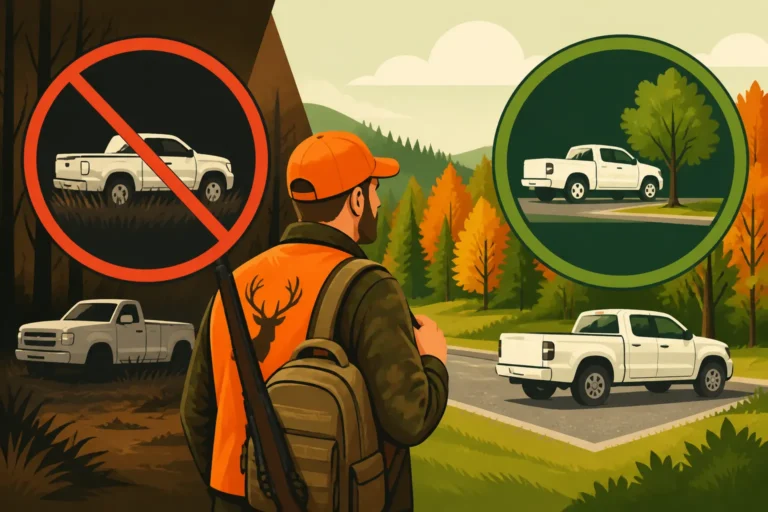
Moshannon State Forest is crisscrossed by an extensive network of roads, from maintained gravel roads to barely-there logging tracks. Many of the most promising hunting areas are accessed via gated roads, requiring you to park and walk in. Always consult the DCNR (Department of Conservation and Natural Resources) State Forest Public Use Map for Moshannon before you go, as these maps detail which roads are open, which are gated, and which are seasonal. Combine this with your onX Hunt app to mark your parking spot and plan your route.
Getting lost is a very real possibility in such a vast and uniform forest. Cellular service can be spotty or non-existent in many areas. Therefore, always carry a reliable GPS unit with pre-loaded maps, or a mapping app like onX Hunt downloaded for offline use on your phone. Better yet, carry both, along with a physical topographic map and compass as a backup. Plan your entry and exit routes meticulously, especially if you plan to walk in before dawn or out after dark. Entry Routes on Steep Ground can be particularly tricky in the dark, so know your path. Mark key turns and terrain features with waypoints.
A useful table for understanding Moshannon's terrain:
| Terrain Feature | Description | How Deer Use It | Hunting Implications |
|---|---|---|---|
| Ridge Tops | Relatively flat, open timber at the highest elevations. | Primary travel corridors, often with scrapes/rubs, occasional feeding areas. | Good for still-hunting, finding fresh sign, vantage points. |
| Benches | Subtle, flatter shelves or terraces along a steep hillside. | Major travel routes, especially for older bucks; transition zones for bedding/feeding. | Excellent stand locations, prime still-hunting corridors. |
| Hollows/Drainages | Steep, often wet valleys with dense cover, sometimes hemlock pockets. | Bedding areas, escape routes, water sources, natural funnels. | Tough to hunt, good for driving, checking for beds, thermal analysis. |
| Saddles | Low points or dips along a ridge line, connecting two higher points. | Crucial funnels for deer crossing between watersheds or ridge systems. | Prime stand locations, especially during the rut; high traffic areas. |
| Clearcuts/Regrowth | Areas of recently timbered land, now dense with young vegetation. | Thick bedding and browse, sanctuary areas, especially under pressure. | Difficult to still-hunt, good for stand hunting edges, deer drives. |
| Oak Flats | Areas with a high concentration of mature oak trees. | Key feeding areas when acorns are dropping. | Focus scouting on these areas during early season, post-rut. |
Safety and Preparedness in Remote Terrain
The remote nature of Moshannon State Forest means you are often far from immediate help. Self-sufficiency is paramount. Always let someone know exactly where you are going and when you expect to return. Carry a small but comprehensive first-aid kit, a headlamp with extra batteries, fire-starting materials, a whistle, and enough water and high-energy snacks for your entire outing, plus extra in case of an unforeseen delay. A portable charger for your phone is also a good idea.
Weather in the Pennsylvania mountains can change rapidly. A warm, sunny morning can turn into a cold, driving rain or snowstorm in a matter of hours. Dress in layers, opting for wool or synthetic materials that retain warmth even when wet. Good, waterproof boots with ankle support are essential for navigating the steep, rocky, and often muddy terrain. Don't underestimate the physical demands of hunting Moshannon; getting a deer out of a steep hollow is a monumental task. Consider carrying a lightweight game cart or at least a good drag rope.
Finally, be aware of other wildlife. While bear encounters are generally rare and bears are typically shy, Moshannon is home to a healthy black bear population. Knowing how to react if you do encounter one is wise. Also, be mindful of timber rattlesnakes in warmer months, though they'll be denned up during deer season. Your primary focus should always be on safety, ensuring you can return home to share your hunting stories, whether or not you filled your tag.
Disclaimer
This article is for general informational purposes only and does not constitute professional advice. Laws, prices and regulations vary by location and change over time. Consult a qualified professional for guidance on your specific situation.