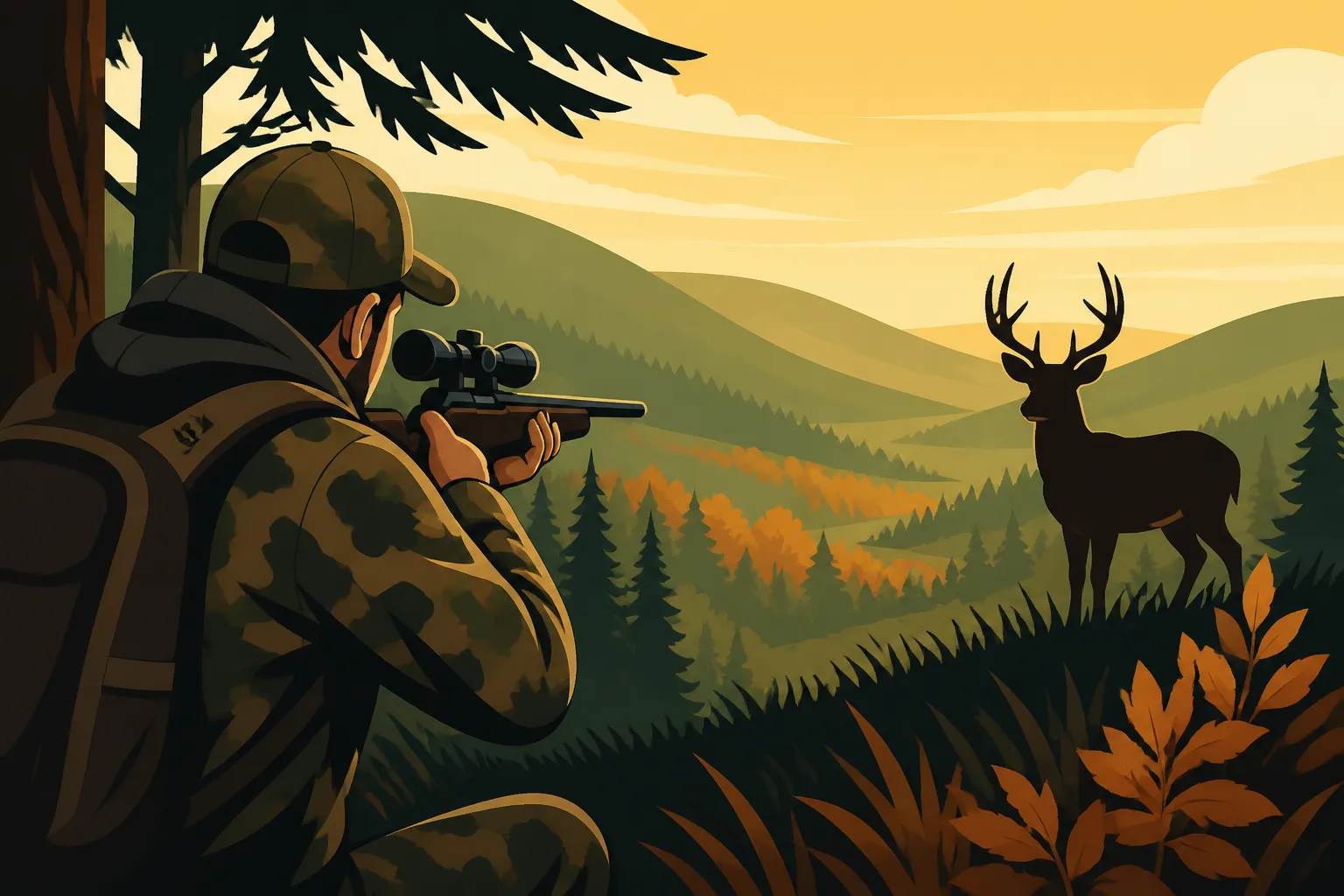
Loyalsock State Forest Hunting
For many Pennsylvania hunters, the thought of tackling vast tracts of public land can feel overwhelming. It's easy to get lost in the sheer scale of the maps, wondering where to even begin in search of whitetails, bears, or turkeys that might be miles from the nearest road. This guide is here to demystify hunting in Loyalsock State Forest, breaking down how to approach its rugged terrain and find success in this challenging, yet rewarding, wilderness.
Understanding Loyalsock State Forest's Landscape for Hunting
Loyalsock State Forest, nestled in the north-central mountains of Pennsylvania, represents a significant chunk of what we fondly call "Big Woods" hunting. It's not your typical farm country hunt, and understanding its unique character is the first step to unlocking its potential.
A Big Woods Wilderness Experience
When you step into Loyalsock State Forest, you're not just entering a patch of timber; you're immersing yourself in a true wilderness experience. This forest spans over 114,000 acres across parts of Lycoming, Sullivan, and Bradford counties, boasting a topography that will quickly remind you why Pennsylvania is famous for its mountains. We're talking about steep ridges, deep, winding hollows, and vast expanses of mixed hardwoods punctuated by hemlock stands. The elevation changes can be dramatic, requiring hunters to be in decent physical shape and prepared for serious climbs and descents.
The sheer scale means that while deer density might not be as high as in agricultural areas, the deer you find often have the opportunity to grow older and bigger. Bear populations here are robust, thriving in the expansive habitat. Turkeys also roam these woods, though finding them can be a different challenge than in more open country. The predominant cover consists of mature oaks, maples, cherries, and birch, interspersed with dense mountain laurel thickets that provide excellent bedding and escape cover for game. This ruggedness means fewer hunters penetrate deep, offering a sense of solitude that's increasingly rare on public lands.
Dominant Game Species and Habitat
Loyalsock State Forest is primarily known for its deer, black bear, and wild turkey hunting opportunities. Each species utilizes the varied habitat in distinct ways, and understanding these patterns is key to finding them.
- White-tailed Deer: While the deer population here might feel sparser than in prime farm country, don't let that discourage you. The deer in the Big Woods are often larger-bodied and have a wilder disposition, making them a sought-after trophy for many. They gravitate towards areas with good mast crops (especially acorns from red and white oaks), thick thermal cover on leeward slopes, and benches where they can travel relatively easily between bedding and feeding areas. Look for old clearcuts and areas of regenerating timber – these provide vital browse and security cover. They'll also use creek bottoms for travel and water, often leaving plenty of sign along these routes. For a broader look at the state's deer population, you might find White-Tailed Deer Across Pennsylvania helpful.
- Black Bear: Loyalsock is prime bear country. The extensive, remote areas, coupled with abundant food sources like acorns, beechnuts, and berries, make it an ideal home for Pennsylvania's largest game animal. Bears will often den in rocky outcroppings or dense laurel thickets, and you'll find them foraging throughout the forest, particularly in mature timber during fall mast seasons. They utilize the same travel corridors as deer, often leaving tell-tale tracks and scat. Success often comes from targeting areas with heavy mast, or focusing on thick cover during a drive. To learn more about bear populations across the state, check out Pennsylvania's Black Bear Population.
- Wild Turkeys: Both spring and fall turkey seasons offer opportunities in Loyalsock. Turkeys here tend to be more spread out than in farm fields, but healthy populations exist. In spring, listen for gobblers echoing through the hollows, often roosting on higher ridges. Fall hunting involves breaking up flocks and calling birds back in. They favor areas near reliable food sources, often along ridge lines, and require extensive walking to locate.
Navigating Access and Planning Your Hunt
The vastness of Loyalsock State Forest means that successful hunting often hinges on effective planning and strategic access. You can't just drive up and expect to stumble upon game; you need a game plan.
Roads, Trails, and Remote Access Points
Loyalsock State Forest is crisscrossed by a network of state routes, township roads, and countless unpaved forest roads. The main paved roads, like some sections of Route 87 or Route 42, offer primary access, but the real gems are often found off the gravel forest roads. Be aware that many of these dirt and gravel roads are subject to seasonal closures, especially during winter or wet periods, to protect the roadbed. It's crucial to check the Pennsylvania DCNR (Department of Conservation and Natural Resources) website or district office for current road conditions and closures before heading out.
To truly escape pressure, you'll inevitably need to leave your vehicle behind and put in some serious boot leather. Old logging roads, gas line right-of-ways, and hiking trails can serve as entry points, but often, the best hunting spots are a mile or more off these routes, requiring bushwhacking through dense cover. This is where detailed maps become your best friend, helping you navigate terrain that can quickly become disorienting.
Essential Mapping and Scouting Tools
In a forest the size of Loyalsock, you simply cannot rely on memory or general directions. Detailed mapping is non-negotiable.
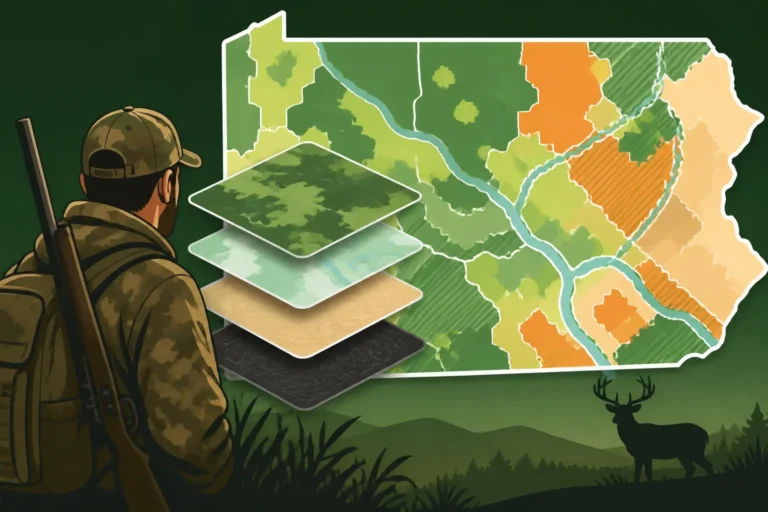
- Topographic Maps: These are invaluable for understanding the contours of the land—identifying ridges, saddles, hollows, and benches. Knowing the elevation changes and terrain features allows you to anticipate game movement and plan your approach. A topographical map clearly shows potential bedding areas on steep slopes or travel corridors along less extreme benches.
- Aerial Imagery: Satellite photos layered over topographic maps provide a crucial "bird's eye view." You can identify different timber types, dense cover thickets, clearcuts, and open areas that might be invisible from the ground. Many hunters find tools like onX Hunt or GoHunt indispensable for this, as they combine property lines, topo data, and aerials into one easy-to-use platform on your phone or GPS device. These apps can literally be a game-changer when trying to determine if that dark green blob on the map is mature hemlock cover or dense mountain laurel, both of which are excellent for game. For more on digital scouting, you might want to read Scouting With the Pennsylvania Mapping Center.
- GPS Devices/Smartphone Apps: A reliable GPS unit or a smartphone with a dedicated hunting app is essential. Not only do they help you pinpoint your current location on a map, but they also allow you to mark waypoints for your vehicle, trails, sign, and even downed game. The ability to track your route in and out of the woods provides a critical safety net in an area where it's easy to get turned around. Understanding how to interpret what you see on these digital maps is critical, and a guide like Reading Aerial Photos for Big Woods Deer can offer further insights.
- Pre-Season Scouting: Nothing beats boots on the ground, but with such a vast area, pre-season scouting often involves a targeted approach. Focus on identifying potential access points, key terrain features, and evidence of game activity like rubs, scrapes, and tracks. Even a couple of days spent scouting a specific block of timber can provide invaluable intel.
| Feature | Loyalsock State Forest (Big Woods) | Farm Country (Southern PA) |
|---|---|---|
| Terrain | Steep ridges, deep hollows, mountainous, dense timber | Rolling hills, open fields, woodlots, agricultural influence |
| Deer Density | Lower, but deer often larger-bodied and warier | Higher, abundant food sources, often smaller-bodied deer |
| Hunting Pressure | Can be high near access, but thins out rapidly deep in | Variable, often high on small public tracts, private access is key |
| Primary Food Sources | Acorns, beech nuts, browse, soft mast | Corn, soybeans, alfalfa, acorns, browse |
| Access | Forest roads (seasonal closures), extensive foot travel | Paved roads, short walks into woodlots, permission-based |
| Navigation | Critical: GPS, topo maps, aerials for wilderness travel | Simpler, often visual landmarks, smaller areas |
Camping and Overnight Stays
For hunters looking to fully immerse themselves in Loyalsock, camping is a popular option. The forest offers opportunities for primitive camping, which means you can typically set up camp away from designated areas, provided you follow Leave No Trace principles and stay a certain distance from roads, trails, and water sources. Some designated primitive camping areas might also be available. Always check the specific DCNR regulations for primitive camping in state forests. This allows for multi-day hunts, letting you wake up deep in the woods and maximize your time afield. Being self-sufficient is paramount; bring enough water, food, and emergency supplies. For more general advice on overnight stays, Camping in a Pennsylvania State Forest might offer some useful tips.
Strategies for Success in Loyalsock's Terrain
Hunting Loyalsock State Forest demands a different approach than what might work in other parts of Pennsylvania. Patience, physical endurance, and a deep understanding of the terrain are your greatest assets.
Still-Hunting the Big Timber and Ridge Systems
Still-hunting is perhaps the most effective method for tackling the vast, rugged terrain of Loyalsock. This involves moving slowly, deliberately, and quietly through the woods, stopping frequently to observe, listen, and scan for any sign of game. It's about blending into the environment rather than trying to force an encounter.
- Pace Yourself: You're not rushing through the woods. Take a few steps, then pause for several minutes, scanning thoroughly with your binoculars. Look for horizontal lines (a deer's back) in a vertical world, subtle movements, or flashes of tan or gray.
- Read the Sign: Look for fresh tracks, rubs on saplings, and scrapes on the ground. These tell a story of recent deer activity and help you identify travel corridors. Understanding where these signs lead—from bedding areas to feeding zones—is crucial.
- Utilize Wind and Thermals: In mountainous terrain, understanding how wind and thermals behave is critical. Cold air sinks into hollows in the morning, while warm air rises up ridges in the afternoon. Position yourself so your scent is carried away from where you expect game to be.
- Patience is Key: Still-hunting is a game of patience and observation. A successful still-hunt might cover only a mile or two in an entire morning, but those miles are thoroughly scrutinized. For a deeper dive into this technique, consider Still-Hunting Pennsylvania Big Woods.
Hunting Bear and Deer in Remote Hollows and Benches
The hollows and benches of Loyalsock are often where the game lives. These features provide cover, food, and efficient travel routes that savvy hunters learn to exploit.
- Benches: These are flat or gently sloping sections along a steep hillside. Deer and bear will often use benches as natural highways, allowing them to travel along a contour with less effort than climbing straight up or down. Look for sign on these benches, especially where they intersect with saddles (low points in a ridge) or funnel points. Hunting Oak Ridges and Benches and Hunting a Bench Above a Creek Bottom offer more specific advice on these areas.
- Hollows: Deep hollows offer secluded bedding areas and thermal cover, especially during cold weather. They can also hold hidden food sources that attract game. Hunting these areas often means challenging climbs and descents, but the payoff can be big. Remember that game will often bed on the leeward side of a ridge, protected from the prevailing wind.
- Focus on Food Sources: In the fall, locate areas with abundant acorns, particularly white oaks, which deer and bear prefer. Hemlock stands in hollows provide excellent thermal cover and often have slightly softer ground, which can hold moisture and different food plants. Pay attention to what's falling; a good mast crop can concentrate game.
Understanding Hunting Pressure and Finding Solitude
Loyalsock State Forest, like any public land, sees its fair share of hunting pressure, especially on opening days and near easily accessible roads. However, the sheer size and ruggedness mean that pressure drops off dramatically the further you get from a vehicle.
- Go Deeper: The golden rule for finding unpressured game in Loyalsock is to walk farther than most other hunters are willing to go. While many hunters might venture a quarter-mile or half-mile from their truck, committing to a mile or two (or more!) into the backcountry often puts you in entirely different hunting territory. This might mean starting your hunt in the dark to reach your desired spot by legal shooting hours.
- Seek Out Difficult Terrain: Areas with extremely steep slopes, dense laurel thickets, or remote water crossings often deter casual hunters. These "nasty" spots are frequently where the older, wiser bucks and bears will seek refuge. Don't shy away from a difficult climb if you suspect it leads to untouched ground. For a broader discussion on dealing with fellow hunters, read Hunting Pressure on Pennsylvania Game Lands.
- Hunt Mid-Week: If your schedule allows, hunting on weekdays outside of major holidays can significantly reduce the number of other hunters you encounter. This often means less disturbed game and a more peaceful experience.
Specific Considerations for Loyalsock Hunters
Beyond tactics, there are practical considerations that can make or break a hunt in such a wild environment.
Weather and Environmental Challenges
Pennsylvania's mountains are notorious for unpredictable weather, and Loyalsock is no exception. A sunny, crisp morning can quickly turn into a cold, driving rain or even a snow squall, especially in the fall.
- Layering is Essential: Dress in layers that you can add or remove as conditions change and as your activity level fluctuates. Wool or synthetic base layers are key, as they wick moisture away from your body even when wet. Cotton is generally discouraged for any serious outdoor activity in cold weather.
- Waterproof Outerwear: Invest in quality waterproof and windproof outerwear. Getting soaked in cold weather is not only miserable but can quickly become a dangerous situation, leading to hypothermia.
- Navigation in Adverse Conditions: Heavy fog or snow can quickly obscure landmarks and make navigation even more challenging. Ensure your GPS or mapping app is fully charged, and consider carrying a physical compass and map as a backup. Clothing for a Pennsylvania December offers good advice for cold-weather gear.
Game Recovery and Extraction
This is perhaps the most physically demanding aspect of hunting in Loyalsock. Getting a deer or bear out of a deep, steep hollow is no small feat.
- Plan Ahead: Before you even pull the trigger, consider your extraction route. Where will you drag the animal to? Is there a less steep path, an old logging road, or a clearcut edge you can aim for?
- Tools for the Job: A good quality deer cart can be a lifesaver on relatively flat ground, but in truly steep, rugged terrain, they can be more of a hindrance. Many hunters opt for deer sleds in snow, or a sturdy frame pack to bone out the animal and carry the meat in pieces. The gutless method, where you debone the animal in the field, is highly effective for reducing weight and bulk when packing out over long distances or steep slopes.
- Buddy System: If possible, hunt with a partner. Two (or more) people can significantly ease the burden of game recovery. Having an extra set of hands and muscle can make all the difference, particularly if you're dealing with a large bear or a mature buck. For detailed strategies, see Getting a Deer Out of a Pennsylvania Hollow.
Regulations and Safety
As with all hunting in Pennsylvania, adherence to regulations and prioritizing safety are paramount.
- PGC Regulations: Always consult the most current Pennsylvania Game Commission Digest for specific season dates, bag limits, and general hunting regulations relevant to Loyalsock State Forest. Pay attention to any special regulations for specific WMUs or public lands.
- Hunter Orange: Be aware of the specific hunter orange requirements for the season you are hunting. During general firearms seasons for deer and bear, it's typically required to wear 250 square inches of fluorescent orange on your head, chest, and back, visible 360 degrees. Even during archery seasons when orange isn't strictly mandated, many hunters choose to wear a small amount when walking in and out for added visibility, especially during peak seasons when other hunters might be afield. To fully understand the rules, check out Pennsylvania Hunter Orange Rules.
- Emergency Preparedness: Carry a well-stocked first-aid kit, a whistle, a headlamp, and a reliable means of communication (fully charged cell phone, satellite messenger if venturing very deep). Tell someone your hunting plans, including where you're going and when you expect to return. In remote areas, cell service can be spotty or nonexistent. These remote areas are where a good First Aid Kits for Remote Big Woods is not just a suggestion, but a necessity.
Loyalsock State Forest offers an incredible hunting experience for those willing to put in the effort. Its vast, wild character can be intimidating, but with careful planning, the right gear, and a healthy dose of determination, you can find solitude and success in one of Pennsylvania's premier Big Woods destinations.
Disclaimer
This article is for general informational purposes only and does not constitute professional advice. Laws, prices and regulations vary by location and change over time. Consult a qualified professional for guidance on your specific situation.