Hunting the Pocono Plateau
The Pocono Plateau, with its distinctive blend of dense forest, sprawling wetlands, and rugged terrain, often presents a perplexing challenge for Pennsylvania hunters. It’s a region that can seem impenetrable, and many hunters are unsure how to tackle its unique environment, leading to frustration and missed opportunities. This comprehensive guide aims to demystify hunting the Pocono Plateau, providing you with the insights and tactics needed to navigate its wilds and experience successful hunts for deer, bear, and other game.
Understanding the Pocono Plateau's Unique Landscape for Hunters
The Pocono Plateau isn't your typical Pennsylvania hunting ground; it's a world unto itself. Shaped by ancient glaciers, this elevated region in northeastern Pennsylvania offers a different kind of hunting experience, one that demands preparation and a deep understanding of its unique characteristics.
Geographical Features and Habitat Types
When you think of the Poconos, visions of resorts and lakes might come to mind, but for hunters, it's a mosaic of challenging and rewarding habitats. Geographically, the plateau is characterized by its relatively flat, high elevation, often sitting between 1,200 and 2,300 feet. This elevation, coupled with heavy glaciation, has created a landscape dominated by unique features:
- Vast Wetlands: A significant portion of the plateau is covered in bogs, swamps, and marshes. These low-lying, often waterlogged areas are a crucial part of the ecosystem, providing dense cover and water sources for wildlife. Navigating these can be extremely difficult, if not impossible, in some areas, but they act as natural sanctuaries for animals, especially during high-pressure seasons.
- Scrub Oak Barrens: You'll find extensive areas dominated by scrub oak and huckleberry. This habitat, though often appearing barren from a distance, provides exceptional bedding and browse for deer and bear. It's incredibly thick, making visibility low and movement noisy, but it's where the animals often choose to hide.
- Northern Hardwoods and Conifer Stands: Interspersed with the wetlands and scrub oak are pockets of northern hardwoods like oak, maple, and cherry, particularly on higher, drier ground. Hemlock and other conifer thickets are also common, providing thermal cover in winter and dense escape cover year-round. These areas can be surprisingly steep in places, especially along stream drainages or glacial moraines.
This blend of habitats means you need to be versatile. A tactic that works in a mature oak flat might be useless in a dense scrub oak barren or a water-filled swamp. Understanding these micro-habitats is the first step to successful hunting here.
Key Wildlife Management Units (WMUs) in the Region
The Pocono Plateau generally falls within a few key Wildlife Management Units, primarily WMU 3D and 4E, with some overlap into WMU 3C. Each of these WMUs has specific regulations regarding antlerless deer licenses, bear seasons, and sometimes turkey seasons, so it's absolutely crucial to check the current Pennsylvania Game Commission digest for the most up-to-date information.
- WMU 3D: This WMU covers a significant portion of the core Pocono Plateau, known for its dense forests and strong bear population. Deer hunting here often means encountering smaller-bodied deer that are masters of evasion in the thick cover.
- WMU 4E: Extending further south and west from the heart of the Poconos, WMU 4E also features diverse terrain, including some more agricultural areas on its fringes, but still retains the characteristic dense cover in its wilder sections.
- WMU 3C: This unit touches the northern edge of the plateau and shares some similar habitat types, particularly extensive public lands and dense timber.
The availability of antlerless tags can vary greatly by WMU and year, so if you're planning an antlerless hunt, make sure you know which WMU you're hunting in and secure your tags early. Understanding the general pressure and game populations within your target WMU can also help refine your strategy. For instance, areas with higher human population density might see more pressure, but also potentially less accessible pockets of prime habitat if you're willing to walk.
Public Land Opportunities and Access
The Pocono Plateau is a haven for public land hunters, boasting extensive tracts of State Game Lands and State Forests. This abundance of open ground is a major draw, but accessing and navigating it effectively requires careful planning.
State Game Lands and State Forests
Across the Pocono Plateau, you'll find numerous opportunities on state-managed lands. These provide vast, unfragmented blocks of habitat for game, offering truly wild hunting experiences.
- State Game Lands (SGLs): These lands, managed by the Pennsylvania Game Commission, are specifically acquired and maintained for public hunting and trapping. The Poconos are dotted with many large SGLs, such as SGLs 127, 135, and 183, among others. They often feature diverse habitats, including the notorious scrub oak barrens and vast swamps. While some SGLs have well-maintained access roads and parking areas, many require significant walking to get away from the easy-access points. The sheer size of these areas means you can often find solitude if you're willing to put in the effort. Remember that regulations for treestands and ground blinds on State Game Lands are specific, so always review the current digest.
- State Forests: Managed by the Department of Conservation and Natural Resources (DCNR), Pennsylvania State Forests also offer incredible hunting opportunities. The Delaware State Forest, Lackawanna State Forest (sections), and Pinchot State Forest cover large portions of the Pocono Plateau. These forests often feature a slightly different mix of habitats than SGLs, with more mature timber and sometimes fewer wetlands, depending on the specific tract. State Forests also tend to have more extensive road networks (though many are gated or seasonal), which can aid in access, but they also have regulations on camping, motor vehicles, and other activities that differ from SGLs. Checking DCNR maps for road closures and designated camping areas is always a good idea. Hunters who enjoy a multi-day trip might consider options for Camping in a Pennsylvania State Forest.
The key to hunting these public lands successfully is to embrace the challenge. The dense cover means fewer long-range shots but excellent opportunities for still-hunting and tracking. Game on these lands are often more elusive and sensitive to pressure, making a strategic approach all the more important.
Navigating with Mapping Tools and Scouting
Navigating the Pocono Plateau's dense, often monotonous terrain can be disorienting. What seems like a short walk can quickly turn into a long, confusing trek if you're not prepared. This is where modern mapping technology becomes not just helpful, but essential.
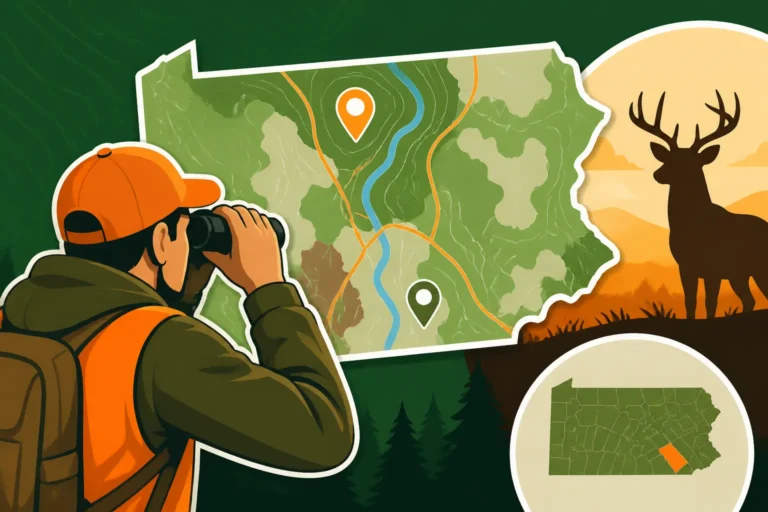
Applications like onX Hunt are invaluable tools for the Pocono hunter. With onX Hunt, you can see detailed aerial photos that reveal subtle changes in vegetation, identify property boundaries (crucial when hunting near private parcels), mark waypoints for stands or game sign, and track your movement in real-time. This level of detail helps you identify those hidden pockets of cover, thickets where deer or bear might bed, or transition zones between swamp and high ground that animals will use. Before you ever set foot in the woods, you can use these tools to scout potential access points, pinpoint clearcuts or old logging roads, and plan your entry and exit routes, which is especially important on steep or wet ground. Understanding how to use Reading Aerial Photos for Big Woods Deer can directly translate to finding success here.
While onX Hunt excels at on-the-ground navigation and detailed map layers, resources like GoHunt can offer broader intelligence, such as harvest data and overall unit conditions, which can help inform your decision-making on which WMUs might be worth exploring or what specific challenges to anticipate for a given season. Using a combination of these tools for both macro-level planning and micro-level navigation can significantly increase your chances of success.
Pre-season scouting, even just from your computer, is critical. Look for funnels created by wetlands, changes in elevation, or old logging operations that might indicate prime bedding or feeding areas. Once you're on the ground, trust your map and compass, and always let someone know where you're going and when you expect to return. The dense cover and often poor cell service mean you can't rely solely on your phone.
Targeting Popular Game Species on the Plateau
The Pocono Plateau supports a diverse array of game, but the unique environment often dictates specific hunting strategies for each species. It’s a place where big woods tactics meet swamp country challenges.
Deer Hunting in the Pocono Plateau's Cover
Hunting white-tailed deer in the Poconos is not for the faint of heart, but it is incredibly rewarding. The deer here are often smaller-bodied than their farm country counterparts, but they are incredibly resilient and masters of using the dense cover to their advantage. They don't need sprawling food plots; they thrive on the abundant natural browse found in clearcuts, regenerating scrub oak, and swamp edges.
- Understanding Deer Behavior: Pocono deer are pressured, and they quickly learn to seek refuge in the nastiest, thickest cover available. This means hemlock swamps, dense laurel thickets, and impenetrable scrub oak barrens are often their preferred bedding areas. They will move through these areas with surprising stealth, making visual encounters rare without careful planning.
- Effective Tactics: Still-hunting is a highly effective method here. Moving slowly, stopping frequently, and using your ears as much as your eyes can pay dividends. Focus on moving into the wind or crosswind, picking apart the cover ahead of you. Small deer drives, involving just a few hunters, can also be productive in specific areas, pushing deer from thickets to waiting standers. Targeting edges where different habitat types meet, like where a hardwood ridge transitions into a swamp, can be productive travel corridors. Old clearcuts offer excellent browse and bedding, making them prime spots, and learning Hunting Pennsylvania Clearcuts and Regrowth tactics is essential here. Setting up a treestand on a bench or ridge overlooking these thick areas can also be effective, allowing you to intercept deer moving between bedding and feeding, or simply traveling to escape pressure. Remember that Treestand Setups in Pennsylvania Hardwoods require careful attention to scent and entry/exit routes, especially in this sensitive environment.
Pennsylvania Black Bear: A Major Draw
The Pocono Plateau is consistently one of Pennsylvania's top regions for black bear hunting. With extensive tracts of undeveloped public land and abundant natural foods, the bear population here is robust, offering excellent opportunities for hunters.
- Bear Habitat: Black bears thrive in the thick, remote areas of the Poconos. They utilize the dense scrub oak and mountain laurel thickets for bedding and escape cover, and the wetlands provide a source of water and berries. Finding areas with natural food sources like acorns (when available), beech nuts, or various berry patches can be key. Look for fresh bear sign: scat, claw marks on trees, and flipped rocks or logs indicating their feeding activity.
- Hunting Strategies: Bear hunting in the Poconos often involves a combination of scouting, still-hunting, and organized drives. Scouting for fresh sign before the season, perhaps even months in advance, can give you a significant advantage. During the season, still-hunting through known bear haunts, slowly and deliberately, can lead to an encounter. Bear drives are particularly effective in this terrain, as bears often seek refuge in the same dense thickets where deer bed. Organizing a drive with a few trusted partners can push bears out of otherwise impenetrable cover. If you plan to hunt bears, knowing Hunting Pennsylvania Black Bear strategies is paramount, as their habits and preferred habitats differ from deer.
Wild Turkeys and Small Game Prospects
Beyond deer and bear, the Pocono Plateau offers other exciting hunting opportunities, particularly for wild turkeys and various small game species.
- Wild Turkeys: Spring gobbler hunting can be excellent in the Pocono region, especially in areas with a good mix of hardwoods and openings. Look for mature timber where turkeys roost and open areas (like logging roads or small fields) where they might strut. Fall turkey hunting is also popular, often involving breaking up flocks and calling birds back in. Turkeys can be found on both State Game Lands and State Forests, particularly where there are mast crops available.
- Small Game: While not as renowned as other regions, the Poconos still hold populations of small game. Ruffed grouse, Pennsylvania's state bird, can be found in regenerating clearcuts and young forest growth, though their numbers have been in decline. Squirrels are abundant in areas with mast-producing trees like oaks and hickories. Cottontail rabbits can be found in brushy areas and field edges. Waterfowl hunting is also possible on some of the larger lakes and numerous beaver ponds found across the plateau. If you're looking for Pennsylvania Small Game and Furbearer Seasons, the Poconos offer diverse options.
Essential Gear and Tactics for Success
Hunting the Pocono Plateau demands specific gear and a robust mindset. The environment itself is a challenge, and being prepared is paramount to a safe and successful hunt.
Footwear and Clothing for Wet and Cold Conditions
The Pocono Plateau is synonymous with dampness and cold, especially during the deer and bear seasons. Investing in the right footwear and clothing isn't just about comfort; it's about safety and endurance.
- Waterproof Footwear: This is non-negotiable. Whether you're slogging through swamps, crossing beaver dams, or just dealing with persistent ground moisture, your feet will get wet if your boots aren't up to the task. Look for high-quality, fully waterproof boots with good ankle support. Rubber boots are often preferred by many hunters for their superior waterproofing and scent control, especially when traversing wetlands or muddy areas. They also offer the advantage of being easy to clean of scent. For hunters concerned about leaving human odor, understanding Rubber Boots for Scent Control is a game-changer.
- Layered Clothing: The weather on the plateau can change rapidly, and damp cold can seep into your bones. A versatile layering system is essential. Start with a moisture-wicking base layer, add insulating layers (fleece or wool are excellent choices), and top it with a waterproof and windproof outer shell. Wool is particularly effective in the Poconos because it retains its insulating properties even when wet. For extended sits, especially during late season, consider extra insulation for your core and extremities. Understanding a Cold Weather Sitting Strategy is crucial to staying warm and focused. And, of course, always adhere to Pennsylvania Hunter Orange Rules for visibility and safety.
Navigating the Challenging Terrain
Beyond the physical demands, the Pocono Plateau presents a navigational puzzle. Its dense, often uniform cover can make it incredibly easy to get turned around, even for experienced woodsmen.
- Redundant Navigation: Never rely on a single navigational tool. Carry a reliable GPS unit or a fully charged smartphone with offline maps (like onX Hunt) AND a traditional compass and paper map. Familiarize yourself with how to use both before you ever step into the woods. The dense canopy can sometimes interfere with GPS signals, and batteries die. Knowing your cardinal directions and how to read a topo map is a skill that will serve you well here. For hunters using State Game Lands, getting familiar with Using the Pennsylvania Mapping Center and downloading appropriate maps beforehand is an excellent practice.
- Slow and Deliberate Movement: In thick cover, visibility is often limited to a few yards. Rushing through the woods will only result in you bumping game or getting lost. Adopt a slow, methodical pace, taking frequent breaks to scan your surroundings, listen for sounds, and confirm your bearing. When hunting, focus on making minimal noise; a Still-Hunting Pennsylvania Big Woods approach, adapted for dense cover, is ideal. Use natural features as landmarks, but remember that many areas can look similar.
- Emergency Preparedness: Because of the remote nature of some areas and limited cell service, carry a small, well-stocked first-aid kit, a headlamp, a fire starter, and emergency shelter. Let someone know your detailed hunting plan, including your intended route and expected return time. Safety is paramount, especially when venturing into truly wild and challenging terrain.
Hunting the Pocono Plateau is an adventure that offers unique rewards for those willing to embrace its distinctive character. With the right preparation, gear, and a deep respect for its challenging environment, you can unlock some of Pennsylvania's most exciting hunting experiences.
Disclaimer
This article is for general informational purposes only and does not constitute professional advice. Laws, prices and regulations vary by location and change over time. Consult a qualified professional for guidance on your specific situation.