Delaware State Forest Public Ground
Finding decent public hunting land in Pennsylvania can sometimes feel like trying to solve a complicated riddle, especially when you're looking beyond the well-known Game Lands or far-flung "Big Woods." It's easy to get frustrated navigating maps and regulations, wondering if you'll ever find a quiet corner. This guide is here to unravel the specifics of hunting in Delaware State Forest, offering practical advice and insights to help you plan a successful and enjoyable trip in this unique corner of the commonwealth.
Understanding Delaware State Forest as a Hunting Destination
The Delaware State Forest, nestled primarily in Pike and Monroe Counties with portions extending into Wayne and Carbon, is a gem for hunters seeking public access in Eastern Pennsylvania. Unlike the vast, remote tracts of the northcentral "Big Woods," Delaware State Forest offers a different kind of challenge and reward. It's an area defined by rugged, steep terrain in some parts, gentle ridges in others, and a mix of habitats that can hold a variety of game. For many, it's a more accessible option than driving five hours north, yet it still provides that authentic public land hunting experience.
Its proximity to more populated areas means you might not always be completely alone, especially on opening day, but with a bit of effort and good planning, you can absolutely find solitude and productive hunting ground. The forest spans a significant acreage, giving hunters plenty of room to roam and explore away from the beaten path.
Geographic Context and Access Points
Delaware State Forest is situated within the picturesque Pocono Mountains region. This means you'll encounter a landscape characterized by rolling hills, steep ravines, impressive rock outcroppings, and a patchwork of mature hardwoods mixed with dense conifer stands and wetland areas. Think oak and maple forests on the ridges, hemlock and rhododendron thickets along stream bottoms, and marshy pockets that can be a magnet for certain game species.
Accessing the forest is relatively straightforward, thanks to a network of state routes and township roads that run through and around its various sections. Major arteries like US-6, US-209, and PA-402 provide key entry points. Many smaller, designated State Forest Roads (SFRs) branch off these main routes, offering deeper access. However, it's crucial to remember that some of these SFRs are gated seasonally or permanently, or might only be open to foot traffic or specific vehicle types. Always check the official DCNR (Department of Conservation and Natural Resources) website for current road conditions and any temporary closures before heading out. Parking areas, often small pull-offs or designated lots, are generally marked but can fill up quickly during peak seasons. Using a reliable mapping app like onX Hunt can be invaluable here, showing property lines, gated roads, and topography, which is especially helpful when planning your approach to a promising ridge or hollow.
Species You Can Expect to Hunt
Delaware State Forest is a diverse ecosystem supporting several popular game species. White-tailed deer are, of course, the main draw for many hunters. The mix of cover and varying habitat types means deer can be found throughout the forest, though their concentrations might shift based on food availability and hunting pressure. You'll find deer browsing on acorns in the fall, seeking cover in thick hemlock groves during winter, and utilizing clearcuts for bedding and browse.
Black bears also call Delaware State Forest home. While often elusive, persistent hunters who understand bear sign – claw marks on trees, overturned rocks, fresh scat, and tracks – can find success. Remember, these woods offer plenty of dense cover and remote pockets where bears can feel secure. Turkeys, both spring gobblers and fall flocks, are also present. The oak ridges provide excellent food sources, and the mixed forest offers ideal roosting sites. Don't overlook the potential for small game like squirrels and grouse, especially in areas with mature oak and hickory stands, or where older clearcuts provide critical young forest habitat for grouse. Waterfowl hunting is generally limited to specific wetlands or larger water bodies adjacent to the forest, so research those opportunities separately if that's your pursuit.
Navigating Regulations and Preparing for Your Hunt
Hunting in any of Pennsylvania's State Forests comes with specific rules and expectations that go beyond the general hunting regulations. It's a privilege to use these lands, and respecting the resource, wildlife, and other users is paramount. The Pennsylvania Department of Conservation and Natural Resources (DCNR) manages State Forests, while the Pennsylvania Game Commission (PGC) sets the hunting seasons and bag limits. It's essential to be familiar with both sets of regulations.
One common frustration for hunters on public land is the varying rules for things like treestands or vehicular access. While State Game Lands (SGLs) have one set of rules, State Forests often have slightly different ones. This makes pre-hunt research vital, especially if you're accustomed to hunting only SGLs.
Key Regulations and Licensing
To hunt in Delaware State Forest, you'll need a valid Pennsylvania hunting license, along with any necessary permits or tags for the species you intend to pursue (e.g., an antlerless deer license for deer, or a bear license for bear). All state-mandated hunter orange requirements apply, depending on the season and species. It's always best to err on the side of caution and wear more orange than minimally required, especially during firearms seasons, to enhance your visibility to other hunters. You can review all the general requirements in Pennsylvania Hunting Licences and What They Cost and Pennsylvania Deer Seasons and WMU Rules.
When it comes to State Forest-specific rules, pay close attention to camping regulations. Dispersed camping is often permitted, but usually requires a free permit if you plan to stay for more than one night at the same location. Treestand use is generally allowed, but temporary stands must be removed at the end of the season, and you typically cannot damage trees. For example, using screw-in steps that penetrate the cambium layer might be prohibited, or specific types of stands might be restricted. Always consult the DCNR website or contact the district forest office for the most current rules on camping, treestand use, and any restrictions on vehicle use on State Forest Roads. The general principle is "Leave No Trace," meaning you should carry out everything you carry in, and leave the forest as you found it.
| Rule Category | General PA Game Commission Rule | Delaware State Forest (DCNR) Specifics |
|---|---|---|
| Hunting License | Required for all hunters | Standard PA hunting license and tags (e.g., Pennsylvania Antlerless Deer Licences Explained) apply |
| Hunter Orange | Varies by season/species | State-mandated square inches apply; always recommended for visibility |
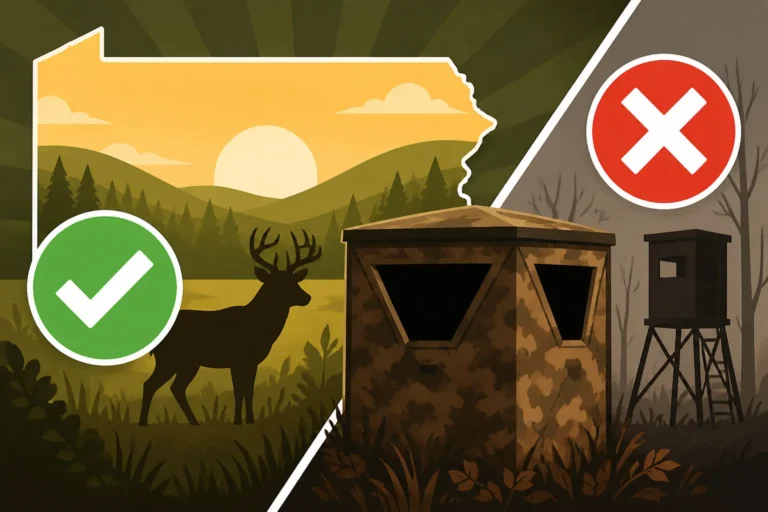
| Treestands/Blinds | Varies by land type | Temporary stands/blinds allowed; usually must be removed end of season. Check for non-damaging attachment rules. |
| Camping | Not usually PGC regulated | Dispersed camping allowed (permit often needed for more than 1 night). Check for fire rules. |
| Vehicle Access | Restricted on SGLs | State Forest Roads (SFRs) may be open seasonally or permanently gated. Check DCNR maps. |
| Game Retrieval | Rules for off-road retrieval | Generally on foot or non-motorized means; check for specific DCNR rules on motorized game retrieval. |
Essential Gear and Scouting
Hunting in Delaware State Forest means being prepared for varying terrain and weather conditions. Your gear needs to be robust and adaptable. Quality Boots and Packs for Steep Country are non-negotiable, as you'll likely be doing a fair amount of walking, much of it uphill or over uneven ground. Layered clothing is crucial, allowing you to adapt to temperature swings common in the Poconos, especially during the shoulder seasons. Remember that even in early archery, evenings can get chilly, and rain is always a possibility.
For navigation, a good GPS unit or a reliable mapping app on your smartphone is indispensable. Brands like onX Hunt and GoHunt offer detailed topographic maps, satellite imagery, and often show property boundaries, which is critical for avoiding trespass onto private land that abuts the State Forest. These apps can help you identify subtle terrain features like benches, saddles, and creek bottoms that deer often use. Even with digital tools, it’s always a good idea to carry a physical map and compass as a backup. Before you ever step foot in the woods, spend significant time scouting, whether virtually with Scouting With the Pennsylvania Mapping Center and Reading Aerial Photos for Big Woods Deer, or physically on foot. Look for areas with diverse habitat, pinch points, and natural funnels that could concentrate animal movement. Early season scouting, before leaves fall, can reveal bedding areas and travel corridors.
Tactics for Success in Delaware State Forest
Successfully hunting in Delaware State Forest requires a blend of adaptability, patience, and a solid understanding of how game animals use this type of environment. It's not always about finding the biggest, most obvious sign, but rather piecing together subtle clues and understanding the bigger picture of the landscape. Because pressure can sometimes be higher here compared to more remote areas, being willing to walk a bit further or hunt less accessible spots can significantly increase your odds.
The mixed habitat — from mature oak forests to dense conifer thickets and marshy bottomlands — means that game animals have a wide variety of food, water, and cover options. Your tactics need to reflect this diversity.
Deer Hunting Strategies
For white-tailed deer, Delaware State Forest offers classic big woods hunting opportunities mixed with pockets of farm-edge influence. During archery season, especially in October, focusing on areas with a good acorn crop can be highly productive. Deer will often concentrate on oak ridges, dropping down into more sheltered areas to bed. Identifying benches on hillsides, or saddles connecting two ridges, can be prime locations for setting up a stand or still-hunting. Check out Hunting Oak Ridges and Benches for more specific insights.
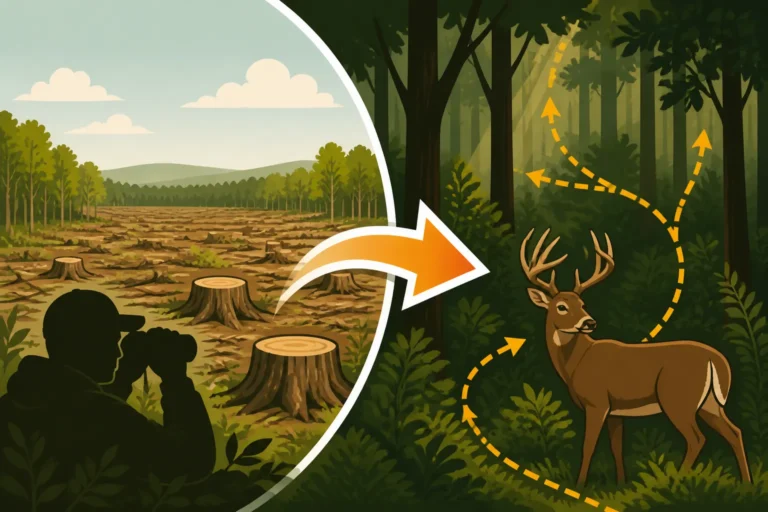
During the firearms seasons, deer drives can be effective if you have a small group, but solo Still-Hunting Pennsylvania Big Woods is a great tactic. Move slowly, quietly, and be acutely aware of wind direction and thermals, especially in the steep terrain. Look for natural funnels created by terrain features, or thick cover where deer might be bedding to escape pressure. Old clearcuts, which are common in various sections of the State Forest due to past logging operations, provide excellent bedding and browse, making their edges prime spots. Consider setting up a stand near a clearcut edge or still-hunting along it. Remember, deer will often travel just inside the thickest cover, rather than out in the open. As the season progresses into late archery and flintlock season, deer will be focused on whatever remaining food sources are available, often shifting to areas with hemlock or other evergreens for thermal cover in colder weather. Late-Season Food Sources for Whitetails can offer some key information here.
Bear and Turkey Hunting Specifics
Bear hunting in Delaware State Forest demands patience and a keen eye for sign. Bears are creatures of opportunity and will follow food sources. In fall, that means acorns, beech nuts, and berries. Look for heavily used game trails in dense cover, especially in areas with thick mountain laurel or rhododendron undergrowth. Overturned rocks, torn-up logs, and scat are all indicators of bear activity. Focus your efforts in remote, secluded hollows or on the less-traveled sides of steep ridges where bears feel secure. Hunting Pennsylvania Bear in the Big Woods provides an excellent foundation for these tactics. During archery bear season, setting up a ground blind or treestand along a natural travel corridor leading to a food source can be effective.
For wild turkeys, both spring gobblers and fall flocks, Delaware State Forest can be excellent. In spring, focus on listening for roosted birds at dawn. Once you locate a gobbler, setting up strategically and using calls to draw him in is key. Ridge tops and benches with mature oaks are often prime locations for roosting and feeding. Remember that during Spring Gobbler Hunting in Pennsylvania, careful scouting for roost trees and understanding the topography can make all the difference. In the fall, breaking up a flock and then calling individual birds back can be a highly successful tactic. Listen for the subtle clucks and purrs of scattered birds. The ability to move quietly and cover ground is vital for both species here.
Responsible Hunting and Conservation
Hunting in a State Forest means you are not just a user, but a steward of that land. Your actions directly impact the experience of other hunters, hikers, birdwatchers, and the health of the ecosystem itself. It’s about more than just filling a tag; it's about upholding the traditions and ethics of hunting and contributing to the conservation of Pennsylvania's natural resources.
The Poconos region, where Delaware State Forest is located, is a beautiful and wild part of Pennsylvania, and keeping it that way requires conscious effort from all of us.
Respecting the Resource and Other Users
One of the most important aspects of hunting on public land, especially in a state forest that sees varied use, is respecting everyone else who enjoys the outdoors. This means being mindful of noise, leaving no trash behind, and ensuring your hunting activities do not negatively impact others. Parking responsibly, off the main road and not blocking gates, is crucial. If you encounter hikers or other non-hunters, a friendly wave and polite interaction go a long way in fostering good relations.
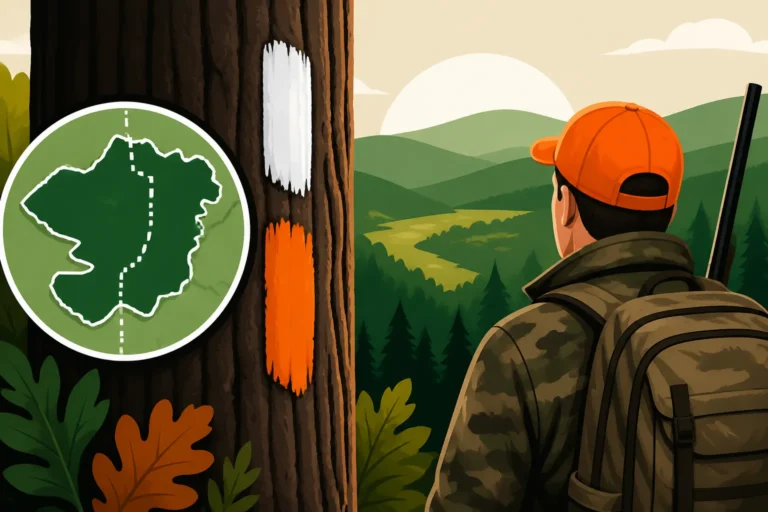
Always be acutely aware of private land boundaries. While onX Hunt and other mapping apps are incredibly helpful, it's ultimately your responsibility to know exactly where you are. Trespassing, even accidentally, can lead to serious legal issues and gives all hunters a bad name. Some private landowners might have posted their properties, or specific tracts might be enrolled in programs like the Pennsylvania Hunter Access Program. Look for clear markings on trees like paint blazes or "No Trespassing" signs. When in doubt, back out.
Contributing to the Future of Pennsylvania Hunting
Beyond personal ethics, responsible hunting in Delaware State Forest means understanding and adhering to all game laws, including proper tagging and reporting of your harvest. This data is critical for the Pennsylvania Game Commission to manage wildlife populations effectively. If you're successful in harvesting a deer or bear, reporting it accurately and within the timeframe ensures the PGC has the information needed to set future seasons and bag limits. You can find more details on Pennsylvania Deer Tagging Requirements and Reporting a Pennsylvania Deer Harvest.
Be aware of wildlife health concerns in the region. Chronic Wasting Disease (CWD) is a significant threat to Pennsylvania's deer and elk herds. While specific CWD Disease Management Areas (DMAs) might not directly overlap with all parts of Delaware State Forest, it's important to know the rules regarding carcass movement and CWD testing, particularly if you're traveling through or near a DMA. Learn about Pennsylvania CWD Carcass Rules to help prevent the spread of this devastating disease. By taking these steps, you're not just enjoying a hunt today, but actively safeguarding hunting opportunities for generations to come.
Disclaimer
This article is for general informational purposes only and does not constitute professional advice. Laws, prices and regulations vary by location and change over time. Consult a qualified professional for guidance on your specific situation.