Pennsylvania Deer Seasons and WMU Rules
Navigating Pennsylvania's deer seasons and the specific rules that come with each Wildlife Management Unit (WMU) can feel like trying to solve a Rubik's Cube blindfolded. It's a common frustration for even the most seasoned hunters, as dates shift, regulations evolve, and what's legal in one county might get you a citation in another. This comprehensive guide is here to break down the complexities, offer clarity on when and where you can hunt, and explain the nuances of antler restrictions and tagging requirements across the Commonwealth.
Understanding Pennsylvania's Deer Season Framework
Pennsylvania boasts a rich hunting heritage, but the way deer seasons are structured has grown increasingly complex over the years. It's not just about one simple season anymore; it's a tapestry woven with different weapon types, specific dates, and localized rules designed to manage the deer herd effectively. Hunters often feel like they need a law degree just to keep up, and believe me, you're not alone in that sentiment.
The Why Behind the Complexity
The Pennsylvania Game Commission (PGC) doesn't just change rules for the sake of it; there are some very real, and often quite scientific, reasons behind the intricate season framework. Their primary goals revolve around balancing the deer population with available habitat, minimizing agricultural damage, reducing deer-vehicle collisions, and providing diverse hunting opportunities. For decades, the focus was often on maximizing buck harvests, leading to an unbalanced herd with too few older bucks. This eventually led to significant changes aimed at improving the buck age structure and better managing the antlerless population.
Think about the varied landscapes we have across Pennsylvania – from the vast, rugged "Big Woods" of the northcentral region to the highly agricultural farm country in the southeast. A "one-size-fits-all" approach simply wouldn't work. The deer populations, habitat conditions, and human pressures are vastly different in these areas, requiring tailored management strategies. This means what's best for deer and hunters in Tioga County might be completely different from what's needed in York County. We've all experienced the frustration of trying to remember the exact dates or antler point rules for different zones, but it's all part of this larger, adaptive management plan.
Wildlife Management Units WMUs Explained
At the heart of Pennsylvania's deer season structure are the 22 Wildlife Management Units, or WMUs. These aren't just arbitrary lines on a map; they are geographical areas defined by ecological and human-related factors that influence deer populations. Each WMU is essentially its own little management zone, allowing the PGC to set specific antlerless allocations and sometimes even different antler restrictions or season lengths based on local conditions.
The purpose of WMUs is to allow for localized management based on specific factors like deer density, habitat quality, urban encroachment, and public access. For instance, a WMU with dense suburban development and high deer-vehicle collisions, like 5C or 5D near Philadelphia, will often have a higher antlerless allocation and longer seasons to reduce the herd more aggressively. Conversely, a large, forested WMU in the northcentral part of the state, where deer densities are naturally lower due to habitat conditions, will have much more conservative tag allocations. Understanding your WMU is absolutely critical, as it dictates what kind of antlerless tags you can apply for, and which specific rules you must follow. If you're curious about how deer populations fluctuate across the state, a deep dive into Deer Density by Pennsylvania WMU can be incredibly insightful for planning your hunt.
Archery Deer Season Details
For many hunters, the archery season is the purest form of deer hunting, a chance to get into the woods before the general firearms frenzy and engage with deer on a more intimate level. Pennsylvania offers a generous archery season, but it's still broken into distinct phases with a few important nuances.
The Early Bow Opener and General Season
The general statewide archery season typically kicks off on the first Saturday of October, running continuously through mid-November, right before the start of the firearms season. This period is a favorite for many, as the weather is often pleasant, deer are still in relatively predictable summer patterns, and the rut begins to kick into gear towards the end. However, some WMUs, particularly those with high deer populations and significant agricultural damage, enjoy an even earlier start. These "early archery WMUs" usually open a week or two earlier in late September.
This early opener can be a real game-changer if you live in or have access to one of these WMUs, as it gives you a jump on the rut and a chance to hunt deer before they've felt much hunting pressure. The key to success during this early period is meticulous scouting, focusing on consistent food sources like acorns, soft mast, or agricultural fields. Deer patterns are often still very much influenced by their stomachs. Knowing When Pennsylvania's Archery Season Opens can help you mark your calendar, but understanding which WMUs get this head start, as detailed in Hunting the Early Archery WMUs in September, is crucial for maximizing your time in the stand.
Late Archery Season Opportunities
Just when you think the deer seasons are winding down, Pennsylvania offers a fantastic late archery season, which usually reopens after the general firearms and muzzleloader seasons conclude, often running from late December through mid-January. This can be a challenging but incredibly rewarding time to hunt. The woods are typically colder, snow might be on the ground, and deer are often much warier after months of hunting pressure.
However, the late season offers unique advantages. Snow cover can make tracking deer much easier, and deer movement often becomes highly concentrated around remaining food sources. Think standing corn, oak flats where acorns still persist under the snow, or even food plots that haven't been completely picked over. Deer are often in survival mode, prioritizing food and cover, which can make them more predictable once you locate those critical resources. You'll need durable gear and a strong will to brave the cold, but for those willing to stick it out, the late archery season provides an excellent chance at filling a tag, especially if you're targeting an antlerless deer. You can find more targeted advice on how to make the most of this challenging time by exploring articles like Hunting Pennsylvania's Late Archery Season.
Firearms Deer Season Breakdown
For many, the firearms deer season is the quintessential Pennsylvania hunting experience. It's often when families and friends gather at deer camp, and the woods come alive with hunters during the traditional two-week rifle season.
The Traditional Two-Week Rifle Season
Historically, Pennsylvania's firearms deer season was a highly anticipated event, a time when thousands flocked to the woods. For years, the general firearms season for antlered deer typically kicked off on the Monday after Thanksgiving, running for two weeks, with antlerless hunting usually restricted to the second week or specific concurrent days. However, the PGC implemented a significant change a few years back, making the entire two-week firearms season a concurrent antlered and antlerless hunt, allowing hunters to harvest either with the appropriate tags.
This shift was a monumental change for many, impacting how hunters approached the season. No longer did you have to wait for the second week to fill your antlerless tag, which reduced pressure on the herd later in the season and provided more flexibility. The concurrent season begins on the Saturday after Thanksgiving, extending the traditional start to include a full weekend, giving more hunters a chance to get out. It's a busy time, especially the first few days, and understanding the specific dynamics can be key to success. For a deeper dive into this period, check out Pennsylvania's Two-Week Firearms Deer Season and learn about the tactics that pay off during Hunting Pennsylvania's Uninterrupted Firearms Season.
Special Regulations Areas and Muzzleloader Hunting
Beyond the general firearms season, Pennsylvania also has "Special Regulations Areas" and specific seasons for muzzleloaders and flintlocks. The Special Regulations Areas, primarily WMUs 5C and 5D (southeastern PA) and some other specific areas around cities, have restrictions on the types of firearms that can be used. In these zones, typically only shotguns with slugs, muzzleloading rifles, or handguns are permitted for deer hunting, due to population density and safety concerns. This means you won't be using your standard centerfire rifle in these areas, so always double-check the rules for your specific WMU.
Muzzleloader season offers another dedicated opportunity, usually running for a week or so in early to mid-December. This season is open to both antlered and antlerless deer, as long as you have the proper tags. Pennsylvania distinguishes between flintlock muzzleloaders, which have a dedicated late season, and modern inline muzzleloaders, which are permitted during the general muzzleloader season. Flintlock hunters get a special extended season, typically running concurrently with the late archery season into January. This is a nostalgic and challenging hunt, requiring a unique skill set and patience. If you're considering this traditional method, our guide on Flintlock and Muzzleloader Deer Hunting in Pennsylvania is a must-read, and you'll find invaluable tips for dealing with the elements, like Keeping a Flintlock Dry in Wet Weather.
Antlerless Deer Licences and Allocation
One of the most frequent sources of confusion for Pennsylvania deer hunters revolves around antlerless deer licences, often called "doe tags." Unlike antlered deer, which you can harvest during the appropriate season with your general hunting license, antlerless deer require a separate, WMU-specific license.
The Antlerless Licence Application Process
The why behind WMU-specific antlerless tags is all about managing local deer populations. Each WMU has a set quota of antlerless licences issued each year, determined by the PGC's biological data and management goals for that specific area. This system ensures that harvest pressure can be adjusted precisely where it's needed most. The application process begins in early summer, typically in June, with a series of phases. The first phase is usually for residents only, followed by another resident phase, and then a general phase that includes non-residents.
You can apply online or by mail, but buying online has become the most common and convenient method. It's absolutely critical to apply early, especially if you're targeting a popular WMU that tends to sell out quickly, such as WMUs 2B, 2C, 2D, 5C, or 5D. Missing the early deadlines for your desired WMU could mean you won't get a tag for that area. Understanding the full process is key to securing your tag, and our guide on Pennsylvania Antlerless Deer Licences Explained provides a comprehensive overview, along with detailed instructions on How Pennsylvania Antlerless Licence Sales Work.
Navigating WMU Quotas and Sell-Outs
The PGC allocates a specific number of antlerless tags to each WMU based on population surveys, habitat conditions, and desired harvest rates. These quotas are public information and are announced well in advance of the sales period. WMUs with higher deer densities or those near urban/agricultural areas typically receive larger allocations, while less productive "Big Woods" WMUs have smaller quotas.
It's a yearly race for tags in some WMUs. Areas like 2B (Pittsburgh suburbs), 5C (Allentown/Bethlehem area), and 5D (Philadelphia suburbs) are notorious for selling out within minutes or hours of their respective sales phases opening. Other WMUs, especially in the northcentral or more rural regions, might have leftover tags available even into the fall. Many hunters use resources like GoHunt or other online tools to track tag availability, making sure they jump on tags for their preferred WMU as soon as they become available. If your first choice sells out, keeping an eye on leftover tags for adjacent or secondary WMUs can be a great strategy. This constant monitoring and quick action are essential for many hunters looking to fill their antlerless quotas.
Antler Restrictions and Legal Bucks
Pennsylvania's antler restrictions have been a topic of much discussion and adaptation over the past two decades. Introduced to help improve the age structure of the buck herd, these rules dictate what constitutes a "legal" antlered deer in different parts of the state.
The "Three Up" Rule and Its Variations
For most of Pennsylvania, the antler restriction rule for antlered deer (bucks) is "three points on one side." This means that to be a legal buck, the deer must have at least three measurable points on one antler, excluding the brow tine. A brow tine, also known as an eye guard, is typically the first point off the main beam above the burr. So, if a buck has a brow tine and two other points on one side, that counts as three "up" points and is a legal buck. This rule was put in place to protect younger, typically 1.5-year-old bucks, allowing them to survive another year and contribute to a more balanced age class.
However, it's not quite that simple across the entire state. In some WMUs, predominantly in the "Big Woods" regions, the rule is even stricter: four points on one side. These WMUs are generally 2F, 2G, 3A, 4A, 4B, and 4D. In these areas, a buck must have four points on at least one side (again, excluding the brow tine) to be legal. The goal here is to further protect young bucks in areas where nutritional quality might be lower, and growth rates slower. Always, and I mean always, verify the specific antler restrictions for the WMU you plan to hunt. Our comprehensive guide on Pennsylvania Antler Restrictions by WMU breaks down these rules in detail, and understanding The Three-Point Antler Rule is fundamental to ethical and legal hunting in PA.
Youth and Mentored Hunter Exceptions
While the antler restrictions are strict for general license holders, there are important exceptions carved out for specific groups, primarily junior hunters and those participating in the Mentored Youth and Mentored Adult Hunter programs. These exceptions are crucial for introducing new hunters to the sport and ensuring they have a positive, less restrictive experience.
For junior license holders (ages 12-16), and for mentored youth hunters (under 12) under the direct supervision of a licensed adult, the antler restrictions are generally relaxed. These young hunters are often permitted to harvest any antlered deer, regardless of the number of points. This approach reduces the pressure on new hunters to make split-second, complex antler-counting decisions, focusing instead on safe shot placement and the overall hunting experience. Similar, though sometimes slightly different, exceptions apply to mentored adult hunters (for their first two years). These programs are vital for hunter recruitment and retention, providing an easier entry point into the sport. If you're mentoring a young hunter or are new to the sport yourself, be sure to review the Pennsylvania Mentored Youth Permit Rules thoroughly to understand these important allowances.
Youth and Special Opportunity Seasons
Beyond the general seasons, Pennsylvania makes a concerted effort to provide special opportunities for specific groups, especially young hunters, military personnel, and disabled veterans. These seasons are designed to foster participation and show appreciation for service.
Junior Hunter Deer Season
Pennsylvania recognizes the importance of nurturing the next generation of hunters, and one of the best ways they do this is through a dedicated Junior Hunter Deer Season. This special early season usually takes place in late October, offering youth hunters (those with a junior license or mentored youth permit) an exclusive opportunity to hunt deer before the general firearms season begins.
During this special season, junior hunters are typically permitted to harvest either an antlered deer or an antlerless deer with the appropriate WMU-specific tag. This allows them to experience the thrill of the hunt without the crowds and intense pressure of the general firearms opener. It's a fantastic chance for parents and mentors to focus on safety, ethics, and the pure joy of being in the woods with their young charges. Many families make this an annual tradition, creating lasting memories. If you have a young hunter in your life, definitely look into the specific Youth Deer Hunt Dates and Rules each year; it's an experience not to be missed.
Military, Disabled Veteran, and Other Special Permits
Pennsylvania also extends hunting privileges and special seasons to active duty military personnel and disabled veterans as a token of gratitude for their service. These opportunities often include earlier or extended season dates for deer, allowing these individuals more flexibility to hunt around their demanding schedules or physical limitations. For example, specific provisions might allow for additional antlerless tags or extended seasons in certain WMUs.
Additionally, the Deer Management Assistance Program (DMAP) offers another avenue for specific hunting opportunities. DMAP permits are issued for designated properties, often private lands or public parks, where the landowner wishes to reduce the deer population beyond what general antlerless tags allow. These permits are WMU-specific and property-specific, meaning you can only use them on the designated DMAP property. Hunters often purchase these directly from landowners or through lotteries. While not a statewide season, these DMAP permits provide valuable localized hunting opportunities, especially for antlerless deer. GoHunt is a fantastic resource for researching these types of localized opportunities and finding private land that might participate in DMAP, helping you pinpoint areas that often fly under the radar. To learn more about these valuable permits, consult the guidelines for Deer Management Assistance Program Permits.
Critical Regulations and Reporting
Harvesting a deer is only half the battle; knowing and adhering to the regulations surrounding tagging, reporting, and disease management is just as crucial. These rules are in place for herd management, data collection, and public health.
Tagging, Reporting, and CWD Zones
Once you've successfully harvested a deer in Pennsylvania, the work isn't over. Immediately after the kill, you are legally required to complete and attach the appropriate tag from your hunting license to the ear of the deer. This tag must be filled out completely and legibly, showing the date, time, and WMU of harvest. This is not a suggestion; it's a critical step, and failing to tag your deer immediately is a serious violation.
Beyond tagging, you must report your harvest to the Pennsylvania Game Commission. This can be done online through their website or by phone, usually within 24-48 hours of harvest. Reporting is essential for the PGC to collect accurate data on harvest rates, which in turn informs future management decisions and tag allocations. Failure to report your harvest by the deadline is also a violation. Furthermore, Pennsylvania has established Chronic Wasting Disease (CWD) Disease Management Areas (DMAs) in various parts of the state. If you harvest a deer within a DMA, there are very specific rules regarding carcass movement and mandatory CWD testing. These rules are designed to prevent the spread of this fatal neurological disease. Understanding Pennsylvania Deer Tagging Requirements and adhering to Pennsylvania CWD Carcass Rules is paramount for ethical and responsible hunting.
Hunter Orange and Safety Considerations
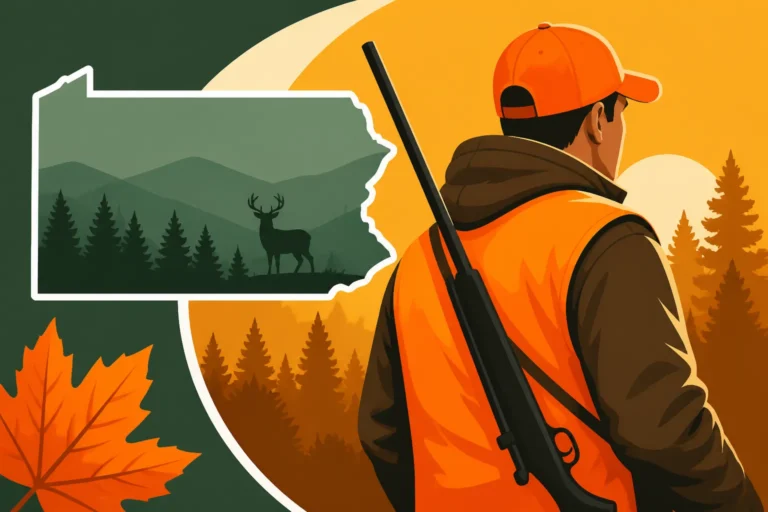
Hunter orange, or fluorescent orange, is a non-negotiable safety requirement during most of Pennsylvania's hunting seasons. The primary goal is to make hunters visible to one another, significantly reducing the risk of accidental shootings. During the general firearms deer season and other specific seasons (like muzzleloader or flintlock deer season, and often during the fall turkey season), hunters are required to wear at least 250 square inches of fluorescent orange material on their head, chest, and back combined, visible 360 degrees. This means an orange hat and vest combination is typically the easiest way to meet the requirement.
During archery-only seasons, hunter orange is generally not required, though many bowhunters choose to wear it while walking to and from their stand. However, if you are archery hunting during a concurrent firearms season (like late archery season when flintlock is also open), you must wear orange. Safety is always paramount, and beyond wearing orange, always follow the four basic rules of firearm safety: treat every firearm as if it's loaded, always point the muzzle in a safe direction, be sure of your target and what's beyond it, and keep your finger off the trigger until ready to shoot. These rules, along with the specific requirements for Pennsylvania Hunter Orange Rules, are the foundation of a safe and successful hunt.
Planning Your Pennsylvania Deer Hunt
Successfully hunting deer in Pennsylvania requires more than just knowing the season dates; it demands thorough planning, understanding your WMU, and staying informed about ever-changing conditions and regulations.
Maximizing Your Chances with WMU Knowledge
When you're planning a deer hunt in Pennsylvania, don't just pick a WMU at random. Truly maximize your chances by becoming a student of your chosen WMU. This means digging deep into its characteristics: Is it primarily big woods, agricultural, or suburban? What are the public land opportunities versus private? What are the historical deer densities and harvest success rates? Topography plays a huge role; steep mountain ridges with benches and hollows will hold deer differently than flat farm fields or creek bottoms. Agricultural crops are natural magnets for deer, providing both food and cover.
For instance, if you're hunting WMU 2G, a classic "Big Woods" region, you'll want to focus on areas with varied timber cuts, mature oak stands for acorns, and dense regeneration for bedding. Your hunting strategy will be vastly different than if you're in WMU 5C, where suburban woodlots, small private parcels, and backyard deer become the focus. Understanding these differences allows you to tailor your scouting efforts and hunting tactics, from stand placement to still-hunting routes. Modern mapping apps, including tools like GoHunt, provide invaluable satellite imagery, topo maps, and public/private land boundary overlays that can help you pick apart a WMU from your living room, greatly enhancing your Scouting Pennsylvania Public Land Before Season efforts.
The Importance of Staying Current
Perhaps the biggest piece of advice for any Pennsylvania deer hunter is this: stay current. The Pennsylvania Game Commission is an active agency, and regulations, season dates, and WMU rules are subject to change, sometimes annually. Relying on an outdated digest or what you heard at deer camp five years ago can lead to confusion, frustration, or even legal trouble.
The best way to stay informed is to regularly check the official PGC website (www.pgc.pa.gov) for the most up-to-date information. They release an annual Hunting & Trapping Digest that details all the season dates, bag limits, antler restrictions, and WMU-specific rules. Don't just skim it; read it thoroughly, paying close attention to any highlighted changes. Subscribe to PGC email alerts, follow their social media, and use reliable hunting apps that update their regulatory layers, like GoHunt. Being proactive about staying informed will ensure you're always hunting legally and ethically, making for a much more enjoyable experience afield.
Pennsylvania Deer Season Quick Reference Table
Navigating the various seasons and requirements can be tough. This table offers a general overview of key aspects for Pennsylvania's main deer seasons. Always consult the current Pennsylvania Hunting & Trapping Digest for precise, up-to-date regulations specific to your WMU.
| Season Type | General Dates (Approx.) | Antler Restrictions (General Rule*) | Hunter Orange Requirements | Weapon Type (Typical) |
|---|---|---|---|---|
| Archery (Early) | Late Sept – Mid Nov | 3 points on one side | None (recommended for travel) | Bow/Crossbow |
| Archery (Late) | Late Dec – Mid Jan | 3 points on one side | None (recommended for travel) | Bow/Crossbow |
| Firearms (Gen.) | Late Nov – Mid Dec | 3 points on one side | 250 sq. inches | Rifle, Shotgun, Muzzleloader, Handgun |
| Muzzleloader | Early/Mid Dec | 3 points on one side | 250 sq. inches | Muzzleloader (Inline) |
| Flintlock | Late Dec – Mid Jan | 3 points on one side | 250 sq. inches | Flintlock Muzzleloader |
| Youth (Early) | Late Oct | Any antlered deer or antlerless with tag | 250 sq. inches | Rifle, Shotgun, Muzzleloader, Handgun, Bow/Crossbow |
*Note: The "3 points on one side" rule applies to most WMUs; however, WMUs 2F, 2G, 3A, 4A, 4B, and 4D require 4 points on one side for a legal antlered deer. Mentored youth and junior hunters often have relaxed antler restrictions. Special Regulations Areas (e.g., WMUs 5C, 5D) have specific firearm restrictions, typically limiting to shotguns, muzzleloaders, or handguns.
Disclaimer
The information provided in this guide is for general informational purposes only and is not intended to be legal advice. Hunting regulations, season dates, and licensing requirements can change. Always consult the official Pennsylvania Game Commission website (www.pgc.pa.gov) or the most current Pennsylvania Hunting & Trapping Digest for the precise and up-to-date regulations before heading afield. It is the hunter's responsibility to know and obey all applicable laws.