Why Pennsylvania Cut the Spring Gobbler Limit
For many Pennsylvania turkey hunters, the news landed with a thud: the spring gobbler limit was cut. For years, the tradition of chasing that second bird was a deeply ingrained part of the season, a hopeful prospect that fueled many early mornings and late afternoons in the woods. This change sparked a mix of disappointment, confusion, and a lot of head-scratching about why Pennsylvania cut the spring gobbler limit. This comprehensive guide will explore the biological realities, the data that led to this significant management decision, and what it all means for us hunters heading out each spring.
Understanding the Pennsylvania Spring Gobbler Season Changes
The decision to reduce the spring gobbler limit wasn't made lightly, and it certainly wasn't met with universal applause. For many, it felt like a direct hit to a cherished hunting tradition, prompting a lot of questions about the health of our wild turkey population.
The Recent Reduction: What Changed?
Historically, Pennsylvania allowed hunters to harvest two bearded turkeys during the spring season, provided they purchased both a general hunting license and a specific "Special Wild Turkey License." This two-bird limit had been a fixture for a long time, offering an extended opportunity and increasing the chances of success for dedicated turkey hunters. However, starting in 2020, the Pennsylvania Game Commission (PGC) made the difficult decision to reduce the statewide spring gobbler bag limit from two bearded turkeys to just one.
This meant that even if you purchased the Special Wild Turkey License, you were still only permitted to harvest a single bird for the entire spring season. The second license, while still available for purchase, no longer provided the opportunity for a second turkey, essentially becoming redundant for many hunters. This shift immediately changed how many of us approached the spring, moving from planning for two potential harvests to focusing all efforts on a single, well-earned gobbler. It signaled a clear concern from the PGC about the overall health and reproductive capabilities of the wild turkey population across the Commonwealth.
Initial Reactions and Hunter Sentiment
The news was, understandably, a tough pill to swallow for many within the Pennsylvania hunting community. The emotional investment in spring gobbler hunting runs deep – it's often the first hunting season after a long winter, filled with the promise of warm mornings and booming gobblers. The reduction felt like a sudden loss of opportunity, especially for those who consistently filled both their tags or simply enjoyed the extended challenge of pursuing a second bird.
There was a palpable sense of frustration and confusion. Some hunters questioned the PGC's data, pointing to robust turkey numbers in their specific hunting areas or expressing skepticism that a reduction in harvest would truly make a significant difference. Others felt that other factors, like increased predation or habitat changes, were more deserving of attention. It's a natural reaction when something you value deeply is changed. We all invest time, money, and passion into our hunts, and any decision that impacts that experience is bound to stir strong emotions. The PGC certainly heard the outcry, but their stance was clear: the data pointed to a need for a conservative approach to ensure the long-term health of the species.
The Data Behind the Decision: Examining Turkey Population Trends
When the Pennsylvania Game Commission makes a significant management decision like cutting a bag limit, it's not done on a whim. These choices are rooted in extensive data collection and scientific analysis, even if the reasoning isn't always immediately clear or popular with hunters. The PGC has been closely monitoring wild turkey populations for decades, and the trends leading up to the 2020 decision painted a concerning picture.
Declining Poult-to-Hen Ratios
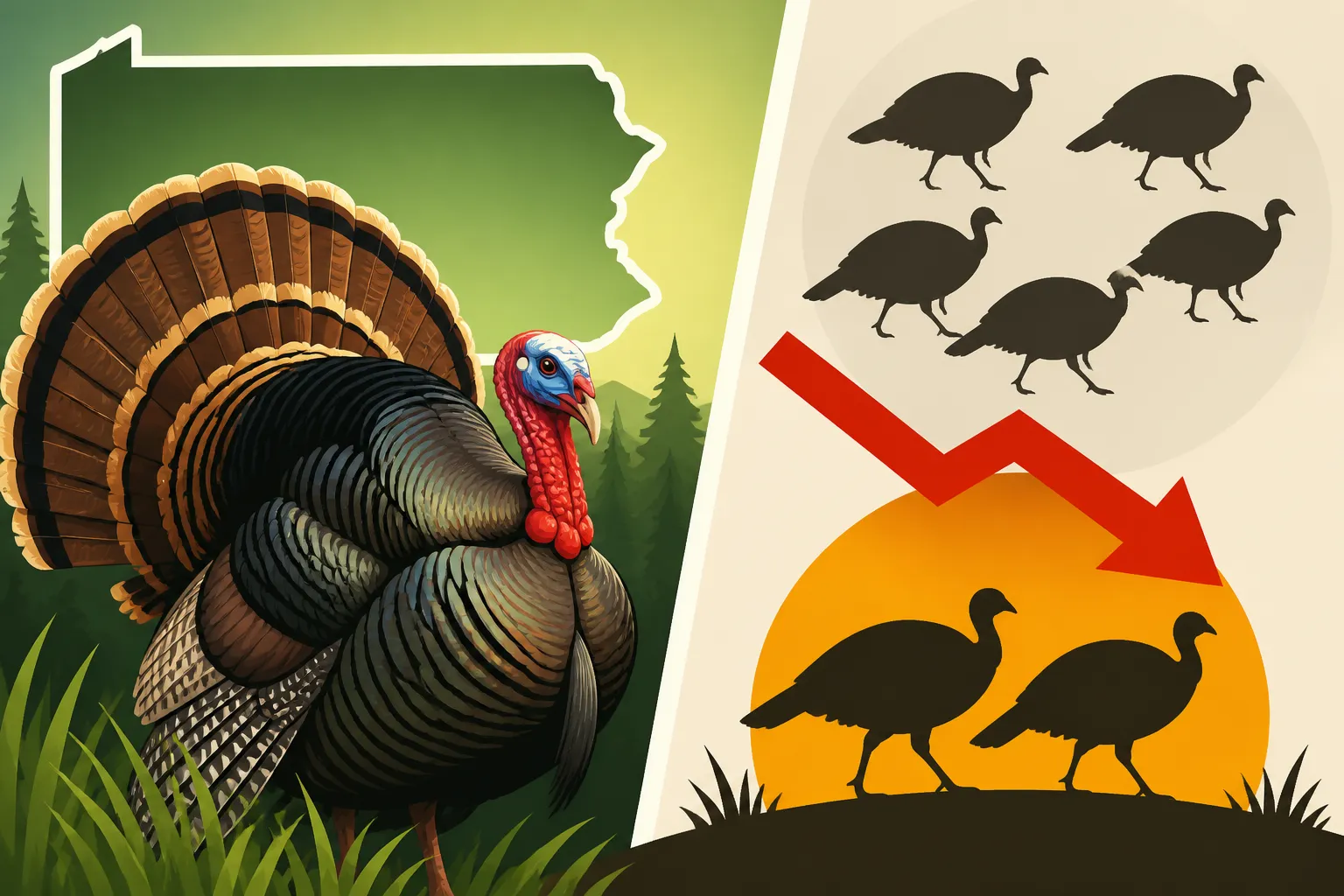
One of the most critical metrics the PGC, and indeed wildlife agencies across the country, uses to gauge the health of a turkey population is the poult-to-hen ratio. Simply put, this ratio measures the number of young turkeys (poults) that survive per adult hen. A healthy, self-sustaining turkey population typically needs a poult-to-hen ratio of at least 2.5 to 3.0 or higher to maintain stable numbers. Anything consistently below that indicates that the population isn't reproducing enough young to replace losses from natural mortality, hunting, and other factors.
For several years leading up to the limit reduction, the PGC's annual summer brood surveys showed a concerning, multi-year decline in this vital ratio across much of the state. Biologists, volunteers, and wildlife technicians participate in these surveys, observing and recording the number of hens they see with poults, and how many poults are with each hen. These observations, when compiled statewide, offer crucial insights into the reproductive success, or lack thereof, of the turkey population. As these numbers dipped, it became increasingly evident that fewer young birds were entering the population, signaling a need for intervention. You can learn more about these critical metrics in our article, Poult-to-Hen Ratios and What They Mean.
Impact of Habitat Loss and Fragmentation
Wild turkeys are generalists in many ways, but they rely on a mosaic of specific habitats to thrive throughout the year. They need mature forests for roosting, open woodlands or agricultural fields for foraging, and dense early successional cover for nesting and brood rearing. Unfortunately, many parts of Pennsylvania have experienced significant changes in land use that directly impact turkey habitat. Development, suburban sprawl, and shifts in agricultural practices have led to the loss and fragmentation of critical areas where turkeys nest and raise their young.
Furthermore, even in forested areas, the maturation of timber stands without regular disturbance (like selective logging or prescribed burns) can reduce the amount of ideal early successional habitat that poults need for cover from predators and insects to eat. Young forest growth is absolutely vital for many game species, including turkeys. While our article Why Young Forest Matters to Grouse focuses on another upland bird, the principles of habitat management and the importance of diverse forest age classes apply equally to robust turkey populations. These habitat changes make it harder for hens to successfully bring a brood to maturity, putting additional pressure on population numbers.
Predation and Environmental Factors
While habitat and poult production are primary drivers, other factors certainly play a role in turkey population dynamics. Predation, for instance, can be a significant issue, particularly for nests and young poults. Common predators like coyotes, raccoons, opossums, and skunks are opportunistic and will readily prey on turkey eggs and newly hatched birds. While predation is a natural part of the ecosystem, an imbalance or an increase in predator numbers in conjunction with reduced nesting success can compound the problem. Our article on Nest Predation and Turkey Hatches delves deeper into this often-misunderstood aspect of wildlife management.
Environmental factors, particularly weather during the nesting and brooding season, also have a profound impact. Cold, wet springs can be devastating for poult survival. Young turkeys are incredibly vulnerable to hypothermia and pneumonia during their first few weeks of life, and prolonged periods of cold, wet weather can wipe out entire broods. A string of particularly unfavorable springs can dramatically depress turkey numbers over several years, irrespective of other management efforts. The PGC's data suggested that a combination of these factors was creating a challenging environment for turkey reproduction, leading to the necessary conservative management decision.
The Pennsylvania Game Commission's Role and Management Strategy
The Pennsylvania Game Commission (PGC) is tasked with the incredibly complex job of managing the Commonwealth's wildlife resources for current and future generations. This means making tough calls that sometimes impact hunting opportunities in the short term, all for the long-term health of the game species.
Data Collection and Scientific Basis
When the PGC decides to adjust hunting regulations, it’s not just a hunch or a guess. Their decisions are underpinned by a robust system of data collection and scientific analysis. They employ a dedicated team of wildlife biologists and technicians who are constantly gathering information. This includes annual harvest reports submitted by hunters, which give them a baseline understanding of how many birds are being taken. More critically, they conduct extensive summer brood surveys, as mentioned earlier, which are crucial for assessing the reproductive success of hens by counting poults. These surveys are often augmented by voluntary hunter surveys, providing valuable anecdotal and observational data from those who spend the most time in the woods.
Beyond these regular surveys, the PGC also conducts targeted research studies on turkey movements, survival rates, and habitat use, often utilizing advanced technologies like radio-telemetry. This scientific foundation allows them to model population trends, understand limiting factors, and predict the potential impacts of different management strategies. While hunters might use various scouting tools like GoHunt to analyze property lines and terrain, the PGC's internal data sets, gathered over decades and covering vast areas, are far more comprehensive and tailored for broad wildlife management.
Balancing Hunter Opportunity with Conservation
This is arguably the trickiest part of the PGC's mission. They are acutely aware that hunters are their primary constituents and that hunting is a vital part of Pennsylvania's cultural and economic fabric. However, their core mandate is wildlife conservation. When population data indicates a decline or a struggle for a species, they must weigh the desire for continued hunter opportunity against the biological necessity of ensuring a healthy, sustainable population for the future.
The decision to cut the spring gobbler limit was a classic example of this balancing act. It was a conservative measure designed to reduce overall harvest pressure on adult gobblers. The theory is that by reducing the number of gobblers harvested, there are more available to breed with hens throughout the spring, potentially leading to higher fertilization rates and, hopefully, an increase in successful broods. It’s a proactive step to help the population rebound without having to resort to more drastic measures like shortening seasons or even closing them entirely. Our article on Pennsylvania Turkey Population Trends offers a deeper dive into the historical numbers and management responses.
Future Outlook and Potential for Recovery
So, what would it take for Pennsylvania to reconsider the spring gobbler limit and potentially return to a two-bird bag? The answer, simply put, is sustained improvement in key population metrics. Biologists would need to see consistent, positive trends in poult-to-hen ratios over several consecutive years, indicating that the turkey population is successfully reproducing and recruiting young birds into the adult cohort. They would also look for an increase or stabilization in overall turkey population estimates across multiple Wildlife Management Units (WMUs).
Continued habitat improvement efforts, particularly those focused on creating and maintaining early successional cover vital for nesting and brooding, would also play a role. The recovery of a wild population is rarely a quick fix; it's a long game dependent on both sound management and favorable environmental conditions. While there's no guarantee the limit will ever revert, the PGC's goal is always to manage for abundance, and if the data supports increased opportunity in the future, they would likely consider it. Until then, the single gobbler limit is a tool aimed at strengthening the foundation of our turkey resource.
Navigating the Single Gobbler Season Effectively
While the change to a one-gobbler limit might have adjusted our expectations, it doesn't diminish the incredible experience of spring turkey hunting in Pennsylvania. It simply shifts the focus, encouraging us to be more strategic and perhaps even more appreciative of that one hard-earned bird.
Shifting Tactics for One Bird
The most immediate shift is psychological. Instead of thinking about filling a second tag, your entire focus becomes about securing that single, magnificent gobbler. This often translates into being more selective. Hunters might pass on jakes or smaller gobblers early in the season, holding out for a mature, long-bearded tom. This increased selectivity can, in turn, contribute to a healthier age structure within the gobbler population, allowing more birds to reach older age classes.
Scouting becomes even more critical. With only one tag to fill, you want to make sure you're hunting the most promising areas. Early season scouting for roost locations, strut zones, and fresh sign can drastically increase your chances. Tools like GoHunt can be invaluable here, helping you pinpoint potential hotspots by layering public land boundaries with topographical maps to identify accessible ridges, creek bottoms, and clear-cuts where turkeys might be active. For a deeper dive into successful spring hunts, check out our comprehensive guide, Spring Gobbler Hunting in Pennsylvania.
Maximizing Your Hunting Opportunity
Despite the reduced limit, there's still ample opportunity to have a rewarding spring season. Persistence is key. Don't get discouraged if the first few hunts are quiet. Turkeys can be fickle, influenced by weather, hunting pressure, and their daily routines. Often, the late morning or even the afternoon hours can be productive, especially as birds disperse from earlier hunting pressure. Our article Hunting Gobblers After Noon in Pennsylvania offers great advice for these often-overlooked periods.
Refining your calling techniques is also paramount. Understanding when to use soft tree yelps versus aggressive cuts and clucks can make all the difference. Practice with various calls – slate, box, and mouth calls – to be versatile in the woods. Consider focusing your efforts on public lands, where the challenge can be greater but the reward even sweeter. Tactics for these areas, such as those described in Run-and-Gun Turkey Tactics on Game Lands, can be highly effective when covering a lot of ground in search of that lone gobbler. Remember, it's about the quality of the experience and the thrill of the chase, even if the bag limit is smaller. Using GoHunt's detailed maps to plan your entry and exit routes quietly can also give you an edge, especially on pressured public land, ensuring you don't spook birds before you even set up.
Pennsylvania Spring Gobbler Season at a Glance
To help put the changes into perspective, here’s a quick overview of how the spring gobbler season in Pennsylvania has evolved in recent years:
| Season Feature | Before 2020 (Typical) | Since 2020 | Implications for Hunters |
|---|---|---|---|
| Bag Limit (Spring) | Two bearded turkeys | One bearded turkey | More selective hunting, focus on single quality bird |
| Special Turkey License | Allowed second bird | No longer allows second bird | License now optional, but no added harvest opportunity |
| Season Length | Similar (approx. 4 weeks) | Similar (approx. 4 weeks) | Still ample time to hunt for one bird |
| Extended Hours (Late Season) | Yes, in final weeks | Yes, in final weeks | Opportunity to hunt afternoon still available |
| Population Trend | Declining | Stabilizing/Slight Improvement (target) | Conservation measure aimed at population rebound |
Disclaimer
The information provided in this guide is for informational purposes only and is not a substitute for official regulations. Always consult the current Pennsylvania Game Commission Digest or their official website for the most up-to-date and accurate hunting regulations, season dates, and license requirements before heading afield. Wildlife management strategies and regulations can change, so staying informed directly from the source is crucial.