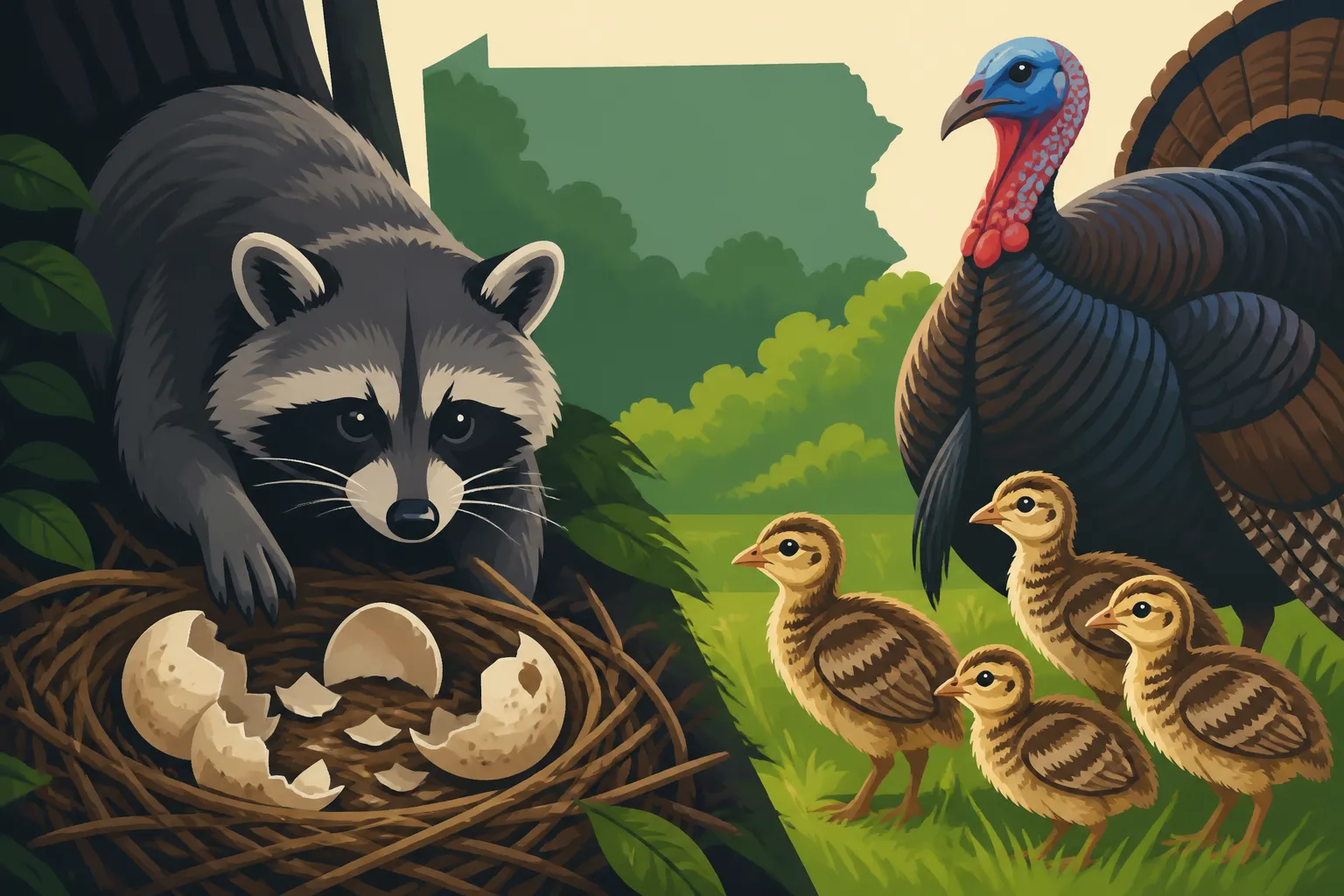
Nest Predation and Turkey Hatches
It's disheartening, isn't it, when you spend a spring morning listening for gobblers, only to realize the woods feel a little too quiet? Or you see hens, but their broods are noticeably smaller than you'd hope for. This common frustration often circles back to one critical, yet often unseen, challenge: nest predation. This guide is here to shed light on why turkey hatches sometimes struggle in Pennsylvania, focusing on the pervasive issue of nest predation and what you, as a hunter or landowner, can understand and even influence to help our wild turkey populations thrive.
The Silent Threat: Understanding Nest Predation's Impact on Pennsylvania Turkeys
When we talk about wild turkeys, our minds often jump to strutting gobblers and the thrill of a spring hunt. But the real backbone of the turkey population lies in the success of the hens – their ability to lay, incubate, and hatch a clutch of eggs, and then raise those vulnerable poults. Nest predation is arguably one of the biggest hurdles they face. It’s a silent, constant battle playing out in the underbrush, impacting the very foundation of our turkey numbers.
Think about it: a hen lays anywhere from 8 to 15 eggs, usually in a well-concealed, shallow depression on the ground. For about 28 days, she sits patiently, a beacon of hope for the next generation. During this critical period, she’s incredibly vulnerable, and so are her eggs. A successful hatch means a new generation of turkeys, but a failed nest due to a hungry predator means those potential poults are lost before they even see the light of day. This isn't just a minor setback; it's a significant factor in whether we see robust Pennsylvania Turkey Population Trends or a decline in local flocks.
The impact isn't just about the immediate loss of eggs. A hen that loses her first nest might try to re-nest, but subsequent clutches are typically smaller, and the late-hatched poults face tougher odds of survival due to less favorable weather or reduced insect availability. This means even if a re-nest is successful, the contribution to the overall population might be lessened. It’s a cascading effect that can influence the overall Poult-to-Hen Ratios and What They Mean across our state's varied landscapes.
Meet the Culprits: Who's Raiding Nests in Your Pennsylvania Woods?
Pennsylvania is home to a rich diversity of wildlife, and unfortunately for nesting turkeys, many of these creatures view turkey eggs (or even the incubating hen) as an easy, high-protein meal. Understanding who these predators are and how they operate is the first step in comprehending the scale of the challenge and identifying potential strategies for better turkey management. It's not about eradicating these species, but recognizing their role in the ecological balance and how their numbers or behavior might affect turkey success.
Common Mammalian Egg Hunters
The usual suspects are often furry and four-legged, driven by instinct and opportunity. Raccoons, opossums, and skunks are notorious nest raiders. They are opportunistic omnivores, often active at night, and their keen sense of smell leads them directly to a hidden nest. A hen might be able to defend against a smaller intruder, but persistent pressure can lead to nest abandonment or the destruction of the clutch. You'll often find scattered eggshell fragments, or sometimes the whole nest disturbed, suggesting a mammalian visitor.
Foxes, both red and gray, are also significant predators. While they might take an egg, they are often more interested in the hen herself, especially when she's locked down on a nest and less vigilant. Coyotes, too, have expanded their range and population across much of Pennsylvania, and a turkey nest, or even a young poult, is certainly on their menu. Identifying their tracks or scat, perhaps using a detailed mapping tool like GoHunt to scout travel corridors, can sometimes give you clues to their presence near known turkey nesting areas. Even black bears, especially in the more forested regions of Pennsylvania, will opportunistically raid a nest if they stumble upon one. They're powerful and can quickly decimate a clutch, leaving little evidence behind.
Avian and Reptilian Raiders
It's not just mammals that pose a threat. Crows and jays, with their sharp eyesight and opportunistic nature, will readily snatch eggs from unattended nests. While a hen is often a fierce defender, she must leave the nest periodically to feed, offering a window of opportunity for these intelligent birds. Even snakes, particularly larger species like black rat snakes, can consume an entire clutch of eggs. Their presence is harder to detect, but a lack of scattered shell fragments and a neatly emptied nest might point to a slithery thief.
To help visualize some of these common culprits and the signs they leave behind, here’s a quick overview:
| Predator Type | Typical Signs of Nest Predation | Other Clues to Presence (Tracks, Scat, etc.) |
|---|---|---|
| Raccoon | Scattered, chewed eggshells; often messy disturbance | Distinctive hand-like tracks, tubular scat with undigested food |
| Opossum | Smaller eggshell fragments, often licked clean; sometimes nest dug up | Star-shaped tracks with widely splayed toes, segmented scat |
| **Skunk | Cleanly eaten eggs, sometimes buried; distinct musky odor nearby | Small, five-toed tracks; strong, unpleasant odor |
| Fox (Red/Gray) | Eggs often crushed or carried away; sometimes feathers from hen | Canine-like tracks (narrower than dog), pointed scat, den entrances |
| Coyote | Similar to fox, potentially larger disturbance; may prey on hen | Larger canine tracks, rope-like scat often with hair and bone fragments |
| Black Bear | Significant disturbance, large paw prints, torn-up vegetation, eggs crushed | Large paw prints, large scat (often fruit/vegetation), claw marks on trees |
| Crow/Jay | Eggs punctured or carried away; nest may be relatively undisturbed | Feathers, calls; often active during daylight when hen is off the nest |
| Snake | Nest neatly emptied; no shell fragments visible; undisturbed nest shape | Scale impressions in soft mud (rarely seen), shed skins |
Recognizing these signs can give you a better idea of what forces are at play in your specific hunting grounds. Understanding the habits of these species, which you can learn more about by exploring topics like Pennsylvania Small Game and Furbearer Seasons and Predator and Furbearer Hunting in Pennsylvania, provides valuable context for turkey management.
Beyond Predators: Other Factors Affecting Turkey Hatches
While nest predation is a huge piece of the puzzle, it's never the only factor influencing successful turkey hatches. Wild turkeys are intricately linked to their environment, and a variety of other elements can significantly impact their reproductive success. A holistic view is crucial if we want to truly support these magnificent birds.
Habitat Quality and Nesting Cover
The availability of suitable nesting cover is paramount. Hens seek dense, low-growing vegetation that provides concealment from aerial and ground predators. Think thick briar patches, regenerating clearcuts, mature goldenrod fields, or dense stands of saplings. If this kind of cover is scarce, hens are forced to nest in less secure locations, making their clutches far more vulnerable. When they have quality cover, they can often avoid detection even by savvy predators. Poor habitat essentially rolls out the welcome mat for nest raids.
Weather patterns during nesting season also play a critical role. Prolonged periods of cold, wet weather can harm embryos or lead to hens abandoning nests. Heavy rains can flood nests, drowning eggs. On the flip side, extremely dry conditions can make cover more brittle and less effective for concealment. These natural events are beyond our control, but their effects can be mitigated if turkeys have access to diverse habitats where they can find optimal conditions. For instance, a hen might choose higher ground for a nest if a low-lying area is prone to flooding. For more insights into the broader health of the turkey population, you might look at Wild Turkeys in Pennsylvania.
Human Disturbance and Hen Health
Sometimes, we humans, unintentionally, contribute to nest failures. Excessive human activity in key nesting areas—hiking off-trail, uncontrolled dogs, or even poorly timed timber operations—can flush a hen from her nest, leaving it vulnerable to predation or causing her to abandon it permanently. Respecting designated wildlife areas and being mindful of peak nesting periods can make a significant difference.
Furthermore, the overall health and nutritional status of the hen herself is a huge determinant of nest success. A healthy hen is more likely to lay a full clutch of viable eggs, incubate more diligently, and be better equipped to defend her nest. Factors like food availability (especially insects for protein and acorns for energy), disease, and general physical condition all play a role. A hen that's struggling might abandon a nest more readily or lay fewer, less viable eggs. Monitoring the health of our flocks, often through surveys like the Pennsylvania Turkey Brood Survey Results, helps biologists understand these broader trends.
Empowering the Flock: What Hunters and Landowners Can Do
Understanding the challenges turkeys face is one thing, but what can we actually do about it? As hunters and stewards of the land, we have opportunities to make a real difference in promoting successful turkey hatches, whether on public ground or private property. It’s about creating an environment where hens have the best possible chance to raise their young.
Habitat Management for Nesting Success
The most impactful thing we can do is focus on habitat. Providing ample, secure nesting cover is a game-changer. This means looking for opportunities to create or enhance dense, brushy areas. For landowners, this might involve selective timber harvesting to encourage new growth, planting native shrubs, or allowing old fields to revert to brushy cover. Think about areas that will be thick enough to hide a basketball from a predator’s eye, especially around the base. Areas with a mix of cover types, like a field edge bordering a young forest, offer excellent opportunities.
When planning habitat work, consider the entire life cycle of the turkey. Hens need nesting cover in spring, but poults need areas rich in insects (often found in grassy fields with tall forbs) during summer, and the whole flock needs mast crops (acorns, beechnuts) and roosting trees in fall and winter. A good mapping application like GoHunt can be invaluable here, allowing you to identify current habitat types, potential areas for improvement, and how turkeys might move between them. You can mark areas that would make ideal nesting spots or safe corridors. For those hunting public ground, understanding how to read a landscape for these critical features is key to finding where birds might successfully hatch and thrive, especially in places like Hunting Pennsylvania State Forests.
Responsible Hunting and Predator Awareness
While we can't eliminate all predators (nor should we try, as they're part of a healthy ecosystem), being aware of predator populations on your hunting grounds can be informative. Legal and ethical Coyote Calling in Pennsylvania Winter or other furbearer hunting can help balance predator populations in some localized areas, particularly if their numbers are disproportionately high and demonstrably impacting turkey recruitment. This is a complex issue, and it's important to understand the ecological implications of such actions.
For turkey hunters, being ethical and responsible during the spring season is also a form of conservation. Avoiding over-pressuring hens and letting them go about their business during the nesting period ensures they have the best chance to lay and incubate their clutches. When scouting, minimize disturbance in potential nesting areas. Use tools like GoHunt to mark potential nesting areas from afar, and plan your approach routes accordingly to avoid disturbing incubating hens. For general scouting tips, consider reading up on Scouting Pennsylvania Public Land Before Season. Every little bit of foresight helps ensure the future of Pennsylvania’s wild turkey legacy.
Disclaimer
This article is for general informational purposes only and does not constitute professional advice. Laws, prices and regulations vary by location and change over time. Consult a qualified professional for guidance on your specific situation.