Pennsylvania Small Game and Furbearer Seasons
It can feel like you need a legal degree just to keep up with all the different hunting seasons and regulations here in Pennsylvania, especially when you start diving into small game and furbearers. Between varying opening dates, specific bag limits, and regional differences, it's easy to get overwhelmed. This comprehensive guide is designed to cut through the confusion, offering a clear, detailed look at the exciting world of small game and furbearer hunting and trapping opportunities in our great state.
Understanding Pennsylvania's Small Game and Furbearer Landscape
Hunting in Pennsylvania isn't just about chasing whitetails or black bears; our state offers a rich tapestry of small game and furbearer opportunities that often get overlooked but provide incredible challenges and rewards. For many, these seasons offer a chance to extend their time in the woods beyond the primary big game pursuits or introduce new hunters to the joys of the chase without the pressure of trophy hunting. It's a fundamental part of our outdoor heritage, connecting generations to the land.
The Importance of Small Game Hunting in PA Culture
Small game hunting, like rabbit and squirrel hunting, has deep roots in Pennsylvania's sporting traditions. For countless families, these pursuits were often the first introduction to hunting, fostering a love for the outdoors and teaching essential skills like tracking, woodsmanship, and responsible firearm handling. Think about those crisp fall mornings, a couple of beagles baying on a fresh rabbit track, or the quiet patience required to outsmart a wary squirrel in an oak stand. These aren't just hunts; they're experiences that forge bonds and create lasting memories. It's a more accessible form of hunting for many, requiring less specialized gear than, say, a full archery setup, making it an excellent entry point for new hunters looking to get their feet wet and understand more about Pennsylvania Hunter Education Requirements.
Beyond the personal enjoyment, small game hunting plays a crucial role in wildlife management by helping to maintain healthy populations and providing valuable outdoor recreation. It encourages hunters to explore different habitats, from dense briar patches to mature timber, expanding their knowledge of the diverse ecosystems throughout Pennsylvania. These seasons also offer ample opportunities for youth and mentored hunters to gain experience in a less intense environment, learning safety, ethics, and fieldcraft while enjoying successful outings that can lead to delicious meals. The focus shifts from the singular pursuit of a large animal to the active engagement with the environment and the thrill of the chase, often shared with friends, family, or a good hunting dog.
Furbearers: A Different Kind of Challenge
Furbearer hunting and trapping, on the other hand, often present a different kind of challenge, appealing to those who enjoy strategic planning, understanding animal behavior, and the satisfaction of a successful set or call. These animals, which include coyotes, foxes, raccoons, bobcats, beaver, and otter, are often elusive and require a keen understanding of their movements, feeding habits, and territories. It's a pursuit that demands patience, observation, and often, an ability to adapt to changing conditions and animal responses. For many, the allure lies in the intellectual challenge of outwitting these wild, intelligent creatures.
Trapping furbearers is a time-honored tradition in Pennsylvania, an integral part of wildlife management that goes back centuries. Trappers play a vital role in controlling populations, especially in areas where certain species might impact agricultural interests or other wildlife. Modern trapping methods are highly regulated and designed to be humane and efficient, reflecting a deep respect for the animals being pursued. Whether you're calling coyotes on a frigid winter night or meticulously setting a trap line for beaver, engaging with furbearers offers a unique connection to Pennsylvania's wilder side and a chance to truly hone your outdoor skills. Understanding Pennsylvania Furtaker Licence Requirements is your first step into this intriguing aspect of our hunting heritage.
General Small Game Seasons and Key Species
Pennsylvania's small game calendar is a vibrant one, offering various opportunities from early fall into the depths of winter. Each species brings its own unique hunting style, habitat preferences, and challenges, ensuring there's always something to pursue. Keeping track of the nuanced season dates and bag limits is key to a successful outing.
Squirrels: The Woodland Acrobat
Squirrel hunting is often the perfect starter hunt, especially for newcomers or those looking to simply enjoy a peaceful morning in the woods. Both gray and fox squirrels are abundant across Pennsylvania, particularly in areas with mature hardwoods that provide plenty of acorns, hickory nuts, and beech nuts. The seasons typically open in early fall, sometimes even before the leaves fully drop, offering a chance to scout and hunt in comfortable weather. It’s a great way to sharpen your shooting skills with a .22 rifle or a small-gauge shotgun, focusing on precise shots. Many hunters enjoy the quiet challenge of still-hunting for squirrels, slowly creeping through the woods, pausing frequently to scan tree trunks and canopies for movement. Others prefer to find a good spot near an active nut tree, sit quietly, and let the squirrels come to them.
Bag limits for squirrels are generally quite generous, allowing for ample opportunity to put some delicious wild game on the table. The season often extends well into the winter months, providing a fantastic reason to get out and enjoy the crisp, silent woods after deer season. Early in the season, when foliage is thick, squirrels might be harder to spot, demanding patience and a keen eye. As the leaves fall, they become more visible, but also more alert. A reliable app like GoHunt can be incredibly helpful for identifying potential squirrel hotspots by showing timber types and mast-producing trees, helping you pinpoint areas with good food sources before you even step foot in the woods. Just remember to always be aware of your surroundings and any other hunters, especially during concurrent seasons.
Rabbits: Chasing Cottontails
Chasing rabbits, primarily Eastern cottontails, is another quintessential Pennsylvania small game experience, often synonymous with the joyful clamor of beagles or the methodical push of a well-organized drive. Rabbits thrive in brushy cover – think overgrown fields, briar thickets, clearcuts, and the edges of farmlands. The season typically kicks off in late October or early November, running through much of the winter, offering plenty of time to enjoy this fast-paced hunt. Many hunters fondly recall childhood memories of bundling up, heading to a local farm, and watching dogs work the dense cover, eagerly awaiting a rabbit to burst into the open.
While Beagles are traditionally the stars of the show, flushing rabbits and sending them on predictable circles back to the hunter, you don't necessarily need a dog to have a successful rabbit hunt. Group drives through thickets can be very effective, with blockers positioned on the edges and drivers pushing through the cover. Solo hunters can also find success by slowly still-hunting through prime rabbit habitat, paying close attention to thick patches where rabbits might be hunkered down. A 12 or 20-gauge shotgun with a light load is the preferred tool for these quick-moving targets. To learn more about this exciting pursuit, check out our guide on Rabbit Hunting With Beagles in Pennsylvania.
Pheasants and Grouse: Upland Bird Pursuits
For upland bird enthusiasts, Pennsylvania offers a mixed bag of opportunities. While wild pheasant populations are very limited in the state, the Pennsylvania Game Commission (PGC) runs an extensive stocking program, releasing thousands of ring-necked pheasants on various State Game Lands and Hunter Access Program properties. This program ensures hunters have a chance to experience the thrill of a flushing pheasant, often with the aid of pointing or flushing dogs. The pheasant season typically runs from late October through early January, with specific dates and sections often designated for youth or special hunts. Hunters aged 12 and older (and mentored adult hunters) need a Pheasant Permit in addition to their general hunting license to pursue pheasants. Understanding the release schedules and locations, often available through the PGC website, is crucial for planning a successful pheasant hunt. Read more about Hunting Stocked Pheasants in Pennsylvania.
Ruffed grouse, Pennsylvania's state bird, presents a much different, and for many, more challenging experience. These native woodland birds prefer early successional forests, clearcuts, and areas with dense undergrowth. Grouse populations have seen declines in recent decades, making them more elusive targets. However, pockets of huntable birds can still be found in appropriate habitat, particularly in the northern tier and mountainous regions. Hunting grouse often involves walking miles of challenging terrain, focusing on thick cover, and being ready for a sudden, explosive flush. A quick-handling shotgun, like a 20-gauge, is ideal for these fast-flying targets. While tough, a successful grouse hunt is incredibly rewarding. For detailed tactics on finding these birds, consult our article on Grouse Hunting Pennsylvania Cover.
Woodchucks and Crows: Year-Round Opportunities
Beyond the traditional fall and winter small game seasons, Pennsylvania offers unique year-round opportunities for woodchucks (groundhogs) and crows. These species provide excellent ways to stay sharp with your rifle or shotgun and spend more time afield outside of conventional seasons.
Woodchuck hunting is a popular summer pastime, particularly in agricultural areas. These large rodents can cause significant damage to crops and farm equipment, making them a welcome target for landowners. Hunters often use varmint rifles, like a .223 Remington or .22-250, often equipped with powerful optics, for long-range precision shots from a stationary position. It's a fantastic way to practice marksmanship and hone your long-distance shooting skills, all while helping farmers manage agricultural pests. Remember, like any hunting on private land, securing permission from the landowner is absolutely essential before setting up for woodchucks.
Crow hunting, on the other hand, is a more active pursuit, often involving calling and decoys. Crows are intelligent birds, and hunting them can be a real test of wits. They are considered an agricultural pest by many and can be hunted year-round, except for Sundays, and specific nesting periods. Shotguns are the preferred weapon for crows, especially when hunting over decoys or using electronic calls to bring them into range. It's an excellent way to refine your shotgunning skills, enjoy fast-paced action, and contribute to local wildlife management efforts. Both woodchucks and crows provide valuable opportunities for ethical hunting practice and extending your time in Pennsylvania's diverse landscapes.
Migratory Game Bird Seasons
Pennsylvania sits squarely in the Atlantic Flyway, making it a critical stopover and breeding ground for a vast array of migratory game birds. From ducks and geese to doves, woodcock, and snipe, these species offer some of the most dynamic and challenging hunting experiences our state has to offer. However, their seasons are often complex, dictated by federal frameworks and state-specific zones, requiring careful attention to detail.
Waterfowl Zones and Specific Dates
Waterfowl hunting in Pennsylvania is a world unto itself, with seasons and bag limits highly dependent on the species, location, and federal regulations. The state is divided into specific zones – the Lake Erie Zone, the Northwest Zone, the North Zone, the South Zone, and the Atlantic Population Canada Goose Zone – each with its own set of opening and closing dates for ducks, geese, and other migratory birds. This zoning helps manage local and migratory populations effectively. Hunters pursuing waterfowl must possess a general Pennsylvania hunting license, a Pennsylvania Migratory Game Bird License, and a Federal Migratory Bird Hunting and Conservation Stamp (Federal Duck Stamp). Additionally, registration with the Harvest Information Program (HIP) is mandatory.
Duck seasons, for example, typically offer split seasons, providing opportunities in early fall and then again later in the winter as new birds migrate through. Species like mallards, wood ducks, and teal are popular targets. Goose seasons, particularly for Canada geese, also have varying dates, often including an early resident goose season to help control local populations, followed by later seasons for migratory birds. Staying informed about these dates, which can change annually based on population surveys and federal guidelines, is paramount. Resources like the Pennsylvania Game Commission's waterfowl hunting guide and online tools from services like GoHunt are invaluable for navigating the intricacies of Pennsylvania Waterfowl Seasons and Zones. Whether you're hunting ducks along Duck Hunting Pennsylvania Rivers or setting up for geese in a cut cornfield, understanding these zones is critical.
Dove, Woodcock, and Snipe: Fast-Flying Challenges
Beyond ducks and geese, Pennsylvania also offers seasons for other migratory game birds that provide thrilling, fast-paced shooting action: doves, woodcock, and snipe.
Mourning doves are a beloved game bird, with their erratic flight patterns providing an excellent challenge for shotgunners. The dove season typically opens around September 1st, offering one of the first hunting opportunities of the fall. Doves are often found feeding in cut agricultural fields, especially those with wheat, sunflowers, or millet, and near water sources. Hunters often set up along flight paths or near feeding areas, using decoys to draw birds closer. The action can be intense, making it a great way to warm up your shooting skills for the upcoming seasons. A 12 or 20-gauge shotgun with light loads is standard.
Woodcock, often called "timberdoodles," are unique migratory birds that offer a different kind of upland experience. They prefer moist, young forest habitats, dense with brush and small trees, often near stream bottoms or swampy areas. Woodcock season usually opens in mid-October. Hunting them often involves walking through thick cover, similar to grouse hunting, with or without a flushing dog. Their peculiar, almost corkscrew flight when flushed makes them a challenging target. Finding their characteristic "splash" (droppings) is a good indicator of their presence.
Snipe are another challenging migratory bird, preferring wet, boggy areas, marshes, and flooded fields. They are incredibly camouflaged and often difficult to spot until they flush with a distinctive "scaipe" call. Their flight is also fast and erratic. Snipe season typically runs concurrent with woodcock season. Both woodcock and snipe hunts are often solitary affairs or shared with a close hunting companion and a well-trained bird dog, offering a quiet, immersive experience in unique wetland and timber habitats. These hunts test a hunter's patience, observation skills, and quick reflexes.
Furbearer Seasons: Trapping and Hunting Opportunities
Furbearers represent some of Pennsylvania's most cunning and adaptable wildlife, offering year-round hunting for some species and distinct trapping seasons for others. Pursuing furbearers demands a deep understanding of animal behavior, habitat, and the specific regulations governing each species.
Coyotes and Foxes: Predator Hunting Allure
Coyotes and foxes (both red and gray) are the primary targets for predator hunters in Pennsylvania, offering year-round hunting opportunities with a general hunting license, except for Sundays, specific hunting hours, and certain weapon restrictions. This extended season makes predator hunting a fantastic way to stay engaged in the outdoors during the off-season for other game. The allure of predator hunting lies in the intense, strategic game of cat and mouse. Hunters use a variety of calls – distress calls mimicking prey, challenge howls from other coyotes, or even fawn bleats – to lure these wary animals into shooting range. Setting up downwind, concealing yourself effectively, and maintaining absolute silence are critical for success.
Night hunting for coyotes is also popular in Pennsylvania, with specific regulations allowing the use of artificial lights (like red or green lights) under certain conditions. This adds another layer of excitement and challenge, requiring specialized gear and heightened awareness. While some hunters focus on population control, others enjoy the pure sport of outwitting these intelligent predators. Winter, when snow cover makes tracking easier and natural food sources are scarcer, can be a prime time for calling coyotes. To dive deeper into effective strategies, check out our article on Coyote Calling in Pennsylvania Winter. Red foxes often respond to similar calls, though they tend to be more cautious. Gray foxes, with their ability to climb trees, present their own unique challenge.
Bobcat and Fisher: Special Permits and Seasons
Bobcats and fishers represent some of Pennsylvania's more elusive and highly sought-after furbearers, with strict management in place due to their historical rarity and the value of their pelts. Both species require a special permit in addition to a general hunting or furtaker license, reflecting their regulated status. The bobcat permit is issued through a lottery system, with a limited number available each year, making drawing one a significant achievement. Fisher permits are also limited and issued similarly.
Bobcat seasons are generally short and occur in winter, overlapping with some trapping seasons. They are primarily found in the rugged, forested big woods regions of northern Pennsylvania. Hunting bobcats is exceptionally challenging due to their nocturnal habits and secretive nature. Most bobcat harvests occur incidentally by deer hunters or through trapping efforts. Fisher seasons are also short and specific, often concentrated in the same remote, forested habitats. Trapping is the most effective method for harvesting these animals, which are known for their voracious appetites and fierce dispositions. These special permits and limited seasons underscore the unique opportunity and ethical responsibility that comes with pursuing these magnificent furbearers.
Raccoon and Opossum: Night Hunting and Trapping
Raccoon and opossum offer some of the most accessible and traditional furbearer opportunities in Pennsylvania, particularly for night hunters and trappers. Both species are abundant across the state, from farmlands to suburban edges, and have relatively long seasons, often running from early fall well into winter.
Night hunting raccoons with hounds is a time-honored tradition in Pennsylvania. The excitement of following baying coonhounds through the woods under the moonlit sky, listening to them tree a raccoon, is an unforgettable experience. Hunters typically use .22 caliber rimfire rifles or handguns to dispatch treed raccoons. This active form of hunting helps manage populations and provides valuable pelts and meat for some. Opossums are often taken incidentally during raccoon hunts or trapping efforts, as they share similar habitats and food sources.
Trapping is also highly effective for both raccoons and opossums. Coil-spring or long-spring foothold traps, and cage traps are commonly used. Trappers often set up near water sources, along travel corridors, or near agricultural fields where these omnivores feed. Both species are relatively easy to catch compared to coyotes or bobcats, making them a good entry point for new trappers. Understanding Pennsylvania Trapping Seasons and Tagging Rules is essential for anyone interested in these pursuits. The long seasons and widespread availability of raccoons and opossums provide ample opportunity for sustained activity throughout the colder months.
Beaver and Otter: Aquatic Trapping
Beaver and river otter are fascinating furbearers that offer unique trapping opportunities for those willing to venture into Pennsylvania's waterways. Both species are primarily managed through regulated trapping seasons, which are typically held during the colder months when their pelts are prime.
Beaver trapping requires specialized knowledge of their habits and their aquatic environment. Trappers target beaver lodges, dams, and feed beds, using large conibear traps, foothold traps set to drown, or snares. Successful beaver trapping means understanding water levels, currents, and how beavers move in and out of their underwater homes. It's a challenging but highly rewarding pursuit, and beaver pelts have a long history of economic and cultural significance. Beaver meat can also be a surprisingly delicious table fare.
River otters, while not as abundant as beaver, have made a significant comeback in Pennsylvania and offer limited trapping opportunities in specific areas. Like bobcats and fishers, otter trapping is highly regulated, often with specific season dates and tag requirements. Otters are incredibly elusive and primarily caught in sets targeting beaver or muskrats, or specifically designed otter slides. Their cunning nature and preference for clean, healthy waterways make them an indicator of good aquatic ecosystem health. Both beaver and otter trapping require a Pennsylvania Furtaker License and adherence to strict regulations regarding trap types, placement, and reporting. Learning about these aquatic furbearers adds another dimension to the rich trapping heritage of Pennsylvania.
Essential Regulations and Licensing for Small Game and Furbearers
Navigating the rules and regulations for small game and furbearers in Pennsylvania can be tricky, but understanding the core requirements is essential for a safe, ethical, and legal hunt or trap. It's not just about knowing the season dates, but also about the necessary licenses, safety rules, and reporting procedures.
General Hunting License and Additional Permits
Before you even think about stepping into the woods or setting a trap, you need to ensure you have the correct licensing. For nearly all small game and furbearer hunting in Pennsylvania, a valid General Hunting License is the foundational requirement. This license is your ticket to legally participate in most hunting activities. However, as we've touched upon, certain species or specific activities require additional permits. For instance, if you plan to hunt pheasants, you'll need to purchase a Pheasant Permit in addition to your general hunting license. This permit helps fund the state's pheasant propagation and stocking program. Similarly, migratory bird hunters, including those pursuing ducks, geese, doves, woodcock, and snipe, must purchase a Pennsylvania Migratory Game Bird License and register with the Harvest Information Program (HIP).
For furbearers, particularly those taken through trapping, a separate Furtaker License is required. This license covers all trapping activities for species like beaver, muskrat, raccoon, fox, coyote, opossum, and skunk. Beyond the general furtaker license, highly regulated species like bobcats and fishers require special permits, often acquired through a lottery system due to limited quotas. This tiered licensing system helps the Pennsylvania Game Commission manage populations and ensures that those participating are aware of the specific rules for each game type. It's always a good idea to annually review the latest hunting and trapping digest to confirm all required licenses and permits for the species you intend to pursue. You can also find detailed information about Pennsylvania Hunting Licences and What They Cost on the PGC website.
Hunter Orange and Safety Zone Requirements
Safety is paramount in Pennsylvania's outdoors, and two key regulations designed to protect hunters and the public are the hunter orange requirements and safety zones.
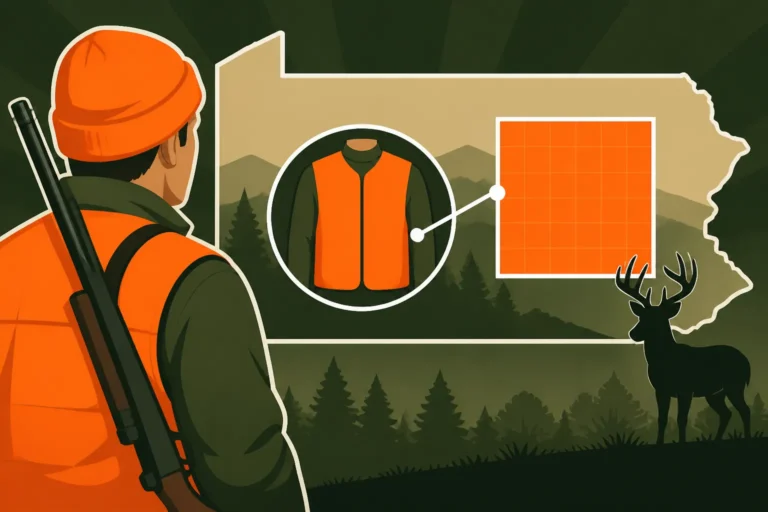
Hunter orange (blaze orange) is mandatory for certain seasons and species, ensuring hunters are visible to each other, especially during peak hunting pressure. For small game hunting, the rules can vary. While hunter orange is generally not required for bowhunting or during the spring turkey season, it becomes crucial during firearms deer season, small game season (except for certain species like turkeys or migratory birds), and on State Game Lands. Specific requirements often dictate a minimum number of square inches of blaze orange to be worn on the head, chest, and back, visible 360 degrees. For example, during general small game season, hunters typically need 250 square inches of solid fluorescent orange material visible at all times. Always check the current digest for the precise requirements for the specific season and location you'll be hunting. This often helps prevent accidents, especially when you are actively moving through diverse cover where visibility might be limited.
Safety zones are another critical regulation, defining areas where hunting is prohibited or restricted to ensure public safety around dwellings and occupied buildings. The general rule is a 150-yard safety zone around any occupied dwelling, building, camp, or playground. This means you cannot hunt, shoot at, or even retrieve game within this distance without the express permission of the landowner or occupant. For waterfowl hunting, the safety zone is reduced to 50 yards from occupied dwellings. These zones are designed to protect residents and their property, and violating them can lead to serious penalties. Before hunting on any private land, it's always wise to ask about specific property boundaries and ensure you understand where these safety zones might apply. Using mapping tools like those offered by GoHunt can help visualize property lines and approximate safety zone boundaries, ensuring you maintain a safe distance from any structures.
Tagging, Reporting, and Carcass Transportation Rules
Pennsylvania has specific rules for tagging and reporting harvested game and furbearers, as well as regulations concerning the transportation of carcasses, particularly in areas affected by Chronic Wasting Disease (CWD).
For most small game species, immediate tagging is not required in the same way it is for big game like deer or bear. However, you must be able to prove your harvest and present appropriate licenses upon request by a Game Warden. For furbearers, particularly those taken by trapping, strict tagging rules apply to the traps themselves. Each trap must have a durable identification tag displaying the trapper's PGC-issued identification number or their name and address. This ensures accountability and allows wardens to identify trap owners. Additionally, specific furbearers like bobcats and fishers, once harvested (whether by hunting or trapping), require mandatory reporting and often physical checking by a PGC official to collect biological data and ensure proper tagging with a PGC-issued tag. These rules are vital for species management and monitoring.
Carcass transportation rules have become increasingly important due to the spread of CWD in deer and elk, though they can also apply to other species depending on disease monitoring. While CWD primarily affects cervids, understanding the general principle is important. In Pennsylvania's Disease Management Areas (DMAs), there are restrictions on transporting certain high-risk parts (brain, spinal cord, etc.) of deer and elk outside the DMA boundaries. While these rules don't typically apply to small game or furbearers, it's a good habit to be aware of any active disease outbreaks or special regulations in your hunting area for any species. Always consult the most current PGC digest or website for up-to-date information on disease management and reporting requirements, especially for any unusual observations of sick or deceased animals.
Planning Your Small Game and Furbearer Adventures
Successful small game and furbearer hunting isn't just about showing up; it requires thoughtful planning, scouting, and understanding the unique demands of each pursuit. From pinpointing habitat to selecting the right gear and securing access, a well-prepared hunter or trapper significantly increases their odds of success and enjoyment.
Scouting and Habitat for Various Species
Effective scouting is the bedrock of any successful hunting or trapping venture, and it's especially critical when pursuing small game and furbearers. Each species has distinct habitat preferences that dictate where you'll find them. For instance, rabbits will be in dense briar patches, old field edges, and clearcuts, while squirrels will gravitate towards mature oak, hickory, and beech stands where mast is abundant. Grouse require specific young forest cover, often found in regenerating timber cuts or dense conifer stands. Understanding these preferences allows you to narrow down your search area considerably. GoHunt offers excellent mapping tools that can help visualize different timber types, topographical features, and even recent timber harvests, providing crucial insights into potential hotspots for various species from the comfort of your home.
Scouting isn't just about identifying the right type of woods; it's about finding specific signs of activity. Look for squirrel cuttings under nut trees, rabbit tracks in fresh snow, grouse droppings near dense cover, or active beaver sign like fresh cuttings and scent mounds along a stream. For furbearers, seek out coyote tracks along field edges, fox scat on elevated points, or raccoon rub trees near water. Pre-season scouting allows you to identify game travel routes, feeding areas, and bedding cover, providing a significant advantage once the season opens. It also helps you learn about the lay of the land, potential obstacles, and the best entry and exit routes, making your actual hunt more efficient and safer.
Gear Considerations for Different Pursuits
The beauty of small game and furbearer hunting is that it often doesn't require the specialized, high-cost gear associated with big game. However, having the right gear for your chosen pursuit can make all the difference in comfort, efficiency, and success.
For most small game like squirrels and rabbits, a dependable .22 caliber rifle or a 12/20-gauge shotgun with appropriate shot size (e.g., #6 for squirrels, #7.5 or #6 for rabbits) is usually sufficient. A good pair of comfortable, sturdy boots is essential for covering ground, and brush pants or chaps are highly recommended if you're pushing through briars for rabbits or grouse. A small game vest with ample pockets for ammunition, water, and game is also a practical addition. For upland bird hunting, a quick-swinging shotgun and an upland vest with a game pouch are standard. If you're hunting stocked pheasants in colder weather, layering is key, and warm, waterproof boots are a must, as conditions can often be wet and muddy around release sites.
Furbearer hunting and trapping demand more specialized equipment. Predator callers need quality calls (electronic or hand calls), good camouflage, and a rifle or shotgun capable of ethical shots at varying distances. Night hunters will need reliable lights, often with red or green filters. Trappers require a variety of traps specific to the target animal (foothold, conibear, cage), along with setting tools, lure, bait, and dispatch tools. A good pack to carry gear, a durable knife for field dressing or skinning, and appropriate cold-weather clothing (especially for winter pursuits) are universally important. For all pursuits, a quality map and GPS (or a reliable smartphone app with offline mapping like GoHunt) are indispensable for navigation, especially on vast public lands.
Public vs. Private Land Access for Small Game
Deciding where to hunt small game and furbearers often comes down to navigating the options of public and private land, each presenting its own advantages and challenges.
Pennsylvania boasts an impressive amount of public hunting land, including over 1.5 million acres of State Game Lands, numerous State Forests, and portions of the Allegheny National Forest. These lands are open to all licensed hunters and trappers, offering vast opportunities. Small game and furbearers thrive in many of these areas, particularly in regenerating timber cuts on State Forests or the diverse habitats found on State Game Lands. The advantage of public land is guaranteed access and the freedom to explore. The challenge can be hunting pressure, especially on popular State Game Lands, and finding less-traveled areas. Thorough scouting and a willingness to walk further off the beaten path can often lead to unpressured pockets of game. Many hunters find great success on public lands by focusing on habitats that other hunters overlook or are less willing to navigate. Our guide on Small Game Hunting in Pennsylvania delves deeper into these options.
Private land, while requiring permission, often offers higher game densities and less pressure. Farmlands, woodlots, and overgrown properties in rural Pennsylvania can be small game havens. Securing permission from landowners is a critical skill for any hunter. This often involves polite inquiry, offering to help with chores, respecting property boundaries, and always leaving the land better than you found it. Many landowners, particularly farmers, are often receptive to hunters who offer to help control woodchuck or coyote populations. Building a good relationship with a landowner can open up exclusive hunting opportunities that last for years. Regardless of whether you choose public or private land, always verify property boundaries and understand local regulations, especially concerning safety zones around residences, to ensure a legal and ethical hunt.
Species-Specific Hunting Strategies and Tips
While the general principles of hunting apply across the board, success with small game and furbearers often hinges on employing tactics tailored to the specific behavior and habitat of your target species. From how you move through the woods to the calls you use, strategy is key.
Still-Hunting and Drives for Small Game
Still-hunting is a highly effective, yet often underutilized, strategy for many small game species, particularly squirrels and sometimes even rabbits. It involves moving through the woods extremely slowly and deliberately, pausing frequently for extended periods (often 5-10 minutes or more) to observe. The key is to blend into the environment, letting your eyes do most of the work. For squirrels, this means scanning tree trunks, branches, and the forest floor for any tell-tale twitch of a tail or rustle of leaves. The quiet approach prevents you from spooking game prematurely, allowing you to get into a good shooting position. This method requires immense patience but can be incredibly rewarding, offering a more intimate connection with the woods. It's also an excellent way to scout for other species while you hunt.
Drives, on the other hand, are a more active and social way to hunt small game, particularly rabbits in dense cover or pheasants in fields. A drive involves a group of hunters, typically two to four or more, coordinating their movements. "Drivers" walk through heavy cover, pushing game towards "blockers" or "posters" positioned on the edges of the cover, ready to intercept flushed animals. For rabbits, this works well in briar thickets and brush piles. For pheasants, it's effective in taller grasses or cornfields. Communication is paramount in a drive to ensure safety and coordinate movements. This method is often favored for introducing new hunters, as the action can be fast-paced and exciting, offering multiple shooting opportunities. It also allows for efficient coverage of large, dense areas that would be difficult for a single hunter to work effectively.
Calling and Baiting for Furbearers
Calling is a cornerstone of furbearer hunting, particularly for coyotes and foxes. Mastering various calls can be the difference between an empty stand and a successful hunt. Electronic callers, loaded with an array of distress sounds (rabbit, fawn, bird) or coyote howls, are popular for their versatility and volume. Hand calls, like open reed or closed reed models, offer more nuanced control and are excellent for close-in work. The strategy involves setting up in a concealed position, preferably with the wind in your face, and then broadcasting calls in varying sequences and volumes. Patience is key, as predators can approach stealthily from downwind, circling to get a scent. Understanding predator behavior, such as how they react to different call types and volumes, is a skill honed over many hours afield.
Baiting, while generally prohibited for big game in Pennsylvania, is legal for certain furbearers like coyotes, foxes, and raccoons, often with specific regulations regarding bait types and placement. Bait can be used to attract animals to a specific location, making it easier to trap or to set up a stand for hunting. For trapping, bait is often incorporated into a specific trap set to lure the animal directly to the trap. For hunting, bait piles can be established to draw predators into a predictable area, but hunters must adhere to all regulations regarding distance from dwellings and baiting materials. Always check the current PGC regulations carefully before using any baiting methods, as rules can change. Effective calling and strategic baiting allow hunters and trappers to exploit a furbearer's natural instincts, drawing them into a favorable position for a shot or a trap set.
Canine Companions: Dogs in Small Game Hunting
The use of trained dogs significantly enhances small game hunting experiences in Pennsylvania, transforming a solitary pursuit into a dynamic partnership. Different breeds excel at different tasks, making dog selection an important consideration for hunters.
Beagles are the undisputed champions of rabbit hunting. Their incredible sense of smell and tireless drive allow them to pick up a rabbit's scent and pursue it, often in a predictable circle, bringing the rabbit back to the waiting hunter. The music of a pack of beagles on a hot track is one of the most iconic sounds of Pennsylvania's small game woods. Not only do they flush rabbits, but they are also excellent at finding downed game in thick cover, minimizing lost animals.
For upland birds like pheasants and grouse, pointing breeds (e.g., pointers, setters, Brittanys) and flushing breeds (e.g., spaniels, retrievers) are invaluable. Pointers will "lock up" when they scent a bird, indicating its location to the hunter, allowing for a strategic approach and a prepared shot. Flushers work to bust birds from cover, keeping them moving ahead of the hunter. Retrievers, as their name suggests, are crucial for finding and bringing back downed birds, especially in dense vegetation or water. A well-trained bird dog not only increases success rates but also adds immense enjoyment to the hunt, transforming it into a cooperative endeavor between human and animal. Proper training and care of hunting dogs are ethical responsibilities, ensuring their safety and effectiveness in the field.
Conservation and Ethical Hunting Practices
Beyond the thrill of the chase and the opportunity to put wild game on the table, ethical hunting and trapping in Pennsylvania are deeply rooted in principles of conservation and respect for the resource. Our actions in the field directly impact the future of these opportunities.
Respecting the Resource and Other Users
One of the most fundamental aspects of ethical hunting is showing profound respect for the game we pursue and the environment they inhabit. This means understanding and adhering to bag limits, season dates, and all other regulations designed to ensure sustainable populations. It means making clean, ethical shots to minimize animal suffering and diligently tracking and recovering every animal. A truly ethical hunter or trapper values the life of the animal and understands their role in the ecosystem. This also extends to how we handle carcasses, ensuring they are disposed of properly and not left to become an unsightly mess.
Respect also extends to other users of the outdoors. Public lands in Pennsylvania are multi-use areas, shared by hikers, birdwatchers, mountain bikers, and other recreationists. Hunters and trappers have a responsibility to be courteous, visible, and mindful of their presence. This includes wearing appropriate hunter orange, respecting safety zones, and being aware of others in the woods. When on private land, demonstrating respect for the landowner's property, crops, and livestock is paramount. Always leave gates as you found them, avoid damaging property, and pack out all trash, leaving no trace of your presence. This kind of thoughtful behavior is what upholds the positive image of hunting in the public eye and helps preserve these opportunities for future generations.
Disease Awareness and Reporting
In today's interconnected world, wildlife diseases pose a serious threat to game populations, and hunters and trappers are often on the front lines of detection and monitoring. Being aware of prevalent wildlife diseases in Pennsylvania, such as Chronic Wasting Disease (CWD) in deer and elk, Avian Influenza in birds, or mange in furbearers, is a crucial ethical responsibility. Understanding the symptoms of these diseases can help prevent their spread and protect the health of our wildlife.
Hunters and trappers spend more time in direct contact with wild animals than almost anyone else, making them invaluable partners in disease surveillance. If you encounter an animal that appears sick, disoriented, or exhibiting unusual behavior, it's vital to report your observations to the Pennsylvania Game Commission. Do not handle or consume meat from obviously sick animals. For specific diseases like CWD, mandatory testing might be required in certain areas, and adhering to carcass transportation restrictions is critical to prevent further spread. By staying informed about wildlife health advisories and actively reporting suspicious findings, hunters and trappers play a direct role in protecting Pennsylvania's wildlife resources and ensuring the long-term health of our game populations.
Pennsylvania Small Game and Furbearer Season Overview
Here's a quick reference table summarizing typical season dates and general bag limits for some popular small game and furbearer species in Pennsylvania. Always consult the current year's Pennsylvania Hunting & Trapping Digest for precise, up-to-date regulations, as dates and limits can change annually.
| Species | Typical Season Dates (General) | Bag Limit (General, Per Day) | License Requirements | Notes |
|---|---|---|---|---|
| Squirrels (Gray, Fox) | Mid-Oct through Late Nov, Late Dec through Late Feb | 6 | General Hunting License | Great for beginners, often split seasons. |
| Rabbits (Cottontail) | Late Oct through Late Feb | 4 | General Hunting License | Often hunted with beagles or group drives. |
| Pheasant | Late Oct through Late Nov, Late Dec through Early Jan | 2 (male or female) | General Hunting License + Pheasant Permit | Stocked birds; check PGC for release sites. |
| Grouse | Mid-Oct through Late Nov | 2 | General Hunting License | Native bird; challenging in dense cover. |
| Woodchuck (Groundhog) | Year-round, except Sundays | Unlimited | General Hunting License | Popular summer varmint hunting. |
| Crow | Year-round, except Sundays and specific closures | Unlimited | General Hunting License | Often hunted with calls and decoys. |
| Coyote | Year-round, except Sundays | Unlimited | General Hunting License | Night hunting with lights permitted under rules. |
| Red & Gray Fox | Late Oct through Late Feb (Hunting) | Unlimited | General Hunting License | Also subject to trapping seasons. |
| Raccoon | Mid-Oct through Late Feb (Hunting & Trapping) | Unlimited | General Hunting License (Hunting), Furtaker License (Trapping) | Popular night hunting with hounds. |
| Opossum | Mid-Oct through Late Feb (Hunting & Trapping) | Unlimited | General Hunting License (Hunting), Furtaker License (Trapping) | Often incidental during raccoon hunts/traps. |
| Bobcat | Mid-Dec through Early Jan (Hunting & Trapping) | 1 | General Hunting/Furtaker + Bobcat Permit (lottery) | Extremely limited, highly regulated. |
| Fisher | Mid-Dec through Early Jan (Hunting & Trapping) | 1 | General Hunting/Furtaker + Fisher Permit (lottery) | Extremely limited, highly regulated. |
| Beaver | Mid-Dec through Late Mar (Trapping only) | Zone-specific | Furtaker License | Aquatic trapping, specific dates by WMU. |
| Migratory Birds (Ducks, Geese, Doves, Woodcock, Snipe) | Varies by species & zone, usually Sep-Jan | Varies by species & zone | General Hunting + Migratory Bird License + Federal Duck Stamp + HIP Registration | Check Pennsylvania Waterfowl Seasons and Zones and PGC for specific dates. |
Disclaimer
The information provided in this guide is for general informational purposes only and does not constitute legal advice. Hunting and trapping regulations in Pennsylvania are complex and subject to change. It is the sole responsibility of every hunter and trapper to consult the most current official Pennsylvania Hunting & Trapping Digest, the Pennsylvania Game Commission website, or contact the PGC directly for the definitive and most up-to-date regulations before participating in any hunting or trapping activities.