Duck Hunting Pennsylvania Rivers
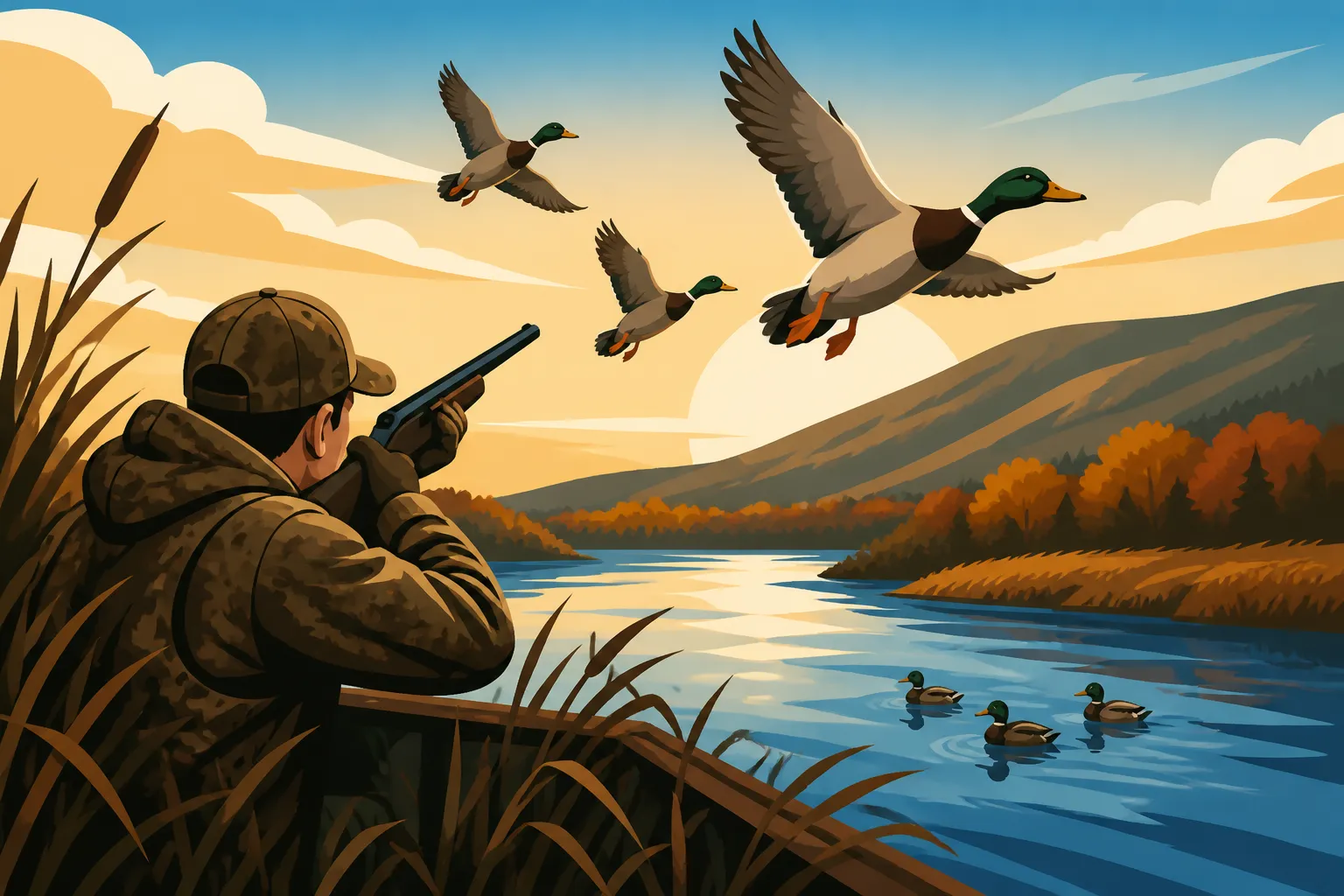
Hunting ducks on Pennsylvania's rivers presents a truly unique challenge, one that can test your mettle against currents, variable water levels, and some incredibly cagey birds. It's not like hunting a static pond or a field spread; the river is a living, breathing entity that constantly shifts and demands your full attention. This guide will walk you through the ins and outs, sharing hard-won wisdom to help you unlock the potential of Pennsylvania's waterways for a successful duck season.
Understanding Pennsylvania's Riverine Duck Habitat
Duck hunting on Pennsylvania's rivers isn't just about finding water; it's about understanding the nuances of moving water and how ducks interact with it. The dynamic nature of rivers creates a different playbook compared to lakes or impoundments.
The Unique Challenges and Rewards of River Hunting
If you've spent any time on rivers like the Susquehanna, Allegheny, or Juniata, you know they are constantly changing. One day, the water might be low and clear, revealing gravel bars and eddies perfect for loafing birds. The next, a heavy rain upstream could swell the river into a muddy torrent, forcing ducks into protected backwaters or smaller tributaries. This variability is both a major challenge and what makes river hunting so incredibly rewarding. You're constantly adapting, reading the water, and trying to predict where the birds will be. It demands a higher level of boat handling skill, an intimate knowledge of specific river stretches, and a keen eye for subtle duck sign.
The biggest frustration often comes from the sheer unpredictability. You might scout a perfect spot only to find the water too high or too low come opening day, or a log jam has completely altered the current flow. But when it all comes together – when you put your decoys in just the right eddy, the current pulls them naturally, and a group of mallards commits, swinging into your spread against the backdrop of a misty river – there's nothing quite like it. It feels like you've outsmarted not just the birds, but the river itself. Hidden rocks, submerged timber, and swift currents also pose significant safety concerns, especially when you're focused on the hunt. You need to be intimately familiar with your chosen stretch of river or take extra precautions, like pre-scouting at lower water levels, to avoid unexpected hazards.
Key Species and Their River Preferences
Pennsylvania's rivers host a fantastic variety of waterfowl, each with its own preferences for habitat and feeding. The most common residents you'll encounter are often the trusty Mallards and the brilliantly colored Wood Ducks. Mallards are generalists, happy to dabble in shallow water, feed on river bottom invertebrates, or loaf on gravel bars. Wood Ducks, on the other hand, are cavity nesters and are heavily associated with wooded riverbanks, especially those with mature trees that provide roosting and nesting sites. They love the calm, sheltered backwaters, sloughs, and flooded timber that often branch off the main river channel.
But the river systems offer more than just dabblers. Black Ducks, with their wary nature, often frequent the same areas as mallards but are generally more sensitive to pressure. As the colder weather sets in and winter migration progresses, you might start seeing diving ducks like Common Mergansers, Hooded Mergansers, and even some Goldeneye on the larger, deeper stretches of rivers or where tributaries meet main stems, bringing in different food sources. They'll dive for fish and aquatic invertebrates in the deeper, swifter currents. Understanding these preferences is crucial. If you're hunting a shallow, timbered slough, focus on wood duck and mallard strategies. If you're on a wide, deep section of the Susquehanna, be prepared for diving ducks to potentially work your spread.
Scouting from the Water and Land
Effective scouting is paramount for river duck hunting, perhaps even more so than for other types of waterfowl hunting. You can't just rely on driving by a field; you need to understand the ebb and flow of the river itself. One of the best ways to scout is from the water, often by floating a section of river a few days before you plan to hunt. Use a quiet method, like a canoe, kayak, or an electric trolling motor, to observe duck activity without disturbing the birds too much. Look for ducks loafing on gravel bars, feeding in shallow eddies, or flying in and out of particular sloughs. Pay attention to their flight paths and where they seem to feel most secure.
You're also looking for natural pinch points, areas where the river narrows, or where islands create multiple channels that ducks might use as travel corridors. Don't forget to look for good cover for your boat or blind. Remember, the river changes, so what was a perfect setup last week might be unusable today. On the land side, modern mapping tools are invaluable. Services like GoHunt allow you to zoom in on aerial imagery, identifying potential backwaters, islands, shallow flats, and likely entry/exit points. You can mark potential blind locations, understand property lines for access, and even get an idea of the surrounding terrain that might funnel birds. This digital scouting, combined with on-the-water observation, gives you the most complete picture.
Essential Gear and Boat Setup for River Duck Hunting
River duck hunting demands specialized gear, particularly when it comes to your mode of transportation. The right boat and accessories aren't just about comfort; they're about safety and effectiveness on moving water.
Boat Types and Safety Considerations
For many Pennsylvania river hunters, a sturdy jon boat is the workhorse. Its flat bottom is excellent for navigating shallow water and easily crossing gravel bars, while its stability is a huge plus when setting decoys or shooting. However, jon boats can be a handful in swift currents and can easily be pushed around by the wind. For smaller, shallower streams or for a more stealthy approach, a canoe or kayak can be incredibly effective, especially for jump shooting or accessing tight backwaters that larger boats can't reach. They are quieter and allow for a more intimate hunt. The downside, of course, is limited carrying capacity for decoys and gear, and less stability.
Regardless of your chosen vessel, safety on the river cannot be overstated. Cold water, strong currents, and hidden obstacles are a dangerous combination. Always wear a life jacket, especially if you're alone or in a small boat. Carry all required safety gear: whistle, throw cushion, bailing device, and navigation lights if hunting at dawn or dusk. Consider a robust anchor system, as anchoring in current requires more holding power than in still water. A small, portable air horn can be invaluable for signaling. If you're using a motor, have a spare shear pin, basic tools, and ensure your fuel lines are in top condition. Don't push your luck in conditions that are too rough for your boat or skill level.
Decoy Spreads and Calling Strategies for Rivers
Decoy spreads for river hunting differ significantly from those used in lakes or fields. The current is your friend and foe. You want your decoys to look natural, swimming and bobbing convincingly in the flow. One common strategy is to set up a "j-hook" or "U" shaped spread with the open end facing upstream, allowing ducks to land in the calm water inside the hook. Use heavy decoy weights and long lines to prevent them from drifting downstream, and consider using a keel-weighted decoy for better stability in current. Often, fewer decoys are more effective on rivers than large, overwhelming spreads. A dozen or two realistic decoys, strategically placed in an eddy or along a bank, can be plenty.
Calling on rivers also tends to be more subtle. While aggressive calling might work on big water, the tighter confines and often wary nature of river ducks mean that soft, reassuring hen calls, clucks, and quacks are usually more productive. Focus on realism. If ducks are working a particular bend, a few quiet quacks might be all it takes to bring them in. Be prepared to adapt your calling volume to the conditions – a windy day might require a bit more volume, but generally, less is more. Remember that birds on rivers are often already committed to a specific flight path or loafing area, so your calls are more about a final reassurance than pulling them from miles away.
Shotgun and Ammunition Choices for River Birds
When it comes to your shotgun, reliability in wet conditions is key. Semi-automatic or pump-action shotguns in 12-gauge are popular choices, offering quick follow-up shots which can be crucial on fast-moving river ducks. Regardless of your action, make sure your firearm is well-maintained and resistant to moisture and rust. For hunting ducks in Pennsylvania, remember that non-toxic shot is a legal requirement. Steel shot is the most common and affordable option, but bismuth or tungsten-based loads offer denser patterns and better terminal performance, especially at longer ranges, though they come at a higher cost.
For shot size, BB or #2 steel shot is a good all-around choice for mallards and larger ducks, offering a balance of pellet count and energy. For smaller ducks like wood ducks, or if you expect closer shots, #3 or #4 steel can be effective. Always pattern your shotgun with your chosen ammunition before the season. Understanding how your gun and choke combination performs at various distances (20, 30, 40 yards) is critical for making clean, ethical kills. Choke choices typically range from Modified to Improved Cylinder, depending on how close you expect the birds to be and the density of cover. For detailed insights on selecting the right ammunition, check out guides on Waterfowl Loads for Pennsylvania Ducks.
Proven Tactics for River Duck Success
Hunting ducks on Pennsylvania's rivers demands a different tactical approach than field or big lake hunting. The dynamic environment means you need a keen understanding of current, concealment, and how ducks use the river itself.
Jump Shooting River Bends and Backwaters
Jump shooting is a quintessential river duck hunting method, filled with anticipation and quick-reaction excitement. It involves quietly floating or walking a section of river, surprising ducks as you round a bend or emerge from cover. The key is stealth. Move slowly and deliberately, keeping a low profile. If you're in a boat, hug the banks where possible, using natural cover like fallen trees, brush, or high banks to conceal your approach. On foot, stick to the edge, peeking around obstacles before exposing yourself.
When you spot birds, the action can be instantaneous. Be ready to mount your gun and shoot quickly. Often, you'll get one or two shots as the ducks flush. Pay close attention to current, as it will affect your boat's drift and your ability to pivot. Look for the "loafing" spots: calm eddies, small coves, or brushy banks where ducks might be resting or feeding. Backwaters and oxbows, even small ones, are prime jump-shooting territory, as they offer sheltered havens away from the main current. The thrill of jump shooting comes from the surprise flush and the demanding, fast-paced shooting. Just be sure you have a clear shot and are aware of what's behind the birds.
Setting Up for a Blind Hunt on River Edges or Islands
While jump shooting is exhilarating, sometimes a more patient approach with a blind hunt is best, especially for wary mallards or when hunting high-pressure areas. Setting up a blind on a river edge or an island requires careful consideration of concealment, wind, and current. Natural cover is your best friend. Look for areas with dense brush, downed trees, or tall reeds that you can enhance with natural materials. A portable ground blind, brushed in effectively, can be incredibly successful. On larger rivers, islands offer excellent opportunities, providing commanding views and natural breaks in the current where ducks might prefer to land.
When selecting your blind location, think about the sun's position and prevailing wind direction. You want the sun at your back and the wind in your face (or quartering) so approaching ducks are landing into the wind, presenting easier shots, and are less likely to spot you. Position your decoys to take advantage of the current, creating a realistic spread that funnels birds into your shooting zone. Often, ducks will follow the contour of the river, so placing your blind along a well-used flyway is crucial. Remember to always blend into your surroundings completely, even if it means extra effort.
Understanding Current and Wind for Decoy Placement and Boat Control
Mastering the interplay of current and wind is perhaps the most critical skill for successful river duck hunting. The current dictates how your decoys move and how ducks will approach your spread. Always set your decoys so they face upstream into the current, mimicking real ducks at rest. Utilize eddies and calm pockets where ducks naturally congregate to escape the main force of the river. If you're using a boat as a blind, anchoring precisely is key – you want to be stable, concealed, and positioned for optimal shots. A sturdy anchor line and a secondary anchor (or even two main anchors) can keep your boat steady in a strong flow.
Wind, of course, plays a significant role in how ducks fly and land. Ducks almost always land into the wind. Therefore, if the wind is blowing from the north, ducks will approach your spread from the south, landing with the wind in their face. However, on a river, the wind can be tricky. It might funnel down the river valley, creating a different "effective" wind direction than what you feel on the bank. Always observe how natural debris, like leaves or foam, moves on the water's surface to get a true sense of the wind and current's combined effect. Use this knowledge to orient your blind and decoy spread so that ducks are committed to landing in your sweet spot, presenting clear, ethical shots. Understanding Wind and Thermals on a Ridge for deer hunting offers a similar principle about natural forces, just applied to different game and terrain.
Navigating Regulations and Public Access on Pennsylvania Rivers
Understanding Pennsylvania's hunting regulations and knowing where you can legally hunt are just as important as your tactics and gear. River hunting often involves unique considerations regarding public access and specific waterfowl rules.
Pennsylvania Waterfowl Seasons and Zones
Pennsylvania's waterfowl seasons are complex, often featuring split seasons and specific regulations that vary depending on whether you're in the Atlantic Population or Resident Population Canada Goose zones, or specific duck zones. While the exact dates change annually, generally, the duck season might have an early split, close for a period, and then reopen for a longer stretch later in the fall and winter. It's absolutely crucial to consult the Pennsylvania Game Commission (PGC) hunting and trapping digest each year for the most current dates, bag limits, and shooting hours. This digest is your bible for compliance.
These regulations are designed to manage waterfowl populations sustainably, considering migration patterns and breeding success. Beyond the general hunting license, you'll also need a Pennsylvania Migratory Game Bird License and a Federal Duck Stamp to hunt waterfowl. Be sure to complete your Pennsylvania HIP Registration for Migratory Birds as well, which helps the U.S. Fish and Wildlife Service gather critical harvest data. Don't assume anything from previous years; always double-check the current year's digest before heading out.
Public Access Points and Navigable Waters
One of the great advantages of river hunting in Pennsylvania is the extensive public access, particularly on major navigable waterways. Generally, if a river is considered navigable, the public has a right to travel and hunt on the water itself, even if the banks are privately owned. However, landing on private land without permission is trespassing. Look for designated public boat launches, state parks with river access, or areas within State Game Lands that border rivers. The PGC and DCNR (Department of Conservation and Natural Resources) often maintain boat access points that are perfect for launching your duck boat.
Mapping tools like those offered by GoHunt are incredibly useful here, allowing you to identify public lands and access points along river systems, and also to clearly see private property boundaries. This helps you avoid accidental trespass. Many sections of the Susquehanna River, Allegheny River, and Delaware River offer excellent public hunting opportunities, provided you launch from public access and remain on the water or on public islands. Always be mindful of other users – anglers, kayakers, and boaters – who also have a right to enjoy the waterways. Respecting their presence helps maintain a positive image for hunters.
Safety Zones and Ethical Considerations
Beyond general hunting safety, river hunting has its own set of rules and ethical considerations. The primary safety concern is the 150-yard safety zone around occupied dwellings or buildings. You cannot discharge a firearm within this zone unless you have explicit permission from the occupant. On a river, it can sometimes be challenging to gauge this distance, so always err on the side of caution. Be acutely aware of your surroundings, not just for ducks, but for houses, camps, and other river users.
Ethical hunting practices are paramount. This includes only taking clear, clean shots within your effective range, and making every effort to retrieve downed birds, even if it means navigating difficult currents or breaking ice. Wounded birds should be pursued immediately and humanely dispatched. Never shoot at ducks that are too far out, or when you can't be certain of what's beyond them. If you're hunting during periods when Pennsylvania Hunter Orange Rules are in effect for other species (like during the rifle deer season, though not required for waterfowl), it's a good idea to wear some orange when traveling to and from your blind, especially if walking through wooded areas. However, for actual waterfowl hunting, camouflage is key.
Overcoming Common River Hunting Challenges
River duck hunting, for all its rewards, comes with its own unique set of frustrations and challenges. Being prepared for these can make or break your hunt.
Dealing with Variable Water Levels and Ice
Perhaps the biggest headache for Pennsylvania river duck hunters is the constantly changing water level. A perfect honey hole one week can be a dry gravel bar or a raging torrent the next. Heavy rains upstream can cause rivers to rise rapidly, bringing with them debris and making navigation hazardous. Conversely, extended dry spells can drop water levels so low that favorite spots become inaccessible, and even main channels become too shallow for propeller motors. This unpredictability means constant monitoring of river gauges and local weather patterns is essential. You need to be flexible and have multiple spots scouted for different water conditions.
Then there's the ice. Early cold snaps can freeze over backwaters and shallower sections of rivers, pushing ducks to open water or completely out of an area. While some hunters successfully break ice to create open pockets for decoys, this can be dangerous and extremely physically demanding. Later in the season, entire sections of rivers can freeze, effectively shutting down hunting. This necessitates knowing when Duck Migration Timing Through Pennsylvania typically occurs and trying to hunt before the deep freeze sets in, or focusing on larger, faster-moving sections that are less likely to freeze completely.
Managing Hunting Pressure and Other River Users
Pennsylvania's public lands and waterways are a fantastic resource, but they also attract a lot of attention. Hunting pressure on popular river sections, especially near boat launches or well-known spots, can be intense. This pressure makes ducks wary and pushes them to less accessible areas. It's not uncommon to arrive at your desired spot before dawn only to find another boat already there. Dealing with other river users – anglers, pleasure boaters, kayakers – is also a common occurrence. They have a right to the water, but their presence can often disrupt a hunt.
The key to managing pressure is often to literally go where others won't. This might mean paddling a canoe further upstream, wading into shallower areas that motorboats can't reach, or simply doing more scouting to find those hidden pockets that most hunters overlook. Learning to read aerial photos to find Finding Ground Others Walk Past is invaluable for deer hunting, and the same principle applies to ducks on rivers. Be courteous and respectful to other hunters and river users. A wave and a smile go a long way. Having a backup plan or two for different sections of the river is also smart strategy.
Retrieve Challenges and Dog Work on Moving Water
Retrieving downed birds on a river presents unique challenges that still water doesn't. The current can quickly carry a bird downstream, making it difficult to locate and retrieve, especially if it's wounded. This is where a good retrieving dog truly shines. A well-trained Labrador or Chesapeake Bay Retriever, confident in the water and accustomed to current, is an invaluable asset. They can navigate currents, dive for cripples, and bring birds back efficiently.
If you don't have a dog, a fast-moving boat or even a long retrieval pole can be necessary. Always try to position yourself so that downed birds drift towards you or a predictable bank. It's often better to make a slightly less-than-ideal shot if it means a higher chance of a clean kill and an easier retrieve. Nothing is more disheartening than losing a bird to the current. Being prepared with the right gear, like sturdy Waders for River Duck Hunting and a reliable boat, can significantly improve your retrieve success and ensure ethical hunting.
Pennsylvania River Duck Species & Hunting Considerations
Here's a quick overview of some common duck species you'll encounter on Pennsylvania rivers, along with specific considerations for hunting them.
| Species | River Preference | Primary Food Source | Hunting Considerations |
|---|---|---|---|
| Mallard | Main channels, slow eddies, backwaters, gravel bars. | Seeds, aquatic vegetation, grains, invertebrates. | Most common. Respond well to basic mallard calls and decoys. Can be wary; good concealment is key. Often jump-shot in small groups or decoyed in open water. |
| Wood Duck | Timbered swamps, sloughs, small creeks, backwaters. | Acorns, seeds, insects. | Highly prized for beauty and table fare. Excellent jump-shooting targets in wooded, calm areas. Respond to wood duck "whistle" calls. Decoys work well in small, tight spreads near timber. Often early morning or late evening fliers. |
| Black Duck | Similar to mallards, but often prefer saltwater/tidal, found on larger rivers. | Aquatic plants, small fish, mollusks, invertebrates. | Very wary. Often associate with mallards but are more sensitive to pressure. Good concealment is paramount. Subtle calling. Often mixed in with mallard spreads. |
| Common Merganser | Larger, deeper river sections, faster currents. | Fish, aquatic invertebrates. | Diving duck. Not generally targeted for eating, but legal to harvest. Often ignore dabbler decoys. Best chance is often jump-shooting or pass-shooting as they fly low over the water. |
| Bufflehead / Goldeneye | Larger, deeper rivers, open water areas. | Aquatic insects, small crustaceans, mollusks. | Diving ducks. Often found in groups. Can be fast flyers. Decoy spreads for divers may be needed, or pass-shooting. Best on the widest, deepest parts of major rivers or near large tributary mouths. Often ignore dabbler spreads. |
Disclaimer
Hunting is an inherently dangerous activity. Always prioritize safety, follow all applicable laws and regulations, and respect private property. The information provided in this guide is for informational purposes only and should not replace official regulations, proper training, or personal experience. Always consult the current Pennsylvania Game Commission hunting and trapping digest for the most up-to-date rules and season dates. Stay safe, be ethical, and enjoy your time afield!