Organising a Pennsylvania Bear Drive
Let's be real, Pennsylvania's black bear population is thriving, but these animals are notoriously elusive, smart, and often hold tight in the nastiest cover you can imagine. Trying to still-hunt a big bruin out of a laurel thicket or a dense hemlock swamp can feel like searching for a needle in a haystack. That's where a well-executed bear drive comes into play, offering a strategic way to ethically move bears towards waiting hunters. This guide will walk you through the essential steps to organize and safely conduct a bear drive in the challenging terrain of Pennsylvania, giving you and your hunting party the best chance at success.
The Unique Challenges of Bear Drives in Pennsylvania
Hunting black bears in Pennsylvania is an incredible experience, but it’s definitely not like deer hunting. Bears operate on a different level, possessing an uncanny ability to vanish into thin air or slip through the smallest cracks in the woods. This is why a strategic, organized drive often becomes a necessary and effective method, especially in areas with dense cover that makes traditional still-hunting almost impossible.
Why Bears Require a Different Approach
Unlike whitetail deer, which might bolt at the first sign of pressure, a mature Pennsylvania black bear often prefers to hunker down. They’ll use their incredible sense of smell and hearing to detect approaching hunters, then burrow into the densest patch of mountain laurel, briars, or blowdowns they can find. If you’ve ever tried to push through one of these areas on your own, you know it’s exhausting, noisy, and often fruitless. Bears are also incredibly tough and can absorb a lot of lead, meaning clean shots and ethical kills are paramount, which good drive planning can help ensure by positioning standers for optimal angles.
Furthermore, bears don't always follow predictable escape routes like deer do. While deer might stick to established trails, a bear will bust straight through seemingly impenetrable cover. They often have several escape plans in mind, making them formidable opponents in a drive situation. Understanding this resilience and evasiveness is the first step in crafting a drive that has a genuine chance of success.
Understanding Bear Sanctuaries and Escape Routes
Before you even think about setting up a drive, you need to understand where bears feel safe. These "sanctuaries" are typically the nastiest, thickest, darkest patches of woods you can find – think steep hillsides choked with rhododendron, dense groves of conifers, or low-lying swamps with heavy undergrowth. When pressured, a bear's first instinct is often to retreat deeper into these areas. However, once that sanctuary becomes too hot, they will look for an escape.
These escape routes might be subtle. They could be game trails leading to another block of thick cover, a creek bottom offering a path of least resistance, or even just a slight dip in the terrain that allows them to slip away undetected. Identifying these natural funnels and escape corridors is crucial for stander placement. If you can anticipate where a bear might try to escape the pressure, you can position your shooters to intercept them safely and effectively. This detailed knowledge of the terrain and how bears interact with it is the bedrock of any successful drive. For a broader understanding of where these impressive animals range, check out our guide on Where Pennsylvania Bears Range.
Meticulous Planning: The Foundation of a Successful Bear Drive
You wouldn't head into the Pennsylvania woods during deer season without a plan, and bear drives are no different – in fact, they demand even more rigorous planning. A haphazard bear drive is not only ineffective but can also be incredibly dangerous. The success and safety of your hunting party hinge entirely on the preparation you put in long before opening day.
Pre-Season Scouting and Identifying Your Drive Zone
This is arguably the most critical step. You need to spend time in the woods, ideally during the off-season, to identify potential bear bedding areas, feeding locations, and, most importantly, their preferred escape routes. Look for fresh tracks, scat, torn-up logs, and claw marks on trees. Bear sign, especially around oak ridges or old apple orchards, can tell you a lot about their activity.
Once you've identified a promising area, use detailed topographic maps or a robust mapping application like GoHunt to define your drive boundaries. Look for natural barriers like roads, clear-cuts, or significant changes in elevation that can help funnel bears. The drive area should be large enough to hold a bear but small enough for your team to effectively cover. Avoid areas that are too vast or have too many uncontrolled escape routes, as bears will simply slip out the sides. Remember, the goal isn't to chase a bear for miles, but to gently push it towards a predetermined position. Our article on Scouting Pennsylvania Public Land Before Season offers valuable tips that apply equally well to bear country.
Assembling Your Team and Defining Roles
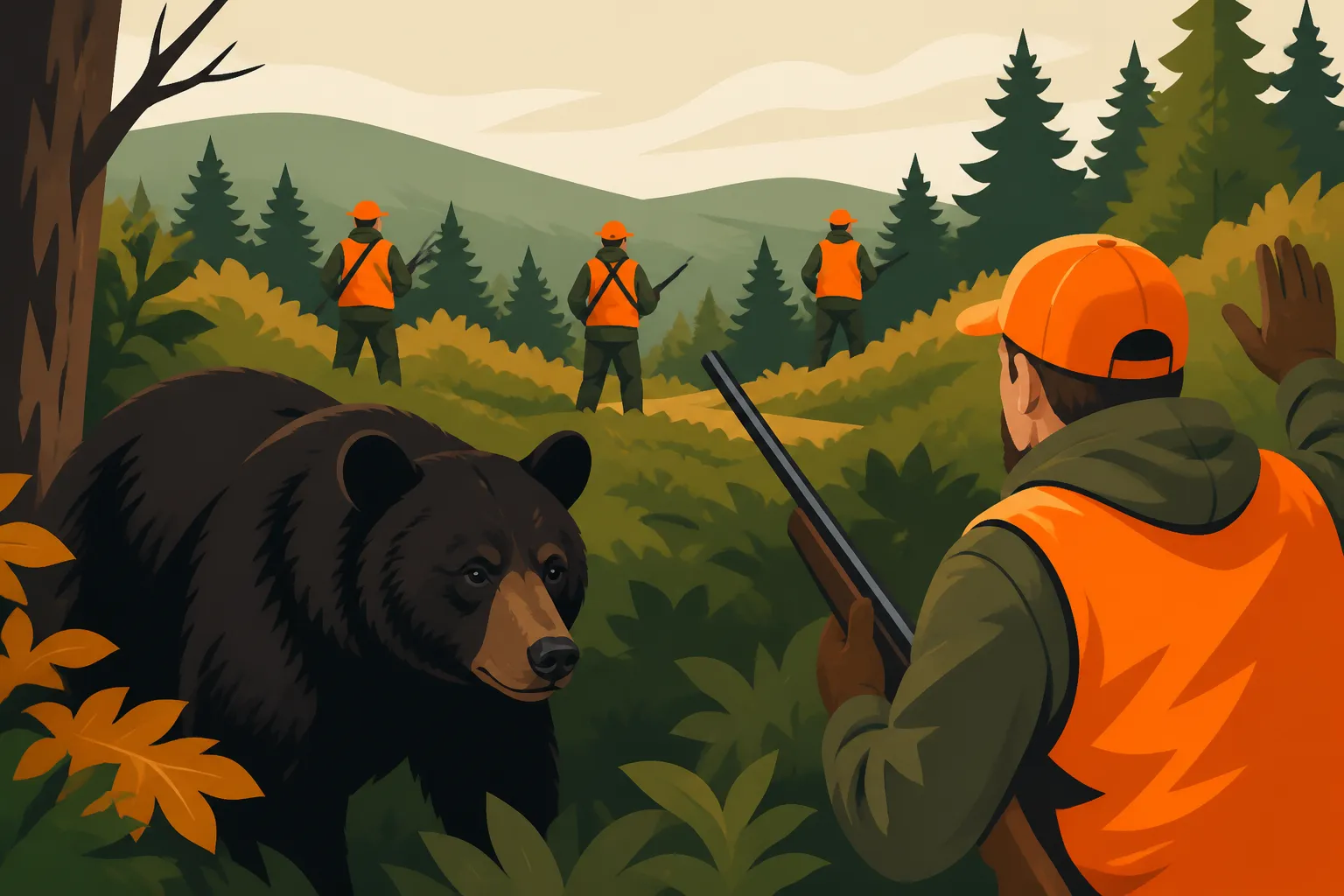
A bear drive is a team sport, and everyone needs to know their position and responsibilities. Typically, you'll have two main groups: the drivers and the standers.
The Drive Captain: This person is the orchestrator of the entire operation. They are responsible for defining the drive boundaries, assigning roles, conducting safety briefings, and managing communication. The captain needs to be experienced, calm under pressure, and capable of making quick decisions.
Drivers: These are the hunters who will walk through the designated cover, making noise to encourage the bear to move. Drivers need to maintain a disciplined line, staying in visual or vocal contact with each other to ensure a thorough push. Their pace should be slow and deliberate, not a mad dash. They also need to be prepared for challenging terrain.
Standers: These hunters are positioned strategically along the anticipated escape routes. Their job is to remain absolutely still and quiet, watching their assigned shooting lanes. Standers must be vigilant, patient, and, above all, safe. They must have a clear understanding of their shooting zones to prevent accidental shots at drivers or other standers. A good practice is to always confirm a safe backdrop before raising your rifle.
It's also beneficial to have a designated "flanker" or "wingman" for certain drives – a hunter positioned slightly outside the main drive line to prevent bears from slipping out the sides prematurely. When assembling your team, consider everyone's experience, physical capabilities, and familiarity with the chosen terrain.
Communication, Safety, and Legal Considerations
Safety cannot be overstated when conducting a bear drive. Before anyone steps into the woods, hold a mandatory safety briefing. Review the drive plan, discuss specific stand locations and shooting lanes, and emphasize what not to shoot at. This is also the time to ensure everyone understands Pennsylvania Hunter Orange Rules – the square inch requirements are there for a reason, and during a drive, every bit of visibility helps.
Effective communication is vital. Two-way radios are almost a necessity, allowing the drive captain to coordinate movements, alert standers, and address any issues. Establish clear codewords or signals to avoid confusion. Discuss what to do if a bear is spotted, if a shot is taken, or if someone gets disoriented.
Finally, review all legal requirements with your team. Ensure everyone has a valid Pennsylvania Black Bear Hunting license and is aware of the specific regulations for the WMU you're hunting in. Know the legal shooting hours, firearm restrictions, and tagging requirements. Ignorance of the law is never an excuse, and a safe, legal hunt is always the most rewarding.
| Role in a Bear Drive | Key Responsibilities | Essential Gear | Safety Emphasis |
|---|---|---|---|
| Drive Captain | Overall coordination, safety briefing, communication, tactical decisions | Radio, map (GoHunt), compass/GPS, whistle | Ensures clear communication, adherence to plan |
| Drivers | Walk the drive line, make noise, maintain spacing, push bears | Radio, hunter orange, sturdy boots, bear spray (optional) | Maintain visual/vocal contact, never shoot without a clear backdrop |
| Standers | Remain still, watch assigned shooting lanes, identify bear | Hunter orange, reliable firearm, binoculars, rangefinder, radio | Identify clear shooting lanes, know what's beyond target, communicate shots |
Executing the Drive: Tactics for Drivers and Standers
With meticulous planning complete, it's time to put your strategy into action. The execution phase is where all your preparation comes to fruition, but it requires discipline, patience, and a steadfast commitment to safety from every member of your team.
Strategic Driver Movement and Noise Control
The drivers' role isn't just to make noise; it's to apply consistent, directional pressure. The line of drivers should move slowly and steadily, covering the entire width of the designated drive area. Think of it as a moving wall. This steady pressure is often more effective than sporadic bursts of noise, as it forces the bear to continually assess its options and eventually move. Noise can vary from simply walking through crunchy leaves and breaking sticks to occasional shouting, clanging pots, or even using a whistle. The key is consistency, not ear-splitting volume.
Drivers must maintain their line. Bunching up creates gaps a bear can exploit, while stretching out too far means some areas aren't being adequately covered. Visual contact, or at least regular vocal communication, is essential to keep the line straight. If a driver spots a bear, they should communicate its direction of travel to the drive captain and other drivers, allowing for adjustments in pressure. When moving through incredibly dense thickets, a slower pace is crucial. Remember, the bear knows you're there; you're just gently persuading it to move.
Optimal Stander Placement and Shot Opportunities
The standers' positions are critical. They should be placed where they have a clear line of sight along likely escape routes, but never in a position where they could accidentally shoot another hunter. This means understanding the topography and anticipating how a bear might move. Often, standers are placed on benches above a creek bottom, along the edge of a field, or at a natural pinch point where cover thins out. Using a mapping app like GoHunt or other digital maps can really help identify these crucial pinch points and elevated positions during scouting.
Standers need to get to their positions quietly and well before the drive starts, settling in and becoming part of the landscape. Silence and stillness are their most potent tools. They should identify their shooting lanes and potential backstops before the drive begins, noting any areas where a shot would be unsafe. When a bear appears, the stander should wait for an ethical, clean shot. Bears are tough, so aiming for the vitals is paramount. For detailed guidance, consult our article on Shot Placement on a Black Bear. Patience is key; a bear might pause, offering a better shot than one taken in a panic. Never shoot blindly into cover.
Post-Shot Procedures and Bear Recovery
Once a shot is taken, immediate communication is vital. The stander should alert the drive captain and the rest of the team. If the bear goes down, approach it cautiously. A "down" bear can still be dangerous. If the bear runs, mark the spot where it was hit and its last known direction of travel.
Resist the urge to immediately jump on the track. Bears, like deer, often don't go far if mortally hit, but giving them time to lie down and stiffen up makes tracking and recovery much safer and easier. Wait at least 30-60 minutes, or longer if the hit wasn't ideal. Then, track deliberately and methodically, looking for blood, broken branches, and tracks. Tracking a bear can be challenging, especially in dense cover, so having experienced trackers is a huge asset. For comprehensive advice on what to do after the shot, read our guide on Handling a Bear After the Shot. Once recovered, ensure the bear is properly tagged and reported according to Pennsylvania Game Commission regulations. Ethical hunting extends beyond the shot to responsible recovery and reporting.
Disclaimer
Hunting bears in Pennsylvania, particularly when participating in a drive, carries inherent risks. This guide provides general information and best practices; however, every hunting situation is unique. Always prioritize safety, adhere to all Pennsylvania Game Commission regulations, and hunt within your personal skill and experience level. The author and publisher are not responsible for any accidents or incidents that may occur as a result of applying the information in this article. Stay safe and hunt ethically.