Where Pennsylvania Bears Range
It's no secret that black bears are an iconic part of Pennsylvania's wild landscape, but for many hunters and outdoor enthusiasts, knowing exactly where these incredible animals roam can feel like trying to solve a puzzle. You might hear stories of bears in the deep woods of the northern tier, but then a buddy spots one right outside a suburban development. This guide aims to clear up that confusion, providing a comprehensive look at where Pennsylvania's black bears range, how their distribution is evolving, and what that means for both those seeking to hunt them and those simply hoping to catch a glimpse.
Understanding the Pennsylvania Black Bear's Domain
Pennsylvania's black bear population is a true conservation success story, growing significantly over the past several decades. What was once primarily a creature of the most remote, rugged wilderness has steadily expanded its footprint, adapting to various habitats across the Commonwealth. This expansion means that the "bear country" we might have once envisioned has become much broader and more diverse.
Historical Footprint and Modern Comeback
Back in the early 20th century, black bears in Pennsylvania were largely restricted to the most isolated, heavily forested regions, mainly in the northern parts of the state. Think of places like the vast, unbroken forests of Potter, McKean, and Tioga counties – true "big woods" country. These were their last refuges as unchecked logging, unregulated hunting, and habitat destruction pushed them to the brink. It was a tough time for Pennsylvania's wildlife, and bears were no exception.
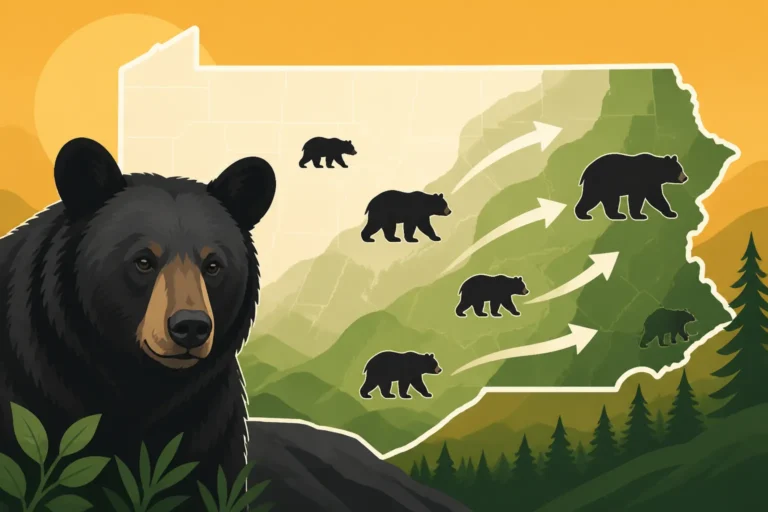
However, thanks to dedicated conservation efforts by the Pennsylvania Game Commission (PGC), including protective regulations, habitat restoration, and sound management practices, the bear population has not only rebounded but thrived. Over the last 50 years, their numbers have steadily climbed, and with that growth came a natural expansion of their range. This isn't just a slight increase; it's a dramatic comeback that has seen bears establishing a presence in areas where they haven't been seen in over a century. Today, you can find evidence of bears in almost every county across the state, even those with significant human populations, a testament to their adaptability and the success of wildlife management. It’s a far cry from their limited historical footprint, turning once-rare sightings into a more common occurrence in many regions.
Key Elements Defining Bear Habitat
So, what makes a good home for a black bear in Pennsylvania? It's more than just "woods." Bears are incredibly opportunistic and require a few key things to survive and thrive. Primarily, they need extensive tracts of forest cover that provide both seclusion for denning and escape cover from perceived threats. These forested areas are their safe zones.
Beyond just trees, food sources are paramount. Bears are omnivores, meaning they eat both plants and animals, and their diet shifts dramatically with the seasons. In spring, they're looking for tender new shoots, grubs, and the occasional fawn or carrion. Summer brings berries like blueberries and blackberries, as well as cherries and other soft mast. But autumn is the most critical time, when bears are in hyperphagia – a state of excessive eating to pack on fat reserves for hibernation. During this period, hard mast like acorns, beechnuts, and hickory nuts are absolute gold. Areas with a diverse mix of oak species (red, white, black) are incredibly attractive to bears. Mountain laurel and rhododendron thickets often provide dense cover, especially in mountainous regions, making them ideal bedding and escape areas. Water sources are also essential, found in perennial streams, seeps, and wetland areas that crisscross much of Pennsylvania's landscape. A healthy bear habitat, therefore, isn't just any patch of woods; it's a mosaic of these elements, offering food, cover, and water year-round.
Dissecting Pennsylvania's Bear Hotspots
While bears can be found throughout most of Pennsylvania, certain regions consistently support higher populations and offer more frequent sightings or hunting opportunities. These hotspots are typically characterized by large, unbroken forest tracts and abundant natural food sources.
The Northern Tier and Big Woods Strongholds
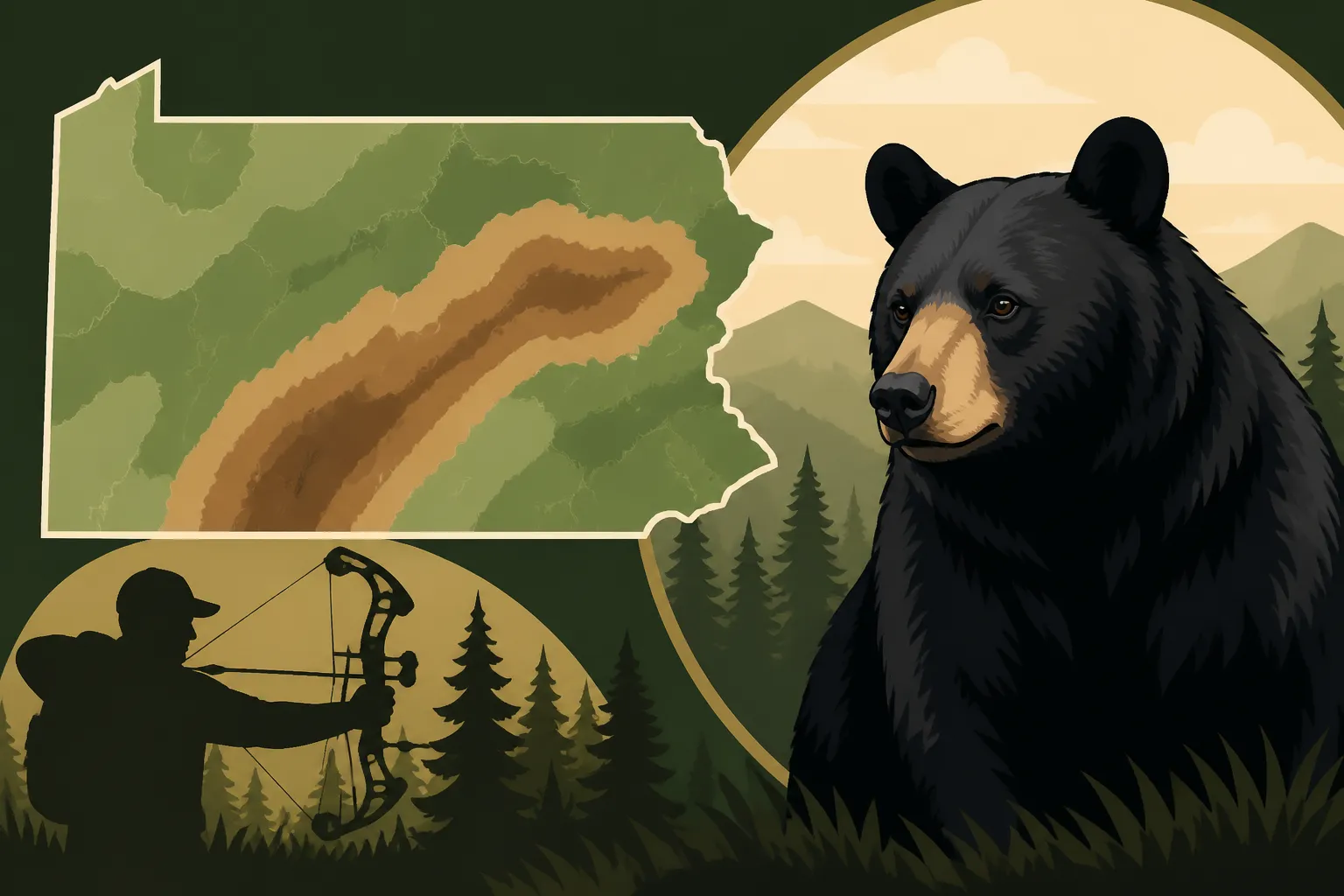
When most Pennsylvanians think of bear country, their minds immediately go to the Northern Tier. This vast expanse of unbroken timber, sometimes referred to as Pennsylvania's "Big Woods," remains the traditional heartland of the state's black bear population. Counties like Potter, McKean, Tioga, Lycoming, Clinton, and Centre are synonymous with bears, boasting some of the highest densities in the state. Here, you'll find expansive public lands, including vast State Game Lands and State Forests, which offer the seclusion and habitat diversity bears need.
These regions are characterized by mature hardwood forests, interspersed with younger growth from past logging operations, providing a mix of denning sites, bedding cover, and diverse food sources. Oak and cherry stands are common, offering critical mast crops in the fall. The rugged terrain, with its deep hollows, steep ridges, and thick mountain laurel patches, further contributes to an ideal bear environment. This area is also popular for Hunting Pennsylvania's Big Woods for Deer, and where you find healthy deer populations, you often find healthy bear populations, as bears will opportunistically prey on fawns or scavenge. Hunters venturing into these areas for Pennsylvania Black Bear Hunting often find success by focusing on traditional bear travel corridors, dense cover, and areas with abundant fall mast.
Eastern and Central Mountain Ranges
Moving eastward and southward from the Northern Tier, the folded mountains of central and eastern Pennsylvania also hold significant bear populations. The Appalachian Ridge and Valley Province, with its distinct parallel ridges and valleys, provides excellent bear habitat. Think of areas like Tuscarora, Bald Eagle, Rothrock, and Michaux State Forests. These public lands, combined with extensive private timber holdings, create crucial corridors for bear movement and provide ample resources.
Counties such as Mifflin, Huntingdon, Perry, Schuylkill, Carbon, Monroe, and Pike are all known for their robust bear numbers. The habitat here is similar to the Northern Tier in its forested nature, but often with more fragmented patches due to historical agriculture and more concentrated human development in the valleys. However, the steep, remote ridges still offer the sanctuary bears require. In these areas, bears often use these forested ridges to travel between different food sources or to avoid human activity. Pockets of dense cover, like clearcuts or old growth with thick understories, are particularly attractive. For those utilizing tools like GoHunt or other mapping resources, identifying these linear mountain ranges and their adjacent forested blocks is key to understanding bear travel patterns in these regions.
Southwestern Pennsylvania's Expanding Presence
One of the most notable shifts in Pennsylvania's bear range has been their expansion into the southwestern counties. Historically, bears were rare in places like Fayette, Somerset, and Westmoreland, often considered more agricultural or industrial landscapes. However, over the past few decades, bear numbers have surged, and their range has pushed significantly westward and southward.
This expansion is largely attributed to forest regrowth on abandoned farmlands and former industrial sites, creating new habitat, coupled with a healthy, growing statewide population that naturally seeks out new territories. While the habitat might not be as expansive or unbroken as the Northern Tier, bears in these southwestern counties have adapted to fragmented landscapes, often utilizing small woodlots, stream corridors, and even suburban green spaces as they move through the region. They are becoming more common residents in areas like the Laurel Highlands, showing just how adaptable these animals are. This presents both new opportunities for hunters and new challenges for human-bear coexistence, as sightings closer to towns become more frequent. Understanding these new frontiers is crucial, especially when considering areas often associated with Hunting Pennsylvania Farm Country Edges.
Factors Influencing Bear Distribution and Movement
Understanding where bears are is one thing, but knowing why they're there and how their presence changes can be even more valuable. Several key factors dictate their distribution and daily movements.
Food Availability and Seasonal Shifts
Food is arguably the biggest driver of bear distribution and movement. Bears are constantly on the move, especially outside of denning season, searching for their next meal. Their movements are highly synchronized with the availability of seasonal food sources.
- Spring/Early Summer: As bears emerge from their dens, they're looking for easily accessible protein and greens. This includes skunk cabbage, tender grasses, new plant shoots, and carrion left over from winter. They might also target deer fawns, making areas where deer give birth attractive.
- Late Summer/Early Fall: This is the berry season! Blackberries, raspberries, blueberries, and cherries draw bears to clearcuts, old fields, and forest edges. Areas with substantial berry patches can hold multiple bears for weeks.
- Late Fall (Pre-Hibernation): The absolute critical period is hard mast season – acorns, beechnuts, and hickory nuts. Bears will travel significant distances to find abundant mast crops. If one ridge or valley has a poor acorn crop, bears will leave it in search of better foraging grounds elsewhere. This is why scouting for mast production is so vital for bear hunters. Conversely, a bumper crop can concentrate bears, making them seemingly "disappear" from other areas. Understanding Hunting After the Acorn Crop Fails can explain why bears move when preferred food sources aren't available. Mapping tools can sometimes help identify oak concentrations, offering clues to potential bear feeding areas.
Human Development and Fragmentation
While black bears are remarkably adaptable, human development still plays a significant role in their distribution. Large, unbroken tracts of forest are always preferred. However, as the human population expands and development encroaches on traditional bear habitat, bears are forced to adapt or move.
Roads, residential areas, and industrial zones create fragmentation, breaking up what would otherwise be contiguous habitat. Bears learn to navigate these fragmented landscapes, often using natural corridors like riparian zones (areas along streams and rivers), powerline cuts, or unpaved logging roads to move between larger blocks of forest. Unfortunately, this increased proximity to humans leads to more human-bear conflicts, such as bears raiding bird feeders, trash cans, or even agricultural crops. The PGC works hard to manage these interactions, but it's a constant challenge. Knowing about Bear Encounters Around Pennsylvania Homes is important for residents in areas with increasing bear presence. The presence of development can push bears into smaller, denser pockets of woods, which can sometimes be overlooked by hunters focusing only on vast wilderness.
Game Commission Management Strategies
The Pennsylvania Game Commission (PGC) plays a crucial role in managing the state's black bear population, and their strategies directly influence bear distribution and population health. The PGC uses various tools, including hunting seasons, trapping, and public education, to maintain a healthy and sustainable bear population while minimizing human-bear conflicts.
Hunting seasons are strategically set, including an archery season, a general firearms season, and extended seasons in specific areas, to control population growth and distribution. The PGC analyzes harvest data, population estimates, and nuisance complaints to make informed decisions about bag limits and season lengths. They also conduct extensive research, including collaring and tracking bears, to better understand their movements, denning habits, and reproductive rates. These management efforts aim to allow for sustainable hunting opportunities while preventing overpopulation in certain areas, which could lead to increased conflicts. The distribution of Pennsylvania Bear Licence and Seasons reflects these management zones and the PGC's understanding of bear densities across the state. Using resources from the PGC is key for any hunter planning their bear season.
Navigating Bear Encounters and Hunting Opportunities
Whether you're heading afield to hunt or just to enjoy the wilderness, being in bear country means understanding how to locate them and act safely.
Recognizing Bear Sign Across Different Habitats
Identifying bear sign is paramount to knowing if you're in active bear country, whether you're scouting for a hunt or just hiking. Bears leave a variety of clues, and these can differ based on the habitat.
- Scat: Bear droppings are highly variable, reflecting their omnivorous diet. In spring, it might be green and clumpy from fresh vegetation. In summer, it's often full of berry seeds and purple-stained. In fall, it's frequently packed with acorn caps, beech nut husks, or corn kernels. The location and freshness of scat are key indicators of recent bear activity.
- Tracks: Bears have five toes on both front and hind feet. Front paws are wider, while hind paws are longer and narrower, sometimes showing a heel pad that resembles a human footprint. Look for these in muddy areas near water, soft soil, or snow.
- Scratch Marks: Bears climb trees, especially mature ones, to feed on mast, escape danger, or simply rest. Look for claw marks on tree trunks, particularly on oak or beech trees. Sometimes, you'll see large sections of bark torn off where a bear has climbed.
- Rub Trees: Bears often rub against trees, usually evergreens like pines or hemlocks, leaving hair and sometimes scent. These rubs are often at bear-shoulder height and can be found along travel corridors.
- Feeding Sign: Look for overturned rocks or logs where bears have rooted for grubs and insects. In cornfields, look for broken stalks and chewed ears. In apple orchards, observe fallen and partially eaten apples. Specific to Pennsylvania's dense undergrowth, you might even find Finding Bear Sign in Mountain Laurel, as bears will often break branches to get to berries or simply to create dense bedding areas.
Knowing what to look for and adapting your scouting strategy to the specific habitat you're in will greatly increase your chances of finding areas with active bears.
Locating Bears Within Specific WMUs
Pennsylvania's Wildlife Management Units (WMUs) are crucial for understanding bear distribution and hunting regulations. While bears are present in almost all WMUs, some consistently have higher populations and harvest numbers. Knowing the general characteristics of a WMU can help you refine your search. For instance, WMUs like 2F, 2G, 3A, and 3B in the Northern Tier typically boast excellent bear populations due to their extensive forested habitats. In contrast, WMUs in the southeastern part of the state, while still having bears, may have lower densities and more fragmented habitat.
When planning a hunt, it's vital to consult the Pennsylvania Game Commission's annual harvest reports and population estimates, which often provide WMU-specific data on bear numbers and success rates. Online resources and mapping applications, like those available through GoHunt, can overlay WMU boundaries with topographical maps, satellite imagery, and public/private land ownership. This allows hunters to identify large blocks of public land – such as Pennsylvania State Game Lands or sections of the Allegheny National Forest Hunting – within high-density WMUs, and then further pinpoint remote areas, dense cover, and potential food sources. It's about combining broad regional knowledge with hyper-local scouting and mapping intelligence to narrow down your focus to where the bears are most likely to be.
Safety and Ethical Considerations in Bear Country
Encountering a bear, whether as a hunter or simply an outdoor enthusiast, requires respect and preparedness. While black bears are generally shy and avoid humans, understanding proper safety protocols is essential.
For hunters, the primary safety concern is ethical shot placement and recovery. Bears are tough animals, and a wounded bear can be dangerous. Always strive for a clean, humane shot. If you wound a bear, prioritize a safe, thorough tracking effort. It's often advisable to give a wounded bear time (a few hours, or overnight if weather permits) before tracking, allowing it to expire or stiffen. Always approach a wounded bear with extreme caution, and if possible, with a partner. For both hunters and non-hunters, carrying bear spray is a wise precaution, especially in dense cover where an encounter might be sudden. Make noise while hiking to avoid surprising a bear. If you do encounter a bear, never run. Make yourself look big, make noise, and slowly back away. If a bear approaches you, especially defensively (e.g., bluff charges, huffing), stand your ground, continue to make noise, and be prepared to use bear spray. For hunters, once a bear is down, proper field dressing and swift cooling of the meat are critical, especially in warmer weather, to preserve the meat quality and prevent spoilage. Remember to comply with all Pennsylvania Bear Licence and Seasons regulations, including tagging and reporting requirements.
Regional Trends and Future Outlook for Pennsylvania Bears
The story of the black bear in Pennsylvania is one of dynamic change, with population trends and range shifts continuing to evolve. Understanding these broader patterns can offer valuable insights.
Population Growth and Range Expansion Southward
The most significant trend in Pennsylvania's bear population has been its remarkable growth and subsequent expansion from its traditional northern strongholds into central, eastern, and especially southwestern portions of the state. The total estimated bear population in Pennsylvania has shown consistent increases over the last several decades, fluctuating slightly year to year based on cub production and harvest rates, but maintaining a robust overall trend. This growth has allowed bears to colonize new areas, pushing their range into regions that were once largely bear-free.
This southward expansion is driven by a combination of factors: increasing bear numbers seeking new territories, the regrowth of forests in historically cleared areas, and the bears' incredible adaptability to diverse landscapes, even those more fragmented by human development. Farmers and rural residents in counties like York, Lancaster, and Chester, which were historically devoid of bears, now report sightings with increasing regularity. This range expansion is a testament to the PGC's successful management strategies and the bears' resilience. It means that what was once confined to the "Big Woods" is now a statewide phenomenon, affecting more communities and offering new hunting opportunities in unexpected places. The data on How Many Pennsylvania Black Bears There Are and Pennsylvania Bear Harvest Trends clearly illustrates this sustained growth.
Challenges and Coexistence in Developed Areas
While the expanding bear range is largely a conservation success, it also presents increasing challenges, particularly in areas where bear habitat directly overlaps with human communities. As bears move into more developed regions, conflicts inevitably rise. Bears searching for easy food sources often find them in suburban and rural residential areas – bird feeders, unsecured trash cans, pet food, and outdoor grills become irresistible attractants.
These conflicts can lead to property damage, public safety concerns, and the need for PGC intervention, sometimes involving trapping and relocating "nuisance" bears. The goal of the PGC is to promote coexistence through public education on how to "bear-proof" properties and reduce attractants. This includes advising residents to secure trash, take down bird feeders during bear activity, and never intentionally feed bears. For hunters, this expansion means potentially finding bears in more accessible, less remote areas, though hunting opportunities in developed WMUs often come with stricter regulations regarding safety zones and preferred methods. The future of Pennsylvania's black bear population hinges on continued effective management by the PGC, coupled with greater public understanding and proactive measures to minimize human-bear conflicts as these magnificent animals continue to reclaim and expand their ancient territories across the Commonwealth.
| Region of Pennsylvania | General Bear Population Density | Typical Habitat Characteristics | Key Counties/WMUs |
|---|---|---|---|
| Northern Tier | High | Expansive, unbroken mature/mixed hardwoods, rugged terrain, dense understory | Potter, McKean, Tioga, Lycoming (WMUs 2F, 2G, 3A, 3B) |
| Central Mountains | Medium to High | Ridge and Valley forests, mixed hardwoods, some fragmentation | Mifflin, Huntingdon, Centre, Schuylkill (WMUs 4D, 4E, 2C, 2D) |
| Eastern Mountains | Medium to High | Appalachian forests, dense thickets, proximity to Poconos | Carbon, Monroe, Pike, Wayne (WMUs 3C, 3D) |
| Southwestern PA | Medium (Expanding) | Fragmented forests, reclaimed land, agricultural interfaces, rugged uplands | Fayette, Somerset, Westmoreland, Indiana (WMUs 2A, 2B, 2C, 4A, 4B) |
| Southeastern PA | Low (Increasing) | Highly fragmented woodlots, suburban green spaces, riparian corridors | Chester, Berks, York (WMUs 5C, 5D) |
| Northwestern PA | Medium | Mixed forests, agricultural edges, dense cover, includes Allegheny NF | Warren, Forest, Venango, Clarion (WMUs 1A, 1B, 2F) |
Disclaimer
The information provided in this guide is for general informational purposes only and does not constitute legal advice. Hunting regulations, seasons, and licensing requirements in Pennsylvania are subject to change. Always consult the most current Pennsylvania Game Commission Digest or official PGC website before engaging in any hunting activities.