White-Tailed Deer Across Pennsylvania
The whitetail deer is more than just an animal in Pennsylvania; it's a deep-rooted part of our heritage, a challenge for hunters, and a vital component of our natural landscape. Yet, with ever-changing habitats, evolving regulations, and the persistent threat of diseases, understanding the nuances of Pennsylvania's deer population can feel overwhelming. This guide aims to demystify the world of white-tailed deer across the Keystone State, offering a comprehensive look at their history, management, behavior, and the strategies that help us pursue them ethically and successfully.
The Enduring Legacy of Pennsylvania Whitetails
For generations, the white-tailed deer has held a special place in the hearts of Pennsylvanians, influencing everything from our ecosystems to our hunting camps. It’s an animal that has weathered dramatic changes, from vast, untouched forests to a landscape shaped by human hands, and its story is intrinsically linked to our own. Understanding this history and connection helps us appreciate the deer beyond just a game animal.
A History of Abundance and Scarcity
Long before European settlement, Pennsylvania's forests teemed with whitetails, part of a thriving ecosystem. Early accounts describe herds moving freely through the extensive woodlands, providing sustenance for Native American tribes. However, with the arrival of settlers and the subsequent push westward, market hunting, coupled with extensive clear-cutting for timber and agriculture, took a devastating toll. By the late 19th and early 20th centuries, deer populations had plummeted to alarming lows, with many areas of the state virtually devoid of whitetails. It’s hard to imagine now, but our forests were nearly empty of this iconic animal.
The pendulum swung back dramatically in the early 20th century, thanks to concerted conservation efforts. Reintroduction programs, strict hunting regulations, and the natural regeneration of forests after the logging boom allowed deer numbers to rebound. This recovery was so successful, in fact, that by the mid-20th century, Pennsylvania faced a new challenge: overpopulation. The deer herd grew to such an extent that it began to heavily impact forest regeneration, agricultural crops, and even increase deer-vehicle collisions. This historical ebb and flow profoundly shaped our current management philosophies, making it a constant balancing act between hunter opportunity and ecological health.
Why Pennsylvania Deer Are So Iconic
Beyond their biological significance, whitetails are a cultural cornerstone in Pennsylvania. The annual deer seasons are etched into the calendar for countless families, often serving as a yearly pilgrimage to deer camp, a tradition passed down through generations. These camps, whether rustic cabins or renovated farmhouses, become hubs of camaraderie, storytelling, and shared experiences. The pursuit of a Pennsylvania whitetail isn't just about the harvest; it's about the connection to the land, the thrill of the chase, and the memories forged with friends and family.
The sheer diversity of the Pennsylvania landscape also contributes to the whitetail's iconic status. From the dense, rugged mountains of the north-central Big Woods to the rolling agricultural fields of the south, deer thrive in various environments, each presenting unique challenges and rewards for hunters. This variety means that whether you're still-hunting miles from a road in Sproul State Forest or patiently waiting on a field edge in Lancaster County, the Pennsylvania whitetail is a symbol of wildness and a testament to our state's rich outdoor heritage. The pursuit of deer here defines a significant part of the hunting community.
Understanding Pennsylvania's Deer Population
Managing a wildlife population as dynamic and widespread as Pennsylvania's white-tailed deer is a monumental task. The Pennsylvania Game Commission employs a robust system of surveys, data analysis, and regulatory frameworks to ensure a healthy, sustainable herd while balancing ecological concerns and hunter expectations. It's a complex science, and understanding its components helps us all be better stewards.
Statewide Estimates and Regional Variations
The Pennsylvania Game Commission works tirelessly to estimate the statewide deer population, though providing an exact number is, understandably, incredibly difficult. Instead, they focus on trends and population densities within specific regions, often expressed as deer per square mile. These estimates are derived from a combination of harvest data, deer-vehicle collision statistics, fawn recruitment rates, and habitat assessments. What's clear is that deer numbers vary dramatically across the state, heavily influenced by habitat quality, hunting pressure, and the availability of food sources.
For instance, you'll find higher deer densities in the fertile agricultural regions of southeastern and southwestern Pennsylvania compared to the expansive, less nutrient-rich forests of the north-central "Big Woods." This difference is stark and directly impacts hunting opportunities and strategies. A hunter preparing to scout in WMU 2D, deep in the mountains, will encounter a very different deer population, both in terms of numbers and behavior, than someone looking for deer in WMU 5C, a more developed, farm-rich area. The Game Commission regularly publishes its Pennsylvania Deer Population Estimate and offers insights into Deer Density by Pennsylvania WMU, providing valuable context for hunters planning their seasons.
How Deer Management Units (WMUs) Work
To effectively manage such a varied deer population, Pennsylvania is divided into 22 distinct Wildlife Management Units, or WMUs. These units are based on ecological features, land use patterns, and human population density, allowing for highly localized management strategies. Each WMU has specific regulations regarding antlerless allocations, antler restrictions, and season lengths, tailored to meet the biological and social objectives for that particular area.
The WMU system allows the Game Commission to address localized issues, such as over-browsing in specific forest tracts or high deer-vehicle collision rates near urban centers, without imposing blanket regulations across the entire state. For hunters, this means familiarizing yourself with the specific rules for the WMU you plan to hunt in is absolutely critical. A regulation that applies in WMU 1A might be completely different in WMU 3D. Tools like the official PGC website and apps like GoHunt can be invaluable resources for looking up detailed information and understanding the nuances of each WMU's regulations.
The Role of Antlerless Licenses
Antlerless deer licenses, often referred to as "doe tags," are the primary tool used by the Pennsylvania Game Commission to manage the overall size of the deer herd. Unlike antlered deer tags, which come with a general hunting license, antlerless licenses are specific to a particular WMU and are sold on a staggered schedule to ensure equitable distribution and to meet harvest objectives for each unit. The number of antlerless licenses allocated to each WMU is determined annually based on population estimates, habitat conditions, and prior harvest data.
The goal of antlerless harvests is to maintain a healthy deer population that is in balance with the habitat and human tolerances. When populations are too high, more antlerless tags are issued to reduce numbers and mitigate issues like forest damage or agricultural crop destruction. Conversely, if a population is stable or needs to increase, fewer tags may be allocated. Understanding How Pennsylvania Antlerless Licence Sales Work and the specific Pennsylvania Antlerless Allocation by WMU is crucial for any hunter hoping to secure a tag for their desired hunting area, especially in WMUs that tend to sell out quickly. These tags are fundamental to the state's deer management strategy.
Habitat & Behavior Across the Keystone State
Pennsylvania's diverse geography—from sprawling mountain ranges to fertile river valleys and expansive agricultural lands—creates a mosaic of habitats, each influencing deer behavior in distinct ways. Understanding these regional differences and how deer adapt to their surroundings is key to successful hunting, no matter where you plan to pursue whitetails.
Big Woods vs. Farm Country Deer
The contrast between the "Big Woods" and "Farm Country" deer is one of the most defining characteristics of Pennsylvania hunting. In the vast, largely unbroken forests of northern and central Pennsylvania (areas often associated with Hunting Pennsylvania's Big Woods for Deer), deer densities tend to be lower due to less nutrient-rich soils and fewer diverse food sources. These deer often range over larger areas, are typically more wary, and can be harder to locate. Their diets rely heavily on acorns, beech nuts, browse, and fungi, depending on the season, making them true wilderness survivors. Hunters here must be prepared for long walks, remote access, and meticulous scouting to find success.
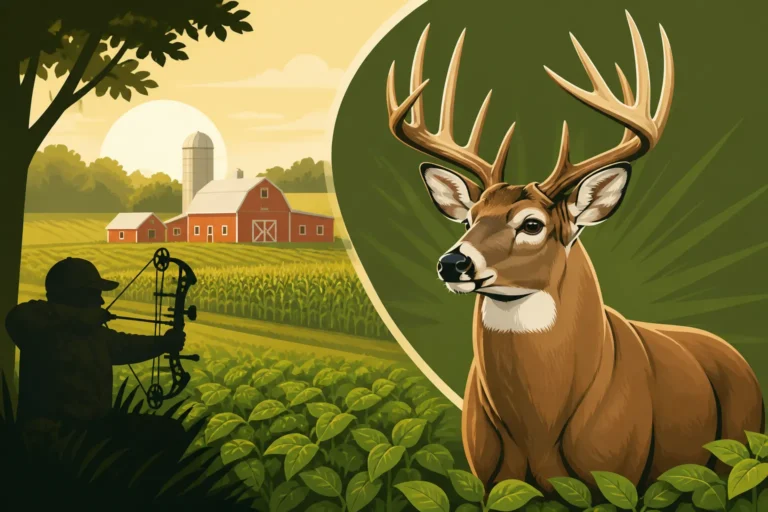
Conversely, in the "Farm Country" of southern and southeastern Pennsylvania, deer thrive on an abundance of high-quality forage. Corn, soybeans, alfalfa, and winter wheat provide a rich, consistent food source, leading to higher deer densities and often larger-bodied animals with more impressive antlers. However, hunting in these areas presents its own challenges, primarily due to increased human population density, smaller hunting parcels, and greater pressure from other hunters. Hunters often focus on field edges, woodlots, and thick cover adjacent to agricultural fields, adapting their tactics for suburban deer hunting in Southeast Pennsylvania or Hunting Pennsylvania Farm Country Edges. The strategies that work in one type of habitat often won't translate directly to the other.
Seasonal Movements and Food Sources
Deer movements and patterns are heavily dictated by the availability of food throughout the year. In spring and early summer, deer are drawn to succulent new growth, tender grasses, and agricultural crops like clover and alfalfa. As summer progresses, they shift to ripening berries, lush browse, and developing acorns. When fall arrives, the acorn crop becomes paramount, especially in mature oak forests. Deer will often concentrate heavily in areas with abundant acorns, creating well-used trails and feeding patterns. Knowing Hunting After the Acorn Crop Fails or What Changes When Beech Nuts Drop can be critical intelligence for a hunter.
Once the hard mast (acorns, beech nuts) is depleted or buried under snow, deer turn to browse – twigs, buds, and bark – as well as any leftover agricultural crops or natural thermal cover. During the late season, finding Late-Season Food Sources for Whitetails is paramount. Understanding these seasonal shifts in diet and habitat use allows hunters to predict deer movements and concentrate their efforts in areas where deer are likely to be feeding or seeking shelter. This requires year-round observation, scouting, and often, reading the subtle signs deer leave behind.
The Rut in Pennsylvania
The rut, or breeding season, is arguably the most anticipated time of year for deer hunters in Pennsylvania, dramatically altering deer behavior and offering unique opportunities. While the exact timing can vary slightly by region and individual deer, the peak of the rut in Pennsylvania typically occurs in early to mid-November. During this frenetic period, bucks, driven by hormones, become much less cautious, actively seeking out does and often traveling widely in search of receptive mates. This heightened activity makes them more visible and vulnerable during daylight hours.
Leading up to the peak rut, the "pre-rut" in late October sees bucks beginning to lay down scrapes and rubs, asserting dominance and scent-marking their territories. This is a great time to be in the woods, as bucks are on the move but haven't yet become completely exhausted by the chase. Hunters often focus on travel corridors, scrape lines along a logging road, and traditional deer crossings. As the rut intensifies, bucks will chase does relentlessly, often paying little attention to their surroundings. Understanding Hunting the Peak Rut Week in Pennsylvania and Rattling and Grunting in Pennsylvania can be incredibly effective, but it requires patience and adaptability as deer movements become less predictable and more driven by instinct.
Antler Restrictions and Their Impact
Pennsylvania's antler restrictions, implemented to allow more bucks to reach older age classes, have been one of the most significant changes to deer management in recent decades. While initially met with mixed reactions, these rules have profoundly reshaped the buck population and hunter expectations across the state.
The "Three-Up" Rule Explained
In most of Pennsylvania, a legal antlered buck is defined as having at least three points on one antler. This is often referred to as the "three-up" rule. However, it's not quite that simple. In certain Wildlife Management Units (WMUs), primarily those with richer habitats and higher deer densities, the antler restriction is even more stringent: a legal buck must have four points on one antler. These "four-up" WMUs are often in the western and southeastern parts of the state where antler growth is naturally more robust due to superior nutrition.
The rationale behind these restrictions is to protect young, yearling bucks (those typically 1.5 years old) from harvest, allowing them to survive another year or two, grow larger bodies, and develop more impressive antlers. By passing on yearling bucks, the goal is to shift the age structure of the buck population towards older, more mature animals, which in turn can contribute to better herd health and more challenging hunting experiences. It's crucial for hunters to thoroughly understand What Counts as a Legal Pennsylvania Buck and Which WMUs Use the Three Up Rule before heading afield, as mistaking a two-point for a three-point can result in significant penalties.
Changes in Buck Age Structure
The implementation of antler restrictions has indeed led to a noticeable shift in Pennsylvania's buck age structure. Before the rules, yearling bucks (1.5 years old) comprised a significant majority of the annual antlered harvest. Today, a higher percentage of the antlered harvest consists of 2.5-year-old and even older bucks. This means hunters are now more likely to encounter mature animals, which often exhibit more cautious behavior and offer a greater challenge.
This shift has been a significant point of discussion among hunters. Many appreciate the opportunity to pursue older, larger-bodied bucks, while others miss the days of a less restrictive hunt. Regardless of personal opinion, the data shows that antler restrictions have successfully achieved their primary goal of increasing the number of older bucks in the herd. Understanding What Antler Restrictions Did to Buck Ages and How Many Pennsylvania Bucks Reach Age Three highlights the effectiveness of this management strategy. The change has certainly made a tangible impact on the deer population dynamics.
Judging Antlers in the Field
With antler restrictions in place, accurately judging a buck's antlers in the field is a critical skill for Pennsylvania hunters. It's not always easy, especially in low light, thick cover, or when a buck is on the move. The key is to take your time, if possible, and count points carefully. Remember, the rule applies to "points on one antler," meaning you only need three or four points (depending on your WMU) on one side, not total points or symmetrical points. A "point" must be at least one inch long from its base to its tip.
Many seasoned hunters use binoculars or a spotting scope to make a definitive count before shouldering their rifle or drawing their bow. Practicing Counting Antler Points From a Stand or reviewing images of various antler configurations can help hone this skill. It's far better to let a questionable buck walk than to make a mistake. When you're in doubt, err on the side of caution. If you are struggling to confirm points, especially in fleeting moments, it's usually best to pass the shot. GoHunt, with its extensive mapping and WMU-specific rule integration, can be a handy reference tool right in your pocket for clarifying regulations quickly.
Navigating Deer Diseases: CWD and EHD
Wildlife diseases represent an ongoing challenge for deer management in Pennsylvania, impacting herd health and creating important considerations for hunters. Chronic Wasting Disease (CWD) and Epizootic Hemorrhagic Disease (EHD) are two of the most prominent, requiring hunters to be informed and responsible in their actions.
Chronic Wasting Disease (CWD) in Pennsylvania
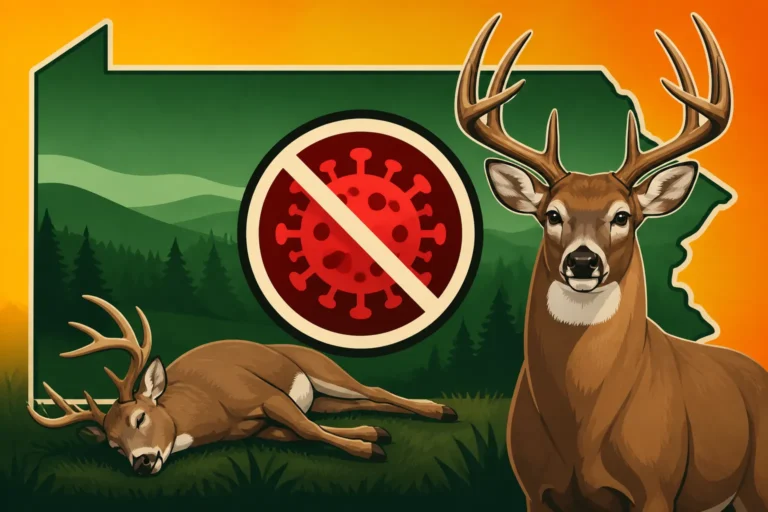
Chronic Wasting Disease (CWD) is a fatal, neurological disease affecting deer, elk, and moose. It's caused by abnormal proteins called prions and is always fatal. CWD has been a growing concern in Pennsylvania, with the first positive case in a wild deer confirmed in 2012. Since then, the disease has spread, leading to the establishment of Disease Management Areas (DMAs) in various parts of the state. These DMAs are designed to contain and slow the spread of CWD through special regulations regarding deer feeding, carcass movement, and hunting practices.
Hunters harvesting deer within a DMA face specific requirements, including restrictions on moving certain parts of a deer carcass out of the zone and recommendations for CWD testing. The Pennsylvania Game Commission provides voluntary CWD testing sites for hunters, particularly within DMAs. Understanding Chronic Wasting Disease in Pennsylvania and Pennsylvania CWD Carcass Rules is not just a regulatory compliance issue; it's a vital part of protecting our deer herd and ensuring the long-term health of our wildlife. The more informed and compliant hunters are, the better our chances of managing this insidious disease.
Epizootic Hemorrhagic Disease (EHD) Outbreaks
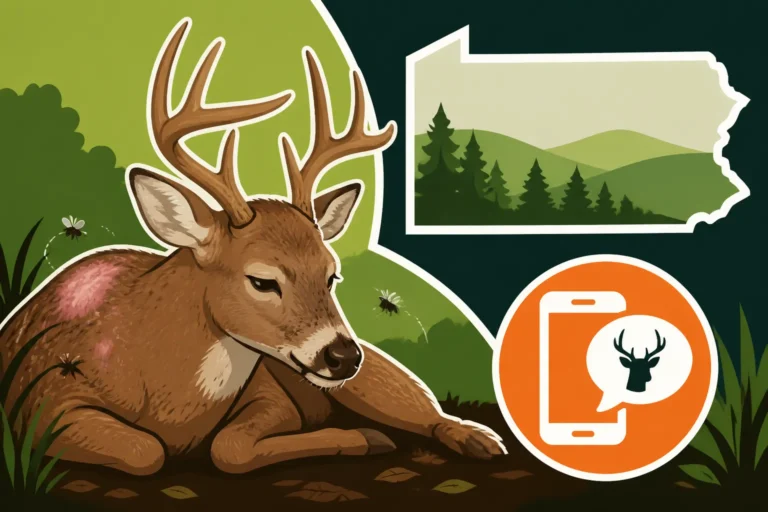
Epizootic Hemorrhagic Disease (EHD) is another significant deer disease in Pennsylvania, though unlike CWD, it is not always fatal and does not pose a risk to humans. EHD is a viral disease transmitted by biting midges, often referred to as "no-see-ums." Outbreaks typically occur in late summer and early fall, particularly during periods of drought followed by heavy rains, which create ideal breeding conditions for the midges. When EHD strikes, it can cause localized deer die-offs, often concentrated near water sources where infected deer seek relief from fever.
Symptoms of EHD in deer include lethargy, fever, swelling of the head, neck, and tongue, and sometimes a blue tongue. Deer often appear disoriented and may lose their fear of humans. While concerning to witness, EHD is a natural phenomenon, and populations typically rebound within a few years. Hunters often encounter dead deer during EHD outbreaks, particularly in hard-hit areas. Reporting sick or dead deer to the Pennsylvania Game Commission helps them track the spread and severity of these outbreaks, providing valuable data for their Pennsylvania Wildlife Disease Monitoring efforts.
Hunter Responsibility in Disease Management
Hunters play a crucial role in disease management efforts in Pennsylvania. Adhering to CWD regulations, such as those governing carcass movement out of DMAs and participating in voluntary testing, is paramount. If you harvest a deer in a DMA, familiarize yourself with Pennsylvania CWD Testing for Hunters and the legal requirements for processing and transporting your deer. It ensures you're not inadvertently contributing to the spread of the disease.
Beyond CWD, simply being observant in the field can make a difference. If you encounter a deer exhibiting signs of illness, or find multiple dead deer, promptly reporting it to the Game Commission is essential. This helps wildlife biologists track potential outbreaks of diseases like EHD. Furthermore, avoiding baiting or feeding deer (which is often illegal, especially in DMAs) can help prevent unnatural concentrations of animals, reducing the risk of disease transmission within the herd. By being informed and responsible, hunters become active partners in safeguarding the health of Pennsylvania's whitetail population.
Hunting Strategies for Pennsylvania Whitetails
Hunting white-tailed deer in Pennsylvania is a tradition built on strategy, patience, and adapting to the diverse landscapes the state offers. While specific tactics vary by region and season, some fundamental principles underpin successful deer hunting across the Keystone State.
Scouting and Stand Placement
Effective scouting is the bedrock of consistent deer hunting success. It’s a year-round endeavor that extends far beyond just the week before opening day. In spring and summer, focus on identifying food sources like acorn flats, apple orchards, and agricultural fields. Look for well-used trails, rub lines, and historical bedding areas. The transition zones between these elements are often key. Using mapping tools, such as the Pennsylvania Mapping Center or third-party apps, to analyze topography, identify Hunting Oak Ridges and Benches, and pinpoint bedding cover is invaluable.
When it comes to stand placement, whether it's a climbing treestand, a hang-on, or a ground blind, consider the prevailing wind, access routes, and the deer's likely travel patterns. Think about how you'll get in and out undetected. An hour spent hanging a stand correctly can save days of fruitless sitting. For public land hunters, understanding Treestand Setups in Pennsylvania Hardwoods and adhering to specific Game Lands rules regarding their use is critical. Always have multiple stand options for different wind directions and deer movements, allowing you to adapt to changing conditions throughout the season.
Still-Hunting and Drives
While stand hunting is popular, still-hunting and deer drives are active and highly effective methods, particularly in Pennsylvania's rugged terrain and dense cover. Still-hunting involves moving slowly and deliberately through the woods, taking a few steps, then pausing to observe and listen, mimicking the natural movement of a deer. It requires immense patience, keen observation skills, and a deep understanding of deer behavior. This technique is particularly potent when trying to locate deer bedded in thickets or when navigating the challenging landscape of the Hunting Pennsylvania Big Woods.
Deer drives, on the other hand, are a collaborative effort where a group of hunters works together to push deer from cover towards other hunters positioned on stand or as blockers. Drives can be incredibly effective in dense clearcuts, swampy areas, or large blocks of timber. They require careful planning, clear communication, and a thorough understanding of the terrain. Whether it's Deer Drives With Three or Four Hunters or a larger group, safety is paramount, with all participants wearing proper hunter orange and knowing their shooting lanes. These methods allow hunters to cover more ground and exploit areas that might be difficult for a single hunter to approach effectively.
Adaptability to Weather and Pressure
Pennsylvania weather can be notoriously unpredictable, swinging from warm, rainy days to bitter cold and deep snow within the span of a week. Successful hunters learn to adapt their strategies to these changing conditions. A cold front often gets deer on their feet and feeding actively, making for great hunting. Conversely, warm, sunny days might push deer into heavier cover, reducing daytime movement. Understanding Wind and Thermals on a Ridge is vital, as shifting air currents can quickly betray your presence.
Hunting pressure, especially on public lands, is another significant factor. Opening day of firearms season often sees heavy hunter concentrations, pushing deer into remote, overlooked pockets of cover. Learning to find Finding Ground Others Walk Past or exploring the far reaches of Game Lands can yield surprising results. Being willing to walk further, hunt during less popular times (like weekdays), and adapt your approach based on what other hunters are doing can make all the difference. The season also progresses, and what works in September during Hunting the Early Archery WMUs in September might be completely different come late November.
The Economic & Cultural Impact of Deer Hunting
The pursuit of white-tailed deer in Pennsylvania is far more than just a recreational activity; it's an economic driver, a significant source of conservation funding, and a deep-seated cultural touchstone that binds communities and families together. Its impact resonates far beyond the woods.
Local Economies and Conservation Funding
The annual deer seasons generate substantial economic activity across Pennsylvania, particularly in rural communities. Hunters spend money on licenses, firearms, ammunition, clothing, boots, fuel, food, lodging, and processing services. This influx of cash supports local businesses, from small sporting goods shops to gas stations and restaurants, providing a vital boost to regional economies. The ripple effect extends to manufacturing jobs for hunting gear and countless other related industries.
Even more significant is the direct financial contribution hunters make to conservation. A portion of every hunting license sold, including those for deer, goes directly to the Pennsylvania Game Commission. This funding is crucial for wildlife management programs, habitat restoration, land acquisition, enforcement, and research. Furthermore, excise taxes on firearms, ammunition, and archery equipment, collected through the Pittman-Robertson Act, also flow back to state wildlife agencies. In essence, deer hunters are primary funders of wildlife conservation in Pennsylvania, ensuring that these resources remain healthy for future generations.
Deer Camp and Community Bonds
For many Pennsylvanians, deer hunting is synonymous with deer camp. These camps, whether simple structures in the mountains or more elaborate setups, serve as annual gathering places where traditions are upheld, stories are shared, and bonds are strengthened. It's a place where fathers teach sons, grandfathers share wisdom, and friends become family. The anticipation of deer camp, the smell of woodsmoke, the sounds of conversation and laughter – these are as much a part of the hunting experience as the hunt itself.
These camps are not just about the pursuit of deer; they are crucibles of community. They foster a sense of shared purpose, camaraderie, and respect for the outdoors. Beyond the camps, the broader hunting community in Pennsylvania shares a unique bond, united by a passion for the whitetail and a commitment to its conservation. These traditions, passed down through generations, ensure that the cultural significance of deer hunting remains a vibrant and cherished part of Pennsylvania life. Learn more about Pennsylvania Deer Camp Traditions and their enduring legacy.
Conservation Efforts and Future Outlook
The health and future of Pennsylvania's white-tailed deer population depend on ongoing, proactive conservation efforts. The Pennsylvania Game Commission, along with numerous partner organizations and dedicated hunters, works tirelessly to manage the herd, enhance habitat, and conduct research to ensure a sustainable future for this iconic species.
Habitat Improvement Projects
A cornerstone of deer conservation in Pennsylvania is habitat management. The Game Commission actively manages hundreds of thousands of acres of State Game Lands, implementing practices designed to improve habitat quality for deer and other wildlife. These efforts include timber stand improvements, creating early successional habitat through controlled burns and selective cutting, and planting food plots. The goal is to provide a diverse array of food sources and cover, which are essential for a healthy and resilient deer herd.
These projects are often tailored to specific regional needs. In the Big Woods, for example, efforts might focus on creating forest openings and promoting new growth to provide critical browse. In farm country, habitat work might involve establishing native warm-season grasses and shrub thickets to offer bedding and escape cover. The Game Commission also works with private landowners through programs like the Hunter Access Program to encourage habitat enhancements on private lands, recognizing that deer don't just live on public ground. All these efforts create a healthier environment for white-tailed deer across the state.
Research and Monitoring
Effective wildlife management is always rooted in sound science. The Pennsylvania Game Commission conducts extensive research and monitoring programs to better understand the state's deer population dynamics. This includes detailed harvest data collection, age and sex ratios of harvested deer, fawn recruitment studies, and disease surveillance. This scientific approach allows biologists to make informed decisions about antlerless allocations, antler restrictions, and habitat management strategies.
Projects like the ongoing CWD research, which tracks the disease's prevalence and spread, are vital for developing effective mitigation strategies. Similarly, studies on deer movements and home ranges provide insights into how deer utilize different habitats and respond to hunting pressure. Hunters can directly contribute to these efforts by accurately reporting their harvest, participating in CWD testing, and reporting sick or dead deer. This collaborative approach, combining professional research with hunter participation, is essential for adaptive management and ensuring the long-term health and sustainability of Pennsylvania's white-tailed deer.
Deer Harvest Statistics and Trends
Examining the annual deer harvest data provides a valuable snapshot of the health and dynamics of Pennsylvania's whitetail population. These numbers offer insights into population trends, the impact of management strategies, and hunter success rates across different regions and seasons.
The Pennsylvania Game Commission meticulously collects and analyzes harvest data each year, which is crucial for making informed management decisions for the upcoming seasons. This data includes the total number of antlered and antlerless deer harvested, broken down by WMU, hunting season, and even specific weapon type.
Here’s a simplified look at the general trends you might observe in Pennsylvania's deer harvest:
| Year/Category | Total Deer Harvest | Antlered Harvest | Antlerless Harvest |
|---|---|---|---|
| Early 2000s | High (e.g., 500,000+) | Moderate | Very High |
| Mid 2010s | Moderate (e.g., 350,000) | Increased Mature Buck Ratio | Moderate |
| Recent Years | Moderate (e.g., 400,000) | Stable, Good Age Structure | Managed for Density |
Note: Actual numbers fluctuate annually. This table represents generalized trends.
The harvest numbers are influenced by numerous factors, including:
- Antler Restrictions: These rules have notably shifted the antlered harvest towards older age classes, as reflected in Buck Age Structure Since Antler Restrictions. Hunters are taking fewer yearling bucks and more 2.5-year-old and older bucks.
- Antlerless License Allocations: The number of antlerless licenses issued directly impacts the antlerless harvest. The Game Commission adjusts these allocations based on WMU-specific management goals to either reduce, stabilize, or allow for growth in local deer populations.
- Weather Conditions: Harsh winters can lead to increased winter mortality, while mild winters can contribute to higher fawn survival rates. During hunting seasons, extreme weather (like heavy rain or deep snow) can impact hunter effort and deer movement, directly affecting harvest numbers.
- Habitat Quality: Areas with abundant food and cover will typically support higher deer densities and, consequently, higher harvest rates compared to areas with poorer habitat.
- Disease Outbreaks: Localized outbreaks of diseases like EHD can temporarily reduce deer populations and subsequent harvest numbers in affected WMUs.
The Game Commission's annual harvest reports are a treasure trove of information, detailing Pennsylvania Annual Deer Harvest numbers and helping hunters understand where the deer are being taken and what the trends indicate for the future.
Disclaimer
The information provided in this guide is for informational purposes only and is based on general knowledge and publicly available resources regarding Pennsylvania hunting regulations and deer management as of the date of publication. Hunting regulations, season dates, and specific WMU rules are subject to change. It is the responsibility of every hunter to consult the most current official Pennsylvania Game Commission Digest and local regulations before participating in any hunting activity. This guide should not be considered legal advice or a substitute for official sources.