Pennsylvania CWD Carcass Rules
Hunting in Pennsylvania comes with its unique set of challenges and responsibilities, and few are as critical and often confusing as navigating the rules surrounding Chronic Wasting Disease (CWD). The fear of inadvertently spreading this fatal neurological illness, combined with the often-changing regulations, can make even the most seasoned hunter feel a knot in their stomach when they finally tag a deer. This comprehensive guide is here to untangle those complex Pennsylvania CWD carcass rules, helping you understand exactly what you need to do to stay compliant, protect our herd, and enjoy your hard-earned harvest without worry.
Understanding Chronic Wasting Disease CWD in Pennsylvania
Chronic Wasting Disease (CWD) is a serious concern for Pennsylvania hunters and wildlife managers alike. It's a persistent, fatal neurological disease that affects cervids, including deer, elk, and moose. Understanding what it is and how it spreads is the first step to understanding why these carcass rules are so important.
What is CWD and How Does It Affect Deer
CWD is caused by abnormal proteins called prions, which accumulate in the brain and other tissues of infected animals, eventually leading to brain damage. Think of it like a slow, degenerative process that ultimately proves fatal. Symptoms in affected deer often include drastic weight loss (wasting), stumbling, drooling, excessive thirst, and a lack of fear of humans. These symptoms typically worsen over time, and there is currently no vaccine or cure. The prions are incredibly hardy and can persist in the environment for years, making transmission possible through direct contact between animals or indirectly through contaminated soil, water, or vegetation. The real kicker is that an animal can be infected for a long time, sometimes over a year, before showing any visible signs, making it a silent threat lurking within our herds.
Where CWD Was First Found in Pennsylvania
Pennsylvania's battle with CWD began in 2012 when the first positive case was detected in a captive deer facility in Adams County. This was a jarring wake-up call, as it signaled the disease's presence within our borders. Since then, the Pennsylvania Game Commission (PGC) has been working tirelessly to monitor, manage, and mitigate its spread. It wasn't long before cases were confirmed in the wild herd, primarily starting in the southcentral part of the state. The discovery immediately led to the establishment of the first Disease Management Area (DMA), a geographical zone where special regulations apply to hunting and carcass management. This initial detection forced a significant shift in how Pennsylvania hunters and the PGC approach deer management, especially concerning the movement of deer parts.
Current CWD Disease Management Areas DMAs
Over the years, as more positive CWD cases have been identified, the Pennsylvania Game Commission has had to expand and create new Disease Management Areas (DMAs). These areas are essentially geographic zones where CWD has been detected or is considered highly likely to occur, and they come with stricter regulations than the rest of the state. It's crucial for every hunter to know if their hunting spot falls within a DMA or not, as this directly impacts what you can and cannot do with your harvested deer. Currently, Pennsylvania has several DMAs, the boundaries of which are regularly updated based on surveillance and new positive cases. For instance, DMA 2 in southcentral Pennsylvania is a long-established area, but others have emerged and shifted over time, like DMAs in the northwestern or southeastern parts of the state. You can find up-to-date maps of all active DMAs on the PGC website or through reliable hunting apps like GoHunt, which often integrate these critical land management boundaries. Knowing these boundaries is paramount because the carcass rules change dramatically inside these zones compared to outside them. Ignorance of the DMA boundaries is no excuse for non-compliance, so always double-check your hunting location before you head out.
The Core Pennsylvania CWD Carcass Rules
Navigating the regulations for deer carcasses can feel like walking through a minefield, especially with CWD in the mix. However, the core idea behind the rules is simple: prevent the spread of prions to new areas. This means restricting the movement of certain "high-risk" parts of a deer, particularly when crossing DMA boundaries.
General Carcass Movement Restrictions for All Hunters
Even if you're hunting outside a designated Disease Management Area (DMA), there are still general rules to keep in mind regarding carcass movement, especially if you plan to travel a significant distance. The primary concern is always preventing the inadvertent introduction of CWD into new areas. For hunters harvesting a deer in a non-DMA, you are generally permitted to transport the whole carcass within Pennsylvania. However, if you plan to take your deer out of state, or if you will be passing through a DMA on your way home from a non-DMA hunt, specific rules might apply. It's always a good practice to consider processing your deer as close to the kill site as possible, regardless of DMA status, to minimize any potential risk and simplify transport. If you're driving long distances across the state, even with a deer from a non-DMA, it's wise to be prepared to demonstrate where your deer was harvested, should you be questioned.
Parts You Can Transport Freely
The Pennsylvania Game Commission has identified certain parts of a harvested deer that are considered low-risk for CWD transmission, meaning you can generally transport these freely, even from a DMA. These parts are typically those that do not contain significant amounts of nervous tissue or lymphoid tissue, where CWD prions concentrate.
Specifically, you are allowed to transport:
- Meat that has been cut and wrapped or boned out. This means separating the muscle tissue from the bone, spinal cord, and other high-risk materials.
- Cleaned skull plate with antlers attached. This is a common practice for trophy hunters, but ensure all brain tissue and other soft tissues are removed.
- Cleaned antlers. Once the antlers are completely separated from the skull and any tissue, they are safe to transport.
- Hides and capes that are free of any meat or tissue.
- Teeth.
- Finished taxidermy mounts.
- Tissues or organs that are being submitted to a diagnostic lab for testing.
For many hunters, especially those who process their own deer, boning out the meat in the field is a great strategy to comply with the rules. This immediately separates the high-risk parts from the edible portions, making transport much simpler. If you're wondering about the exact process, our guide on Field Dressing a Deer in Cold Weather or Butchering a Deer at Camp might offer some helpful tips.
Parts That Require Special Handling
Conversely, there are specific "high-risk" parts of a deer that must be handled with extreme care and are restricted from movement out of a DMA. These are the parts where CWD prions are most concentrated and therefore pose the highest risk of spreading the disease if improperly transported.
These high-risk parts include:
- The head (including brain, eyes, and tonsils). This is a primary site for CWD prions.
- The spinal cord and backbone. The central nervous system is a significant prion reservoir.
- The spleen.
- Lymph nodes. These are crucial parts of the immune system and can harbor prions.
If you harvest a deer in a DMA, these parts cannot leave the DMA unless they are going directly to a PGC-approved CWD collection site, a PGC-approved taxidermist, or a PGC-approved meat processor located within a DMA. You cannot, for example, take a whole deer from a DMA and drive it across the state to your home processor outside of the DMA. This is the cornerstone of the carcass movement restrictions, designed to contain the disease within its known boundaries. Failure to adhere to these rules can result in significant penalties, so understanding and following them is not just a suggestion, but a legal requirement.
Specific Rules for Hunters in Disease Management Areas DMAs
Hunting within a Disease Management Area (DMA) in Pennsylvania adds an extra layer of responsibility. The regulations are more stringent for a reason – these are areas where CWD is known to exist or is at high risk, and preventing its spread to new territories is paramount.
Transporting Whole Carcasses Out of a DMA
This is perhaps the most critical rule to understand when hunting inside a DMA. You absolutely cannot transport a whole deer, or any of its high-risk parts, out of a DMA. This includes the head, spinal column, spleen, and lymph nodes. If you harvest a deer within a DMA, you have a few options:
- Process it within the DMA: This is often the easiest and most compliant option. Take your deer to a PGC-approved processor or taxidermist located inside the DMA. They are aware of the rules and will handle the high-risk parts appropriately. Once processed, you can then transport the boned-out meat, cleaned skull plate, or taxidermy-ready hide out of the DMA.
- Bone it out in the field: If you're comfortable with field butchering, you can bone out the meat and leave the high-risk parts at the harvest site or dispose of them properly within the DMA. This allows you to transport only the low-risk meat out.
- Utilize a PGC-approved collection site: The Game Commission often provides special drop-off bins or collection sites within DMAs for hunters to deposit high-risk parts for proper disposal and CWD testing. Always check the PGC website for current locations.
Trying to bypass these rules, such as stuffing a whole deer into a vehicle and driving it through a DMA to another part of the state, is not only illegal but irresponsible. These rules are not arbitrary; they are scientifically determined measures to protect the health of our deer herd statewide.
What to Do with High-Risk Parts in a DMA
So, you've harvested a deer in a DMA and need to deal with those high-risk parts—the head, spinal column, spleen, and lymph nodes. What are your options for legal and responsible disposal?
The most common and encouraged methods include:
- Leaving them at the kill site: If you've boned out your deer in the field, you can leave the carcass remains, including the high-risk parts, where the deer was harvested. Nature will take its course, and scavengers will help with decomposition. This is a very effective way to keep potential CWD prions localized.
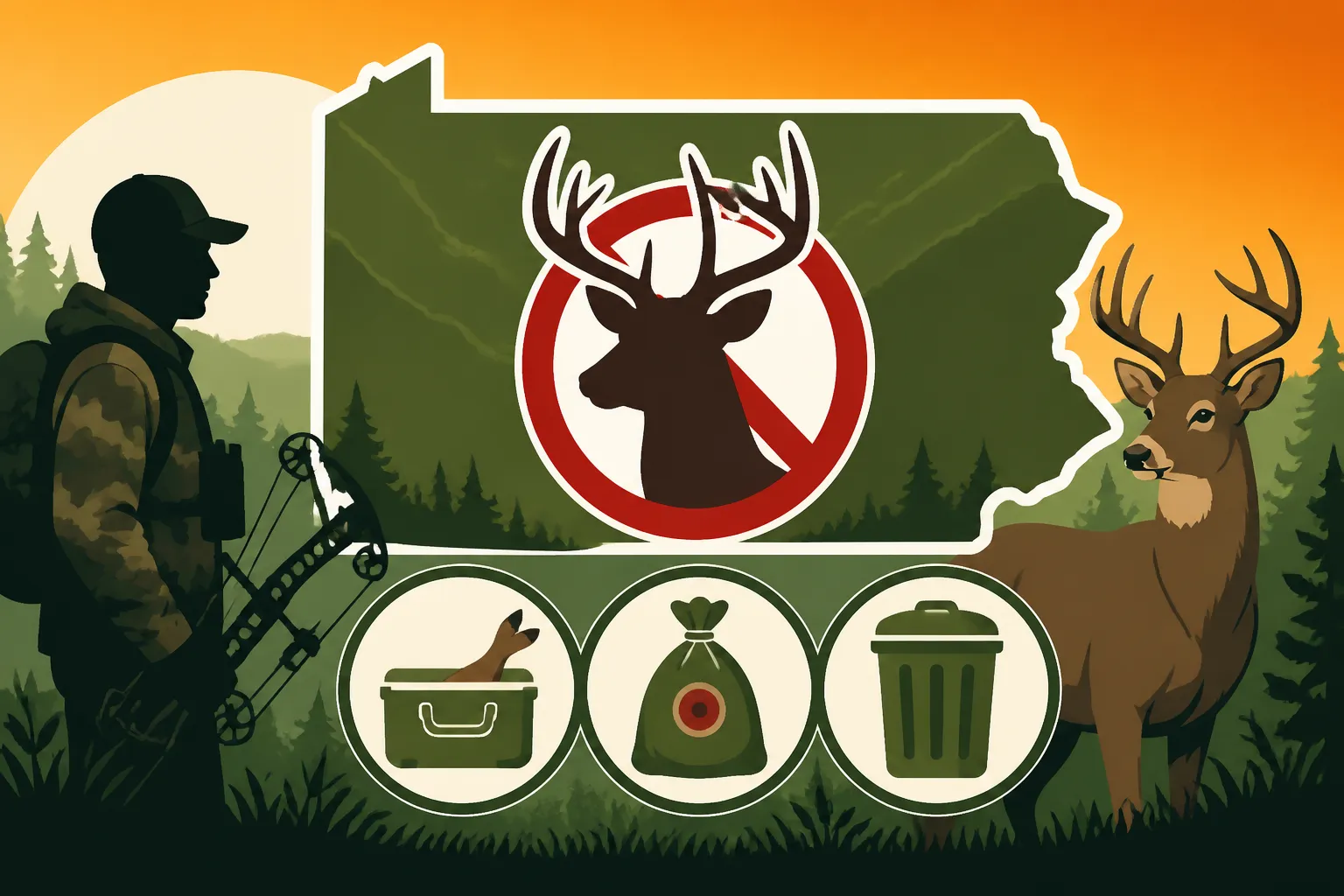
- Utilizing PGC-provided collection bins: In many DMAs, the PGC places dumpsters or collection bins specifically for high-risk parts. These are designed for the safe disposal of heads, spinal columns, and other restricted materials. Always check for current locations and operating hours on the PGC website or through a reliable hunting information resource like GoHunt. These bins ensure the parts are incinerated or otherwise disposed of in a manner that destroys prions.
- Taking them to an approved processor or taxidermist within the DMA: As mentioned, these professionals are equipped to handle and dispose of the high-risk parts according to PGC regulations. They often have arrangements for proper disposal or participate in CWD testing programs.
The key takeaway here is that these parts must not leave the DMA, period, unless they are heading to a PGC-approved facility within the DMA for testing or processing. This is a non-negotiable aspect of CWD management.
Mandatory CWD Testing for Hunters in DMAs
While CWD testing has often been voluntary in many areas of Pennsylvania, there are instances where the Game Commission implements mandatory testing requirements, especially within DMAs or specific zones of concern. This usually happens during certain periods or for particular harvests, like during the opening days of firearms season, to gather critical surveillance data.
When mandatory testing is in effect:
- Specific Check Stations: The PGC will set up mandatory check stations within or near DMAs. Hunters harvesting deer in these designated zones during specified periods will be required to bring their deer (or at least the head) to one of these stations.
- Sample Collection: At these stations, PGC staff will collect tissue samples, typically from the lymph nodes and brainstem, for CWD testing. This process is usually quick and minimally invasive to your carcass.
- Information and Results: You'll be provided with information on how to check your test results online. It’s important to remember that receiving a "Not Detected" result doesn't mean the deer definitely didn't have CWD, as testing isn't 100% accurate, but it means the prions weren't found in the tested sample.
Even when testing isn't mandatory, hunters are strongly encouraged to submit samples from any deer harvested in a DMA for voluntary testing. The more data the PGC collects, the better they can understand the disease's prevalence and spread, and refine their management strategies. You can often find voluntary drop-off locations at PGC offices or partner locations. For more on disease impact, you might want to read about CWD Risk to the Pennsylvania Elk Herd to see the broader implications.
Preparing Your Harvest for Transport and Processing
Proper preparation of your harvested deer is not just about meat care; it's a critical step in CWD compliance, especially when dealing with DMAs. Knowing how to field dress, bone out, and manage high-risk parts can save you a lot of headache and ensure you're following the rules.
Field Dressing and Bone-Out Strategies
Field dressing your deer, or removing the internal organs, is a standard first step for any hunter to cool the meat and begin the preservation process. This typically leaves the head and spinal column intact. However, if you're hunting in a DMA and need to transport your deer out of it, a full bone-out in the field becomes an incredibly useful, if not necessary, strategy.
Here's how a bone-out helps with CWD compliance:
- Separation of High-Risk Parts: By carefully removing all muscle tissue from the bone, you are effectively leaving the spinal column, head, and other high-risk parts at the harvest site.
- Reduced Weight: Boning out also significantly reduces the weight you need to pack out, which is a huge bonus, especially on public lands or steep terrain. Our guide on Getting a Deer Out of a Pennsylvania Hollow can offer more tips on handling game in challenging areas.
- Easier Transport: Packaged, boneless meat is much easier to carry in a game bag or cooler, and it's compliant for transport out of a DMA.
To execute a successful field bone-out, you'll need sharp knives, game bags, and a basic understanding of deer anatomy. There are many excellent online tutorials and resources that walk you through the gutless method or full bone-out. The goal is to separate all the edible muscle from the bone structure, ensuring no nervous system tissue remains attached to the meat you intend to transport.
Proper Disposal of High-Risk Parts
Once you've separated the high-risk parts, their proper disposal is paramount to preventing CWD spread. As discussed, these parts – the head, backbone, spleen, and lymph nodes – contain the highest concentration of CWD prions.
If you're in a DMA, your options for disposal are:
- Leave at the kill site: If you've completely boned out the carcass, leaving the skeletal remains and head at the site of the kill is a PGC-approved method.
- PGC-provided collection bins: These bins are strategically placed in or near DMAs for the express purpose of collecting high-risk parts for safe incineration or rendering. Always use these if available and convenient.
- Approved processors/taxidermists: These facilities within DMAs are authorized to accept and properly dispose of high-risk parts.
The absolute key is that these parts do not leave the DMA. Do not put them in your regular household trash if you live outside a DMA, and never dispose of them in landfills or other unapproved sites outside the DMA. These methods could inadvertently introduce CWD prions into new areas, potentially contaminating soil and water where other deer might pick up the disease. Remember, what you do with these parts directly impacts the health of the entire Pennsylvania deer herd.
Using Processors Inside and Outside DMAs
The choice of where to process your deer is closely tied to CWD carcass rules, especially if you hunt in a DMA.
If you hunt within a DMA:
- You must either process the deer yourself in the field (boning it out) and leave high-risk parts behind, or take the whole carcass (or high-risk parts like the head for taxidermy) to a PGC-approved meat processor or taxidermist located within that same DMA. These businesses are registered with the PGC and have protocols in place for proper disposal of high-risk CWD parts. This ensures that any potential prions remain confined to the DMA.
- Once the deer is processed, and you only have boned-out meat or cleaned skull plates, you are then free to transport these low-risk products out of the DMA to your home or elsewhere.
If you hunt outside a DMA:
- You generally have more flexibility. You can take your whole deer to any meat processor or taxidermist of your choice, whether they are within or outside a DMA, as long as your travel does not involve passing through a DMA with an intact carcass.
- However, if you plan to travel a significant distance, especially across different regions of the state, it's still a good idea to consider local processing to minimize any potential risk, however small.
It’s always a good idea to call your chosen processor or taxidermist ahead of time, especially if you're coming from a DMA, to confirm their current CWD protocols and ensure they are approved to handle deer from those areas. This saves everyone time and prevents any last-minute complications.
Here's a quick summary table of carcass parts and their transport rules:
| Carcass Part | Transport Allowed Out of DMA? | Notes |
|---|---|---|
| Boned-out meat | Yes | Must be completely separated from bone, spinal cord, and nervous tissue. |
| Cleaned skull plate with antlers | Yes | All brain tissue, eyes, and other soft tissues must be removed. |
| Cleaned antlers | Yes | Must be completely separated from the skull. |
| Hides/capes | Yes | Must be completely free of meat and tissue. |
| Teeth | Yes | |
| Whole carcass | No | Must be processed within the DMA (boned-out or taken to approved processor/taxidermist) or left at kill site. |
| Head (with brain, eyes, tonsils) | No | Except when taken to a PGC-approved CWD collection site, taxidermist, or diagnostic lab within the DMA. |
| Spinal cord/backbone | No | Must be left at kill site or disposed of in PGC-approved collection bin within the DMA. |
| Spleen | No | Must be left at kill site or disposed of in PGC-approved collection bin within the DMA. |
| Lymph nodes | No | Must be left at kill site or disposed of in PGC-approved collection bin within the DMA, or submitted for testing within the DMA. |
Practical Tips for Handling Carcasses and Staying Compliant
Staying compliant with CWD carcass rules doesn't have to be overwhelming. With a little preparation and the right mindset, you can navigate these regulations smoothly and confidently. It's all about being proactive rather than reactive.
Tools and Supplies for CWD Compliance
Having the right gear on hand can make all the difference when you're dealing with a harvested deer, especially if you're hunting in a DMA. These tools aren't just for efficiency; they're essential for compliance.
- Sharp Knives: A good set of field dressing knives is crucial for a clean and efficient bone-out. If you're planning to debone in the field, invest in a quality fixed-blade knife and a smaller, sharper blade for intricate work. Consider a game processing kit that might include a bone saw, though often not necessary for boning out.
- Game Bags: Breathable, clean game bags are indispensable. Once you've boned out your meat, these bags will protect it from dirt, flies, and debris during transport. They allow the meat to cool properly while keeping it clean.
- Gloves: Always wear disposable gloves when field dressing and processing game. This isn't just about CWD (though it helps prevent potential transmission if you come into contact with prions); it's basic hygiene. Pack several pairs.
- Plastic Sheeting/Tarps: A small tarp or heavy-duty plastic sheeting can be invaluable for keeping your work area clean during a field bone-out, especially on public land. It also serves as a barrier between your meat and the ground.
- Coolers and Ice: Even in colder weather, having coolers with ice (or frozen water bottles) is essential for quickly cooling your boned-out meat, especially if you're facing a long hike out or warmer-than-expected conditions. Our guide on Coolers and Game Bags for Warm Openers has more tips.
- Maps/GPS Device: An accurate map or a GPS app on your phone (like what GoHunt offers) that clearly shows DMA boundaries is non-negotiable. You need to know exactly where you are and where the DMA lines fall to ensure you're making compliant decisions about your harvest.
By packing these items, you'll be well-prepared to handle your deer in a manner that respects both the animal and the regulations designed to protect Pennsylvania's deer herd.
Staying Informed About Rule Changes
Pennsylvania's CWD rules, particularly the boundaries of DMAs and specific regulations, are not static. They can change based on new detections, research, and management strategies. As a responsible hunter, it’s your duty to stay up-to-date.
Here are the best ways to keep informed:
- Pennsylvania Game Commission (PGC) Website: This is your primary and most authoritative source. The PGC maintains dedicated CWD pages with the latest maps, news releases, and detailed regulation summaries. Make it a habit to check this before each hunting season.
- PGC Digest: The annual Pennsylvania Hunting and Trapping Digest, which you receive with your hunting license, contains a summary of regulations. However, for CWD, always cross-reference with the website as changes can occur mid-year.
- Reputable Hunting Publications and Forums: Many state-specific hunting publications and online forums (like those tied to GoHunt, for example) do an excellent job of breaking down and explaining PGC updates in an accessible way. Just be sure to verify critical information directly with the PGC.
- Sign up for PGC Alerts: The PGC often offers email or text alert systems for critical updates, including CWD news. This is a great way to get timely information delivered straight to you.
The key here is vigilance. Don't rely on old information or hearsay from camp. A quick check of the official sources before you head afield can save you from potential fines, legal issues, and inadvertently contributing to the spread of CWD. Ignorance of the law is never an excuse, especially when it comes to wildlife health.
Ethical Considerations and Community Responsibility
Beyond the legal requirements, there's a strong ethical component to CWD carcass rules. As hunters, we are conservationists first, and protecting the health of the wildlife we pursue is a fundamental responsibility.
- Preventing Spread: Every hunter's actions, or inactions, can directly impact the spread of CWD. By diligently following carcass rules, you're not just avoiding a fine; you're actively participating in the larger effort to contain a devastating disease. This protects not only the deer themselves but also the future of hunting in Pennsylvania.
- Respect for the Resource: The deer we hunt are a shared resource. Respecting CWD rules demonstrates respect for the entire deer population and the land they inhabit. It also shows respect for fellow hunters and non-hunters who care deeply about wildlife.
- Setting an Example: Be an example of responsible hunting. Discuss CWD rules with your hunting partners, mentor new hunters on proper carcass handling, and speak up if you see non-compliant behavior. This collective effort is what truly makes a difference.
Remember, the goal of CWD management is to protect the long-term health and sustainability of Pennsylvania's deer herd. Your commitment to following these rules is a vital part of that conservation effort, ensuring that future generations can enjoy the rich hunting heritage we cherish.
The Importance of Hunter Cooperation and Future Outlook
The fight against Chronic Wasting Disease is a long-term endeavor that absolutely requires the full cooperation of Pennsylvania's hunting community. Without hunters on board, the battle is significantly harder, if not impossible.
Why Hunter Compliance is Crucial
Hunter compliance isn't just about following the law; it's the single most powerful tool we have in managing CWD. The Pennsylvania Game Commission (PGC) sets the regulations, but it's the hunters in the field, day in and day out, who are truly on the front lines.
- Data Collection: When hunters submit samples for CWD testing, whether mandatory or voluntary, they provide invaluable data to wildlife biologists. This data helps the PGC understand the prevalence, distribution, and spread patterns of the disease, allowing them to adjust DMA boundaries, implement targeted management actions, and assess the effectiveness of current strategies. Without this ground-level information, management decisions would be based on incomplete pictures.
- Limiting Spread: Strict adherence to carcass movement restrictions, especially when coming out of a DMA, directly prevents the physical movement of CWD prions to new, currently unaffected areas. Every time a hunter properly disposes of high-risk parts within a DMA or bones out a deer in the field, they are actively disrupting a potential pathway for the disease to spread. Imagine the risk if even a small percentage of hunters disregarded these rules; CWD could rapidly jump across the state.
- Public Trust: Hunter cooperation also builds public trust. When the non-hunting public sees hunters acting responsibly and taking proactive steps to protect wildlife health, it strengthens the image of hunting as a conservation tool. Conversely, a lack of compliance can erode that trust and lead to increased scrutiny or even calls for more restrictive regulations.
In essence, every hunter who takes the time to understand and follow CWD rules is performing a vital conservation service, contributing directly to the health of Pennsylvania's wildlife resources.
The Role of the Pennsylvania Game Commission PGC
The Pennsylvania Game Commission is the lead agency in the state's CWD response. Their role is multifaceted, encompassing research, regulation, surveillance, and public education.
- Research and Monitoring: The PGC continually conducts or supports research into CWD, aiming to understand its epidemiology, transmission dynamics, and potential long-term impacts on deer populations. They lead extensive surveillance efforts, collecting thousands of samples annually from harvested deer, road-killed deer, and targeted removals to map the disease's distribution and prevalence. This is how they determine Where CWD Was First Found in Pennsylvania and monitor its progression.
- Developing Regulations: Based on scientific data and best management practices, the PGC develops and updates CWD regulations, including the establishment and modification of DMAs, carcass movement rules, and testing requirements. These decisions are not made lightly but are carefully considered to achieve the best possible outcomes for wildlife health.
- Public Education and Outreach: A significant part of the PGC's role is to educate hunters and the public about CWD, its risks, and the importance of compliance. They provide resources on their website, engage with hunting groups, and participate in public forums to ensure that information is accessible and understood.
- Collaboration: The PGC collaborates with other state and federal agencies, universities, and neighboring states to share data, research findings, and management strategies, recognizing that CWD is a regional, not just a local, challenge.
The PGC provides the framework for CWD management, but its effectiveness is always dependent on the active participation and understanding of the hunting community.
Long-Term Strategies for CWD Management
Managing a disease like CWD, which has no cure and is caused by persistent prions, is a marathon, not a sprint. Pennsylvania's long-term strategies are focused on containment, mitigation, and adaptation.
- Containment within DMAs: The primary strategy is to contain CWD within existing DMAs and prevent its spread to new areas. This is where carcass rules and hunter compliance are absolutely critical. By limiting the movement of high-risk parts, the PGC hopes to slow or halt the expansion of the disease.
- Targeted Removals and Population Management: In areas with high CWD prevalence, the PGC may implement targeted deer removal efforts or adjust antlerless allocations to reduce deer density. Lower deer densities can potentially reduce direct contact between animals, which is a known transmission pathway, and remove infected individuals from the population. This is a delicate balance, as detailed in discussions around Deer Density by Pennsylvania WMU.
- Habitat Management: Healthy deer populations in robust habitats are generally more resilient. While not a direct CWD solution, broader habitat management efforts contribute to overall herd health.
- Research and Innovation: Investing in ongoing research to better understand CWD, develop more effective detection methods, and potentially find solutions remains a long-term goal. This could include exploring genetic resistance in deer populations or new ways to decontaminate environments.
- Adaptive Management: CWD management is an ongoing learning process. The PGC employs an adaptive management approach, meaning strategies are continually evaluated, adjusted, and refined based on new scientific findings and the changing landscape of the disease. What worked last year might need tweaking this year, and hunters need to be prepared for that flexibility.
Ultimately, the future of Pennsylvania's deer herd in the face of CWD hinges on a collaborative effort between wildlife managers and dedicated hunters. By understanding the science, following the rules, and staying informed, we can all play a vital role in protecting this cherished resource for generations to come.
Disclaimer
Please remember that hunting regulations, including those related to Chronic Wasting Disease, can change. Always consult the official Pennsylvania Game Commission website or the current Pennsylvania Hunting and Trapping Digest for the most up-to-date and authoritative information before heading into the field. This guide is for informational purposes only and should not be considered legal advice.