Pennsylvania Waterfowl Seasons and Zones
Trying to navigate the myriad of regulations, season dates, and zone boundaries for waterfowl hunting in Pennsylvania can feel like trying to call in a wary canvasback from a mile away – complicated, precise, and often downright frustrating. It's easy to get lost in the details, accidentally violate a rule, or miss out on prime hunting opportunities simply because you weren't fully aware of the specifics. This guide is here to untangle the complexities, offering a clear, comprehensive breakdown of Pennsylvania's waterfowl seasons and zones, ensuring you're well-prepared for your next hunt on the water.
Understanding Pennsylvania's Waterfowl Management Zones
Pennsylvania sits squarely within the Atlantic Flyway, a massive migratory corridor that funnels millions of ducks, geese, and other migratory birds from their northern breeding grounds down to their southern wintering areas. This unique geographical position means that waterfowl hunting in our state is governed by both federal frameworks and state-specific regulations, often broken down into distinct zones. These zones aren't just arbitrary lines on a map; they're designed to manage specific populations of birds based on their migration patterns, population health, and hunter harvest data, which can change year to year. It's a system put in place to ensure sustainable hunting opportunities for future generations, even if it does mean hunters have more homework to do.
The Atlantic Flyway Connection
Being part of the Atlantic Flyway means that decisions made by the U.S. Fish and Wildlife Service, in conjunction with flyway councils from Maine down to Florida, directly influence our local hunting regulations. These decisions dictate the overall framework for duck and goose seasons, including maximum season lengths and bag limits, which each state then tailors to its specific needs and waterfowl populations. For example, if duck populations across the entire flyway are robust, we might see more liberal season lengths or higher bag limits. Conversely, a decline in a particular species, like the pintail or black duck, might lead to more restrictive regulations here in Pennsylvania, even if our local populations seem healthy at a glance. It's a balancing act, ensuring that hunting pressure doesn't disproportionately affect any one segment of the migratory journey. This larger context is crucial to understanding why our state’s regulations are structured the way they are, responding to continent-wide bird movements and conservation efforts.
Pennsylvania's Specific Waterfowl Zones
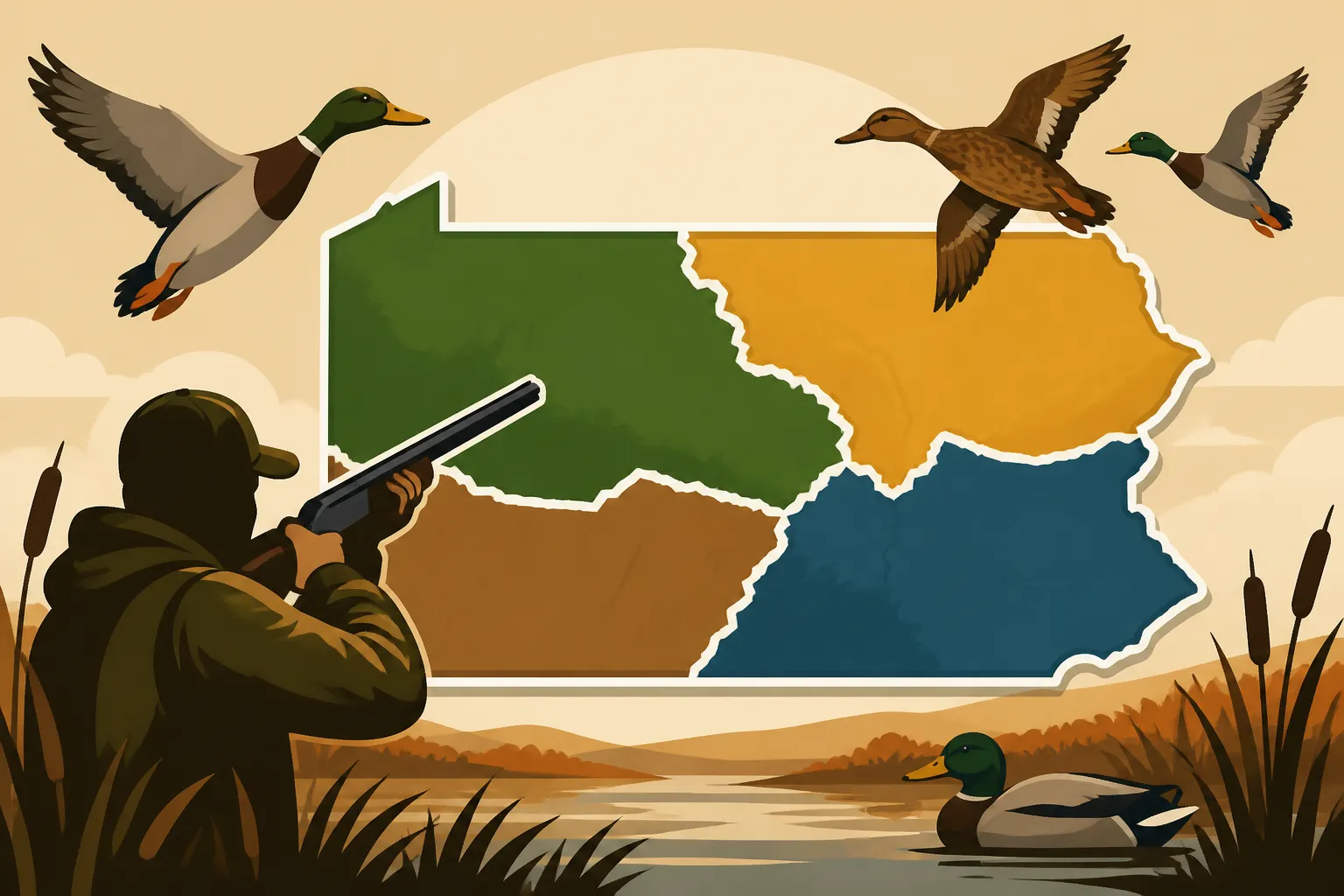
Within the broader Atlantic Flyway, Pennsylvania is further divided into specific zones for different waterfowl species, primarily to account for varied migratory patterns and local bird concentrations. For ducks, there are generally two main zones: the Lake Erie Zone and the Northwest Zone. The Lake Erie Zone typically covers a narrow strip along the Lake Erie shoreline, encompassing parts of Erie County, and has unique season dates that often align with the later migration of divers and sea ducks that utilize the Great Lakes. The Northwest Zone covers a larger area, generally west of a line drawn from the New York border south to the West Virginia border, and often has earlier season openings, reflecting the arrival of dabbling ducks.
For Canada geese, the zoning gets a bit more intricate, differentiating between the Atlantic Population (AP) Canada Goose Zone and the Resident Population Canada Goose Zone. The AP Zone generally covers the eastern half of the state, where Atlantic Population Canada Geese traditionally migrate through. These birds are managed under stricter guidelines due to population concerns in the past, leading to shorter seasons and lower bag limits. The Resident Population Canada Goose Zone, encompassing the rest of the state, targets the booming population of Canada geese that breed and reside year-round in Pennsylvania. These birds often have very generous season lengths and higher bag limits to help manage their numbers, which can sometimes lead to agricultural conflicts. Understanding which zone you are in, and which population of geese you are targeting, is paramount to staying legal and effectively managing our local wildlife. Tools like those found on GoHunt can be invaluable for pinpointing these often-confusing zone boundaries on a map.
Pennsylvania Duck Seasons – A Closer Look
Duck hunting is a cherished tradition for many Pennsylvanians, offering fast-paced action and the beauty of being out on the water at dawn. However, the season dates and bag limits for ducks can be a bit of a puzzle. Unlike deer hunting, which has fairly uniform statewide seasons, duck seasons often have "splits" – periods when hunting is open, followed by a closure, and then another open period. This strategy aims to coincide with different migration waves, allowing hunters to target early migrants like wood ducks and teal, and then later migrants like mallards and divers as cold weather pushes them south.
Diving into Duck Dates and Bag Limits
The specific opening and closing dates for duck seasons, as well as the daily bag limits, can vary significantly between the Lake Erie Zone and the Northwest Zone, and even within the general statewide regulations. It’s absolutely critical to consult the Pennsylvania Game Commission’s (PGC) annual hunting and trapping digest each year, as these dates are subject to change based on federal frameworks and PGC decisions. Typically, the Northwest Zone might see an earlier opening, sometimes in late September or early October, followed by a closure, then reopening later in October or November and running into January. The Lake Erie Zone usually has a later, more continuous season to coincide with big water migrations.
Daily bag limits are also species-specific and can be quite restrictive for certain birds. For example, a common daily bag limit might allow six ducks total, but with specific sub-limits for species like mallards (often only two hens), black ducks (one), pintails (one), canvasbacks (one), or wood ducks (two). Exceeding these species-specific limits is a common, unintentional violation. It's vital to be able to identify your birds in flight and on the water to ensure you stay within the legal limits. Always check the current year’s digest for the most accurate and up-to-date information for Pennsylvania Duck Season Dates by Zone.
Here’s a simplified table illustrating typical season structures and bag limits for some common ducks in Pennsylvania, but remember, always verify with the current year's PGC digest.
| Species | Typical Openers (NW Zone) | Typical Openers (Lake Erie Zone) | Daily Bag Limit (Total) | Species-Specific Limit (Daily) |
|---|---|---|---|---|
| Ducks (Total) | Late Sept/Early Oct, Nov | Early Nov | 6 | See below for specific species |
| Mallard | Included in Total Ducks | Included in Total Ducks | (2 hens) | 4 total, not more than 2 hens |
| Wood Duck | Included in Total Ducks | Included in Total Ducks | 2 | 2 |
| Black Duck | Included in Total Ducks | Included in Total Ducks | 1 | 1 |
| Pintail | Included in Total Ducks | Included in Total Ducks | 1 | 1 |
| Canvasback | Included in Total Ducks | Included in Total Ducks | 1 | 1 |
| Scaup (Bluebill) | Included in Total Ducks | Included in Total Ducks | 1-2 (Variable) | Check digest, often varies throughout season |
| Redhead | Included in Total Ducks | Included in Total Ducks | 2 | 2 |
| Green-winged Teal | Included in Total Ducks | Included in Total Ducks | 6 | 6 |
| Hooded Merganser | Included in Total Ducks | Included in Total Ducks | 5 | 5 (can include common and red-breasted mergs) |
Note: This table is for illustrative purposes only. Actual dates and bag limits vary annually. Consult the official PGC digest.
Special Species Considerations
Beyond the common dabblers and divers, there are several duck species in Pennsylvania that often come with highly specific or more restrictive regulations. These are typically species of conservation concern or those that have unique migratory patterns. For instance, Harlequin ducks, eiders, and scoters – often referred to as "sea ducks" – are primarily found along the coast but can sometimes be seen on Lake Erie or larger inland bodies of water. Their seasons and bag limits are typically quite distinct and limited, reflecting their generally lower populations and different management strategies.
Another example is the American black duck, a beautiful and wary dabbler whose populations have faced challenges over the years. This often translates to a reduced daily bag limit, usually one per hunter, throughout the duck season. Similarly, pintails and canvasbacks, while offering some of the most rewarding hunting, are also frequently restricted to a single bird per hunter per day. These restrictions are not meant to penalize hunters but are critical conservation measures. As responsible waterfowlers, it's our duty to not only know these rules but to actively support the conservation efforts that ensure these magnificent birds continue to grace Pennsylvania's wetlands and waterways.
Navigating Pennsylvania's Goose Seasons
Geese, particularly Canada geese and snow geese, offer some of the most exciting and challenging waterfowl hunting in Pennsylvania. However, their seasons and regulations can be even more complex than ducks, primarily due to the different population segments and the sheer numbers of some species. Pennsylvania sees both migratory Atlantic Population Canada geese and a thriving resident population, each managed with different goals and rules. Snow geese, on the other hand, have reached such high numbers that they are managed under a special "Conservation Order" to help reduce agricultural damage and habitat degradation.
Canada Goose Complexities
Pennsylvania's Canada goose hunting is divided into two primary management zones: the Atlantic Population (AP) Canada Goose Zone and the Resident Population Canada Goose Zone. The AP Zone generally covers the eastern part of the state, roughly east of a line from the New York border south through various county lines. Hunters in this zone are targeting geese that breed in northern Quebec and migrate through Pennsylvania. Due to past population declines, seasons in the AP Zone are typically shorter, and bag limits are more conservative – often 1-3 birds per day during the regular season. These geese are often warier and can be a real challenge to hunt, reflecting their long migratory journey and exposure to hunting pressure along the flyway.
The Resident Population Canada Goose Zone covers the remainder of the state. Here, the season is often much longer, sometimes running for over 100 days, and daily bag limits are considerably more liberal, often allowing 5-8 geese per day. This is because these geese breed and live within Pennsylvania and nearby states, and their populations have exploded over the past few decades. The PGC encourages hunters to target these birds aggressively to help manage their numbers, which can cause significant damage to agricultural crops and golf courses. It's a prime example of how hunting can be a vital tool in wildlife management, balancing ecological health with human interests. Always confirm your specific location's zone and dates in the Pennsylvania goose season dates by zone section of the current digest.
Snow Geese and Conservation Orders
Snow geese present a fascinating and unique hunting opportunity in Pennsylvania. Their populations have grown exponentially, leading to severe habitat degradation in their Arctic breeding grounds. To address this, the U.S. Fish and Wildlife Service, in cooperation with states like Pennsylvania, implemented a "Conservation Order" for snow geese. This order allows for extended seasons, often running from late winter well into spring, with incredibly generous bag limits (sometimes 25 geese per day) and relaxed hunting methods. During the Conservation Order, hunters are permitted to use unplugged shotguns (capacity exceeding three shells) and electronic calls, which are normally prohibited for other migratory birds.
These special rules are designed to maximize hunter harvest and help reduce the snow goose population to a more ecologically sustainable level. Many hunters travel to renowned areas like the Snow Goose Hunting at Middle Creek Wildlife Management Area during the peak of migration to participate in this unique season. It's a high-volume, action-packed hunt, but also one that requires understanding and adherence to the specific rules of the Conservation Order, which differ significantly from regular waterfowl seasons. It’s an effective, albeit unconventional, approach to wildlife management that offers hunters a truly unique experience.
Brant and Other Migrants
While Canada and snow geese dominate the goose hunting scene in Pennsylvania, another migratory goose species, the Brant, also passes through our state. Brant are smaller, darker geese, often seen closer to coastal areas but occasionally encountered inland on larger waters. Their seasons are typically very short and restrictive, often just a few weeks long with a daily bag limit of one or two birds. This reflects their lower population numbers and the need for more conservative management.
Hunters might also encounter various other migratory birds, such as Tundra Swans, which are a protected species and cannot be hunted in Pennsylvania. Misidentification is a real concern, and it underscores the importance of positive identification before taking any shot. Knowing your target is not just good hunting practice; it's a legal and ethical imperative, especially when dealing with diverse migratory species that can sometimes look similar to less experienced eyes.
Essential Permits: HIP and Federal Duck Stamp
Before you even think about setting up decoys or making your first duck call, there are two absolutely non-negotiable requirements for waterfowl hunting in Pennsylvania: the Migratory Bird Harvest Information Program (HIP) permit and the Federal Duck Stamp. Without these, even if you have your general hunting license and waterfowl stamp, you are not legally permitted to hunt ducks, geese, brant, or any other migratory game birds. Forgetting these simple, yet critical, steps is a common pitfall for even experienced hunters, leading to potential fines and a ruined hunt.
HIP Certification – Your Annual Checklist Item
The Migratory Bird Harvest Information Program, or HIP, is a nationwide program designed to collect data on the harvest of migratory birds. Every year, before you hunt any migratory game birds – ducks, geese, woodcock, snipe, doves, rails, coots, or gallinules – you must register for HIP. It’s a free certification, usually completed when you purchase your annual Pennsylvania hunting license, either online or at an authorized agent. You'll be asked a few questions about your hunting success the previous year for various migratory species, which helps wildlife biologists estimate harvest numbers and set future season frameworks.
While it seems like a small detail, carrying proof of your current HIP certification is legally required. It’s not just a formality; the data collected through HIP is incredibly valuable for the U.S. Fish and Wildlife Service and state agencies like the PGC to make informed management decisions about migratory bird populations. Without accurate harvest data, it’s much harder to ensure sustainable hunting opportunities. So, think of it as your annual contribution to waterfowl conservation – a quick click or checkmark that helps ensure the future of the sport we all love.
The Federal Duck Stamp – More Than Just a Permit
Beyond HIP, every waterfowl hunter 16 years of age or older must possess a valid Federal Migratory Bird Hunting and Conservation Stamp, commonly known as the Federal Duck Stamp. This isn't just a permit; it's one of the most successful conservation programs in history. A significant portion of the revenue generated from Duck Stamp sales goes directly into the Migratory Bird Conservation Fund, which is used to acquire and protect wetland habitats for ducks, geese, and a vast array of other wildlife. It’s a direct investment by hunters into the very habitats that sustain the birds they pursue.
The Federal Duck Stamp costs $25 and can be purchased online, at U.S. Post Offices, or through many sporting goods retailers. When hunting, you must sign the stamp across the face and carry it with you. While an actual physical stamp is preferred, Pennsylvania also recognizes the electronic Federal Duck Stamp for a short period (45 days) while you await your physical stamp to arrive by mail. Many hunters collect these stamps, appreciating their artistic value and the tangible connection they represent to conservation. It’s a small price to pay for the immense benefit it provides, ensuring critical wetlands are preserved and enhanced across the continent for Pennsylvania Waterfowl on the Atlantic Flyway.
Key Regulations and Considerations for Waterfowl Hunters
Beyond the essential licenses and season dates, successful and legal waterfowl hunting in Pennsylvania requires an understanding of several other important regulations. These rules are in place for safety, ethics, and conservation, ensuring that hunting remains fair, sustainable, and respectful of both wildlife and other outdoor enthusiasts. Ignorance of these rules is no excuse, and wardens patrol regularly to ensure compliance. Knowing them inside and out will prevent an otherwise great day afield from turning into a costly headache.
Nontoxic Shot and Ammunition Rules
One of the most critical regulations for waterfowl hunters is the absolute requirement to use nontoxic shot. Since 1991, federal law has mandated the use of nontoxic shot for all waterfowl hunting throughout the United States. This means traditional lead shot is strictly prohibited when hunting ducks, geese, coots, and other migratory game birds. The primary reason for this is to prevent lead poisoning in waterfowl and other birds of prey that ingest spent lead pellets from hunting areas. Birds can mistake lead pellets for grit, which they consume to aid digestion, or scavenge on carcasses containing lead.
Common nontoxic alternatives include steel, bismuth, and various tungsten alloys. While steel shot is the most affordable and widely available, it has different ballistic properties than lead, often requiring a larger shot size and different chokes for optimal patterns. Bismuth and tungsten blends offer better performance, mimicking lead more closely, but come at a higher cost. It's crucial to ensure your shotgun is rated for nontoxic loads, especially older firearms. Always double-check your shells to confirm they are stamped "nontoxic" before heading afield, because the regulations are clear: Where Nontoxic Shot Is Required in Pennsylvania is everywhere migratory waterfowl are hunted.
Blinds, Decoys, and Calling Ethics
The use of blinds and decoys is integral to most waterfowl hunting strategies. In Pennsylvania, rules regarding blinds are generally straightforward: they must be constructed or placed to conceal the hunter. On public lands, permanent blinds are usually prohibited unless specifically allowed and permitted by the PGC. Portable blinds, whether pop-up or natural brush blinds, are generally fine. When it comes to decoys, there are few restrictions on numbers or types for most species, though some specific areas or conservation orders might have unique rules (e.g., electronic calls for snow geese only). However, it's worth noting that some regulations regarding motorized decoys, specifically those with spinning wings, can vary by state and sometimes by flyway, so always check the most current digest.
Ethical calling is also important. While calling is a vital tool, "high-balling" (excessively loud or frantic calling) at birds that are already committed or too far away can spook them. Knowing when to call, how loud, and when to go silent is an art learned over time. Respect for other hunters is also key; avoid setting up too close to another hunting party or calling excessively to try and pull birds away from them. This kind of courtesy makes for a better experience for everyone on public waters or shared hunting grounds.
Watercraft and Motorized Devices
Hunting waterfowl from a boat is a common practice, especially on larger rivers, lakes, and the Lake Erie coastline. However, there are specific rules about how watercraft can be used. Generally, you cannot hunt from a boat that is under power, meaning the motor must be completely shut off and the boat's forward motion ceased before you can shoot. This often means anchoring, tying off, or drifting. Retrieval of downed birds with a motorboat is generally allowed, but hunting from a boat in active motion with the motor engaged is not.
Additionally, regulations might exist concerning the use of airboats, hovercrafts, or other specialized motorized devices on certain waters, particularly within State Game Lands or other protected areas. These rules are usually in place to minimize disturbance to wildlife and other users, or to protect sensitive habitats. It's always best to check the specific regulations for the body of water you intend to hunt. For instance, accessing certain islands on the Susquehanna River Hunting Access may have specific regulations. Being informed ensures a safe and legal hunt, preserving the privilege for all.
Practical Tips for Pennsylvania Waterfowlers
Waterfowl hunting in Pennsylvania is as much about strategy and preparation as it is about knowing the regulations. The state offers incredibly diverse habitat, from the vast open waters of Lake Erie to the small creeks and flooded timber of the interior. To be consistently successful, hunters need to adapt their tactics, scout relentlessly, and be prepared for whatever Mother Nature throws their way.
Scouting and Location, Location, Location
Successful waterfowl hunting is almost entirely dependent on location, and finding the right spot begins with thorough scouting. This means more than just a quick drive-by; it involves spending time observing bird behavior, identifying flight paths, and locating preferred feeding and resting areas. Ducks and geese are creatures of habit, often using the same entry and exit points to fields or water, especially during specific weather conditions. Look for "loafing" areas where birds rest during the day, or feeding grounds in harvested cornfields or flooded timber.
Pre-season scouting will give you a baseline, but in-season scouting is just as crucial, as bird patterns can change daily with weather, hunting pressure, and food availability. Pay attention to changes in water levels, the presence of new food sources, or recent timber cuts on public land. Using mapping tools, like those available through GoHunt, can help you identify potential access points, pinpoint hidden pockets of water, and understand the surrounding land use, which can all influence where birds will be. Remember, birds will often move to quieter, less pressured areas, so finding ground others walk past might be your ticket to success. Consider scouting the Pymatuning Wildlife Area Hunting or other specific waterfowl areas long before opening day.
Gear Up for the Elements
Pennsylvania waterfowl hunting often means facing some of the most challenging weather conditions: bitter cold, driving rain, and strong winds. Being properly geared up isn't just about comfort; it's about safety and endurance. Layering is key, starting with moisture-wicking base layers, insulating middle layers like fleece or wool, and a waterproof, windproof outer shell. Wool is an excellent choice for hunting apparel as it retains warmth even when wet, which is an undeniable advantage when you're exposed to the elements.
Appropriate footwear is also critical. Good quality chest waders are essential for setting decoys, retrieving birds, and navigating shallow waters. Look for insulated models if you plan to hunt late in the season when water temperatures plunge. A quality blind bag, loaded with extra shells, hand warmers, a thermos of hot coffee, and a first-aid kit, is indispensable. Don't forget your gloves or mittens; numb fingers make reloading and calling incredibly difficult. Being prepared for the cold means you can stay out longer and focus on the hunt, not on shivering uncontrollably. Proper gear, like that needed for Duck Hunting the Susquehanna River or other large waters, makes all the difference.
Calling and Decoy Strategies
Mastering calling and decoy placement can significantly increase your success rate. For ducks, a good mallard call is a foundational piece of equipment, but knowing how and when to use a variety of calls (greeting calls, comeback calls, feeding chuckles) can make you sound more realistic. For geese, a deep, resonant Canada goose call is essential, used in conjunction with clucks and moans to mimic a contented flock. Practice is paramount; birds can easily tell the difference between a realistic call and an amateur imitation.
Decoy spread strategy depends on the species, location, and conditions. On open water, larger spreads with a mix of species might be effective, creating a visible beacon. In smaller ponds or flooded timber, a more realistic, smaller spread with natural-looking groupings can be better. Always consider the wind direction; ducks and geese almost always land into the wind, so position your decoys to force birds to land in your shooting zone. Adding motion to your spread with jerk strings or motorized decoys can also greatly enhance realism, enticing wary birds to commit. Experiment with different spreads and calling sequences; what works one day might not work the next.
Leveraging Resources
Beyond personal experience and advice from fellow hunters, there's a wealth of resources available to help you plan and execute a successful waterfowl hunt. The Pennsylvania Game Commission's website is your go-to for the most current regulations, season dates, and license information. They also offer detailed maps of State Game Lands, many of which provide excellent waterfowl hunting opportunities. Local sporting goods stores can be a great source of localized information, offering insights into recent bird movements and popular hunting spots.
Online forums and communities dedicated to Pennsylvania hunting can also be valuable, allowing you to connect with other waterfowlers and share tips. Furthermore, specialized hunting apps and mapping services, such as GoHunt, can provide satellite imagery, public land boundaries, and even weather overlays, all of which are crucial for planning and executing a hunt. These digital tools can help you identify potential hunting areas, scout from home, and navigate unfamiliar terrain in the field, making your experience more efficient and effective.
Disclaimer
Please remember that hunting regulations, season dates, and bag limits are subject to annual changes by the Pennsylvania Game Commission and federal authorities. Always consult the most current official Pennsylvania Hunting & Trapping Digest or the PGC website before engaging in any hunting activities. This guide is intended for informational purposes only and should not be considered a substitute for official legal documentation.