Run-and-Gun Turkey Tactics on Game Lands
There's nothing quite like the sound of a gobbler ringing through the spring woods, but on Pennsylvania's public lands, those birds can be notoriously tight-lipped and difficult to pin down. Many of us have spent frustrating mornings sitting patiently, only to hear distant gobblers fade away or realize another hunter beat us to the hot spot. This guide is all about embracing a more dynamic approach: the run-and-gun turkey tactic, a strategy designed to actively seek out and engage gobblers on vast, often-pressured Game Lands, giving you the best chance to punch your tag.
Understanding the "Run-and-Gun" Philosophy on Public Land
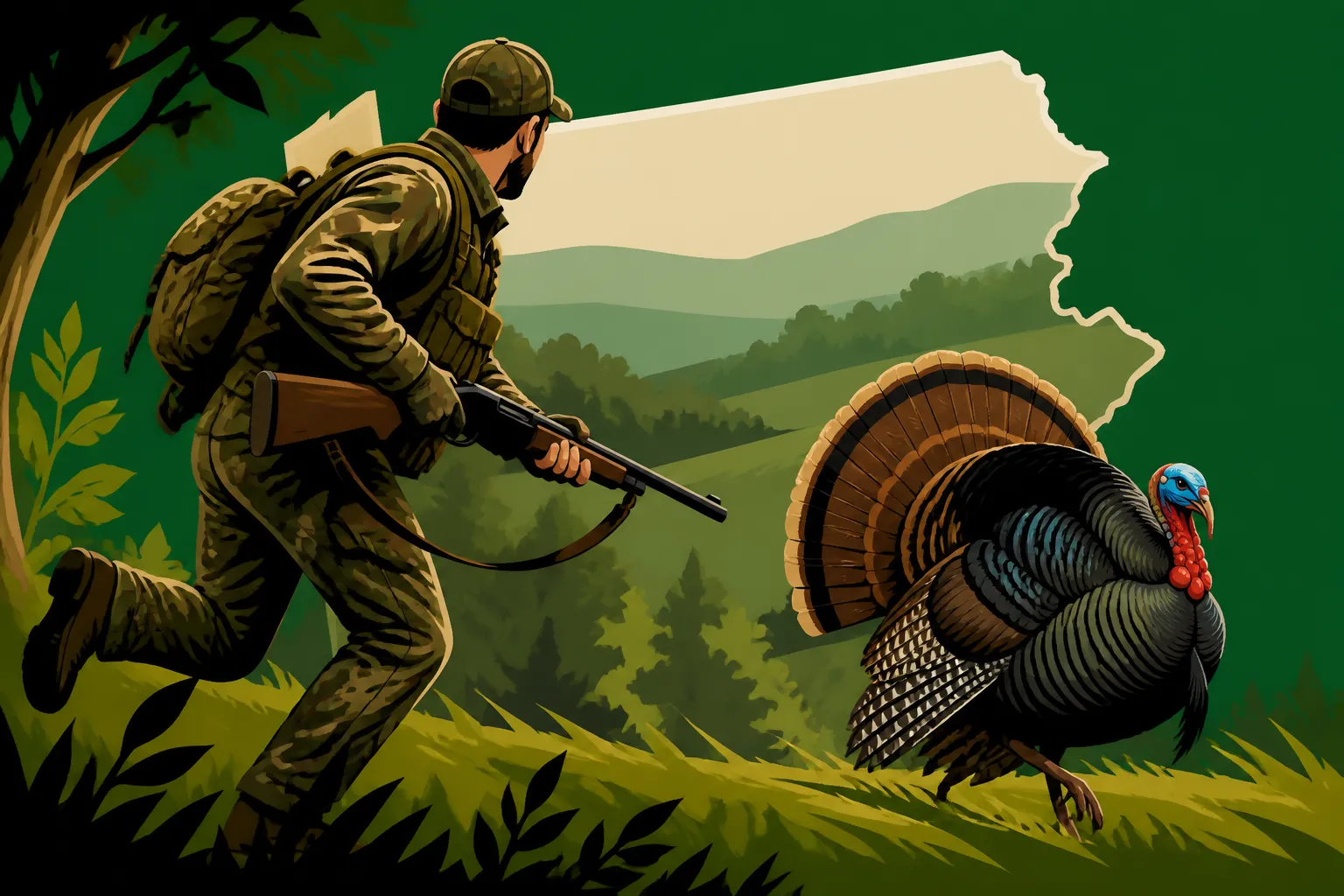
The very thought of "run-and-gun" might conjure images of hunters frantically sprinting through the woods, blowing calls every twenty yards. While it can be an energetic approach, it's far more nuanced than that. On Pennsylvania's expansive State Game Lands, where turkeys might be scattered, heavily hunted, or just plain shy, a mobile strategy isn't just an option—it's often a necessity. This philosophy is about covering ground intelligently, listening intently, and being ready to react swiftly when a bird sounds off, rather than committing to one spot and hoping a turkey wanders by. It's about taking the hunt to the turkey, not waiting for the turkey to come to you.
Why Traditional Sits Fail on Pressured Game Lands
We've all been there: you get up pre-dawn, hike into what you think is the perfect spot, set up your decoys, and settle in, full of anticipation. Then, as the woods wake up, you hear a gobble—but it's a quarter-mile away, perhaps on a ridge you can't access easily without spooking everything. Or worse, you hear a string of calls, only to realize another hunter is already working that bird. On Pennsylvania Game Lands, especially those within reasonable driving distance of population centers, traditional static sits often put you at a disadvantage. Turkeys on these lands are accustomed to pressure. They know where hunters set up, they learn call sequences, and they often become "henned up" early, making them less willing to commit to a lone, stationary caller. Furthermore, the sheer size of many Game Lands means that if you pick the wrong spot to sit, you could be miles from the action, effectively wasting valuable morning hours.
The problem with a static approach is that it relies heavily on the turkeys' willingness to move into your setup, or for you to be in the exact right place at the exact right time. When birds are responding to soft calls, or moving subtly through thick cover, or if they've already been called to and become wary, a stationary setup is often too slow and inflexible to adapt. Hunters often express frustration when they've spent hours perfectly still, only to realize the birds were moving perpendicular to their position, or worse, moved off the roost and immediately went silent after flying down. This dynamic is a huge driver for considering more active methods.
The Aggressive Mindset and Its Benefits
Embracing the run-and-gun mindset means you're not just a hunter; you're a scout, an investigator, and a predator all rolled into one. It means starting your day with a plan, but being flexible enough to ditch it the moment you get new information from a gobbler. This aggressive approach offers several key benefits. First, it allows you to cover significantly more ground, increasing your chances of encountering a receptive gobbler. Instead of hoping a bird walks by, you're actively searching for the bird. Second, it lets you capitalize on birds that might be reluctant to travel long distances to a call. By quickly closing the distance to a gobbling turkey, you reduce the inherent risk a gobbler takes by leaving its hens or preferred strutting areas.
Another significant benefit is the ability to adapt to changing conditions and other hunters. If you hear another hunter working a bird, or if a gobbler goes silent, you're not stuck. You can quickly disengage and move to another area, minimizing lost time. This mental shift from "wait and see" to "find and engage" can drastically improve your success rate, especially when hunting the vast and sometimes unpredictable terrain of Pennsylvania's State Game Lands. It recognizes that in a competitive environment, being proactive often trumps being purely patient, especially when a gobbler might only give you a small window of opportunity.
Balancing Aggression with Stealth
Now, "aggressive" doesn't mean careless. A crucial part of successful run-and-gun tactics on public land is knowing when to push hard and when to pull back and be utterly silent. Speed is important for covering ground, but stealth is paramount when you're closing in on a hot gobbler. Imagine walking briskly along an old logging road, stopping every few hundred yards for a quick series of calls. This is the "run" part. You're trying to provoke a shock gobble, a bird responding out of instinct or annoyance, not necessarily because it wants to come directly to you.
The "gun" part comes when you get a response. The moment you hear a gobble, the pace shifts. You immediately pivot from covering ground to becoming a silent, deliberate hunter. This means dropping into stealth mode, using terrain features for concealment, moving slowly, and assessing the bird's location and likely travel path. You need to quickly determine the best setup location, often behind a rise or a large tree, and get ready for the shot. This careful balance ensures you're efficient in finding birds without inadvertently spooking them once they're located. It's an art form, knowing when to put your foot on the gas and when to gently apply the brakes.
Scouting and Pre-Season Preparation for Mobile Hunting
Even with a run-and-gun strategy, success isn't purely random. Effective mobile hunting on Game Lands starts long before opening day with meticulous scouting. You're not looking for one perfect setup spot; you're looking for areas that hold turkeys, identifying potential travel routes, roosting sites, and strutting zones. The more homework you do before the season, the more efficient your "running" will be, as you'll have a mental map of high-probability areas to check when you're out there. Think of it as knowing the roadmap to potential goldmines, so you don't waste time digging in barren dirt.
Digital Scouting for Promising Terrain Features
In today's hunting world, digital scouting tools are absolute game-changers, especially for public land. Applications like GoHunt, OnX Hunt, or the Pennsylvania Game Commission's interactive mapping center allow you to analyze vast tracts of State Game Lands from the comfort of your home. You're looking for key terrain features that turkeys favor: subtle ridge lines, benches, creek bottoms, saddlebacks, and clearings. Pay close attention to changes in elevation, as turkeys often roost on higher ground and feed in lower areas. Identify areas with varied timber, recent timber cuts, or older growth interspersed with open patches, as these provide both cover and food sources.
Focus on areas away from obvious access points like main parking lots or easily visible trails. Turkeys on public land learn to associate these areas with human activity and will often move deeper into less disturbed zones. Look for "fingers" of timber extending into fields, or natural funnels created by topography that could serve as travel corridors. Mark these potential hotspots on your map. This digital reconnaissance gives you a huge head start, allowing you to prioritize which sections of a sprawling Game Lands property to hit first. You can also use these tools to identify potential access routes that others might overlook, like old logging roads or gas lines that cut through dense woods. Consider how a gobbler might move from a roost to a feeding area, or how it might travel along a ridge. You're essentially building a series of mini-plans for different sections of the property, ready to be deployed.
Locating Roosting Areas and Travel Corridors
While digital scouting points you in the right direction, nothing beats boots-on-the-ground confirmation. Before the season opens, take some time to walk these promising areas. Your goal is to find actual turkey sign: droppings, feathers, scratch marks in the leaves, and most importantly, roost trees. Turkeys often roost in the same general areas, especially large, mature trees on ridge tops or near water sources. Locating these spots gives you a massive advantage for opening morning or any early season hunt, as you know exactly where to start your "run."
Beyond roosts, look for well-used travel corridors. Turkeys are creatures of habit. They'll often use the same paths to move from roosting areas to feeding grounds, or between strutting zones and open fields. These might be subtle deer trails, old logging roads, or simply worn paths through sparse undergrowth. By identifying these corridors, you can anticipate where a gobbler might be headed after flying down and set up an interception. Remember, you can't hunt turkeys during the pre-season, but you can certainly scout them. Early morning or late evening trips to listen for gobblers on the roost can be incredibly informative. You might hear the distinctive "cluck" as they fly up or down, or even get a distant gobble that confirms their presence. This vital intelligence helps you plan your initial approach for the hunting day, setting you up for an effective first "run."
Adapting to Changing Turkey Patterns
One of the biggest frustrations for turkey hunters is how quickly birds can change their patterns. What worked yesterday might not work today, especially if hunting pressure increases or weather shifts. The run-and-gun hunter thrives on adaptability. If your initial plan to hit a known roost area yields no gobblers, you don't stay put. Instead, you consult your mental map or your GoHunt app, identify the next high-probability area, and move on. Maybe the birds have shifted to a different ridge for a new food source, or they've been pushed by other hunters.
Successful adaptation means continuously re-evaluating the situation. Are the gobblers silent but moving? Are they responding only to certain calls? Are they coming in only after flying down? Being able to read these subtle cues and adjust your strategy on the fly is what separates a truly effective run-and-gun hunter from someone just walking around calling. Sometimes, a full day of "running" might mean you've covered miles, visited several potential areas, and only got a single, fleeting response. But that one response is your cue to change tactics, move in quickly, and try to make something happen. This flexibility is critical on public land where conditions are rarely static. This is also why having multiple "Plan Bs" through thorough scouting, perhaps by checking out different areas for Hunting Turkeys in Pennsylvania Big Woods or even looking for new Late-Season Food Sources for Whitetails that might also attract turkeys, can make all the difference.
Essential Gear for the Mobile Turkey Hunter
The beauty of run-and-gun hunting is its emphasis on minimalism and efficiency. You can't be encumbered by excessive gear if you plan to cover miles of rugged Pennsylvania terrain. Every item in your vest or pack needs to serve a purpose, be lightweight, and be readily accessible. The right gear won't just make you more comfortable; it will make you more effective and safer. It's about having what you need, nothing more, and nothing less.
Lightweight Calling Setup and Decoy Considerations
Your calls are your primary tools for locating and attracting gobblers, so a versatile, lightweight setup is key. For run-and-gun, this typically means a handful of mouth calls (diaphragm calls), one or two slate or pot calls, and a good locator call like an owl hooter or a crow call. Mouth calls are invaluable because they allow for hands-free calling, crucial when you're moving or have your gun shouldered, ready for a shot. Slate calls offer a different tonal quality and can be highly effective for soft purrs and clucks once a bird is close. Locator calls are indispensable for provoking shock gobblers without sounding like a hen.
Decoys are a trickier consideration for run-and-gun. While effective, carrying multiple full-sized decoys can be cumbersome and noisy. Many mobile hunters opt for a single, lightweight collapsible hen decoy, or even just a fan decoy that can be quickly deployed. The idea is to have just enough visual appeal to seal the deal on a bird that's already committed to your calls, without weighing you down. Some hunters skip decoys entirely, relying on their calling prowess and stealth. The choice depends on the specific situation and how aggressively you plan to move. If you're planning to run and gun through particularly dense areas, a minimalist approach to decoys might be best. But if you expect to be setting up on open logging roads or field edges, a lightweight decoy could be the missing piece.
Comfortable Footwear and Layered Clothing
You'll be putting in the miles, often over uneven ground, up steep inclines, and through thick briars. This means your footwear is arguably the most critical piece of gear. Invest in comfortable, waterproof, and durable boots with good ankle support. There's nothing that will cut a hunt short faster than blisters or wet feet. Think about a boot designed for rugged hiking, not just stand-sitting. Similarly, your clothing needs to be adaptable. Pennsylvania spring weather can be unpredictable, swinging from frosty mornings to warm afternoons, with sudden rain showers always a possibility.
Layering is the answer. Start with a moisture-wicking base layer, add a mid-layer for insulation (fleece or wool works well), and top it off with a quiet, waterproof outer shell. This allows you to shed or add layers as the temperature changes, keeping you comfortable and quiet. Opt for camouflage patterns that blend with the early spring woods – typically lighter greens, browns, and grays. Don't forget a face mask and gloves to break up your silhouette and hide any skin. This strategic approach to clothing ensures you stay agile and focused, no matter what the woods throw at you, helping you maintain a consistent pace as you cover ground, perhaps even while Hunting Gobblers After Noon in Pennsylvania.
Navigation Tools and Emergency Supplies
Even on familiar Game Lands, getting disoriented is a real possibility when you're constantly moving and focused on the hunt. A reliable navigation system is non-negotiable. While a traditional compass and map (specifically a good map of Pennsylvania State Game Lands) are always smart backups, a GPS unit or a smartphone app like GoHunt with downloaded maps is incredibly useful. These tools allow you to mark your location, track your movements, and find your way back to your vehicle, even in dense fog or after dark. Always carry a portable power bank for your phone, as GPS apps can drain batteries quickly.
Beyond navigation, a small, lightweight emergency kit is essential. This should include a compact first-aid kit for minor cuts and scrapes, a headlamp for unexpected walks out after dark, a lighter or waterproof matches, a small knife, and enough water and a few high-energy snacks to last you the day. Don't forget to tell someone your hunting plan, including the specific Game Lands you'll be on and your estimated return time. While you might be "running and gunning," safety should always be your top priority. Remember, you're often miles from the truck, and minor issues can quickly become major problems without the right preparation.
On-the-Move Calling Strategies and Tactics
The heart of run-and-gun is effective calling while covering ground. It’s not just about making noise; it’s about strategically placing your calls to maximize your chances of getting a response, interpreting that response, and then acting decisively. This is where the aggressive mindset truly comes into play, constantly probing the woods for a vocal tom, then shifting gears instantly to become a precise, stealthy hunter.
Aggressive Locators and Shock Gobbles
When you're covering ground, your primary goal with calling is to elicit a "shock gobble." This is a purely reactive gobble, a response triggered by a sudden, loud sound that surprises the bird. It's not necessarily a sign that the bird is interested in breeding, but rather a vocal reaction to another sound in its territory. Owl hoots, crow calls, and even sharp coyote howls are excellent locator calls for this purpose. When you stop, usually every 100-200 yards, let out a loud, confident locator call. Don't expect a response every time, but be ready for it.
The key here is aggression. Don't be shy. A timid locator call will often go unheard or ignored on vast Game Lands. Let it rip, then listen intently for a minute or two. If you don't hear anything, move another 100-200 yards and repeat. If you do get a response, pay close attention to its direction and approximate distance. This gobble tells you exactly where you need to go next. Sometimes, a gobbler might not gobble back to your locator, but might instead cluck or yelp, or respond to a different call type. Always be prepared to switch it up; perhaps try a few aggressive hen yelps after a locator call to see if you can get a hotter response. This combination of strong, diverse calling is essential for Locator Calls for Pennsylvania Gobblers when covering expansive terrain.
Setting Up Quickly After a Response
The moment you get a gobble, everything changes. The "run" part of your strategy pauses, and the "gun" part kicks in. Your immediate priority is to close the distance as quickly and quietly as possible, while simultaneously assessing the bird's location and the terrain. You need to move fast, but intelligently. Use every bit of available cover—thick brush, large trees, rises in the ground—to conceal your approach. Avoid skylining yourself on ridge tops. Your goal is to get within 100-150 yards of the gobbler, or even closer if the terrain allows, without being seen or heard.
Once you're in position, find a tree or a thick clump of brush that offers good concealment and a clear shot lane in the direction you expect the turkey to approach. This setup needs to be fast and efficient. You might not have time to brush in a blind or perfectly position a decoy. Often, it's just you, your gun, and your calls. Get your back against a wide tree, facing the direction of the gobbler. This provides concealment and breaks up your silhouette. Nock an arrow or shoulder your shotgun, ready for action. Once you're settled, give a soft series of hen calls to reassure the gobbler and entice him closer. The faster and smoother this transition, the better your chances. Being able to quickly identify a good setup is paramount, almost as important as understanding Reading Aerial Photos for Big Woods Deer to understand movement corridors.
Reading a Gobbler's Mood and Adjusting Your Approach
Turkeys, especially on public land, can be incredibly fickle. One minute they're gobbling their heads off, the next they're silent. A critical skill for run-and-gun is being able to read a gobbler's mood and adjust your calling and approach accordingly. Is he gobbling hard and cutting off your calls? He's hot and aggressive. You might need to call more, maybe even move in a little closer or try a soft cluck to seal the deal. Is he gobbling, but moving away? He might be henned up, or simply heading to a known strutting zone. You'll need to parallel him, get ahead, and cut him off.
If a gobbler goes silent after several calls, don't assume he's gone. He might be sneaking in silently, or he might have just stopped gobbling but is still interested. Give him some time, and be prepared for a silent approach. Sometimes, a soft tree yelp or a few clucks after a period of silence can make a difference. If he hangs up out of range, resist the urge to call too much. Over-calling can make wary public land birds even warier. Instead, try backing off 20-30 yards and calling again from a slightly different angle, sometimes this changes their perception of the situation and makes them commit. This constant assessment and adjustment are crucial for converting a distant gobble into a bird in your sights. It's a delicate dance, and knowing When Pennsylvania Gobblers Go Quiet and how to react is a skill honed through experience.
Navigating Pennsylvania's Game Lands: Challenges and Solutions
Hunting State Game Lands in Pennsylvania offers incredible opportunities, but it also comes with unique challenges, especially for mobile turkey hunters. These lands are often expansive, rugged, and shared with other outdoor enthusiasts. Understanding and navigating these dynamics is key to a successful, safe, and enjoyable hunt.
Dealing with Hunting Pressure and Other Hunters
Let's be honest, hunting on Pennsylvania Game Lands, particularly during spring gobbler season, means you're not likely to be alone. You'll encounter other hunters, and this pressure can significantly impact turkey behavior. Birds become warier, more scattered, and often less vocal. The run-and-gun strategy is partly designed to mitigate this. By being mobile, you can quickly move away from areas with high human activity and seek out less pressured birds. Using your GoHunt mapping system to identify less-traveled access points and deeper pockets of timber can lead you to areas where other hunters might not venture.
If you encounter other hunters, be respectful. A simple wave or nod is usually sufficient. If you realize another hunter is working a bird, it's generally best practice to back off and find another area. There are plenty of acres on Pennsylvania Game Lands, and ethical hunting means giving each other space. Sometimes, other hunters inadvertently push birds your way, so always be alert. Being aware of your surroundings, listening not just for gobblers but for human voices or distant calls, allows you to anticipate and react. Remember to wear sufficient Pennsylvania Hunter Orange Rules during mixed-use seasons, though for spring turkey, camo is key. Knowing how to adapt to Opening Day Crowds on Pennsylvania Game Lands is a fundamental skill for public land success.
Utilizing Topography and Cover to Your Advantage
Pennsylvania's terrain is renowned for its rolling hills, steep mountains, and dense timber. As a run-and-gun hunter, you must learn to read and utilize this topography to your advantage. When moving from one calling location to the next, use the natural lay of the land to conceal your movement. Walk along the back side of a ridge, drop into a creek bottom, or weave through thick timber. This keeps you out of sight of potential gobblers and minimizes the chances of spooking them. When approaching a gobbler, use elevation changes to your benefit. Sometimes, slipping just over a rise or down into a hollow can put you in a perfect position without being detected.
Cover is your friend. Think about the types of vegetation you're moving through. Early spring sees some green-up, but many areas are still relatively open. Choose routes that offer the most concealment, even if it means taking a slightly longer path. When setting up, position yourself against a tree or a thicket that breaks up your outline. Remember, turkeys have excellent eyesight. Any unnatural movement or silhouette will send them packing. By using the landscape effectively, you enhance your stealth and increase your chances of getting a close-range shot, making the most of every step you take through the Pennsylvania woods.
Safe and Ethical Considerations on Public Land
Hunting on public land carries a heightened responsibility to ensure safety and adhere to ethical practices. Always be absolutely certain of your target and what lies beyond it. On Game Lands, other hunters, hikers, and even mushroom foragers might be in the woods, so positive identification is non-negotiable. Only shoot at a bird you can clearly identify as a legal gobbler. Additionally, be mindful of safe zones around occupied buildings or vehicles, even on Game Lands.
Beyond safety, uphold ethical hunting practices. This includes respecting property lines (even on public land, there might be private in-holdings or adjacent properties), following all game laws, and ensuring a clean kill. Avoid sky-busting or taking marginal shots that could wound a bird. If you wound a bird, make every effort to recover it. The reputation of hunters on public land depends on all of us demonstrating respect for the land, the wildlife, and our fellow outdoors enthusiasts. By being a responsible and ethical hunter, you contribute positively to the hunting community and ensure these opportunities remain available for future generations, especially as more people seek out Hunting Pennsylvania State Forests or other public areas.
Post-Shot Procedures and Game Recovery
So, you've executed the perfect run-and-gun strategy: you located a gobbler, closed the distance, read his mood, and he committed to your calls. You made the shot. But the hunt isn't truly over until that bird is recovered and safely prepared for transport. This final stage requires patience, diligence, and knowing the proper steps to ensure a respectful and efficient process.
Confirming the Shot and Waiting Period
In the excitement of the moment, it's easy to rush in after the shot. However, exercising a little patience can prevent a lost bird. If the gobbler drops and thrashes, keep your eye on it and quickly move to secure it. If it runs or flies off, mark the exact spot where it was when you shot and where you last saw it. Then, resist the urge to immediately pursue. Turkeys, especially if hit non-vitally, can run surprisingly far.
Give the bird at least 15-20 minutes, sometimes longer if the hit seemed marginal or if it's thick cover. This allows the bird time to expire or stiffen up, making it easier to track and prevent it from getting up and running further. Use this waiting period to calm your nerves, reload your gun, and carefully plan your tracking approach. Scan the area where the bird was standing for feathers, blood, or any other sign. Your primary goal is a quick and ethical recovery, and patience is often the best tool for achieving that.
Efficient Field Dressing and Transport
Once you've recovered your gobbler, the next step is to field dress it to ensure the meat stays fresh, especially on warmer spring days. While some hunters wait until they get back to camp or home, field dressing immediately can make a big difference in meat quality. The most common method involves removing the entrails. Lay the bird on its back, make a small incision near the vent, and carefully remove the internal organs. This quickly cools the carcass and removes potential sources of bacteria. Many hunters also choose to remove the crop, which can contain food that might taint the meat.
After field dressing, you'll need to tag your bird according to Pennsylvania Game Commission regulations. This typically involves attaching your harvest tag to the bird's leg. Always ensure you report your harvest as required. For transport, carry a game bag to keep the bird clean. On a hot day, you might consider packing a small cooler with ice in your vehicle to protect the meat until you can properly process it. Dragging a bird out can be tough, particularly if you've run-and-gunned deep into a hollow or up a steep ridge. A small drag rope can be invaluable. Once back at your vehicle, you can make the decision to skin and butcher your bird yourself or take it to a local processor. Either way, treating the harvested bird with respect is the final, crucial step in any successful run-and-gun turkey hunt on Pennsylvania Game Lands.
Comparing Turkey Call Types for Run-and-Gun Hunting
Choosing the right calls for a run-and-gun scenario is essential. You need versatility, ease of use, and the ability to project sound effectively without being cumbersome. Here's a quick comparison of popular turkey call types and their suitability for mobile hunting on Pennsylvania Game Lands:
| Call Type | Pros | Cons | Run-and-Gun Suitability |
|---|---|---|---|
| Mouth Call | Hands-free, compact, versatile (yelps, clucks, gobblers, purrs), quiet. | Requires practice, can be difficult for beginners, limited volume for locators. | Excellent. Ideal for stealthy, close-range calling and finishing birds. Always have a few in your vest. |
| Slate/Pot Call | Realistic soft sounds, good for clucks/purrs, moderate volume, easy to learn. | Requires two hands, less compact than mouth calls, can get wet/muddy. | Good. Excellent for follow-up calling when a bird is close or when volume isn't crucial. Carry one reliable option. |
| Box Call | Loud, easy to use, excellent for shock gobbling and cutting, good range. | Bulky, requires two hands, can be noisy when carried, less subtle. | Situational. Great for initial locating from a distance, but less ideal for close, stealthy work due to size. |
| Locator Calls (Owl Hooter, Crow Call) | Excellent for shock gobbling, projects sound well, natural to the woods. | Not designed for hen sounds, can scare birds if overused or too close. | Essential. Crucial for covering ground and getting initial responses from distant birds. |
Disclaimer
Hunting is an inherently dangerous activity. This guide provides information for educational purposes only. Always prioritize safety, follow all local, state, and federal hunting regulations, and consider taking a certified hunter education course. The author and publisher are not responsible for any accidents, injuries, or legal infractions incurred while hunting.