Roost Hunting Pennsylvania Gobblers
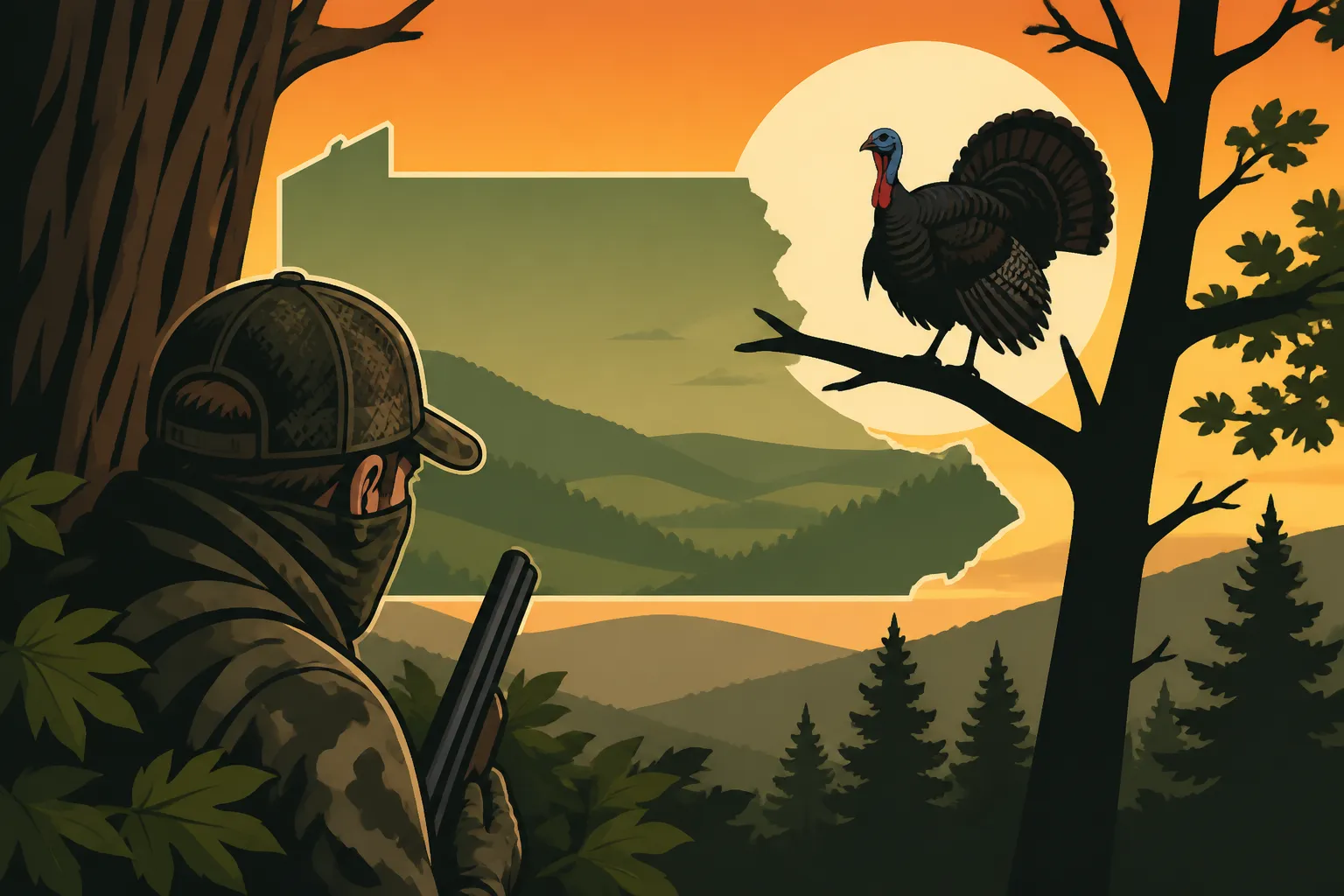
There are few things more frustrating in the spring woods than hearing a gobbler sound off from his roost tree, only to have him fly down and wander off in the opposite direction, leaving you scratching your head. Pennsylvania gobblers are notorious for being cagey, and getting them to commit to your setup right after fly-down can feel like a dark art. This comprehensive guide will pull back the curtain on the subtle yet effective strategies for roost hunting these magnificent birds, ensuring you're in the right place at the right time when they hit the ground.
Understanding the Gobbler's Roosting Habits in Pennsylvania
To effectively hunt a gobbler from his roost, you first need to understand why he chooses a particular tree or area for his nightly slumber. It's not just a random pick; there's a method to their madness, driven by survival and instinct.
Why Gobblers Roost Where They Do
Gobblers, and turkeys in general, don't just pick any old tree to roost in. Their choice is a calculated decision, first and foremost about safety. Elevated positions protect them from ground predators like coyotes, foxes, and bobcats during the vulnerable nighttime hours. They look for tall, sturdy trees with strong horizontal limbs that offer a good perch and clear lines of sight, allowing them to spot potential threats before they're too close. This visibility is crucial, not only for spotting predators approaching from below but also for scanning the landscape at first light before flying down.
Beyond safety, proximity to food and water sources also plays a significant role. Turkeys don't want to travel far to get their morning meal or a drink after flying down. You'll often find roosts near agricultural fields, mast-producing oak ridges, or along stream bottoms where food and water are readily available. Escape routes are another consideration; a bird won't roost if he can't safely fly down into dense cover or across an open field to evade a threat. In Pennsylvania's varied terrain, this might mean a big oak on a steep hillside, allowing them to glide safely down into a hollow, or a towering sycamore along a creek bed that gives them a direct flight path to an adjacent cornfield.
Weather conditions also influence roosting choices. On windy nights, turkeys might seek more sheltered locations in a valley or a dense stand of pines or hemlocks to avoid being buffeted. Conversely, on calm, clear nights, they might prefer more exposed ridge tops where they can catch the first rays of morning sun. Understanding these nuances can help you predict where a gobbler might settle in for the night, whether you're deep in the State Game Lands or skirting the edges of private farmland.
Identifying Potential Roost Trees and Areas
Identifying where turkeys are roosting can be both an art and a science. Visually, you're looking for mature trees, often the tallest in an area, with large, sturdy limbs. These are typically hardwoods like oaks, maples, or sycamores, but pines and hemlocks can also serve the purpose, especially in areas with persistent wind or thick cover. Evidence on the ground is your next best friend: fresh droppings, discarded feathers, and even scratch marks on the trunk from birds climbing up or down are all tell-tale signs. The more fresh evidence you find, the more confident you can be that the spot is currently active.
Beyond physical evidence, your ears are your most powerful tool. The best way to confirm a roost is to be in the woods at dusk and listen for evening gobbles. As the sun dips below the horizon, turkeys often "shock gobble" at sudden loud noises like crow calls, owl hoots, or even distant car doors slamming. These pre-roost gobbles can pinpoint their exact location before they settle in for the night. You're trying to locate the specific tree or cluster of trees where they'll spend the night, giving you a distinct advantage for your morning setup.
Technology has become an indispensable aid in this endeavor. Mapping applications like GoHunt, or other similar platforms, allow you to study aerial imagery and topographical maps, identifying likely roosting areas before you even step foot in the woods. Look for areas with mature timber, prominent ridge lines, or creek bottoms that fit the description of a typical roost. You can mark these potential spots, then verify them with in-person scouting, saving you countless hours of aimless wandering. Remember, if you find one roost, chances are there are others nearby, as turkeys often prefer certain micro-habitats for their nightly rest.
Pre-Season and In-Season Scouting for Roosted Birds
Scouting is paramount for successful roost hunting. You can't just stumble into a roost setup; it requires careful planning and observation. This involves both evening listening sessions and early morning reconnaissance to confirm locations and pattern turkey behavior.
Evening Listening and Locating Gobblers
The hours just before dusk are critical for identifying active roosts. This is when gobblers are most vocal as they fly up to their roost trees or settle in for the night. Your goal is to be in a good listening post at least an hour before sunset, ideally on a high point or an open ridge that allows sound to carry. Once you're positioned, the waiting game begins. You're listening for those tell-tale gobbles that signal a bird is heading to bed.
Many hunters employ locator calls to trigger "shock gobbles" from birds. An owl hooter or a crow call can be incredibly effective. Let out a sharp, realistic hoot or caw, then immediately go silent and listen intently. A gobbler will often respond, giving away his position. It’s important not to overdo it with the locator calls; one or two well-placed calls every 10-15 minutes is usually sufficient. Pay close attention to the direction and distance of the gobble. Is it coming from the same direction as last night? Does it sound like one bird or multiple? These details will help you refine your approach plan for the next morning.
Distinguishing between a shock gobble and a natural roost call is also important. A shock gobble is usually a single, immediate response to your call. Natural roost gobbles, on the other hand, might be more drawn out, sometimes multiple birds gobbling back and forth as they settle in. As the light fades, the gobbles will typically subside, signaling that the birds are on their perches for the night. Once you've pinpointed a gobbler's general location, resist the urge to get any closer. Your objective is simply to know where he's roosting, not to spook him before dawn. It’s a delicate balance that separates the successful hunters from those who consistently educate birds.
Early Morning Reconnaissance
While evening listening confirms where a gobbler is, early morning reconnaissance confirms his fly-down habits and helps you plan your exact setup. This means getting into the woods well before first light, often an hour or more before sunrise. You need to be silently positioned in a spot where you can hear the first gobble and, crucially, the sound of the birds flying down from their roost.
The pre-dawn routine requires absolute stealth. Every snap of a twig, every rustle of leaves, can carry far in the quiet morning air and alert a sharp-eared gobbler. Your goal is to find a listening post that allows you to observe (or at least hear) the fly-down without being detected. This might be on an adjacent ridge, across a hollow, or just out of sight of the roost tree itself. Once you hear the first light gobble, followed by the distinctive whoosh of wingbeats as a turkey descends, you'll know you've confirmed an active roost and its exact location.
Observing the fly-down pattern from a safe distance can provide invaluable information. Do they fly directly into a field? Do they land in heavy timber and then work their way towards an opening? Do they land and immediately start calling, or do they remain silent? This intelligence allows you to refine your setup for a future hunt, ensuring you're placing yourself directly in their preferred fly-down and travel corridor. Don't be tempted to try and kill the bird on this reconnaissance mission; your focus is purely on gathering information. This often means leaving without a shot, which can be tough, but it dramatically increases your odds on subsequent hunts. If you're wondering how these observations relate to other tactics, consider how this information could inform Run-and-Gun Turkey Tactics on Game Lands if the roost doesn't work out.
The Art of the Silent Approach and Setup
Once you've located a roosted gobbler, the real challenge begins: getting into position without alerting the bird. This demands meticulous planning, silent movement, and a strategic setup that anticipates the gobbler's every move.
Stealthy Entry Tactics Before Dawn
Executing a truly stealthy entry before dawn is perhaps the most critical component of roost hunting. This isn't a casual stroll; it's a calculated infiltration. The darkness is your friend, but it also amplifies every sound. You need to plan your route to the setup location down to the very last detail during daylight hours if possible, identifying quiet paths, avoiding thick brush, and noting any potential obstacles like downed trees or rocky patches. Using a headlamp on a very dim setting, or better yet, using moonlight if available, can help you navigate without startling wildlife.
Minimizing noise means moving at a snail's pace. Every step should be deliberate, testing the ground before committing your full weight. Walk on soft moss, pine needles, or bare earth whenever possible, avoiding crunchy leaves or snapping twigs at all costs. If you absolutely must move through thick cover, do so slowly and methodically, pushing branches aside rather than letting them snap back. Additionally, always consider the wind direction. You want to approach from a direction where your scent is carried away from the roost, even though turkeys rely more on sight and sound, any advantage helps. Thermals in mountainous Pennsylvania terrain can also play a role; cold air drains downhill at night, so an uphill approach might carry your scent directly to a roosted bird if not careful.
Having your path pre-planned and possibly even walked in daylight makes a world of difference. This helps avoid getting lost or disoriented in the dark, which can lead to unnecessary noise and fumbling. Many experienced hunters will use a GPS device or a mapping app like GoHunt to mark their exact roost location and their planned entry route. This allows for precise navigation, ensuring you arrive at your chosen setup spot quietly and efficiently, well before the first hint of daylight.
Positioning for the Fly-Down Shot
Your setup is your ambush point, and its location is paramount. The golden rule is to position yourself between the roost tree and where you anticipate the gobbler will want to travel once he hits the ground. This often means placing yourself on a natural travel corridor, a subtle ridge, an old logging road, or the edge of a field. Avoid setting up directly under the roost tree; this puts you at a disadvantage as the bird will be looking down from above, and it also puts you too close to the initial commotion of fly-down. A distance of 75 to 150 yards from the roost is usually a good starting point, but this can vary depending on terrain and cover.
Once you've chosen your general area, select a spot with good natural cover that breaks up your outline. A wide tree trunk, a cluster of thick brush, or a blowdown can serve as an excellent natural blind. Ensure you have a clear shooting lane in the direction you expect the turkey to approach, and ideally, in the direction of the roost for those early morning fly-down shots. Make sure your back is against something substantial, like a tree, to protect your back arc from any potential approach and to keep your movements concealed. Think about how to effectively use the landscape, much like considering Setting Up Against a Big Oak for deer, but with turkey behavior in mind.
Decoy placement is another critical element. If using decoys, set them up where they are visible from the roost, but not so close that they appear to be directly under the roost tree. A common strategy is a single hen decoy, or a jake and a hen, placed about 20-30 yards from your position, facing away from you (as if walking away) or slightly quartering. This gives the approaching gobbler a visual target and can draw his attention away from your hiding spot. However, use caution with decoys, especially on public land or with highly pressured birds; sometimes no decoy is better than a poorly placed one, or one that signals "danger." On areas with significant hunting pressure, over-reliance on decoys can sometimes educate birds further.
Calling Strategies for Roosted Gobblers
Calling a roosted gobbler requires finesse and patience. It's not about blasting out loud calls from the get-go; it's about building anticipation and mimicking natural turkey sounds that encourage the gobbler to come looking for the source.
Subtle Calls Before Fly-Down
The moments before a gobbler flies down are some of the most exciting, and nerve-wracking, in turkey hunting. This is not the time for aggressive, booming yelps. Instead, think subtle, soft, and enticing. Start with very soft tree yelps, clucks, and purrs, mimicking a hen just waking up on the roost. These calls should be quiet enough that they sound like they're coming from another turkey just a short distance away, maybe 50-70 yards. The goal is to pique the gobbler's interest, to make him think there's a contented hen nearby, without alarming him or making him suspicious.
These early morning calls should be sporadic and non-committal. A few soft yelps, a pause, perhaps a light cluck or purr. You're not trying to call him off the roost; you're simply letting him know you're there and sounding inviting. The gobbler will often respond with a gobble or two from his perch, giving away his position and indicating he's aware of your presence. This confirmation is gold. It tells you he's interested, but not yet committed.
Continue with these subtle calls until you hear the distinct sound of him flying down, or you see him hit the ground. Resist the urge to increase your volume or aggression too early. The aim is to make him curious enough to fly down in your direction, believing he's coming to investigate a hen who isn't making a huge fuss. Remember, you're trying to replicate what happens naturally in the woods, and usually, hens don't start screaming from the roost. Consider this specific tactic further in Calling a Pennsylvania Gobbler Off the Roost.
Aggressive Calling Post-Fly-Down and When to Avoid It
Once the gobbler has hit the ground, your calling strategy might need to shift, depending on his behavior. If he flies down and immediately gobbles, or if he's moving in your general direction but seems hesitant, it might be time to increase the volume and aggression of your calls. Cuts, cackles, and louder, more excited yelps can sometimes be the ticket to draw him in. These calls suggest an eager hen, ready to meet up, and can often trigger a strong response from a dominant gobbler.
However, discretion is key. Not every situation calls for aggressive calling. If the gobbler flies down and goes silent, or if he starts moving in the opposite direction, aggressive calling might actually push him further away. In these scenarios, it's often better to scale back your calling, perhaps returning to softer yelps and clucks, or even going silent altogether. Sometimes, the best call is no call at all. A gobbler that thinks a hen is playing hard to get might be more inclined to come investigate a silent, unseen bird.
It's crucial to adapt to the bird's mood. Is he fired up and gobbling aggressively? Then a more aggressive calling sequence might work. Is he quiet and wary? Then subtlety and patience will be your best allies. The danger of over-calling is always present, especially with pressured birds in Pennsylvania. They've heard it all, and an unnatural or overly enthusiastic calling sequence can quickly turn them off. Pay attention to his responses, his body language if you can see him, and be ready to change your strategy on the fly.
Common Mistakes and How to Avoid Them
Even the most seasoned turkey hunters make mistakes, especially when it comes to the delicate dance of roost hunting. Understanding these common pitfalls and actively working to avoid them can significantly improve your success rate.
Pressuring the Roost and Spooking Birds
One of the biggest mistakes a turkey hunter can make is pressuring the roost. This means getting too close to the roost tree, making too much noise during your approach, calling too aggressively before fly-down, or letting the gobbler see you. When a gobbler is spooked off the roost, he often flies a considerable distance and becomes highly wary. This isn't just a setback for that morning; it can educate him and other turkeys in the area, making them incredibly difficult to hunt for days, or even weeks, afterwards. It's the cardinal sin of roost hunting.
To avoid spooking birds, always err on the side of caution. Give the roost tree a wide berth, even if it means taking a slightly longer or more challenging route to your setup. Plan your approach with a buffer zone in mind—think at least 150-200 yards away from the actual roost tree itself, especially if you anticipate the bird flying down in a different direction. Move slowly and deliberately, paying attention to every footfall. If you accidentally make a noise, freeze for a few minutes and listen for any reaction before cautiously resuming your movement.
Learning from past mistakes is crucial. If you suspect you've spooked a bird, make a silent retreat and don't push it. Trying to continue the hunt after spooking a roosted bird is usually an exercise in futility. Instead, consider relocating to a different area for the rest of the day, or plan to return to that roost site only after several days of rest for the birds. Respect for the roost isn't just about successful hunting; it's about good wildlife management and ensuring these birds remain huntable for future seasons.
Misjudging Terrain and Entry Routes
Pennsylvania's diverse topography, from the steep inclines of the Allegheny Mountains to the rolling hills of the Ridge and Valley region, presents unique challenges for navigating in the dark. Misjudging the terrain or your entry route can lead to fumbling, noise, and ultimately, spooked birds. A gentle slope on a map can be a near-vertical climb in person, and a thin line of trees might hide an impenetrable thicket. Getting lost in the dark or encountering unexpected obstacles can derail your entire morning hunt.
To prevent this, thorough pre-season and daylight scouting are essential. Walk your planned entry routes in broad daylight. Identify landmarks, note changes in elevation, and scout for areas of thick cover that might force you to make noise. Use topographical maps in conjunction with aerial imagery (like those found on GoHunt or similar platforms) to get a comprehensive understanding of the landscape. Pay close attention to features like creek beds, rock outcroppings, and logging roads, which can serve as both navigation aids and natural travel corridors for turkeys. Think about how understanding these features can also help when Reading a Pennsylvania Hollow for Deer or other game.
Always have a backup plan. What if your chosen entry route is suddenly blocked by a fallen tree, or you find another hunter already set up in your spot? Knowing alternative routes and backup setup locations can save your hunt. Carry a reliable GPS device or a fully charged phone with a mapping app, and know how to use it, even in offline mode. It's not just about finding the roost; it's about safely and silently getting to your position and having a way to get out, even if your first plan doesn't pan out.
Adapting to Pennsylvania's Diverse Landscapes
Pennsylvania is a state of incredible diversity when it comes to its wild landscapes, and how you approach roost hunting will naturally change depending on whether you're deep in the "Big Woods" or on the edge of a farm field.
Roost Hunting in the Big Woods
Hunting the vast expanses of Pennsylvania's Big Woods offers a completely different experience than farming country. Here, turkeys are often more scattered, and the terrain is typically much more rugged, with steep ridge lines, deep hollows, and dense timber. This means less distinct travel corridors for the birds, and you'll often have to cover more ground to locate an active roost. The sheer scale of the landscape can be intimidating, but it also offers a sense of solitude and accomplishment when you connect with a bird.
In the Big Woods, focus your scouting efforts on prominent ridge lines, areas where mature timber (especially oak stands) transitions into younger growth or clear-cuts, and along stream bottoms. These areas often provide the taller trees turkeys prefer for roosting, along with the food sources and protective cover they seek. Old logging roads or gas lines can serve as excellent listening posts, allowing sound to carry through the dense forest. When studying maps, look for fingers or spurs off main ridges, as these can be natural bottlenecks for turkeys traveling to and from their roosts. When scouting, consider how these natural elements influence other game, as discussed in Hunting the Pennsylvania Big Woods for Deer.
Patience and persistence are your greatest assets in the Big Woods. You might not hear a gobble every evening, and you might need to cover several miles to find an active roost. Don't be afraid to use locator calls frequently, as sound can be absorbed by the dense forest canopy. Once you do locate a roost, your setup needs to account for the often-steep terrain. Position yourself where the gobbler will have to come uphill or across a bench to get to you, using gravity to your advantage, or where his natural fly-down path leads him directly into your setup.
Roost Hunting in Farm Country Edges
Pennsylvania's farm country, particularly in the southern and southeastern regions, presents a different set of challenges and opportunities for roost hunting. Here, turkeys are often more concentrated in smaller woodlots, along fencerows, and in creek bottoms nestled amidst agricultural fields. While locating birds might be easier due to their higher densities, these turkeys are often more accustomed to human activity and can be incredibly wary. Pressure from other hunters can also be a significant factor.
In farm country, concentrate your scouting efforts on isolated woodlots, strips of timber along creek beds or rivers, and areas bordering active agricultural fields. Turkeys often roost in mature trees on the edge of a field, allowing them to fly down directly into a food source. Look for birds using specific travel routes between roosting areas and feeding grounds. You might find "strut zones" or dusting bowls near these roosts, indicating where birds spend their early morning hours after fly-down. For more specific advice on hunting these areas, refer to Turkey Tactics for Farm Country Edges.
Dealing with increased human activity is crucial here. Farmers, dog walkers, and other hunters can easily spook birds, so quiet and early entry is even more critical. You might need to set up further from the actual roost than in the Big Woods, allowing the gobbler to clear the roost area before engaging him with calls. Decoys can be highly effective in farm country, as they offer a visual confirmation that helps draw in birds that are used to seeing other turkeys. However, be mindful of property lines and safety zones around buildings. Always obtain permission before hunting private land, and respect the landowner's property. These birds are often smarter and more experienced due to exposure, so your calling needs to be impeccable and your movements flawless.
Roost Hunting Considerations: Big Woods vs. Farm Country
| Feature | Big Woods | Farm Country |
|---|---|---|
| Terrain | Rugged, steep ridges, hollows, dense timber | Rolling hills, isolated woodlots, fields |
| Gobbler Density | More scattered, lower density | More concentrated, higher density |
| Scouting Focus | Ridge lines, stream bottoms, mature oak stands | Woodlot edges, fencerows, creek bottoms, fields |
| Locator Calls | Often necessary, sound carries less far | Effective, sound carries well |
| Entry Stealth | Critical due to quiet environment | Critical due to human activity/wary birds |
| Setup Distance | Often closer to roost, utilizing topography | Often further from roost, allowing space |
| Decoy Effectiveness | Less critical, sometimes not used | Often highly effective, visual appeal important |
| Hunter Pressure | Generally lower | Generally higher |
| Primary Challenge | Locating birds, covering ground | Wary birds, human interference, access |
Disclaimer
Hunting is an inherently dangerous activity. This guide provides informational content only and does not substitute for proper training, adherence to all local, state, and federal hunting regulations, or responsible gun handling practices. Always prioritize safety, understand your equipment, and be aware of your surroundings. The author and publisher are not responsible for any incidents that may occur.