Pennsylvania Dove Season Dates
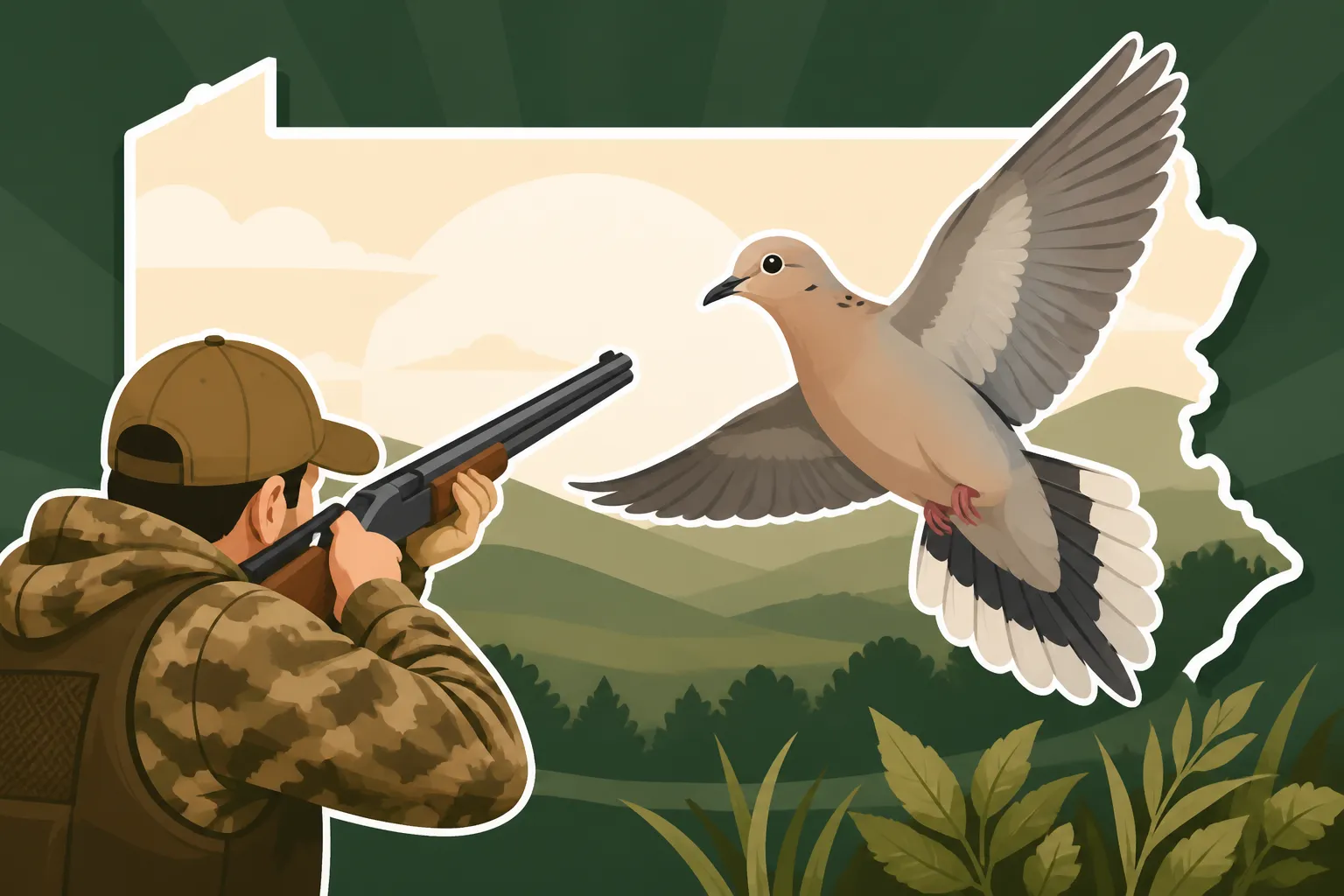
The anticipation for dove season in Pennsylvania is palpable each year, bringing with it the promise of fast-flying action and a challenging hunt that requires sharp reflexes. However, keeping up with the exact Pennsylvania dove season dates, which often feature split seasons and specific regulations, can be confusing for even seasoned hunters. This comprehensive guide aims to demystify the migratory bird hunting calendar, providing clear, up-to-date information on dove seasons, necessary permits, and crucial regulations to ensure you're fully prepared for a successful hunt.
The Typical Structure of Pennsylvania's Dove Season Dates
Pennsylvania's mourning dove season typically operates under a split-season framework, designed to maximize hunting opportunities while aligning with dove migration patterns across the state. This means you'll usually have an early season, a period of closure, and then a late season. The early season is often the most popular, coinciding with the beginning of September when doves are abundant and local populations haven't yet been pressured too heavily. It’s also when young-of-the-year birds are plentiful, offering a challenging but rewarding hunt.
Historically, the first segment of the dove season kicks off on September 1st, or the Saturday closest to it, and runs for several weeks. This initial period is when hunters will encounter the highest densities of local birds, often concentrated around agricultural fields, power lines, and water sources. As the season progresses into late September and early October, colder temperatures and changing food sources begin to push some of these local birds southward.
Following this initial burst of activity, there's usually a break in the season, which gives both the birds and the hunters a respite. This hiatus is vital for allowing late-hatching doves to mature and for migrating flocks to move through or settle into new areas. The mid-season break also prevents excessive pressure on the remaining local populations, contributing to sustainable hunting.
The second segment, or late season, typically reopens in late October or early November and can extend into early January. This later period often sees different birds, mostly migrants moving through the state or those that have paused their journey. Hunting in the late season can be more challenging due to colder weather, more scattered birds, and often different feeding patterns, but it can also be incredibly rewarding for those who brave the elements. These dates are set annually by the Pennsylvania Game Commission (PGC) in cooperation with the U.S. Fish and Wildlife Service, falling within federal migratory bird hunting guidelines. Always check the current year's official Pennsylvania Game Commission Digest for the precise dates, as they can shift slightly year to year.
Securing the Necessary Licenses and Permits
Before you can even think about where to set up your blind or which fields to scout, you need to ensure all your licensing is in order. Dove hunting, like all migratory bird hunting in Pennsylvania, requires a few specific permits beyond your general hunting license. Neglecting these can lead to fines and a ruined hunt, so pay close attention.
First and foremost, you'll need a valid Pennsylvania general hunting license. This is your foundational permit for nearly all hunting activities in the state. Once you have that, you'll need to purchase a Pennsylvania Migratory Game Bird Licence, sometimes simply called a "Migratory Bird Stamp." This state-specific permit is crucial and indicates your intent to hunt species like doves, ducks, geese, woodcock, and snipe. It's a small fee but a mandatory one, and the funds often contribute directly to migratory bird management and habitat conservation efforts within the state. You can purchase both your general hunting license and the migratory bird license through the PGC website, at an authorized licensing agent, or by using a digital platform like GoHunt to streamline the process.
Beyond these state requirements, there's a federal component: the Harvest Information Program, or HIP registration. This is not a physical stamp or permit you carry, but rather a mandatory registration that every migratory bird hunter must complete annually. When you register for HIP, you'll answer a few simple questions about your previous year's hunting success for various migratory species. This data is collected by the U.S. Fish and Wildlife Service and is vital for setting future hunting seasons and bag limits for migratory birds across the country. It helps biologists understand harvest trends and population health, ensuring sustainable hunting opportunities for years to come. Remember, you must complete your Pennsylvania HIP Registration for Migratory Birds every year, even if you didn't hunt migratory birds the previous season.
For younger hunters, Pennsylvania offers a fantastic Mentored Youth Permit Rules program, allowing them to participate in many hunting activities, including doves, under the direct supervision of a licensed adult. This is a great way to introduce the next generation to the joys of hunting and the ethics of conservation. Similarly, adults new to hunting can utilize the Mentored Adult Permits in Pennsylvania to get started, ensuring they learn safely and responsibly. Make sure to review the specific regulations for these permits, as they have strict age and supervision requirements.
Critical Regulations and Bag Limits for Dove Hunting
Pennsylvania has clear rules regarding dove hunting to ensure fair chase, hunter safety, and sound wildlife management. Understanding these specifics is just as important as knowing the season dates themselves.
The daily bag limit for mourning doves is typically 15 birds. This means you can harvest up to 15 doves per day. The possession limit, which dictates how many legally harvested birds you can possess at home or in transit, is usually three times the daily bag limit, or 45 birds. These limits are strictly enforced, so always keep a count of your birds. Exceeding these limits not only risks a citation but can also negatively impact local dove populations.
Legal shooting hours for doves generally run from one-half hour before sunrise until sunset. This allows hunters to be in the field during the periods of peak dove activity, typically early mornings and late afternoons when birds are flying to and from feeding and roosting areas. However, as with all regulations, it’s crucial to confirm the exact Pennsylvania Legal Shooting Hours for migratory birds in the current year's digest.
Unlike deer or bear hunting, hunter orange is generally not required for dove hunting. This is due to the nature of dove hunting, which often involves being concealed in fields, and the fact that doves are typically hunted with shotguns, which have a limited range. However, if you are hunting on public lands where other seasons might be open concurrently, or if you are crossing areas where deer hunters might be present, wearing some amount of blaze orange is always a smart safety precaution. For deer hunters, Pennsylvania requires a specific amount of Pennsylvania Hunter Orange Square Inches during certain seasons, but doves fall under different guidelines.
One of the most critical regulations to understand for dove hunting is the prohibition against baiting. It is illegal to hunt doves by the aid of baiting, or on or over any baited area. "Baiting" means placing, exposing, depositing, distributing, or scattering of shelled, shucked, or unshelled corn, wheat, or other grain, salt, or other feed that could lure or attract doves. While normal agricultural practices, such as harvesting standing crops or planting a crop in a way that attracts doves, are generally permissible, hunters must be absolutely certain that any area they hunt has not been illegally baited. If you are uncertain about a field, it is always best to err on the side of caution and find another spot. Many PGC-managed properties will have specific areas designated for dove hunting that are actively managed to be legal and attractive to birds, mitigating some of this concern. You can often find these locations by utilizing mapping tools available on services like GoHunt or checking the PGC website directly.
Regarding firearms, only shotguns are legal for hunting doves in Pennsylvania. Most hunters opt for 12-gauge or 20-gauge shotguns, with lighter loads of fine shot (e.g., 7.5 or 8 shot) being most common. There are no specific restrictions on shotgun gauge or action type, but federal regulations stipulate that shotguns used for migratory birds must be plugged to hold no more than three shells (one in the chamber, two in the magazine). This rule is universal for migratory bird hunting across the United States. While not specifically for doves, you can find more general information about Legal Firearms for Pennsylvania Deer if you're curious about other species.
Effective Strategies for Successful Dove Hunting
Beyond knowing the rules, having a solid strategy can make all the difference when pursuing these speedy aerial targets. Dove hunting is often a game of anticipating flight paths and having quick reflexes.
Scouting is Paramount: Doves are creatures of habit and will often follow predictable patterns between their roosting areas, feeding grounds, and watering holes. The absolute best way to increase your chances is to scout before the season opens. Look for cut grain fields (corn, wheat, sunflower, millet) where doves feed. Power lines are also prime spots, as doves love to perch on wires before dropping down into fields. Water sources, especially muddy ponds or creeks, are also major attractants. Using a mapping application like GoHunt can be incredibly helpful for identifying potential hotspots and understanding land ownership, allowing you to scout efficiently. Pay close attention to small, overlooked fields or corners of larger fields that might see less pressure. Sometimes, these small pockets of habitat can hold an incredible number of birds that other hunters overlook. Learning to identify Scrape Lines Along a Logging Road might be useful for deer, but for doves, you’re looking more for active feeding sign and flight patterns.
Concealment is Key: Doves have excellent eyesight. While you don't need a full-blown blind like you might for waterfowl, breaking up your silhouette is critical. Wearing camouflage clothing that blends with the field stubble or trees you're near is a good start. Utilize natural cover like fence rows, standing corn, or brush piles. A simple stool or bucket to sit on and a few camouflage netting panels can create an effective blind. Staying still and minimizing movement when birds are approaching will greatly improve your shot opportunities. Many hunters forget how important stillness is; even subtle movements can flare approaching doves.
Decoy Placement and Attraction: Dove decoys, especially spinning-wing decoys, can be incredibly effective. Doves are highly social birds and are often drawn to the sight of other doves. Place decoys on the ground in a realistic feeding pattern, or attach them to a fence line or dead tree branch near your position. Spinning-wing decoys, such as those from Mojo Outdoors or Lucky Duck, mimic a dove landing and can pull birds from a distance. A common tactic is to place a spinning-wing decoy on a pole above the field, making it visible from further away. Combining these with static decoys creates a very convincing spread.
Shotgun and Load Choice: As mentioned, 12-gauge and 20-gauge shotguns are standard. Shot sizes 7.5 or 8 are ideal, offering a dense pattern of small pellets capable of bringing down these fast-moving birds without over-penetrating the meat. You'll likely be taking many shots, so consider buying shells in bulk. Patterning your shotgun before the season is a great idea to understand how your gun and choke combination performs at various distances. A modified or improved cylinder choke is often preferred for dove hunting, providing a good balance of spread and density. While not typically a concern for doves, be mindful of Where Nontoxic Shot Is Required in Pennsylvania if you ever venture into specific waterfowl hunting areas, as lead shot is generally fine for doves otherwise.
Retrieving Downed Birds: Doves are small and can be tough to find in thick cover. Having a good bird dog is invaluable for retrieving downed birds, minimizing lost game. If you don't have a dog, mark precisely where the bird fell and immediately go to retrieve it. It’s a good practice to only shoot at birds you're confident you can recover. A lost dove is a wasted dove, and ethical hunting dictates that we do everything we can to recover every animal we harvest.
Managing Hunting Pressure: Early season doves, especially on easily accessible public lands, can quickly become educated due to hunting pressure. If you find your go-to spot isn't producing, don't be afraid to move. Look for areas with less obvious access or smaller, more out-of-the-way fields. Sometimes, a short walk further into Hunting Pennsylvania Clearcuts and Regrowth or along the edges of larger timber stands can yield untouched pockets of doves. Understanding Hunting Pressure on Pennsylvania Game Lands is critical. Even on well-used properties, there are often ways of Finding Ground Others Walk Past if you're willing to put in a little extra effort.
Summary of Pennsylvania Dove Season
Hunting doves in Pennsylvania offers an exciting start to the fall hunting seasons. With a little preparation regarding licenses, a solid understanding of the regulations, and smart hunting strategies, you can enjoy plenty of fast-paced action. Remember to always double-check the current year's official Pennsylvania Game Commission Digest for the most accurate and up-to-date season dates and regulations. Keep your shotgun swinging, your eyes peeled, and enjoy the thrill of the hunt.
| Season Segment | Typical Start Date | Typical End Date | Bag Limit (Daily) | Possession Limit | Shooting Hours |
|---|---|---|---|---|---|
| Early Season | Sept 1st (or near) | Mid-September | 15 birds | 45 birds | 1/2 hr before sunrise to sunset |
| Late Season | Late Oct/Early Nov | Early January | 15 birds | 45 birds | 1/2 hr before sunrise to sunset |
Note: These dates are typical and subject to change annually by the Pennsylvania Game Commission. Always consult the most recent PGC Hunting & Trapping Digest for official dates and regulations.
Disclaimer
The information provided in this article is for general guidance and informational purposes only and does not constitute legal advice or official hunting regulations. Hunting laws and regulations in Pennsylvania are subject to change. It is the responsibility of every hunter to consult the official Pennsylvania Game Commission Hunting & Trapping Digest, available on the PGC website or at license issuing agents, for the most current and accurate information regarding season dates, bag limits, licensing requirements, and all other applicable regulations before engaging in any hunting activities. Failure to do so may result in legal penalties.