Youth Deer Hunt Dates and Rules
There's a special kind of excitement that ripples through the household when a young hunter is preparing for their first deer season. It's a mix of anticipation, hope, and maybe a little anxiety for the parents or mentors who want nothing more than a safe, positive, and memorable experience. Understanding the specific dates and rules for Pennsylvania's Youth Deer Hunt is absolutely crucial to ensuring everything goes smoothly, helping to alleviate those worries and pave the way for an incredible adventure in the woods. This guide will walk you through all the ins and outs, so you can focus on making memories with your young hunter.
The Excitement and Logistics of Pennsylvania's Youth Deer Hunt
The Pennsylvania Game Commission (PGC) has long recognized the importance of recruiting and retaining new hunters, and the Youth Deer Hunt is a cornerstone of that effort. It’s designed to give young, aspiring hunters an exclusive opportunity to get into the deer woods before the regular firearms seasons become crowded, offering a less pressured environment where they can learn and build confidence. For many families, this early season is the highlight of their hunting year, a chance to bond over shared experiences in nature.
What the Youth Hunt Offers
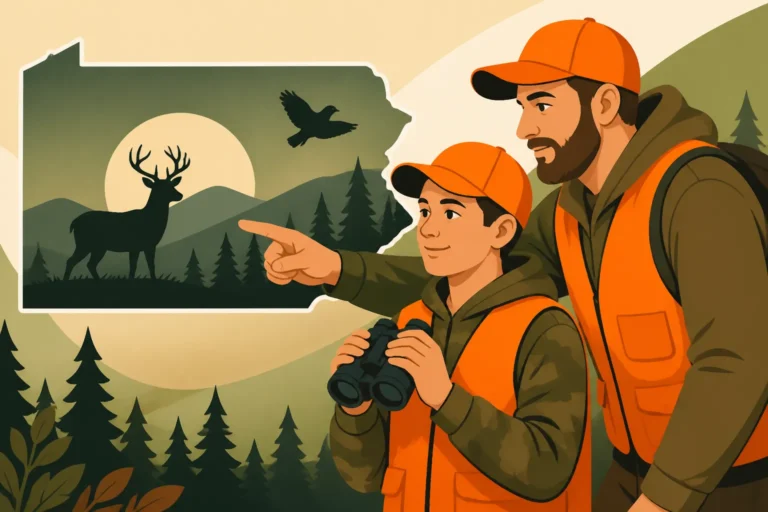
This dedicated youth season isn't just about bagging a deer; it's about fostering a love for the outdoors, teaching responsible hunting ethics, and creating indelible memories. Imagine the crisp autumn air, the vibrant fall foliage, and the quiet anticipation as you sit with your mentee, scanning the woods. It's a prime opportunity for one-on-one instruction, explaining deer behavior, tracking, and the importance of ethical shot placement without the added pressure of dozens of other hunters moving through the woods. Many mentors find that the focus shifts from purely harvesting an animal to truly teaching the craft of hunting.
This specific season also often coincides with excellent weather conditions – not too hot, not too cold – making for a more comfortable experience for young hunters who might not yet be accustomed to long hours in challenging conditions. It allows for a relaxed pace, plenty of time for questions, and the chance to observe other wildlife, turning the hunt into a broader nature lesson. It's a precious window for mentors to instill patience, observation skills, and a deep respect for wildlife.
General Season Structure and Timing
Pennsylvania’s Youth Deer Hunt typically takes place over a specific weekend in late October, usually preceding the statewide archery season's later phases and well before the rifle season. This strategic placement provides a buffer, minimizing competition and maximizing opportunities. While the exact dates can shift slightly year to year, it's consistently scheduled to give youth hunters a dedicated crack at whitetails. It’s important to always check the current PGC Hunting & Trapping Digest for the precise dates, which are published annually.
This hunt typically allows both antlered and antlerless deer to be harvested, provided the young hunter possesses the appropriate tags. The ability to harvest either sex, particularly antlerless deer, increases the chances of success and helps manage deer populations. This is a crucial detail, as it means mentors can focus on teaching shot placement and game recovery rather than just antler assessment, which can be challenging for new hunters. Understanding the full calendar, including when Pennsylvania's Archery Season Opens, helps contextualize this special youth opportunity.
Who Can Participate: Eligibility and Mentored Hunter Rules
The Youth Deer Hunt is structured around the Pennsylvania Game Commission’s Mentored Youth Hunter Program (MYHP) and Mentored Adult Hunter Program, which are designed to safely introduce new hunters to the sport under the direct supervision of an experienced adult. This isn't a free-for-all; it's a carefully regulated program focused on safety and education, ensuring that every young participant has a knowledgeable guide by their side.
Understanding the Mentored Youth and Adult Programs
The Mentored Youth Hunter Program allows children under the age of 17 to participate in various hunting seasons, including the Youth Deer Hunt, without first having to complete a hunter education course. This is a huge benefit, as it removes a potential barrier to entry for many families and allows kids to experience hunting firsthand before committing to the full course. Instead, the responsibility falls squarely on the shoulders of the adult mentor. The adult mentor must be at least 18 years old, possess a valid Pennsylvania hunting license, and accompany the mentored youth at all times while hunting.
The adult mentor is essentially serving as the proxy for the hunter education, ensuring the youth understands safety rules, ethical shooting practices, and game laws. They are responsible for the youth's adherence to all regulations, from proper firearm handling to tagging requirements. For those over 17 but new to hunting, the Mentored Adult Hunter Program offers a similar introductory path, though their participation in certain youth-specific seasons like this one might be different. Full details on these programs can be found in the Pennsylvania Hunter Education and Mentored Permits guidelines.
Age Requirements and Supervision Guidelines
For the Youth Deer Hunt, mentored youth must be under the age of 17 on the date of the hunt. This age cut-off is firm, so if a child turns 17 before the hunt, they would no longer qualify as a "mentored youth" for this specific season and would need to have completed hunter education and purchased their own adult license to hunt in general seasons. The supervision requirements are strict: the mentor must be within arm's reach of the youth at all times when hunting with a firearm. This isn't just about being in the same general area; it's about direct, immediate control and guidance.
When hunting with archery equipment or a crossbow, the mentor must be close enough to communicate and provide immediate assistance. The intent is to ensure that the mentor can intervene immediately if a safety issue arises or provide instruction on shot selection, game identification, and post-shot procedures. This close supervision also promotes a richer learning environment, allowing for constant dialogue and hands-on teaching, making the experience truly educational rather than just transactional.
Navigating Licenses, Tags, and Antler Restrictions
Understanding the licensing and tagging requirements can feel a bit like decoding an ancient scroll, especially for new hunters and their mentors. But it's essential to get this right to avoid any issues afield. The Youth Deer Hunt has specific provisions that simplify some aspects while still requiring adherence to the general framework of Pennsylvania hunting licenses.
Required Permits and Antlerless Tags
To participate in the Youth Deer Hunt, a mentored youth hunter needs a Mentored Youth Hunting Permit. This permit is relatively inexpensive and covers participation in all mentored youth hunting seasons, including the Youth Deer Hunt. However, to harvest a deer, the mentor must possess an unused antlered deer tag from their own general hunting license and/or an antlerless deer license valid for the Wildlife Management Unit (WMU) where they are hunting. When a mentored youth harvests a deer, it is tagged using the mentor's appropriate tag. This means the mentor effectively "gives up" one of their own tags for the youth's harvest.
For antlerless deer, the mentor needs to have purchased an antlerless license specific to the WMU. These are sold on a first-come, first-served basis, often selling out quickly in popular WMUs. If you're planning to hunt antlerless deer during the youth season, it's wise to purchase your antlerless tag as early as possible after they become available. Details on how to acquire these, including when they go on sale, are covered in the Pennsylvania Antlerless Deer Licences Explained guide. This system ensures that even though a young hunter is participating, the harvest is accounted for within the state's deer management goals.
| Permit/License Type | Required For | Who Needs It | Cost (approx.) | Notes |
|---|---|---|---|---|
| Mentored Youth Permit | Youth Hunter | Youth Hunter | $2.97 | Required for all mentored youth hunts. |
| General Hunting License | Mentor | Adult Mentor | $20.97 (Resident) | Allows mentor to provide an antlered tag. |
| Antlerless Deer License | Mentor | Adult Mentor | $6.97 (Resident) | Required for antlerless harvest, WMU-specific. |
| Total Minimum Cost | ~$30.91 | If mentor is a PA resident. |
Note: Costs are approximate resident fees and subject to change annually. Non-resident fees are higher.
Applying Antler Restrictions to Youth Hunts
One common area of confusion revolves around antler restrictions, which can vary by WMU in Pennsylvania. Historically, some of the stricter antler point rules were relaxed for mentored youth hunters, allowing them to harvest any antlered deer with at least one antler three inches in length, regardless of the number of points. This rule was designed to increase success rates and simplify identification for new hunters. However, it's crucial to consult the current digest, as regulations can change. Always verify the specific antler restrictions that apply to mentored youth in your chosen WMU for the current year.
For the Youth Deer Hunt, the primary focus for mentors should be on teaching the young hunter to identify legal deer and make ethical shots, rather than getting caught up in complex antler point counts. Simplifying the decision-making process helps prevent "buck fever" mistakes and allows the youth to concentrate on the fundamentals. Tools like GoHunt can be invaluable for mentors to quickly cross-reference WMU-specific rules and antler restrictions, ensuring compliance before heading out. This knowledge ensures a smooth, stress-free hunt, where the youth can learn without undue pressure.
Safety First: Essential Regulations and Gear
Safety is, without a doubt, the paramount concern for any hunting trip, and it's doubly important when introducing new, young hunters to the sport. The Youth Deer Hunt provides a fantastic learning environment, but it's only as safe as the precautions taken by the mentor. Pennsylvania has clear regulations regarding hunter orange and approved firearms that must be strictly followed.
Mandatory Hunter Orange Requirements
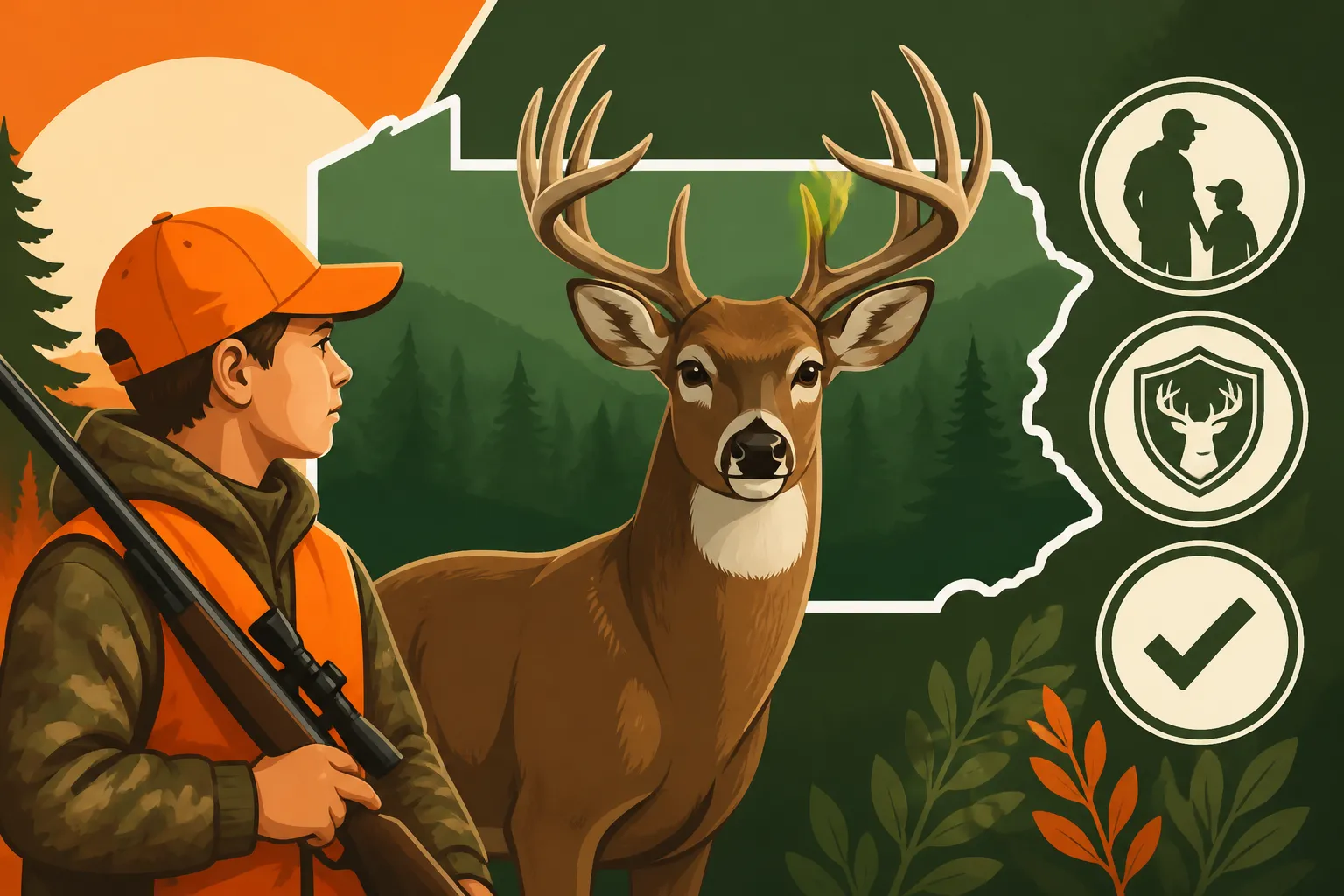
Pennsylvania's hunter orange regulations are designed to maximize visibility and minimize accidents. During the Youth Deer Hunt, which falls within a period where hunter orange is generally required for firearms seasons, both the mentored youth and the adult mentor must wear a minimum of 250 square inches of fluorescent orange material on their head, chest, and back combined, visible from all angles. This isn't optional; it's a non-negotiable safety measure. Wearing more than the minimum is always a good idea, especially in dense cover or during low-light conditions.
Make sure the orange clothing fits well and doesn't impede movement or vision. A common setup involves an orange hat and an orange vest, but jackets or other garments that meet the square inch requirement are also acceptable. This high visibility is especially critical when other hunters might be in the area, or simply for distinguishing human forms from game animals. Emphasize to the young hunter why they wear orange – it’s not just a rule, it’s a life-saving practice that protects them and others. For more specific details, refer to the Pennsylvania Hunter Orange Rules.
Approved Firearms and Ammunition
The Youth Deer Hunt allows the use of various legal firearms for deer hunting, typically mirroring what's allowed in the general firearms season. This includes centerfire rifles, shotguns, muzzleloaders, and bows/crossbows. For mentored youth, the mentor often provides a firearm that is suitable for the youth's size and recoil tolerance. A common choice is a smaller caliber rifle like a .243 or 6.5 Creedmoor, or a 20-gauge shotgun, which offers less recoil than larger calibers but is still effective on deer. The goal is to ensure the youth can handle the firearm safely and accurately.
It’s crucial to match the ammunition to the firearm and ensure it’s legal for deer hunting. Generally, expanding bullets designed for big game are required. Always check that the firearm is in good working order and that the young hunter is proficient with it through repeated practice at a shooting range. Never take a youth hunting with a firearm they haven't comfortably handled and accurately shot multiple times. The focus should be on building confidence and competence, not overwhelming them. Detailed information on legal firearms can be found in the guide to Legal Firearms for Pennsylvania Deer.
Setting Up for Success: Tactics and Preparation
Beyond the rules and regulations, the real magic of the Youth Deer Hunt lies in the preparation and the actual experience in the field. A successful hunt isn't just about harvesting a deer; it's about making the entire process enjoyable, educational, and inspiring for the young hunter. Thoughtful scouting, strategic stand placement, and a patient, positive attitude from the mentor are all key ingredients.
Scouting and Stand Placement for Young Hunters
Pre-season scouting is absolutely vital, especially for a youth hunt. You want to identify areas with consistent deer activity – fresh tracks, droppings, rubs, and scrapes. Look for natural funnels, food sources (like acorn flats or agricultural fields), and bedding areas. Since young hunters may have a shorter attention span or less endurance for long sits, choosing a location where deer are likely to be active within a reasonable timeframe is paramount. This might mean setting up closer to known food sources during the mid-morning or late afternoon.
When selecting a stand or blind location, comfort and safety for the youth should be prioritized. A ground blind, well-brushed in on a field edge, can offer warmth, concealment, and the ability for the youth to move a little more without being detected. This is often more comfortable than a treestand for a beginner. If using a treestand, ensure it's incredibly stable, properly installed, and that both mentor and youth are tethered with safety harnesses at all times. Consider wind direction and access routes carefully to minimize disturbance. You can find more specific advice on Scouting Pennsylvania Public Land Before Season. Using mapping tools like those offered by GoHunt can help you identify prime locations, analyze terrain, and pinpoint potential deer travel corridors, making your scouting efforts more efficient and effective.
Making the Hunt Enjoyable and Educational
The Youth Deer Hunt should be an experience, not a chore. Keep the atmosphere relaxed and positive. Talk to your mentee about deer behavior, explain how to read sign, and teach them about the importance of being quiet and observant. Point out other wildlife – squirrels, birds, even interesting trees – to keep them engaged during quiet periods. Bring snacks, water, and maybe even a thermos of hot cocoa to keep spirits high. Comfort is key to enjoyment.
Patience is a virtue for the mentor. A young hunter might get fidgety, ask a lot of questions, or make noise. Respond with understanding and gentle correction. Remember, you're building a foundation for a lifetime of hunting. If a shot opportunity arises, guide them through the process: confirm the target is a legal deer, ensure a clear shot, emphasize ethical shot placement, and encourage them to take a deep breath. Even if no deer is harvested, a day spent in the woods, learning and bonding, is a success. Teach them about Using a Ground Blind on Pennsylvania Game Lands for warmth and concealment.
After the Shot: Reporting, Care, and Lessons Learned
Successfully harvesting a deer with a young hunter is an unforgettable moment, but the responsibilities don't end there. Proper post-hunt procedures are crucial for ethical hunting, meat care, and fulfilling regulatory requirements. This is another prime opportunity for mentors to teach vital skills and lessons.
Harvest Reporting and Carcass Management
Once a deer is on the ground, the mentor must immediately fill out the mentor's appropriate harvest tag and attach it to the deer's ear. This is a legal requirement and ensures the harvest is properly documented. The harvest then needs to be reported to the Pennsylvania Game Commission, usually online or by phone, within specific timeframes. This is part of the state's wildlife management efforts, as accurate harvest data helps the PGC make informed decisions about deer populations and future seasons. Make sure to review the specific steps for Reporting a Pennsylvania Deer Harvest beforehand.
Carcass management is also critical. If it's a warm day, field dressing the deer promptly will help cool the meat and prevent spoilage. Teach the young hunter the basics of field dressing, emphasizing hygiene and efficiency. Even if they're not ready to wield a knife, they can assist and learn. For heavier deer or difficult terrain, consider how you'll get the deer out of the woods. This might involve a deer cart, a sled, or simply breaking the deer down into manageable pieces to carry out. Knowing the Entry Routes on Steep Ground will help you plan your extraction route.
Processing and Celebrating the Experience
Whether you take the deer to a professional butcher or process it yourself, involve the young hunter in the process as much as appropriate. Seeing the meat harvested and prepared reinforces the connection between the hunt and the food on the table, fostering a deeper appreciation for the animal and the sustenance it provides. This also teaches valuable life skills about food sourcing and preparation.
Finally, celebrate the experience! It doesn't have to be a trophy; simply being successful in the field, making good decisions, and learning new things is cause for celebration. Share stories from the day, look at photos, and talk about what went well and what could be done differently next time. The Youth Deer Hunt is more than just a hunt; it's a rite of passage, a bonding experience, and a vital step in passing on the tradition of ethical hunting. These moments, filled with learning and shared effort, are what truly make a lifetime hunter.
Disclaimer
Please note that hunting regulations, dates, and licensing requirements can change annually. While this guide provides comprehensive information based on typical Pennsylvania Game Commission rules, it is imperative to consult the most current official PGC Hunting & Trapping Digest or their website before planning any hunt. This ensures you have the most accurate and up-to-date information for your specific hunting season and WMU.