Reporting a Pennsylvania Deer Harvest
You've just wrapped up a successful hunt, perhaps a crisp fall morning in the Pennsylvania woods, and there it is: a beautiful whitetail. The adrenaline is pumping, the hard work paid off, and now it’s time for the real work. But before you can even think about dragging, field dressing, or butchering, there's a crucial, often overlooked, step: reporting your deer harvest. Many hunters, especially newer ones or those coming from states with different rules, find this process a little confusing, worrying about getting it wrong or missing a deadline. This comprehensive guide is here to walk you through every aspect of reporting your Pennsylvania deer, ensuring you stay compliant and contribute to the vital management of our beloved deer herd.
Why Accurate Harvest Reporting Matters to Every Hunter
It might seem like a bureaucratic formality after the excitement of a successful hunt, but reporting your deer harvest to the Pennsylvania Game Commission (PGC) is far more important than just checking a box. It's a fundamental part of wildlife conservation and management that directly impacts your future hunting opportunities and the health of our deer population.
The Collective Impact on Deer Management
Every single deer harvest report contributes to a massive pool of data that the PGC uses to make informed decisions about deer management across the Commonwealth. Think about it: without knowing how many deer are being taken, wildlife biologists would be flying blind when it comes to setting season dates, establishing antlerless tag allocations, and even determining antler restrictions for specific Wildlife Management Units (WMUs).
Your report helps them understand population trends – are deer numbers up or down in certain areas? It informs them about herd health, sex ratios, and even age structures. When you report that 3-point buck from WMU 4C, you're providing a tiny, yet vital, piece of information that, when combined with thousands of other reports, paints a clear picture. This direct data collection is far more accurate than mere estimates and allows for more precise, biologically sound management practices. In essence, your report is a vote for better, more sustainable hunting in Pennsylvania. It ensures that the seasons and limits are tailored to the actual conditions on the ground, promoting a balanced ecosystem and robust deer populations for generations to come. This is especially critical when you consider the impact on topics like Pennsylvania Deer Population Estimate.
Staying Compliant and Protecting Your Hunting Privileges
Beyond the grand scheme of conservation, there's a very practical and personal reason to report your harvest: it's the law. The Pennsylvania Game Commission mandates that all deer (and turkey) harvests be reported. Failing to do so isn't just a minor oversight; it's a violation of the state's hunting regulations. While the PGC often prefers education over enforcement for first-time, honest mistakes, a blatant or repeated failure to report can lead to real consequences.
You could face fines, which no one wants after a great hunt, but more seriously, it could jeopardize your hunting privileges. Imagine having your license suspended or revoked because you neglected to report a deer. It's a stark reminder that hunting is a privilege, not a right, and with that privilege comes the responsibility to adhere to all regulations. The process is straightforward, and understanding Pennsylvania Deer Tagging Requirements and harvest reporting rules is part of being a responsible hunter. Don't let a simple administrative task put your future hunting seasons at risk.
The Step-by-Step Process for Reporting Your Pennsylvania Deer Harvest
Reporting your deer harvest doesn't have to be a stressful ordeal. With a little preparation and understanding of the available methods, it's a quick and simple process. Let's break down exactly what you need to do.
Essential Information to Gather Post-Harvest
Before you even think about logging onto the PGC website or picking up the phone, you need to have specific information readily available. This isn't something to guess at; accuracy is key. It's always a good idea to have your license and a pen that works in all weather conditions on you when you're hunting, ready to go.
Here's the checklist of what you'll need:
- Your Hunter ID (PALS Number): This is a unique identification number found on your Pennsylvania hunting license. You can also find it if you're using a platform like GoHunt to manage your licenses electronically. It's crucial for the system to identify you as the hunter.
- Date of Harvest: The exact date the deer was legally taken.
- Wildlife Management Unit (WMU): The specific WMU where the deer was harvested. Pennsylvania's WMUs can be tricky, especially if you hunt near boundary lines. Tools like the Pennsylvania Mapping Center or the PGC's official maps are invaluable here. Double-checking this before you hunt can save a headache.
- County and Municipality: The specific county and municipality (township, borough, or city) where the deer was harvested. Again, knowing your exact location is paramount.
- Antlered or Antlerless: You'll need to specify if the deer was an antlered buck or an antlerless deer.
- Number of Antler Points (if antlered): For antlered bucks, you must report the number of points on one antler and whether the deer met the antler restrictions for the WMU it was harvested in. Remember, the "three up" rule or whatever the requirement is for your specific WMU is important here.
- Sex (if antlerless): For antlerless deer, you'll simply specify if it was a doe.
Having all this written down clearly before you initiate the reporting process will make it much smoother and faster, reducing the chance of errors.
Navigating the Online PALS System
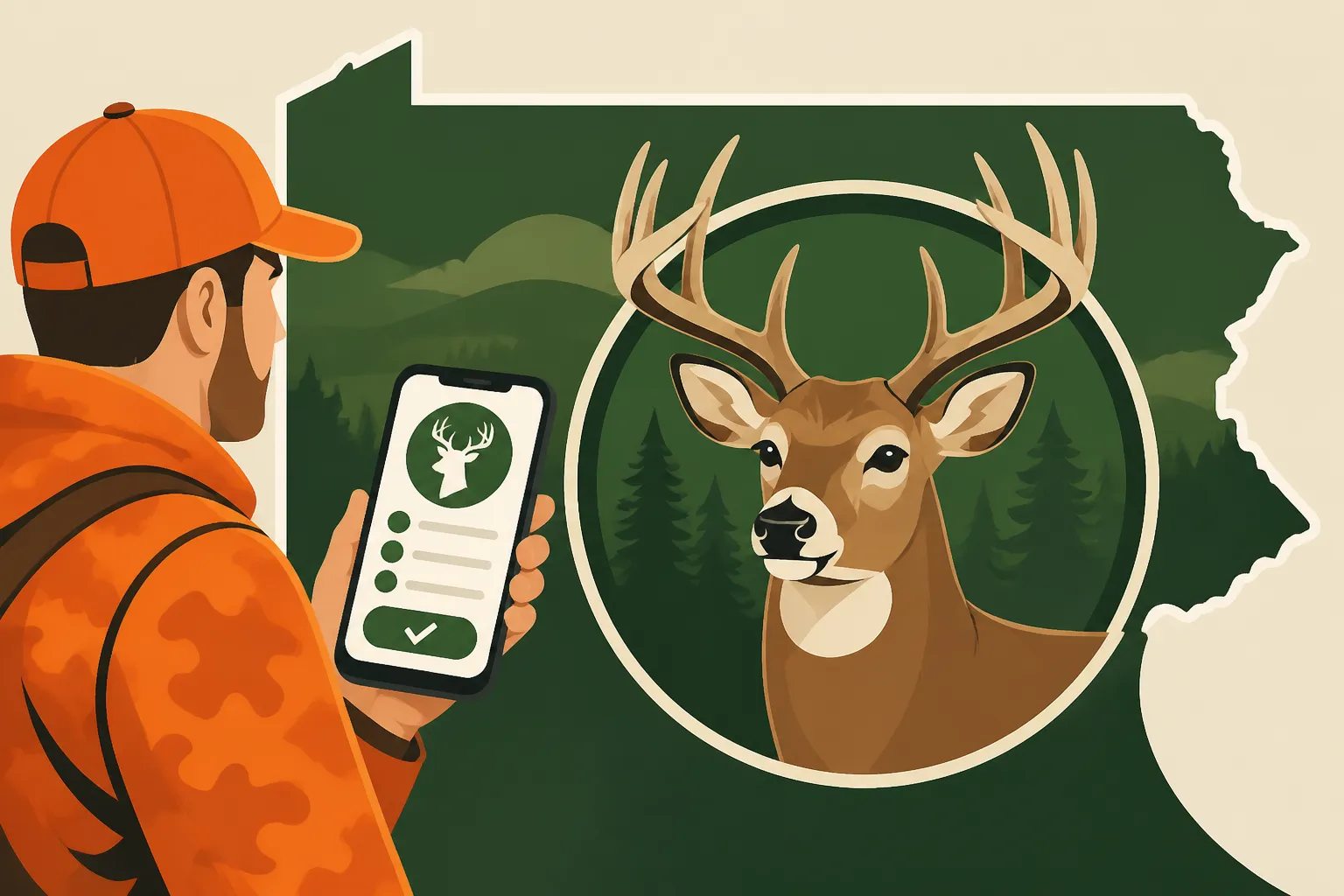
For most hunters, the easiest and most convenient way to report a deer harvest is through the Pennsylvania Game Commission's online PALS (Pennsylvania Automated License System) portal. It's accessible 24/7, meaning you can report your deer as soon as you're home and have all your info squared away, or even from deer camp if you have internet access.
Here's a step-by-step guide:
- Access the PALS Website: Go to the official PGC website and look for the "Buy License / Report Harvest" link, which will direct you to the PALS system.
- Log In: You'll need your customer ID (PALS number) and date of birth to log in. If you've never used the online system before, you might need to go through a quick setup process to verify your account.
- Select "Report Harvest": Once logged in, you'll see a menu of options. Select "Report Harvest."
- Choose Species: The system will prompt you to select the species you're reporting. Choose "Deer."
- Enter Harvest Details: This is where you'll input all the information you gathered earlier: date, WMU, county, municipality, antlered/antlerless status, antler points (if applicable), and sex. The system is designed to guide you through these fields.
- Review and Confirm: Before submitting, carefully review all the entered information for accuracy. One wrong number or letter can throw off the data.
- Receive Confirmation Number: Once submitted, the system will provide you with a confirmation number. This is extremely important. Write this number down or take a screenshot. It's your proof that you reported the harvest. Keep it with your license, or in a safe place, for your records.
Using the online system is generally quick and user-friendly, allowing you to get back to enjoying the spoils of your hunt.
Reporting via the Automated Phone System
For those who prefer not to use a computer or don't have reliable internet access, the PGC also offers an automated phone reporting system. This is a great alternative, especially if you're out in a rural area with limited connectivity but still have cell service.
Here’s how to use the phone system:
- Dial the Number: Call 1-855-PGC-HUNT (1-855-742-4868). This is a dedicated line for harvest reporting.
- Follow the Prompts: The automated system will guide you through the process. It will ask for your PALS number, the date of harvest, and other relevant information.
- Input Data via Keypad: You'll use your phone's keypad to input the numeric information (PALS number, WMU, county codes, etc.). Listen carefully to the prompts to ensure you're entering the correct digits.
- Confirm Information: The system will typically read back the information you've entered. Listen closely and confirm that everything is accurate.
- Receive Confirmation Number: Just like the online system, you will be given a confirmation number at the end of the call. Again, it is crucial to write this down and keep it as proof of your report.
While the phone system is convenient, ensure you're in a quiet place where you can hear the prompts clearly and have all your information ready to avoid fumbling or making errors.
The Critical First Step: Properly Tagging Your Deer In the Field
Before any electronic or phone reporting even happens, there's a vital, immediate step that happens right there in the field: tagging your deer. This isn't just a suggestion; it's a mandatory legal requirement that must be completed immediately after the kill, before the carcass is moved.
Here's what you need to do:
- Locate Your Tag: Every hunter who purchases a general hunting license or specific antlerless deer licenses receives a harvest tag. These are usually found at the bottom of your license printout. Make sure you have the correct tag for the deer you harvested (e.g., general tag for an antlered buck, an antlerless tag for a doe).
- Fill Out the Tag Completely: Using a pen that works in all weather (a pencil or a permanent marker is often a better choice in damp or cold conditions), fill out all the required information on the tag. This includes the date, time of kill, WMU, county, and your PALS number. Make sure your handwriting is legible.
- Attach the Tag to the Deer: The regulation states the tag must be securely attached to the ear of the deer. If it's an antlered deer, you can attach it to an antler. The key is "securely attached" – you don't want it falling off while you're dragging the deer out. Many hunters use zip ties for this purpose, which are much more reliable than string or thin twist ties.
- Do Not Move the Carcass Without a Tag: This is a critical point. You cannot move the deer from the kill site until the tag is completely filled out and attached. This ensures accountability and helps prevent poaching.
This physical tag serves as immediate proof of a legal kill. The information on this physical tag will mirror what you enter into the online or phone reporting system later. Properly tagging your deer is the crucial first step in fulfilling your responsibilities as a hunter, and it's essential knowledge, particularly if you're considering Pennsylvania Deer Tagging Requirements.
Avoiding Common Reporting Pitfalls
Even with the best intentions, it's easy to make mistakes during the harvest reporting process. A minor oversight can lead to incorrect data or, worse, put you in violation of PGC regulations. Being aware of the most common pitfalls can help you avoid them.
Double-Checking Location Details: WMU and Municipality
One of the most frequent errors hunters make is incorrectly reporting the Wildlife Management Unit (WMU) or municipality where they harvested their deer. This is especially common when you're hunting near WMU boundary lines or county lines, where a slight shift in your location could put you in a different management zone. It's frustrating to think you're in one WMU, only to realize later you were just a few hundred yards over the line.
To avoid this, a little pre-hunt scouting with modern mapping technology goes a long way. Before you even step foot in the woods, use a reliable mapping application like GoHunt's mapping features or the Pennsylvania Game Commission's official online mapping tools. These platforms often have WMU and county overlays that can show you precisely where you are. Pin your stand locations or general hunting areas on these maps. During the hunt, if you harvest an animal, make a mental note or even a GPS waypoint of the exact spot. It's much easier to verify your location accurately when you're still in the field, or immediately after, rather than trying to remember the precise spot days later. Knowing your WMU is critical for understanding Pennsylvania Deer Seasons and WMU Rules and Pennsylvania Antlerless Deer Licences Explained.
Understanding and Meeting the 10-Day Deadline
The Pennsylvania Game Commission requires deer harvests to be reported within 10 days of the kill. This deadline is firm, and missing it can put you in a tough spot. Life happens, of course – busy schedules, travel, or simply forgetting after the excitement of the hunt. However, the responsibility falls squarely on the hunter to meet this deadline.
It’s not just an arbitrary number; it helps the PGC gather timely data for their management models. Don't procrastinate. As soon as you've tagged your deer and handled the initial processing, make it a priority to report. If you're heading out for a multi-day hunt and harvest a deer early on, plan to report it once you have reliable internet or phone service, rather than waiting until you're completely home. What happens if you miss the deadline? While a slight oversight might sometimes result in a warning, repeated or significant delays could lead to penalties, similar to those for not reporting at all. Always err on the side of reporting promptly. For more specific details on deadlines, you can refer to the Pennsylvania Harvest Report Deadline post.
Forgetting Your Hunter ID or Other Key Details
Imagine sitting down to report your deer, ready to go, and then realizing you don't have your PALS number, or you can't remember the exact date you harvested the animal. It's a frustrating hiccup that can delay the process and potentially lead to missed deadlines. Your PALS number, found on your hunting license, is your primary identifier in the system, and without it, you can't report.
To prevent this common issue, always keep your hunting license handy. Take a clear photo of it on your phone, or better yet, carry a physical copy and maybe even a small card with your PALS number and other critical details (like common WMU/county codes for your hunting spots) written down. Some hunters even laminate a small card with their personal info and relevant codes to keep in their wallet or hunting pack. For the date of harvest, simply fill out your physical tag immediately in the field – that's your official record. By being prepared with all necessary information, you'll ensure a smooth and stress-free reporting experience every time.
Beyond the Basics: Special Scenarios and Support
While the core reporting process is straightforward, there are a few special scenarios that can sometimes trip up hunters. Knowing how to handle these situations, and what to do if you encounter an issue, will make you a more confident and responsible hunter.
Reporting Multiple Deer and DMAP Harvests
If you're fortunate enough to harvest multiple deer in a season – perhaps an antlered buck with your general tag and an antlerless deer with a separate antlerless license – each harvest must be reported individually. They are separate events, each requiring its own report.
For example, if you shoot a buck in the morning and a doe in the afternoon on the same day, you would first fill out the antlered tag for the buck and report it. Then, you'd fill out the antlerless tag for the doe and report it. Each deer must have its own, properly filled-out tag affixed immediately, and then each must be reported separately through the online or phone system. The system handles this seamlessly; you just initiate a new harvest report for each animal.
Deer Management Assistance Program (DMAP) permits add another layer. These permits allow for the harvest of antlerless deer on specific properties or tracts of land that have applied to the PGC to manage their deer population. If you harvest a deer using a DMAP permit, that harvest also needs to be reported. The process is similar to reporting a general antlerless deer, but you'll likely need to input the specific DMAP unit number associated with that permit. It's always a good idea to keep your DMAP permit documentation handy, as it will contain all the necessary details. Understanding how Pennsylvania Antlerless Allocation by WMU works will help you manage your tags.
What Happens After You Report?
Once you've successfully reported your deer harvest and received that all-important confirmation number, you're officially done with your legal obligation for that specific animal! You can now focus on processing your deer, sharing the harvest with friends and family, and recounting the tale of the hunt.
But what happens on the PGC's end? Your report, along with thousands of others, is compiled into a vast database. This data is then meticulously analyzed by wildlife biologists. They use it to:
- Track Annual Harvests: Get an accurate count of how many deer were taken in specific WMUs, counties, and even municipalities.
- Monitor Population Trends: Compare current harvest numbers with previous years to understand if deer populations are growing, stable, or declining.
- Assess Herd Health: Look at data points like antler development, sex ratios, and success rates to gauge the overall health of the deer herd.
- Inform Future Regulations: The data directly influences decisions about upcoming seasons, antlerless tag allocations (like How Many Antlerless Licences Pennsylvania Issues), and antler restrictions. For instance, if reports show a disproportionate number of young bucks being harvested in a WMU, it might signal a need to adjust antler restrictions to allow more deer to mature.
In short, your reporting helps ensure that the PGC can continue to manage Pennsylvania's deer population responsibly, providing sustainable hunting opportunities for everyone. It's a direct contribution to conservation that extends far beyond your personal hunting experience.
Troubleshooting and Correcting Reporting Errors
We're all human, and mistakes happen. Maybe you accidentally reported the wrong WMU, selected antlered instead of antlerless, or entered the incorrect date. If you realize you've made an error after submitting your harvest report, don't panic! The key is to address it promptly.
Here's what to do:
- Do Not Submit a Duplicate Report: Your first instinct might be to just submit a new, corrected report. Resist this urge. Duplicate reports can further complicate the data and create more issues.
- Contact the Pennsylvania Game Commission Directly: The best course of action is to contact the PGC's Bureau of Wildlife Management or their regional office that covers the area where you hunted. Explain the situation clearly, providing your PALS number and the confirmation number from your original report. They can often correct the mistake on their end.
- Be Prepared with Details: When you call, have all your license information, the original incorrect report details, and the correct information ready. This will help the PGC representative resolve the issue quickly.
- Patience is Key: The PGC staff are there to help, but they handle many inquiries, especially during busy hunting seasons. Be patient and polite.
Trying to fix errors yourself by submitting multiple reports or ignoring the issue can lead to more significant problems down the line. A quick phone call can typically resolve most reporting errors, ensuring your data is accurate and you remain in good standing.
| Reporting Method | Pros | Cons | Information Needed |
|---|---|---|---|
| Online (PALS System) | Accessible 24/7, visual confirmation of entries, convenient from home, immediate confirmation number. | Requires internet access/device, potential for login issues if not used regularly. | PALS Number, Date, WMU, County, Municipality, Antlered/Antlerless, Antler Points/Sex. |
| Phone (Automated) | No internet needed, accessible from remote locations with cell service, immediate confirmation number. | Can be tedious with keypad entry, requires clear reception, automated system can be frustrating for some. | PALS Number, Date, WMU, County Code, Municipality Code, Antlered/Antlerless, Antler Points/Sex. |
Disclaimer
The information provided in this guide is for general informational purposes only and is not intended as legal advice. Hunting regulations in Pennsylvania are subject to change, and it is the hunter's responsibility to review the current Pennsylvania Game Commission Digest and all applicable state laws before hunting. Always refer to the official PGC website or printed digest for the most up-to-date and accurate information.