When Pennsylvania Fall Turkey Seasons Run
Trying to figure out Pennsylvania's fall turkey seasons can often feel like you need a secret decoder ring, with different dates, lengths, and rules depending on which Wildlife Management Unit (WMU) you're planning to hunt. It's a real headache for many of us who just want to enjoy the crisp autumn air and the challenge of chasing turkeys. This guide is here to untangle that complexity, giving you a clear rundown of when and where you can pursue gobblers and hens across the Commonwealth this fall, and how to make sure you're always on the right side of the regulations.
Understanding Pennsylvania's Fall Turkey Season Structure
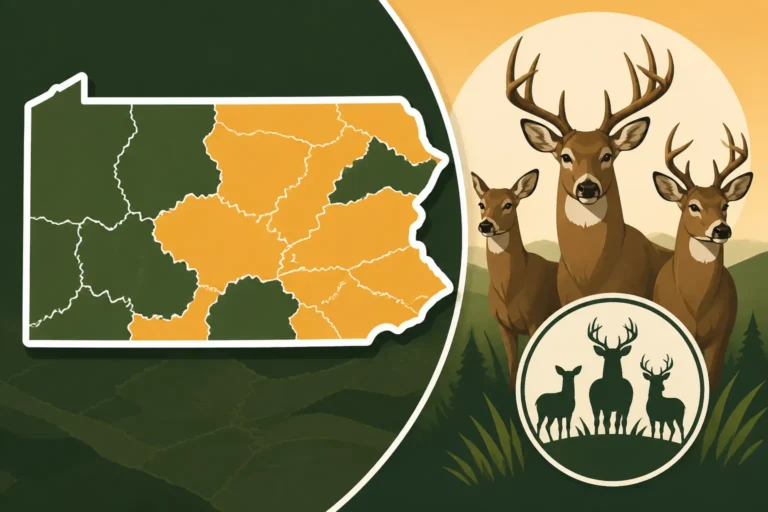
Pennsylvania's fall turkey season isn't a one-size-fits-all affair, and that's where a lot of the confusion stems from. Unlike the more unified spring gobbler season, fall dates are meticulously carved out by the Pennsylvania Game Commission (PGC) based on turkey population data and management goals within each of the state's 23 WMUs. This means you might have a different season length if you're hunting in the Big Woods of north-central Pennsylvania compared to the farm country of the southeast, or the ridge and valley region in between. It's a system designed to ensure healthy turkey populations statewide, but it certainly puts the onus on us hunters to stay informed.
Why Fall Seasons Vary by WMU
The primary reason for these varying season lengths is the PGC's ongoing effort to manage turkey populations sustainably. If a WMU shows a robust, increasing turkey population, you're likely to see a more generous season. Conversely, if a WMU's turkey numbers are struggling, perhaps due to poor hatch rates, habitat loss, or disease, the season might be shortened or even closed to allow the population to rebound. For example, some WMUs might have a substantial four-week season, while others might only offer a two-week window, or even just a few days. The PGC uses detailed brood surveys, harvest data, and scientific modeling to make these decisions annually, aiming for a balanced approach that provides hunting opportunities while safeguarding the future of the flock. This dynamic approach means hunters need to check the current regulations every single year, as what was true last fall might not be true this fall.
General Timeline for Fall Turkey Seasons
While the exact dates fluctuate, you can generally expect Pennsylvania's fall turkey seasons to kick off sometime in late October and extend through much of November, with some WMUs having later segments. The typical pattern often sees an initial archery-only segment in certain WMUs, followed by a general firearms season. Some WMUs even have short, late-season opportunities into December, often overlapping with the later deer seasons. It’s a tapestry of opening and closing dates that requires careful planning. For instance, in some areas, the season might open the last Saturday in October and run for two or three weeks straight. In others, it might open the same day, close briefly, and then reopen for a week in November. And in specific WMUs, you might find no fall turkey season at all if the population is critically low. This regional variation is a prime example of why checking the PGC digest or an up-to-date mapping application is crucial. For detailed insights into these fluctuating seasons, checking out the guide on Pennsylvania Fall Turkey Seasons by WMU can be a real time-saver.
Navigating WMU-Specific Season Lengths and Bag Limits
Once you understand that WMUs dictate season length, the next step is to actually pin down the specifics for your hunting grounds. This isn't just about marking your calendar; it's about making sure you’re legal every time you pull the trigger. Ignoring these nuances can lead to citations, or worse, negatively impact local turkey populations.
Identifying Your Hunting WMU
First things first, you need to know which WMU your hunting area falls into. If you hunt public land, like a State Game Land or State Forest, you can often find WMU boundaries clearly marked on official maps or online resources. For private land, a quick check of an online mapping tool or the PGC website's interactive map will tell you exactly where you stand. Knowing your WMU is the foundation for everything else, from season dates to antler restrictions for deer, so it’s worth the five minutes to confirm. Tools like GoHunt can be incredibly useful for overlaying WMU boundaries directly onto satellite imagery, making it easy to see if your favorite woodlot straddles two different zones with potentially different regulations.
Example Fall Turkey Season Dates by WMU (2023-2024 Season as a Reference)
To give you a clearer picture, let's look at some examples from a recent season. Keep in mind these are for illustrative purposes and actual dates change annually, so always consult the most current PGC digest!
| WMU | Archery Season | General Firearms Season | Late Season (Archery/Firearms) | Bag Limit |
|---|---|---|---|---|
| 1A | Closed | Oct 28 – Nov 10 | Nov 23 – Nov 25 | 1 Turkey |
| 2B | Oct 28 – Nov 17 | Nov 21 – Nov 25 | Closed | 1 Turkey |
| 3D | Closed | Oct 28 – Nov 17 | Closed | 1 Turkey |
| 4A | Closed | Oct 28 – Nov 17 | Closed | 1 Turkey |
| 5C | Closed | Oct 28 – Nov 3 | Closed | 1 Turkey |
Note: These dates are hypothetical examples based on general season structures and must not be used for actual hunting purposes. Always refer to the current Pennsylvania Game Commission digest for official dates.
As you can see, the length of the general firearms season can range from a mere week in some areas (like WMU 5C in this example) to several weeks in others. The inclusion of late-season opportunities or archery-only segments also varies significantly. This is why a simple online search for "PA fall turkey season" isn't enough; you need to drill down to your specific WMU. And remember, the bag limit for fall turkey in Pennsylvania is typically one turkey (either sex) per hunter, per fall season. You can learn more about general licensing requirements by checking out Pennsylvania Hunting Licences and What They Cost. If you're looking to maximize your opportunities, you might also consider securing The Special Wild Turkey Licence, if offered and available, for additional turkey tags.
Accessing Official Regulations
The best place to get current, accurate information is directly from the Pennsylvania Game Commission. Their annual Hunting & Trapping Digest is the bible for Pennsylvania hunters. You can pick up a physical copy wherever hunting licenses are sold, or download a digital version from the PGC's website. I always recommend having a copy, digital or physical, with you in the field. These digests clearly lay out the season dates for each WMU, along with any special regulations or exceptions. Many hunters also use apps like GoHunt that integrate this regulatory information directly into their mapping platforms, offering real-time updates and ensuring you're always looking at the most current rules for your chosen WMU. This can prevent a lot of confusion and potential issues in the field.
Effective Strategies for Fall Turkey Hunting in Pennsylvania
Knowing when and where you can hunt is just the beginning; how you hunt in the fall requires a different approach than spring gobblers. Fall hunting is all about locating flocks and understanding their daily routines, often involving dispersal calls and flock-breaking tactics.
Locating Fall Flocks
Unlike spring, when gobblers are actively seeking hens and broadcasting their presence with booming calls, fall turkeys are more focused on feeding and regrouping. They live in family groups, or "flocks," often consisting of a hen and her poults from the spring hatch, sometimes joined by other hens or jakes. Your primary goal in the fall is to locate these flocks. This often means extensive scouting before the season, covering ground to find fresh sign like droppings, tracks, and scratching in the leaves where they've been feeding.
Food sources are king in the fall. Turkeys will gravitate towards areas with abundant acorns, beechnuts, or other mast crops. Agricultural fields, especially cornfields after harvest, are also huge draws in farm country. Water sources are equally important. Spend time walking logging roads, powerline cuts, and along creek bottoms, looking for any indication of turkey activity. A good mapping app, such as one integrated with GoHunt, can help you identify potential food sources, water, and roosting areas, allowing you to focus your scouting efforts. If you're Scouting Pennsylvania Public Land Before Season, focusing on these key elements will significantly improve your odds.
Utilizing Fall Calling Tactics
Once you locate a flock, or at least recent sign, fall calling tactics come into play. The classic fall strategy revolves around "breaking up" a flock. This involves intentionally scattering the birds by running at them, yelling, or even shooting into the air (away from birds, of course!) to make them fly in all directions. The idea is that once scattered, the turkeys will naturally want to regroup.
After the birds have flown off, you set up quickly and quietly. Wait about 15-30 minutes for things to settle down, then begin making a series of lost calls, typically yelps and kee-keees, mimicking a young bird trying to find its family. Start softly, then increase volume gradually. The goal is to entice a bird, often a poult or a lonely hen, to come back to your position. This can be incredibly effective, especially if you can get between two scattered groups. If you're hunting in the big woods, understanding Fall Turkey Tactics in the Big Woods can make all the difference, focusing on locating birds in vast timber. For those in more agricultural areas, knowing Turkey Tactics for Farm Country Edges will be more beneficial. The art of Breaking Up a Fall Turkey Flock is a skill that takes practice but is incredibly rewarding.
Setting Up for the Shot
When a turkey responds to your calls, be ready. Unlike the spring, fall birds are often less wary and more concerned with regrouping. They might come in quickly and silently, or they might gobble softly as they approach. Have your shotgun shouldered or your bow drawn if possible, and be absolutely still. It’s critical to identify your target and ensure it’s a legal bird (any turkey in the fall, within legal shooting hours). If you’re utilizing a ground blind, ensure it’s brushed in naturally to break up your outline. For those opting for a more mobile approach, learning to Run-and-Gun Turkey Tactics on Game Lands can enhance your ability to adapt to changing situations and get into position quickly after a break.
Tagging, Reporting, and Responsible Hunting
Harvesting a turkey in Pennsylvania comes with specific responsibilities beyond the shot. Proper tagging and reporting are not just legal requirements; they're vital for wildlife management.
Tagging Your Fall Turkey
Immediately after harvesting a fall turkey, you must complete your harvest tag, which is part of your general hunting license. The tag typically requires you to fill in the date, time, and WMU of the kill. Once filled out, the tag must be securely attached to the turkey's leg before you move it from the kill site. This is a non-negotiable step. Failing to tag your bird properly is a violation and can lead to fines. Ensure you understand the specific instructions on your license tag, as they can sometimes vary slightly from year to year.
Reporting Your Harvest
After tagging, the next crucial step is reporting your harvest to the PGC. This can be done online through their website, by mail using a tear-off card from your digest, or over the phone. You'll need to provide information such as your license number, the date and WMU of harvest, and sometimes details about the bird itself (e.g., sex if identifiable, approximate age).
The PGC relies heavily on this harvest data to make informed decisions about future season lengths and management strategies. Your prompt and accurate reporting directly contributes to the sustainability of Pennsylvania's turkey populations. Don't skip this step! It’s how the PGC monitors Pennsylvania Turkey Population Trends and ensures healthy flocks for future generations. You can find more detailed instructions on Reading a Pennsylvania Harvest Report if you're unsure.
Respecting Landowners and Fellow Hunters
Whether you're hunting public or private land, always practice ethical and responsible hunting. If you're on private property, ensure you have explicit permission from the landowner, and understand any specific rules they might have. Leave no trace, pack out all your trash, and avoid damaging property. On public land, be aware of other hunters, especially during busy times like the opening weekend. Give others space, avoid sky-busting or shooting too close to others, and always prioritize safety. These simple courtesies ensure everyone has a positive experience in the woods and helps maintain a positive image for hunters.
Disclaimer
Please remember that hunting regulations, including season dates, WMU boundaries, and licensing requirements, are subject to change annually by the Pennsylvania Game Commission. Always consult the most current official PGC Hunting & Trapping Digest or their website before planning and engaging in any hunting activities. This guide is for informational purposes only and should not be considered a substitute for official legal documentation.