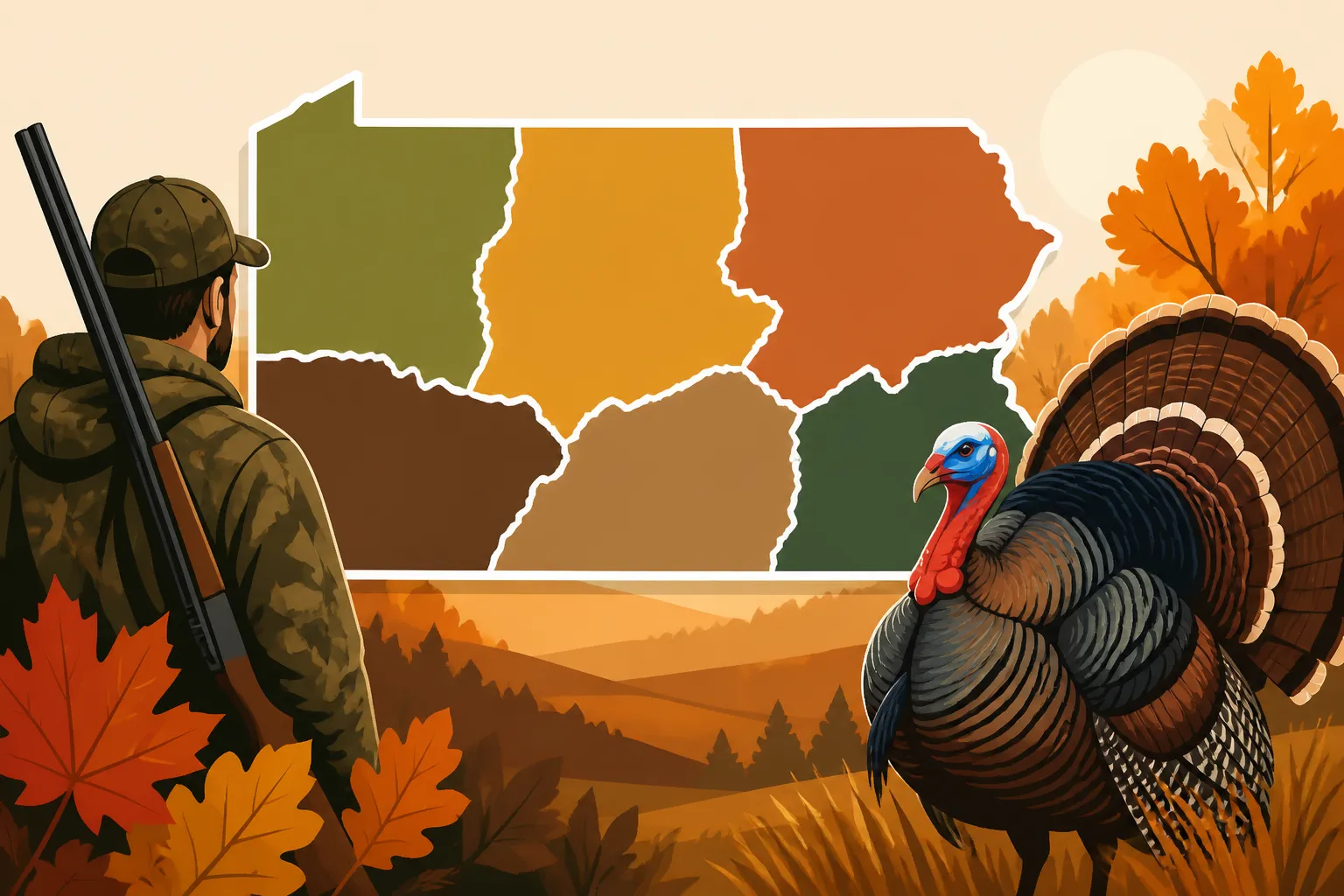
Pennsylvania Fall Turkey Seasons by WMU
It's no secret that fall turkey hunting in Pennsylvania can feel like navigating a maze, especially with all the different Wildlife Management Unit (WMU) regulations. Many hunters, even seasoned ones, find themselves scratching their heads trying to keep track of varying season lengths and opening dates. This guide is here to untangle that confusion, providing a clear roadmap to understanding Pennsylvania's fall turkey seasons by WMU, so you can plan your hunt with confidence.
The Shifting Landscape of Pennsylvania's Fall Turkey Seasons
Fall turkey hunting is a whole different ballgame compared to the spring season. The woods, the birds, and the strategies all feel distinct. If you're coming off a successful spring gobbler hunt, don't expect the same approach to work when the leaves are falling. The Pennsylvania Game Commission recognizes these differences, which is why they implement such varied seasons across the state, heavily influenced by local turkey populations.
Why Fall Turkey Hunting Differs So Much from Spring
In the spring, it's all about finding that strutting gobbler, mimicking a hen, and enticing him into range. The birds are focused on breeding, and their behavior is relatively predictable once you locate a tom. You might sit still for hours, relying on persistent calling to bring a bird to you. It's a game of patience and precision, often centered around a roost tree or a known strut zone.
Come fall, the turkeys have entirely different priorities. Their main focus is feeding to bulk up for winter, and they're usually gathered in family flocks or large groups of adult gobblers. You won't hear much gobbling, if any at all. Instead, the hunt becomes more about finding food sources – acorns, beechnuts, or waste grain in agricultural fields – and then breaking up those flocks. Once scattered, the goal is to call the birds back together, hoping a curious turkey comes to your yelps and clucks. It's a more active, mobile style of hunting that requires a keen understanding of turkey family dynamics.
This shift in behavior means your tactics must change dramatically. Gone are the days of setting up with a jake decoy and waiting for an aggressive gobbler. In the fall, you're often covering more ground, looking for fresh sign like droppings and scratchings, rather than listening for distant gobbles. Hunters often find themselves working through clearcuts or along ridge lines, trying to intercept moving flocks. It can be frustrating when you expect spring-like responses, only to be met with silence, but once you adapt, it’s incredibly rewarding.
How Wildlife Management Units Shape Your Opportunities
Pennsylvania is divided into 23 Wildlife Management Units (WMUs), and these imaginary lines on a map dictate a lot about your hunting experience, especially for fall turkeys. These units were established to allow the Game Commission to manage wildlife populations more precisely, tailoring regulations to the specific ecological and population conditions of each region. It makes sense, when you think about it – the turkey population dynamics in the rolling farmlands of WMU 5B are vastly different from the dense, mountainous forests of WMU 2G.
For fall turkeys, this localized management means that the season dates, and sometimes even the bag limits, can vary significantly from one WMU to another. This approach helps conserve local populations where numbers might be lower, while allowing for more generous seasons in areas with abundant birds. It’s a science-backed way to ensure sustainable hunting opportunities for future generations.
While the intention is good, it can certainly be a source of confusion for hunters. Imagine living on a WMU boundary, where one side of the road has a two-week season and the other has none! It forces every hunter to be diligent in checking the specific regulations for the WMU they plan to hunt, rather than assuming a statewide blanket season. This is where tools like the PGC's interactive mapping center or even a detailed hunting app like GoHunt can be invaluable, helping you pinpoint exactly where you are and what rules apply. The frustration of needing to check separate rules for seemingly similar pieces of ground is real, but it's a necessary evil for effective wildlife management.
Decoding the WMU-Specific Fall Turkey Season Dates
Trying to pin down the exact dates for Pennsylvania's fall turkey season without consulting the current hunting and trapping digest is a fool's errand. The season structure is explicitly broken down by WMU, reflecting the Game Commission's careful population assessments and management goals. Generally, you'll encounter a few different scenarios: short one-week seasons, more moderate two-week seasons, longer extended seasons, and unfortunately, some WMUs where fall turkey hunting is simply not permitted.
The Common One-Week Fall Season Scenario
For many WMUs across Pennsylvania, the fall turkey season is a concise one-week affair. These seasons typically open in late October or early November, often coinciding with the early weeks of the deer archery season or leading right up to the firearms deer opener. This shorter duration is a direct reflection of careful population management. In areas where turkey numbers might be a bit more fragile, or where the habitat can't support a heavier harvest, a brief season allows hunters an opportunity while minimizing impact on the overall population.
This limited timeframe means hunters in these WMUs need to be incredibly efficient with their time afield. Pre-season scouting becomes even more critical, as you might only have a few days to locate birds and execute a plan. You won't have the luxury of waiting for the perfect weather window or letting a flock settle into a routine. Every moment in the woods counts, making the pressure to succeed during this short window quite intense for many.
Tactics for these shorter seasons often lean towards aggressive scouting, locating primary food sources, and then being prepared to act quickly. If you find birds, you need to be ready to break them up and call them back in. There's less room for error or for slow-playing a flock. Many hunters dedicate their vacation days specifically to this one week, making it a high-stakes endeavor. If you're looking for more general strategies, our guide on Fall Turkey Hunting in Pennsylvania offers some excellent advice to get you started, which can then be adapted to your specific WMU's short window.
Identifying Two-Week and Extended Fall Seasons
Beyond the common one-week structure, several WMUs offer more generous opportunities with two-week or even extended fall turkey seasons. These longer seasons are typically found in areas with robust turkey populations and expansive habitat capable of supporting a higher harvest. WMUs in the northern tier and "big woods" regions of the state, for instance, often fall into this category, as they historically boast some of Pennsylvania's healthiest turkey numbers. These longer seasons might run from late October well into November, sometimes even encompassing the Thanksgiving holiday.
A two-week season provides a significant advantage, allowing hunters more flexibility with weather, work schedules, and the ability to relocate if their initial spots aren't producing. You can afford to spend more time scouting, learning turkey patterns, and adapting your strategy as the season progresses. This extended timeframe also means you might encounter different environmental conditions – from crisp autumn days to early winter snow – which can influence turkey behavior and necessitate a flexible approach.
Extended seasons, which might stretch for several weeks, are a true boon for dedicated fall turkey hunters. They allow for an in-depth exploration of a WMU and multiple attempts at different flocks. For instance, in some of the more rugged, mountainous WMUs, the season might run long enough that turkeys are actively seeking out evergreens for roosting as temperatures drop. Having that extra time means you can really dial in on specific areas and observe how turkey movements change with available food sources and weather fronts. The ability to hunt for a prolonged period, rather than a frantic single week, makes for a much more relaxed and often more successful experience.
WMUs Where Fall Turkey Hunting is Restricted or Closed
Now, for the part that can be tough to swallow: there are some WMUs in Pennsylvania where fall turkey hunting is either severely restricted or, in some cases, completely closed. Typically, these are the WMUs where turkey populations have faced significant challenges, often due to habitat changes, disease, or other environmental factors that have led to a decline in numbers. Historically, WMUs like 5C and 5D, primarily in the southeastern part of the state, have seen such restrictions.
The decision to close or restrict a fall season is not made lightly; it's a critical conservation measure by the Pennsylvania Game Commission. It allows local turkey populations a period of recovery without the added pressure of hunting, particularly when those populations are struggling to maintain sustainable numbers. While it can be disappointing for hunters living in or near these areas, it's a testament to the commitment to long-term wildlife health.
For hunters in WMUs with no fall season, the option remains to travel to other WMUs where seasons are open. This might mean a bit of a drive, but it ensures you still get to participate in the fall tradition. Otherwise, the focus shifts entirely to the spring gobbler season, where efforts are concentrated on managing the male population rather than impacting the overall flock dynamics. It’s a good reminder that conservation sometimes requires sacrifice, but it ensures that the "wild turkey" remains a vibrant part of Pennsylvania’s natural heritage.
Preparing for Your WMU-Specific Fall Turkey Hunt
Once you've nailed down the season dates for your chosen WMU, the real work begins. Fall turkey hunting, especially with the diverse landscapes Pennsylvania offers, demands meticulous preparation. It's not enough to simply know when you can hunt; you need to understand how to hunt effectively within your specific WMU's environment. This means dedicated scouting and tailoring your approach to the local conditions, utilizing all the tools at your disposal.
Essential Pre-Season Scouting and Local Adaptation
Pre-season scouting for fall turkeys is paramount, far more so than in spring. Since fall birds aren't gobbling much, you can't rely on sound to locate them. Instead, you're searching for visual signs: tracks in the mud, droppings, and most importantly, turkey scratchings. These are distinct V-shaped patterns left in the leaves where turkeys have raked away the forest floor searching for acorns, beechnuts, or other mast. Finding fresh scratchings around prime food sources tells you exactly where the birds are concentrating their efforts. You'll often find these feeding areas on oak ridges, along creek bottoms, or near agricultural fields.
The food sources themselves are hyper-local and change annually. One year, white oaks might be dropping heavily; the next, it could be red oaks or even an unexpected crop of beechnuts in a remote hollow. Understanding the mast crop in your specific WMU is crucial. Turkeys will travel extensively to find abundant food, so identifying these hotspots is key to success. This means walking miles of potential habitat, looking for those tell-tale signs. If you're hunting in the big woods, understanding how deer move can often help you predict turkey travel as well; our guide on Reading a Pennsylvania Hollow for Deer can offer some transferable insights into mapping terrain, even if the target species is different.
Utilizing modern mapping tools like the Pennsylvania Game Commission's interactive maps or a premium hunting app like GoHunt is a game-changer for pre-season scouting. These platforms allow you to overlay public land boundaries, identify habitat features like clearcuts or old logging roads, and even mark potential food sources from satellite imagery before you ever step foot in the woods. This digital reconnaissance saves countless hours and helps you prioritize areas for boots-on-the-ground scouting. For instance, finding areas of Hunting Pennsylvania Clearcuts and Regrowth on a map can reveal excellent turkey habitat that might otherwise go unnoticed.
Tailoring Your Gear and Tactics to the WMU
Your gear and tactics for fall turkey hunting should be as dynamic as the seasons themselves. Gone are the days of sitting patiently with a gobbler call. Fall demands a more active, and often aggressive, approach. When you find a flock, the primary tactic is often to "bust" them – deliberately rushing in to scatter the birds in all directions. Once they're disoriented and separated, you find a good hiding spot and begin making assembly calls – soft yelps and clucks – mimicking a lost turkey trying to re-group. This is where your calling skills really come into play, trying to convince a lonely turkey that you're part of its flock.
For shotguns, while a tight pattern is still good, the scenarios might be more varied than spring. You might be shooting at a bird running to re-join a flock, or one that comes in silently. Therefore, a versatile choke and load combination is often preferred. Many hunters opt for a more open choke, like an improved cylinder or modified, compared to the extra-full used for spring gobblers. This provides a wider pattern for closer, faster shots that might present themselves when calling in scattered birds. Our guide on Fall Turkey Tactics in the Big Woods delves into some specific strategies for these scenarios.
Beyond the gun, your clothing and footwear need to support a more mobile hunt. You'll be covering ground, often through thick brush, steep hills, and possibly wet conditions. Durable, quiet outerwear in camouflage patterns is essential, and good quality, waterproof hiking boots are a must. A comfortable vest or small backpack to carry calls, water, snacks, and any harvested birds is crucial. Some hunters even embrace a "run-and-gun" style, moving quickly through the woods, stopping to call, and then relocating if no birds respond. If that sounds like your speed, our article on Run-and-Gun Turkey Tactics on Game Lands could provide some valuable pointers, regardless of your specific WMU's terrain.
Navigating Fall Turkey Regulations and Ethical Considerations
Just knowing when and where to hunt isn't the full picture. Pennsylvania has specific regulations that govern fall turkey hunting, particularly concerning bag limits, additional licenses, and hunter orange requirements. Being fully aware of these rules isn't just about avoiding a citation; it's about practicing responsible and ethical hunting, ensuring the safety of yourself and others in the woods, and contributing to the conservation efforts that make our sport possible.
Understanding Bag Limits and the Special Wild Turkey License
In Pennsylvania, the general bag limit for fall turkey season is one bird per hunter. This limit is critical for managing populations, especially in WMUs with shorter seasons where conservative harvest numbers are a priority. However, the Pennsylvania Game Commission does offer an opportunity for dedicated hunters to take a second fall turkey through the purchase of a "Special Wild Turkey License." This additional license allows a hunter to harvest one more turkey during the fall season, provided the season is open in the WMU you are hunting.
The Special Wild Turkey License is a separate purchase from your general hunting license and your regular turkey license. It typically costs around $21 for residents and more for non-residents. It's not a freebie; it's a way for the PGC to generate additional revenue for turkey management while offering an expanded opportunity in WMUs that can sustain it. However, it's absolutely crucial to remember that this license does not override the WMU-specific season dates. If your WMU has a one-week season, you can still only hunt during that week, even if you possess a Special Wild Turkey License. This license simply allows you to tag a second bird if you manage to harvest it within the legal dates for that WMU. This nuanced regulation can be confusing, so always double-check the current hunting digest. If you want more details on the general costs associated with hunting, our article on Pennsylvania Hunting Licences and What They Cost is a great resource, and for specific information, refer to The Special Wild Turkey Licence.
Hunter Orange Requirements During Concurrent Seasons
One of the most vital safety considerations during Pennsylvania's fall turkey season is understanding hunter orange requirements. While you might associate hunter orange primarily with firearms deer season, it's also mandatory for fall turkey hunting during specific periods, particularly when other firearms seasons, like archery or bear, are open concurrently. The rules are designed to ensure maximum visibility and reduce the risk of accidents when multiple hunting activities are happening simultaneously in the woods.
The Pennsylvania Game Commission mandates that hunters wear at least 250 square inches of fluorescent orange material on the head, chest, and back combined, visible from 360 degrees, during specific concurrent seasons. For fall turkey hunters, this usually applies during the regular statewide firearms deer season and any overlap with extended bear seasons. However, during the early archery season, or when fall turkey season is open on its own without concurrent firearm seasons for deer or bear, hunter orange is generally not required for turkey hunters. This allows turkey hunters to remain camouflaged, which is often essential for success in fall calling.
It’s paramount to consult the most current hunting digest for the exact dates and specific WMU requirements. The rules can be intricate, and misinterpreting them could lead to dangerous situations or a fine. When in doubt, wear orange. It’s always better to be safe than sorry, and ensuring visibility is a responsible part of sharing the woods. For a complete rundown on all the rules, our guide on Pennsylvania Hunter Orange Rules will provide essential information.
Proper Tagging, Reporting, and Ethical Harvest
Harvesting a fall turkey is an exciting moment, but the responsibility doesn't end with the shot. Proper tagging and reporting are legal requirements in Pennsylvania, and they play a crucial role in wildlife management by providing the Game Commission with vital data on harvest numbers and trends. Failure to tag or report your turkey can result in fines and loss of hunting privileges, so it's essential to follow the procedures precisely.
Immediately after you've harvested a turkey and determined it's legally taken (confirming it's a fall turkey and not a hen or jake that's out of season for that specific WMU, for example, though typically in fall any wild turkey is legal), you must attach your harvest tag to the bird. This tag, found on your general hunting license, needs to be filled out completely and secured to the turkey's leg. Make sure the information is legible and includes the date, time, and WMU of harvest. This physical tag must remain on the bird until it's processed for consumption or taxidermy.
Beyond the physical tag, you are legally required to report your turkey harvest to the Pennsylvania Game Commission within five days of taking the bird. This can be done conveniently online through the PGC's website or via phone. When reporting, you'll need information from your license and harvest tag, including the WMU, date, and sex of the bird. This data helps the Game Commission track population health and adjust future season structures. For a detailed, step-by-step guide on this process, you can refer to our article on Pennsylvania Turkey Tagging and Reporting. Always prioritize ethical shots and responsible game recovery to minimize suffering and ensure a respectful harvest.
Frequently Asked Questions About Fall Turkey Hunting
Even with all the regulations laid out, it's common for hunters to have lingering questions about fall turkey seasons in Pennsylvania. The state's diverse WMU system and multi-layered regulations can certainly spark confusion, especially for those new to fall turkey hunting or even experienced hunters who simply haven't kept up with the annual changes. Let's tackle some of those common head-scratchers to clear things up.
Can I Use My Spring Turkey License for Fall?
This is a question that pops up a lot, and the answer is a definitive no. Your Pennsylvania spring gobbler license is valid only for the spring season. It's a specific tag allocated for the spring hunt, typically for a male bird. Fall turkey hunting requires a separate, dedicated fall turkey tag, which is part of your general hunting license. Think of it as entirely distinct management periods.
The reasoning behind separate licenses is rooted in wildlife management and funding. The Pennsylvania Game Commission manages turkey populations with separate goals for spring and fall. Spring hunting primarily targets gobblers, which typically has less impact on the overall reproductive potential of the flock. Fall hunting, however, focuses on entire flocks, including hens and young birds, which requires more cautious management based on population health. Separate licenses allow the PGC to track participation and harvest rates for each season independently, providing more accurate data for future decisions regarding Pennsylvania Turkey Population Trends.
To hunt fall turkeys, you'll need to purchase your general hunting license, which includes a fall turkey tag. If you wish to harvest a second fall turkey, you'll then need the additional "Special Wild Turkey License." These can be purchased online through the PGC's website, at any license issuing agent across the state, or at some county treasurers' offices. Always ensure you purchase the correct license type well in advance of your planned hunt.
What If I Harvest a Turkey in a Different WMU Than My License?
This question sometimes comes from a misunderstanding of how Pennsylvania's WMU system works in conjunction with licenses. Unlike antlerless deer tags, which are WMU-specific, your general Pennsylvania hunting license (and thus your fall turkey tag) is statewide. This means you don't buy a "WMU 2G fall turkey license" or a "WMU 5A fall turkey license." Your license allows you to hunt anywhere in Pennsylvania where a season is open and you have legal access, such as on Hunting Pennsylvania State Game Lands.
However, the crucial distinction, and the point of potential confusion, lies not in the license but in the season dates. While your license is statewide, the legal dates for hunting fall turkeys are strictly WMU-specific. So, if you live in WMU 5B but decide to drive to WMU 2G for a longer season, your statewide fall turkey tag is perfectly valid. What matters is that you are hunting within the open dates for WMU 2G and not the dates for WMU 5B (especially if 5B's season is shorter or closed).
The critical takeaway here is to always consult the current Pennsylvania Hunting and Trapping Digest. It’s the official word on season dates, hours, and any special regulations for each specific WMU. Even if you have a statewide license, you must adhere to the local WMU's season framework. Ignorance of the specific WMU dates is not a valid excuse if you are found hunting out of season, so verify before you ever step into the woods.
Pennsylvania Fall Turkey Season by WMU Overview
Understanding the nuances of Pennsylvania's fall turkey seasons by WMU is critical for a successful and legal hunt. While the specific dates and durations can vary slightly each year, the general patterns remain: some WMUs have short seasons, others have extended ones, and a few remain closed to allow populations to recover. Always consult the official Pennsylvania Game Commission digest for the most up-to-date information before planning your hunt.
| WMU (Example) | Typical Fall Season Length | General Characteristics / Notes |
|---|---|---|
| WMU 1A, 1B | 1 Week (e.g., late Oct) | Often Western PA, mixed habitat. Shorter season due to management goals. |
| WMU 2B, 4D | 2 Weeks (e.g., early Nov) | Central/South Central PA, healthy populations, mixed woods & farm. |
| WMU 2G, 3A | Extended (e.g., through Nov) | Northern Tier/Big Woods country, robust populations, extensive forestland. Offers more flexibility. |
| WMU 5A, 5B | 1 Week (e.g., late Oct) | Southeast PA, suburban/farm country. Populations sometimes lower, warranting conservative season. |
| WMU 5C, 5D | No Season | Far Southeast PA. Closed for fall to protect struggling turkey populations. Spring season is usually an option. |
Please note: This table provides illustrative examples based on common patterns. Always verify current year's exact dates and regulations with the official Pennsylvania Game Commission Hunting and Trapping Digest. Season dates and lengths are subject to change annually.
Disclaimer
The information provided in this guide is for general informational purposes only and is not intended as legal advice. Hunting regulations in Pennsylvania are subject to change, and it is the hunter's responsibility to consult the most current Pennsylvania Game Commission Hunting and Trapping Digest or their official website for all applicable laws, rules, and season dates before engaging in any hunting activities.