Sproul and Susquehannock State Forests
Venturing into Pennsylvania's vast public lands can be an intimidating prospect, especially when you're dreaming of escaping the crowds and finding truly wild game. The sheer scale and ruggedness of places like Sproul and Susquehannock State Forests can make a hunter feel lost before they even step out of the truck. This guide is here to demystify these incredible big woods strongholds, helping you navigate their unique challenges and discover their hidden hunting opportunities.
Discovering Sproul State Forest: A Hunter's Perspective
Sproul State Forest, sprawling across Clinton and Centre counties, is a monumental expanse of mountainous terrain, dense timber, and remote valleys. It’s part of the larger Pennsylvania Wilds, a region known for its rugged beauty and challenging hunting. For many, Sproul represents the quintessential Pennsylvania big woods experience – a place where you can truly get away from it all and test your skills against wary game.
The Landscape of Sproul: What to Expect
When you look at a map, Sproul might seem like an endless sea of green. And in many ways, it is. This forest is characterized by steep, winding ridges, deep hollows, and extensive hardwood forests, primarily oaks, maples, and birches, interspersed with pockets of hemlock and pine. Access roads, many of which are gated or seasonal, often follow stream bottoms or traverse ridge lines, offering limited entry points into the interior. The elevation changes can be significant, making for physically demanding hunts. You'll quickly learn the value of a contour map and a good set of lungs here. Entry Routes on Steep Ground are paramount to success.
Navigating this terrain requires more than just good boots; it demands careful planning. Creeks and drainages carve through the landscape, providing natural travel corridors for deer and bears, but also presenting obstacles for hunters. Understanding how game moves through these natural funnels and how wind and thermals play a role on such varied topography is crucial. The sheer density of cover can also be a challenge, limiting visibility and making shot opportunities fleeting. It's a land where patience and quiet movement are often rewarded.
Hunting Opportunities in Sproul
Sproul State Forest is a prime destination for various game species, though white-tailed deer and black bears are undoubtedly the stars of the show. The expansive, low-density deer population means you won't see deer around every bend, but the deer you do encounter are often mature and wise, having survived multiple hunting seasons. These bucks are truly products of their environment, tough and elusive. For an in-depth look at hunting the region, check out Hunting Pennsylvania's Big Woods for Deer.
Black bears also thrive in Sproul's rugged habitat, finding ample food and cover in its vast timberlands and mountain laurel thickets. Bear sign can be found almost anywhere, from torn-up logs where they've foraged for grubs to claw marks on beech trees. Hunters often focus on areas with consistent acorn crops or dense berry bushes in season. Turkey hunting, both spring and fall, can also be productive, with birds utilizing the oak ridges and creek bottoms. The challenging terrain means less pressure in many areas, offering a more solitary hunting experience.
Navigating Susquehannock State Forest: Remote Hunting
Just to the north of Sproul, largely in Potter and Clinton counties, lies Susquehannock State Forest, often dubbed the "Black Forest" for its immense tracts of unbroken timber. This forest offers an even deeper dive into Pennsylvania's wilderness, known for its extreme remoteness and incredible opportunities for those willing to work for them. If Sproul is big, Susquehannock is truly vast and wild.
The Unique Character of Susquehannock
Susquehannock State Forest is famous for its "big woods" character, featuring vast, rolling plateaus and deep, narrow valleys. Compared to Sproul, it might feel a bit more uniform in its ruggedness, with large areas of mature northern hardwoods, including cherry, maple, and beech, alongside some significant conifer stands. The logging history here has created a mosaic of forest ages, with clearcuts and regeneration areas providing vital browse and cover for game, especially deer. Hunting Pennsylvania Clearcuts and Regrowth is a great resource for understanding these areas.
What truly sets Susquehannock apart is its network of dirt roads and trails, some of which are very remote and require a 4×4 vehicle. Many roads are seasonally open, closing to public vehicles in winter, which further preserves the wilderness feel. This remoteness often translates to less hunting pressure in the deep interior, meaning that while the hunting is challenging, the rewards can be substantial for those who venture far from paved roads. The quiet solitude found here is a huge draw for hunters seeking an authentic backcountry experience.
Prime Hunting Targets in Susquehannock
Like Sproul, Susquehannock is a premier destination for white-tailed deer and black bear. Deer densities can be lower than in farm country, but the mature forests and diverse habitat support a healthy population of robust, hard-to-hunt animals. Targeting Where Big Woods Bucks Bed in these remote areas often involves long walks and detailed scouting. For bear hunters, Susquehannock is a legendary spot, consistently producing some of the state's heaviest bears. The expansive habitat provides everything a bear needs to thrive, from mast crops to dense protective cover.
Turkey hunting is also popular, especially during the spring gobbler season when the woods come alive with calls. Grouse and snowshoe hare can be found in appropriate cover types, such as regenerating clearcuts or conifer swamps, offering additional small game opportunities for the dedicated hunter. The sheer size of Susquehannock means there are always new areas to explore and new challenges to overcome.
Planning Your Hunt: Access, Camping, and Regulations
Hunting in Sproul and Susquehannock State Forests requires more preparation than a typical hunt on smaller public tracts. These are immense, wild places where understanding access points, knowing where you can camp, and adhering to specific regulations are not just good practices—they're essential for a safe and successful outing.
Navigating Access Points and Roads
Both Sproul and Susquehannock State Forests have extensive networks of state forest roads. However, many of these are dirt roads, and a significant number are gated or seasonally closed. It’s absolutely critical to consult the Pennsylvania Department of Conservation and Natural Resources (DCNR) Motorized Trail/Road maps for the specific forest district you plan to hunt. These maps clearly indicate which roads are open to vehicles, which are administrative only, and which have seasonal restrictions. You can often download these maps as PDFs or pick up paper copies at district offices. Motor Vehicle Maps for State Forests is a vital resource.
Parking is usually available at designated pulloffs or along roadsides, but be mindful of blocking gates or creating hazards. In these remote areas, help can be a long way off, so ensuring your vehicle is safely parked and won't get stuck is paramount. I always recommend having a detailed physical map in addition to any digital mapping apps, as cell service is often nonexistent in deeper sections of these forests.
Camping Options for Extended Hunts
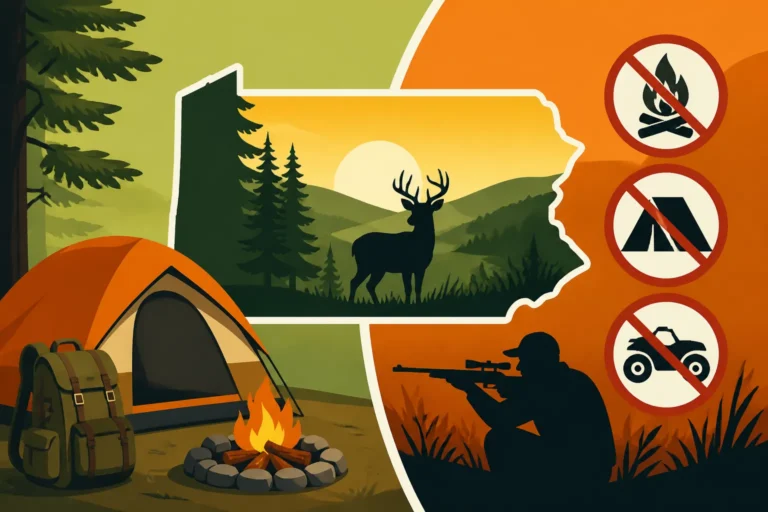
For those truly immersing themselves in the big woods experience, primitive camping is often allowed throughout state forests, though specific rules apply. Generally, you can camp for one night without a permit at dispersed sites. For longer stays or group camping, a free permit from the specific State Forest District office is usually required. This is an important step to ensure you're compliant with regulations and to let the forest district know your general whereabouts in case of emergency. Camping in a Pennsylvania State Forest provides more details on these rules.
Designated campsites, often found along major roads or near popular recreation areas, may have specific restrictions or amenities (though usually very basic). Many hunters prefer to hike in and set up a primitive camp away from roads, allowing them to be right in the heart of the hunting action at dawn and dusk. Remember to practice Leave No Trace principles, pack out everything you pack in, and be aware of fire regulations, especially during dry periods.
Understanding Key Regulations and Safety
Beyond general hunting regulations, specific rules apply to state forests. For example, the use of ATVs is restricted to designated trails, not for general access or game retrieval. ATV Rules on Pennsylvania Public Land gives more information on this. Tree stands and ground blinds must be removed within a specific timeframe after the season closes, and leaving them up year-round is prohibited. Always consult the current Pennsylvania Game Commission Digest for season dates, bag limits, and specific WMU (Wildlife Management Unit) rules that apply to the area you're hunting.
Safety in these remote areas cannot be overstated. Tell someone where you're going and when you expect to return. Carry a well-stocked first-aid kit, emergency shelter, a reliable light source, and plenty of water. A fully charged phone (even if for emergencies only), a GPS unit or reliable mapping app like onX Hunt, and a compass are non-negotiable. Knowing how to Blood Trailing After Dark in Pennsylvania is also a critical skill if you're out late. Weather can change quickly in the mountains, so dress in layers and be prepared for rain, snow, or sudden drops in temperature.
Target Species: Deer, Bear, and Turkey Tactics
While many game species call Sproul and Susquehannock home, deer, bear, and turkey are the primary draws for hunters willing to tackle these challenging landscapes. Each requires specific tactics adapted to the vastness and ruggedness of the big woods.
Hunting Whitetails in Remote Timber
Deer hunting in Sproul and Susquehannock is a different ballgame than in agricultural areas. You won't find high deer densities, but the bucks that call these mountains home are often older, wiser, and possess impressive rack potential. Success here hinges on covering ground, reading sign, and understanding deer movement patterns in vast timber. Still-hunting is a highly effective tactic, slowly slipping through the woods, pausing frequently to observe, and letting the landscape dictate your pace. Still-Hunting Pennsylvania Big Woods delves into this technique.
Focus on terrain features like saddles, benches, and creek bottoms that act as natural travel corridors. Look for fresh rubs, scrapes, and feeding areas, especially where oak ridges drop off into hollows. During the rut, these remote areas can be fantastic, as bucks are more apt to cover long distances looking for does. Consider using rattling antlers or grunt calls to pique the curiosity of a cruising buck.
| Tactic / Location | Sproul State Forest Focus | Susquehannock State Forest Focus |
|---|---|---|
| Deer | Steep oak ridges, hemlock thickets, creek drainages. | Rolling plateaus, cherry/beech stands, regenerating clearcuts. |
| Bear | Mountain laurel, dense conifer pockets, areas with mast. | Large timber blocks, remote swamps, berry patches. |
| Turkey (Spring) | Oak flats, open timber edges, old logging roads. | Ridge tops, hardwood bottoms, transition zones. |
| Access | Seasonal dirt roads, foot travel in steep hollows. | Remote state forest roads (4×4 often useful), long hikes. |
| Pressure | Moderate in accessible areas, very low in deep interior. | Low overall, almost non-existent deep in the forest. |
Tracking Down Pennsylvania Black Bears
These state forests are bear country, plain and simple. Hunting bears here can be an exhilarating experience, often involving long days of scouting and patient waiting. Bear sign, such as tracks, scat, and claw marks on trees, will be your best indicator. During the fall, bears will be actively feeding to put on weight for winter, so focusing on areas with a reliable mast crop—like acorn-producing oak flats or beech nut ridges—is crucial. Hunting Pennsylvania Bear on Acorns is key for this.
Still-hunting is also effective for bears, especially in dense cover like mountain laurel thickets or regenerating timber where they seek refuge. Organized bear drives are a traditional and often successful method in these vast woods, requiring a coordinated effort of several hunters. For solo hunters or small groups, targeting specific feeding areas or known travel corridors between bedding and feeding sites will increase your odds. Remember, once you harvest a bear, the real work begins, and Handling a Bear After the Shot is vital.
Pursuing Wild Turkeys
Both spring and fall turkey hunting can be excellent in Sproul and Susquehannock. Spring gobblers often roost on high ridges and pitch down into valleys to feed and breed. Locating roosting areas before the season, or using locator calls like owl hoots or crow calls at dawn, can help you get close. Setting up quickly and calling patiently from a natural blind, especially against a large oak or downed log, is usually the best approach. Setting Up Against a Big Oak is a classic strategy.
Fall turkey hunting in these big woods often involves finding flocks that are feeding on mast crops or insects. The "breaking up a flock" tactic, where you scatter a group of birds and then call them back in, can be very effective here due to the vast, quiet woods. Patience and good calling skills are essential, as fall flocks can be wary.
Leveraging Technology for Public Land Success
In the vastness of Sproul and Susquehannock, modern technology isn't just a convenience; it's a critical tool for safety, navigation, and finding game. While a paper map and compass should always be in your pack, digital tools can give you a significant advantage.
Digital Mapping: Your Best Friend in the Big Woods
Apps like onX Hunt are invaluable for hunting these expansive public lands. With detailed satellite imagery, topographic maps, and property line overlays, you can precisely pinpoint your location, identify public versus private land boundaries, and mark key features like potential bedding areas, water sources, and access roads. Using the Pennsylvania Mapping Center is a great start, but dedicated hunting apps take it a step further. Before you head out, download offline maps, as cell service will be spotty or non-existent in many remote sections. This allows you to navigate confidently without a signal.
Using such an app, you can easily identify critical features like logging roads that might not be visible on older paper maps, or pinpoint subtle elevation changes that create natural funnels for deer. You can also mark parking areas, camp locations, and even where you last saw promising sign, helping you to build a comprehensive picture of the area you’re hunting. This level of detail is a game-changer when you're miles from any recognizable landmark.
Scouting with Aerial Photos and Topography
Before you even set foot in the woods, spend significant time scouting from your computer using aerial photos and topographic maps. Platforms that provide high-resolution satellite imagery allow you to identify potential food sources (like oak stands), dense bedding cover, clearcuts, and subtle terrain features such as benches and saddles that deer frequently use. Look for areas where different cover types meet or where topography funnels animal movement. Reading Aerial Photos for Big Woods Deer is an art that can save you countless hours of unproductive walking.
Topographic maps help you understand the steepness of terrain, plan efficient routes, and anticipate wind and thermal patterns. In mountainous regions, understanding Wind and Thermals on a Ridge is critical, as scent control is paramount. These digital tools allow you to virtually explore hundreds of acres, narrowing down your focus to the most promising areas before you ever strap on your boots.
Essential Gear for the Remote Hunter
Beyond your weapon and ammunition, several pieces of gear are non-negotiable for hunting Sproul and Susquehannock. A quality backpack, capable of carrying all your day's essentials plus emergency gear, is fundamental. Sturdy, waterproof boots with good ankle support are a must for navigating the rugged, often wet terrain. A good headlamp with extra batteries is crucial for walking in before dawn or out after dark, as these woods can get incredibly dark.
A powerful rangefinder is important for making ethical shots in varying terrain, and quality binoculars are essential for glassing distant ridges and spotting game in dense cover. For longer trips, a water filter or purification tablets, along with a reliable fire starter, are essential survival items. Finally, never underestimate the value of a comfortable, quiet set of layers that can adapt to changing weather conditions—Pennsylvania's mountains are notorious for sudden shifts in temperature and precipitation.
Disclaimer
This article is for general informational purposes only and does not constitute professional advice. Laws, prices and regulations vary by location and change over time. Consult a qualified professional for guidance on your specific situation.