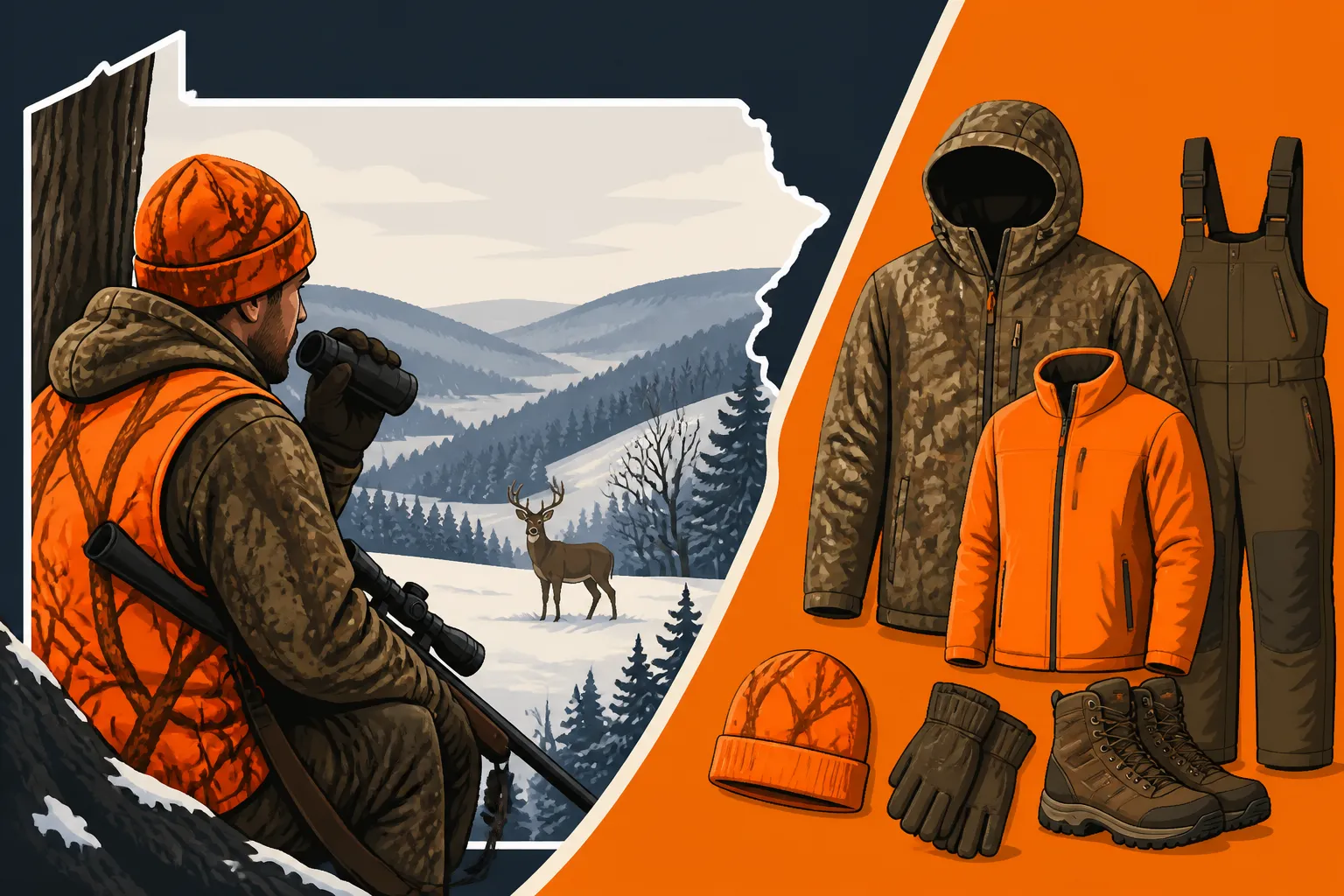
Clothing for a Pennsylvania December
Oh, December in Pennsylvania! It conjures images of crisp air, tracking fresh snow, and the quiet beauty of the late season. But let's be real, it also brings bone-chilling cold, biting wind, and often, that miserable mix of rain, sleet, or heavy, wet snow that soaks you to the core. Nothing ruins a hunt faster than being miserably cold and wet, leading to an early exit from the woods. This comprehensive guide is here to ensure you're dressed not just for comfort, but for success, so you can stay out longer and capitalize on those late-season opportunities.
Understanding December's Bite: The Pennsylvania Winter Reality
December in Pennsylvania isn't just "a little cold." It's a month that can throw everything at you, from relatively mild, brisk days to brutal, sub-zero wind chills that feel like they're sucking the warmth right out of your bones. The reality is, if you're not prepared, the weather will send you packing faster than a missed shot on a big buck. Understanding the specific challenges of December weather is the first step in winning the battle against the elements.
The Unpredictable Nature of Late-Season Weather
One day you might be comfortable with a mid-weight jacket, and the next, you're wondering if your toes will ever thaw. Pennsylvania's December weather can be notoriously fickle. You might wake up to clear, freezing skies, only for a warm front to roll in by midday, bringing with it a sudden downpour that turns your hunting grounds into a muddy mess. Conversely, a mild morning can quickly turn into a full-blown blizzard. This unpredictability means your clothing system can't be one-size-fits-all; it needs to be adaptable, ready for anything. You're not just dressing for a temperature; you're dressing for a range of possibilities, from a sunny but cold still-hunt to an unexpected sleet storm during a Deer Drives With Three or Four Hunters. Always check the forecast, but always pack for the worst-case scenario. It's better to shed a layer than to shiver uncontrollably.
Wind Chill and Its Impact in Open vs. Timbered Areas
Wind is the silent assassin of warmth. Even on a relatively mild December day, a stiff breeze can drop the "feels like" temperature dramatically, making you feel much colder than the thermometer indicates. In open fields or ridge tops, where the wind can howl unimpeded, wind chill can penetrate even well-insulated clothing if it's not windproof. Imagine sitting on a high stand, glassing a distant field, and that wind just cuts through you. In thick timber, the wind might be less direct, but it can still swirl and find its way through gaps in your layers. This is why having an outer shell that truly blocks the wind is paramount, regardless of whether you're tucked into a hemlock thicket or exposed on a power line cut. It’s not just about how much insulation you have, but how effectively that insulation is protected from heat-robbing air movement.
The Dreaded Freezing Rain and Wet Snow
Perhaps the most miserable December weather phenomenon is freezing rain or heavy, wet snow. Unlike dry, fluffy snow that brushes off easily, wet precipitation saturates everything it touches. A light drizzle can quickly turn your outer layers into heavy, cold sponges, compressing your insulation and robbing you of warmth. Once your core layers get wet, it's a losing battle. Your body has to work overtime to heat the water in your clothing, draining your energy and making hypothermia a real risk, even if temperatures aren't extreme. This is where truly waterproof (not just water-resistant) outer layers become non-negotiable. There's no "toughing it out" when you're soaked to the bone in freezing temperatures. Having reliable rain gear in your pack, or ideally, as your primary outer layer, is critical for those days when the skies decide to cry.
The Foundation: Base Layers for Warmth and Moisture Management
Think of your base layer as the unsung hero of your December hunting attire. It's the first line of defense, the layer closest to your skin, and its primary job is twofold: to provide initial warmth and, perhaps even more importantly, to wick moisture away from your body. Sweat, even in freezing temperatures, is your enemy. If perspiration stays on your skin, it cools rapidly, chilling you instantly and robbing you of precious body heat. A good base layer is the foundation upon which your entire warm-weather system is built.
Material Choices: Merino Wool vs. Synthetics
When it comes to base layers, the debate often boils down to two main contenders: merino wool and synthetic fabrics. Both have their merits, and the best choice often depends on your personal preference, activity level, and budget.
Merino Wool:
- Pros: Merino wool is a natural wonder. It's incredibly soft, not itchy like traditional wool, and it excels at regulating body temperature. It keeps you warm when it's cold and helps cool you down when you're working up a sweat. Perhaps its most lauded feature is its ability to retain warmth even when wet, a huge advantage if you get caught in a downpour or sweat through your layers. It's also naturally odor-resistant, meaning you can wear it for multiple days without smelling like a locker room, which is a major plus for scent control and multi-day hunts. Many hunters find merino to be more comfortable against the skin for extended periods.
- Cons: Merino can be more expensive than synthetics, and while durable for a natural fiber, it can be more prone to snags or holes than some synthetics, especially if you're crashing through briars. It also takes longer to dry than synthetics if it gets thoroughly saturated.
Synthetics (Polyester, Polypropylene, etc.):
- Pros: Synthetic base layers are engineered for performance. They are excellent at wicking moisture away quickly and drying rapidly, making them ideal for high-exertion activities where you expect to sweat. They're generally more affordable, very durable, and easy to care for. Many synthetics offer a good warmth-to-weight ratio.
- Cons: The biggest drawback for synthetics is their tendency to retain body odor over time, even with antimicrobial treatments. After a few days in the woods, you might find yourself a bit more pungent. They also lose more of their insulating properties when wet compared to merino.
For December hunting, particularly if you anticipate periods of sitting or mixed activity, the "retains warmth when wet" and "odor resistance" qualities of merino wool often make it the preferred choice for many Pennsylvania hunters. However, if you're doing a lot of Deer Drives on Pennsylvania State Game Lands or other high-energy pursuits, the quick-drying nature of synthetics might be appealing, provided you're diligent about bringing fresh layers or managing scent. You can learn more about this choice in Wool Versus Synthetics in Wet Cold.
Weight and Thickness for Varying Activity Levels
Base layers come in different weights: lightweight, midweight, and heavyweight. The right choice for December depends heavily on your planned activity and the actual temperature.
- Lightweight: Best for high-aerobic activities (like a strenuous hike up a steep mountain or a fast-paced still-hunt) or for early December when temperatures might not be brutally cold yet. Their primary function is moisture wicking, with minimal insulation.
- Midweight: This is the workhorse base layer for most December hunting. It provides a good balance of warmth and moisture management, suitable for moderate activity levels and colder temperatures. Many hunters will start with a midweight top and bottom as their primary base.
- Heavyweight: Reserved for extreme cold or very low-activity hunts, such as all-day sitting in a treestand during a bitter cold snap. These offer maximum insulation right against the skin.
It's wise to have a couple of options. For instance, you might wear a lightweight base layer if you're hiking a long way in to your spot and plan to put on more layers once you're there, or you might choose a midweight if you're starting colder and expecting to sit for long periods. Consider packing an extra lightweight top in your pack if you anticipate really sweating on the hike in; changing into a dry base layer once you cool down can prevent a serious chill.
The Crucial Role of Wicking Away Sweat
The mechanism of "wicking" is fundamental to staying warm. When you exert yourself, your body produces sweat to cool itself. If this sweat remains on your skin, it draws heat away from your body as it evaporates, a process known as evaporative cooling. In cold weather, this can rapidly lead to hypothermia. Wicking fabrics are designed with tiny capillaries that pull moisture away from your skin and transfer it to the outer surface of the fabric, where it can evaporate more easily or be absorbed by the next layer. This keeps your skin dry and significantly reduces the chilling effect. Never wear cotton as a base layer in cold weather – cotton absorbs moisture and holds it against your skin, making it a "killer cloth" in freezing conditions. Choose merino or synthetic base layers specifically designed for moisture management.
The Mid-Layer Advantage: Insulation and Heat Retention
Once your base layer is doing its job of wicking moisture, your mid-layers step in to trap precious body heat. This is where you really build your insulation system, creating pockets of warm air close to your body. The beauty of mid-layers is their versatility – you can add or subtract them as conditions or your activity level changes, allowing you to fine-tune your warmth.
Fleece, Down, and Synthetic Options
Mid-layers come in a variety of materials, each with its own benefits for December hunting.
- Fleece: A perennial favorite, fleece (often polyester) is lightweight, breathable, and provides excellent warmth. It's relatively inexpensive, durable, and dries reasonably quickly if it gets damp. Fleece comes in various weights (100-weight, 200-weight, 300-weight), allowing you to customize your warmth. A 200-weight fleece jacket or vest is a staple for many hunters. Its breathability makes it a good choice for active hunting, as it allows some body vapor to escape without losing too much heat.
- Down: Down insulation (duck or goose feathers) offers the best warmth-to-weight ratio available. A thin down vest or jacket can provide an incredible amount of warmth without bulk. It's often highly compressible, making it easy to pack.
- Pros: Superior warmth, lightweight, highly compressible.
- Cons: The biggest drawback of down is that it loses virtually all its insulating properties when wet. If your outer layer fails and your down gets soaked, you're in trouble. It's also typically more expensive.
- Synthetic Insulation (PrimaLoft, Thinsulate, Coreloft, etc.): These materials are designed to mimic the properties of down while overcoming its vulnerability to moisture. They are made from fine, synthetic fibers that trap air effectively.
- Pros: Retains significant warmth even when wet, hypoallergenic, dries faster than down, often more affordable than high-quality down.
- Cons: Not quite as compressible or as warm for its weight as down, but the performance when wet makes it a compelling choice for unpredictable Pennsylvania December weather.
For Pennsylvania December, where wet conditions are a real possibility, synthetic insulation often strikes a better balance of warmth and resilience than down, especially if you're concerned about unexpected rain or freezing sleet.
Layering for Active vs. Stationary Hunting
Your mid-layer strategy needs to adapt to how you'll be hunting.
- Stationary Hunting (Stand Hunting, Still-Sitting): If you're going to be sitting in a treestand for hours, especially for Cold Weather Sitting Strategy, you'll need more insulation. This means thicker fleece, a heavier synthetic-insulated jacket, or even multiple mid-layers. The goal is to maximize trapped air, creating a thermal barrier. You might even hike into your spot with minimal mid-layers and then add a puffy insulated jacket or vest once you're settled to prevent chilling. Keeping an extra mid-layer, perhaps a compressible down or synthetic "puffy" jacket, in your pack is always a smart move.
- Active Hunting (Still-Hunting, Tracking, Drives): When you're moving, you're generating body heat, and too many mid-layers can quickly lead to overheating and sweating. For active pursuits like Still-Hunting Pennsylvania Big Woods or participating in a Deer Drives With Three or Four Hunters, you want mid-layers that are breathable and allow excess heat to escape. You might opt for a thinner fleece or a grid-fleece design that helps regulate temperature. The key is to avoid sweating profoundly. As soon as you stop moving, that sweat will chill you quickly. This is where the ability to shed and add layers easily truly shines.
Many experienced hunters will carry an additional, easily accessible mid-layer in their pack, especially a lightweight puffy that can be donned or removed without much fuss. This allows for quick adjustments if the temperature drops or if you stop moving for an extended period.
Versatility of Zip-Up and Vest Designs
The design of your mid-layers significantly impacts their versatility.
- Full-Zip or Half-Zip Jackets/Shirts: These are excellent for temperature regulation. A full-zip fleece allows you to dump heat quickly by unzipping, or to seal it in by zipping up. A half-zip offers similar benefits with less bulk around the zipper. This adjustability is crucial for managing your comfort throughout a day of varying activity. You can go from a brisk walk to your stand to an hour of sitting, and easily adjust your clothing without fully removing a layer.
- Vests: An insulated vest is another incredibly versatile piece of gear. It provides core warmth without adding bulk to your arms, which can restrict movement or make aiming a bow or rifle awkward. Vests are perfect for layering over a base layer and under a shell, or as an outer layer on a milder, less windy day. They are also easy to pack and can be quickly added or removed. For instance, a thin fleece vest or an insulated synthetic vest can provide just enough extra warmth to your torso without overheating your arms during an active hunt.
When building your layering system, think about how each piece complements the others and how easily you can adapt to changing conditions. A combination of zip-up fleece and an insulated vest can give you a wide range of options for December's unpredictable bite.
Outerwear: The Shield Against the Elements
Your outer layer, also known as your shell, is your ultimate defense against the harsh realities of a Pennsylvania December. It's the armor that protects your carefully constructed internal insulation system from wind, rain, and snow. Without a robust and effective outer layer, all the high-tech base and mid-layers in the world won't keep you warm when the weather turns nasty.
Waterproofing and Breathability Ratings
This is where the science of fabric comes into play. You need protection, but you also need to avoid turning your jacket into a personal sauna.
- Waterproofing: For December in Pennsylvania, aim for truly waterproof materials, not just "water-resistant." Look for jackets and pants made with membranes like GORE-TEX, eVent, or proprietary brand equivalents. These fabrics have pores small enough to prevent liquid water droplets from entering but large enough to allow water vapor (sweat) to escape. Check for taped seams, which prevent water from seeping through stitching. A Durable Water Repellent (DWR) coating on the outer fabric is also important, as it causes water to bead up and roll off, preventing the fabric from "wetting out" and compromising breathability. Remember that heavy, wet snow and freezing rain can quickly overwhelm less-than-perfect waterproof gear. Investing in high-quality waterproof outerwear will be one of the best decisions you make for comfort and safety.
- Breathability: While waterproofing keeps external moisture out, breathability allows internal moisture (sweat vapor) to escape. If your shell isn't breathable, sweat will condense on the inside, making you damp and cold from the inside out. Manufacturers often provide ratings (e.g., MVTR – Moisture Vapor Transmission Rate), but in practice, you'll feel the difference. Highly breathable shells are essential for active hunting or hiking to your stand. The challenge is finding the optimal balance between bombproof waterproofing and excellent breathability, especially in less expensive gear. Rain Gear for a Mountain Downpour is a must-have, but for continuous wear, breathability is key.
Quietness and Durability for Stalking and Still-Hunting
Beyond weather protection, your outer layer needs to function stealthily.
- Quietness: Many waterproof fabrics can be noisy, making a distinct "swish" or "crinkle" sound with every movement. This is a deal-breaker for close-range hunting where deer can hear incredibly well. For Still-Hunting Pennsylvania Big Woods or close-quarters setups, you need an outer layer with a soft, brushed face fabric that is as quiet as possible. Fleece-backed shells or fabrics specifically designed for quiet movement are invaluable. Test your outerwear in cold conditions to hear how it sounds – some fabrics become stiffer and noisier in freezing temperatures. Even the quietest fabric will make some noise, but minimizing it is crucial.
- Durability: December hunting often means navigating thickets, crawling through briars, and pushing through dense cover. Your outerwear needs to stand up to this abuse without tearing or snagging. Look for reinforced knees, elbows, and seat areas. While lighter shells might offer better breathability, they can sometimes sacrifice durability. Consider the trade-off based on your hunting style. For instance, a heavier, more durable softshell or insulated jacket might be appropriate for still-hunting in dense hemlocks, while a lighter, packable rain shell might be reserved for emergencies or less abrasive environments.
Insulated vs. Shell Outer Layers
This is another critical choice depending on your hunting style and the forecast.
- Insulated Outer Layers: These combine the waterproof/windproof shell with a layer of insulation (synthetic or sometimes down).
- Pros: They are an all-in-one solution for extreme cold, reducing the number of layers you need to manage. Ideal for stationary hunting in bitter cold.
- Cons: Less versatile for changing conditions or varying activity levels. If you start hiking, you can quickly overheat and sweat without the ability to shed just the insulation. They can also be bulkier.
- Shell Outer Layers (Non-insulated): These are just the waterproof/windproof outer fabric, with no integrated insulation.
- Pros: Highly versatile. You build your warmth underneath with base and mid-layers, allowing you to fine-tune your insulation based on conditions and activity. Excellent for active hunting where you might get warm. Lighter and more packable.
- Cons: Requires a more thoughtful layering system underneath. If you don't have enough mid-layers, you'll be cold.
Many experienced Pennsylvania hunters opt for a non-insulated shell and build their warmth with layers underneath. This allows for maximum adaptability. For instance, if you’re using a mapping tool like GoHunt to scout a new ridge, you might notice varying elevations and cover types. An adaptable layering system lets you adjust your warmth for the strenuous climb, then add insulation when you reach your stand, rather than being stuck with a single, unchangeable insulated outer garment.
Extremities: Head, Hands, and Feet – Often Overlooked, Always Crucial
It's a common rookie mistake: bundling up the torso but neglecting the extremities. Your head, hands, and feet are often the first parts of your body to get cold, and once they do, your overall comfort and ability to stay in the woods plummet. Don't underestimate the importance of dedicated gear for these vital areas.
Headwear for Heat Retention and Vision
You lose a significant amount of body heat through your head, so keeping it covered is non-negotiable in December.
- Insulated Beanie/Stocking Cap: A good wool or fleece beanie is your best friend. It should be warm enough to be comfortable but not so bulky that it interferes with your peripheral vision or hearing. Many hunters choose a blaze orange beanie for safety compliance. On really cold days, a windproof beanie can make a huge difference.
- Neck Gaiter/Balaclava: For biting winds and extreme cold, a neck gaiter or a full balaclava that covers your face and neck is invaluable. It protects exposed skin from frostbite and helps seal in heat. A thin fleece or merino wool gaiter can be pulled up over your nose and mouth when the wind whips, then pulled down when you need to call or drink.
- Cap with Ear Flaps: Some insulated caps come with fold-down ear flaps, offering extra protection without the full coverage of a balaclava. These are great for still-hunting when you need good hearing.
- Integrated Hoods: A well-designed hood on your outer jacket can be a lifesaver. It adds a critical layer of insulation and wind protection to your head and neck, often fitting over a beanie. Ensure it allows for good peripheral vision and can be cinched down to keep out drafts.
Remember hunter orange requirements. Even if your jacket has orange panels, a solid orange hat (or an orange cover over your existing hat) is often necessary for visibility and safety, especially during firearms season. The Pennsylvania Hunter Orange Square Inches rule applies, and it's always better to be seen by other hunters.
Hand Protection: Gloves, Mitts, and Muffs
Cold hands are miserable and can severely impact your ability to shoot, load, or even operate your phone. The challenge is finding a balance between warmth and dexterity.
- Layering for Hands: Just like your body, layering works for hands.
- Thin Liner Gloves: Start with a pair of thin merino wool or synthetic liner gloves. These provide a bit of warmth, wick moisture, and allow for excellent dexterity when you need to handle small items, adjust optics, or prepare for a shot.
- Mid-Weight Gloves/Mittens: Over your liners, add a pair of insulated gloves or mittens. Mittens are generally warmer than gloves because your fingers share warmth, but they sacrifice dexterity. Many hunters opt for "shooters mittens" or "glomitts" which have a flip-back finger and thumb for when you need to manipulate a firearm or bow.
- Hand Muffs: For stationary hunting, a hand muff worn around your waist (often with a hand warmer packet inside) is an absolute game-changer. You can keep your hands bare or in thin liners inside the muff, providing maximum warmth and instant dexterity when a shot presents itself. This allows you to stay warm without bulky gloves, which can hinder your ability to draw a bow or quickly shoulder a rifle.
- Heated Gloves/Mitts: For those who really struggle with cold hands, battery-heated gloves or mitts are an option. While an investment, they can be the difference between staying in the stand or packing it in early.
Regardless of your choice, ensure your handwear allows you to safely and effectively operate your weapon. Practice with your chosen system before you hit the woods.
Footwear: Boots, Socks, and Gaiters for Dry, Warm Feet
Cold, wet feet are a direct route to misery and can escalate into serious health issues like frostbite. Keeping your feet warm and dry is paramount. Insulated Boots for All-Day Sits are a non-negotiable for December.
- Insulated, Waterproof Boots: This is one area where you absolutely cannot skimp. Your boots need to be waterproof, with a reliable membrane, and sufficiently insulated for December temperatures. Look for boots rated for cold weather (e.g., 800g, 1000g, or even 1200g of Thinsulate equivalent insulation for deep cold). Ensure they are tall enough to offer support and protection from snow. Rubber boots are excellent for scent control and wading through wet terrain, while leather/synthetic hybrids offer more support for steep terrain but require diligent waterproofing. Remember to check the seams on all boots for potential weak points.
- Socks (Layering is Key): Forget cotton socks. They absorb sweat and become cold, wet sponges.
- Liner Socks: Start with a thin pair of synthetic or merino wool liner socks. These help wick moisture away from your skin, preventing blisters and adding a bit of warmth.
- Outer Socks: Over your liners, wear a pair of thick, insulated merino wool or synthetic blend socks. These provide the primary insulation. Look for socks specifically designed for cold-weather hunting.
- Avoid Over-layering: Counterintuitively, too many thick socks can compress your feet inside your boots, reducing circulation and actually making your feet colder. Ensure your boots are sized appropriately to allow for proper sock layering without constriction.
- Gaiters: These are often overlooked but incredibly useful. Gaiters are waterproof sleeves that extend from the top of your boots to just below your knee. They prevent snow, rain, and debris from entering the top of your boots, keeping your socks and lower pant legs dry. Essential for walking through deep snow or wet brush.
Always carry an extra pair of dry socks in your pack. If your feet get wet, changing into dry socks can save your hunt and prevent discomfort or worse. Give your boots a good waterproofing treatment before the season, and inspect them regularly for wear and tear.
Scent Control and Camouflage: More Than Just Blending In
While warmth and dryness are critical for your comfort and safety, effective clothing for December hunting also needs to address scent control and camouflage. Even in cold weather, deer have an incredible sense of smell, and seeing human shapes is something they've evolved to avoid.
Minimizing Human Odor in Cold Weather
Cold air can carry scent for surprisingly long distances, especially in stable air conditions or with subtle thermals. While it might feel like the cold "freezes" your scent, it actually just makes it denser and allows it to travel.
- Layering Helps: Paradoxically, a good layering system helps with scent control. By wicking sweat away from your body and keeping you from overheating, you'll sweat less, which means less odor production.
- Scent Control Regimen:
- Cleanliness: Shower with scent-free soap before a hunt.
- Scent-Free Detergent: Wash all your hunting clothes in scent-free detergent.
- Storage: Store your hunting clothes in airtight bags or containers with natural elements like pine needles or cedar branches to absorb odors.
- Carbon/Silver-Infused Fabrics: Many brands offer base layers and outer layers with activated carbon or silver ions designed to absorb or inhibit odor-causing bacteria. While not a magic bullet, they can help.
- Play the Wind: Ultimately, no amount of scent control gear will overcome a bad wind direction. Always prioritize playing the wind, especially in the late season when deer are warier. Use tools like GoHunt's wind and weather data to help plan your approach and stand placement. You can scout likely areas and decide on entry and exit routes that keep the wind in your favor.
- Rubber Boots: As mentioned earlier, rubber boots are excellent for eliminating ground scent on your way to and from your stand, as they don't absorb or hold human odors like fabric boots can.
Camouflage Patterns for Late-Season Woods
December in Pennsylvania typically means a mostly barren landscape. The vibrant greens of summer and the fiery reds and oranges of fall are long gone, replaced by muted tones of brown, gray, and often, white if snow is on the ground.
- Open Timber Patterns: Look for camouflage patterns designed for open timber or late-season deciduous woods. These usually feature a mix of dark browns, grays, and black to mimic tree bark and shadows, often with vertical elements to break up your outline against tree trunks.
- Snow Camo: If significant snow is predicted or already present, a snow camouflage outer layer (white with muted grays/browns) can be incredibly effective. Even white over-garments or a white balaclava can make a huge difference in breaking up your human silhouette against a snowy backdrop, particularly for Flintlock Hunting in Pennsylvania Snow when deer are on high alert.
- Breaking Up the Silhouette: More important than the specific pattern is how well it breaks up your human form. Use natural cover, such as the trunk of a large oak or the dense branches of a hemlock, to further melt into your surroundings. The most effective camo pattern still won't help if you're silhouetted against a clear sky.
- Minimal Movement: Even the best camouflage is useless if you're fidgeting constantly. Focus on slow, deliberate movements, especially when you suspect deer are nearby.
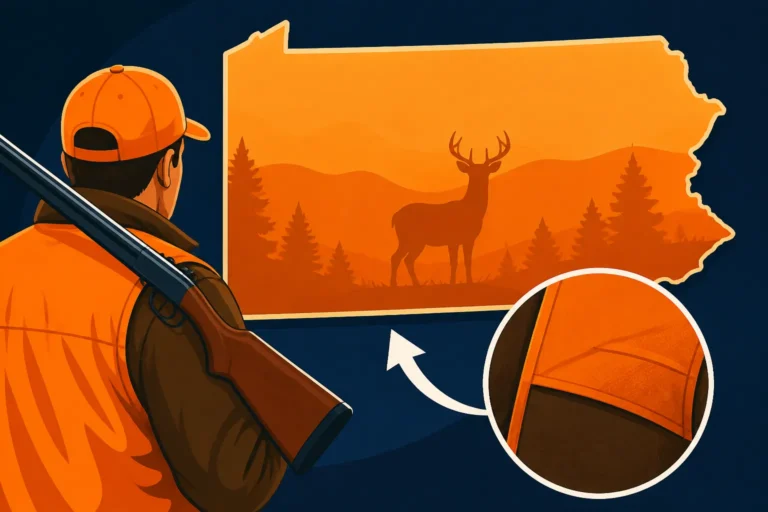
Hunter Orange Compliance in December
Hunter orange is mandatory during various firearm seasons in Pennsylvania, and December sees a significant portion of this. Knowing the rules is not just about avoiding a fine, it's about safety.
- Requirements: Always check the current Pennsylvania Game Commission regulations for specific hunter orange requirements by season and WMU. Generally, during the firearms deer season, hunters are required to wear 250 square inches of fluorescent orange material on the head, chest, and back combined, visible 360 degrees. This applies to both rifle and archery hunters during concurrent firearms seasons.
- Archery/Flintlock: During the late archery and flintlock seasons, orange requirements can vary. For instance, during the traditional flintlock season, hunter orange typically isn't required unless you are hunting concurrently with the firearms deer season or are in specific management zones. However, many archers and flintlock hunters choose to wear a minimum amount of orange for safety, especially when entering or exiting the woods.
- Visibility: Ensure your orange is clean and vibrant. Faded or dirty orange is less effective. Consider an orange vest or jacket over your camouflage, and always a blaze orange hat. Your visibility to other hunters is your best defense against accidents. You can find more details on Pennsylvania Hunter Orange Rules and Hunter Orange Square Inches.
Special Considerations for Different December Hunts
Not all December hunts are created equal. The clothing strategy for sitting motionless in a frigid treestand is vastly different from that for actively tracking a deer through knee-deep snow. Tailoring your gear to your specific hunting method is key to staying comfortable and effective.
Stand Hunting in Freezing Conditions
This is arguably the most challenging scenario for clothing, as you're generating very little body heat. The goal is to maximize insulation and block every bit of wind.
- Layer, Layer, Layer: This is where a robust layering system truly shines. Heavyweight base layers, multiple mid-layers (thick fleece, synthetic puffy jacket), and an insulated, windproof/waterproof outer layer are essential. Many hunters even opt for insulated bibs or pants over a jacket for stand hunting, as they provide excellent core and leg warmth.
- External Warmth Aids: Don't be afraid to use external heat sources. Hand warmers in your gloves/mittens or a hand muff, toe warmers in your boots, and even a portable catalytic heater can make a huge difference in comfort. Some stands even allow for insulated seat cushions to keep your backside warm.
- Stillness is Key: The warmer you are, the easier it is to remain still, which is crucial for stand hunting. Shivering not only alerts deer but also makes accurate shooting incredibly difficult.
- Strategic Dressing: Consider wearing minimal layers during your walk to the stand (carrying your heavy outer layers and puffy mid-layers in your pack), then adding them once you're settled. This prevents sweating on the hike in, which would lead to a chilling effect once you stop. This strategy is also discussed in Cold Weather Sitting Strategy.
Still-Hunting and Tracking in Snow
Still-hunting involves slow, deliberate movement, while tracking is often more active, following a blood trail or fresh tracks. Both require a balance of warmth and breathability, with an emphasis on quietness.
- Breathability is Paramount: While you need warmth, you'll be generating body heat. Opt for breathable base and mid-layers that can manage sweat effectively. A non-insulated, quiet shell often works best, allowing you to vent or add layers as needed.
- Quiet and Durable Outerwear: As mentioned, noisy fabrics will betray you. Choose outer layers with soft, brushed faces that won't rustle against branches or crackle in the cold. Durability is also important, as you'll be pushing through brush and potentially crawling.
- Maneuverability: Your clothing should not restrict your movement. Avoid overly bulky layers that can hinder your ability to shoulder a rifle quickly or nock an arrow.
- Gaiters and Waterproof Boots: If there's snow, gaiters are a must to keep snow out of your boots, and your boots need to be absolutely waterproof. For more on this, check out Still-Hunting After a Fresh Snow and Hunting Deer in Deep Pennsylvania Snow.
- Hunter Orange: Be mindful of hunter orange requirements, especially if you are actively moving during firearms seasons. A blaze orange vest over your quiet shell is often the best compromise between safety and stealth.
Deer Drives and High-Activity Moments
Deer drives involve sustained, high-intensity activity, followed by periods of relative stillness (for standers). This presents a unique challenge for clothing.
- Active Layers for Drivers: If you're a driver, you'll be exerting a lot of energy. Lightweight or midweight base layers, and perhaps a breathable fleece mid-layer, underneath a durable, windproof (but possibly not heavily insulated) outer shell are often ideal. You'll sweat, so maximum wicking and breathability are crucial. You might even shed a jacket entirely for the drive itself, especially if it's not bitterly cold, and put it back on after the drive is complete.
- Insulation for Standers: If you're a "stander" on a drive, you'll be sitting or standing motionless, potentially for a significant period in the cold. You'll need more insulation than the drivers, similar to a stand hunter. This might mean adding a puffy jacket or a heavy fleece once you reach your post.
- Communication and Planning: In a deer drive, communication is key. Knowing your role (driver or stander) will dictate your clothing strategy. Using radios for communication between groups can help plan gear adjustments if, for example, a drive takes longer than expected, and standers need to prepare for a longer, colder wait.
- Hunter Orange: Hunter orange is absolutely critical for deer drives. Ensure all participants have highly visible, 360-degree orange, as safety is paramount in these group hunting scenarios. Check out Deer Drives With Three or Four Hunters for more on tactics.
Pre-Hunt Preparation and Field Care for Your Gear
Having the right gear is only half the battle. Proper preparation before the hunt and diligent care in the field and afterwards will ensure your clothing performs optimally throughout the brutal Pennsylvania December. Don't let neglected gear ruin your hunt.
Testing Your Layering System Before the Hunt
The worst time to discover your layering system has flaws is when you're miles from the truck, shivering uncontrollably.
- Practice Runs: Before opening day, take your full December hunting outfit out for a walk in similar conditions to what you expect. Hike the same distance you'd walk to your stand. Sit motionless for an hour in a backyard stand. How do you feel? Are you sweating too much? Are you getting cold? Does your clothing restrict your movement or make too much noise?
- Adjustments: Use these practice runs to make adjustments. Maybe you need a lighter base layer, or a warmer mid-layer. Perhaps your boots aren't as warm as you thought, or your gloves are too bulky to handle your gear. This feedback is invaluable. Think about how you'd manage a long glassing session in a particular area, or how you'd adapt to a sudden drop in temperature.
- Simulate Hunting Scenarios: Can you quietly draw your bow or shoulder your rifle with all your layers on? Can you access your calls, rangefinder, or release aid easily? Practice these movements.
Packing Extra Essentials for Unexpected Changes
December weather is notoriously unpredictable. Always pack for the unexpected.
- Extra Base Layers/Socks: A dry change of base layer top and an extra pair of thick, dry socks can be a literal lifesaver if you get wet or sweaty.
- Emergency Rain Gear: Even if your main outer layer is waterproof, a lightweight, packable emergency rain jacket and pants (like those made of Frogg Toggs or similar lightweight materials) can be a cheap insurance policy against catastrophic gear failure or an unforeseen downpour.
- Insulated Puffy Jacket/Vest: A compressible down or synthetic puffy jacket that can be easily added over your mid-layers when sitting, or shed when moving, is incredibly useful.
- Hand Warmers/Toe Warmers: Always have more than you think you'll need.
- Emergency Blanket: A compact emergency thermal blanket or bivvy can provide crucial warmth if you're stranded, injured, or have an unexpected overnight in the woods.
- First Aid Kit: Always carry a First Aid Kits for Remote Big Woods. Beyond injuries, it can include items like blister pads which can prevent serious discomfort when your feet are working hard in heavy boots.
- Navigational Aids: Even with GoHunt or similar apps on your phone, a physical compass and map are essential backups, especially if your phone battery dies in the cold.
Drying and Maintaining Gear After the Hunt
The hunt doesn't end when you get back to the truck. Proper care of your clothing ensures it's ready for the next outing and prolongs its lifespan.
- Drying: As soon as you get home, hang up all your damp clothing to dry. Do not wad it up or leave it in a pile; this promotes mildew and retains odor. If items are wet, tumble dry on low heat (if suitable for the fabric) or hang in a well-ventilated area. Avoid direct high heat on waterproof membranes, as it can damage them.
- Cleaning: Wash your scent-control items with scent-free detergent. For waterproof/breathable shells, use technical wash products (like Nikwax or Granger's) specifically designed to clean the membrane without leaving residues that can inhibit breathability. Re-apply DWR treatments periodically if water stops beading up on your outer layers.
- Storage: Once clean and thoroughly dry, store your hunting clothes in airtight containers or bags to keep them free from household odors. Some hunters add natural elements like pine boughs to storage containers.
- Repair: Inspect your gear regularly for rips, tears, or worn seams. Promptly repair any damage to maintain waterproofness and durability. Small holes can often be patched with repair tape designed for technical fabrics.
By following these tips, you'll be well-prepared to tackle the challenging but rewarding hunting opportunities that December in Pennsylvania has to offer. Stay warm, stay dry, and stay safe out there!
Disclaimer
This article is for general informational purposes only and does not constitute professional advice. Laws, prices and regulations vary by location and change over time. Consult a qualified professional for guidance on your specific situation.