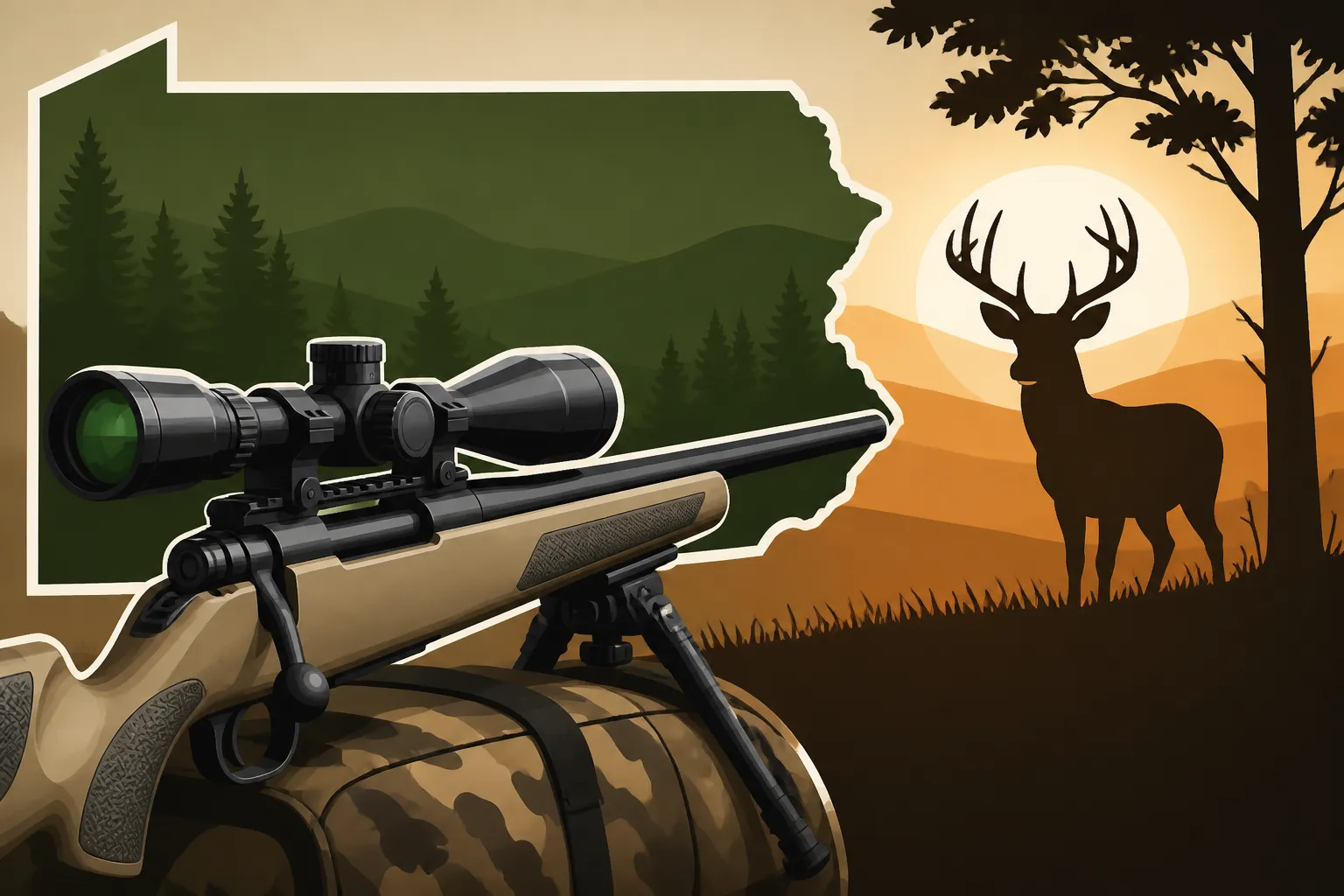
Rifle Setups for Pennsylvania Deer
Ah, the quest for the perfect deer rifle setup in Pennsylvania! It's a journey every hunter in our great state embarks on, often fraught with conflicting advice, strong opinions, and the nagging worry that you're not quite prepared for whatever the woods throw at you. From the dense, unforgiving laurel thickets of the Big Woods to the expansive, often wind-swept crop fields of farm country, Pennsylvania presents a dizzying array of hunting scenarios. This guide is here to cut through the noise, offering practical, empathetic advice on how to choose, equip, and prepare your rifle for the diverse challenges of deer hunting right here in our beloved Commonwealth.
Understanding Pennsylvania's Deer Hunting Landscape and Its Impact on Rifles
Hunting deer in Pennsylvania isn't just "hunting deer." It's an experience shaped profoundly by our incredibly varied terrain. You might be still-hunting dense public land one week, and the next, sitting over a food plot on a private woodlot. Each scenario demands different considerations for your rifle setup, and understanding these nuances is the first step to making smart choices.
The Diverse Terrain: From Big Woods to Farm Country
Let's be honest, Pennsylvania is a patchwork quilt of hunting environments, and what works beautifully in one area might be a hindrance in another. If you're heading into the vast, rugged expanse of the northcentral mountains, often called the "Big Woods," you're dealing with steep climbs, deep hollows, and dense regrowth. Here, your shots might be quick, close-range encounters in thick timber, or occasionally, a longer poke across a pipeline or an old clearcut. You need a rifle that's maneuverable, not overly heavy for those grueling hikes, and capable of quick target acquisition. You might find a lot of useful insights in Hunting Pennsylvania's Big Woods for Deer when considering the particular challenges of that region.
Contrast that with the rolling hills and agricultural landscapes of southern Pennsylvania, where you might be looking across open crop fields or small woodlots. Here, shots can extend beyond 100 yards, and having a setup that allows for precision at those distances becomes more important. However, even in farm country, deer often hug the edges of cover, meaning you're still likely to encounter deer at closer ranges. For those hunting primarily in these areas, checking out Farm Country Deer Hunting in Southern Pennsylvania can provide additional context. The frustration often comes from trying to find that "one rifle" that does it all perfectly, knowing deep down there are always trade-offs.
Shot Distances and Target Acquisition
This is where the rubber meets the road for most Pennsylvania hunters. Despite what you see on hunting shows set out West, the vast majority of deer shot in our state are taken at relatively short distances. I'm talking under 100 yards, and often, much, much closer – sometimes 30 or 40 yards. This reality heavily influences the kind of rifle and optics you should be considering.
In thick woods, whether it's the Big Woods or even a dense woodlot in farm country, deer often appear like ghosts, moving quickly through cover. You need to get your rifle up, find the deer in your scope, and make a confident shot in a matter of seconds. A scope with excessively high magnification can be a real hindrance here, turning your field of view into a blurry, zoomed-in mess when you need to see the whole picture. The ability to acquire your target quickly and clearly is paramount. It’s incredibly frustrating when a legal buck slips through the brush because your scope is set at 9x and all you can see is brown fur with no context. This emphasizes a setup that prioritizes speed and clarity over raw power or extreme long-range capability.
Choosing the Right Caliber for Pennsylvania Whitetails
The world of rifle calibers is a deep rabbit hole, and every hunter has their favorite. For Pennsylvania deer, you don't need a cannon, but you do need something capable of a humane, ethical kill. Let's talk about some of the most popular and proven choices.
Popular and Proven Calibers for Deer
When you walk into any Pennsylvania sporting goods store, you'll see a lot of rifles chambered in a few key calibers, and for good reason. They work.
- The .30-06 Springfield: Often referred to as "the king," the .30-06 has put more venison on the table than probably any other round in North America. It's powerful, incredibly versatile with a wide range of bullet weights, and ammo is available everywhere. It handles everything from whitetails to black bears with authority. For many, it's the classic "if it ain't broke, don't fix it" choice, especially for those venturing into Pennsylvania Black Bear Hunting where a bit more punch can be comforting.
- The .308 Winchester: This is the .30-06's slightly younger, more compact brother. The .308 offers similar performance to the .30-06 at typical hunting distances, but often in a shorter action rifle, making for a lighter, handier package. It's renowned for its inherent accuracy and moderate recoil, making it a favorite for stand hunters and those who appreciate a nimble firearm.
- The .270 Winchester: If you appreciate a flat-shooting round that can reach out a bit further, the .270 is a fantastic choice. It throws lighter bullets at higher velocities, making it excellent for crossing a longer field or punching through a bit of wind. It's a proven deer killer and handles Pennsylvania's mixed terrain beautifully.
- The .243 Winchester: A popular choice for youth hunters, recoil-sensitive shooters, and those primarily hunting in more open areas where shots are precise. While perfectly capable of taking deer, shot placement is absolutely critical with the .243 due to its lighter bullet weight. It's a great round, but probably not the first choice for someone new to hunting or someone who anticipates less-than-perfect shot opportunities in dense cover.
- The 6.5 Creedmoor: The "new kid on the block" that has gained massive popularity. The 6.5 Creedmoor offers surprisingly good ballistic performance, very mild recoil, and excellent accuracy. It's a fantastic choice for those who want a modern, low-recoil option that is still very effective on deer. While it's great for longer ranges, its mild recoil and accuracy make it enjoyable to shoot and very effective in typical Pennsylvania deer ranges too.
The frustration here is real – everyone has an opinion, and it feels like a monumental decision. But truthfully, all these calibers, when matched with the right bullet and proper shot placement, are more than adequate for Pennsylvania whitetails.
Understanding Recoil and Its Impact on Accuracy
Let's talk about something often overlooked: recoil. It's the kick you feel when you pull the trigger, and it can make or break a hunter's confidence and accuracy. If you're flinching or anticipating the shot because you're worried about the kick, you're not going to shoot as accurately. It's that simple.
For new hunters, especially younger ones or those with a smaller frame, choosing a rifle with manageable recoil is paramount. A bad experience with a hard-kicking rifle can sour someone on hunting for good. Calibers like the .243 Winchester or 6.5 Creedmoor shine here. For those who still want more power but are sensitive to recoil, modern rifles often come with excellent recoil pads, and some can even be fitted with muzzle brakes (though these drastically increase muzzle blast and noise, so consider your hunting buddies and hearing protection!). Don't let pride get in the way of honest self-assessment. A hunter who shoots a .243 accurately is far more ethical and successful than one who flinches with a .300 Win Mag.
Caliber Considerations for Bear Hunting in Pennsylvania
Many deer hunters are also aspiring bear hunters, and thankfully, most common deer calibers do double duty on Pennsylvania's black bears. If you have a .30-06, .308, or .270, you're generally well-equipped for bear. These rounds have sufficient energy and bullet weight for the heavier bone structure and larger body mass of a black bear.
However, if your primary deer rifle is a .243, and you plan to hunt bear, it's worth considering bullet construction carefully. You'll want a heavier, tougher bullet designed for deep penetration. While a .243 can take a bear, it offers less margin for error compared to the larger calibers. Always consult Pennsylvania Black Bear Hunting for more specific information on hunting bears and ensure your chosen caliber and bullet are up to the task. The goal is a quick, humane harvest, regardless of the game animal.
Optics Selection for Pennsylvania's Diverse Cover
Your rifle is only as good as the eyes on it. Optics—your scope, binoculars, and rangefinder—are absolutely critical components of your deer hunting setup, especially in Pennsylvania's varied conditions where light can be fleeting and targets appear suddenly.
Rifle Scopes for Low-Light and Quick Shots
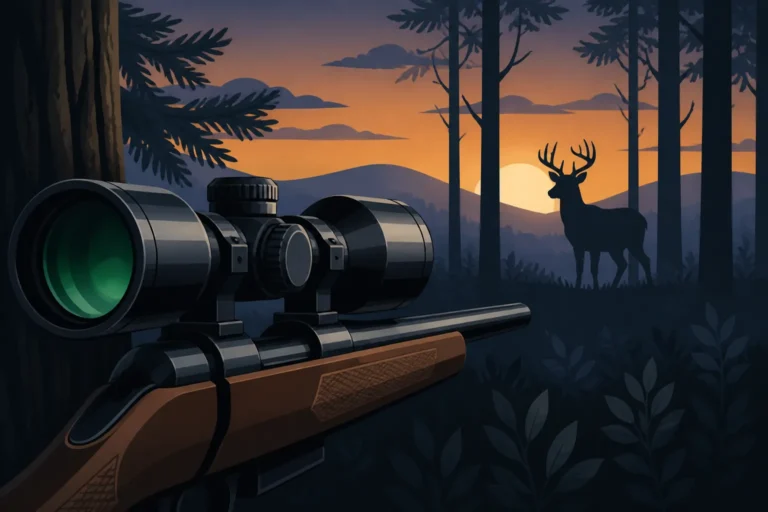
This is where many hunters, especially new ones, often make mistakes by going for too much magnification. For Pennsylvania deer hunting, a scope with a moderate power range is almost always the best choice. Think 2-7x, 3-9x, or even a 1-4x or 1.5-5x if you hunt extremely thick cover.
- Magnification: At 2x or 3x, you get a wide field of view, making it incredibly easy to find a deer that jumps up at 30 yards. As you dial up to 7x or 9x, you have enough power for those longer shots across a field or pipeline. A 4-12x or higher might seem appealing, but it can be a nightmare in dense woods. The wider field of view at lower magnification allows you to quickly track moving game and get on target.
- Objective Lens Size: The front lens of your scope, often denoted by the second number (e.g., 3-9×40). A 40mm or 42mm objective lens is usually plenty. While larger lenses (e.g., 50mm) gather more light, they also make the scope bulkier, heavier, and require higher rings, which can affect cheek weld and overall rifle balance. In the crucial low light of dawn and dusk, a quality 40mm scope with good glass will often outperform a cheaper 50mm scope.
- Reticle Choice: For deer hunting, a simple duplex reticle is often the fastest and cleanest. Some hunters prefer an illuminated reticle, which can be fantastic in very low light or against dark backgrounds, helping you place your crosshairs precisely without losing them.
- Glass Quality: This is arguably more important than pure magnification. Good quality glass provides clarity, brightness, and true color rendition, which is vital in dim light. You don't need to break the bank, but investing in a reputable brand will pay dividends. For more detailed information, check out Rifle Scopes for Low-Light Timber.
It's a common frustration to have a deer step out in the last minutes of legal shooting light, and you can barely make out your reticle against its dark hide. Choosing a scope for low-light performance is not just about big numbers; it's about intelligent design and quality components.
Binoculars and Rangefinders for Situational Awareness
While your rifle scope is for the shot, your binoculars and rangefinder are for everything leading up to it. They are invaluable tools for hunters in Pennsylvania.
- Binoculars: A good pair of 8x or 10x binoculars is essential. They allow you to scan fields, pick apart dense timber, and most importantly, identify if that deer has legal antlers without constantly raising your rifle. This is critical for safety and for adhering to antler restrictions. Many a hunter has raised their rifle, only to realize the "legal" buck was a spike or an antlerless deer after wasting precious seconds. GoHunt reviews are often a great place to start looking for quality optics that fit your budget and hunting style, offering comparisons of different brands and features.
- Rangefinders: While many shots in Pennsylvania are close, there are plenty of scenarios where knowing the exact distance is critical. An open powerline, a clearcut edge, or even a subtle rise and fall in farm country can make a 100-yard shot feel like 75 or 125. A rangefinder removes the guesswork, allowing you to confidently hold your shot. Even at short ranges, it can confirm your estimate and build confidence. Combined binocular-rangefinder units exist, offering convenience but often at a higher price point. If you only hunt the thickest cover, you might think you don't need one, but the moment you step out onto an old logging road or overlook a wider creek bottom, you'll wish you had it.
Rifle Features and Accessories for Practical Hunting
Beyond caliber and optics, the physical characteristics of your rifle and the accessories you choose can significantly impact your comfort, effectiveness, and overall hunting experience.
Stock Materials, Weight, and Balance
The stock of your rifle isn't just cosmetic; it's a functional part of the system that impacts feel, durability, and even accuracy.
- Synthetic vs. Wood: This is a classic debate. Wooden stocks are beautiful, offer a traditional feel, and often have a warm, classic aesthetic. However, they can be heavier, more susceptible to dings and scratches, and can warp slightly with changes in humidity, potentially affecting accuracy. Synthetic (fiberglass, carbon fiber, polymer) stocks are generally lighter, impervious to weather, more durable, and require less maintenance. For the practical hunter who isn't afraid of a little rain or snow, a good synthetic stock is often the more reliable choice in Pennsylvania's unpredictable weather.
- Weight: This is a huge factor, especially if you hunt public land or spend your days still-hunting. A heavy rifle feels great on the bench rest, but after three hours of climbing ridges and busting through brush, every ounce feels like a pound. Look for a rifle that feels good in your hands, not too heavy, but with enough heft to absorb some recoil and hold steady.
- Balance: A well-balanced rifle should feel "neutral" in your hands, not muzzle-heavy or butt-heavy. Good balance contributes to quick target acquisition and steady aim. This is often a subjective feel, so it's always best to shoulder a few different rifles at your local gun shop to see what feels right for you.
The frustration of lugging a heavy rifle up a mountain is real, as is the worry that your beautiful wooden stock will get soaked and warp in a late-season rain. Choosing wisely here can save you a lot of discomfort.
Slings, Bipods, and Shooting Aids
These accessories might seem minor, but they play a significant role in making your hunt more comfortable and your shots more stable.
- A Good Sling: This is non-negotiable for Pennsylvania hunting. You're going to be walking, often with both hands free for balance, climbing, or carrying other gear. A comfortable, wide sling made of durable material will make carrying your rifle infinitely easier. Look for one that doesn't slip on your shoulder and is adjustable. A quick-adjust sling can even be used to steady your shot when sitting or kneeling.
- Shooting Sticks or Tripods: While you might not carry a full bipod on an active deer hunt in the woods, shooting sticks or a monopod can be incredibly useful. If you're hunting an open area, sitting on a log, or kneeling on a ridge, a set of collapsible shooting sticks can provide a rock-solid rest. This can turn a wobbly, uncertain shot into a confident, ethical one. For more on using these, consider reading Shooting Sticks From a Ridge Seat.
- Bipods: These are less common for active deer hunting in dense Pennsylvania cover, as they add weight and can get snagged. However, if you primarily hunt open fields from a blind or a stationary position, a lightweight bipod can offer maximum stability for longer shots.
Imagine you've just hiked for an hour, your arms are tired, and a buck steps out. Without a sling, you'd be exhausted. Without a rest, that shot might be shaky. These accessories are about making the moment of truth as easy as possible.
Triggers and Safety Mechanisms
These internal components often go unnoticed until they matter, and then they really matter.
- Trigger Pull: A good rifle trigger should have a crisp, predictable break with minimal creep (the feeling of the trigger moving before it breaks) and overtravel (the distance the trigger moves after the break). A heavy, mushy trigger can make you pull shots, leading to misses or poor hits. While many factory triggers are decent, some aftermarket triggers offer significant improvements. If your rifle has a particularly heavy or "creepy" trigger, consider having a reputable gunsmith lighten and smooth it, or look into aftermarket options.
- Safety Mechanisms: Modern rifles come with various types of safeties (two-position, three-position, tang safeties). The most important thing is to understand how your rifle's safety works and to operate it smoothly and silently. Practice taking the safety off and putting it on, both quickly and quietly, so it becomes second nature. A three-position safety, found on many bolt-action rifles, is often favored as it allows you to manipulate the bolt (to load or unload) while the firing pin is still locked, offering an extra layer of safety.
There's nothing more frustrating than a buck pausing perfectly, only for your trigger to feel like it's dragging through mud, or fumbling with a safety that jams or makes a loud click. Practice makes perfect here.
Ammunition Considerations and Ballistics
Once you have your rifle and scope, the ammunition you feed it is the final, crucial component. The right bullet in the right place is what ensures an ethical harvest.
Bullet Construction for Whitetails
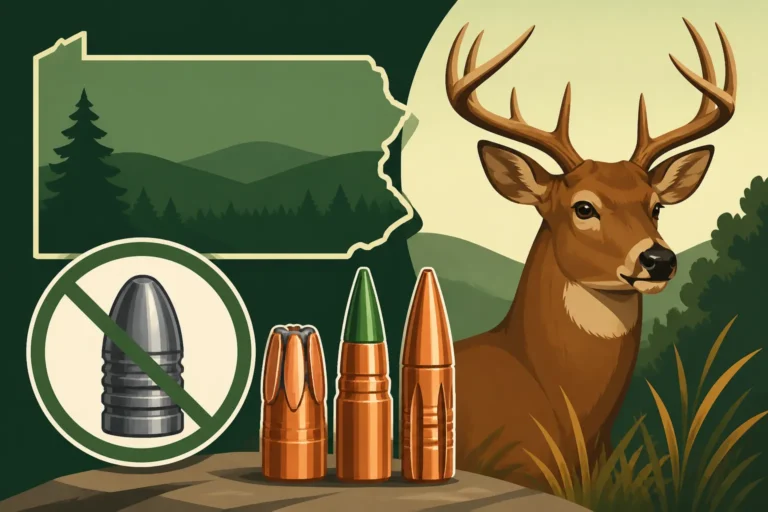
Not all bullets are created equal, and for whitetails, you want a bullet that expands reliably to create a large wound channel, but also penetrates deeply enough to reach vital organs.
- Soft Point (SP) and Hollow Point (HP): These are common, affordable, and effective. They are designed to expand upon impact, transferring energy to the animal quickly.
- Bonded Bullets: These bullets have their lead core chemically bonded to the copper jacket. This prevents the core from separating from the jacket, leading to better weight retention and deeper penetration, even through bone. Excellent for tough angles or larger deer.
- Monolithic (Solid Copper) Bullets: These are lead-free bullets, often required in certain areas or chosen for environmental reasons. They retain nearly all their weight, offering excellent penetration and reliable, though sometimes smaller, expansion. With growing interest in lead-free options, especially for meat donation programs, these are becoming more popular.
For Pennsylvania deer, a good quality soft point or bonded bullet from a reputable manufacturer in the 130-165 grain range (for .270 to .30-06/.308) will perform admirably. Your choice should prioritize consistent expansion and adequate penetration. The last thing any hunter wants is to make a good shot and have the bullet fail to perform, leading to a long, difficult, and potentially unsuccessful track.
Ballistics in Pennsylvania's Short to Mid-Range Shots
While ballistic charts showing bullet drop at 500 yards are fascinating, for typical Pennsylvania hunting, they're often overkill. As mentioned, most shots are under 100 yards.
- Zero Distance: For most calibers, zeroing your rifle at 100 or 150 yards is ideal. At these distances, your bullet will only rise or fall a couple of inches from your line of sight at any point within typical PA hunting ranges (say, 25 to 175 yards), allowing you to hold dead on the vitals without worrying about holdover.
- Energy Retention: Ensure your chosen bullet has enough kinetic energy to perform effectively at the distances you're shooting. All standard deer calibers mentioned earlier carry more than enough energy for a humane kill out to 200+ yards.
- Trajectory: While a flat trajectory is always nice, a deer's vital zone is a fairly generous target. A few inches of drop or rise at typical ranges won't make a difference if you're holding steady on the shoulder. Don't get bogged down in micro-adjustments for typical woods hunting distances. GoHunt often features helpful articles and tools for understanding ballistics and ammunition choices, which can be great for fine-tuning your knowledge.
The frustration often stems from overthinking the numbers for ranges that simply don't materialize in our dense woods. Focus on consistent performance at the ranges you actually shoot.
Ammunition Availability and Consistency
You've got your rifle and know your preferred bullet, but can you actually get that ammo? And can you get enough of the same lot for practice and hunting?
- Availability: Stick to popular calibers and readily available loads. While boutique ammunition can be fantastic, if you can't easily find it year after year, it makes consistency difficult. During times of ammunition shortages, this becomes even more critical.
- Consistency: Once you find a load your rifle shoots well, try to buy several boxes from the same manufacturing lot (check the lot number on the box). Slight variations can occur between different lots, which can subtly change your point of impact. Having enough of one lot for sighting in, practice, and the actual hunt ensures maximum consistency.
For more on this, check out Ammunition Availability Before Opening Day. - Lead-Free Options: Consider experimenting with lead-free ammunition. As awareness grows about lead fragments in venison and the environment, these options are becoming more prevalent and effective. They offer consistent performance and are a great ethical choice.
It's truly maddening to find the perfect load, only for it to be out of stock everywhere come hunting season, or worse, to show up at the range and realize your new box of ammo shoots to a different point of impact. Plan ahead!
Sighting In and Practice for Ethical Hunting
Having the best rifle and ammunition in the world means nothing if you can't hit what you're aiming at. Sighting in your rifle and consistent practice are non-negotiable for ethical hunting.
The Importance of a Proper Zero
Sighting in, or "zeroing," your rifle means adjusting your scope so that your bullet hits exactly where your crosshairs are aimed at a specific distance.
- Zero Distance for PA: For most of Pennsylvania, a 100-yard zero is an excellent starting point. It offers a good balance for typical woods shots (where you'll be slightly high at 50 yards and slightly low at 150 yards) without needing significant holdover or holdunder. Some prefer a 50-yard zero for very dense cover, or a 150-yard zero for flatter-shooting calibers in more open terrain. Understand what your chosen zero means for bullet impact at various ranges.
- Checking Your Zero: Don't just zero your rifle once and forget about it. Check your zero before every hunting season, and ideally, after any significant travel or if your rifle takes a hard knock. Rifles can and do shift their point of impact.
- Confirmation Shots: Always confirm your zero with the exact ammunition you plan to hunt with. Different bullet weights, types, and manufacturers can (and usually will) result in a different point of impact, even within the same caliber.
The most common frustration here is a rushed zeroing session, or neglecting to check your rifle before opening day. A cold, wet morning in the deer stand is no time to discover your scope is off.
Practicing Under Realistic Conditions
Shooting from a perfectly stable bench rest at a paper target is great for zeroing, but it doesn't simulate real-world hunting conditions.
- Vary Your Positions: Practice shooting from standing, kneeling, sitting, and even prone (if your hunting area allows). Try shooting off your backpack, over a log, or with shooting sticks. These are the positions you're likely to encounter in the field.
- Cold Bore Shots: Your first shot from a cold barrel can sometimes land slightly differently than subsequent shots from a warm barrel. Practice taking your first shot of a session from a cold, clean bore to understand where it hits. This simulates the most common hunting scenario: that first shot at a deer.
- Time Pressure: Practice getting your rifle up, finding the target, and taking the shot quickly, but smoothly. A deer rarely gives you unlimited time. This isn't about rushing, but about efficiency.
- Practice with Hunting Gear: Wear your hunting clothes, including your heavy coat, gloves, and hat. This helps you get a feel for how they might interfere with your shooting form. GoHunt's resources often include articles on effective practice routines and hunting fitness, which can enhance your field performance.
It's incredibly frustrating to perform perfectly on the range, only to have your skills fall apart when a real deer appears because you haven't practiced in a realistic scenario.
Understanding Your Maximum Ethical Range
Every hunter has a maximum ethical range—the farthest distance at which they can consistently make a clean, humane shot under field conditions. This isn't just about what your rifle can do, but what you can do.
Be honest with yourself. If you can only consistently group shots within a 6-inch circle at 100 yards from a bench, then 100 yards is probably your maximum ethical range under pressure. Don't let ego push you beyond your limits. The goal is a quick, humane kill, not a long, agonizing track. Patience is a virtue, and passing on a shot that's beyond your capabilities is the most ethical choice you can make.
Special Considerations: Regulations and Unique Scenarios
Pennsylvania has specific rules and unique areas that can impact your rifle setup. Staying informed is crucial to a legal and successful hunt.
Semi-Automatic Rifles and Pennsylvania Regulations
For many years, semi-automatic rifles were not permitted for big game hunting in Pennsylvania. However, regulations have changed.
- Legality: Semi-automatic centerfire rifles are now legal for hunting most big game, including deer and bear. This opened up options like AR-15 style platforms chambered in common hunting calibers (e.g., .223/5.56, .300 Blackout, 6.5 Grendel, .308 Winchester).
- Magazine Capacity: Be aware of specific magazine capacity rules for hunting. Typically, you are restricted to a maximum of a five-round capacity in the magazine plus one in the chamber (5+1) for semi-automatic centerfire rifles for big game. Always check the current Pennsylvania Game Commission regulations for the most up-to-date information. For a deeper dive, consider Are Semi-Automatic Rifles Legal in Pennsylvania?.
It's easy to assume your favorite sporting rifle is legal, only to find out too late it's not. Always double-check!
Special Regulation Areas and Shotgun/Muzzleloader Zones
Pennsylvania isn't a "one-size-fits-all" state when it comes to firearms. There are specific areas where traditional rifles are not permitted for deer hunting.
- Special Regulation Areas: Certain Wildlife Management Units (WMUs), particularly those closer to urban and suburban centers like WMU 5C and 5D, historically had (and some still have) restrictions on the type of firearms allowed. These areas often mandate the use of shotguns with slugs, muzzleloaders, or archery equipment.
- Planning Ahead: If you plan to hunt in a special regulation area, you need to be absolutely sure your rifle setup complies. This might mean having a dedicated shotgun setup or a muzzleloader ready to go. Don't assume your trusty deer rifle is legal everywhere. Consult Where Pennsylvania Requires Shotguns for Deer for specific details on these zones.
The frustration of planning a hunt, only to realize your firearm isn't legal for that specific WMU, is a bitter pill. Always verify the rules for your intended hunting grounds. For a comprehensive overview of all regulations, look up Pennsylvania Deer Seasons and WMU Rules.
Mentored Youth and Recoil-Sensitive Hunters
Introducing new hunters, especially youth, to the sport is a wonderful experience, but it comes with responsibilities, particularly regarding rifle choice.
- Low-Recoil Calibers: As discussed, calibers like the .243 Winchester, 6.5 Creedmoor, or even a .223 Remington (if legal for deer in your area and matched with appropriate bullets, though often considered on the light side for deer) are excellent choices for minimizing recoil and ensuring a positive first experience.
- Proper Fit: A youth-sized rifle with a shorter length of pull is crucial. A rifle that's too long or too heavy will be difficult to handle safely and accurately. Many manufacturers offer youth models that can grow with the shooter.
- Safety and Instruction: Emphasize proper hunter education and responsible firearm handling. A positive introduction, focused on safety and skill-building, is key to fostering a lifelong passion for hunting. The Pennsylvania Game Commission's Pennsylvania Hunter Education and Mentored Permits program is an excellent resource for new hunters.
Nothing is more disheartening than seeing a new hunter flinch excessively or develop bad habits because they're using a rifle that's too much for them. Start them right, start them safe, and start them with confidence.
Maintenance and Care for Your Pennsylvania Deer Rifle
Your rifle is a significant investment and a critical piece of safety equipment. Proper maintenance ensures its longevity, reliability, and accuracy, especially given the harsh conditions Pennsylvania hunting can sometimes throw at you.
Cleaning and Rust Prevention
Pennsylvania weather is famously unpredictable. A beautiful, crisp autumn morning can turn into a cold, driving rain or snowstorm in a matter of hours. This means your rifle needs attention.
- Regular Cleaning: Clean your rifle after every range session and after every hunting trip, especially if it's been exposed to moisture, dirt, or debris. The bore is paramount for accuracy, so a good bore solvent and brush are essential.
- Rust Inhibitors: After cleaning, apply a thin coat of rust-preventative oil to all metal surfaces, both internal and external. Pay special attention to the bore, bolt, and any exposed metal. Modern synthetic stocks make this easier, but wooden stocks need protection too. Even stainless steel can rust if neglected.
- Field Cleaning vs. Deep Clean: A bore snake can be a fantastic tool for a quick field clean to remove moisture and major fouling. However, a full cleaning with a rod, patches, and brushes should be done periodically to remove stubborn carbon and copper fouling.
The sheer frustration of pulling your rifle out of the safe before opening day only to find a rust spot, or worse, a frozen action, is enough to make anyone sigh in despair. Preventative care is worth its weight in gold.
Protecting Your Rifle in the Field and During Storage
Your rifle faces different threats in the field than it does in the safe. Protecting it appropriately for both scenarios is key.
- Gun Cases: For transport, a good quality hard case will protect your scope and rifle from bumps and drops. For field use, a soft case or even a simple neoprene scope cover can protect your optics from rain and scratches while you're walking through brush.
- Weather Protection: In the field, try to keep your rifle as dry as possible. A simple cover over the action or a scope cap can prevent rain and snow from getting into critical areas. If it does get wet, dry it thoroughly as soon as possible.
- Humidity Control for Storage: When storing your rifle long-term, ensure it's in a cool, dry place. A dehumidifier in your gun safe, or desiccant packs in individual cases, can prevent rust and corrosion in humid environments. Avoid storing rifles in soft cases for extended periods, as they can trap moisture.
A dinged scope or a water-logged rifle can ruin a hunt and potentially cost you hundreds in repairs. Simple protection goes a long way.
Pre-Season Check-Up
Before the season kicks off, take the time for a thorough inspection of your rifle. This simple habit can prevent a lot of headaches.
- Tighten Mounts and Rings: Scope rings and base screws can loosen over time with recoil and handling. Gently check and tighten them with a proper torque wrench (don't overtighten!). A loose scope mount is one of the most common causes of accuracy issues.
- Inspect Bore: Look through the bore for any obstructions. Even a small piece of debris can cause catastrophic damage or a wildly inaccurate shot.
- Cycle Action and Check Safety: Smoothly cycle the bolt or action several times. Check that the safety engages and disengages properly, and that the trigger functions as it should.
Finding out your scope is loose the night before opening day, or that your action is gummed up, is a horrible feeling. A quick check-up can give you peace of mind and ensure your rifle is ready when you are.
| Caliber | Typical Pennsylvania Use | Pros | Cons |
|---|---|---|---|
| .30-06 Springfield | All-around, Big Woods, mixed terrain | Powerful, versatile, widely available | Can have stout recoil for some shooters, longer action |
| .308 Winchester | Woods hunting, stand hunting, versatile | Accurate, moderate recoil, compact, efficient | Slightly less power than .30-06 at extreme ranges (rarely an issue) |
| .270 Winchester | Open country, long shots, mixed terrain | Flat trajectory, good energy retention | Not ideal for very thick brush, less common for bear (though capable) |
| 6.5 Creedmoor | Mixed terrain, recoil-sensitive shooters | Low recoil, accurate, good ballistics | Less raw energy than .30 calibers, newer, potentially less ammo choice |
| .243 Winchester | Youth, small-framed hunters, open fields | Low recoil, accurate, effective with good shot | Requires precise shot placement, limited energy for larger deer |
Disclaimer
This article is for general informational purposes only and does not constitute professional advice. Laws, prices and regulations vary by location and change over time. Consult a qualified professional for guidance on your specific situation.