Shooting Sticks From a Ridge Seat
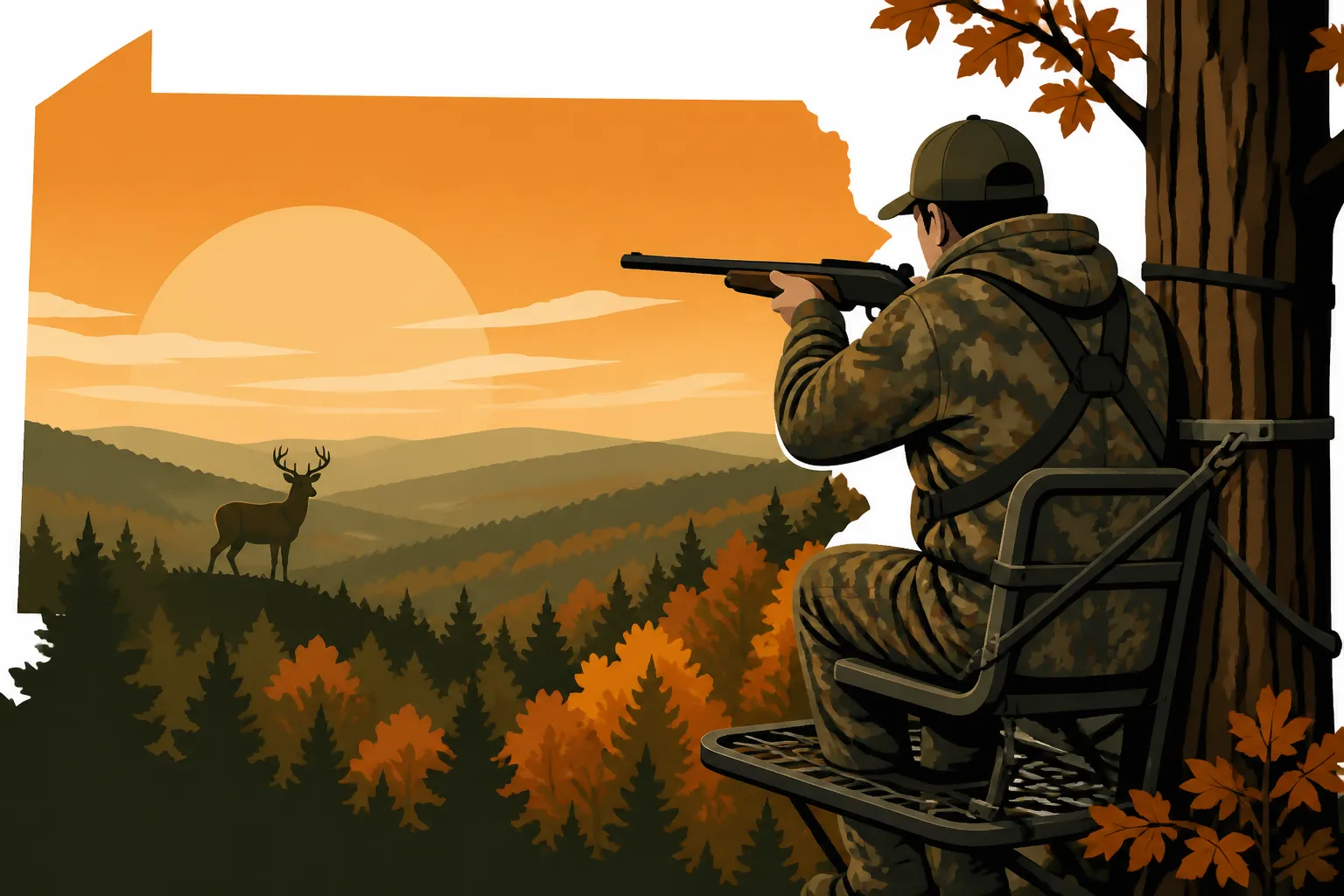
There’s nothing quite like settling into a prime spot on a Pennsylvania ridge, knowing the deer are likely moving along those subtle contours and benches below you. You've hiked in, picked your perfect vantage, and now it's time to be still and observant. But when that moment comes, and a nice buck steps out, you often find yourself in an awkward position – a sloped hillside, uneven ground, and suddenly, that steady shot you practiced at the range feels impossible. This guide is all about turning those wobbly, last-second shots from a ridge seat into confident, stable engagements, all thanks to the humble, yet powerful, shooting stick.
The Unique Challenges of Shooting From a Ridge Seat
Hunting the ridges and mountains of Pennsylvania is an incredibly rewarding experience, but it comes with its own distinct set of shooting challenges. It's rarely a flat, open field where you can set up a nice prone shot or even stand comfortably. More often than not, you're nestled against a tree, perched on a rock, or simply melting into the terrain, trying to remain unseen. And when that deer appears, you need to be ready, no matter how uncomfortable your footing might be.
Uneven Ground and Awkward Angles
Anyone who’s spent a crisp November morning on a Pennsylvania ridge knows that "flat" is a luxury. You're constantly dealing with slopes, subtle benches, and contours that make getting a truly stable shooting platform a real headache. Imagine a scenario: you're sitting patiently, back against a big oak, overlooking a steep hollow. A nice buck steps out at 100 yards, quartering away, but he's downhill and slightly to your right. Trying to rest your rifle on your knee means a cramped, elevated elbow and a wobbly sight picture. Even if you try to brace against a small sapling, it’s rarely at the right height or angle.
The rifle itself is often canted due to your body position on the slope, which can subtly, but significantly, impact bullet trajectory at longer ranges. What feels like a solid rest can quickly become a teetering proposition under the pressure of a live animal. This isn't just about accuracy; it's about ethical hunting. We owe it to the animal to make the cleanest shot possible, and struggling with an unstable platform goes against that principle.
Limited Movement and Quick Reactions
One of the cornerstones of successful ridge hunting, especially during the peak of the rut or when Still-Hunting Pennsylvania Big Woods, is remaining absolutely still. You’re a part of the landscape, and any sudden, large movement can send an alert deer bounding away. The problem is, being still often means being somewhat static in your shooting posture. When a deer suddenly appears, whether it's Hunting the Pre-Rut in Late October or during the later season, you need to react swiftly but smoothly.
Trying to shift your body, adjust your footing, or find a natural rest in those crucial seconds often leads to excessive movement, potentially spooking the deer. Even if the deer doesn't see you, the frantic attempt to get steady can introduce an adrenaline-fueled tremor that’s hard to control. The ideal situation is to have a stable platform that requires minimal body movement to engage the target, allowing you to focus purely on shot placement rather than fighting your own stability.
Why Shooting Sticks Are Your Best Friend on a Pennsylvania Ridge
For years, I stubbornly relied on my backpack, a strategically placed log, or even just my knees for stability when hunting from a seated position. And while those can work in a pinch, they're rarely ideal. Once I started consistently integrating shooting sticks into my ridge hunting setup, it was a genuine revelation. They address those core challenges head-on and make the whole experience more confident and, frankly, more enjoyable.
Unmatched Stability for Precise Shots
Think about it: when you're resting your rifle on your knee, you're relying on your own muscle stability, which can fatigue over time and introduce wobble. A backpack might be better, but it's often too soft, too high, or too low, and you're still relying on its position relative to your body. Shooting sticks, on the other hand, provide a rigid, independent support system for your rifle. This translates directly into a rock-solid sight picture.
Whether you're taking a shot across a hollow or down a steep ravine, that stable platform allows you to settle your crosshairs exactly where they need to be. It reduces the opportunity for human error caused by muscle fatigue or unsteady hands. This consistent stability gives you the confidence to wait for the perfect shot, knowing that when you pull the trigger, your rifle will be precisely aimed. This is especially critical when dealing with the vital zone on a deer, which isn't a huge target.
Adjustability for Varied Terrain and Shot Angles
The beauty of a good set of shooting sticks, especially for hunting varied terrain like Pennsylvania's ridges, is their inherent adjustability. Unlike a fixed bipod on your rifle that's only good for one height, most shooting sticks offer a wide range of height adjustments, often with individual leg adjustments. This is an absolute game-changer when you're sitting on a slope. You can shorten one leg and extend another, creating a level platform for your rifle even if you're sitting on ground that's anything but.
Many sticks also feature a swiveling V-yoke or a flexible head that allows you to track an animal's movement horizontally without having to pick up and reposition the entire stick. This means if that buck walks along a bench, you can follow him smoothly, keeping the rifle stable and aimed, without making sudden, alarming movements. This adaptability is far superior to trying to balance on a static rest or constantly shifting your body to follow the game.
Stealth and Readiness
Another often-overlooked benefit of shooting sticks is how they contribute to your stealth and readiness. When you're sitting still, scouting the landscape, you can have your sticks quietly deployed and adjusted to your seated height, with your rifle resting comfortably in the yoke. This means minimal movement when a deer appears. Instead of fumbling to get your rifle up and find a rest, you can simply bring it to your shoulder, make minor adjustments, and be ready to shoot.
Good quality sticks are designed to be quiet, often made of carbon fiber or aluminum with rubber feet and silent adjustment mechanisms. This means you can deploy or adjust them without making a racket that echoes through the quiet woods. Having your rifle at the ready, silently supported, drastically increases your chances of getting a shot off before that wary whitetail spots you or decides to bolt. It’s all about being prepared for that split-second opportunity.
Selecting the Ideal Shooting Sticks for Ridge Hunting
Choosing the right shooting sticks can feel a bit overwhelming with all the options out there, but for ridge hunting in Pennsylvania, there are a few key considerations that will narrow it down and ensure you get a tool that truly helps, rather than hinders, your hunt. Your personal style of hunting – whether you're strictly still-hunting or sitting for hours on a favored point – will also play a role.
Monopods, Bipods, and Tripods: Which is Best?
Each type of shooting stick offers a different level of stability and portability, and understanding these trade-offs is crucial for a ridge hunter.
- Monopods: These are single-leg sticks. They offer quick adjustments and are the most portable. From a ridge seat, they provide immediate support and are great for quick, unexpected shots where you need some elevation and a bit of stability. However, they still require you to support the rifle's weight and maintain some balance, offering less stability than a two or three-legged option. Think of them as taking the edge off a freehand shot.
- Bipods: These have two legs and offer a significant increase in stability over a monopod. They are still relatively light and quick to deploy. For a seated position, a bipod can be adjusted to create a very stable rest, especially if you can also lean your elbows on your knees, effectively creating a three-point contact system with your body. Many hunters find bipods to be the sweet spot between stability and portability for varied terrain.
- Tripods: With three legs, tripods offer the ultimate stability. Once set up, your rifle can rest almost hands-free, allowing you to fine-tune your aim and breathing. The downside is they are typically heavier, bulkier, and take a little more time to deploy and adjust, especially from a seated position on uneven ground. For a long sit in a known high-traffic area, they can be excellent, but for more mobile hunters who might be Still-Hunting Pennsylvania Big Woods or frequently repositioning, they might be overkill.
Here’s a quick comparison for ridge seat use:
| Feature | Monopod | Bipod | Tripod |
|---|---|---|---|
| Stability | Good (better than freehand) | Excellent | Superior (rock-solid) |
| Speed/Deploy | Very Fast | Fast | Moderate (requires more leveling) |
| Portability | Excellent (lightest, least bulky) | Very Good (good balance of weight/size) | Good (heaviest, can be bulky) |
| Seated Use | Quick rest, helps elevation | Great for stable, quick shots | Ideal for long, patient sits |
| Tracking Game | Requires more body movement to track | Good, especially with swivel head | Excellent with swivel head |
| Uneven Ground | Adjusts easily, but still needs body | Individual leg adjustment helps a lot | Individual leg adjustment crucial for level |
Material, Weight, and Portability Considerations
When you're climbing those steep Entry Routes on Steep Ground to get to your ridge seat, every ounce matters. You want sticks that are robust enough to provide stability but light enough that they don't become a burden.
- Materials:
- Carbon fiber: This is the premium choice. It's incredibly lightweight, very strong, and often quieter in cold weather than aluminum. The downside is typically the higher cost. If you spend a lot of time packing into remote areas, carbon fiber is worth the investment.
- Aluminum: A more budget-friendly option, aluminum sticks are still very durable and offer excellent stability. They might be a bit heavier than carbon fiber, but for most Pennsylvania hunters, the difference is negligible unless you're truly ultralight backpacking.
- Weight and Portability: Look at the collapsed length of the sticks. Can they be easily strapped to your pack, or do they awkwardly stick out? Consider how you'll carry them – some hunters prefer to carry them in hand, ready for immediate deployment, while others strap them to their pack. Rapid deployment is key, so don't get something so cumbersome it's left behind or too slow to use when the moment of truth arrives. Many hunters, myself included, will carry a good set of sticks in their hand or slung over a shoulder when Hunting the Early Archery WMUs in September or walking a ridge, ensuring they are always ready.
Key Features for Seated Use
Beyond the basic type and material, certain features specifically enhance the usability of shooting sticks from a seated position on a ridge.
- V-Yokes: A rubberized V-yoke securely cradles your rifle's forend without scratching it and allows for quiet, subtle adjustments of the rifle within the rest. Some are removable, allowing you to mount binoculars or spotting scopes for extended glassing sessions.
- Quick-Adjust Levers or Twist Locks: When you spot a deer and need to adjust your stick height in a hurry, you don't want to be fumbling with complicated mechanisms. Levers are generally faster and easier to operate with cold hands or gloves than twist locks, though both can be effective.
- Swivel Heads: For tripods and some bipods, a smooth, quiet swivel head that allows for 360-degree rotation of the rifle rest is invaluable. This means you can track a deer moving along a distant bench without having to physically move the entire stick setup, minimizing motion and noise.
- Individual Leg Adjustment: This is paramount for uneven ground. Being able to independently adjust the length of each leg ensures you can always create a level and stable platform for your rifle, no matter how steep or rocky your chosen seat.
- Rubber Feet: Look for rubber feet, or even spiked feet with rubber covers, that will grip rock, frozen ground, or leaf litter quietly and securely. You don't want your sticks sliding out from under you at the critical moment.
Practical Application: Using Sticks from Your Ridge Seat
Having the right shooting sticks is only half the battle; knowing how to integrate them effectively into your hunting strategy, especially when hunting from a fixed or semi-fixed ridge seat, is where the real advantage comes in. It's about making them an extension of your body and your rifle, ready to perform when it counts.
Pre-positioning for the Advantage
The best way to use shooting sticks from a ridge seat is to anticipate the shot. When you first sit down at your chosen location – perhaps a natural seat on an Oak Ridges and Benches overlooking a promising hollow – take a moment to assess the likely shooting lanes. Where do you expect deer to appear? Are they likely to be moving uphill, downhill, or parallel to your position?
Once you’ve identified these potential shot scenarios, deploy your shooting sticks. Adjust them to your seated height, making sure the V-yoke is at a comfortable level for your rifle when you bring it to your shoulder. If you're on a slope, adjust the individual legs to level the platform. This might mean shortening the downhill leg and extending the uphill one. Have your rifle resting in the yoke, or at least quickly accessible to be placed there. This pre-positioning means that when a deer finally makes an appearance, your movements are minimized to simply raising the rifle to your shoulder, making any fine-tuned adjustments, and taking the shot. It dramatically reduces the time and motion involved in getting steady.
Adapting to the Shot
Even with pre-positioning, deer rarely follow the script. They might appear in an unexpected spot or move in a way that requires you to adapt quickly. This is where the features of good shooting sticks truly shine. If the deer is further out or closer than anticipated, a quick-adjust lever allows you to silently change the height. If it's moving, a swivel head allows you to track it smoothly.
Practice makes perfect here. Before season, take your shooting sticks out to your backyard or a local range and practice sitting down, deploying them, and aiming from different seated positions. Simulate uneven ground. Get comfortable with the feel of the rifle in the yoke and the process of quickly acquiring a target. The more you practice, the more intuitive it will become, and the less you'll have to think about it in the heat of the moment. Remember that Wind and Thermals on a Ridge can change rapidly, so being able to adapt your position and sight picture quickly is key.
Integrating with Your Pack and Body
For maximum stability when using shooting sticks from a ridge seat, think of your body as a third, fourth, or even fifth point of contact. While the sticks support the rifle, you can further stabilize yourself by resting your elbows on your knees, or on your pack if it's positioned in front of you. This creates a human "tripod" or "quadpod" system that is incredibly stable.
Your pack, especially a full one like those you'd use when carrying Boots and Packs for Steep Country, can act as an excellent front rest for your elbows, or even a rear bag for the rifle’s buttstock, allowing you to fine-tune your elevation. Experiment with different seated positions – legs crossed, legs out in front, knees up – to find what feels most stable and comfortable for you while using the sticks. The goal is to eliminate as much wobble as possible, allowing you to maintain a steady aim for as long as needed to make the shot. This careful setup can drastically improve your chances of success, whether you're hunting during Pennsylvania's Two-Week Firearms Deer Season or in the extended bear seasons.
Disclaimer
This article is for general informational purposes only and does not constitute professional advice. Laws, prices and regulations vary by location and change over time. Consult a qualified professional for guidance on your specific situation.